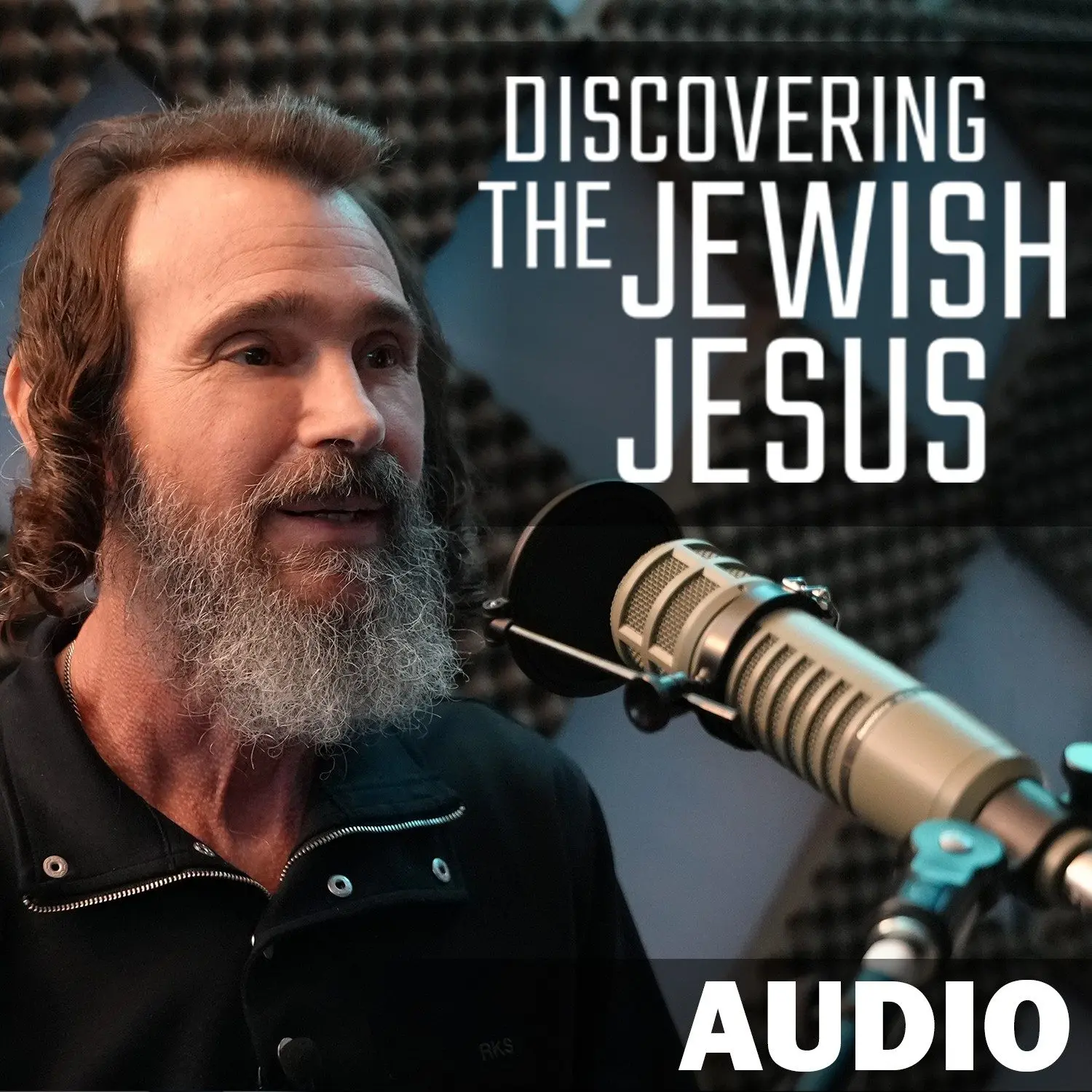


Dive deep into the spiritual lessons of Sukkot, also known as the Feast of Tabernacles. In this episode, we explore the significance of this Jewish festival, focusing on themes of gratitude, dependency, and the unseen spiritual realms. Gain insights into how the practices of Sukkot, such as the waving of the lulav, remind us of our connection to God and the blessings that come from recognizing His hand in our lives. We discuss the importance of rejoicing in the gifts we often take for granted and understanding that even in the wilderness, God’s provision is steadfast and sufficient.
SPEAKER 04 :
We need to cultivate a mindset where the unseen realm becomes more real to us than the seen realm. Shalom uvracha, peace and blessings, beloved ones. Welcome today for the second part of my message on the Feast of Tabernacles, or in Hebrew we call it Sukkot. The Lord of Israel, Yahweh, has commanded us, the Jewish people, to build every single year one of these temporary structures on our property called a sukkah. It’s to remind us that when the Israelites, when we as people were in the wilderness for 40 years during the time that the Lord delivered us from Egypt, that 40 year journey, we were living in the wilderness with nothing but God living in these temporary structures. And I simply made the application last time that every year when we build ourself a sukkah and we sit in it like we’re doing today, we’re reminded as we look through the roof and we can see the stars at night that all we really have in the world is God. Even as Israel had nothing in the world during those 40 years in the wilderness but Hashem, but God, He was enough. He provided for them manna every day, six days a week for 40 years. He caused water to supernaturally come out of a rock. He sent the quail to feed them later every day. God took care of them. And the application that I made on last time’s broadcast was this, and it’s very powerful. Don’t let it go over your head. If you lost everything, you would still be okay because you would still have God and He would cover you and take care of all your needs just like He did Israel in the wilderness for 40 years. It’s an important truth that can really bring freedom into your life. Sometimes we think it all depends on us. We think if we don’t keep it going, it’s all going to fall apart. But the truth is, beloved, even if everything around us fell apart, we would still have God, and having Him would be enough, we’d be okay. And so I covered that last time. I want to move on now to new ground. As we’re in the book of Leviticus, we call in Hebrew Vayikra, chapter 23, I want to read verse number 40 for you once again. It says, now on the first day you shall take for yourselves the foliage of beautiful trees, palm branches and booze of leafy trees, and willows of the brook. And you shall rejoice before the Lord your God for seven days. So the children of Israel were commanded to take the species of different agricultural products from the land that represented the beauty and the bounty of the Lord. And this is called the lula, the willow, the palm, the etrog. And we wave it before the Lord like this in all directions, up and down, up and down, thanking God, representing that everything that we have comes from Him. Every good gift that we have, the loved ones in our life, the food on our table, the roof over our head, whatever health we have, every provision that we have in life has come to us as a gift from God. And so during the Feast of Tabernacles, during the Feast of Sukkot, we wave the lulav, once again representing the beauty and the bounty of the Lord that comes into our life, we wave it in recognition and in honor of the fact that every good gift that we’ve enjoyed in our life has been a gift from Hashem. I mean, think about it, Jennifer, even the breath that you’re gonna take right now. Isn’t every breath that we take really a gift from God? I mean, really, we didn’t do anything to create ourselves, right?
SPEAKER 02 :
Right.
SPEAKER 04 :
I mean, the beauty that we experience just being with each other, looking at these beautiful people today that I’m surrounded with, the love that we enjoy, the friendship that we’ve established. Where does friendship come from? Where does love come from? It’s all a gift from God. And so the Lord said that during this particular time of year, we should remember that and not take it for granted. So many people today, you know, they’re willing to enjoy, for example, the beautiful nature that even we’re surrounded in now, but they don’t give God credit for creating it. You know, just like go, aren’t those mountains beautiful? Oh, I don’t believe in God, but I love those mountains. Oh, I don’t believe in God, but aren’t those birds beautiful? It’s like that’s the spiritual mindset that’s seeping over the earth right now. But we’re a called out people, amen? We say, God, thank you for the beauty. You created it. Thank you for my loved ones. Thank you for whatever’s good in my life. So this is a time to rejoice. And actually, I love what this verse says here. We sometimes don’t realize it. It says in verse 40, you shall rejoice before the Lord your God for seven days. And do you know, At another place in the Torah, the Lord actually brought a curse, a penalty upon his people because they didn’t rejoice before him when he was doing good things. And he said, because you didn’t rejoice, and weren’t grateful to me when I blessed you, now I’m gonna send a curse upon you to teach you gratitude. So it’s important to consider, I mean, I don’t know about you, but for myself sometimes, you know, just being flesh and, you know, being corrupt, I have to sometimes snap myself out of it. Like, you know, my wife Cynthia has to tell me a lot of times, you are a blessed man. And I have to say, yes, you are right. Because God could take all this away any second. You know, and it’s so easy to think about the glass being, you know, half empty. Well, anything anyone would like to add today?
SPEAKER 01 :
It’s reassuring that he wants us to be happy and he wants us to rejoice and be thankful for him and reminds us of that.
SPEAKER 04 :
That’s a really good point. That’s a really powerful point. You know, and when you’re saying that, Ryan, it makes me think about the war that we’re in. I mean, what you’re saying, just knowing that God wants us to be happy. He wants us to rejoice and recognizing, you know, we’re up against darkness that doesn’t want us to be happy and doesn’t want, and we have to make that choice to get an agreement. It’s a good point.
SPEAKER 05 :
It’s interesting how he ties rejoicing with reminding us what He’s done in our lives for what He wants to do going forward. And so connecting with the fact that our rejoicing reminds us of all the victories that He’s brought us through preparing us for whatever we have to go through beyond that point.
SPEAKER 04 :
Good point, because this feast is a celebration of the fall harvest. It was the last great harvest in Israel for the year before winter came, because this is the fall feast and the last one. But part of the celebration of this feast takes place on the last day of it. It’s actually written about in the Gospel of John chapter seven. It was called the Great Day of the Feast, and there’s a special ceremony that took place in this day called Hoshana Rabbah, which was a water-pouring ceremony. And what happened was that everyone would gather together at the temple, and there’d be a big processional of the priests, and they’d be singing and dancing. They would walk from the temple down to the Pool of Siloam. And then when they got to the pool of Siloam, the priest would take a pitcher, he would dip it into the waters of Siloam, and then they would begin to walk back to the temple. And everybody would be singing and praising and dancing. We have all types of historical records of this. In fact, the ecstasy of the celebration and the rejoicing was so intense that we have writings of rabbis doing cartwheels and praising God while they were standing on their head. And the question is, well, why? You know, what was going on? And the reason is, on this last day of Sukkot, when they took that water from Siloam to the temple, they would then, when they got to the temple, at the height of the rejoicing and the praise, the priest would then pour the water on the altar at the temple, and that’s when the praise would reach its crescendo. And the reason is that that water that was being poured out on the altar at the temple, it represented the rain that Israel was expecting God to bless them with in the coming winter months, so that that would in turn give them a great new harvest in the spring. So it was rejoicing for what the Lord had already done, but it was also a confidence in what Hashem was going to do for them in the future. There was an expectation of future blessing. And by the way, it also represented the confidence they had that the Lord was gonna be sending Messiah, and that when Messiah came, water would be poured out, spiritual water on the people. Of course, we know that Yeshua was right there in the midst. In fact, Yeshua cried out in John 7, if any man is thirsty, you know, as the water’s being poured out, he says, if any man’s thirsty, Come to me and drink. And rivers of living water will spring forth from your innermost being. So it’s important. I mean, it’s good to just talk about this together because we’re in a battle. I mean, with everything that people are facing in the world right now and the ugliness in society that we’re seeing right now, just a lot of divisiveness that we’ve experienced and so on and so forth, we need to remind ourselves that God’s a good God. Amen. He wants us to be happy. He wants us to rejoice. And so I want to thank you, Lord, that these feasts that we celebrate every year, they bring us back into spiritual alignment. You see, these feasts, these holy days of the Lord, these seven holy days, plus the Sabbath, it’s like an opportunity for a spiritual tune-up. It’s like your car eventually, you know, it starts, the timing starts getting off. So it needs to be readjusted. So celebrating these holy days is an opportunity for us to say, yes, thank you, Lord, for my salvation on Yom Kippur, that my sins are forgiven. The Feast of Trumpets, thank you, Jesus, that you are coming back soon, et cetera.
SPEAKER 02 :
You’re listening to Discovering the Jewish Jesus, and Rabbi Schneider will be right back in just a moment. First, though, I want to invite you to explore our Messianic content on our website. You can dive deep into topics like the Feast of the Lord, the prophetic significance of Israel, and how Yeshua fulfills prophecy. Visit DiscoveringTheJewishJesus.com and click on our Ministry and Messianic Contents tab. helping you understand the roots of your faith today. At Discovering the Jewish Jesus, we are dedicated to reaching Jewish people with the truth in Messiah, Yeshua. And when you support this ministry, you’re helping usher in Jesus’ second coming because scripture tells us he’ll only return when the Jewish people cry out to him. Help us be a part of fulfilling this promise through our calling. Give today at DiscoveringTheJewishJesus.com. And now back to Rabbi.
SPEAKER 04 :
Well, listen, let’s get into some specific applications from the Feast of Tabernacles for your life and my life, for our life today. Number one, the Feast of Tabernacles teaches us to walk in an attitude of dependency. Because when you think about it, every single day, six days a week, the children of Israel had to rely on the Lord for new manna. What happened if they tried to hang on to yesterday’s manna? It rotted, it became foul. It only lasted for a day. So every day they were dependent. Every single day it had to be a new thing. And so I think about this concept of clinging to God. How important it is to cling to God, of being dependent, of trusting Him. And without that attitude of dependency, There’s not an open door in our soul for him to move through. You know, I think about Moses and how Moses, when the Lord said, I want you to deliver my people from Egypt. And Moses said, if you don’t go with me, I’m not going. That’s kinda how I feel in my life. It’s kinda like, Lord, if you’re not gonna be with me today, kill me now. Because I know that without you, I’m just a victim. I’m just like out here, you know, a target for the enemy. So we live in this concept of dependency on the Lord every day for our provision, for our health, for our safety, for our protection. Now, this guy right here, he’s really dependent right now because he’s got another little one coming into his home in a few days here. So he’s like he’s walking in fear and trembling and dependency with all the extra juggling of the blessing that the little one’s going to bring. But we are walking in dependency. Amen. All right, let’s go to the next one. I love this concept that one of the things that Sukkot or the Feast of Tabernacles teaches us is that we need to cultivate a mindset where the unseen realm becomes more real to us than the seen realm. Because the children of Israel, they were relying on an unseen God. You know, everything that they were receiving was coming from this unseen God. And yet he was more real to them than everything else. Now I think about, you know, application. And we’ve all heard, how many times have we been taught that our fight is not against flesh and blood, but it’s against the unseen God. invisible forces of spiritual wickedness. Right, we’re taught that. That our fight is not against flesh and blood. It’s not against the realm of the material world. It’s against an unseen force of wickedness. But if I look at my own life, I have to consider myself a big failure many times because I look at situations and I think my problem is the circumstance and I’m dealing with flesh and blood in my thinking rather than recognizing my problem is not the circumstance. It’s not in what I see. My problem is in the unseen realm of my thought, which comes from the realm of the spirit. So to be able to make that shift to recognize that our real battle and what’s real in life is not what’s visible. What’s really going on is what’s invisible. I’m going to be off this planet. I mean, it’s going to be like, what happened to that guy? He’s gone. He’s here today, gone tomorrow. You know, it’s like all this that we thought was real. I mean, there’s so many people, you know, the older we get, the people are here today like a vapor in the wind. They’re gone. All these people have come and gone. It’s not what’s visible that’s real. It’s what’s invisible that’s real. And that’s what we need to be living for. Any thoughts on that before we move on to our next point today?
SPEAKER 05 :
Yeah, I was thinking the struggle, oftentimes I’m reminded of that even we have in our flesh, We’re not wrestling against flesh and blood. We’re not even wrestling against us when we fail or when we sin. Oftentimes we think it’s just us, but we’re being fought by forces and powers that we can’t see. That verse of scripture often I’m reminded, I’m not wrestling against me. I’m wrestling against forces of darkness.
SPEAKER 04 :
Yeah, and I’m thinking, Brandon, as you’re saying that, even the consequences of sin and how we sometimes deal with those consequences, and once again, it gets back to the unseen realm and the fact that we process things wrong, because the truth is we know that the Bible says if we sin, I’m not talking about people that lead a lifestyle of willfully sinning and are not caring about God. I’m talking about people that love God and are striving, but still they fall and fail at times in their quest for perfection. In their journey to perfection, we still fall and fail and stumble at times. And sometimes what happens is, rather than believing that Jesus still loves us, that we’re forgiven, instead we get all this self-accusation, this shame, this self-condemnation, and we think it’s coming from our own mind, and it’s really, it’s just a plot of the enemy. So yeah, so Sukkot teaches us that we need to be recognizing that the real battle is in the unseen realm. You know what’s another great principle about Sukkot that I think you guys will love? Is that it really equals and levels the playing field for humanity. You know, in the wilderness, you didn’t have some Israelites living in mansions and other Israelites, you know, living in flimsy, you know, tents with holes through their roof. They all lived in the same kind of structures. Everybody was equal. You know, they all ate the same food. They all had the same manna. They all had the same quail. And it really shows us that before the Lord, we’re all just human beings. And we’re all the same. And we need to respect all humanity. And Sukkot really teaches us this. It just like, it equals the playing field. In fact, one of the keys of Judaism is to never hate a fellow Jew. It is built into Jewish identity. Even though we know that still there’s a lot of arguing amongst the Jewish people, there always has been. But the teaching is that the actual temple was destroyed because there was senseless hatred, Jew versus Jew. This was part of rabbinic teaching. So during Sukkot, Jewish people really strive to cultivate this attitude of love for each other, love for the Jewish people, love for fellow Jews, and even to entertain strangers. It’s a custom during Sukkot to invite a stranger into your sukkah and have a meal with them. And so I kind of love that concept, just brotherhood and humanity and loving each other and respecting people regardless of their position in life. I’d like to bring up one more principle here. And that is that the Feast of Tabernacles cultivates an end times mindset. Because, as I was indicating, on the last day of the Feast of Sukkot, the priest would take water from the Pool of Siloam and pour it on the altar at the temple. And everybody would just go ecstatic in their praise to the Lord. And one of the reasons for that is because the water being poured on the altar symbolized the water that would be poured out upon the earth by the Spirit when Messiah came. And so today we recognize that the Feast of Tabernacles carries with it a mindset of Messiah’s coming. And in fact, in the book of Zechariah, the Bible tells us that during the Millennial Kingdom, Jew and Gentile alike will worship the God of Israel and the Father of Yeshua together during the Feast of Tabernacles. This is a special opportunity for you to prophetically take part in celebrating the Feast of Tabernacles. Let me explain. The Feast of Sukkot or the Feast of Tabernacles is also referred to as the Feast of Ingathering. Israel would go into their fields and they’d bring back to the Lord a tremendous harvest and then celebrate before Him. Jesus used this same type of language for you and I. He told us, go into the world and bring me a harvest, for the harvest is plentiful and the laborers are few. What he’s doing is mandating us, beloved, to go into the world, share the gospel, and bring him back a harvest, the harvest being those that have received the good news. When you sow your financial gift to the Lord through discovering the Jewish Jesus during this holy special season, you’re going to be playing a part, truly beloved one, in reaching people for King Jesus and the harvest that this ministry is bringing to him, you’re going to be able to have a part in Be rewarded for and celebrate before Him on the final day when you see all the souls that have been won to the Lord through this ministry. Bring your special offering to the Lord and you’ll be blessed and celebrate with them in the end times.
SPEAKER 02 :
You can give a special Fall Holy Days offering of any amount to Discovering the Jewish Jesus by visiting us online at discoveringthejewishjesus.com or just give us a call at 800-777-7835. If it’s easier for you, give a gift by texting the keyword GIVE to the phone number 88777. And we want you to know that you can also send your financial donations in the mail today to us at Discovering the Jewish Jesus, P.O. Box 777, Blissfield, Michigan, 49228. And Speaking of the holy days, today’s episode, it was on Sukkot, and it’s coming up really soon. This year, the Feast of Tabernacles, Sukkot in Hebrew, begins October the 6th at sunset, and it ends Monday, October the 13th at nightfall. This season speaks of dwelling and living life with the Father. And there’s so much deep insight that can be gained from this holiday and other biblical holidays. So if you visit our website, discoveringthejewishjesus.com, you’re going to find a wealth of messianic resources. There’s great tools there that will help you understand these holidays and how they’re still applicable and relevant to you as a believer today, right now. You can learn more, visit discoveringthejewishjesus.com to do so. And now let’s turn things back over to Rabbi again to wrap up today’s message on how the Feast of Tabernacles affects you with God’s sacred blessing.
SPEAKER 04 :
Blessings trump curses, and in the book of Numbers chapter six, we find the Aaronic blessing that God commanded Moses’ brother Aaron, the high priest, to speak over the children of Israel. There’s power in blessing, beloved ones, so take part in receiving Father’s blessing upon your life today.
SPEAKER 03 :
Yevarecheche Yahweh, vayishmarecha. Yair Yahweh, panaveylecha, vichunecha. Yissa Yahweh, P’navei Lecha Ve’asem Lecha
SPEAKER 04 :
The Lord bless you and keep you. The Lord make his face shine on you and be gracious to you. The Lord lift you up with his countenance and the Lord give you, beloved one, his peace. God bless you and shalom.
SPEAKER 02 :
This program is produced and sponsored by Discovering the Jewish Jesus. And I’m Dustin Roberts. Be sure to join us tomorrow when Rabbi Schneider explains how you can receive freedom from accusation. That’s Thursday on Discovering the Jewish Jesus.