



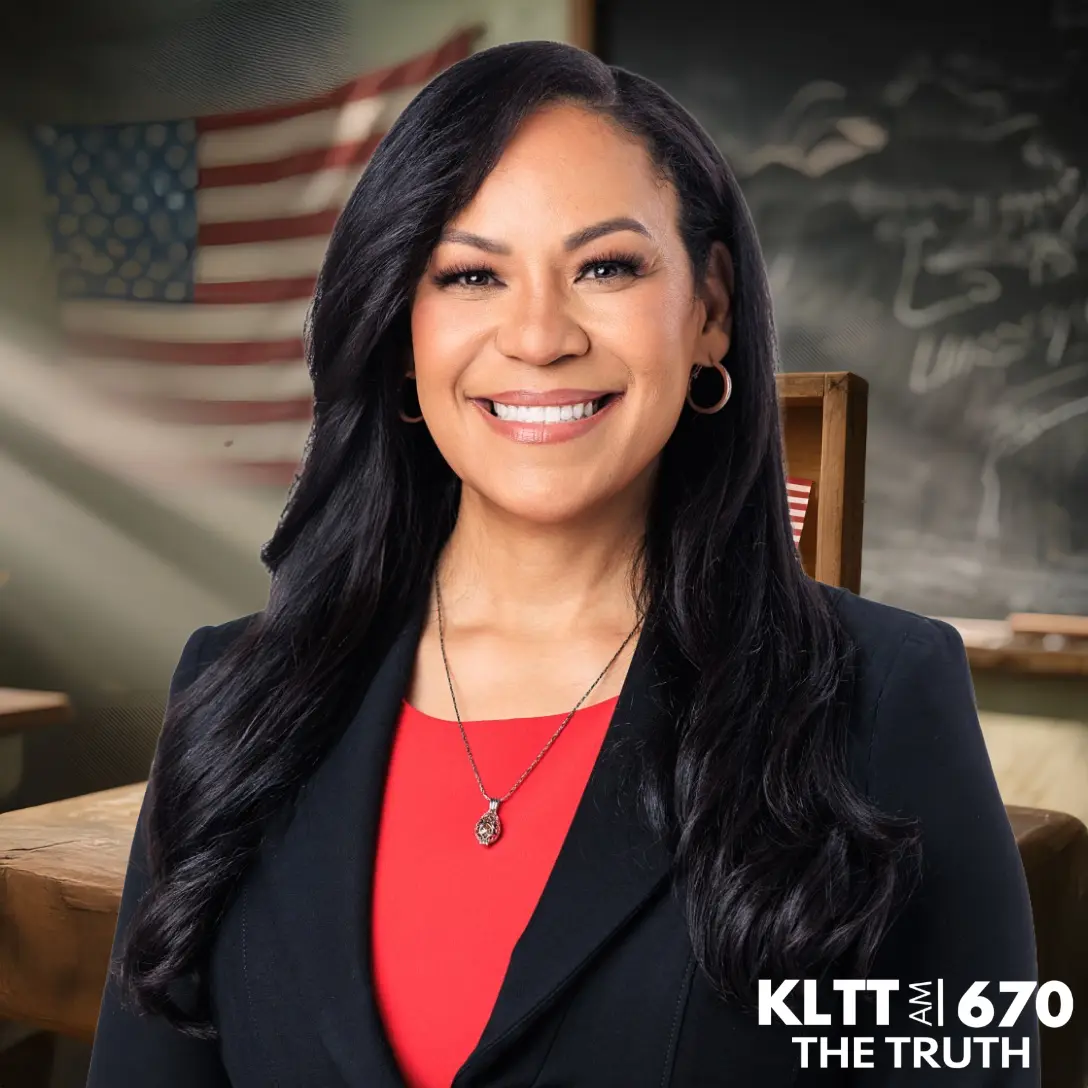
In this engaging episode of Restoring Education in America, host Priscilla Rahn speaks with Stefan Padfield, Executive Director of the Free Enterprise Project, about the influence of diversity, equity, and inclusion (DEI) in education and corporate America. Stefan shares his own immigration story, giving insight into his journey towards conservatism and his efforts to challenge the status quo in both the corporate and educational sectors. Discover how his unique perspective as an immigrant turned advocate for educational reform provides hope for those questioning the current societal narratives.
SPEAKER 02 :
Welcome to Restoring Education in America with Priscilla Rahn. She’s a master educator and author leading the conversation to restore the American mind through wisdom, virtue, and truth.
SPEAKER 01 :
Welcome, everybody, to another episode of Restoring Education in America. I’m your host, Priscilla Rahn. Thank you so much for joining the conversation today. And there is a new private classical school that’s opening in the Centennial, Colorado area. It’s called Excalibur Classical Academy. And their mission and vision is restoring America’s heritage by developing servant leaders who are keepers and defenders of the principles of freedom for which our founding fathers pledged their lives, fortunes, and sacred honor. And I want to reiterate, it’s a private school. That means that it’s a safe place for you to send your students. We’re not going to be having DEI in our school. So we want to make sure that you have an option. If you have children that are starting K through three this fall, please go to their website. It’s Excalibur Classical Academy dot org. But on that theme about DEI, it’s 2026. We are so over that. And I’m going to bring someone who knows all about DEI to the stage. Welcome to Mr. Stefan Padfield. Hi, Stefan.
SPEAKER 03 :
Hi. Thanks so much for having me.
SPEAKER 01 :
I am so thrilled to have this conversation with you. You are an expert in this area, but before we get too far into the conversation, I’m going to share your bio with the listeners. Stefan Padfield is the Executive Director of the National Center’s Free Enterprise Project, which is the original and premier opponent of the woke takeover of American corporate life. FEP files shareholder resolutions, engages corporate CEOs and board members, submits public comments, engages state and federal leaders, crafts legislation, files lawsuits, and directs media campaigns to push corporations to respect their fiduciary obligations and to stay out of political and social engineering. Prior to joining FEP, Stefan spent over 15 years teaching law at the University of Akron School of Law. He previously worked in private practice and clerked for two federal court judges. Stefan originally immigrated to the U.S. as a child, later becoming a U.S. citizen and serving six years in the U.S. Army. Stefan earned his Juris Doctorate from the University of Kansas and a Bachelor of Arts degree from Brown University. Welcome again, Stefan. And we have something in common. My mother’s an immigrant and my husband is an immigrant. So I have this love for people who come to the United States legally. and pledged to be a great citizen. So tell me a little bit about your immigration story and how those experiences shaped your life and your view of American institutions today.
SPEAKER 03 :
Yeah, thanks so much. I mean, it was one of the most moving ceremonies, at least in the sense of how surprising it was when I got naturalized. So this was probably in my early 20s, maybe 19, somewhere around that time before I went into the Army. And I remember going to the courthouse and I’d taken the citizenship test. And I thought it was just going to be a raise your hand, say a few words and head out. And the room was quite full, all ages of people. And the judge who was conducting the ceremony, and this was in Rhode Island, and I ended up actually working in the federal Rhode Island courthouse later as a clerk. So that was also interesting. But the judge, he basically really took his time, went around the room, asked people what it meant to them to become an American citizen, why it was important to them. It was really moving and really powerful. And I was very grateful for that because even though, like I said, my expectation was I’d walk in, raise my hand, say something, walk out. It just made all the difference to really drive home the significance of the choices we were making. You know, and so often in today, today’s world, with all the debates that we’re having around immigration, you know, when you hear all these narratives around how important immigration has been to the success of this country it is always critical to stress that the majority of that has been legal immigration right people have come in followed the rules whatever the applicable rules are uh gotten their citizenship or maintained their residency status and moved on from there so i’m extremely proud to have been you know able to make those choices and become a u.s citizen so what nation did you immigrate from So I was born in England. So I have an English dad and a German mom, basically moved to Germany right away and then came over to the States when I was about five years old. We bit of back and forth, probably settled, you know, around fourth grade. And then, you know, wasn’t really thinking much about citizenship. But then certainly once I got to college and especially once I started thinking about citizenship, You know, joining the military and so on. It just seemed like very much the right thing to do. And as I’ve grown and certainly become more enamored with the conservative movement and the history of this country and the pride that I hope we all take in that, it’s just become a deeper and deeper source of gratitude for me.
SPEAKER 01 :
Well, I think it’s beautiful to hear the stories of immigrants to this country. My mother has shared her story with me many times. My husband’s from Canada. It’s a very similar story to yours about coming to the U.S. young and growing up here and then realizing what can I contribute to the United States. But talking about tenacity, you are pretty tenacious in your work around corporations and DEI groups. Stefan, for listeners who may not know, what is the Free Enterprise Project and why do you describe it as opposing the woke takeover of corporate America?
SPEAKER 03 :
Sure. So the Free Enterprise Project is one of the projects that’s housed within the National Center for Public Policy Research. And as you have already noted, we focus on corporate governance and we do so as a shareholder. So we own shares in 70 to 80 of the largest corporations, all of them well-known brand names. and what we do is we use our status as a shareholder to file shareholder resolutions to show up at meetings to engage with corporations we’ll also have letter writing campaigns with boards we’ll write op-eds that directly address our concerns from a shareholder perspective we’ve also engaged in some litigation we have that ability so it’s really a unique way of approaching the issue of what’s happening in corporate America. And when we talk about the woke takeover, really, it traces back to Occupy Wall Street, right, which is roughly when the free enterprise project started in part in response to the way in which corporations seem to try to weasel their way out of any sort of accountability after the market issues around that basically triggered Occupy Wall Street by striking a bargain where essentially the leaders said, look, if you stop coming after us as individuals, we’ll adopt your leftist agenda and then we can all be happy and move on. And so we’ve basically seen that repeatedly for the last 20 years. And so we’ve been there from the start. Certainly, there’s been a lineage of leaders at the Free Enterprise Project. And so there’s been a long track record. And some of this work happens quickly and sometimes it happens slowly and sometimes it seems like it’s not happening at all but we just keep showing up we keep raising the issues we try to be creative about the ways in which we engage in corporations and raise the various issues that we’re concerned about but it’s all about trying to get these corporations back to neutral right we do believe in capitalism free market capitalism classical liberalism, that if you have a thriving capitalist market, then by definition, the boats will get lifted in the optimal way because the company is only going to make money if it takes care of the customers, takes care of the employees, takes care of the environment. It’s when you start saying the first priority is the environment, the first priority is how you look in the community, and you start allowing managers to hide behind those agendas that’s when the trouble starts to percolate and you start to get this takeover that we’ve seen that we’ve been fighting for some time
SPEAKER 01 :
So, Stefan, you mentioned capitalism, and this is a debate that I have a lot with teachers, educators, and especially the teachers union who actually wrote a resolution being against capitalism. And it makes me think, do you really understand what capitalism is and the power of capitalism? You’d think we would be raising young people to understand the power of capitalism, the mind, free market. How would you describe capitalism to an educator who might be arguing with you about this?
SPEAKER 03 :
I mean, the first thing I do is just ask them to look at their phone, look at their clothes, look at their home, look at their car, all these things that most likely for an educator are going to be quite positive, right, and prosperous as compared to other places in the world that we might point to. And just start with the proposition that largely that’s a result of capitalism, right? It’s a result of the competition of the innovation of the value seeking that is driven by capitalism and then i would say well what’s the alternative to capitalism well on one extreme it’s communism and let’s look at the history of communism because capitalism is rooted in natural rights it’s individuals choosing to transact with one another in situations where they both end up better off that’s the only way a transaction gets done in capitalism so it’s very natural in that way on the other hand communism because it’s unnatural requires forcing people it takes from one group it forcibly distributes and so there’s there’s this tension that it shouldn’t surprise us that it ends up failing horribly right like the most dystopian societies come out of this communist leftist totalitarian vision, which is always, of course, cloaked in social justice and equity and all these terms that sound great. So I think that’s the starting point, right? We’ve really failed, those of us who believe in capitalism and liberty and free markets, we failed on two fronts. We failed to explain and keep harping on the benefits of capitalism. And we’ve also failed to keep harping on the failures of communism. The fact that Mandami can get up and basically say to the country, we’re going to embrace the warm glow of collectivism and not even realize the horrific history of phrases like that. It just says we have failed to some extent. And part of that, I think, is because capitalists tend to be busy, right? They’re busy making things and creating value and jobs and improving the lives of people around them, whereas the leftists are busy undermining institutions and foaming revolution. And so they tend to do a better job of capturing the textbooks, capturing the classrooms and so on. And so that’s a message we need to just keep saying over and over again and having those conversations.
SPEAKER 01 :
You know, we just came out of this. Once you go woke, you go broke type of situation in America. We saw it with big corporations like Budweiser. We saw it a little bit with Target, this whole conversation with ESG and banking. Can you describe what ESG is for our listeners and how did it evolve from risk management concept into a vehicle for ideological enforcement?
SPEAKER 03 :
Sure. So environmental social governance, that’s basically what makes up the acronym of ESG. And in its best form, it is basically promoted as a way to get at material information better. So all corporate decision makers have a duty to gather information when they make their decisions. And so ESG is supposed to allow for a focus on asking additional questions like how is this going to impact the environment? How is this going to impact society? What about our governance structure? But what happened very quickly is is each of those elements and particularly the environment and particularly the social, but also the government’s angle was essentially, again, capture. Right. So the environmental arm became basically climate hysteria. Right. And all the sort of let’s get rid of oil and gas and drive around in buggies. And sure, solar can power everything. Right. Just complete utopian errors, basically counterfactuals to reality. And then the social, that’s where we got the whole, you know, what I would describe as basically a neo-racist, neo-Marxist quota system, right, under the guise of equity. And then even with the governance, right, which should just be things like, hey, keep your chair and your CEO separate on your board, but ended up being, oh, you know, you need to disclose the gender and race makeup of your board. And if you don’t have the right proportion. Then the proxy advisers are going to recommend voting against you. So each of those letters that make up that acronym, while they’re often defended by certain folks as simply being information gathering tools and data drivers, in practice, what we have seen over and over again is they’re just a leftist lever to push these corporations into the arms of the radicals.
SPEAKER 01 :
Well, this is the problem, Stefan, as someone who is a educator of color and a descendant of enslaved Africans. I keep thinking we’re going to finally start to see people for the content of their character. And why do I constantly need to check a box about what? I am in order to access everything that anybody else can access in America. And it gets really frustrating because it’s starting to infiltrate not just corporations, but it’s infiltrating in education. There’s a connection. So how do we start to break apart what we’re seeing from an education standpoint? Like, how do we start to break? develop and raise young people who understand the harm of all of these types of DEI programs in order to make our society better?
SPEAKER 03 :
Yeah, I think one is to continue to educate on the history of where these ideas come from. And so there’s a number of people that have done a really good job. One, James Lindsay comes to mind, wrote a book on critical theories, where the line, the intellectual history behind things like critical race theory and then equity as it’s currently practiced tracing back to actual marxists who you know there’s this line the issue is never the issue the issue is always the revolution so it’s not that they care about you it’s not that they care about the black community or or black children and want them to thrive it’s that oh here’s a lever that we can use to divide and undermine society because we hate the West and we hate capitalism and we wanna instill this Marxist utopia, which is gonna be totalitarian. So I think that’s one part of it is to really emphasize and keep pushing an understanding of where it comes from. And then the other is people have really just accepted, again, because we don’t do a great job often and we haven’t got the culture the way the left does in terms of getting the message out, When I talk about race and sex in these contexts, right, one of my starting points is I don’t think anybody wants to live in a society where based solely on the color of your skin, I can predict whether you’re going to have worse outcomes or not. And to some extent, we have that society. We still have that. Right. That I can predict things like what’s the likelihood of ending up in prison? What’s the wealth outcomes? What’s the health outcomes? The problem with the left’s DEI agenda and with the checking the box that you just mentioned agenda is it’s seemingly the worst way to try to improve outcomes. I mean, can you I can’t think of a better way that the KKK would try to keep black youth down than to say you have no agency. There’s nothing you can do. You live in a systemically racist society. You’re a perpetual victim. You’re surrounded by oppressors. Everybody who’s white is an oppressor. Like on and on and on. The entire message is so destructive that I think highlighting that, no, the solutions are colorblind. And this is what I loved about your quote, the one that I’ve used at a number of shareholder meetings where we had anti-DEI proposals. Because you said, if you have solutions that will raise the floor, and I’m paraphrasing here, right? So raise the test scores, raise the employment outcomes, raise the health outcomes without reference to color or sex. Can you imagine if all the corporations that went all in on Black Lives Matter just went all in on raising testing outcomes? Because you would naturally have pipeline impacts that would improve diversity, but you wouldn’t be dividing us and tearing us apart the way that the DEI agenda does. So I think it’s twofold. It’s uncovering and continuing to shine a light on the basically nefarious intellectual history. Right. And it’s really in some form just repackaged communism and Marxism. And then pointing out that the solutions that you’re after, that the left is claiming to be advancing. It’s actually neurotically undermining and that we already have much better solutions that go all the way back to, you know, what you were talking about at the beginning of your show, which is these values. Agency, you know, the values of individual liberty, the values of merit and hard work, they’re already there. We need to cultivate those and point to all the successes.
SPEAKER 01 :
You’re 100% correct, Stefan. When I think back in history, right after slaves were emancipated and they started building their own communities with their own doctors and their own bankers and their own business owners, they didn’t need government handouts and DEI. My father was in the military as well. He was in the army. He retired after almost 30 years as a CW4. He didn’t have DEI. in the Army. There was no such thing. If you were going to get a promotion, you had to earn that promotion. And that meritocracy is so critical in this day and age. And I’ve had to detox myself and my own thinking being in public education for 32 years now. and being indoctrinated. I always say students are not the only ones being indoctrinated in schools. It’s teachers who also get indoctrinated because we’re the army that’s actually perpetuating this mindset of I need all of this help and support because I’m incapable of doing it myself and you owe me. And now we have these crazy books called Grading for Equity where we’re supposed to give kids grades when they don’t turn in any work. That doesn’t help us at all in our community. Thinking about some of the lawsuits that you’ve been involved with, like, for example, with CVS, and they claim that your proposal interferes with ordinary business. What do you believe the argument is that that’s not holding up legally with a case like that?
SPEAKER 03 :
Sure. So with CVS, this is a slightly different topic that flows out of DEI, which is transgenderism, right? And all sorts of things we can talk about the problems with basically, you know, teaching kids that they can be born in the wrong body and letting men basically infiltrate women’s and girls’ spaces in sports simply by claiming that they’re a woman, right? I think most likely you and your audience are quite familiar with the issues here. And so we went to CVS and some other corporations with one of our shareholder proposals, and we basically had a women’s rights audit request. And we said, look, when you make decisions, business decisions, they should be fully informed. So when you decide to partner with the Human Rights Campaign, which is essentially an organization that really pushes radical transgenderism in a variety of ways, and you get 100% on their corporate equality index, those are business decisions. So when you did that, when you essentially aligned yourself in transgenderism, did you decide as a corporation what you believe about what is a woman, right? We have jokingly asked that question, but it’s really a very important and true question to ask, right? What do you think a woman is? Because if you think a woman can be born in the wrong body or a person be born in the wrong body or that a man can become a woman by simply saying so then say that what do you think about or how did you inform yourself about the rights of women who are being basically invaded by these men who want to take over all these spaces and take you know win women of the year awards and so on and so that was the proposal and what cbs did was essentially just say well we’re just going to exclude this proposal uh which right now there’s a lot going on at the sec where that’s become much easier for corporations And so one of their arguments and they didn’t even really provide much analysis at all, much other than just saying, well, this interferes with ordinary business. And our response is it was a request for a report. So even if all the shareholders voted in favor. you could still choose not to do it. Literally no hands of any managers would be tied. So the idea that we’re interfering with ordinary business is a bit crazy. And in the ordinary business analysis, there’s a social policy exception. And it seems like this issue around transgenderism and the promoting and pushing of it is a pretty big social issue. So even if you bought the argument that somehow we were interfering with ordinary business, you got to deal with the social policy exception. So they’re basically right now just betting that, that nobody will pay too close attention. And what we’re trying to do is we’re trying to shine more light on that. I’ve got that op-ed that went out recently and we’ll see. I mean, basically the way I phrased the op-ed is I said they’re basically daring Trump to defend biological reality because I’m sure they have government contracts, they being CVS, And, you know, the Trump administration has been quite vocal about wanting to defend biological reality. So this seems like a good opportunity to step up and ask. And that’s all it really is. In the first instance, ask some questions of CVS. Are you making fully informed decisions? What do you actually believe? And let’s have that conversation.
SPEAKER 01 :
I’m always curious about people who are experts in certain fields. What sparked this passion for this subject as an attorney and someone who is now the director of Free Enterprise Project? Where did that all start?
SPEAKER 03 :
I mean, it’s a long story and a short story, but I’ll keep it short. I’ll pick the short one. So I actually was pretty much of a card carrying leftist for most of my life. I mean, I would say probably till 2016. And a couple of things happened around that time. So one is I was teaching business law. And there’s only so many questions you can answer by looking to the business law itself. At some point, you have to look at political philosophy. You have to look at economics. And so one of the things that came up in the course of that additional research is that this whole gender pay gap issue is really not existing. Right. I mean, because the theory is if it was a gap, if women are producing value at one hundred, but they’re getting paid at 60, that’s an arbitrage opportunity. So some greedy capitalist is going to come in and pay them 70, 80, 90. And most of the research that has actually been done where they take into account things we would generally consider to be relevant to salary, find that there either is no gender pay gap at all, or it’s at most 4 cents, as opposed to the basically 40 cents that we’re told from often the Democrats and people on the left. So my reaction to that was, well, if they’re lying to me about that, What else are they lying to me about? Then I started going down the rabbit hole and realizing that if you just Google an issue, you’re basically only going to get left-leaning answers. You have to do some work to get at the conservative thought processes, the intellectual history, the answers and the issues. So I started doing that. And then, of course, the country just went crazy when Trump got elected. And you can either say the left lost its mind or it took off its mask, either one. But the extent to which they embrace illiberalism, shouting people down, refusing to let you speak, you know, cancel culture along its forms. I just realized, OK, I need to switch sides. And I’ve basically done a complete 180. And then once I basically embraced conservativism, this opportunity here at the National Center with the Free Enterprise Project seemingly just popped out of nowhere. And in fact, initially I was because I was a tenured full professor teaching at law school, not the kind of thing you easily turn your back on. But every time I tried to find a reason not to take the opportunity, It didn’t make sense. And so I’ve been so grateful for the opportunity they gave me at the National Center and what I’ve been able to do there and continue to have the opportunity to do there. Because even with everything we hear about, oh, there’s been a vibe shift and DEI is over, it is not over. It is burrowing underground. It is rebranding. It is waiting for the next administration. And some of them are just overtly defiant, some of these corporations. So there’s so much work that still needs to be done. We certainly want to celebrate the victories, but that’s basically the elevator pitch version of my journey to this position.
SPEAKER 01 :
Well, the National Center hires really great people. Our friend Terrace Todd was a Democrat for most of his early life as well. And he’s doing amazing work with Project 21. You’re right. The secrecy I see in public education, they change the lingo and they change the names because they have to get that federal funding done. And they know if they have overt DEI departments, they’re not going to get that funding, but they change the names. It’s like belonging or, you know, all these other little things, how they, but, but I’m also still seeing like our mission is to eliminate, you know, systems of white oppression and, and, you know, in our training. And I’m just thinking, boy, we’re just not figuring it out. And so my show is called Restoring Education in America. After all of this conversation, in your mind, do you think there’s any hope for our nation? And if so, what do you think it’s going to take to restore education in America?
SPEAKER 03 :
Well, I am always optimistic that there is hope. I refuse to give up hope. And certainly when I talk to someone like yourself who is leading the charge in education, it just makes me even more hopeful. I just think ultimately we have the truth on our side, right? The narratives, the lies of the left cannot withstand the sunlight of truth and reason. They’re very good at sort of dumbing down the culture, dumbing down students at conveying messages through media and Hollywood. So they get a lot of credit coming up with the right branding, right? Who could be against equity, right? I mean, they do a good job, but I firmly believe we have the truth and we have reason on our side. So if we just keep showing up, asking the right questions, being able to discuss the issues, right, we will eventually win. It’s simply how much damage is the left going to do until the truth wins. And so that’s why we need to keep showing up every day and providing alternatives and opportunities. And being willing to admit when we’re wrong, right? Because certainly it’s not like everything a conservative says or proposes is right. We make mistakes. We get feedback loops. So we have to be willing to show or be able to show a willingness to admit when we’re wrong, a willingness to engage with people, even if they have called us every ist and ick in the book, right? Still be willing to have those conversations. And then eventually, I really do believe that the truth and reality and reason will win out in our favor.
SPEAKER 01 :
So, Stefan, we’re out of time. We have to land our plane here. But before we go, where can people find out more about you and about Free Enterprise Project?
SPEAKER 03 :
Sure. So easiest thing is to go to nationalcenter.org. You’ll find all our projects there. You can sign up for our newsletter. And then I personally am on X at Stefan Padfield. So you can certainly look me up there as well.
SPEAKER 01 :
Well, to my listeners, thank you so much for tuning in. If you are catching the encore on YouTube, make sure you like and subscribe and share. And then catch me next time. And remember that educating the mind without the heart is no education. So seek wisdom, cultivate virtue, and speak truth.
SPEAKER 02 :
Thanks for tuning in to Restoring Education in America with Priscilla Rahn. Visit PriscillaRahn.com to connect or learn how you can sponsor future episodes to keep this message of faith, freedom, and education on the air.
