

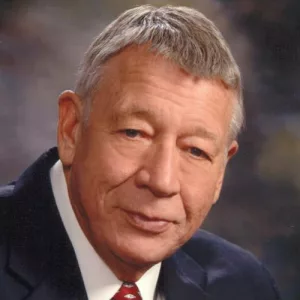

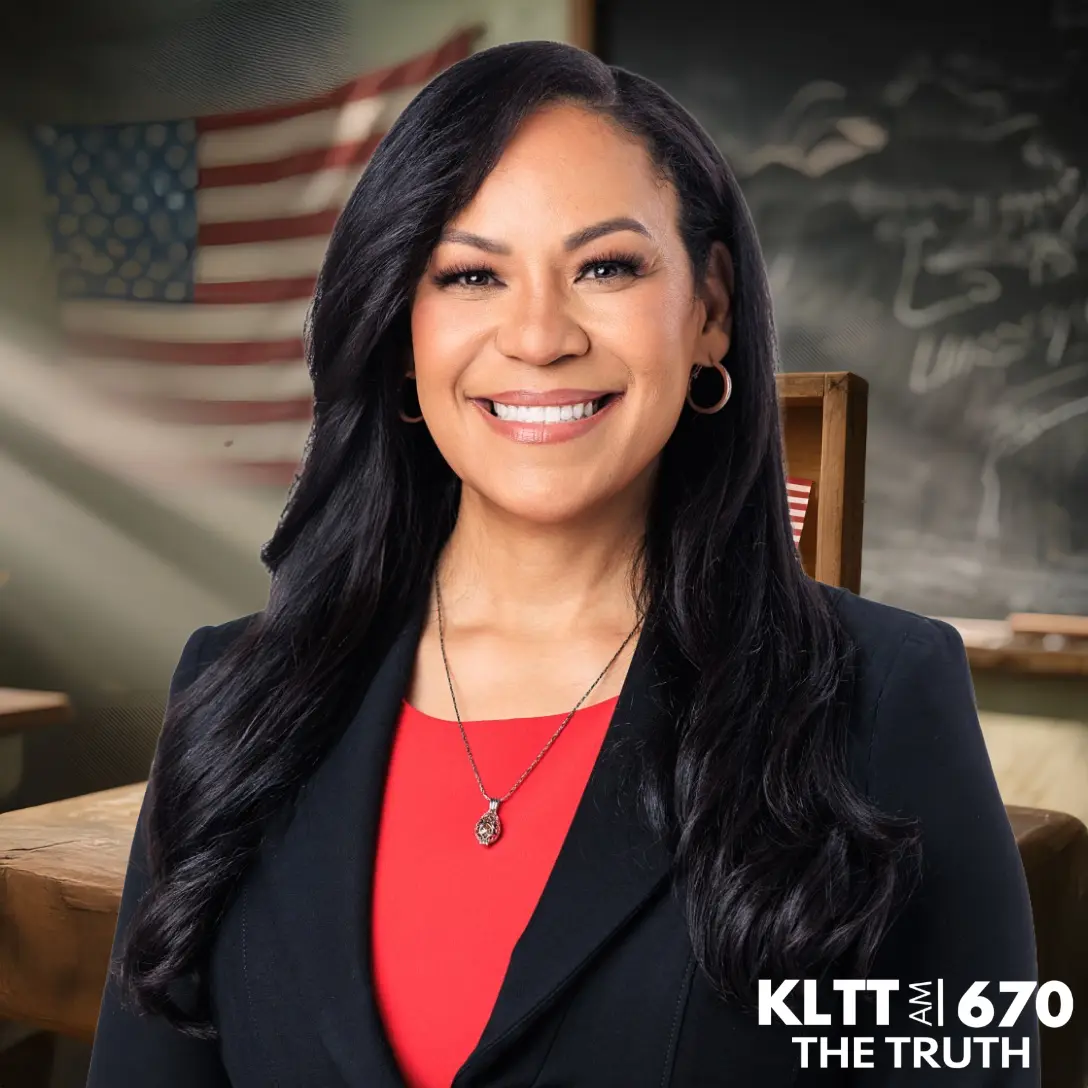
In this enlightening episode of Restoring Education in America, Priscilla Ron sits down with Jamie Lynn Davola, a seasoned educator and former school board member, to discuss the myriad of challenges and opportunities within the American education system. From the joy of Christmas break for teachers to the critical policy changes within school districts, Jamie Lynn shares her personal journey and the impactful work she’s done to boost academic achievement and reinforce parental rights. As an instructional coach, she opens up about her transition from classroom teaching to coaching and how it has enriched her perspective on education.
SPEAKER 01 :
Welcome to Restoring Education in America with Priscilla Ron. She’s a master educator and author, leading the conversation to restore the American mind through wisdom, virtue, and truth.
SPEAKER 02 :
Well, hello, everybody. Welcome to Restoring Education in America. I’m your host, Priscilla Ron, and I am so excited that you’ve decided to join the conversation today. We are ending 2025, and… You know, it’s one of the favorite times of the year for those of us who are classroom teachers because we get a little bit of a break. We get to enjoy our family. And so I’m going to invite my friend to the stage who is a fellow educator. Hi, Jamie Lynn. How are you? I’m doing well. How are you? I’m great. Have you been enjoying your little time off from school?
SPEAKER 03 :
Yes, I sure am. We were able to go down and visit family from my husband’s side. So that was a lot of fun.
SPEAKER 02 :
Awesome. Well, before we get into the conversation, I’m going to share your bio with our listeners. So Jamie Lynn Davola is a Colorado Springs native with 17 years of experience in public education. She served as vice president of the Falcon School District 49 Board of Education, where she has spent the last four years working to improve academic achievement and strengthen parental rights. Jamie Lynn spent 15 years as an elementary classroom teacher and now serves as a full-time instructional coach for grades three through five, training teachers in academics and classroom management. She holds a degree in Spanish and an elementary education professional license from UCCS. She is a wife, a mother, and a woman of faith who believes parents know what is best for their children and that every child deserves a strong academic foundation, character development, and an education that prepares them for the future. How fortunate are your students to have you as a teacher?
SPEAKER 03 :
Thank you. I appreciate that.
SPEAKER 02 :
Well, listen, we have some free time. It’s the Christmas break. I still call it Christmas break. I love this time of year because it’s an extended two weeks that we get off that we can relax and eat and sleep in and just kind of recharge from the school year. Tell me a little bit about how your semester went for you.
SPEAKER 03 :
So as an instructional coach, I get to work one-on-one with teachers during the school year, which is so much fun for me because not only am I working in classrooms, but I’m also working with teachers. And these teachers are basically my students now. And so I’m teaching teachers how to teach students while teaching students, which is so much fun for me. I get the best of both worlds. are brand new, brand new to the profession. They come in, they’re really nervous, really excited. And I get to work directly one-on-one with them with coaching and seeing the hard work that they put in and then seeing the fruit of my labor with how well they’re teaching at this point in the year. So I had a first year teacher come in and brand new, and I got to work with her for the first entire month and a half of the school year. And she’s thriving. She’s doing a fabulous job right now.
SPEAKER 02 :
That’s awesome to hear. And I know having been a full-time coach, it’s so inspiring to feel like you’re helping someone else to perfect their craft in a way or become more excited and creative. So you spent a lot of time in the classroom, you spent time on the school board, and now you’re an instructional coach. What were some of the reasons why you actually stepped out of the classroom into those two different types of roles?
SPEAKER 03 :
OK, so I was actually kind of forced into becoming a coach, instructional coach, because I love teaching. Teaching is my passion. So my administrators came to me and said, you know what? You’re such a fabulous teacher. We really want you to be an instructional coach. And I told them, no, I don’t want to do that. I love my kids so much. I couldn’t imagine not having a classroom. But of course, I went home and I prayed about it and I talked to my husband and he’s like, this is the perfect opportunity. You should totally do it. And so I decided, yep, I’m going to go ahead and be an instructional coach. And I’m so grateful that I did. Every time I take that step. It’s rewarding for me, that step of faith of just like the unknown. I was really, I like comfort in like being in my own familiar places like everybody else. But when I’m pushed out of my limits, I’m always grateful for how I grow and how I learn in those environments. Previous to that, four years ago, I was a lead teacher in a fifth grade classroom when I decided to run for the school board. And the reason I ran for the school board is that my husband and I attended church and the pastor was talking about how it’s so important to be involved spiritually. locally, because everything that happens in our society starts at the local level. So local city, then the state, then your country. But in order for you to change your country or the trajectory of your country, it starts at the most local level. And the most local is your school board. Everything stems from that. And I’m in education. So he’s like, Oh, man, you’d be perfect to be on the school board. And I’m like, who do you know is a teacher and a school board person? That’s too much work. Because I was a full-time teacher and working way too many hours. But the more I prayed about it and really sought the Lord and was… talking to my husband about it, the more I felt like I really was called to go into this school board. And I told, I told God, I said, you’re going to have to make time for me. Cause as a, as a full-time teacher, you don’t, you don’t have extra time. You barely have time for your family. And he was faithful and he made it happen. And I am so grateful. I had those four years of experience on the school board and making really good, significant changes for our school children and for parents, especially. But I didn’t realize how terrible it was until I got on the school board about how public education is. I did not realize.
SPEAKER 02 :
messed up our education you know that is so true and you know it’s really actually a little unusual because i teach in denver public schools and you cannot be a teacher and on the school board so when i found out that you were actually a full-time classroom teacher and on the school board i thought wow that’s unusual how do you do that there’s no like conflict of interest
SPEAKER 03 :
Well, see, this is how you get around it. I work in a different district than I live. So I work in a small or not smaller, but a more southern district. And I drive there in order to work there. But I live in the northeast part of Colorado Springs and I’m on the school board for a different district. I am not working in the district that I’m a school was a school board member. That’s how you got around it. It wasn’t a conflict of interest because I wasn’t working for the district that I was on the board for.
SPEAKER 02 :
Okay. Now that makes sense. And I didn’t know that. I was like, wow. I mean, you get to really fix a lot of things. So you’re currently working in a charter school. Correct.
SPEAKER 03 :
And I didn’t realize because I was sheltered in a charter school world. So I grew up charter school, second grade, all the way through high school. And it wasn’t until I went to college and went to UCCS that I realized that that everybody else’s education was different than mine and they didn’t actually get the quality education i had received and i work at a charter school so when i became a school board member and then i was involved with really with um public schools that’s when i realized wow we have a crisis on our hands we need to we need to really fix what’s what’s gone wrong with the education in america
SPEAKER 02 :
So let’s unpack that a little bit. The knowledge that you have working in a charter school and having a little bit more local control of the curriculum and some of the policies and then going into a traditional public school system, what were some of the things that you were able to impact policy-wise in your school district to improve outcomes?
SPEAKER 03 :
So one of the things that I think was really important is choosing quality curriculum. So that’s really important. And so before I was on the school board, every principal of each school or this, we have this weird school zone. I’m not going to try to explain it right now with our district, with different zones that we have. But they got to independently choose the curriculum that they were going to use for their schools. And some of them are good and some of them are not so good. And when I got on the board, I had other people who worked with me who were like, no, let’s find research validated, not just research based, but research validated, actually used on with kids. and proven to work and make that district wide versus each school gets to make their own choices. Now with that, of course, we invited everyone to the table. So everybody from the district came together and we had discussions of which ones were better than the other. And we created a curriculum review policy based on that. In order for us to adopt policy, it has to go through a review process with everyone involved to get the best material that is research proven. And so with that, we’ve gotten a lot better programs and now we’re using the same literacy programs across all of our elementary schools. We do vary in other subjects, but for the most part, we are a lot more aligned than we ever were before I was on the board.
SPEAKER 02 :
So you are an instructional coach, but you also take your learning really seriously as well. And we met a little while back and we talked about my book, Restoring Education in America. And you decided to take my book study. And I was really honored. I said, oh, my goodness, this is really cool because I love teaching like you do. But I also love having time with my colleagues because it’s like iron sharpens iron. But you didn’t have to. You were busy teaching. You’re busy on the school board. And you decided to take on my book study. Tell me a little bit more about that. why this book and what motivated you to just go in to taking the course?
SPEAKER 03 :
Well, my motivation was twofold. One, I absolutely love your book. I looked at it, I flipped through the pages when I met with you on the fly, completely just spur of the moment, right? And looked at it and I said, this is what we need. This has got some biblical foundations in it. It talks about how we are able to hold our expectations really high for students, which is what I had as a kid. regardless of their background and not to categorize them based on their skin color or based on their social economic status and lower standards because of that. No, we’re going to keep those standards high. So just looking at the book and then it was twofold because I’m also a professional educator and my professional license is is going to be expiring in the next year and a half. And I needed hours in order to do this. And I was like, what better way to get hours than to do something based on something I actually believe, not based on courses I have to go to that half the time I’m like scratching my head saying, oh, no, that’s not actually how it works. So that’s not what we should be doing for kids. It’s actually not helpful for them.
SPEAKER 02 :
So I’m going to take a second to make a plug because you reminded me, I need to talk about this more. Restoring Education in America. You can go to Amazon. It’s an inspirational teacher toolbox. I am doing my very first cohort. Jamie Lynn is my guinea pig in my very first book study cohort. All of the educators are going to get 20 hours of professional development credit and in order to apply for their renewal. I know it’s different in every state, but in Colorado, you need 90 hours every seven years in order to renew your license. And I do have a master’s degree in education administration. I’m a former principal, national board certified. And so my book study is done through a Socratic method, which I think is really the most effective way for learning, in my opinion, going through the text and grappling with it. How have you enjoyed the process so far?
SPEAKER 03 :
It’s been fabulous because we’re able to read the chapters and then discuss it as a group. And the floor is open and anyone can participate and say whatever’s on their mind. And then we can discuss it of pros this way or I see it this way. And it’s very eye-opening what other people’s perspectives will bring to the table. That’s the best way to learn actually is to see everyone’s different perspectives, bring it to the table and say, this is our common ground. We might disagree here, but we have common ground here and let’s attack this issue in this way. And so it’s been very helpful. So I appreciate it.
SPEAKER 02 :
I’m sure as you’re going through different classrooms and watching different teachers teach, you learn something new or you’re like, oh, let me give you from personal hand experience a different way of approaching this pedagogy. And that’s what’s so beautiful about teaching is there’s no one way. There’s no one size fits all. And I’ve said this before. My mentor told me, Priscilla, a master teacher is not a perfect teacher. A master teacher is a reflective teacher. And as long as you’re constantly trying something new, even if what you did worked. you don’t have to do it the same way every single time you can say you know what that works let me see if another way might work as well and so i will be starting a second cohort soon as soon as you guys graduate from the first cohort i will put out a calendar for anybody who’s listening by the way if you’re just tuning in my special guest today is jamelyn davola And she is an educator, instructional coach, and just awesome person, former school board member with all of her knowledge and wisdom. So I noticed that you were endorsed by Moms for Liberty and very active organization. Why was that endorsement special to you?
SPEAKER 03 :
So Moms for Liberty is an organization that really wants to put the education back into the hands of the parents. Because that is actually our role as parents. I’m a parent myself. We are required as parents to be in charge of the education of our children. And Moms for Liberty is an organization that… really believe strongly in parental rights and that schools should not be doing anything that would go against what parents would want. And so that was a huge thing for me, especially when I was running for the school board. I strongly believe we need to make sure that parents have a voice in everything and know everything that’s going on with their kids. So if there’s surveys going out that parents don’t know about, that should not be happening. And that’s what I discovered, is that there’s surveys that have been going out, books that were being read, things that students shouldn’t be exposed to, and parents were not even aware. They weren’t even noticing these things. until COVID hit. And that’s when people’s eyes started to open with what was really going on in schools, such as like, you know, sex education. That should be totally with a parent’s notification. Parents should have to opt in to those programs, not opt out, but opt in. But the bare minimum is an opt out because that is a very sensitive topic and students and parents need to make that decision for their kids.
SPEAKER 02 :
Yeah, you’re bringing up a couple of really good points. One is I know you have a daughter who’s elementary aged and, you know, there’s been this nationwide debate over boys in girls sports and in locker rooms and spaces. And I know you’ve been an advocate for, you know, a healthy space. healthy environment for young girls and a safe environment for young girls. But why is that critical in this day and age to have separate spaces for boys and girls and keeping boys out of girl sports?
SPEAKER 03 :
Well, it’s a matter of safety, number one. Number two, it’s it’s immorally wrong to have boys being being considered girls. Like that’s it’s not that’s not actually fact. It’s not truth. Right. And so I’m a huge proponent for truth. And the truth of the matter is that there are boys and there are girls and there are significant differences between the two. And so it’s important for us to recognize those differences and also to keep them safe. We also don’t want to promote any sexual perversion or anything that would go against what parents would believe. And so that’s very important for us to separate them, which is why District 49, actually, we have a policy, a sports policy that says only boys and boys sports and girls and girls sports and vice versa, as well as in locker rooms. And when they’re traveling, that they’re separated in hotel rooms as well. We’ve all heard horror stories of cases of sexual abuse happening in bathrooms by someone who is biologically a man, but is claiming to be a woman against another woman, right? And so that’s it. We don’t want to put any of those students in that position at all.
SPEAKER 02 :
You mentioned surveys, and I’ve seen a couple of surveys, the questions. And I thought, wow, that seems really invasive because I would look over the shoulder of my students and see what kind of questions are they being asked. And I thought, oh, my goodness, parents have no idea what questions are being asked. And I live in Douglas County, and the previous school board, voted to have parents, as you said, opt into the surveys. And then the newly elected board that was just elected in November voted to reverse that to where now parents have to opt out. And one of the… reasons I heard was because the district needed data. And I was like, well, what data do you need outside of academic data? What data are you getting from the survey? Can you unpack that for those of us who are not school board members who may not understand what this data is that they’re collecting?
SPEAKER 03 :
OK, so there’s a this is I’m very saddened to hear that this has been reversed because that’s something I have fought definitely for. So this the data collection is is twofold. One is just demographics, being able to know who you have in your in your classes, who’s in the district, things like that. And I have a problem with with that. And let me explain it. So we have state testing and We always go through and we’re like, OK, if you’re a minority student, you’re in this category. We’re going to look at your score separate from the white students, separate from socioeconomic. And so we categorize students based on outside circumstances in order to basically say, are we shortening the achievement gap? Right. And so here’s my here’s my problem with that. kids see that parents see that our our culture sees that and it comes with this stigma of because you are a certain color we have to categorize you differently that’s not okay right and we should be treating everyone the same and educating students the same way regardless of those things So why don’t we just say all students, let’s look at them. Are they achieving? Are they not achieving? What can we do to help them to grow without categorizing them? So I have a problem with that. But there’s a survey that is like a cleaner survey where it just talks about demographics, etc., for statistical purposes. But then there’s these healthy kids surveys which talk about mental health issues. Do you think about suicide? Are you transgender? And it actually plants ideas in students’ heads who probably wouldn’t have been aware of those things had they not taken the survey. That is a huge problem. So we don’t have those surveys in District 49. Thank God we got rid of those. They used to have them. But when we got on, we got rid of those. They still have statistical surveys, though.
SPEAKER 02 :
So is that so it’s optional for a school district to do the healthy kids survey? Is there money attached to that? Like what would be the motivation for a district to use that survey?
SPEAKER 03 :
That’s a great question. I’m not quite sure I know the answer to it. I bet there is some sort of grant or some sort of incentive for using those surveys, but we have opted out of them.
SPEAKER 02 :
Well, if someone who’s listening to the show or watching the recording afterwards who knows the answer to that, I would invite them to message me and please explain why in Douglas County we need a healthy school survey. What would be the incentive for us to ask students about their gender identity or anything like that in regards to instruction? And you’re making a really good point, Jamie Lynn, about skin color really doesn’t play a factor in any sort of academic setting. It has nothing to do with pedagogy. It doesn’t have anything to do with brain science or how kids learn best. And I think personally, it’s an excuse to look at skin color and say, well, if you’re a Black kid and you’re underperforming, that’s pretty much what we expect and we can’t expect anything to change rather than saying here’s the standard and are our individual students meeting the state standard because when you say oh this is where black students are achieving and this is where white students are achieving achieving and this is the achievement gap you’re comparing black kids to white kids well you’re never going to be able to how do you compare yourself to being white or black that’s not the standard. The standard is the standard. So you need to, if you’re going to disaggregate data, then you need to disaggregate it by an individual child and see why is this individual child not meeting the state standard versus here’s a demographic of Black kids, Asian kids, white kids, Native kids, and saying, we’re always going to have this
SPEAKER 03 :
uh this gap compared to white children and why is that and i no one’s been able to explain how to address that and it doesn’t it doesn’t allow kids to to actually see their own achievement for example i mean there are there are high achieving black kids like they have high scores i know them personally like i’ve taught students who were um straight a students And then when they come out with the disaggregated data, they’re like, oh, I’m a I’m a black kid and I’m under underperforming. No, you’re not. You’re over. You’re actually above your peers and you need to be proud of that. But because they’re categorized, they don’t see it the same way. And I have a huge problem with that. So I just wish we would just say, hey, this is where you were last year. This is your target, your goal for this year. Let’s get you to this. Did you achieve and meet your goal? Awesome. Let’s keep going. That’s how we should be should be doing it. We should not be saying, well, you’re you’re an Asian kid, so you’re super bright and you’re black. So you’re not right. It’s just it’s the stigma that comes with this disaggregated data that I don’t think is is helpful. at all. You’re right. We’re comparing. What are we comparing?
SPEAKER 02 :
We’re not really looking at the standards. We’re not actually comparing apples to apples because this is another thing we do in public education which doesn’t make sense to me. We’ll say this was last year’s third grade data. Now this is this year’s third grade data. This was the last five years third grade data. You’re not comparing the same kids. Every year it’s a new third grade class. I How are we showing any kind of improvement per student? To your point, we have to do a better job of focusing on kids individually. But I’m looking at the time, Jamie Lynn. My show is called Restoring Education in America. Real quickly, what do you think it’s going to take for us to restore education in America?
SPEAKER 03 :
It’s going to take a miracle, actually, is in my mind. And that miracle, I think, is getting it back to the local control. So taking it from the federal level back to the state, state back to the local, and really having parents become involved at the local level in order for us to turn this ship around. It’s going to be a miracle. But I know that God’s in the business of miracles, so I’m not giving up.
SPEAKER 02 :
Well, we’re on that journey. And thank you so much for your time. And Happy New Year. And to my listeners, thanks for tuning in. Catch me next time. And remember, educating the mind without the heart is no education. So seek wisdom, cultivate virtue, and speak truth.
SPEAKER 01 :
Thanks for tuning in to Restoring Education in America with Priscilla Ron. Visit PriscillaRon.com to connect or learn how you can sponsor future episodes to keep this message of faith, freedom, and education on the air.
