


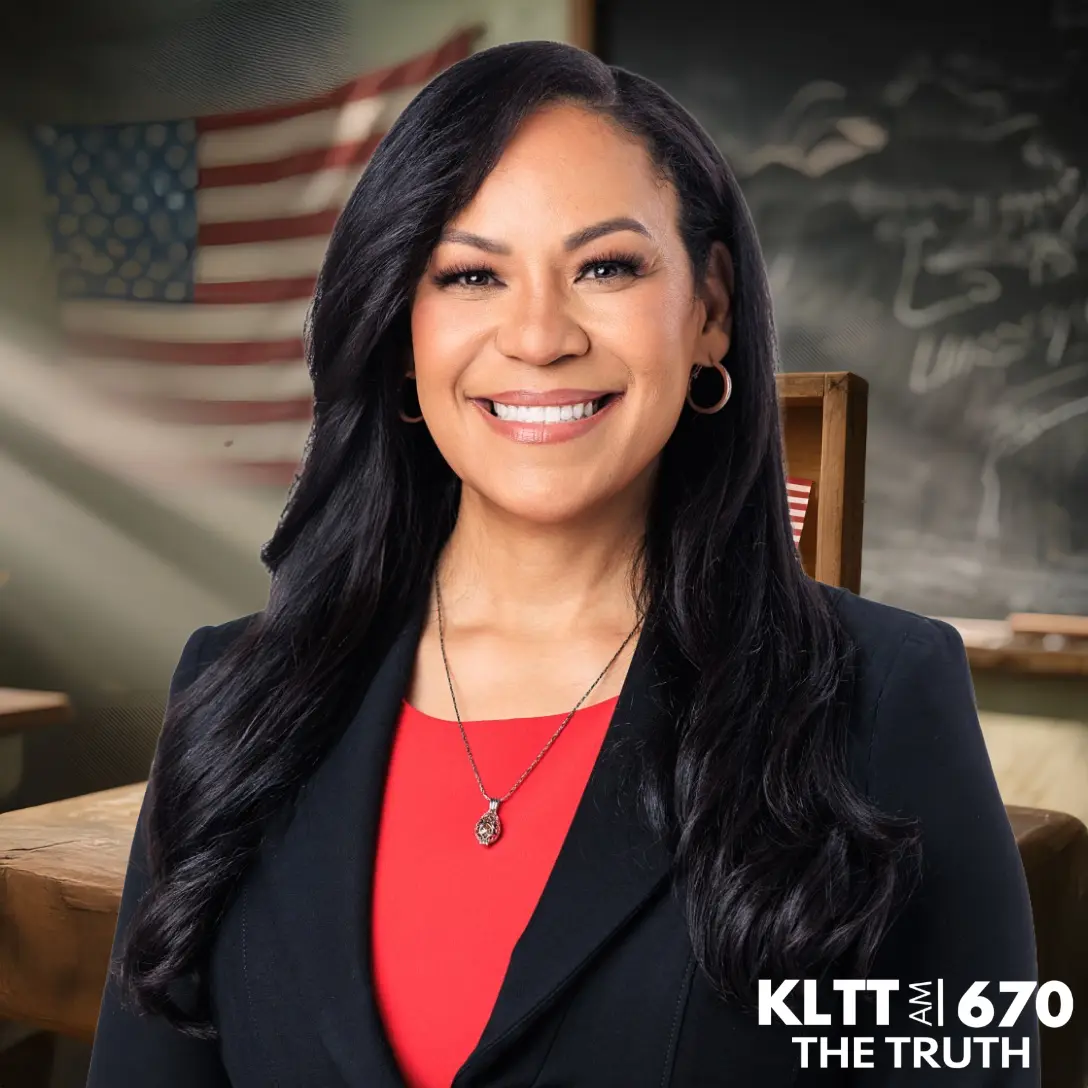
Join Priscilla Rahn as she welcomes Kim Gilmartin, a trailblazer in the classical charter school movement across Colorado. In this enlightening episode, they delve into the realities and misconceptions surrounding charter schools, emphasizing the importance of educational choice and quality. Discover how Kim’s journey led to the founding of multiple charter schools and her ongoing advocacy for parental choice in education.
SPEAKER 01 :
Welcome to Restoring Education in America with Priscilla Rahn. She’s a master educator and author, leading the conversation to restore the American mind through wisdom, virtue, and truth.
SPEAKER 03 :
Well, hello, everybody. Welcome to Restoring Education in America. I’m your host, Priscilla Rahn, and I’m so excited that you’ve decided to join the conversation today. I have somebody that I really admire that we’re going to talk to, and she is my very special guest and my friend. I’m welcoming to the stage. Welcome, Kim Gilmartin. Hi. Hi.
SPEAKER 02 :
Hi, good to see you.
SPEAKER 03 :
It’s great to talk to you today. We get to talk quite a bit, especially lately because of all the wonderful work that you’re doing in Douglas County. But before we get into the conversation, I’m going to share your bio with our listeners. Kim Gilmartin is the founder and executive director of the Liberty Schools Initiative, where she works with parents and community leaders across Colorado to to launch high quality classical charter schools with a strong background in classical education. Kim is a highly regarded leader in Colorado’s charter school movement. Kim is the co-founder of Ascent Classical Academy Charter Schools, a network of classical charter schools serving families in four Colorado communities. She is also the co-founder of the John Adams Academy Douglas County Charter School that is opening next year in Douglas County. Through the Liberty Schools Initiative, Kim has helped parents and additional communities navigate the charter authorization process, build grassroots support, and open new classical charter schools. Kim was named 2025 Charter School Advocate of the Year by the Colorado League of Charter Schools and was featured in the national documentary, Whose Children Are They?, In addition to currently serving as vice chair of the John Adams Academy Douglas County Board of Directors, she has previously served on the Golden View Classical Academy Board of Directors, serves on the advisory board for the leadership program of the Rockies, and actively supports numerous parent-led education advocacy efforts throughout Colorado. Wow. Yeah, I’m tired. I know. You know, it’s so funny. Every time I read someone’s, you know, bio, they say the same thing. It’s like, oh my goodness, who’s that? And you know what? The fact that you’re a fellow graduate of LPR, it seems like we all have this in our DNA to be overachievers and do all of this wonderful work. And You are definitely a go-getter. Every time I see you, you are out there fighting for parents, fighting for the future of children. It’s something that not everybody can do. So thank you so much for dedicating your time. But you do, I see your social media. You have a beautiful family. And tell us about some of the great things that your children are accomplishing these days.
SPEAKER 02 :
Well, they, I’ve got two in college now. So both of them are at the same college and it’s out of state. And they were, my kids were classically educated, but didn’t start being classically educated until my oldest was in sixth grade. My middle was in fourth grade and my youngest was in first, second grade. So, you know, it’s, I’m so glad that I made that choice for them, but Um, they’re going off and doing great things. And then I have a, my youngest is a senior, uh, in one of the classical charter schools. I helped to start and she’s graduating this year. So I’m going to be an empty nester soon.
SPEAKER 03 :
Oh, well, congratulations. Um, tell us about the, the start. So you said, you know, your children didn’t initially go to a classical school. What was the impetus for you to get involved in classical education?
SPEAKER 02 :
Yeah, well, um, I live in Jefferson County. So I live in South Jeffco, so not very far, just right on the border of Douglas County. And we moved into this neighborhood that I live in when my oldest was getting ready to enter kindergarten. And we wanted to be in a neighborhood where we had schools right there. And I didn’t know anything about education at that point. But both of us, my husband and I were working. It’s like, oh, I read, this is great. Everybody loves this school. And so we’ll just get them started here. It was probably, and everything was fine in the beginning, but it was probably when my oldest was in second or third grade that I really started to sort of question, and this was a long time ago. He’s in college now, he’s a junior in college. So I just started to question what it was that he was learning in school. And I know we can all talk about what we think is happening in some of the district schools now. And by the way, when I talk about that, I’m not criticizing. I think teachers are doing the best job they can. They’re great teachers. but what i mean is that i didn’t really understand the content of what he was learning you know where were they getting this curriculum where were they getting the worksheets all of these things you know just really started to question the science that he was learning the math uh what books he was reading and it seemed watered down to me uh and then you know i had my middle child who just was a different kind of a learner. And he was sort of getting lost in the mix, you know? And so I would come into the school and what I would see was, you know, kids on iPads, you know, one-to-one device ratio, not really, you know, it’s just a very chaotic kind of structure inside the classroom. I would go and talk to the principal and say, you know, I just wanna understand better what it is that you got, you know, where you’re getting your curriculum, how is this decided? And I realized, okay, this is how this works you’ve got one school board of five people who manage the district for 86 000 kids which is what it was at the time i mean jeffco’s lost a lot of kids but back then in 2013 that was that was with the numbers and i thought i’m never going to be able to make a change you know this is just so i learned about charter schools and i found out about this classical charter school that was maybe coming to jeffco they had had a board flip you know uh that year to a charter friendly uh board that was in 2000 into 2013. by the way that that board got recalled within the next 18 months but during that time We we got a charter school approved. I met with the people who were starting it. I said, I want to help with this. I got on the founding board and that was Golden View Classical Academy. And I just thought this is exactly what I want for my kids. This is the kind of education that I think every child should have access to. And so I got involved in that. And then I had all three of my kids in there because it was a K-12 school. about a year or two after being on the board, we started having parents coming to us from adjoining district, you know, adjacent districts saying, we really want to get a school like this open. And can you do it here? It’s like, well, That’s a lot of work. But we decided the founder and I decided to start a charter management organization. And that’s what that’s what we did. That’s what a sent classical academy charter schools was. And we got that going and we we were able to over the next seven years to open. four different classical charter schools, although we put applications into more than that. And it’s during that whole process that I learned how difficult it is to get these charter schools started and how political it is to get them started. There is a huge movement against them.
SPEAKER 03 :
Yeah, you know, a lot of people and I was guilty of this, too, because I was I’m still a public school teacher. And when I was a younger teacher, the teachers union would tell us, oh, charter schools are bad. Charter schools are bad. We don’t want them like it. And I didn’t know because the only thing I knew was public schools. And so I was indoctrinated. I try to tell people that if you’re in a teacher’s union, it’s not just kids who are getting indoctrinated. It’s teachers who are getting indoctrinated. We’re taught to use language like there are kids. I’m a trusted adult. You can come to me, right? Because I will help you against the bad parents because they don’t understand you. I understand you. All of this stuff, I had to go through detox. Kim. I got here as fast as I could. I keep saying this. I got here as fast as I could. You got red-pilled.
SPEAKER 02 :
Pardon? You got red-pilled on this podcast.
SPEAKER 03 :
Yes, I got red-pilled. Exactly. I just feel so much healthier and so much better now. I can sleep at night. And But I know that there’s a lot of misconceptions. And one of the misconceptions is that charter schools are not public schools. They’re 100% public schools. There are laws that charter schools have to follow. It’s not just like willy-nilly that you can’t comply with state laws. Children still have to take the standardized tests. There’s still accountability. What are some other misconceptions and things that you were hearing from parents that you were fighting against?
SPEAKER 02 :
Yeah, there’s so many misconceptions. It’s amazing. And I sometimes I’ve been in this world for ten years now on this, and I’m still amazed that people believe these things. But it’s been the narrative in their ears. It’s really hard to get the right message out there. So I appreciate you talking about this today. So one of the biggest misconceptions is that we do not serve students that have learning disabilities, special needs. Matter of fact, when I was going to put my kids in Goldenview, this is in the very beginning, I remember my middle son’s teacher, she had, you know, found out that we were leaving, and there were a number of kids I had gotten in the neighborhood to come over there as well, and I remember her saying, you know, charter schools don’t serve, they’re not going to serve your son’s needs, and And it’s just not true because, first of all, charter schools must accept all students. We have a blind lottery. You can’t even ask the questions of does your child have a learning disability or does your child have an IEP or an ALP? But once we run the lottery and if the parent accepts the seat, then the conversation begins with understanding, do you have an individualized education plan? And if so, we’re going to have a meeting and we’re going to make sure that we set your child up on that plan and serve them well. And I remember when I was on the board of Golden View, we would have monthly board meetings and i remember some parents one parent in particular came in and she gave public comment she said i’ve been in the district schools for this long i have one child who is an advanced learner has been on an alp and one student that struggles a little bit more and he’s on an iep and i have to say that i’ve never had a school serve both of my children so well now it doesn’t mean that charter schools are perfect and they some sometimes you know if there’s a very severe need the district or whoever your authorizer is can tell the school you cannot serve that student so if you’re authorized by the district they could say we need you to put that student’s going to go to this severe needs or you know a center based learning or something like that but i’ve never seen uh I have never personally melded in any charter schools that turn students away. So that is not true. They have to be accountable. They’ll say that they’re operating under darkness. You know, they’re not financially accountable. That’s not true. We have to meet all of the same standards, fiscal transparency. You’ve got to have all of this on your website where we have to have open meetings laws. So, you know, adhere to all the same sunshine laws have to serve all students. Any kind of fiscal, financial mismanagement, not responding to CORAs, all of those things will get you in hot water. The other thing that people don’t seem to understand is that if you are not performing academically, so your scores are not good, you’re operating in the red, anything like this, an authorizer can revoke your charter school. They can revoke your contract, and you can be closed down. It’s not only when a charter school comes up for renewal, which is what some people think is when the charter school comes up for renewal, then, you know, then we can figure out what they’re doing. No, it’s if you’re a good authorizer, you’re looking at these things every single year and holding the school accountable.
SPEAKER 03 :
If you’re just tuning in, my special guest today is Kim Gilmartin. She is the founder of Liberty Schools Initiative and the backbone of this movement to make sure our kids are accessing a high quality education and that parents feel confident in sending their children to school. That’s how I look at you. You know, the other misconception I’ve heard is you guys are making millions. You’re making all this profit off of the backs of children. And As I’ve been watching your journey of starting a school, you’re like trying to figure out how you can break even and make sure that you have enough children to come to the school. So, you know, can you address this whole thing about you’re just making millions and millions of dollars and everybody on the board is making millions. You’re going to just retire rich off the backs of kids. Is this true?
SPEAKER 02 :
Yeah, I would. If I would retire, if that were the case. Now, it is it is a labor of love. And it’s also sort of a curse because when you are passionate about this, you are signing up for a lot of long nights. Anyone who serves on a charter board is not paid. Just like people who serve on school boards are not paid, I believe. I don’t know. They’ve changed the law. In Denver Public Schools, they’re getting paid. Yeah, I think I think there are some school districts who are now getting paid. I think Durango is another one. But but no, not not paid now. I do want to talk a little bit about the inequity and the inequality as it relates to charter schools. And this is something that’s coming up and it’s been in the news lately, especially in Douglas County and what’s going on with the John Adams Academy and the land deal. So I want people to understand that when a district school When a district builds a school, they have bond money. So they put a bond on the ballot, hundreds of millions of dollars usually, and they say, this is what we’re going to do with it. And so when a school is built, that is paid for out of the taxpayer dollars. And then every student that is in that school is funded by per pupil revenue. With charter schools, we are funded at the same level in terms of the per pupil revenue. And that ranges anywhere between 11,000 to 13, 14,000, just depending on what district you’re in and how many mill levy overrides they’ve passed, how many tax increases. But we have to fund our facility out of our operating revenue. We don’t get bonds. We don’t get to go to the taxpayers and have them build a $60 million school, which is what the Sterling Ranch School that the district is going to build, their district, that’s $60 million. For about the same size school as what John Adams Academy is going to build, it’s costing us about $20 million. to build that school so we have you know we we definitely have to do more with less um and then we’ve got to pay for that so we have usually somewhere between 15 to 20 percent less operating revenue to work with that means less money that’s not going into the fewer dollars that aren’t going into the classroom not going to the students not going to uh the teachers and we have to really really tighten the belts you know to get um to to run this budget The other thing that we don’t have access to is land. So the way it works in Colorado is that when a new developer builds a development, they have to set aside land for public schools. And if the district doesn’t want to build a school or they can’t pass a bond, then the district, then the developer has to give the district cash in lieu of. So they get cash for it. But if a charter school wants to take that land, they said, well, we would like the land. We have money. We’re going to pay for it ourselves. And we would like to go. No, they don’t have to give that to you. And most times they don’t give it to you. And that’s what’s happened in the John Adams situation at Douglas County is that they want to set aside that land for a district school. And I hope that they get district schools, but it took them 10 years to, that community was built in 2015. It took them 10 years to pass a bond. How long do you think it’s going to take them to pass another $120 million bond to build the high school there that they want, the middle school, high school? So I think that charter schools are not given, not on an equal playing field. And all of the parents that send their kids to these charter schools are taxpayers. This is a public school and they deserve to have the same access.
SPEAKER 03 :
You know, I was on the planning commission for four years, and I remember having to make decisions about the development out there in Sterling Ranch. And I loved when they talked about, here’s a site for future school. And at the time, they were only about 20% built out. And I could just envision all What a beautiful community and how wonderful it was that, you know, the Smeddles said, you know, we want to have a school in this community. We want our community, our parents to not have to drive far for their children to go to school. And I’ve just been really impressed with how they’ve been thoughtful about that. the development and the growth. And as a career public educator, I’ve just come to the point where I don’t care what the name of the building is on the outside. I don’t care if it’s a public school. I don’t care if it’s a public charter school. I don’t care if it’s a private school. I just, A, I want kids to have access to a neighborhood school, number one. And I want parents to have confidence in the school that they send their children to. And I want great quality teaching, rigorous teaching happening in the schools. And I was so caught up in that it had to be a public school, a traditional public school, in order for it to be legitimate. And I’ve just learned that a lot of the bureaucracy, it doesn’t matter, it doesn’t translate into great outcomes. But when we talk about, Kim, like classical curriculum, a lot of people may not really understand what classical curriculum is. Can you describe what classical curriculum is?
SPEAKER 02 :
Yeah, I mean, there are a lot of different flavors of classical, I think, because I have seen so the Ascent schools are affiliated with Hillsdale College. So those are and Golden View is as well. Those are the Hillsdale brand. So very classical. They have a specific guide, a curriculum guide that they want all schools to adhere to. This is how they this is their reading list. This is how they teach phonics. This is the math program that they use. This is what they teach in the upper school and in the high school. And then you’ve got schools like Liberty Common up in Fort Collins, which they don’t call themselves a classical school, but they are very classical. You’ve got just some classical Christian schools that are a little different. They have a religious aspect, a faith aspect to them. And then you’ve got core knowledge schools, which you probably know a little bit about that. A lot of the classical schools that I’ve worked with, they incorporate core knowledge, and so do the Hillsdale schools. They incorporate the core knowledge sequence into the K-8 sequence. I have just found that there’s not really one exact flavor, but there’s a lot of similarities. And the way I explain it, and this is how it was explained to me, and I was not classically educated, so I’m not going to be able to sit here and talk about Aristotle with you and Socrates. But what I can say is that I do believe that this is the kind of education that I would say our grandparents probably got our great grandparents and then their generations before that. And it absolutely was the education of our founding fathers. So we’re talking about, you know, we’re reading classic literature, almost all of the books that our children read. The authors are dead. They’re no longer alive. These aren’t modern authors. The reading program, the literacy program is very prescribed. They definitely teach phonics, right? There’s no sight learning, sight reading or whole word approach. It’s phonics. And it is a very prescribed program. You know this better than anyone since you’re a teacher, how important literacy is in those early years. sets the path for them for learning and comprehension. So that is a big staple of any classical program that I’ve seen. I’ve seen classical schools that use Singapore math, some use Saxon math, very good math programs. You know, algebraic thinking from an early, early from the early years, they’re learning cursive. These are kids that are writing. They’re not on a computer. Yeah, they might have some keyboarding and some computer time, but they’re spending a lot of time with a pen and pencil and writing and learning their cursive learning. making the brain work that way. They’re reading books. Not on a computer, again, they’re actually reading textbooks. Most of the classical schools I’ve been involved in, we actually give the kids books. They actually start a library that they bring home. I know with the John Adams Academy School that I’m involved in, the one that’s going to be in Sterling Ranch, they call them keep books. They get to start making their little library, you know, of Charlotte’s Web and Animal Farm and all of these great books and that they’re going to be reading. You know, we have music and art. So the co-curriculars are a big part of our program all the time. It’s not we’re going to do these as extras or specials. It is part of the learning. It’s part of the curriculum, just as important as math and science reading. You know, so those are kind of that’s how I like to explain when I go and talk to parents. They just go, oh, this is what I read when I was growing up. You know, this is what I I want for my children. I didn’t even know it existed anymore. And when we talk to teachers, they’re like, this is what I want to teach. So, yeah, that’s that’s how I explain classical.
SPEAKER 03 :
Very thorough. Thank you. You know, for you and I, as graduates of Leadership Program of the Rockies, the term freedom has been instilled in us so hard. You know, and it’s not like we, especially when we talk to Congressman Bob Schaefer, he’s pounded this into me. He’s like, I’m not against public schools. You know, I think public schools should exist. If you want to send your kids to public school, you should have a right to do that. But if you want to send your children to a different kind of school, you should have a right to do that, too. So as you mentioned earlier, Kim, that there will be two schools options for parents in Sterling Ranch, one a traditional public and then one is the classical charter John Adams Academy. What would you say to parents as they’re making their choice? I want you to do a pitch for your school as to why you want them to register their children to your school.
SPEAKER 02 :
Well, you made a good point because there is not one size that fits all. And that’s why I’m such an advocate for charter schools. Some people may not want the district option. It’s a certain kind of curriculum. The classical option is another. And if parents appreciate what it is that we are teaching at this school, if they appreciate the curriculum that I mentioned to you, and the kinds of books that their kids are going to be reading, and the fact that it is a local charter school, which means you have one governing board. You have a governing board that governs that school, not a district board that governs 60,000 kids. So it’s closer to the parents. It’s just closer. It’s closer to, you know, you’re going to have a little bit more apparent choice that way. If that is something that is interesting to you and attractive to you, then I would say you definitely give our school a look. We will have, we’re working on hiring our school leader right now. We don’t have everything in terms of the hours figured out, but we have gotten 26 acres of land there in Sterling Ranch. We’re gonna be opening the school with grades K through eight. And then the next year we’ll add ninth grade and the year after that we’ll add 10th grade and then we’ll be building phase two. So we have a much bigger high school. It’s just really exciting. One of the thing I wanna tell you that I didn’t mention besides the classical curriculum Is we put a lot of emphasis on virtue education. And so what is the people say? What does that mean? Well, it’s the virtues. It’s it’s you know, with you said you have it as your tagline on your show. Truth, beauty and goodness. Right. That’s we’re educating the mind. We’re educating the heart. We’re educating the whole person. And we put a lot of value. We want our teachers value. to be wrapping those virtues and the core values into their everyday lessons. This is not, we’re gonna do a character education class on Friday. No, it’s part of everything. It’s interwoven into the stories that they read, the lessons that they learn, the interactions that they have with each other and with their teacher. It’s all part of it. We want this to be an experience for them that sort of mirrors what the parents want and what they do at home. We’re just coming alongside them academically. And what’s the name of the website if people want more information? It is JAA, for John Adams Academy, JAA.co.org.
SPEAKER 03 :
Wow. Well, I could talk to you forever about this conversation. And we just want to encourage parents to take a look at John Adams Academy and the classical curriculum. I think that they should come out, take a tour and come to a parent meeting and find out more about what you have to offer. And then they can make a decision from there. But I’m looking at the time, Kim, and we have to, I know we have to land our plane, but to be continued. To my listeners, thank you so much for tuning in and catch me next time. And remember, educating the mind without the heart is no education. So seek wisdom, cultivate virtue, and speak truth.
SPEAKER 01 :
Thanks for tuning in to Restoring Education in America with Priscilla Rahn. Visit PriscillaRahn.com to connect or learn how you can sponsor future episodes to keep this message of faith, freedom, and education on the air.
