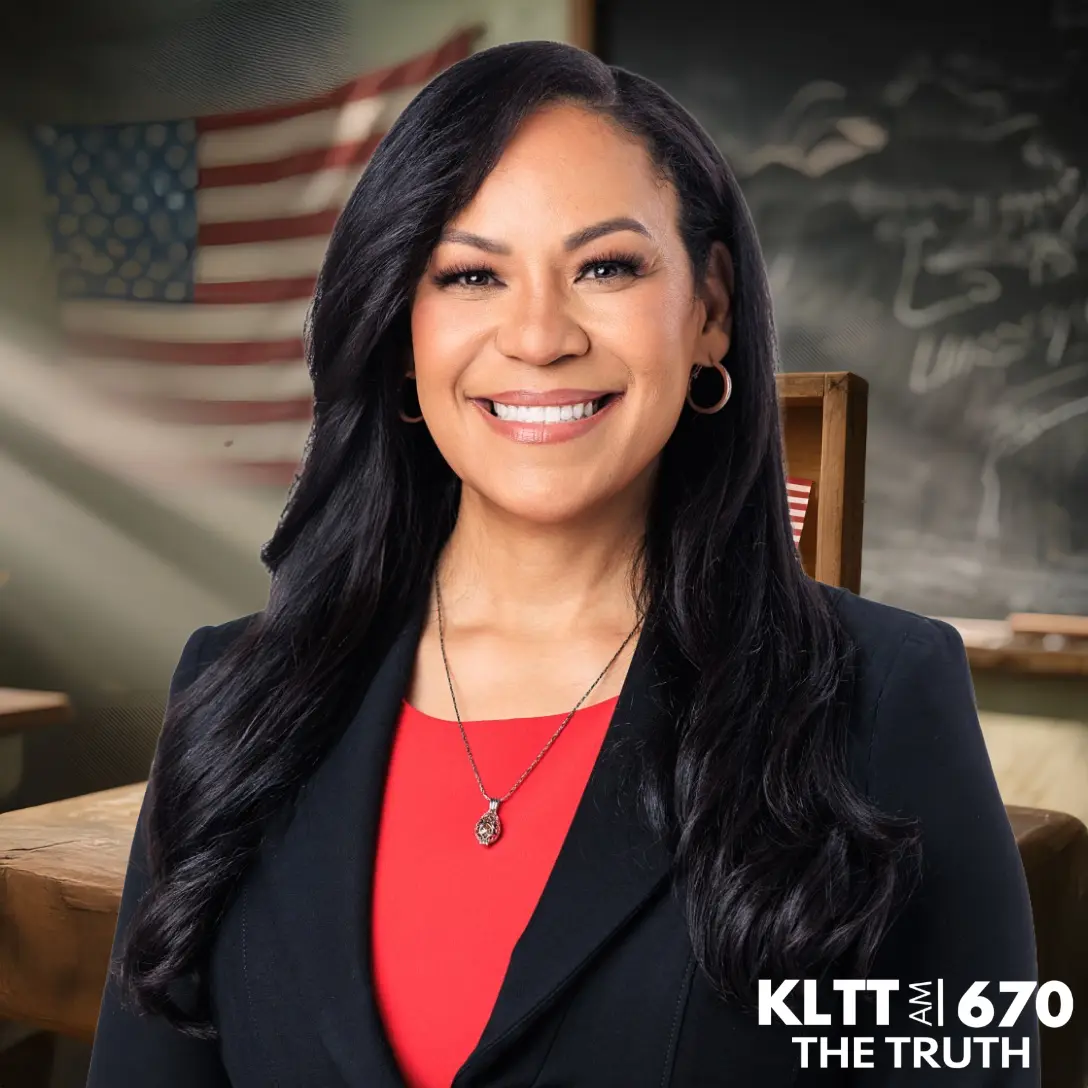
What happens when parents stop trusting the education system to do right by their kids? In this episode of Restoring Education in America, Priscilla Rahn sits down with Maryland Delegate LaToya Nkongolo for a wide-ranging conversation on parents’ rights, mental health, public education, and the deeper cultural battle shaping America’s classrooms.
Congolo shares her personal story of rising from poverty and government dependence into a life of leadership, entrepreneurship, and public service. She explains how her background in mental health shaped her passion for helping children break destructive cycles and why strong families, resilience, and personal responsibility matter so much
SPEAKER 01 :
Welcome to Restoring Education in America with Priscilla Ron. She’s a master educator and author leading the conversation to restore the American mind through wisdom, virtue, and truth.
SPEAKER 02 :
Well, hello, everybody. Welcome to Restoring Education in America. I’m your host, Priscilla Rahn, and I’m so thrilled that you’ve decided to join the conversation today. Well, you guys know it’s open enrollment time. Parents all over Colorado are looking for a great school for their children. And there’s a new private classical school that’s starting in Centennial, Colorado. It’s called Excalibur Classical Academy. And their mission and vision is restoring America’s heritage by developing servant leaders who are keepers and defenders of the principles of freedom for which our founding fathers pledged their lives and lives. fortunes and sacred honor and i would encourage you to go to their website excalibur classical academy.org to learn more they’re currently doing open houses giving tours of the school and answering questions so if you have a young child that’s starting kindergarten through third grade please reach out to Excalibur Classical Academy. And also, if you are a teacher looking for a great opportunity to teach the future, please submit your resume through their website. Well, I love talking to people in the education space, especially parents who are movers and shakers and who are getting involved because you know parents are the first educators of their children. And there is a big movement going back to elevating and respecting the voices of parents. And my next guest is no different. And I am so excited to bring her to the stage. Miss Delegate Latoya Nkongolo. Welcome.
SPEAKER 03 :
Thank you, Priscilla. Thank you so much for having me.
SPEAKER 02 :
Well, I am so thrilled to make this connection. You and I are fellow Project 21 ambassadors. For those people who may not know what a Project 21 ambassador is, can you share a little bit about that?
SPEAKER 03 :
Yeah, so what it means is it really just elevates the voice of conservatives, Black conservatives especially, really championing the things that what I say embodies what it means to be free and Black and American. Free is F-R-E-E, family, religion, education, entrepreneurship. So pretty much every conversation we have as Project 21 ambassadors, we embody those values.
SPEAKER 02 :
Well, before we get too far into the conversation, I’m going to share a little bit of your bio with our listeners. Latoya is an award-winning mental health expert and entrepreneur. She was the social and emotional chair for the Anne Arendelle Board of Education Citizen Advisory Committee, where she successfully advocated for increased mental health services for students. As a former county employee, Latoya played a key role in developing effective programs to combat the opioid epidemic while efficiently managing budgets for these initiatives. Her leadership in program development extends to county courts, detention centers, and hospitals. LaToya has partnered with the City of Annapolis Mayor’s Office to create the Naptown Anti-Dote Movement Program. In recognition for her contributions, LaToya received the Distinguished Leader Award from Leadership Anne Arundel in 2020, the Legislative Black Caucus Excellence in Community Service Award in 2022, and was a nominee for the 2023 SBA Minority-Owned Small Business of the Year. Latoya was appointed to the Maryland House of Delegates on January 2025. Since being appointed to the Maryland House of Delegates, LaToya was named 2025 Legislative Rookie of the Year, 2025 New Leader Honoree by leadership Anne Arundel, and was selected to serve as a Maryland State Director for the national organization Women in Government. In 2026, LaToya was named Deputy Minority Whip of the Maryland House Judiciary Committee. But your number one job is wife to Mr. Bamoyo and mom to two children. Super mom. Congratulations on all of your recognition.
SPEAKER 03 :
Thank you. Thank you so much. It’s hard work, but a lot of it, I’m inspired by my children. I just want to leave the world a better place for my kids and all kids.
SPEAKER 02 :
So LaToya, take me all the way back, this career path that you’ve paved for yourself in mental health. What started that for you?
SPEAKER 03 :
Well, it started because of my childhood. I grew up in low-income housing on government assistance. My mother was a single mother. And we struggled a lot. And in our community, I saw a lot of despair. I saw a lot of fatherlessness, drug activity, violence, crime. And for me growing up, I always knew that it was temporary for me. I never saw myself living that way for the rest of my life. And I just made a vow to myself to, you know, to make sure that I made decisions and to put myself on a path. to independence and freedom. Because when you live in government housing, there is no freedom. And one thing that Ronald Reagan said that I wholeheartedly believe is that if you don’t control government, government will control you. And I totally felt controlled by the government. But more than that, I realized that a lot of people are stuck in those circumstances because psychologically, they don’t see themselves doing anything different because they’ve never been exposed to anything different. So that’s what drove me to mental health is because I feel like, you know, people have psychological chains that aren’t broken. And my job is to break those psychological chains because I feel like mentally, if you feel that you can do something, if you could think it, you will become it. And that’s why I’m so passionate about mental health. And I’ve been doing this for 28 years and don’t see myself doing anything different.
SPEAKER 02 :
Well, that’s beautiful because, you know, in our community, we hear a lot of narrative or a lot of rhetoric around being stuck in that cycle. Once you’re born into that cycle, you’re stuck in that cycle, but you’re living proof that you don’t need to stay in that cycle. So was there a moment where you realized, even though this is my current circumstance, that I’m going to break out? And what were some of the things that you did to create a different path for yourself? Yeah.
SPEAKER 03 :
That’s great. I think one, oh my goodness, there’s so many moments throughout my childhood. I gave an example recently about watching the movie Roots when I was in middle school. And I was just sharing that when I watched Roots, that week in school, I observed my white peers, they shriveled and they shrunken in guilt and shame. and my Black peers simmered in anger. And I’ve always been a very observant person. I always watch people. And in that moment, I said, you know what? I’m going to honor my ancestors. My ancestors, they weren’t able to have families. I’m going to have an intact family and keep my husband and children together. I’m going to be an avid reader. I’m going to get an education, things that my ancestors were denied. I’m going to own land and businesses and, you know, be an entrepreneur, things that my ancestors systematically were shut out of. And I think Roots changed it for me. It didn’t make me angry. It made me just, you know, sit and resolve and say, this is the path that I’m going to take in honor of my ancestors and do what they were denied, what they were denied.
SPEAKER 02 :
You know, I’m noticing in education that teachers have such an impact, especially if you’re teaching in a city urban school where you have a high minority population of children, that you can teach them that resolve, that you can decide whether or not you’re going to give them the narrative of their oppressed children. And they’re oppressors and they’re stuck and they’ll never be anything different than what they are. Or you can be the kind of teacher that says this may be your current circumstance, but you live in the greatest nation in the world where you can become a House of Representatives delegate. I bet you share that story a lot with people to say this is where you started. So now you’re the assistant minority whip. Talk about it, sis.
SPEAKER 03 :
Talk about it. The greatest reward about this job is that I can go into schools. And I target certain schools, alternative schools, schools where kids like me go. And I do share my story all the time. And I let them know it’s possible. I never, ever, ever… felt that I was a second-class citizen, even though I was poor, even though I was Black, a woman. I never felt like I was second-class to anyone. And I just feel like, like you said, teachers can use those moments to really teach resiliency, grit, and teach kids all of those, what we call in the mental health world, protective factors. These are the things that you can do to set yourself up for success, and it is possible. But unfortunately, when I think back to watching Roots, I don’t remember my teacher ever addressing that you know it was just a lot of emotions in the room whether it was the the black the angry black kids or the guilty white kids there was no one that really talked about this is this is where we were this is where our country is now you know everyone has equal opportunity and and it’s up to you to take advantage of those opportunities
SPEAKER 02 :
Well, I think we need to see more teachers go back to teaching the heritage of our nation so that young people grow up to go, you know what? Maybe I can be greater or create my path and take my education, you know, make it more of an internal decision of the path that I’m going on. But I want to talk to you about your expertise in mental health because I’ve been teaching for 32 years and I was teaching during COVID and now I’m seeing… You know, we’re kind of sort of starting to get out of this fog, this mental health fog and getting back to students being at proficiency prior to COVID. Well, what do you think was the change? Was it COVID? Was it social media? Was it family? Like what has been the cause of this increase in the need for more counselors in our schools?
SPEAKER 03 :
Well, it goes back decades. Oh, my goodness, Priscilla. How much time do we have? It’s all compounded over time. I think that COVID was probably the straw that broke the camel’s back, but it certainly was not where it started. I would say in my experience as a mental health professional, rarely do I see a child that has severe depression or anxiety or any sort of common mental health issues if they come from a loving, supportive two-parent household, a stable two-parent household. rarely do I see those kids in therapy. So what I will say is that it starts with the foundation. If the foundation isn’t solid, then you see a lot of issues with children. And then with the school setting, if the school setting is not supportive and it’s not supportive of champion education. You know, when the schools lean towards social issues and less towards what the child’s mindset is when they walk in that building is to be educated, is to thrive academically. And if schools aren’t really supporting that, then that also leaves room for low self-esteem, lack of confidence. And then social media, as you mentioned, You know, a lot of comparisons are done there that leads to emotional issues. And then we had COVID, the isolation, the lack of socialization, and it just kind of compounded. Those issues just kind of like fed off of one another. But that was actually where my political career started is with COVID. Being a mom, having my son who was in elementary school at the time, stuck in front of a computer screen for about a year and a half here in Maryland. And I reached out to my school board representatives and I’m listening to what they’re teaching him on the other end of the other side of the camera where there was one lesson that was about social justice. And my son being only one of the black students in the entire school, it was almost like they were teaching it as if being black was a handicap. And you have to pity black people as if it was some sort of disorder. And it really offended me because I never raised my kids to feel that they were the second class to anyone. But yeah, definitely COVID is what really triggered me to get involved politically.
SPEAKER 02 :
Latoya, a lot of parents have a mistrust for the public education system because there was this big movement to secretly transition children. Teachers use a lot of language where they say, well, I’m a trusted adult and you can come to me instead of encouraging children to go to their parents first. There are states where children are being taken away from their parents because their parents are not affirming the transgender movement and this type of thing. And so now we have this problem where great counselors like yourself have to constantly reassure parents that you’re there for the right reason. and that you’re really there to help your children. Can you unpack a little bit? Because even for me as a teacher, I don’t know which counselors are doing right by the students because they shut the door and it’s just them and the student and you don’t know what they’re talking about. Can you reassure me and my listeners? Are there more good counselors than there are secretive counselors? Or do we still have to be concerned about how counselors are being trained to talk to young people?
SPEAKER 03 :
So I will say that I have grown more concerned about the newer generation of counselors, because I go to a lot of conferences. I have to, to, you know, to renew my license every two years. And, um, I’ll say that they are, um, they have been trained more into that sort of affirmative therapy and it has become concerning. I tell parents that they should really look at the bio of the therapist. Oftentimes you’ll see it in their bio. You’ll see what they stand for. And if it’s socially driven and racially or whatever you want to call it, you’ll see it. You know, my bio says that I’m a Christian counselor. So people know that they’re going to get some level of conservatism when they come to me. And, you know, someone who’s a little bit seasoned because we were trained differently under a different diagnostic statistical manual. So it’s something I would caution parents to really be mindful of. And are there more good therapists than not? I would say it’s probably 50-50 because it is scary. And when I work with families… I because there’s no conversion therapy that has been outlawed. We cannot do that. That is not a thing. But what I lean more towards is psychoeducation. around development, what’s normal development. And normal development in adolescence is identity versus confusion. Because you really are trying to find yourself and figure out who you are. I’ll use this example. You know, when I was a teenager, I wanted to hang with the pretty girls because I wanted to be a part of the cute girl crew. I wanted to go to the mall with the pretty girls. That did not mean I was attracted to them in a romantic way. It was just the aesthetics of being a part of a certain group. And I just try to explain that to adolescents because most of the times you see this happening with, you know, 11 to 15 year old range where they’re going through this confusion stage. And I try to normalize that for them to let them know just to give themselves time to discover themselves and that it does not necessarily mean that you are you know, homosexual or transgender or, you know, so psychoeducation, I think, has been my strongest tool to really help parents and adolescents understand themselves.
SPEAKER 02 :
Yeah. Well, I teach middle school and have for the last 10 years. And I can tell you there is no 12 year old girl who’s comfortable in her body. And absolutely, they’re all girls are going through their hormone changes and they’re just awkward. They’re trying to become more independent. So you see all kinds of things. in here, all kinds of things. I don’t think the average person really truly understands what this stage of life is. I mean, we all went through it, but to see it every day and to see the wide range of the crazy things that you see, it is quite astounding to see. Latoya, as a legislator, what are some of the policy issues that you’re most passionate about or some successes that you’ve had?
SPEAKER 03 :
Wow. So education, number one, first and foremost, you know, I went in, went in, you know, really focused on mental health because that was where my advocacy has been for years. But they put me on the Judiciary Committee and then, you know, we had several controversial bills. that came out of the legislator around education. So I really latched on to those as a mother, as an educator. I taught at the community college level for 14 years. So there were several bills. We have one bill that was to install vending machines in all public schools. So we’re talking pre-K through 12th grade, but these vending machines would include condoms, over a counter contraceptives, you know, all sort of things. You know, it was disgusting to believe that adults thought it would be okay. to put condom vending machines in kindergarten. So that was one bill that we just got the community rallied around and we did a lot of media and the bill died in the Senate. It just didn’t go anywhere. It sat in a drawer. So those are little successes that we in the minority as Republicans down in Annapolis, those are successes that we kill bills. There was another bill that talked about the mental health, the health education framework. So the health education framework, Priscilla, you kind of alluded to some of this earlier in our interview, where there were, you know, a lot of gender affirming or gender identity educations and lessons starting in pre-kindergarten. And then it escalated from there, where it talked about the same sex romance partnerships in middle school. and very, very vulgar lessons that were in this framework. And I challenged the sponsor of the bill on the floor. We had a very lengthy debate around it, and I called out specific pages, specific lessons that had a lot of the other legislators, they were gasping because they didn’t know what was in the framework. And I pointed it out, and it was in black and white. That clip made it to Fox News, and it ended up The Supreme Court case, the Mamou versus Taylor case. I’m not sure if you’re familiar with that case where they weren’t allowing parents to opt out of these lessons. They were forcing kids to participate. So I made it to the Supreme Court. I was asked by the attorney, the lead attorney, to file the amicus brief, be a co-lead on the amicus brief. And we won that case. We won that case. Parents have the option to say no. And those, to me, are successes when it comes around education. Parents have the right to say no and to determine what their children learn and not learn.
SPEAKER 02 :
Well, let’s talk a little bit more about that, Latoya, because a lot of parents don’t know what the Constitution says because our public schools did not do deep dives into what is the proper role of government when it comes to education. We saw earlier last year in 2025 where President Trump signed his executive order It said eliminate the Department of Ed, but we know it takes an act of Congress to actually do that. So he’s reduced the department, moved around some of the departments. But can you explain to parents why it’s not the federal government’s role to dictate to parents about the education of their children?
SPEAKER 03 :
Well, if you look back at history, I mean, when has the government really, if we’re going to be honest, when has the big government made anything better for us? Limited government and we’re supposed to take care of ourselves essentially. It’s incumbent upon us as citizens to really take care of one another. So it’s not government’s job to take care of us. I don’t care if we’re talking about feeding us or educating us or housing us. They never do a good job when we rely on them. But parents have to understand that, you know, they are their child’s best voice, their child’s best advocate, their child’s best educator. You will not leave your child in the hands of anyone. I mean, you know, whether it be a school or just you don’t put that responsibility on anyone. It is our responsibility. And parents should feel empowered to say that I am my child. I know my child best and I know what I want for my child. And they need to be actively involved in the schools. You know, I think the COVID opened the eyes of many parents by just essentially being in that virtual classroom with your child. It certainly did it for me. You know, there were certain things I didn’t see when I went on field trips or volunteered at my kids’ schools. It really took for COVID for me to say, my goodness, this is scary what they’re teaching our kids. It truly is indoctrination. So parents have to get involved.
SPEAKER 02 :
So Delegate Latoya, educate us. Some states, they call them representative. You’re a delegate. What’s the difference?
SPEAKER 03 :
There is no difference. It just depends on the state. So, you know, most states, they have a delegate or senator or representative and senator. So the delegate and representative are kind of like the same. And then senator, for some reason, seems to be universal. I still don’t know why, but…
SPEAKER 02 :
Well, we got a history lesson already there. So the time that you were on the Education Citizens Advisory Committee, what was the purpose of that committee and what were some of the things you guys tried to change?
SPEAKER 03 :
Well, it was a great committee. The Citizens Advisory Committee is comprised of community members across the county. So you have to be appointed by the governor. And so my time on that committee was really just to kind of meet with my community, find out what their educational needs were. what they wanted me to advocate for on behalf of the portion of the community I represented. And then we would all come together, we would have monthly meetings. And we had a variety of subcommittees. And I was selected to chair the social and emotional health committee, mainly because of my mental health background. And that subcommittee was fabulous. What I’ll say is during my time when I was the chair of social and emotional health, there was no talk about transgender or any sort of movement. It truly was around teaching kids protective factors and resiliency, things that. I think that schools need to focus more on because a lot of times they focus more on the mental health symptoms, but not enough on what the solutions are. What are some of the things that can really help you overcome those feelings? They don’t talk enough about that. So we were able to champion more talks around resiliency, self-grit, determination, confidence. And we were able to advocate for more psychologists and social workers. So we expanded mental health support across our school system. It was very effective. I would say it was very effective at the time.
SPEAKER 02 :
Latoya, you were talking earlier about books in the school and there are some parents who might argue, well, I want my children to learn. It’s not a secret. They’re going to learn about this anyway. Would you say that it’s critical to have age appropriate books or, I mean, I don’t want to say ban books because that’s what the rhetoric of the left, like we’re banning books, but there’s something to be said about what’s appropriate for child development. Don’t you think? Yeah.
SPEAKER 03 :
absolutely you know you have to understand that children are sponges they absorb whatever they are exposed to and their brain when it goes through rapid development the brain is primed for whatever they’re exposed to you’re basically training the brain to think a certain way and what do we want to train or train our children up to be is the question we need to ask ourselves. And we need to be very careful about what we expose children to, because if you expose them to things too early, too soon, it can have long-term repercussions. So I would say parents need to be more involved When it comes to what their children are being exposed to, age appropriate is the best thing. You know, I’m not going to use the other term that you refer to because they always want me to say it. I never give them the satisfaction of saying it. But yes, materials should be age appropriate for a healthy brain development of any child.
SPEAKER 02 :
Well, Ms. LaToya, as we close out our time together, my show is called Restoring Education in America. In your opinion, what do we need to do to restore education in America?
SPEAKER 03 :
I think we need to demand accountability. I think that we need to not incentivize schools to turn out the failure. We need to make sure that if schools are performing proficiently, children are reading and doing math proficiently by third grade, incentivize them. But we’re not holding them accountable enough. So I think that we need to do more of that. But I just want to say before we close out, Priscilla, it has been an absolute pleasure. You’ve asked great questions. And I would love to have this conversation again. I want to also let people know that I’m available. If they’d like to reach out to me, they can find me on Facebook at Delegate LaToya Congolo. And also on Instagram at Latoya underscore Kongolo.
SPEAKER 02 :
Well, thank you. And I know you’ve got to head to the floor and do some great debating. And so thank you to my listeners for tuning in and catch me next time. And remember, educating the mind without the heart is no education. So seek wisdom, cultivate virtue and speak truth.
SPEAKER 01 :
Thanks for tuning in to Restoring Education in America with Priscilla Rahn. Visit PriscillaRahn.com to connect or learn how you can sponsor future episodes to keep this message of faith, freedom, and education on the air.