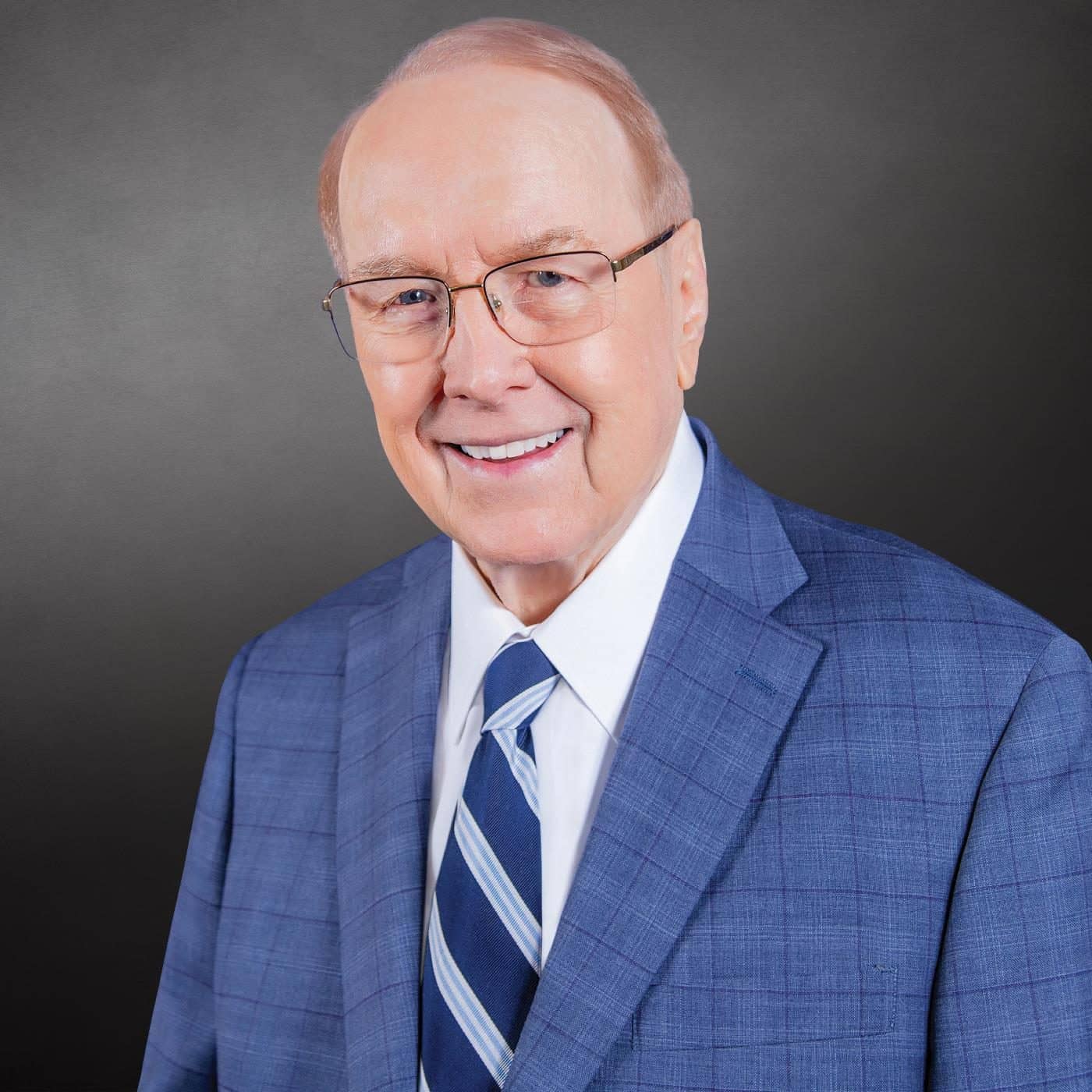

Join Dr. James Dobson and special guest Lauren Green in a thought-provoking conversation about finding and holding onto faith when society seems to lose its way. Lauren shares personal stories from her journey towards a profound and resilient faith, discussing the importance of God’s laws and their innate design to help us thrive. Additionally, they delve into the interconnectedness of music and academic development, emphasizing the crucial role of understanding both scientific and scriptural principles as covenants for living purposeful lives.
SPEAKER 03 :
You’re listening to Family Talk, the radio broadcasting division of the James Dobson Family Institute. I am that James Dobson, and I’m so pleased that you’ve joined us today.
SPEAKER 01 :
Well, welcome to Family Talk featuring psychologist and bestselling author, Dr. James Dobson. I’m Roger Marsh. You know, in a world where truth seems increasingly blurred by cultural confusion, how do we find our way forward? Well, that’s the compelling question at the heart of today’s Family Talk conversation. Our guest is Lauren Green, who has served as Fox News Channel’s chief religion correspondent since 1996. She’ll be joining Dr. Dobson to discuss her powerful book called Lighthouse Faith, God as a Living Reality in a World Immersed in Fog. What happens when society abandons absolute truth? Well, we’re seeing some of those examples in the culture right now. So how can believers maintain moral clarity when surrounded by relativism? And what does it mean to have faith that acts as a guiding lighthouse through life’s storms? Lauren Green brings her years of experience covering religious events worldwide to this thought-provoking discussion about finding God’s unchanging truth in an ever-changing culture. So here now is Dr. James Dobson with his special guest, Lauren Green, to introduce today’s edition of Family Talk.
SPEAKER 03 :
Well, greetings, everyone. I’m James Dobson, and we want you to help us today. I want you to help welcome our guest, Lauren Green. I know that many of you will recognize her name and you’ve seen her on television. She is Fox News chief religion correspondent and a lady with, I’m telling you, a long list of accomplishments and honors. You’ve no doubt seen her on special assignments with Fox, and she always handles her work with skill and poise. Lauren provided live coverage for Pope Francis’ ascendancy in 2013. She did that from Rome, and she has also provided live coverage of Pope Benedict XXVI’s his visit to the U.S. in 2008. She’s a concert pianist and has interviewed many classical musicians, including Placido Domingo and Joshua Ball, and the list just goes on. Laura covered the Van Cliburn Piano competition. And she also was at the opening night at the Metropolitan. And she’s a beautiful lady. In fact, she was Miss Minnesota in 19 blah, blah. Yeah, we want to go into that.
SPEAKER 05 :
Let’s leave those last two digits off.
SPEAKER 03 :
You also were third runner-up in Miss America title about the same time.
SPEAKER 05 :
Yes, yes, third runner-up.
SPEAKER 03 :
You’ve had quite a history.
SPEAKER 05 :
Well, I thank you very much. First of all, thank you for having me on your show. And it’s just such an honor. I’ve listened to you for a long time over the years. So first I focused on the family and now family talk. So I’m a big admirer.
SPEAKER 03 :
Thank you. And, of course, you have a new book, Lighthouse Faith. We’re going to be talking about that today, too. And the subtitle says, God as a Living Reality in a World Immersed in Fog. That kind of describes our culture at this time, doesn’t it?
SPEAKER 05 :
Well, there are a lot of gray areas out there. You know, my original title for the book was, you know, The Lighthouse God as a Living Reality. And the publisher suggested, you know, maybe kind of speak to people’s lives, you know, a world immersed in fog. Because, you know, some of the realities out there are not realities at all. There’s just sort of reality. Things that we sort of create in our minds.
SPEAKER 03 :
Describe that fog for me.
SPEAKER 05 :
Well, think about it is that the vast majority of decisions a lot of people are making are not based on what’s right or wrong, but wise choices, things when the moral rules really don’t apply. Should I go to this job or should I take this job? What decides which job you take? Well, that takes wisdom, and that takes years. But the idea of a reality, of a world immersed in fog, it means that the truth has been – shaded over. The truth is not clear to anyone. What we’ve got is a sort of a secular humanist world that says, I can decide what’s right and wrong for myself.
SPEAKER 03 :
There’s no absolute truth.
SPEAKER 05 :
Right, and there’s no absolute, there’s no objective truth. When I’ve asked people, do you believe there is an objective truth or objective right or wrong that exists outside of yourself? Then they say yes. But when you ask them is something objectively wrong, they say, well, no, I have to decide what’s right or wrong for myself. You see? So that’s the fog. Where do you get the idea that you can decide what’s right or wrong for yourself? I have total control of my life. And then I ask, well, did you decide who your parents were? No, I did not decide who my parents were. Did you decide when you were born, what day you were born, the year you were born? You decided none of that.
SPEAKER 03 :
You know, I grew up in a Christian home. I want to talk about your home because you didn’t. But I did. And the world made a lot more sense to me when I was younger than it does today because the culture has drifted and shifted. And like you say, a lot of people don’t even know what they believe. And many people don’t believe anything. But there are others that just don’t have a clue. Right.
SPEAKER 05 :
Well, I would like to say that I actually did grow up in a Christian home in the sense that— I misunderstood that. We went to church. We believed in God. We believed in Christ’s sacrifice. But it wasn’t the kind of faith where you walk out in faith. This is how I described, you know, Dennis W. Miller at Princeton University who created a faith and works community. a department at Princeton University. And he said a lot of us were just sort of breathing the air of Christianity. We’re kind of living off the capital of Christianity without really understanding and digging deep down into its doctrines. And I think that describes a lot of people. I think that describes my home, my household. But as I say, you know, we believed in God. We said prayer before a grace before meals. I said prayers at night. So there was nothing in me that said that God did not exist. But what happened was, and I believe this, is that I was… In a world that was starting to get darker and darker and darker as the secular world and secular culture started to sort of redefine what right and wrong was. You know, abortion, you know, abortion rights, you know, fighting about abortion. I remember having this discussion with one of my friends in junior high about it was abortion right or wrong. I remember in the sixth grade when we were talking about evolution. And one of my dear friend who was – whose father was a minister and she had a very, very bad argument with the teacher who wanted to bring in – This is the evolutionary concept and she believed something else. So my age of growth, my coming of age came at a time when there was a lot of questioning authority, questioning the authority of the Bible as well as questioning the authority of the government, of the presidency, of everything. And I think that had an effect on how I saw God.
SPEAKER 03 :
So you had a faith journey that has been a little uncertain or rocky along the way. When did you really put your feet down and say, this is for real. This is worth everything I invest in it for my whole life.
SPEAKER 05 :
I think it was a journey of time. I remember in graduate school and I was at Northwestern studying at Medill and getting a master’s degree in journalism and going to Second Baptist Church in Evanston, Illinois and having this emotional journey. response to faith and realizing at that point I needed to be baptized. I hadn’t been baptized. I thought I was when I was a child, but I didn’t realize that my church did not baptize children. So I took the step of faith and became a baptized Christian at that time. And that was the moment where I said, yes, I put my faith in Christ. And it’s a journey. And even when you do, it’s still a journey. You know, you’re still a new Christian. You’re In Christ. And so there is a journey that happens.
SPEAKER 03 :
Paul said we see through a glass darkly. We see through a dark glass. And we won’t know until we get to the other side. All that culture has confused within us. But he’s real and he’s there. And I’ve given my whole life to him. And I think I’m hearing that you have too. Yeah.
SPEAKER 05 :
I remember going to a church in State College, Pennsylvania, and hearing a sermon for the first time that actually made sense to my life. And it was the first time I’d ever heard a sermon that applied to my life. And that made me hungry for more. I needed to find out more. And I think that began this whole journey of being baptized, of reading, of Of, you know, finding the right church, finding the right, you know, scriptures, finding this wealth of direction that was in the Bible that I had never known. I mean, I know people who had read C.S. Lewis when they were teenagers. I had no idea about C.S. Lewis. And I wish I had. I didn’t read. I didn’t know about Francis Schaeffer. I didn’t know about Spurgeon and all of these great minds, you know, this wealth of knowledge that was out there. And I didn’t know. I just didn’t know. And now I’m voracious. I’m a voracious reader of, like, who’s next? Who’s next on the list? I just happened to go to a really great church, you know, in New York, Redeemer Presbyterian.
SPEAKER 03 :
You’re getting opportunity now through your work. Yes. To really get acquainted with some of the bright lights of Christendom, aren’t you?
SPEAKER 05 :
Oh, absolutely. But, you know, even before that, I was incredibly interested in it. Lauren, you titled your book Lighthouse Faith.
SPEAKER 03 :
Explain what that is.
SPEAKER 05 :
Lighthouse Faith is because of the imagery of the lighthouse. And I talked about this in the morning, the devotion about the lighthouse is the emblem of God’s love and his law. I mean, you can’t have one without the other. You know, if God is love, like water is wet, then the laws that we see every day, you know, the scientific laws, the laws about who we are, these are covenants. These are part of his love for us to create laws, to create boundaries. That’s love. And the other part of the law is that the lighthouse has in shape and in structure is like the Ten Commandments. There’s this beacon on the top, which is the first commandment. I am the Lord your God. You shall have no other gods before me.
SPEAKER 03 :
You say that all the other nine are based on that first one.
SPEAKER 05 :
Right. You can’t violate two through nine without first violating number one. That’s how comprehensive these laws are. Why did I do this, right? Why did I think these thoughts? Or why did I commit even adultery, right? It’s because something else was more important to me than the living God. And so that to me was, that’s the lighthouse. If we’re made in the image of God, then we too have this beacon in us that needs to connect with God.
SPEAKER 03 :
Is the lighthouse the scripture?
SPEAKER 05 :
The lighthouse is God’s word. It is who God is, right? Well, God has two books. He has, you know, the book of nature, basically, which testifies to him constantly, you know, Psalm 19, the heavens declare his glory, right? So, the created world is talking to us physically. constantly glorifying God. That’s the book of nature. And then they have the scripture. That’s the other book. And these two go hand in hand. These two are together. So the lighthouse is God in both his elements. And so that’s why I bring together the structure of the Ten Commandments as a sort of template for all law. It’s like God’s logo on everything. And us too. And so we can’t operate. We can’t live without being connected to that light. How do you process pain and suffering without understanding the sacrifice of Christ on the cross?
SPEAKER 03 :
So the lighthouse faith is a faith that is informed by God.
SPEAKER 05 :
those two sources yes and it looks to god for that objective sense that objective stance of truth objective reality i can feel a lot of things give an example i love jelly beans i love jelly beans you see i have a whole bowl of them i love jelly beans but i shouldn’t be eating jelly beans no matter how i feel about jelly beans jelly beans are not going to be good for me Right? No matter how I feel. Well, that’s not so bad. Let’s take another example. This is a classic example of a fish. A fish exists in water. This is how a fish thrives. No matter how confined you think the fish is in water, a fish can only survive in water. If you try to liberate the fish from the water, it will die.
SPEAKER 04 :
Yeah.
SPEAKER 05 :
You see? And so when you understand that God’s law is the water in which we need to thrive, if you take us out of that and we say, no, this doesn’t apply to me. I can live however I want. You see? And you pay a price for it. You pay a price for it. And it may not happen immediately. And this is what gets most people is that the arc of your destruction can be very, very long. And people sometimes don’t even realize it over a period until it’s almost too late. It can happen over a lifetime, 10, 15, 20 years. And then people wonder, why did he self-destruct? I mean, I don’t want to use names, but I mean, I see this every day in news. Let’s just give an example of somebody who’s a prominent person who gets involved in a hit and run and then leaves, leaves the scene. Why did he leave the scene? Did he just turn into that person who gets away with everything at that moment? I don’t want to be held responsible. No. His entire life has been going along step by step trying to skirt the rules, trying to get around what was right or wrong. My little lie here at 10 years old now is created at 30 years old, a bigger lie. that I can walk away from. You see, it’s a process. And the same way with somebody who does something, fraud, financial fraud, you know, all of those crimes are very common these days in the financial industry. How did that happen?
SPEAKER 03 :
And in politics.
SPEAKER 05 :
And in politics. It’s because at some point, somebody takes a little turn to this way because it’s not important, because it’s just a little lie. It’s just a little… fraud until the next time, the next time, the next time. It’s like a train track that if, you know, all you do is push one little lever and the train goes in another direction. At first, it doesn’t seem like it’s a totally different direction until it gets 50 miles down the road and you realize it’s in a totally different direction.
SPEAKER 03 :
Let me give my own illustration on that. I’ve run Christian Ministries for 40 years and I find that keeping it on track is is not unlike the satellite Pioneer 10, which went to Saturn, more than a billion miles away. And if the rocket is going to get there and arrive where it’s supposed to, there are little jets on the side of that rocket that just, it’s a little squirt that moves it or corrects the trajectory. If somebody’s not doing that, It can miss by five billion miles because you have to have that little correction that takes place. If you look at the Ivy League schools, they started out being totally committed to Christ. They were Christian institutions. Designed to train ministers. Yeah, that’s exactly what their purpose was. But now they’ve changed. You completely missed the mark because you didn’t make those little corrections. We all have to do that in our lives. And our consciences will guide us to say that really was not good.
SPEAKER 05 :
Right, right.
SPEAKER 03 :
What you did there, you shouldn’t do that again. And you repent of it and you make the little corrections. Make the corrections. And keep it on track. But it is not only for an institution like those I was responsible for, but also for us as individuals. Because we press toward the mark. You don’t allow it to vary. And then you find out you’re in big trouble.
SPEAKER 05 :
Oh, absolutely. I mean, it’s the classic case of the Israelites being given God’s law and the rituals of sacrifice and the laws that went around them. And then being so enamored with that process in itself, they forgot the reason behind the law in the first place.
SPEAKER 03 :
Yeah.
SPEAKER 05 :
And that’s kind of what happens to Christians who become more interested in the ritual rather than the relationship.
SPEAKER 03 :
Lauren, you came here today. And I gave a devotional to our staff. I told you earlier that everybody on our staff, in order to work here, has a commitment to Christ and a determination to serve Him. And that’s one of the qualifications to work here. And so you came and spoke to them today. And I couldn’t be there this morning, but you spoke on the Psalms. You love the Psalms, don’t you?
SPEAKER 05 :
I do love the psalms because, you know, as a musician, of course, I love the psalms because they’re songs to God. They’re songs. But the psalm I talked about most is the Psalm 119, which is the longest single chapter in the Bible. And it sits right in the middle of it. It’s 176 verses. It’s an acrostic poem, which means eternal. Each letter of the first stanza of the eight is a letter of the Hebrew alphabet. It starts with Aleph and then Bet and then it goes down. And we lose that in the translation. As you translate the Bible into the various languages, we don’t understand. But usually most of the translations have the Hebrew letter name and the beginning of each eight stanzas. You actually kind of understand what that means. People don’t understand that about their Bible. That’s the reason why you have it, because it’s an acrostic. It’s alphabetical, according to the Hebrew alphabet. And so Psalm 119 is 176 verses, and it’s the largest single chapter, but it is a virtual love song to God’s laws. It’s a love song to the law of God. And I thought it was an incredible, powerful understanding of this psalm, because it’s right in the middle of the Bible. Right? You’ve got the law given to the Israelites in the Old Testament moving towards— That was not an accident, I’m sure. Exactly. And then as you leave Psalm 119, you’re going towards the birth of Jesus and the New Testament. And I think that it’s a very, very telling position for this psalm, which is a virtual love song to God’s law.
SPEAKER 03 :
Are you speaking at various venues? Do people invite you to speak?
SPEAKER 05 :
Well, they can. Anybody can invite me. They can certainly get a hold of me, and I will certainly go. I actually spoke a few weeks ago at North Greenville University. I also spoke at Patrick Henry College outside of D.C. It’s a great little school. It’s a wonderful little school. And so this is my first book, and it took me about 10 years to write. Did it really? Between the research and the interviews— A lot of the research was done with scientists as well as theologians because I was a 2009 Templeton Cambridge fellow. I went to Cambridge University, lectured to many of the scientists who – at the Faraday Institute for the Study of Science and Religion. And so a lot of the science is in there about bringing these two elements of science and faith together that if there is a god – this is my take. If there is a god, then he’s totally understanding of what the science is. He created it.
SPEAKER 03 :
And to me – There’s no contradiction. Exactly.
SPEAKER 05 :
There’s no contradiction. Not only that, I look at the nature around us and whatever science has discovered about it, I take it as covenants because it’s a covenantal God. He created it. So to me, they’re not just natural laws or scientific laws. They’re covenants that God has given us for the purpose of human flourishing.
SPEAKER 03 :
Mathematics is closely related to music and so on. Oh, my goodness. Absolutely. Is science for you an outgrowth of your love for music and the mathematical aspect of your training?
SPEAKER 05 :
I think so because one of the consistent things we’ve seen in the past is how music is – very much a part of a scientist’s background. Have you seen the movie Hidden Figures? No. Talking about the black women who helped put a man into space in NASA because they were basically called human computers and they had incredible math skills and they called them computers. And one of the consistent things about their background is that they were all musicians and played in church. And it’s a very consistent study that music, particularly piano, I believe, because I’m a pianist, trains the brain in a way that only music can to look at scientific problems, technology.
SPEAKER 03 :
You know, that’s kind of related to the code breakers in World War II who were able to decipher both the Japanese and the German codes. Yes.
SPEAKER 05 :
Music is probably the most important element of an academic training that’s not directly related to academics. I was told, and I should probably look this up, that the Japanese actually include music as part of the curriculum of their academics, of their education process, because they understand how much it influences how a child thinks.
SPEAKER 03 :
That is true. I’ve read that. Yes.
SPEAKER 05 :
So this is something that America really needs to understand. And one of the things that I would love to do, and I keep talking about this, is create what I call the Piano Forte Project to bring piano curriculum into the schools as a conservatory. Not as something to be fun, but as a conservatory so that they actually start learning and processing and growing and having exams and juries and getting to the next level and having requirements.
SPEAKER 01 :
Well, in a culture that’s drifting like a ship without an anchor, Lauren Green’s lighthouse metaphor illuminates how God’s unchanging truth can guide us through even the thickest fog. Friend, you’re listening to Dr. James Dobson’s Family Talk and a special conversation Dr. Dobson had with our special guest, Lauren Green of the Fox News Channel. To hear today’s program again or to share it with a friend, go to drjamesdobson.org forward slash Family Talk. That’s where you’ll also find information about Lauren Green’s insightful book called Lighthouse Faith, God as a Living Reality in a World Immersed in Fog. The biblical principles discussed today here on Family Talk represent the heart of our mission at the Dr. James Dobson Family Institute. We are committed to preserving and promoting marriage, family, and faith today. If it’s easier, you can make a secure donation online when you go to drjamesdobson.org. Well, I’m Roger Marsh inviting you to join us again next time for the conclusion of Dr. Dobson’s fascinating conversation with Lauren Green from Fox News Channel. That’s coming up right here next time on the next edition of Dr. James Dobson’s Family Talk. The voice you trust for the family you love.
SPEAKER 02 :
This has been a presentation of the Dr. James Dobson Family Institute.
SPEAKER 03 :
Hello, everyone. This is James Dobson inviting you to join us for our next edition of Family Talk. Every day we come to these microphones with someone in mind, whether it’s a busy mom looking for tips on discipline or a husband who wants to learn more about connecting with his wife. We want to put an arm around your family in any way that we can. So join us next time for Family Talk, won’t you?