
Explore the rich narrative of Jephthah’s life and the pivotal moments that defined his faith. Discover how he navigated personal challenges and societal rejection to become a figure of great influence and spiritual strength. This episode also examines the significance of Jephthah’s vow, offering insights into the principles of integrity, the weight of promises, and the grace of God in times of trial. Join us for an insightful exploration of a story that underscores the timeless virtues of resilience and divine purpose.
SPEAKER 01 :
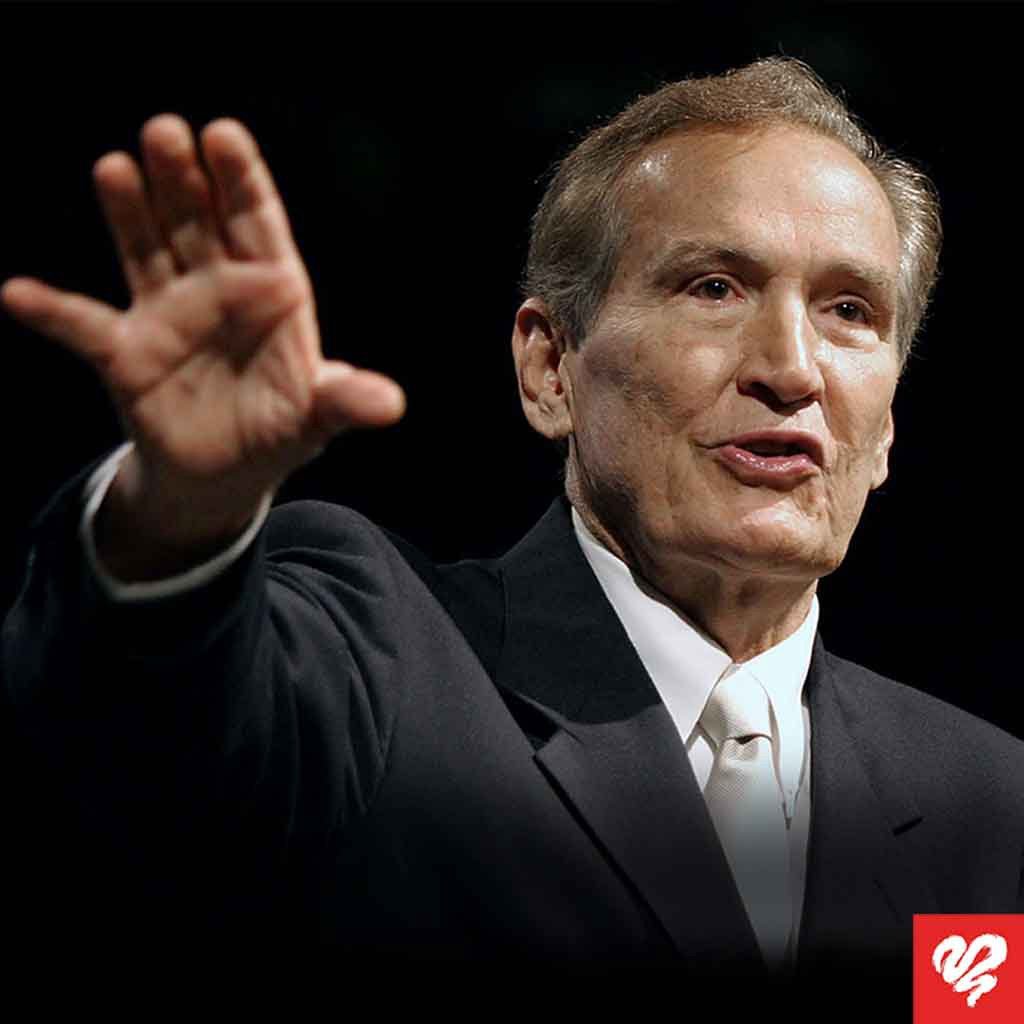
Known for his unique ability to simplify profound truth so that it can be applied to everyday life, Adrian Rogers was one of the most effective preachers, respected Bible teachers, and Christian leaders of our time. Thanks for joining us for this message. Here’s Adrian Rogers.
SPEAKER 02 :
The title of our message, Men of Strength. The great need today is for men, real men, men of character. Men of integrity. Men that will stand. Men of strength. America’s in trouble because America’s homes are in trouble. And America’s homes are in trouble because men have failed to be the men of God that they ought to be. One man was not behaving like a man and someone said, what are you, a man or a mouse? He said, well, he said, I must be a man. My wife’s afraid of a mouse. We need some men today. We’re going to study about a man today who was a real man, and he was a man of faith. His name was Jephthah. Now, most of us have not heard of Jephthah, but God has heard of him. And when God wrote in Hebrews chapter 11 of the great heroes of the faiths, He listed this man’s name in verse 32. Didn’t tell anything about him, but just says, Jephthah was one of these mighty men. And now we’re going to look at him today and we’re going to find out the marks of his character. What made him such a mighty man, a man of steel, a man of strength? What was his character like? He was one of a handful of men that God put in the hall of fame there in Hebrews chapter 11. Well, we’re in Judges chapter 11, and I begin reading verses 1 through 3. Now Jephthah The Gileadite was a mighty man of valor. Right away we know something about him. He was a man of strength, a mighty man of valor. And he was the son, oh, watch, of an harlot. And Gilead beget Jephthah, And Gilead’s wife bare him sons, and his wife’s sons grew up. And they thrust out Jephthah and said unto him, Thou shalt not inherit our father’s house, for thou art the son of a strange woman. And Jephthah fled from his brethren and dwelt in the land of Tob. And there were gathered vain men to Jephthah and went out with him. Now here’s a man, anybody ever had a background that he could use for an excuse? It was Jephthah. First point, I want you to see his character, his character in the face of great difficulties. Listen, you need to learn today to be unshackled by the past. You need to quit making excuses for your background. Stop blaming your circumstances. And forget all this psycho babble about what’s wrong with you now is somebody else’s fault and something that happened to you some time ago. Jephthah was the son of a harlot. He was an illegitimate child. Let me say this, there are no illegitimate children in the truest sense of the word, only illegitimate parents. Every child has a right to live, and I’m glad he wasn’t aborted. But in today’s lingo, he was an illegitimate child. And as a result, he was looked down on by his half-brothers who disowned him. They said, you’re not going to share in the inheritance. Actually, he was exiled. He was driven out. The Bible tells us that he was in a consort of vain fellows. That is, he had a bad environment. He’d known failure and rejection and poverty. Now today, everybody would say, well, we don’t expect much of Jephthah. He has an excuse if he turns out bad. The psychologist and the sociologist would say he’s not to blame. It’s all somebody else’s fault. He is the creature of his environment. Today we do that, don’t we? We use our background as an excuse. There is in our world today a war on guilt. Nobody is to be responsible anymore for what they do wrong. It’s somebody else’s fault. To feel guilty is considered unproductive. And so the word guilt is obsolete. It’s an affront to our dignity and to our self-esteem in this day where meology has taken over from theology. Here’s what one advice column said. Do you read these advice columns in the newspapers from these eminent theologians? Here’s one that says, quote, it’s not your fault. The first step you must take is to stop blaming yourself. Your compulsive behavior is not your fault. Refuse to accept blame. And above all, do not blame yourself for what you cannot control. Heaping guilt on yourself only adds to your stress. low self-esteem, worried depression, feelings of inadequacy, and dependence upon others. Let go of your guilt feelings. And Ann Landers has helped us to want to live in this no-fault society. Here’s what she wrote. Quote, One of the most painful self-mutilating time and energy-consuming exercises in the human experience is guilt. Quote, It can ruin your day or your week or your life if you let it. It turns up like a bad penny when you do something dishonest, hurtful, tacky, selfish, or rotten. What she’s saying, if you do something dishonest, hurtful, tacky, selfish, or rotten, don’t feel bad about it. Never mind that it was the result of ignorance, stupidity, laziness, thoughtlessness, weak flesh or clay feet. You did wrong and the guilt is killing you. Too bad. But be assured, the agony you feel is normal. Remember that guilt is a pollutant and we don’t need any more of it in the world. Get rid of guilt. Get rid of guilt. Get rid of guilt. It’s somebody else’s fault. That’s exactly what this man Jephthah could have said. Hey, don’t blame me. If anybody ever had a bad background, I am not a perpetrator. I am a victim. We have a generation today of victims. I mean, nobody’s responsible. We’re just casualties. And our sin is not sin. It’s sickness. It’s disease. It is a dependency. We’re not an alcoholic or a druggie. We have a chemical dependency. We’re not a glutton. We have an eating disorder. We’re not a sex fiend. We are sexually challenged. Somebody else’s fault. Guilt’s out of date. We were sitting around and I said to Joyce, I want a root beer float. And so I began to rummage around there and we did have some root beer. And I opened the freezer and I looked in there and there was a big thing like this of frozen yogurt. And I loved what it said on the label. It said, guilt free. Boy, I got that out. Man, I could eat that. No guilt. Do what you want. That’s the reason today the therapy industry is booming. I mean, people are spending millions for people to tell them that they’re not sinful, they’re sick, they’re not responsible. Don’t think of yourself as a sinner. You come and you can be my patient. What your problem is, you’re an addict. You know, we’ve got sex addicts and gambling addicts and nicotine addicts and anger addicts and wife-beating addicts and child-molesting addicts and debt addicts and self-abuse addicts and envy addicts and failure addicts and overeating addicts or whatever. The problem with all of this is just simply this. If you make a wrong diagnosis, you’ll never get the cure. Jesus did not die for mistakes. He died for sin. Stop blaming your past. Stop saying it’s somebody else’s fault. You’ll never rise to be what you ought to be. The Bible teaches that guilt is real. That we are responsible. But the Bible teaches that grace is wonderful. And forgiveness is free and full. And here was a man. He had a bad birth and a bad background. But the Bible teaches that if we were born wrong the first time, we can be born again. We can be a royal blue blood, a child of the King. And if you’ve had a rough background, just remember that just may be the black velvet on which the diamond of God’s grace is displayed. I think in the Bible of those who came out of great difficulty to great power. Think of Joseph. He also was disowned by his brothers and sold as a slave and lied about and slandered and rotted in prison. But his abasement… was God’s plan for His advancement. And the Lord many times will humble a man before He exalts him. And if the devil has been against you, remember this, that God often uses the sword… that Satan has sharpened to cut off Satan’s own head with, just like David cut Goliath’s head off with Goliath’s own sword. The power of God is greater than all the odds that are stacked against you. And the grace of God is greater than all of your sins. And stop making alibis and stop making excuses. Here was a man that had a bad background. but he’s listed in the Hall of Fame. He’s listed in the Hall of Fame. And so see his character in the face of difficulties and disentangle yourself from the past. All right? Quit living in the past. Quit trying to say, well, I’m just a victim. I’m just a bundle of bad genes or a victim of psychological muddles. and say, I can be what I ought to be by the grace of God today. Now here’s something else about this man that I want you to notice. Not only his character in the face of difficulties, but I want you to see his confidence in the face of danger. His confidence in the face of danger. Now look in verse 4. And it came to pass in the process of time. By the way, a man used to keep this part of this text on his desk. It said it came to pass. That’s all he had. He said, if I’m having too good a time, I know it’s going to pass. But if trouble comes, it’ll pass too. It just came to pass. In the process of time that the children of Ammon made war against Israel. And it was so that when the children of Ammon made war against Israel, the elders of Gilead went to fetch Jephthah out of the land of Tob. Now he must have already had a reputation now for being a good and honorable and a strong man because they said, send for this man that we’ve cast out. And they said unto Jephthah, come and be our captain that we may fight with the children of Ammon. And Jephthah said unto the elders of Gilead, Did ye not hate me and expel me out of my father’s house? And why are ye come unto me now when you’re in distress? And the elders of Gilead said unto Jephthah, Therefore we turn again to thee now that thou mayst go with us and fight against the children of Ammon and be our head over all the inhabitants of Gilead. And Jephthah said unto the elders of Gilead, if you bring me home again to fight against the children of Ammon and the Lord deliver them before me, shall I be your head? I mean, if you bring me back to battle and I win the battle for you, will you follow me? Will I be your leader? And the elders of Gilead said unto Jephthah, The Lord be witness between us if we do not so according to thy words. Then Jephthah went with the elders of Gilead, and the people made him head and captain over them. And Jephthah uttered all his words before the Lord in Mizpah. You can tell right now, here was a man who had great confidence in God. He was a man of faith. I don’t have to worry about it. I don’t have to think about it or apologize about it, stutter, stammer, or wonder about it. I know that I know that I know that I know he was a man of great faith because he’s listed in Hebrews chapter 11. These are the men of faith. Here was a man that somehow, out of a bleak background… out of people hating him and despising him, even his own flesh and blood, had somehow seen God. I mean, he somehow had an insight into the things of God, and he had character in spite of difficulties, and he had confidence in spite of danger. The foe did not faze him. He’s not fettered by his fears. Fear is a dark room where negatives are developed. But this man had faith, incredible faith. Read it sometime. Put in your margin Hebrews chapter 11 verse 32. And what shall I more say? For time would fail to tell me of Gideon and of Barak and of Samson and of Jephthah and David also and of Samuel and of the prophets. I’d say he’s in a pretty good list of names, isn’t he? Now, we don’t read much about him in the New Testament except for this one statement. But you know, it’s kind of interesting to me. They cast him out. And then in their trouble, they run to him. Just like America, this proud nation of ours, we live high, wide, and handsome. Then we get in trouble. We turn to God, don’t we? Can’t pray in schools, but somebody said in one school, in case of an atomic attack, the rules against public prayer are immediately suspended. We come to God in times of trouble. This man’s confidence was not in himself. It was in God, but I like what he said. He said, all right, you’ve sent for me. Now you need me. And I know it’s not me that you need, it’s God that you need. But he said, I want to ask you a question. If I give you the victory… If I deliver you, will you then follow me? Will I be your head? Will I be your leader? You know, I see right here a glimmer of the Lord Jesus Christ. Jesus despised and rejected. And yet when we are convinced of our sin and our difficulty, we say, Lord God, come and help me. But Jesus will ask you exactly the same question. If I deliver you, Will I rule over you? Will I be your head? He is the head of the church. Friend, I want to tell you very clearly and plainly that unless He is your sovereign, He’ll never be your Savior. How much like our Lord was Jephthah, those who despised him and rejected him and hurt him and cast him out, those were the ones that he came to save. And so in verse 11, we see that he goes to God in prayer before he ever begins the battle. Before the battle ever begins, he goes to God in prayer. And he asked God for strength. And Jephthah went to the elders of Gilead and the people made him head and captain over them. And Jephthah uttered all his words before the Lord. He does this before he goes to battle, not afterward. Prayer. It was not his last resort. It was his first thought. He enters into battle in prayer. Don’t ever claim to be a man of strength if you’re not a man of faith. And never claim to be a man of faith if you’re not a man of prayer. Two things I want you to see about Jephthah already we’ve seen. Number one, he was not bound by the past. And number two, he was not bound by the foe. not bound by his enemies, not bound by danger. There’s something about this man. He could unshackle himself from the past and refuse to let present dangers intimidate him. I wonder what dangers are facing you right now. I wonder if you can know to get on your face before God. Tell God all about it. And remember that greater is he that’s in you than he that’s in the world. That’s what a man of strength is. But here’s the third thing. And I want us to focus even more tightly on the third thing. I want you to see not only his character in the face of difficulty. His confidence in the face of danger. But I want you to see and listen carefully. His commitment in the face of disappointment. His commitment… In the face of disappointment. Now I’m going to read an extended passage, but I want you to listen to it carefully. I’m going to begin in verse 29. Then the Spirit of the Lord came upon Jephthah, and he passed over Gilead and Manasseh, and passed over Mizpah of Gilead. And from Mizpah of Gilead he passed over unto the children of Ammon. Now watch this. And Jephthah vowed a vow. That is, he made a promise unto the Lord and said, If thou shalt without fail deliver the children of Ammon into mine hands, then it shall be that whatsoever cometh forth out of the doors of my house to meet me when I return in peace from the children of Ammon shall surely be the Lord’s And I will offer it up for a burnt offering. God, these Ammonites are wicked and they’re cruel and they’re fierce. Lord, I need your help. And God, I’m going to make you a solemn promise. Lord, if you will give me the victory. If you will allow me to come home victoriously. The first thing that comes out of my house to meet me when I come back, whatever it is, that’s yours, Lord. And it will be offered up to you. Then verse 32, So Jephthah passed over unto the children of Ammon to fight against them, and the Lord delivered them into his hands, and he smote them from a roller, even unto thou come unto Minoth, even twenty cities, and unto the plain of the vineyards, and so forth. And then verse 34, And Jephthah came to Mizpah unto his house. And behold, are you watching? And behold, his daughter came out to meet him with timbrels and with dances. And she was his only child. Beside her, he had neither son nor daughter. And it came to pass when he saw her that he rent his clothes and said, Alas, my daughter, thou hast brought me very low and thou art one of them that trouble me. For I have opened my mouth unto the Lord and I cannot go back. And she said unto him, My father. If thou hast opened thy mouth unto the Lord, do to me according to that which hath proceeded out of thy mouth, forasmuch as the Lord hath taken vengeance for thee of thine enemies, even of the children of Ammon. Have you got the picture? Lord, I need you. Oh, God, I’m in a battle against my enemies. God, I want to make a promise to you of how… LORD, IF YOU WILL GIVE ME THE VICTORY, I’LL SACRIFICE THE FIRST THING THAT MEETS ME AND COMES OUT OF MY HOUSE WHEN I GET HOME. GOD GIVES HIM THE VICTORY. AND THEN WHEN HE GETS HOME, OUT OF THE HOUSE, DANCING AND LEAPING WITH JOY IS HIS BEAUTIFUL DAUGHTER. CAN YOU IMAGINE THE SITUATION? What would you have done? What is all of this about? I know your mind is going 10,000 miles an hour if this is the first time you’ve ever really noticed this passage of Scripture. Well, let me relieve your mind and tell you that this is not human sacrifice. And Jephthah, from my study of the Word of God, did not kill his daughter. No man would have made a vow concerning human sacrifice if he had been a man of God. Now look at it in context. And we’re slowing down here a little bit. But it’s important that you see this. Look, if you will, in verse 29. Then the Spirit of the Lord came upon Jephthah. Now whatever he’s saying, he’s saying with the anointing of Almighty God upon him. Remember this, that he was a man of faith. And he was led by the Spirit. Now the Bible expressly condemns human sacrifice. Now had this man been an ungodly man, and had this been a thoughtless promise, and not a promise impelled and led by the Holy Spirit, then we could say, well, perhaps he carelessly and thoughtlessly promised to sacrifice for a burnt offering anything, and now he had to kill his daughter. Put in your margin Deuteronomy chapter 12 and verse 31. That’s one of the verses in the Bible that deal with human sacrifice and shows that God has strictly forbidden it. Thou shall not do so unto the Lord thy God, for every abomination to the Lord which he hateth have they done unto their gods. Talking about the Canaanites. For even their sons and their daughters they have burnt in the fire to their gods. God said don’t do that. So we know that Jephthah was led of the Spirit of God, and the Spirit of God would never lead Jephthah to contradict the Word of God. Well, what’s the answer to this? Well, look, if you will, in verse 31, and here’s the clue. Here’s what Jephthah said, “…and it shall be that whatsoever cometh forth out of the doors of my house to meet me, when I return in peace from the children of Ammon, shall surely be the Lord’s, and I will offer it up for a burnt offering.” Now look at the word and, A-N-D. That same word may be translated and is translated or. Let’s read it this way. When I return in peace from the children of Ammon, shall surely be the Lord’s, or I will offer it up for a burnt offering. That is, it’s going to be consecrated to you, Lord, for your service, or it’ll be a burnt offering. Because he didn’t know what was going to come out of the door. So he’s just simply saying, Lord, the choice is yours and I can trust you. What comes out of the door? It’ll be consecrated to you or it’ll be a burnt offering. And God, I can trust you to do the right thing. The Spirit of God was upon him. So his beautiful daughter came out of the door. and he kept his vow, he consecrated her to the Lord. We say, Pastor, why then was that such a great disappointment to him? Here was a man, a family man, who’d not really known the joys of a family when he was a child. Here was a man who had hoped, like every Hebrew, that he would be a part of the line of Messiah, that the Savior would be in his descendancy. And what girl in Bible times did not have the true value of being a wife and a mother? But he gave his daughter over to being a perpetual virgin. That is, her life is to be separated, never to get married, but to serve the Lord. And Jephthah knew that he would have no grandchildren. Look in verse 37. And she said to the father, let this thing be done for me and let me alone two months that I may go up and down upon the mountains and bewail my virginity and my fellows. That is, I’ll never know the joys of a home and a baby. And he said, Go. And he sent her away for two months. And she went with her companions and bewailed her virginity upon the mountains. And it came to pass at the end of two months that she returned unto her father who did with her according to his vow which he had vowed. And she knew no man. And it was a custom in Israel. That is that someone would be set aside to perpetual virginity. To serve the Lord. I guess the counterpart of that today we would look on as some that we call nuns. Verse 40 says, And that the daughters of Israel went yearly to lament the daughter of Jephthah. They don’t speak of her as dead but as living. And the word lament here may be translated to talk with. They went yearly to see her. To talk with her. And what I’m trying to say is this. that here was a man, a man of strength, a man of steel, a man who refused to be shackled by the past, a man who refused to be bound by his enemies, but a man who was bound by his word, by his word. Now, here it is. Character… In the face of difficulty. Confidence in the face of danger. And friend, commitment in the face of disappointment. Now, if there’s anything that the men of this generation need to learn, it is to keep your word. Keep your word. Listen to this scripture. Numbers chapter 30 verse 2. If a man vow unto the Lord or swear an oath to bind his soul with a bond, he shall not break his word. He shall do according to all that proceedeth out of his mouth. That’s why he was a strong man. Listen to Deuteronomy 23 verses 21 and 23. When thou shalt vow a vow unto the Lord thy God, thou shalt not slack to pay it, for the Lord thy God was surely required of thee, and it would be sin in thee. But if thou shalt forbear to vow, it shall be no sin to thee. God says you don’t have to make the promise, but if you make it, you’d better keep it. You keep your word. Verse 23, that which is gone out of thy lips, thou shalt keep and perform even a freewill offering, according as thou hast vowed unto the Lord thy God, which thou hast promised with thy mouth. You say, Pastor, what if a man does make a wicked vow, a wrong vow? Should he keep a wrong vow? Absolutely not. If you make a wrong vow, a wicked vow, it was wrong for you to do it and you need to repent of it. But if you make a righteous and a holy vow, you need to keep that vow. Now tell me what we need today are some men of strength who keep their word. Men of their word. Think of the promises that people make. Think of people who join churches and and promise to be faithful to their church and they’re not. Think of men who stand at the altar and promise to be faithful to their bride till death. They break their word. Think of men who break their word to their family and their friends and their children. Think of politicians who stand up and take an oath of office with their hand upon the Word of God and become dishonest liars. Think of people who’ve made commitment to the lordship of Jesus Christ. And they don’t keep their word. I’m telling you, sirs, that what we need today are some men. Men not shackled by the past. Men not fettered by the enemy. But men who are bound to their word. Lord, I thank you. I thank you, Lord, for your Word. Thank you for this man, Jephthah, who because he believed your Word, kept his Word. God, give us men who’ll stop making excuses. Give us men who are not intimidated by the enemy. And give us men who will stand by their Word and their promise to their church, to their family, to their children. And yes, Lord, to you, and help them to do it as Jephthah did when the Spirit of God came upon him by your might. In Jesus’ name, amen. Now, the reason that Jephthah was a man of faith was he knew the Lord. Now, faith is the gift of God. You don’t manufacture it. Don’t say, well, it’s not my fault if I don’t believe. It is your fault if you don’t believe because God has dealt the measure of faith to every man. Whosoever will may come. Salvation is the gift of God and the faith to believe for salvation is the gift of God. So what is the good news today is this. If you want to be saved, you can be saved. Whosoever will may come. You say, well, I need faith. God will give it to you. Just say, God, I want you. Help me to believe you. And He will. He will. Now, the Bible says… Believe on the Lord Jesus Christ and thou shalt be saved. Now that word believe doesn’t mean just intellectual belief. It includes that, but it means trust. Trust. Commitment. Trust Him. Commit your life to Him and you’ll be saved. And if you’ll pray a prayer like this, God, I know I’m a sinner. I cannot save myself. I know that you love me and you want to save me. Jesus, I believe you’re the son of God. I believe you paid my sin debt on the cross. I believe that God raised you from the dead. And I trust you now to save me. Say, Lord, save me. Lord, save me. And he will.
SPEAKER 01 :
If you would like to learn more about how you can know Jesus or deepen your relationship with Him, simply click the Discover Jesus link on our website, lwf.org. For a copy of this message or additional resources, visit our online store at lwf.org or call 1-800-274-5683. Thank you.