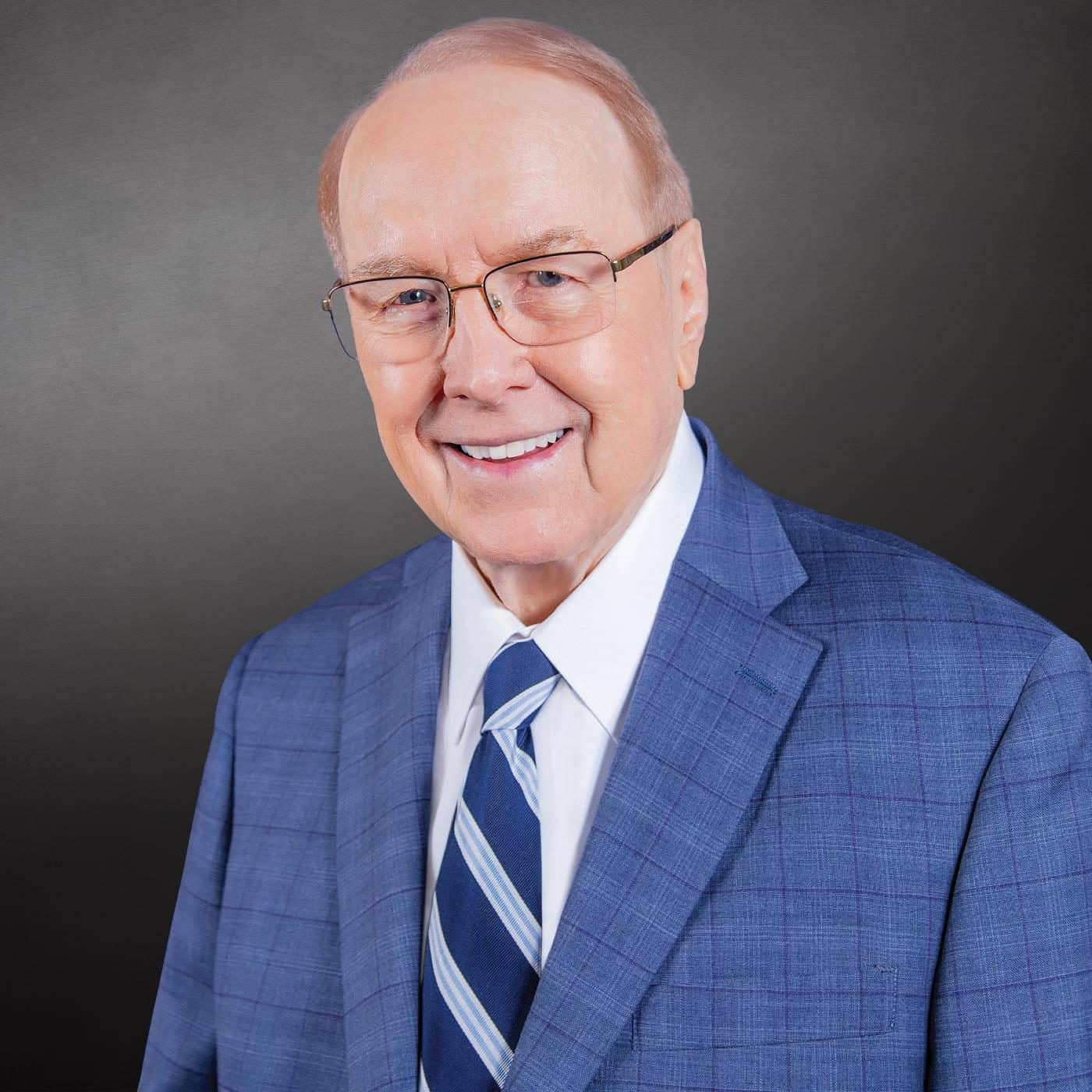
In this insightful episode of Family Talk, Dr. James Dobson and Bob Beal delve deeply into the transformative world of mentoring. With decades of experience, Bob Beal, founder of Master Planning Group International, shares invaluable wisdom on how mentoring can shape individuals and leaders alike. They discuss the nuances between mentoring and discipling, offering a clear perspective on the importance of personal, agenda-free relationships that foster growth and potential.
SPEAKER 04 :
Welcome everyone to Family Talk. It’s a ministry of the James Dobson Family Institute supported by listeners just like you. I’m Dr. James Dobson and I’m thrilled that you’ve joined us.
SPEAKER 01 :
Well, welcome to Family Talk. I’m Roger Marsh. Have you ever wished someone would come alongside you? Someone who truly believes in your potential and wants to help you succeed? Or maybe you’re on the other side of that equation, hoping to pour your wisdom and experience into someone younger. Well, on today’s edition of Dr. James Dobson’s Family Talk, we’re bringing you a classic conversation from our archives about the life changing practice of mentoring. Our guest is Bob Beal, founder of Master Planning Group International. For nearly five decades, Bob has consulted with over 500 senior executives and invested an estimated 50,000 hours in one on one mentoring sessions. His book, Mentoring, How to Find a Mentor and How to Become One, has helped countless people experience the power of these transformative relationships. In this timeless conversation, Dr. James Dobson and Bob Beal explore what mentoring really is, why it matters, and how you can either find a mentor or become one. Here now is Dr. Dobson.
SPEAKER 04 :
Bob Beal is with us today. Bob has been here a number of times before. He has written a book on mentoring. In fact, the title of it is Mentoring, How to Find a Mentor and How to Become One. And Bob came here and we did a program with him on the original version of this. Bob, it has now been expanded and brought up to date and you’ve got it in its fourth printing.
SPEAKER 03 :
It’s in its fourth printing and… When I first started writing on mentoring in 92, I was the only one I think that seemed to me that was interested. Howie Hendricks and I were writing on it some. But today it seems like everyone is interested in it because it’s a topic who has come of life, come of season. And people have watched people like Eddie Harwood and Jim Dobson. relating over the years and seeing the impact that has and saying what an incredible part that is of a leader’s development.
SPEAKER 04 :
Bob is the president of Master Planning Group International. That’s a consulting firm that equips companies in the area of personal and organizational development. Not just companies, but ministries, organizations, spiritual organizations.
SPEAKER 03 :
Churches, large or fast-growing churches, nonprofit organizations, for-profit companies. and government agencies.
SPEAKER 04 :
And Bob has mentored over 400 clients and has met one-on-one with over 3,500 executives. His son, Jay, and my son, Ryan, were skateboard friends a long, long time ago. That was a while ago. It sure was, and they’ve both grown up, and I’m proud of Ryan. I bet you’re proud of Jay.
SPEAKER 03 :
You bet. Absolutely.
SPEAKER 04 :
Well, let’s talk about mentoring, Bob. And I think we ought to just begin with the basics. What is it? What is mentoring? What is a mentor?
SPEAKER 03 :
And why is it important to us? I’m glad you asked because so many people have a misconception about mentoring. Let me give you the ideal definition first. Mentoring is ideally a lifelong relationship in which the mentor is helps the protege realize her or his God-given potential. That’s ideal. It’s an Eddie Harwood staying with you, helping you realize your writing potential over the years. And it’s a relationship that… As Jay Kessler, who was the president of Youth for Christ and then Taylor University, said, your mentors are some of the people that won’t be looking at their watch at your funeral. There are people that care for us and want to see us do well, believe in us, and are encouragers and affirmers of us. Now, that’s an ideal. It’s a lifelong relationship like that, or you and Jerry Jenkins. the reality is some mentoring relationship lasts for a year or two years or five years and then drift apart or blow apart or something. Just because they aren’t all ideal doesn’t mean there isn’t an ideal. The ideal is a lifelong relationship in which the mentor helps the protege realize her or his God-given potential.
SPEAKER 04 :
Well, so what, Bob? Why does it matter? Why should there be mentors?
SPEAKER 03 :
There are three real, real fundamental reasons. The first is the one that everyone understands, and that’s the word momentum. In other words, you’re old enough to remember the roller derby on television when they used to have teammates.
SPEAKER 04 :
Are you kidding? I’m old enough to remember World War I. Not quite, but it feels that way.
SPEAKER 03 :
A teammate would come along behind you, and you’d put your hand back, and you’d whip around, and it would just accelerate your progress.
SPEAKER 04 :
It was a forerunner to World Federation of Wrestling.
SPEAKER 03 :
There you go. But basically that whip is what mentoring is about, that a mentor sees something or has an experience that the protege comes along behind, but the mentor with that hand back can, with his experience or her experience, move the protege from trial and error to track record, and it just accelerates everything. The momentum is the number one advantage that most people are aware of in the mentoring relationships.
SPEAKER 04 :
In order to make it successful, the personalities have to click.
SPEAKER 03 :
You have to have someone you enjoy being with or the mentoring relationship won’t last two days. The second major advantage, however, is what I call the mountain of life advantage, and that is this. A lot of people, as you pointed out, because of the mobility in our society or whatever, are sort of – On the mountain of life alone. They’re up to maybe 2,000 feet, climbing with their hands, no safety ropes. It’s a nice blue sky day, but all of a sudden a freak storm comes up and that mountain ice is over and we’re up there all alone. And there may be a person listening today that says, I feel I’m all alone on the mountain of life. And a rainstorm has come. I’m freezing. I don’t have any safety ropes. If I drop, it’s like who’s to care? I say that is one of the main advantages of having a mentoring relationship is there’s someone to care whether you live or die and they have a safety rope on you that will hold you if you fall. Then the third tremendous advantage of mentoring is the maturity process. So many, about a third of the men that I work with in small groups admit they have a question about their own manhood. But where do you go to talk about manhood? It’s in the intimacy of a mentoring relationship that you can discuss issues like that that you used to discuss with your uncle, but the problem is your uncle is 3,000 miles from here, or maybe your dad wasn’t sure of his own manhood. So where do you go to discuss those issues and those issues of maturing as an individual, man or woman? happen in the mentoring relationship. So the three main advantages.
SPEAKER 04 :
Would you say that the Apostle Paul’s relationship with Timothy was a mentoring relationship?
SPEAKER 03 :
Not really, no. I think that it was more of a discipling relationship. I think the best biblical model for mentoring is actually Barnabas and Paul. Remember, Barnabas was the son of encouragement. He was the guy that believed in Paul even when the other disciples weren’t ready to accept him yet. He was the one that came, introduced him, said, look, he is a good person. Let him into the fellowship here. He’s the one that would negotiate problems, et cetera.
SPEAKER 04 :
So Barnabas was the mentor and Paul was the mentee.
SPEAKER 03 :
Yes, Barnabas was the mentor. Paul was the protege. Whereas Timothy was more of a disciple. Paul was there telling him, Timothy, you need to do this, you need to do this, you need to do this.
SPEAKER 04 :
Okay, you’ve got to define the difference between that. What’s the difference between mentoring and discipling?
SPEAKER 03 :
There’s a huge difference. And the reason this is such a critical subject, Jim, is that the church doesn’t understand it, frankly. A lot of churches think, well, because we’re discipling people, we’re mentoring them. Not true. The question is, whose agenda are you on? In a discipleship role, Paul was not on Timothy’s agenda. Paul was on Paul’s agenda saying, Timothy, here’s what you need to do. You need to learn how to pray this way, read the Bible or read Scripture, that kind of thing. He was there helping Timothy grow up but telling him what he needed to do to be a mature believer. Whereas Barnabas was on Paul’s agenda. Barnabas wasn’t on Barnabas’ agenda. The whole mentoring relationship is basically defined by two fundamental, profoundly simple questions. What are your plans and how can I help? Basically, Barnabas knew that Paul had plans of what he could do if the disciples would accept him. He basically knew they were the plan and said, Paul, here’s how I can help. Or what are your plans and how can I help? And he said, well, do you know Peter and do you know John? And could you sort of bridge the relationship there? And am I saying discipleship is wrong? Absolutely not. That is what the church should be doing. It should be taking new believers and bringing them through the disciplines of Scripture, through praying and reading the Bible and tithing and those kind of disciplines. That’s critical. But it doesn’t at the same time assume a relationship. In other words, let’s say most of the discipleship that goes on in churches today, you can have ten people that you’re discipling through a ten steps to maturity, be there for ten weeks and say goodbye to all of them and not even like them necessarily, but you’ve taken them through and shown them how to do it. But a mentoring relationship is where you’re relationally connected. We have that natural chemistry where there’s chemistry that goes on.
SPEAKER 04 :
You mentioned a few minutes ago that there might be somebody listening to us who feels all alone, who’s on the icy mountain by themselves, who would love a relationship like this. And they don’t have it. I don’t think there are just a few like that. I think there are multiple millions like that who go to work or are staying home raising kids. They go to church on Sunday and they don’t have anybody in their life committed to them.
SPEAKER 03 :
The other thing Howie Hendricks talks about mentoring is being like two junior high kids at a dance, both waiting for each to ask. And what happens, Jim, based on what you’re saying there, let’s say you’ve got a young person 25, 30 years old in the church, and they’re aching for someone to sort of connect with them relationally, not just socially, not just sort of say, hi, how are you doing? How are the kids? How’s the gas mileage? But rather… What’s happening in your life and how can I help? But the problem is historically people don’t know who should ask. Should the protege ask the mentor to be a mentor? Should the mentor offer to be a mentor to the protege? And without knowing which is which, they both hesitate. I say ideally the mentor sees some person that they really believe in, has a natural chemistry with, and would like to see them do well. The mentor goes to the protege, say, hey, let’s have a cup of coffee. They sort of date relationally to see if the chemistry is good before they just jump into the mentoring relationship. You should sort of get to know someone a little bit. But the mentor ideally says to the young leader, hey, let’s have a cup of coffee. Let’s just talk. And it drifts, like you were saying, into family issues and like that. And then the mentor comes back to the young protege and says, you know, you have incredible potential in life. I really believe in you. I like you. I’d like to make you an offer. I’d like to offer to be one of the mentors in your life. Now, be careful not to say the mentor in your life because that takes on too much responsibility. But one of the mentors in your life. And what I mean by that is simply this. Whenever we get together in the future, I want to ask you two questions. What are your plans and how can I help? That’s the ideal. But if no one is coming to you and you’re saying, would someone please come and offer that to me? I’m saying don’t hesitate. Initiate. Go to a mentor, someone, the two or three people that you know personally that you like, you think they like you. You think, boy, I’d like to have that person for a mentor. Ask them for a cup of coffee. Go out, see what the natural chemistry is, and then say, you know, would you ever consider being one of my life mentors? All right. Initiate both ways.
SPEAKER 04 :
How do you deal with this danger or what might be perceived as a danger? And let me give an illustration. A number of years ago, Ryan and I went deer hunting. And he was too young to shoot, and I didn’t shoot at a deer either. But we were sitting there in the early morning fog talking and just kind of being father-son. And a doe came out into the clearing about 100 yards away. from us and began coming our way. I had no intention of shooting her, but we just watched her. She didn’t know we were there. And there was a machine that dropped high-quality corn every morning and so the deer would get used to coming and eating it and she very skittishly made her way to where we were we were not far away then and and we just sat and watched her and she came and she had a very good breakfast and then she scurried off very quickly before she would get in trouble And I said, Ryan, take note of what happened there. You will find in life, unexpectedly, in the clearing, high quality corn that somebody has set in front of you. And all you have to do is take it. Ryan, when that happens, be careful because somebody is sitting in a blind, not very far from you, ready to blow your ears off. You know, you have to be Careful when something is too good to be true and somebody is offering you a lot of themselves with nothing in return. How do you keep from being exploited for whatever reason by a mentor with a personal objective in your relationship?
SPEAKER 03 :
Personal agenda.
SPEAKER 04 :
Yeah.
SPEAKER 03 :
I would say the basic logic of a gem is very, very similar to a marital relationship. Because when you start dating, you don’t really trust that person all that much. You learn to trust them. The more you’re with them, the more you expose of yourself. The more you learn what they’re really after. They just after sex or they are talking about marriage or that kind of thing. And then after you’re married for a while, you realize that they have needs, but you can help them. And it’s sort of a growing, progressive, mutual trust. And I think there’s a natural barrier we have up to disclosing too much of ourselves to anyone. And I think that over time in the mentoring relationship, that has a chance to come down. It comes down to trust, doesn’t it? It comes down to, I trust this person more and more, to trust more and more of who I am, what’s in my heart to them.
SPEAKER 04 :
Speaking of them wanting some sexual favor, you do not recommend… that men mentor women or girls or vice versa?
SPEAKER 03 :
No. One of the relationships I’m proud to say I’ve had over the years is a very close relationship with Dr. Bill Bright, the founder of Campus Crusade. I probably spent 50 days with him one-to-one. And I’ve only asked him for two favors. And he was generous enough to offer many more, but I only asked him for two favors, one of which is to read the mentoring booklet, not the book, but the booklet before I printed it because I said I want to expose this to the crusade team and I don’t want to have something that’s real contrary to what you’re thinking. In that edition or that draft, that rough draft, I had put I would not recommend – it would not be ideal for men to mentor women or women to mentor men. He came back and he said, Bob, I would recommend that you – he only had one change, one suggestion. He said – I would recommend that you say it’s never that way. Because he said what happens is the minute you get into a close, intimate relationship, and a lot of people have never had that kind of intimacy before, they begin confusing it with sexual things and it begins to go crazy. Now, I still stand by that. Men should not be mentoring women and women mentoring men. But let me show you something I’ve seen over the last 10 years. It’s just almost always the same. When I meet with men, they say, Bob, I am desperate for a mentor. So I help them find who are the two or three people that you have a relationship with at church or somewhere you know that you could have a cup of coffee with, see where the relationship goes, talk to them about mentoring and so on. They can always name two or three for me. When I talk with women, they have a similar response. I am desperate for a mentor. The problem is when I say who are the two or three women that you know that are professional women that are ahead of you in ways that have relationship, typically they cannot name one. They say my mother was a homemaker. My aunts and like that have all been homemakers.
SPEAKER 04 :
What’s wrong with being mentored by a homemaker?
SPEAKER 03 :
Why do you have to be a professional? Nothing wrong with being mentored, a life mentor, but in terms of a professional mentor. That can give me sort of that whip at work, that accelerated momentum at work. They’re thinking, who could be my mentor in terms of professional mentor is what they’re thinking at that moment. And I’m saying women want mentors as desperately as men but often don’t have one. It’s just an interesting observation.
SPEAKER 02 :
It almost sounds like this is a one-way street, though, and I know that you don’t believe that. What does the mentor get out of this relationship? Because there may be that person right now who says, I’ve got all this life experience, I’ve got all the knowledge, and I really want to find somebody to kind of pour my life into as well. Yes.
SPEAKER 03 :
I wrote a book called Why You Do What You Do where I explain there are eight needs people have. And it’s the only eight I’ve ever found after hundreds and thousands of hours of interviews. Only eight needs people ever have. One of which is the need for significance. Now, some people on a scale of one to ten rate that need as a two for them. Making a significant difference isn’t that important. But a lot of people rate it a ten plus. I want to make a significant difference, period. And they see a lot of times they feel like I’m in a job where I don’t feel it is significant. It’s just not making any difference in life. And they see mentoring as an avenue to make a significant difference by pouring their life experience into someone that can help accelerate them, can help them on the mountain of life, can help them mature. And they feel that if I can make a significant contribution to that person’s life, that’s all I need out of it.
SPEAKER 04 :
Bob, I think I hear you saying that having a mentor is not the same thing as having a good role model.
SPEAKER 03 :
No, it is not.
SPEAKER 04 :
What’s the difference?
SPEAKER 03 :
You could have a role model on television.
SPEAKER 04 :
Not likely.
SPEAKER 03 :
But you could have Christian speakers. Let’s say a Christian person that’s on TV a lot could be a role model for you, but there’s no relationship there. That’s the uniqueness of mentoring. There’s always a relational, a two-way relationship. By the way, another interesting thing, one of my mentors in life was my father-in-law, Joe Kimball, who died recently. And for years, he was the person whipping me along, bringing me network and people and all that kind of thing and helping me with the manhood and all that kind of stuff and just a variety of approaches to things. There got to be a point at which I became sort of a mentor to him. And we basically became what I consider maturity in the mentoring relationship is a mutual mentoring where it depends on in some cases I had experience he didn’t have in some cases he had experience I didn’t have and so we just got together as mature friends at that point and I think Ideally, a mentoring relationship matures into mutual mentoring and a friendship, a deep, long-lasting, over-the-years friendship. That’s the ideal end of it.
SPEAKER 04 :
Let’s take an example here in closing because we’re almost out of time. Suppose you had something really tough that happened at work in a given day. Somebody said something that stung you, that hurt, or your boss didn’t understand you. You worked really hard on something and your boss looked at it and didn’t think it was worthy. And you come home really wounded. Would it be appropriate to pick up the phone and call your mentor and say, help me cope with this? I’m not sure what to do next.
SPEAKER 03 :
Absolutely. That touches on another subject, which is should mentoring relationships be always formalized or aren’t most mentoring relationships just informal anyway? Absolutely. I say the reason you would actually discuss it and formalize the relationship is what you’re touching on right now. When you ask yourself this, there have been people in your life who have built into your life, believed in you, et cetera. But if in 2 o’clock in the morning something like that was eating you and you’re about to get out the revolver and put it to your head, would you feel comfortable calling those people? The answer is typically not really. But if the person had said to you, Jim or Chris, look, as your mentor, A midnight call, a 2 in the morning call before you jump out of a window or blow out your brains or leave your wife, to me, is not an inconvenience. It’s a command. Before you do anything stupid, you call me at 2 in the morning. I don’t care what time it is. You call me. If they had said that to you, then you’ve got this thing at 2 in the morning. You just can’t live with it anymore. It’s that serious. You have access to that person. So it involves a deep commitment. Absolutely. Absolutely.
SPEAKER 04 :
Bob, we’re out of time. I want to talk some more about this subject to you. Make sure that we understand the how-tos. How do you find a mentor? How do you convey that? What do you do if you ask them to mentor you and they say no? Then you’re wounded. You were alone before. Now you’re doubly alone. Let’s talk about all that next time.
SPEAKER 03 :
Okay.
SPEAKER 01 :
Well, whether you’re climbing the mountain of life alone or you have someone holding that safety rope, today’s conversation reminds us that we were not meant to do life in isolation. You’re listening to Dr. James Dobson’s Family Talk. And today we featured a classic conversation that Dr. Dobson had with Bob Beal discussing the power of mentoring. If you missed any portion of today’s broadcast, remember you can always hear it again at jdfi.net. And once you’re there, you’ll also find information about Bob Beal’s book. It’s called Mentoring, How to Find a Mentor and How to Become One. And while you’re on our website, I want to share with you about a helpful free resource we’ve created for married couple. It’s called The Undeniable Differences Between Husbands and Wives. Drawing from Dr. Dobson’s decades of research and counseling experience, This digital download explores the fundamental ways that men and women think, feel, and approach relationships differently. It’s our gift to you. All you have to do is go to JDFI.net and search for that title, The Undeniable Differences Between Husbands and Wives. You can download it for free at JDFI.net. You know, for nearly 50 years, Dr. James Dobson dedicated his life to strengthening families through biblical principles and practical wisdom. And these daily broadcasts carry forward that mission, bringing his timeless insights to new generations of parents, couples, and families who need them. The Dr. James Dobson Family Institute exists to preserve and share this legacy, equipping you with the truth and guidance that stands firm no matter what challenges you face. If today’s broadcast encouraged you, I invite you to join us as a partner in this work. Your gift, regardless of the size, helps us continue sharing Dr. Dobson’s wisdom with families all across America who desperately need it. To make a secure donation, visit JDFI.net. That’s JDFI for James Dobson Family Institute dot net. or you can call a member of our constituent care team. That number is 877-732-6825. Once again, 877-732-6825. Well, I’m Roger Marsh, and from all of us here at Family Talk and the Dr. James Dobson Family Institute, thanks so much for listening today. Be sure to join us again next time right here for part two of Dr. Dobson’s fascinating conversation with Bob Beal, coming up on the next edition of Dr. James Dobson’s Family Talk, The Voice You Can Still Trust. This has been a presentation of the Dr. James Dobson Family Institute.