
Join us as we uncover the striking connections between Micah’s prophecies and contemporary societal issues. From the corrupt hearts of ancient leaders to God’s unwavering desire for redemption, this episode reveals profound insights. The discussion also touches on the role of government in upholding moral values and how prayer can impact believers worldwide, as illustrated by stories from the World Prayer Team.
SPEAKER 01 :
the foundation ye saints of the Lord is laid for your faith
SPEAKER 02 :
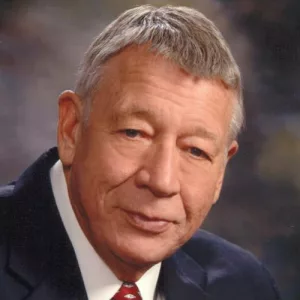
God’s judgment and redemption. That’s what we’ll be studying as we dig into the Old Testament book of Micah here on Through the Bible. I’m Steve Schwetz, your host, and our teacher, of course, is Dr. J. Vernon McGee. And though it was written long ago, Micah’s message is actually surprisingly current. He condemns violence, corruption, robbery, covetousness, gross materialism, spiritual bankruptcy, and illicit sex. Sounds like it could be written today, doesn’t it? Before we get started, though, here’s a quick introduction by Dr. McGee recorded years ago. It’s a poem sent to him about God blessing his word through prayer.
SPEAKER 03 :
Some time ago, I got a poem from Newport News, Virginia. Well, it’s not Shakespeare and it’s not Shelley. And it doesn’t happen to be any other great poet, but it’s a good poem, and I like it. Dactylic hexameter is not being displayed here, but I like the poem, and maybe you might like it. He says, “…with greetings and thanks to a man named McGee, whose messages daily bring comfort to me. I love as he speaks in his southern drawl, telling out God’s salvation still offered to all. He always speaks slowly in words, clear and plain. If he didn’t, these words would bring no one much gain.” Whether speaking on Hebrews, Ezekiel, or John, there’s always a message to carry us on. The letters he read from those lands far and near prove God’s Word hasn’t lost its own power to bring cheer. From people in Europe and India, too, we hear the good news of what God’s Word can do. I pray for this brother both day after day, asking God to keep blessing his word as I pray. And may there be many still wandering in sin who will hear of the Savior and let him come in.
SPEAKER 02 :
What a great heart behind those words. That gentleman may not have known it, but he certainly was a member of our world prayer team. Have you heard about this incredible group of prayer warriors who support through the Bible’s ministry across the globe? Each day we pray for a specific language group and region, and as we lift others up, we see God working, not only in their lives, but also in our own hearts. But don’t just take my word for it. Here is what a couple of our team members have shared recently. Kathy from Washington writes this. Being on the World Prayer Team has been the best thing. The stories remind us that while we may differ in many ways, at our core we are all the same. We all share concerns for our health, our loved ones, and ultimately our deep need for Jesus. The stories that bring me the most joy and often move me to tears are from those who must be secretive about their new faith in Christ. I try to imagine being in their situation, and it prompts me to pray for them throughout the day. Hearing how God is using modern technology to bring his word to people in their heart languages is so exciting. I often thank him for those who do the translating and for the voices that bring Dr. McGee’s teaching to life in other languages. Enclosed is my contribution to help keep the Bible bus running strong wherever it goes. Well, thanks, Kathy, and it’s a joy to partner with you in God’s work. Here’s a note. This is from Ken in Texas. The World Prayer Team helps me keep a Christ-centered perspective on nations and people. It reminds me that even in countries hostile to Christians, there are still faithful believers among them. As I pray, I’m also motivated to pray for my community. And you know, Ken, that’s a great point. I’m so glad that you’re on our team as well. If you’d like to join us in praying for God’s whole word to reach his whole world, then you need to sign up today, my friend. Just go to ttb.org forward slash pray. Let’s do that now. Heavenly Father, thank you that you’re at work across the world drawing people to yourself. And as we study, would you open our hearts to receive your truth and then help us to not only hear it, but to live it out daily, bringing glory to you in all that we do. In Jesus’ name we pray. Amen. Here’s Dr. J. Vernon McGee with our study of Micah 1 on Through the Bible.
SPEAKER 03 :
Now today, friends, we come to the little book of Micah. Back in the Old Testament, one of the minor prophets, it contains seven chapters. It’s a little bit longer than the last couple that we’ve looked at. And it’s a very important little book. I think maybe I’m repeating myself. I’ve said that about every book that we’ve come to in the Bible. And each one of them serves a very definite purpose. And we need to keep that in mind. I would like to just say a word concerning this man, Micah. And I think very important that we know something about him as well as his message. His name means who is like Jehovah. And the word has the same derivation as Michael, the archangel. And that means who is like God. And there are many Micahs in the scripture. But this one here is identified here in the very first verse. as a Moreshite, the word of the Lord that came to Micah, the Moreshite, in the days of Jotham, Ahaz, and Hezekiah, kings of Judah, which he saw concerning Samaria and Jerusalem. Now, that gives us a great deal of information. The place that he came from is Moresheth Gath. And it’s a place that is about 20 miles southwest of Jerusalem near Lachish. And he is not to be confused with any other Micah of Scripture. We need to keep that before us also. Now, we are told here that he prophesied during the reign of Jotham, Ahaz, and Hezekiah. And they’re kings of Judah. And his prophecy concerns Samaria and Jerusalem. Now, Samaria was the capital of the northern kingdom of Israel, while Jerusalem was the capital of the southern kingdom of Judah. So here is a man who actually comes from the southern kingdom, but a great deal of his prophecy has to do with the northern kingdom. Now, it was at the particular time when the northern kingdom was being attacked by Assyria as well as the southern, but the northern kingdom was taken away into captivity by Assyria. Now, we’re told here that it was during the reign of these three kings. He was therefore a contemporary of Isaiah. and also Hosea and Amos, and that was along about the last part of the 8th century B.C. So that we have here a pretty good background for Micah. We can know a great deal about him. And he was apparently a friend of Isaiah. His prophecy has been called a miniature Isaiah. It’s sort of a mini Isaiah, or Isaiah in shorthand. They’re very striking similarities, and we’ll call attention to them as we go through. Now, it was the German higher critics of many years ago who made an attack upon the unity of this book. It was Ewald and Welthausen. And they made the same attack, of course, upon Isaiah. And frankly, the attack that these men made way back yonder has been pretty well answered by conservative scholarship today so that we don’t need to waste time delving into that particular part. And the very interesting thing is that Micah is actually quoted by Jeremiah. Many of you will recall that when we were in Jeremiah that I called particular attention to that because it was unusual and it reveals the importance of Micah in that day. And over in the 26th chapter of Jeremiah, In verse 18, I’d like to read that again. It says, Micah the Moreshite prophesied in the days of Hezekiah, king of Judah, and spoke to all the people of Judah, saying, Thus saith the Lord of hosts, Zion shall be plowed like a field, and Jerusalem shall become heaped And the mountain of the house is the high places of a forest. And the interesting thing is that they paid no attention to either Jeremiah or to Micah. And that is exactly what happened to Jerusalem. Probably no city has been left in a shambles and in ruin and wreckage as much as the city of Jerusalem has been. Now, the theme of Micah is, to me, very important because the emphasis has always been put on judgment, that Micah is the prophet of judgment. Well, actually, it would seem that that is true. Because in the first three chapters, you have a great emphasis on judgment, and that’s what it is. But from chapter 4 through 7, and that is 4, 5, 6, 7, you have four chapters that are given over to that which is not judgment at all. In other words… The first three chapters are denunciatory, and the last four chapters are consolatory. And the great question that we find that he asks, and it’s one of the loveliest passages in the scripture, who is like unto thee? That is, unto God. And we find that he emphasizes that as he goes along. Who’s like unto God in proclaiming? That is, in witnessing in the first three chapters. And then who’s like unto God in prophesying, in consoling the people, chapters 4 and 5. And who is like unto God in pleading, chapter 6. And who is like unto God in pardoning. That is the wonderful thing that you have in this little book here that makes it a very wonderful little book. So we’d like to say that actually the theme here is the judgment and redemption of God. Both are here. And the key verse to me is Micah 7, 18 that I’ve just given. “‘Who is a God like unto thee, who pardoneth iniquity, and who passeth by the transgression of the remnant of his heritage, who retaineth not his anger forever, because he delighteth in mercy?’ Now, God hates sin, but he loves the souls of the sinners, and he wants to save them. You see, judgment is called God’s strange work, and it’s strange because he doesn’t like to do it. He’d rather not. But he’s a holy God and he hates sin. And any rebellion against him, since he is God, must be dealt with. It couldn’t be otherwise. But he still loves the souls of the sinners and he wants to save them and will save them. Now, let me give you a statement that I have in my notes concerning his style. Because you and I are coming now to one of the remarkable books as to style. If you appreciate literature, if you appreciate poetry, if you appreciate that which is beautiful in language, you’ll appreciate Micah. Now, let me give you the statement I have on this. And I’m reading now from my notes. For many, this is the favorite of the minor prophets. The writing is pungent and personal. Micah was trenchant, touching, and tender. He was realistic and repertorial. He would have made a good war correspondent. There is an exquisite beauty about this brochure which combines God’s infinite tenderness with his judgments. There are several famous passages which are familiar to the average Christian, though many do not know even where it comes from in the Bible. Through the gloom of impending judgment, Micah saw clearly the coming glory of the redemption of Israel. And this makes this quite a remarkable book. And I’d like to add a further comment here that we have made in our notes. Micah pronounced judgment on the cities of Israel and Jerusalem and Judah. These centers influenced the people of the nation. These were the urban problems that sound very much like our present-day problems. Micah condemns violence. Corruption, robbery, covetousness, gross materialism, spiritual bankruptcy, and sex. He could be labeled the prophet of the city. Well, that’s a label been given by someone else. Now, I think that the way you can divide the little book is very interesting. That starts off in verse 2. Hear, all ye people. That’s the first division. Then when you get to chapter 3, you find this again. And I said, here I pray you, O heads of Jacob. And then you keep turning over and you’ll come to chapter 6. And here it begins, hear now what the Lord saith. So that you can divide it according to the here’s that we have. And so we have in the first three chapters, proclaiming future judgment for past sins. Then in chapters 4 and 5, you have prophesying future glory because of past promises. And then you have in the third major division, chapter 6, and you have present repentance because of past redemption. And I put in this fourth division. pardoning all iniquity because of who God is and what He does. And that’s chapter 7. Now, that gives you the rundown on the little book. So many, especially young preachers, have written in. They want to give exposition, and they want to know how to begin. And I would say this not only to young preachers, but to anyone who wants to study the Bible. The first thing that you should do is to get a grasp of the message of the entire book. What’s it all about? What’s he trying to say? What is the main message that you have? And therefore, you need to get an outline of the book. And therefore, here it’s, who is it God like unto thee in proclaiming and in prophesying and in pleading and in pardoning? And that divides the little book. Now, that brings us to this first chapter and the first division. And the first three chapters, we have proclaiming future judgment for past sins. The first three chapters. Now, we have in this little book some very striking statements. And we will be looking at one of them, the first one here in this first chapter. We won’t get to it today. But in practically every chapter we have, and I say practically in every chapter, there will be a very striking statement that will be made. And sometimes it’ll be one verse. Sometimes it’ll be many verses, as it will be here in this first chapter. So we have here the prophet’s first message is directed against Samaria, and it reaches to Jerusalem. That is chapter 1. Now, will you note here in verse 1, and I want to read it again, the word of the Lord that came to Micah, the Moresh Thites. in the days of Jotham, Ahaz, and Hezekiah, kings of Judah, which he saw concerning Samaria and Jerusalem. Now, again, let me repeat. Samaria is the capital of the northern kingdom. And one of the golden calves that Jeroboam had made was put in Samaria. It was the place that we talked about before because it’s been before us. It was built by Omri and it was really made famous or infamous, I should say, by Ahab and Jezebel. And it’s built in a very lovely location. But it’s in absolute ruins today. I have a message that I give on the Antichrist, and I show pictures, slides that I took on a trip that we made to that land, and we visited Samaria. And it certainly is in ruins today. Probably no place is as much in ruins as this place is. But it certainly tells the story. And Micah’s prophecy concerning Samaria has been literally fulfilled. Now, Micah, he’s from southwest of Jerusalem. He’s in the kingdom of Judah. But he prophesies to both kingdoms. But actually, this main message is to the northern kingdom. And I’ve often wondered about that. He’s a contemporary of Isaiah, and he was a younger man. I have a feeling that he felt that Isaiah, being the senior prophet to the southern kingdom, would take care of them. And so God directed him to speak to the northern kingdom. And he makes it very clear to whom he’s speaking. You’ll never misunderstand Micah because he’ll let you know the ones to whom he’s speaking. And that brings us here to verse 2, where he makes this statement. Hear, all ye people. Now, this begins this first main division. He’s going to proclaim future judgment upon Samaria. Hear all ye people. Now, all ye people means all the people, friends. That means you, way out yonder, wherever you are today, he’s talking to you. This has a message for us today, and as we’ve seen, that although the prophets spoke into a situation that has long since disappeared, and even the kingdom has disappeared, But their message is relevant for today because certain great principles are put down. Actually, the thing I’d like to mention here is that Micah, as several of the other prophets, gives us a philosophy of human government. He deals with that which is false and true authority in government. This would be a good book for the Democrats and the Republicans to consider in Washington today. Wouldn’t hurt them to look at God’s philosophy of government because, very candidly, their form is not working today. And the reason they can’t make our form work is because it was put together by men Several of them were not Christians, couldn’t be called Christians, but they had respect and reverence for the Bible. And they felt that the great principles stated in the Bible were worth following. And therefore… That was woven into the web and woof of our government. And a group of godless men, they can’t make it work. And it will never work in the hands of godless men. And that, friends, frankly, is our problem. Our problem today in this country is not a question of this party or that party, and it’s not a question of whether this will work or that will work. And there are all kinds of rationalizing today of what our problem is. But our problem today is that our government is in the hands of godless men, and it won’t work. Because, you see, there is a philosophy of government given in the Bible, and these men of the past were acquainted with it. And actually, the form of government is not important. That’s not the important feature at all. We think it is today. Did you know that Cromwell was a dictator in England? And they had about the best form of government they could possibly have. Now, don’t misunderstand me. I’m not recommending a dictator. But if you had the right kind, and when Jesus comes to reign on this earth, friends, he’s going to be a dictator. And I want to say this, he’s going to be the right kind. The character of the ruler is important. That’s the thing that’s important today. And a monarchy, a limited monarchy, an autocracy, a democracy, or a representative form of government, it makes no difference which, if the right men are in charge. I wish I could get it over to folk today that I’m not talking politics. I am talking about a philosophy of government, and I’m trying to put my finger down on what the Bible says is the problem. It’s the character of the man. In government, we today are so wrapped up in whether he has a TV personality or not, or whether he has charisma or not, and we are more interested in charisma than we are in character. And today, we need men of character in government. And they’re few and far. Well, you just can’t find them around much today. And that is what this man condemned. Over in the third chapter, verse 11, he said, Her heads judge for reward, and her priests teach for hire, and her prophets divine for money. Yet will they lean upon the Lord and say, Is not the Lord among us? No evil can come upon us. False, you see. False prophets. False religion. False leaders. That’s the big problem. And Micah puts his finger down on it. We’re going to begin right here at verse 2 next time. Until then, may God richly bless you, my beloved.
SPEAKER 02 :
Micah’s message is certainly a modern one, isn’t it? I’m excited. This is going to be a great study. To listen to this message again or access Dr. McGee’s free notes and outlines for Micah, click on the menu in our app or visit ttb.org or call 1-800-65-BIBLE if we can help you find them. Well, that’s all for now. I’m Steve Schwetz, and I’ll meet you back here as we set off for another great adventure in God’s Word.
SPEAKER 01 :
We’re grateful for the faithful and generous support of Through the Bible’s partners, whom God uses to take the whole word to the whole world.