
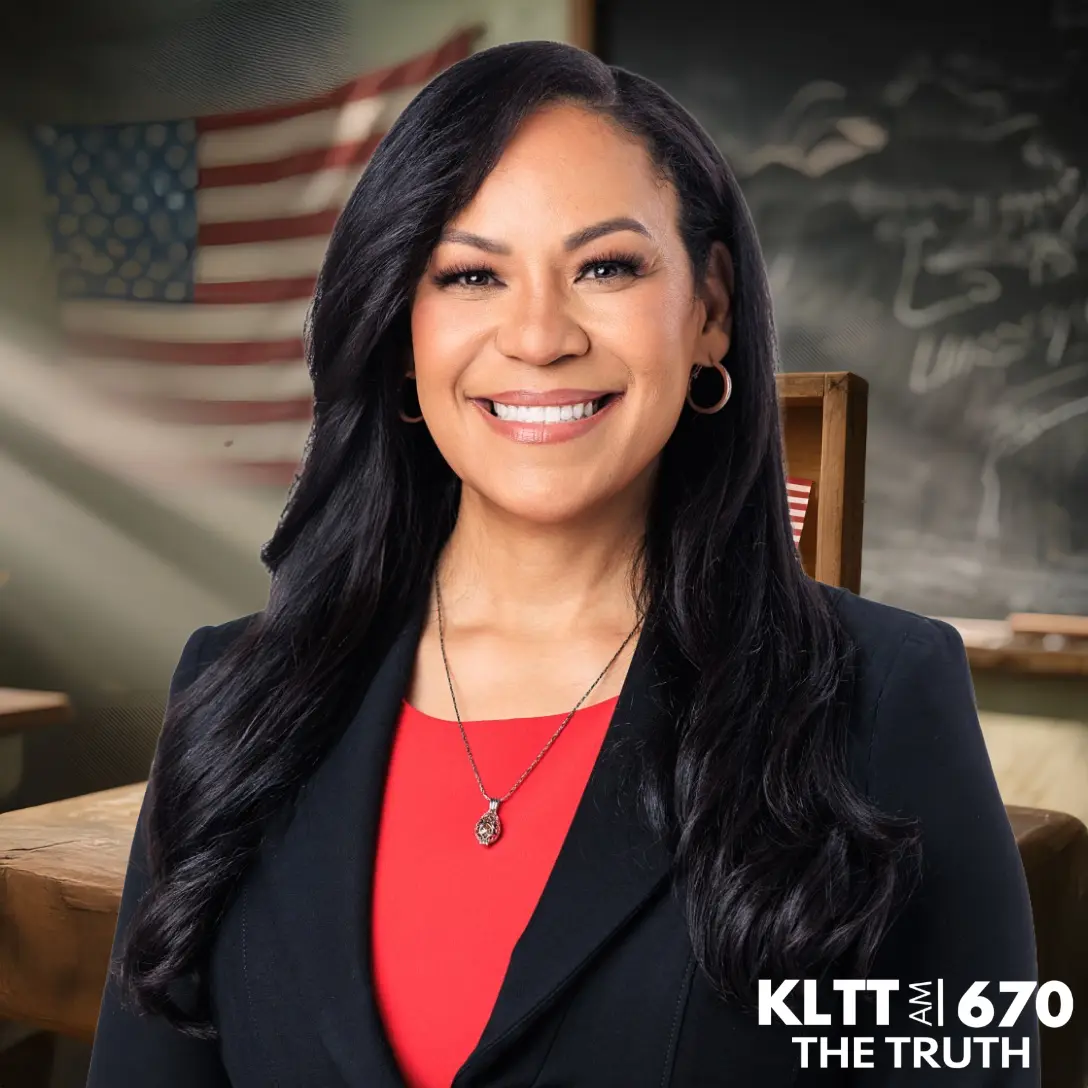
Join host Priscilla Rahn as she dives deep into the realm of economics, wealth building, and education with nationally recognized economist, Michael Austin. This episode unpacks the intricacies of creating generational wealth, the significance of understanding capitalism, and the controversial topic of reparations. With thought-provoking dialogue, they explore solutions for empowering future generations to be financially independent and autonomous from government reliance.
SPEAKER 01 :
Welcome to Restoring Education in America with Priscilla Rahn. She’s a master educator and author, leading the conversation to restore the American mind through wisdom, virtue, and truth.
SPEAKER 03 :
well hello everybody welcome to restoring education in america i’m your host priscilla rahn and i’m so excited that you’ve decided to join the conversation today you know there’s a bible verse in proverbs 13 22 and it says that a good man leaves an inheritance for his children’s children god designed us to live a purposeful life and leave a legacy. And this isn’t about our recognition for fame. Instead, it’s about serving the next generation. But let me tell you about something really exciting about the next generation. There’s a new school opening in the Denver Metro area called Excalibur Classical Academy. It’s a private school, and their mission is restoring America’s heritage by developing servant leaders who are keepers and defenders of the principles of freedom for which the founding fathers pledged their lives, fortunes, and sacred honor. So if you’d like more information on this school, they’re opening K-3 this fall, please go to their website, ExcaliburClassicalAcademy.org, and get some more information. But I want to talk about education and a legacy of understanding how you create wealth and how you pursue freedom in the United States and the opportunity that we have because we know that 2026 is America’s 250th birthday. And here to talk about it is my friend and fellow Project 21 ambassador, Mr. Michael Austin. Hi, Michael.
SPEAKER 02 :
Hey, Priscilla. Thank you so much for having me today.
SPEAKER 03 :
Well, I am so honored to have you on my show today and to talk about all things economics. But before we get into the conversation, I’m going to share your bio with our listeners. Mr. Michael Austin is a nationally recognized economist and policy innovator who blends academic expertise with practical impact. As principal of knowledge and decisions economic consulting, he delivers strategic economic analysis for state and local leaders. Michael, a lead fellow, America Enterprise Institute’s emerging poverty scholar and former Heritage Foundation Coalition partner for Project 2025, has shaped transformative strategies in US Treasury policy, education reform, and federal reserve operations. He advised two Kansas governors as chief economist and is the brainchild behind the Kansas Tax Itemization Act and other landmark policies. Featured by outlets like Bloomberg Tax and the Washington Times, to name a few, Michael’s influence continues to shape the future of policy, economics, and leadership in Kansas and nationwide. So welcome again, Michael. I have a very important first question to ask you.
SPEAKER 02 :
Okay, I’m ready.
SPEAKER 03 :
Did you get a new penny? Because I know we are going to be out of pennies soon.
SPEAKER 02 :
I will be honest with you, Priscilla. I did not go and get myself a new penny. I am probably one of the only advocates for getting rid of the penny because I’m a dollars and cents guy. And like President Trump said, unfortunately, we’re just living in a time where it’s getting too expensive just to make a penny. Doesn’t mean that we can’t have it around. Of course, it can still be in circulation. But I think it’s time to let it go and it’s time to move on to the new economy here.
SPEAKER 03 :
Well, I’m kind of a Benjamins girl, you know, so bring the Benjamins. I’m so honored to talk to you because economics is something that I’m the most fascinated about, but I know that it takes a lot of education to understand how things work and how You know, I look at some of the decisions that people are making when it comes to economics, but I want to get to what’s happening in San Francisco in a minute. But first, what’s important to me is building a legacy. In my book, Restoring Education in America, People Need to Go to Amazon and Buy It, I have a chapter about financial literacy because there are certain things that it seems like in our culture, in the Black culture, that we just don’t know. We haven’t learned. that we should know about to building wealth and i’m curious to know from you what are some really important things that families can do in order just to start building some generational wealth
SPEAKER 02 :
Oh, sure. That’s a really great question. I might push back just a little bit on your premise there because, you know, you talk about the black community in general, most certainly maybe not having the skills to create that general wealth that you had claimed. But I’ll tell you this, we did have those skills before. We can most certainly make a claim that in today’s day and age, it’s largely absent in the Black community, but it was present, largely for the most part. I would say families just staying intact after slavery, and then I believe going up until 1940s, 1950s, African-American family wealth grew at a faster rate than the national average. So that means faster than white people on average, faster than any other type of demographic. It was there. But something happened, of course, in the 60s, 70s, and 80s, I’m sure we’ll talk about a little bit, where not only did we lose those skills, but then what we started advocating for was not about making ourselves better. It was more about what could we take from other people in order to make our lives better. And clearly, not only has it not worked, but it has probably made us more worse off. To get to your question, one of the first things that I think families can start doing is pulling back their spending and actually saving money first. When you get a paycheck coming in, instead of looking at that paycheck and thinking you can spend it on X, you can spend it on Y, you can spend it on Z, take a portion out before you even start spending and scroll that away. You can’t save, you can’t invest until you make a concerted effort to make sure that you give a profit to yourself and your family first. And that type of logic applies to a family, that applies to an individual, even applies to a business. And it’s something that I think families in Black America today are woefully forgetting.
SPEAKER 03 :
Yeah, I love that you brought up, you know, our history. And we think of Black Wall Street, where there were people who created their own businesses, and they were very independent of the government. And today, the word capitalism is by the left is a bad word. I try to explain to people that capitalism isn’t just about a profit, but it’s about free trade and free market and using your mind to create. How would you explain capitalism to the average person?
SPEAKER 02 :
I think there was a quote, and I think it was by Benjamin Franklin, and I’m probably going to butcher it. I think he probably made it more about democracy, maybe not capitalism per se. But I guess my thought process would be is that before capitalism, how did human beings get wealthy? Well, they got wealthy from taking it from somebody else. Before capitalism, the idea about growing your economic standing was what could you take away from someone? And maybe that was taking away somebody’s property, maybe by theft, maybe it was by war, maybe it was by other unethical ends. We’ve had entire human history, right, where human beings have taken, stolen, murdered each other just so that they can get their hands on more stuff. But the great thing about capitalism is that it’s a process that says, you know what, you don’t need to steal or take from somebody else to make yourself wealthy. What you actually need to do is make more stuff, right? Find a more efficient way of making more things and then finding someone who values those things and selling it to them. And by creating a way that you can make somebody else’s better off as well as yourself better off, instead of slicing up a pie, you grow the pie. And it’s been a type of system that we’ve employed particularly here in America ever since 1776. How can you find a cheaper way to create more stuff and apply and give those stuff to individuals who want it and value it? And that way, not only do people get things that are cheaper, but also you get a profit that you can use to invest and make yourself better off as well. So I would say that’s what capitalism is. And the alternative would just resort us back to lying, stealing, and thieving from each other. And I don’t think anyone really wants that.
SPEAKER 03 :
No, this is why I love watching Shark Tank. Because the line that they say a lot is, you know, create a better mousetrap. And we have all of these creations. And then what can you do to make it better, cheaper, more reliable? And it really… forces you to be creative. And I was growing up during a time where the United Negro College Fund had that commercial, a mind is a terrible thing to waste. And I just remember thinking, wow, I don’t want my mind to go to waste. I need to go to college. You know, I need to learn because I want to be smart. And when I started learning about capitalism and free market and how important creating is, that starts in the mind because your mind is the most important property that we have. It’s what allows us to… be free citizens and receive everything that America is designed to offer opportunity, right? So, but let’s talk about what’s going on in California, this new move to, well, what they did in the San Francisco City Council is they approved to create a fund to receive money for reparations. So the City Council didn’t approve to put money money in there because that would be federal you know public taxpayer dollars going into this pot but as of right now they have the ability to receive funds and donations but there’s no money in it and so now that causes me to think well who’s gonna put money into that fund for reparations and they they’re still figuring out who qualifies figuring it out in quotations right priscilla yes And I’m thinking the amount of time these people are going to spend trying to figure out who qualifies for reparations and who’s going to donate the millions of dollars for this. Your life is over. OK, you could have you could have created something and, you know, created your own wealth. All right. Unpack this, Michael. What do you think about reparations for the black community? Is that good for us or not?
SPEAKER 02 :
It’s it’s not good. I I feel like. The left particularly love bringing up reparations, almost like how Lucy keeps holding that football for Charlie Brown. It’s right here, come get it, come kick it. And then every time Charlie Brown comes, they whisk it away at the last minute and you end up falling on your back. And that’s exactly what progressives do with reparations. Because fundamentally, I just don’t think it’s American. If we were talking about a system where someone was wronged, and that person who was wronged is entitled to justice, that would be completely different. But that’s not exactly what reparations is about, is it? It’s about white people feeling guilty for crimes that they never committed.
SPEAKER 03 :
But also, Michael, none of us were slaves. You and I were not slaves.
SPEAKER 02 :
And that’s the second half of the coin there, right? So you have white people who feel guilty for a crime they never committed. And then you have Black people feel like they need to get justice for a crime they never suffered. So you have two sides here that weren’t involved in slavery in any way, shape, or form, weren’t involved in racism, but apparently one has to pay the other. Not only is that not American, but it goes back to our conversation where that’s not capitalism at all. That’s once again, stealing. from one group and giving it to another. And it’s the hallmark of socialism or a communist type idea. And I think that’s fundamentally problematic. And then I guess the last thing I’ll say is, you know, you said that they’re still figuring it out. And let’s just be, let’s just call a spade a spade. They’re not figuring it out. They’re avoiding it. They can’t put taxpayer money into this fund, and they can’t allocate any money. And the reason why is because if they did, it would be the largest transfer of wealth ever seen in the state of California, probably even the nation. And that’s something that they simply just cannot do. It would destroy their budget. It would destroy all of their opportunities and goals that they want to achieve. But it still makes a really good virtue signal. So we’ll symbolically vote on this. We won’t put any money and nothing will ever happen.
SPEAKER 03 :
So Michael Austin is my guest today. He’s an economist and we’re talking about generational wealth. And maybe that’s what the argument would be for the left would say. But, you know, my parents and my grandparents didn’t have access to owning property or building wealth. And so therefore it’s unfair. Right. You know, I could spend a lifetime trying to talk about generational wealth from the past, or I can start developing it myself and leaving an inheritance for the next generation. What went wrong in the 60s, Michael, when it came to welfare? It wasn’t just the Civil Rights Act, because we know the intention was to try to make sure that freed Blacks could have access, equal access to everything that America had to offer. But that one little thing of welfare… has really created a lot of damage to the point where now we have a generation of young people who expect something for nothing. And we’ve destroyed our families from that. So why didn’t it work, Michael?
SPEAKER 02 :
Well, I think the answer is in your question. It didn’t work because the families were destroyed. You can most certainly talk about the Civil Rights Act and the good that came about it, you know, the equal application of the law. But it wasn’t perfectly good, right? While it had equal application of the law, it also came with massive government authority. And when you had individuals like Lyndon B. Johnson as president, he took the authority, not only that he got from the civil rights era, but just politically, and used that to create what he called the war on poverty. And while it most certainly seemed benign enough, providing income or loosening restrictions so that you can help individuals who seem to be at or below the poverty line, what it actually did was that it encouraged fathers to leave the house. You know, there’s a story about, you know, a woman who, a family that wanted to capitalize on welfare checks. And every now and then a government official would come to the house and ask, excuse me, present a survey. And one of the surveys would be, you know, is there a father in the home? And if the answer was no, then you potentially got more money. And so this family tried to trick the system. Every time that they knew the welfare official was going to come by the house, they made sure that the father was not in the home. Now, of course, that’s a single anecdotal type event, but you can see the incentives that it’s creating. Eventually, you know, it just got to the point where families or not families, but, you know, mothers decided, you know what, I don’t need a husband, right? Or I don’t need to get married. I can be a single mother because I don’t need a husband. I have government to fill that role financially instead. And once you have that type of breakdown where you have children now being raised in single parent homes without a father, without a father or a father role model, the negative consequences just, you know, exacerbate, exaggerate. Not only did it contribute to more men, black men being in the penitentiary system, but then it also contributed right to the lack of skills that our black young boys and young girls really needed to be productive citizens. Not to say that single mothers didn’t try. Of course, I’m sure they most certainly did. But clearly had the odds were stacked against them if they didn’t have two parent households. Couple that with the fact of a brand new welfare system means higher taxes, which really can discourage entrepreneurship. And you just have a recipe for disaster. And it’s a recipe that disproportionately affected the black community.
SPEAKER 03 :
So, Michael, you have been very instrumental in writing policy in the state of Kansas. You formerly worked in the Trump administration. You’ve worked at Project 2025 and, you know, making recommendations. If you could wave a magic wand, right, and make some policy changes economically, where would you target that?
SPEAKER 02 :
Well, I would say a lot of the work that President Trump is doing already, you know, has been outlined by myself and many of my colleagues as kind of what needs to be done. You know, you want to look at the Department of Education. What has President Trump done on that? Well, he’s targeted DEI, right? No federal dollars if you’re going to be pushing this reverse racism on, you know, white people or men or older individuals. you’re going to treat everybody applicably under the law or you’re not going to get any federal funds. That’s a great thing to see. Not only that, but providing more funds to families so that if they don’t like a public school that they’re forced to be into, they could take their kids into the private school. Allowing more school choice options is something that also can be done. Reducing the size of the Department of Education. I mean, let’s be real here. We never had a Department of Education until the 70s, until Jimmy Carter. So finding ways that we can reduce the size and scope of that administrative body where we just provide more funds to schools, provide more funds to teachers, provide more funds to families is always a step in the right direction. Another policy, of course, we recommended is the passage of the Working Families Tax Cut Act, right? The bill that had the permanence of the Tax Cuts and Jobs Act that was passed in 2017. It also included the no tax on tips. It included the no tax on car loan interest deduction. It also included some expensing and bonus depreciation, all great many things that most certainly can help push the economy in the right direction to make sure that money is in their wallets and, of course, not in government coffers.
SPEAKER 03 :
Wait, so you’re saying lower taxes actually helps American citizens make more money or keep more money in their pocket?
SPEAKER 02 :
I think if you polled people, yes, they would say they don’t like paying higher taxes. Would you believe that, Priscilla?
SPEAKER 03 :
Something came across my social media that the concept of income tax came up. later in the creation of the United States. I can’t remember. I need to go back and do a little more research, but this idea of income tax. And there are some states that don’t charge an income tax. I mean, they still charge a federal tax, but some states like I know Alaska, I think Florida don’t charge an income tax. How is it that some states can get away with not charging an income tax? Yeah.
SPEAKER 02 :
Okay, so I don’t know if you have 30 minutes to get into this, Crystal, but I’ll try to go as brief as I can. So you’re exactly right. The income tax in the United States is relatively new. I would say only in the last 100 years, since 1913. Before 1913, the primary way that the U.S. federal government ever got revenues to fund for services was through import duties, so tariffs. And it kind of relates back to what President Trump is talking about. President Trump is, of course, trying to push more tariffs and whatnot. And my point of view is that’s fine as long as you also decrease or eliminate the income tax. Get us back to where we were before. I don’t want two taxes at the same time. Just switch it. Get rid of the income tax. But then, of course, it’s the beauty of our Constitution, which is why states have such flexibility on how they tax their citizens. And that just goes back to our Constitution, right? Any right that is not explicitly provided in the U.S. Constitution is diverted to the states, and then the states are the ultimate arbiter of where powers and freedoms are granted. So yes, we have about, oh goodness, seven states, I believe, seven or nine states, that don’t have any income tax. Let me see if I can do this. That’s going to be Florida. That will be Alaska. That would be Texas. That would be Tennessee. That would be, oh goodness, see, now I’m going to forget them all. I’m already shooting myself in the foot here for so long. But it’s about seven or so states. And then there, I would say about half of all states either have no income taxes or have a single tax rate, a flat tax rate on their income. And so I think those states are really leading the way in showing that you can operate your government without having to discourage people from being entrepreneurs by taking a slice of their income. There are other and more efficient ways to do that.
SPEAKER 03 :
I just don’t understand why we don’t do a flat tax period. It just from in my brain as a non-economist, it makes so much sense to say everybody pays the same tax percentage. And that way you don’t get everybody fighting about the wealthy not paying their fair share. We can get into a whole nother conversation. I know when you’re a business owner corporation, you are accepting more of the liability when you have employees and maybe that’s why they get certain tax breaks because they’re actually employing people. Is that my, is that a good understanding of why the rich get a tax break?
SPEAKER 02 :
Yeah. They get a tax break because they have congressmen and senators arguing for a tax break on their behalf, right? And so, you know, you have constituents going to their congressmen, constituents going to their senators saying, I’m a business owner. You’re exactly right. I have employees. Can I get a break? I’m a job creator. And the statesmen or congressmen say yes. And, you know, so they put that into the bill. but it just gets so convoluted and complicated. Then I go back to your thinking, Priscilla, why don’t we just make it simple? Instead of doing these two, three, four, five different brackets, we just have one bracket and we make it low so that people aren’t encouraged to cheat the system or run away. At least if everyone pays just a small percentage of their income, not only will that bring in more revenue to the federal government, but it won’t feel like that much of a burden. I mean, I’m a small business owner. You’re a small business owner. You know, how much do we have to pay accountants every tax filing year? Or how much do we have to pay lawyers for tax filing year? Imagine if the taxes were so simple that you could do it by yourself. Imagine how much money you would save not having to hire accountants, lawyers, and the tax rate would be low. So, you know, financially, it wouldn’t take that much out of your system. You’re exactly right. That’s exactly the system that we need to get to, if not eliminate the whole dang thing.
SPEAKER 03 :
Will you give me an honorary diploma of being an economist after this conversation, Michael?
SPEAKER 02 :
I shall, I shall.
SPEAKER 03 :
You have the power to coronate me as an honorary economist. Okay, listen, I’m just an average everyday citizen and I think more people should recognize really learn more about the economy and their future. And that’s something that I hope for the next generation as we’re going into the next 50 years of America. You started out by saying it’s really important that we don’t spend more than we make and that we save. Michael, what are some other recommendations that you have? Because I want the next generation to be independent of the government. What is some other advice? I know one is like buy life insurance because that’s what the Rockefellers did. They bought, you know, instead of instead of birthday gifts, they got life insurance policies for babies and stuff. So what are some other things that people can do?
SPEAKER 02 :
Now, of course, every technique is different. I’m not a financial advisor. And, you know, I want to make sure I put that disclaimer out there. But economically, I think it really does go back to saving. So if you think about, you know, yourself, if you just invest in the stock market, you know, the S&P 500, right, which is just the top 500 firms in the stock market, and you do it early, you do it young, and you just devote a couple hundred bucks a month, starting from 16, 18, 20, by the time you’re in your 40s or in your 60s, the amount of capital gains that you’ll get on that continuous spending, you can be a millionaire by the time um you know you’re in your uh midlife uh midlife years and so it really just goes to saying that yeah there are ticks in the trade you can do bonds you can do stocks you can do etfs you can do xyz but but it all comes down to one one simple thing saving your money and you know using the beauty of the american economy which is one of the strongest economies of the world to build your interest, build your savings without you having to do a thing. And all you need to do is just be disciplined enough not to spend all of your funds and instead put it away so that you can spend it in the future.
SPEAKER 03 :
Well, there you have it, everybody from the expert economist. You are all now many economists start saving, start investing, become independent, create, know that you’re capable. You don’t have to rely on the government and you don’t have to wait a lifetime for reparations because you know, you don’t need it, you know, enjoy your life and be proud of what you’ve created and what you’ve done. So, um, Mr. Michael Austin, I’m looking at the time and we have to land our plane. I’m so excited that we’ve had this conversation. We’ll have to have you back to talk a little bit more about economy. But to my listeners, thank you so much for tuning in and catch me next time. And remember that educating the mind without the heart is no education. So seek wisdom, cultivate virtue and speak truth.
SPEAKER 01 :
Thanks for tuning in to Restoring Education in America with Priscilla Rahn. Visit PriscillaRahn.com to connect or learn how you can sponsor future episodes to keep this message of faith, freedom, and education on the air.


