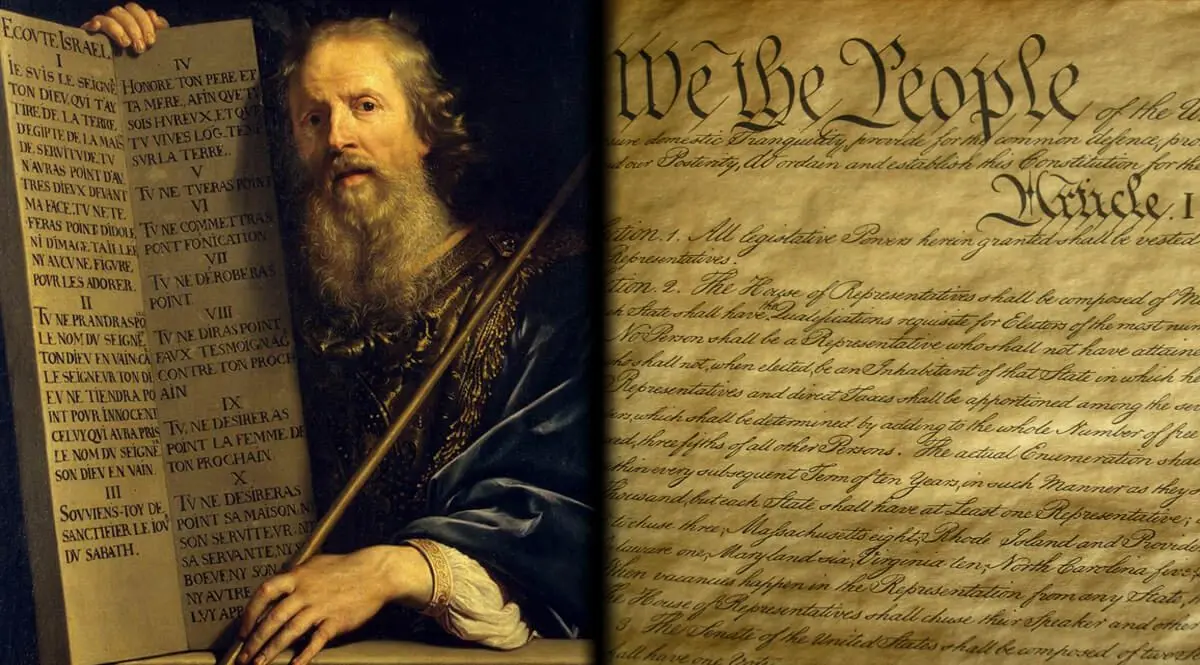

Explore the profound insights of Justice Antonin Scalia’s approach to constitutional interpretation and how it compares to understanding biblical law. This episode delves into the nuances between original intent and originalism, providing listeners with a deeper comprehension of how words and their meanings have been anchored throughout history. Ronald L. Dart connects Scalia’s perspectives with the challenges faced by Christians in interpreting ancient scriptures in today’s context.
SPEAKER 02 :
The CEM Network is pleased to present Ronald L. Dart and Born to Win.
SPEAKER 03 :
It’s surprising at times where insights come from. I was browsing the Internet and came upon a speech by a Supreme Court justice of these United States. And it helped me understand some things about biblical law that I had not got quite straight. The speaker was Antonin Scalia. He was speaking at the Catholic University of America in Washington, D.C. It was ten years ago this month that speech was given, and I only just now came across it. You know, Christian people have a lot of difficulty with biblical law, and they sometimes take shortcuts in trying to understand it. One of the most common approaches is, well, let’s divide the law into types. Thomas Aquinas divided the law into three types, moral law, ceremonial law, and judicial. Now, something like this is widely accepted by Christian people, allowing that the moral law continues, but, well, all the others, the ceremonial, the judicial, the civil, these have all passed away. Then there’s the approach of one denomination, which holds that even the Ten Commandments were abolished at the cross, but nine of them were reinstated in the New Testament. Now, of course, if you’ve read the New Testament, you’re going to know that you search that book in vain for any reference to reinstatement of any law. It’s not a book of law, and there’s no list of laws anywhere in it. I think what they mean by this is you can find references in the New Testament that indicate laws still exist, but the laws are still laid out in the Old Testament. So, how did Justice Scalia help me with this? Well, the title of his speech was A Theory of Constitution Interpretation. And it seems to me that the big problem Christians have with biblical law is not so much the application of law, but the interpretation of law. And Justice Scalia helped me a little bit with that. He began his speech with a question. What is the object of the court? That is really a simple question. He says, this is a matter of interest to not only judges and lawyers, but any intelligent American citizen, philosopher or not. What do you think your judges are doing when they interpret the Constitution? It’s sad to tell you, he said, after 200 years, there is no agreement on this rather fundamental question. What is the object of the enterprise? Well, now, I have to tell you the truth. I’m not surprised to learn that we lack an understanding of what the judges in the courts are actually doing. You read what they decide. You read how they decide them. You just basically see judges all over the place, and it all depends on who you talk to and when you talk to them, what kind of an answer. you’re going to get. Well, I learned something about constitutional law recently that I did not have straight. I thought the Constitution should be interpreted on the basis of original intent, and I assumed that Justice Scalia thought the same way. What I learned is that there’s a marked difference between original intent and originalism, and the difference is more important than I had thought. Here is how Scalia explains it. The theory of originalism treats a constitution like a statute and gives it the meaning that its words were understood to bear at the time they were promulgated. You will sometimes hear it described as the theory of original intent. You will never hear me refer to original intent because, as I say, I am, first of all, a textualist. If you are a textualist, you don’t care about the intent. And I don’t care if the framers of the Constitution had some secret meaning in mind when they adopted its words. I take the words as they were promulgated to the people of the United States and what is the fairly understood meaning of those words. Now, that’s pretty good, actually, when you put that down, because, and I hadn’t thought about it quite this way, we don’t have to go back through the writings of the original framers of the Constitution to figure out how they thought about things, because what they thought and what they intended is not all that important. What is important is what was in the mind, what did the people who ratified that Constitution think it meant? Because the Constitution was written into a social context and accepted by society in that context. It’s that meaning that is important. And it’s striking to me that when you start examining the law in any historical context, you keep coming upon the same principles. Because law is law, and it functions the same way in any society. So when examining the laws of the Bible, we can take the words of the text as they were originally handed down and as they were understood by the people who heard them. And we can look for what Scalia calls the fairly understood meaning of those words. Now, with the Bible, this is crucial because we’re looking at many laws that had a meaning in that culture that really does not naturally carry over into our own culture. And just so you’ll know what I’m talking about, let me give you an example. In Numbers, the 15th chapter, I’ll begin in verse 38. Here’s this law. Speak to the children of Israel. Tell them to make tassels on the corners of their garments throughout their generations and to put a blue thread in the tassels at the corners. And you shall have the tassel that you may look upon it and remember all the commandments of the Lord and do them. And that you may not follow the harlotry to which your own heart and your own eyes, let’s face it, are inclined. Now, it’s evident that the custom of wearing that fringe or tassel had to do with identity. Studies have indicated that this custom was as well understood in that culture as the yellow ribbon is understood in ours. The yellow ribbon has come to mean you have a loved one in the military serving far away. I think it may have originated with a yellow stripe down the leg of a cavalryman’s uniform and his lover wearing a yellow ribbon in her hair in support of him when he’s away on patrol. The custom has morphed into various other applications. You’ll see people, for example, with a little looped pink ribbon on the lapel, which I understand stands for breast cancer awareness. The yellow ribbon, of course, still basically military in its focus. I think the blue tassel or the blue thread in the tassel for Israel served a similar purpose. It made a public statement that I am a commandment keeper and I am a servant of Jehovah. I met a gentleman not long ago who was wearing a pair of these tassels, woven of white and blue, tied to his belt. But I think he was wearing them not so much as a sign to others, as a matter of a legalistic obligation to the law. God says I should wear a tassel, so I’ll wear a tassel. Now, I doubt seriously that one person in ten would have a clue what that tassel was supposed to mean, and thus it becomes largely pointless. I’ve heard that some wear that blue ribbon on their underwear, which makes it all the more irrelevant, because it was to be worn where people could see it. The fellow I met had his tied to his belt under his jacket, and you could easily miss them. Once again, it misses the point. I think the Israelites were supposed to wear them in plain view. Now, what you need to understand is that in ancient societies—and I really hadn’t focused on this until I saw an article on it in Biblical Archaeology Review— that it was customary, either in the form of a tassel on the garment, the hem of the garment, or some form like this, that people wore things like that as a sign of status, a sign of origin, perhaps an identity of a tribe, or something of that nature. It was rank or status. Now, you had David, for example, when he was fleeing from King Saul, was hiding in the corner of a cave. King Saul walked into the cave to relieve himself without any clue that David was hiding back in that cave. So David quietly bent forward, took his knife, and cut off the hem of Saul’s garment as he was relieving himself. Now, what’s significant about this is, I mean, if you read the story, you think, well, what did he do that for? Why would he take that and cut that off? The answer is, it was a symbol of Saul’s rank. The fact of the matter is, God was replacing Saul with David. In fact, had already done so for all practical purposes. And what David did was cut off the symbol of Saul’s rank and take it for himself. His conscience smote him after that, and he came outside and rendered something of an apology as Saul walked away. But nevertheless, it’s a very significant thing that he did here. So what we have here… To ask the question, what is the meaning of the words in this law to the people who first heard them? Basically, it’s this. In the tassels you wear on your garment, you will always include a thread of blue. Thus you remind one another of your God, his commandments, and his way. By the way, it’s worth noting that blue was one of the dominant colors in the decor of the tabernacle. Thus, it was a double tie to the worship of Jehovah. It said, this is my God. I obey his laws. And it made that statement to a world that understood what these were. I mean, for all we know, men of Judah wore a tassel of one color. Men of Manasseh wore a tassel of another color. But they all were supposed to have the thread of blue identifying them as servants of God. Now, for a society that does not wear tassels at all, the meaning of the law doesn’t come through. Even if you decide to wear a loop of blue ribbon on your lapel, people may realize it means something, but they won’t have a clue what it means. In the society of the time, though, it identified commandment keepers and worshipers of Jehovah to one another. Now, try to avoid thinking of this as an old covenant practice that has passed away with the old covenant. That will lead you down the wrong way. Think of this as a custom of the time that no longer carries the meaning it once did. If you customarily wear a tassel, then put a thread of blue in it. If the custom doesn’t exist, don’t bother to create it. It’s also worth mentioning that this was a voluntary provision. I have never seen in the Bible anything resembling tassel pulleys. The idea that any part of the law was voluntary gives some people the willies. Even if breaking the law was a sin, compliance was still up to the individual. Now, grab a pencil and a piece of paper. I have an offer for you. And then I’ll return to Scalia’s view of the Constitution and what we can learn in the Bible from it.
SPEAKER 02 :
Most Christians have no idea how the greatest of Jewish holidays became the greatest of Christian holy days. Ronald Dart’s second book, The Thread, God’s Appointments with History. is now available at your local bookstore or directly from borntowin.net. Write to Born to Win, Post Office Box 560, White House, Texas 75791. Or call toll-free 1-888-BIBLE-44. Returning to Scalia’s view of the Constitution.
SPEAKER 03 :
He noted that he does not use legislative history. He said, the words are the law. I think that is what is meant by a government of laws, not men. And when I read that, the thought kind of ricocheted through my mind, and I thought, that’s one of the things that Jesus was driving at in his conflict with the Pharisees. It’s one of the things that Paul kept hammering in his epistles, that we’re dealing with the law of God, not the law of men, and that this whole structure, this whole edifice of tradition that had been built up in Judaism around the law was nothing more than the commandments of men. Scalia went on to say, we are bound not by the intent of our legislators, but by the laws which they enacted, which are set forth in words, of course. As I say, until recently, this was constitutional orthodoxy. Everyone at least said that, that the Constitution was that anchor, that rock, that unchanging institution that forms the American polity. Immutability was regarded as its characteristic. What it meant when it was adopted, it means today, and its meaning doesn’t change just because we think the meaning is no longer adequate to our times. And then he goes on to say something very important. He says, if it is inadequate, we can amend it. That’s why there is an amendment provision. That was constitutional orthodoxy. When I say constitutional orthodoxy, I don’t mean it’s just judges and lawyers. Judges and lawyers are not very important. It’s ultimately the American people. What do they think this document is? Now, we come across here something, I think, rather different. God’s law is immutable, and we can’t amend it. But we can amend our understanding, our interpretation, and our application of the law. This is precisely what Jesus was doing through most of the Sermon on the Mount. When he said, you’ve heard it was said by them of old time, and then he goes on to say, but I say unto you. And then there is this interesting occasion you’ll find in chapter 8 of John. Early in the morning, Jesus came into the temple again, and all the people gathered around, and he sat down and taught them. Then there was a disturbance. The scribes and the Pharisees brought to him a woman caught in adultery. And when they set her in the midst, they said to him, Teacher, this woman was caught in adultery in the very act, in flagrante delicto. Now Moses, in the law, commanded us that such should be stoned. What do you say? Now, they did this because in spite of everything, they thought Jesus was in conflict with Moses, and they were trying to establish that. Now, John goes on in the account saying, this they said, testing him, that they might have something of which to accuse him. But Jesus stooped down and wrote on the ground with his finger as though he did not hear. Now, this is fairly important, maybe more important than you and I think, because in point of fact, Jesus did not hold the office of a judge in this place, in this society, in this time, and it really wasn’t appropriate to bring this woman before him at all, so he ignored them. But they pressed him, and finally he raised himself up and said, He who is without sin among you, let him throw a stone at her first. Now, this is an interesting example, and it illustrates a basic misunderstanding about biblical law. The law of Moses required due process, just as our own Constitution does. If a man caught his wife in adultery, he couldn’t just take her out and kill her himself. In spite of a generation gone by, men have been known, having found their wife in bed with another man, to shoot both of them, but that’s another time and another place. In Israel, you couldn’t do that. There was a judiciary. The woman had rights, and she could not be deprived of life without a hearing, just as in our own Constitution we say, no man shall be deprived of life or property or liberty without due process. Furthermore, some assume that under the law of Moses, the adulterer had to be stoned. Not necessarily. There’s an interesting example of a just man, a righteous man, a man who did the right things, mind you. His name was Joseph. His wife, his betrothed wife, was named Mary. And you know her as the mother of Jesus. Well, when he found Mary with child, Joseph was minded, the Scripture tells us, to put her away privately. He had the right to take her to the judges. He had the right to have her judged, and I suppose stoned. He didn’t. It was his option not to do so. That’s why the law of Moses allowed for divorce instead of death in Deuteronomy 24. It was an option that someone could follow rather than having to kill somebody who might have even been the mother of your children. In any case… Someone had to want to carry out the penalty. The witnesses were to be the ones who cast the first stones, and if they wouldn’t do it, no one else could. And Jesus added one more criterion. If you’re going to stone this woman, you have to be innocent yourself. Now, that’s not in the law. That’s a judgment. And since it comes from Jesus himself, it carries a lot of weight. Now, Scalia presents an interesting illustration of the principles involved in all this. He cites the 19th Amendment, adopted in 1920, which gave women the right to vote. Now, he points out that there was a national campaign of suffragettes to get this constitutional amendment adopted. It was a very big deal. to get that constitutional amendment. Why? Why did they think they had to go through all that trouble? If people then thought the way people think now, there would have been no need. Why? Well, because there was an equal protection clause right there in the Constitution in 1920. As an abstract matter, what in the world would be the greater denial of equal protection in a democracy than denial of the franchise? So why didn’t these people come into the court and say, this is a denial of equal protection? Now, I think that’s a really interesting question. And his answer is just as interesting. He said, it’s because they didn’t think that way. Equal protection could mean that everybody has to have the vote. It could mean that. It could mean a lot of things in the abstract. It could mean that women must be sent into combat, for example. It could mean that we have to have unisex toilets in public buildings, equal rights. But does it mean those things? There’s a big gap in them. I hadn’t thought about it this way, but there’s a huge gap between it could mean something and it did mean something. Does it mean those things? Of course it doesn’t. It could have. It just never did. That was not its understood meaning. And since that was not its meaning in 1871, it’s not its meaning today. The meaning doesn’t change. And he goes on to point out that’s why you had to have the constitutional amendment allowing women the right to vote. Because in all the meaning of that constitutional phrase, that of equal protection under the law, did not include the franchise as it was put in the Constitution, as it was understood, when it was ratified. Stay with me. I’ll be right back after this short message, and we’ll talk further.
SPEAKER 02 :
If you would like to share this program with friends and others, write or call this week only and request your free copy of Moses and the Constitution. Write to Born to Win, P.O. Box 560, White House, Texas 75791 or call toll free 1-888-BIBLE44. And please tell us the call letters of this radio station.
SPEAKER 03 :
There’s a new way that has developed over the years of interpreting the Constitution. The phrase that often comes into opinions now is, quote, to reflect the evolving standards of decency of a maturing society. Now, Scalia goes on to say, every day and every way we are getting better and better, people think. Now, you know that Pollyannish attitude is not the attitude that is possessed by people who adopt a Bill of Rights. People who adopt a Bill of Rights know that societies not only evolve, they also rot. Now that, to me, is one of the most important things in this entire speech. The realization that whenever the framers of the Constitution adopted this Bill of Rights, they did so because societies don’t go on and on to bigger and better things. History tells us exactly the opposite. They evolve, and they also rot. He went on to say they are worried that future generations may not have the integrity and the wisdom that they do. So they say, some things we are going to freeze in, and they will not change. Now, when you begin to understand this, you realize the importance of an inflexible Constitution. It’s not there for that. We have the right to amend it if we need to. We don’t need nine justices amending it at will. Well, he said something else that was a surprise to me. He said, this is not, I caution you, a liberal versus conservative issue. That was a revelation. In truth, new rights are being created all the time on both sides. So, says Scalia, it’s not liberal conservative. It’s modernist versus the traditional view of the Constitution. End quote. And I think this is a mistake we all make all the time in talking about our political situation. There is a presumption in our society that modern equals good. I suppose it’s rooted in the evolution that we’re taught in school and the realization that everything is always going upward and onward. It ain’t so. We forget that societies do not always evolve upward. They also rot. Thus the need for stability somewhere. It comes most naturally in the words of the written law. And this may be why Jesus said what he said about it. You’ll find it in Matthew 5, verse 17. Do not think I come to destroy the law or the prophets. I did not come to destroy but to fulfill. For assuredly I say unto you, now brace yourself. The written law to Jesus, including the law about hymns and tassels, is not going away. But then he proceeds in that same message to interpret the law in terms of its original meaning. The applications of the law, the judgments made on the law, can change with the changing times. One of the truly classic examples of this is one that forbids women from wearing that which pertains to a man and vice versa. Now, there is nowhere in the Bible that describes men’s clothing or describes women’s clothing or prescribes either, I should say. And so consequently, the culture of the time will determine how that law is carried out. Scalia goes on to say, And that is, in the long run, it is the death knell of the Constitution. As I suggested earlier, the whole purpose of the Constitution is to prevent a future society from doing what it wants to. And you know, in a very important way, that is precisely why the Old Testament cannot be cast aside either. It is there to prevent a future church from doing what it wants to do. And we could provide a whole list of churches that are doing what they want to do with no regard to what the law of God, the Bible, Old Testament, and New Testament says they ought to do. When it comes to the Constitution… Scalia says to change and to evolve, you don’t need a Constitution. All you need is a legislature and a ballot box. Things will change as fast as you want. You want to create new rights, destroy old ones? That’s all you need. The only reason you need a Constitution is because some things you don’t want the majority to be able to change. That’s my most important function as a judge, he said. I have to tell the majority to take a hike. I tell them, I don’t care what you want. The Bill of Rights says you can’t do it. And the reason Jesus did not lay aside the written law is because there were some things he didn’t want the church to go changing. It’s the same way with the Constitution. Scalia said if there’s no fixed absolute, if the Constitution evolves to mean what it ought to mean today… What makes you think the majority is going to leave it to me or to my colleagues to decide what it ought to mean? So at the end of this long process, this great evolution from stuffy old originalism to an evolutionary Constitution, we arrive at the point where the meaning of the Constitution, the most important part of the Constitution, the Bill of Rights, is decided upon by the very body that the Bill of Rights is supposed to protect you as an individual against. Namely… The majority. Now, I think there’s a lesson in all this for the church. We have been tempted to interpret scriptures not in terms of what the words mean, but in terms of what we think they ought to mean. And thus, we have made ourselves the arbiters of right and wrong. That has happened to the nation, and it seems to be happening to the churches as well. And we end up steering our ship, not by the stars, but by wherever the winds and the tides and the currents blow us and sweep us. And we have no fundamental basis for what we teach, what we believe, and what we practice. There’s a reason in the Bible why Jesus is called the Word of God. The truth of God is conveyed to us not by vague images, but by very precise words.
SPEAKER 02 :
which we can understand. The Born to Win radio program with Ronald L. Dart is sponsored by Christian Educational Ministries and made possible by donations from listeners like you. If you can help, please send your donation to Born to Win, Post Office Box 560, White House, Texas 75791. You may call us at 1-888-BIBLE44 and visit us online at borntowin.net.
SPEAKER 01 :
Stay in touch with the new Born to Win with Ronald L. Dart app. This app has all of your favorite Ronald L. Dart radio messages, sermons, articles, and it even has a digital Bible. Simply search on the iOS or Android app store to download it for free today.