


- Posted
Welcome to the Kim Monson Show podcast. Kim Monson is your host. “Want to view one of the many…

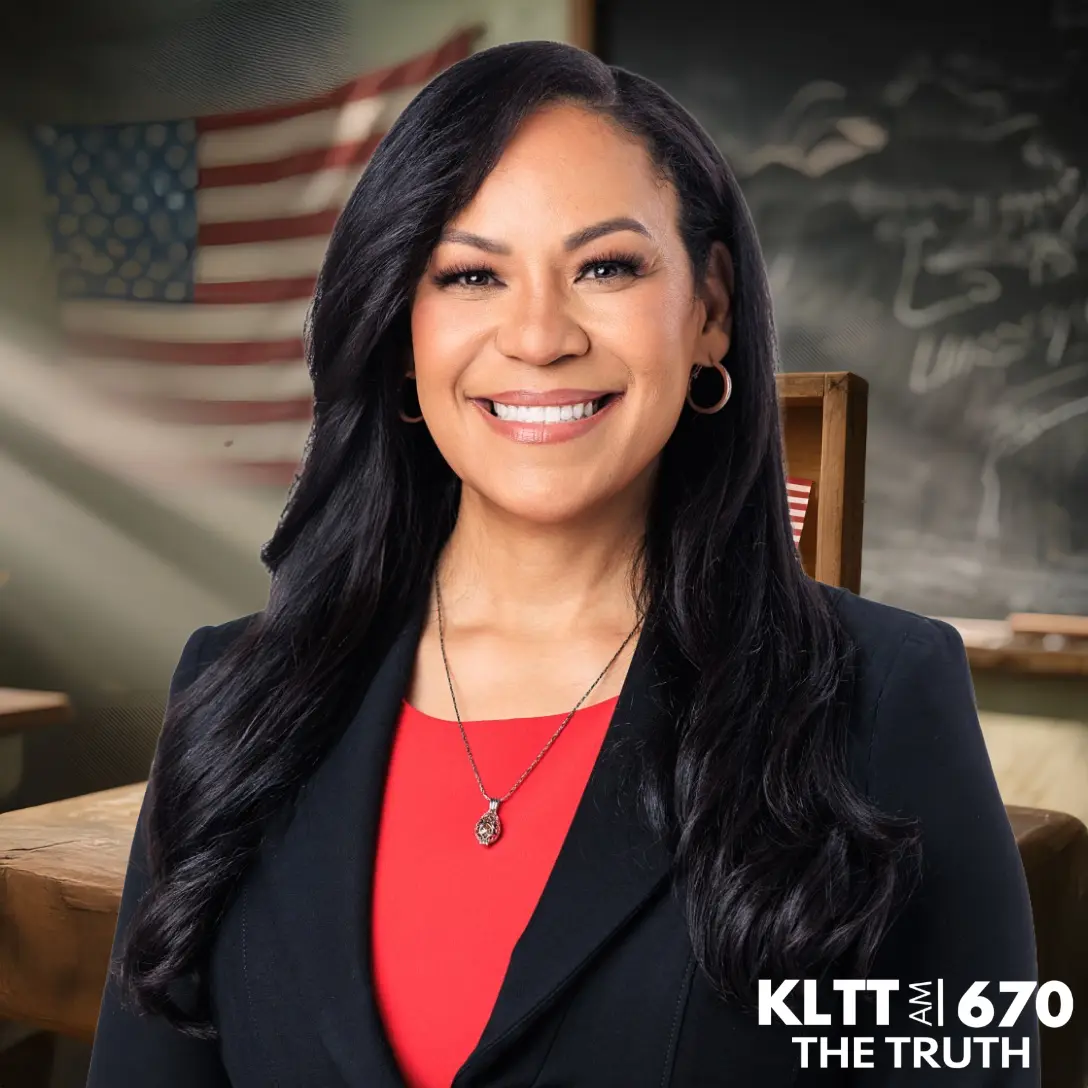
In a deeply engaging discussion, Priscilla and Lori address the controversial House Bill 251312 and its implications on parents and educators alike. Discover the intricacies of Colorado’s school choice initiatives and the importance of a transparent educational system. As Lori shares her experiences and advocacy efforts, learn how you too can participate in fostering environments where family roles are respected in educational settings. Stay informed with insights on FERPA, PPRA, and the agenda for the upcoming National School Choice Week.
SPEAKER 01 :
Welcome to Restoring Education in America with Priscilla Rahn. She’s a master educator and author leading the conversation to restore the American mind through wisdom, virtue, and truth.
SPEAKER 03 :
well hello everybody welcome to restoring education in america i’m your host priscilla rahn and i’m so thrilled you’ve decided to join the conversation today 2026 is shaping up to be a pretty exciting year and one new thing that’s exciting is a new private school is opening in the centennial area It’s called Excalibur Classical Academy. They’re a private school, and their mission and vision is restoring America’s heritage by developing servant leaders who are keepers and defenders of the principles of freedom for which our founding fathers pledged their lives, fortunes, and sacred honor. And with 2026 being America’s 250th birthday year, I can’t think of a more exciting time to start a new private classical school. But there’s a lot of other exciting things happening in the school choice movement. And here to talk with me about it is my friend and fellow LPR graduate, Lori Gimmelstein. Hi, Lori. Hi, Priscilla. Great to see you. It’s always great to talk to you. I’m following all of the wonderful things you’re doing. You’re so busy as a mom and activist in the community. But before we get into the conversation, I’m going to share your bio with our listeners. Lormy Gimmelstein is the Executive Director of the Colorado Parent Advocacy Network, a leading grassroots organization dedicated to protecting parental rights and restoring academic excellence in Colorado schools. A former private practice speech-language pathologist with two decades of clinical experience, she brings a principled, family-first perspective to education policy and reform. Under her leadership, CPAN has earned statewide trust and national media recognition for its work defending the rights of parents to direct the upbringing care and education of their children. I am so proud of all the work you’re doing to go to go from colleagues sitting in classes together with LPR. And now you’re you’re doing all of this amazing work. So take us back, Laurie, to the beginning. Like what caused you to become activated in this space?
SPEAKER 02 :
Well, like many parents across the nation, 2020 was a very revealing year. When our kiddos were in fifth and seventh grade, that’s when we went on our two-week shutdown. And then the following school year, the 2020-21 school year, our kids were doing virtual learning in some in-person, in small cohort learning. And a very divisive time in our country, for sure. Very polarizing. And at dinnertime, our children were coming home with some really interesting conversations about white privilege and systemic oppression and you know again they’re 11 and 13 and of course this is at a time you know when George Floyd had just happened and I was thinking in my mind we have a teacher that’s bringing politics into the classroom and I just need to give them a call and say, this isn’t really appropriate for school. And just a long story short, I went to the teacher, I went to the principal, I went to the school board, I went to the district administration of Cherry Creek Schools, and I came home and told my husband, we are in big trouble. Our daughter came home from school, and again, she’s 11, and she had shared with us that her friend Stella was now gonna be River, And River was going to use he, his, him pronouns and use the boys’ room. And it was a very casual, like, this isn’t a big deal conversation. And it was before where we are today with the transgender social contagion. And I, as a speech pathologist, have many times been invited into classrooms to work with peers and teachers to support another student’s communication. And so I just kind of thought, oh, this is like a workshop situation. And I made a comment, it’s really progressive of River’s parents to ask the school to do a workshop. And Jenny goes, oh no, mommy, River goes home every day as a girl. His parents have no idea. And that was very shocking. And I didn’t, I thought she must be mistaken. But as we have realized over the last five years, through some investigations and looking at practices, policies, and the legislation here in Colorado, we know that it’s not only a practice in Cherry Creek School, that it’s pervasive across the state, it’s pervasive across the nation. And in Colorado, our Governor Polis recently codified that practice in 2024 for schools to be able to hide social gender transitions from the family.
SPEAKER 03 :
I can’t think of anything more divisive than to keep secrets from parents. And we have people who say, this isn’t happening in our schools. And parents don’t know because they’re not in the classroom. But I can attest as a full-time public school teacher that, yes, this happens. I have received emails asking me, do not tell the parents that this little girl wants to be called by a boy’s name. go by male pronouns. And I’m thinking that is not our role as government schools to keep secrets from parents. And why are we dividing relationships rather than encouraging relationships? Because we know that, especially adolescents, when they’re going through body changes in puberty, They’re not comfortable. They’re they’re questioning already. And to not strengthen the bonds between parents and say, hey, parents, this is what your child is saying at school. Here are some resources for you as the parent to talk to your child about this and let the parents decide. how they want to direct the upbringing of their children. And so it’s definitely happening. Good for you as a mom for bringing light to this so that we can actually start to strengthen those bonds between parent and child. So with your clinical experience, how did that inform your perspective on parental rights and education policy?
SPEAKER 02 :
Well, as a speech-language pathologist, over the past two decades, immersing myself in family-based services, we know best practice always has best results when the family is involved and engaged. So for the last two decades of my career, I have been focused on partnering with parents and helping them to advocate for their child’s needs at school, in the classroom, in the community, at work, wherever it may be. I also run a charitable organization called the Let’s Talk Initiative for children and adults with very complex communication needs, really helping them to expand their abilities, again, at home, at work, at school, and in the community through augmentative forms of communication. It’s been really great. And so I naturally fell into this. The skill set has been there for a long time, but the arena has changed quite alarmingly. And I would be much more content if I was able to be helping parent advocacy around strengthening merit in academics in schools or strengthening special education services so that our students are are progressing and having great success. But as you know, we have all these fires in the state of Colorado around uppercase DEI under the guise of diversity, equity, and inclusion initiatives that really separate our children and faculty based on immutable characteristics that no one can change. And then gender ideology has really taken over our schools and our schools are performing so poorly. It is such an alarming situation where over half of students in the state of Colorado are not even proficient in reading, writing, or math, but yet we’re seeing the highest graduation results ever. And I can personally attest, we pulled our daughter out of Cherry Creek when at the end of her seventh grade year, and she was a high honor roll student. in Cherry Creek. And you know, Cherry Creek comes with a reputation of being one of the most academically rigorous programs. And when we moved her into her charter school, she was struggling to maintain B’s and C’s. And we realized that she was missing some very core knowledge in order to be successful in high school. I think it’s really important for parents to understand that grades are being inflated in education. Um, and there is a lot of focus on equity in the classroom, elimination of homework, elimination of grading. Um, and these are all practices that we hope to reverse and return to a really strong academic education across the state in all types of schools.
SPEAKER 03 :
Well, if you’re tuning in just now, my guest today is Lori Gimmelstein. She is the founder of Colorado Parent Advocacy Network. But you’ve been really active in some lawsuits. Unfortunately, that’s what it takes to get some things moving. So let’s talk a little bit about that. So you are a co-plaintiff. in a landmark lawsuit challenging Colorado’s House Bill 25, 13, 12, which I went to the Capitol and I waited hours for my turn. I was I was actually fortunate that I had an opportunity to testify because there were so many people there and it went late into the night. But can you explain what this law does and why it’s so concerning for parents and educators?
SPEAKER 02 :
Yes, absolutely. So House Bill 251312 is titled Legal Protections for Transgender Individuals. What the bill sought out to do was to classify parenting as quote unquote coercive control, also known as abuse. So a parent that did not immediately affirm their child’s newly declared gender identity would be at risk of having their children taken away under the guise of abuse. And it also prohibits now in law that we are no longer allowed to use biological pronouns or birth names. And it’s very, very challenging because you can actually be sued for each instance that you use somebody’s biological pronouns or their birth name. $5,000 and then up to $50,000 in emotional distress. And it’s also punishable by up to four months in prison. And so these are huge attacks on our first and 14th Amendment rights. Now, I will say in the Senate Judiciary Committee that you were testifying in last year, which was Over 800 people, I think, signed up to testify. The majority were in opposition. We had over 35,000 Coloradans sign a petition opposing this legislation. You know, what we saw there was kind of smoke and mirrors, if you will. Senate Democrats came in and they said, we’re going to strike this language because we’re hearing from constituents that this parenting, you know, this has got too far. And really all they did was they moved it into the Colorado Anti-Discrimination Act. And that bill is now resurfacing. this first week of legisl seeking to undermine a pa to raise their Children a morals and values. We kn I can guarantee the state are suing the state of Co Attorney General and the But for our first and 14 I can’t comment any further But we’re very grateful for the support of Defending Ed.
SPEAKER 03 :
So when your organization is involved in a lawsuit, do you need donations to help fund that lawsuit?
SPEAKER 02 :
Yeah, so a lot of our lawsuits, we’re very grateful, are pro bono from national organizations like America First Legal and the Center for American Liberty. But we do have many lawsuits that we’re helping to facilitate. One in Elizabeth School District, we’re fundraising for them. They’re being sued. literally just for ensuring that books available in the school library are educationally appropriate. And they’re being sued saying that they’re banning books. But we know this, banned books are illegal everywhere. So it’s not banning books and it’s just rhetoric and it’s propaganda. So we’re helping fundraise for that effort. It’s a huge strain on the financial resources of the district. We are also helping a father in Boulder County who is fighting in the appeals court to reverse a decision during a divorce mediation agreement where his ex-wife would like to transition their child and he wanted to wait. And the mediator found with the mother and now he’s going through the appeals process, you know, knowing all the evidence that we have on the harms of these really aggressive gender, quote unquote, affirming treatments. It’s radical. We’re stopping puberty when it’s so important for human development, for bone development, brain development. And they’re literally stunting children’s growth.
SPEAKER 03 :
You know, you mentioned book banning and I keep hearing this too. As a teacher, the concern is about age appropriateness. So what parent would want their minor child, their elementary school child reading sexual content or looking at comic books that are graphic? It’s inappropriate for that age group. It’s actually I can’t think of any academic reason why that type of content would be in a school and it’s still there. And so it’s not about banning books. And if you even if you do want to use that term, look into the content. Because it just seems very pedophilic to say, oh, I’m okay with sexual content in middle school or elementary school or even a high school. So it’s really interesting to me how people on the left, what they’re fighting for. They’re fighting more for sexual content in the schools and separation of families than there are for bringing families together. But I want to really quickly talk about there’s an event coming up on January 27th out at the Capitol. Talk to us about that event.
SPEAKER 02 :
Yes, we’re so excited to be hosting Colorado’s National School Choice Week celebration again this year. We are inviting families and schools. Every school is welcome. We’re just so excited to celebrate options for parents. We know one size does not fit all. We know that there’s a huge exodus from certain public schools in the state because of some of these harmful ideologies and low proficiency rates. And so we’re thrilled that Governor Polis signed the proclamation declaring Colorado’s National School Choice Week beginning on the 25th of January this year. And in the morning, we’re hosting a Constitution Connection Program where we have over 200 students joining us. We have one workshop on principles over party and a second workshop with our partners at Constituting America. Our good friend and LPR colleague, Jill Cullis, will be presenting on civil discourse. From one to two, we have a big celebration on the west steps of the Capitol where we’ll hear from students and parents and faculty. We’ll have school choirs performing. It’s going to be an amazing celebration of school choice here in Colorado.
SPEAKER 03 :
that sounds beautiful and to your point we’re not against public schools because that’s part of the choice too yes if parents want to send their children to public school they should have that option so um we’re not we’re not an enemy to the education of children as far as options go so you’re 100 correct So parents aren’t aware of their rights under FERPA and PPRA. Could you briefly explain what these laws protect and why they’re so important?
SPEAKER 02 :
Yes. So the Family Educational Rights and Privacy Act, or FERPA, allows all of us as parents to be able to have privacy insight into our children’s educational records. And I don’t think most parents genuinely understand that it really is their role and responsibility to be the primary authority in their child’s education. And through FERPA, you as a parent can actually request your child’s educational records. And then the school district is responsible for providing all of those records to you for complete transparency. And what we’re finding is that there’s lots of errors in these student records. For example, I pulled my son’s educational records and there was a disciplinary note that wasn’t his. It was another student’s. And that could impact him, you know, as he’s applying for college and things of that nature. So we made that correction. So we’re encouraging families. We’re going to be doing a, we have a FERPA template form that families can use available on our website at coloradoparents.org. And we’re encouraging parents to take back your authority in 2026 and request those records twice a school year. So right after the beginning, at the end of the first semester and at the end of the second semester so that you can make any corrections needed and have insight into what is happening. And another big thing that we’re seeing with FERPA and these laws that create these very harmful practices of these social transitions, which are psychological interventions. This is not just a, you know, calling somebody a nickname. This is a genuine psychological intervention when you have a child use different biological pronouns, use different restrooms and facilities. And we’ve actually had parents that found out accidentally that their child had transitioned socially at school. And when we request the records through FERPA, there’s no notification in the educational record and it is illegal for a school district to keep a separate record. And we’ve actually uncovered the gender transition plan schools are using across the state that literally point out on the very first page, if the parents are not supportive, how are we going to keep it private from them? This is an illegal practice. So parents, use FERPA. It’s definitely a very helpful tool, and we can help you at coloradoparents.org. You can always reach out to us, and we’re happy to show you how to advocate best for your children.
SPEAKER 03 :
Lori, when I was a young teacher, we used the term stakeholders and we were taught like there’s all these stakeholders. You have the parents and you have teachers and you have community business people. Somewhere along the way, we stopped looking at parents as stakeholders and partners and And then parents became more ostracized. And then during COVID, parents were called domestic terrorists. And I think it’s really difficult for parents to feel welcome to even go to a school, which is really unfortunate. And I have watched this with my colleagues who are afraid or won’t call parents, if something happens in school and their child’s acting up, they’ll avoid calling the parents to even let the parents know, hey, your child was being disrespectful today or whatever. It’s really unfortunate that we have now this culture in the schools And I blame the teachers union for that, too, because I think the teachers union has a responsibility to use certain language to encourage young educators to say, yes, you’re a professional, but you’re not the parent. And we’ve got to stop using language like I’m the trusted adult because they brainwashed us into using that language. I think, you know, I used to be a leader in the teachers union. I wasn’t just a member. I was a leader and I was using that language like, oh, I love my kids. I love my children. And they would say, find a student at the beginning of the year who doesn’t have anyone to go to and become that child’s trusted adult. And it seemed really at the time such an endearing thing. It’s like, oh, yeah, I don’t want a child. to go without feeling supported, but it has morphed into this. I’m the, I’m the professional. I know best. Your parents are not teachers. They don’t know how to teach. They don’t know what to teach. And so therefore I’m going to be the one that controls the situation to the point. Now teachers are working to take kids away from their parents. We’ve seen that we know the stories and it’s really, really dangerous. So my message to my colleagues is, A, stop saying they’re your kids because they’re not. B, work really hard to invite not just moms, but also fathers because fathers are being ostracized from the family and being stripped away from their God-given role as the head of the home and being… being the leader, to be the protector of the family. Because, you know, we were at the Capitol seeing how a mom was pitting their daughter against the father who was trying to protect his daughter. I mean, there’s just all of this. What would be your message to teachers as you’re going through this movement?
SPEAKER 02 :
Well, I think it’s very important that we do change the language around a variety of issues. But in particular, your example where teachers are saying, these are my kids. They’re not. They’re your students. And they belong to the parents. Parents are their child’s first and primary teacher. We allow our school systems to educate our children in particular areas, but they’re not supposed to be influencing our children’s morals and values. And I think with the teachers union, you’re really hitting the nail on the head because they have become so politicized and they are pushing political ideology onto teachers. And they are really foundational in moving teachers from education. And I hate to use the word indoctrination, but there is that component of it. And I think a lot, I know a lot of our teachers are just awesome and amazing. The majority of them are. And the reason why it seems like such a good idea and it seems the kind thing to do is because teachers by nature are very empathetic. They’re very kind. They’re very loving. They go into education because you know, they want to help children succeed. But it opens the doors for somebody that might have a nefarious reason for befriending a student, as we saw when a high school math teacher basically convinced a young teen girl who was really struggling academically, struggling socially, her mom was going through cancer treatment, her parents were getting divorced, that she was actually born in the wrong body, and told her that she was actually, you know, a boy. And So this is problematic. That is not the role of an educator. And you’re right. Call the parents. We have to get back to that practice. And we’ve seen discipline issues really amplify in schools across the state with the introduction of restorative justice. and practices that eliminate kind of swift discipline and cause chaos in the classroom. We have teachers through our incident reporting tool that report significant safety issues where teachers are literally in a classroom of 20 students with identified behavioral concerns and where they’re putting desks in between them and the students to just have something, a barrier between them because they’re afraid the student will attack them. If a student is at that level of aggression, there should be an emergency meeting with the family. And it’s not an educator’s role to be policing the classroom.
SPEAKER 03 :
Yeah, you hit the nail on the head with the swift reaction. I know a lot of my colleagues that work with me, we don’t like the restorative action because it doesn’t work. It’s not being implemented with fidelity. It puts the victim and the perpetrator on an equal playing field. And the perpetrator doesn’t have to engage with the victim in a restorative conversation. Conceptually, I like it. Like, let’s talk about we’re raising children, right? Think about the decisions that you’re making. And we’re trying to pull that, you know, fix that frontal lobe because we know young people are still learning how to interact and develop that empathy. And so, I mean, that makes sense. But when it comes to swift responses where a kid is being violent or cursing at a teacher, right? there has to be a fast response with the parent and a consequence that the child feels so that they can start to change their behavior. But we’re seeing these bad behaviors continue. And talking about special education, a lot of people will use the excuse, well, they’re on an IEP. And so that’s part of their accommodation. There is no way there’s an accommodation for a child to hit or throw or run out of a building. There has to be some more common sense resolution. And we’re adults, we all have bachelor’s, master’s and PhDs in the school system, you would think we’d be able to figure it out. But we’re not figuring it out.
SPEAKER 02 :
Yeah. And we’re also seeing kind of, you know, these making excuses for bad behavior, like your example with special education, the student might be on an IEP. And you’re right that high expectations are students thrive, they do so much better. But we’re also seeing blaming it on their culture, like For example, we see differences in disciplinary actions based on race, because what they’re saying is that in this particular student’s race and their culture, they’re applying culture to their color of their skin, that these behaviors are culturally appropriate. It is not appropriate in the classroom And we have a culture and a standard of expectations that students need to achieve in order to be active participants in their learning.
SPEAKER 03 :
Well, having those high expectations is something I talk about in my book, Restoring Education in America, which you can get on Amazon. I would encourage everybody to read my book because it’s from a perspective of a 32-year veteran educator to talk about these things that are going on in the classroom. And as an educator of color, I think I would know what I’m talking about when I say, to your point, there is a disparity between how we treat students based on the shell that God has blessed them with. And we need to have high expectations for all students. But my friend Lori, one more time, give us your website and tell us about the 27th one more time.
SPEAKER 02 :
Great. So viewers can learn more about the Colorado Parent Advocacy Network at coloradoparents.org. And we hope everybody that’s watching will join us on January 27th from 1 to 2 p.m. on the west steps of the Colorado capital in Denver for a celebration of National School Choice Week.
SPEAKER 03 :
This is going to be a peaceful and happy celebration.
SPEAKER 02 :
It’s a great time every year. You know, sometimes we’re dealing with a lot of very heavy issues and concerns. And this celebration is absolutely one of my most favorite days of the year.
SPEAKER 03 :
Well, Lori, thank you for all of the work that you’re doing. And to my listeners, thank you for tuning in and catch me next time. And remember, educating the mind without the heart is no education. So seek wisdom, cultivate virtue, and speak truth.
SPEAKER 01 :
Thanks for tuning in to Restoring Education in America with Priscilla Rahn. Visit PriscillaRahn.com to connect or learn how you can sponsor future episodes to keep this message of faith, freedom, and education on the air.