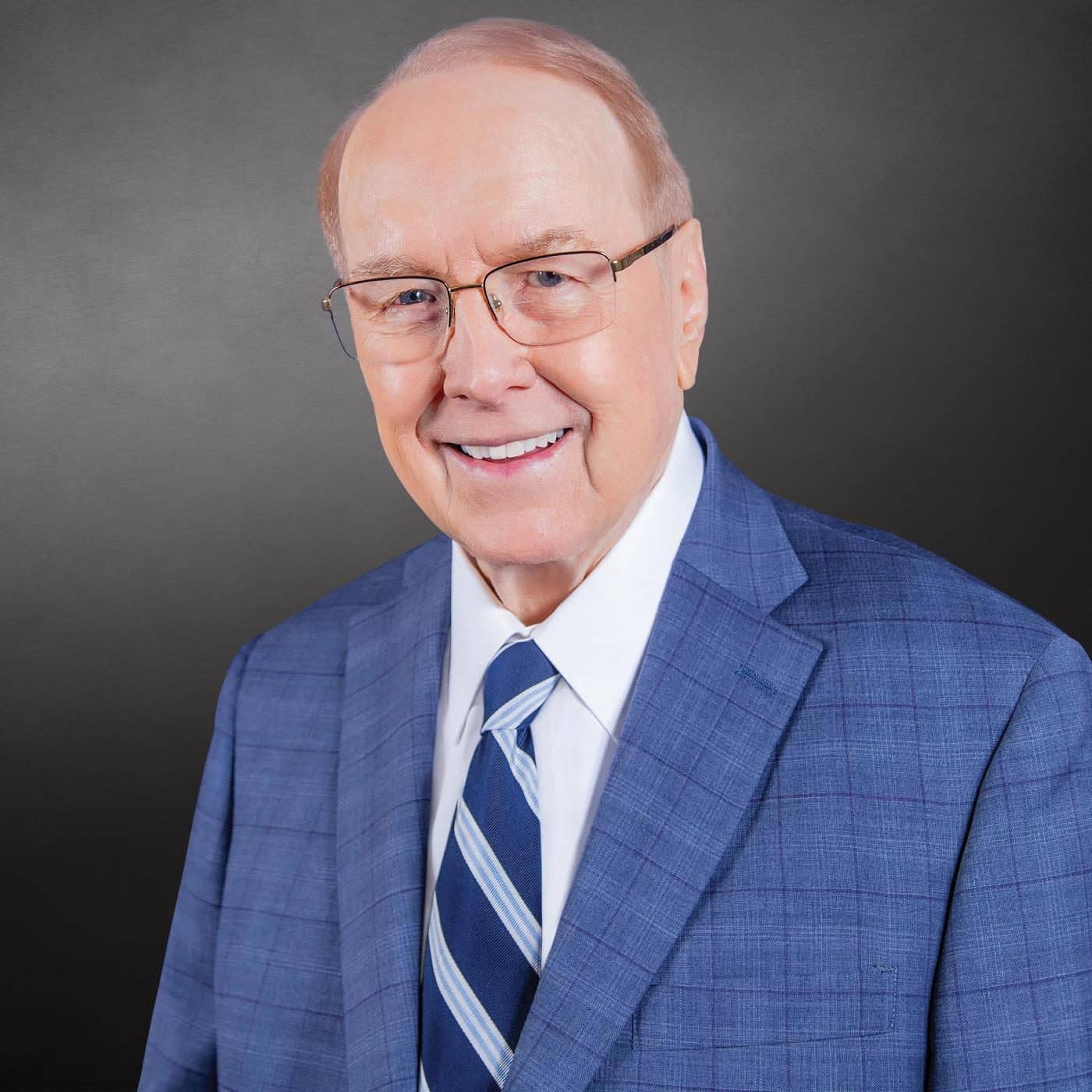

Join Dr. James Dobson as he welcomes Rachel Faulkner Brown, founder of Never Alone Widows, to discuss the challenges and opportunities faced by widows today. Hear Rachel’s personal journey through widowhood as she shares how faith and community played a pivotal role in her healing process. This episode dives into the ways churches and individuals can support widows in their journeys toward rediscovery, strength, and new beginnings.
SPEAKER 01 :
Welcome everyone to Family Talk. It’s a ministry of the James Dobson Family Institute supported by listeners just like you. I’m Dr. James Dobson and I’m thrilled that you’ve joined us. Well, welcome to another edition of Dr. James Dobson’s Family Talk, the broadcast division of the Dr. James Dobson Family Institute. I’m Roger Marsh in the co-host seat again and welcoming back our guest from the last edition of Family Talk, Rachel Faulkner Brown. Rachel is founder of the and leader of Never Alone Widows, the largest Christian widows ministries in the United States. And on our last program, we found out there are more than 12 million widows right now in the U.S., In addition, Rachel is also the co-creator of How to Widow Well, that great video series, and host of the There Is More podcast. Now, Rachel, as we mentioned on our last broadcast, was widowed twice, and now she equips women to rediscover joy and embrace their identity in Christ and live with renewed hope and freedom. She lives in Atlanta, Georgia with her husband, Rod, and their two children, Davis and Campbell. Rachel Faulkner Brown, welcome back to Dr. James Dobson’s Family Talk.
SPEAKER 03 :
What an honor. So happy to be back.
SPEAKER 01 :
Now, one of the resources, we’re talking about Widow’s Might, the 365 Days of Strength for Grief and Loss that’s released by Rachel Faulkner Brown and the Never Alone Ministries. But let’s talk a little bit about the video, too. I love this, where you’ve kind of made widowhood into a bit of a verb, if you will, how to widow well. Talk about what’s in that video. I think that’s a great title.
SPEAKER 03 :
Yeah. Well, that’s kind of what we were doing at our retreats. We were just like, hey, we didn’t do this well, so don’t do what we did. Do this. And so we made that into a series that we were like, if somebody never meets us and never gets to come to a retreat or can’t come to a conference, doesn’t have a local in their area, they can get this 20-video series, and they can really do widowhood well. I mean, financially well, spiritual warfare, raising your children, forgiveness. These are big, big topics because so many times you either need to forgive yourself, forgive your late husband, forgive the hospital, forgive. There are so many people for your friends who didn’t show up for you. You know, there’s a million ways that widows can hold offenses and offense kills. It is the most deadly of all things when it comes to widowhood because there’s a lot of ways to be offended. even in your grief. And so I just was like, hey, what videos would I have liked to have had? And that’s what we did. So this 20 video series, it’s really robust and helpful. I’m like, oh my gosh, I wish more widows knew about it because I do think like on day two after your husband dies, you could watch it and really feel like you had a grip on what you were doing because there’s such a fog around widowhood. There’s so many details. There’s so many people. There’s funerals to plan and Just people to see and death certificates to pass out. I mean, I was still giving out death certificates three years after Blair died because it just seems like it never ends. There’s always something related to the financial and business side of death because there’s a lot related to that.
SPEAKER 01 :
You know, it’s interesting toward the paperwork. I was married and divorced. And then my first wife passed away. She had a problem with alcohol. And I remember that paperwork part because my kids had to go through next of kin and this, that, and the other thing. But it impacted me because there were things because I was paying alimony. And no longer. And so I had to keep a copy of the death certificate handy. And sometimes I’d be filling out something like an application for a loan refi or something. And I had to present it. And I’m like, wait, what does this have to do with? But but it’s just even something like that. And that used to get under my skin. So I’m thinking I can only imagine what must be like for a widow. Who has to do the paperwork stuff, if you will, and process that. That’s another part of the grieving where you don’t want to be reminded of it. But like you said, three years after one of the passings, you’re still handing out those papers. And that’s just another reminder that if you haven’t healed it, well, if you don’t feel it, you can’t heal it. Is that what you just said? Right.
SPEAKER 03 :
Oh, yeah. Well, and everything changes. Your whole world is different. You are doing your world together. And then one of those people passes away. So every meal is different. Every business transaction is different. You know, every interaction with your children changes. You become, you know, we don’t want to say you’re mom and dad, but you kind of become mom and dad, you know, in some, I mean, everything around your home, like you’re responsible. It’s just everything changes. It’s really unreal. Yeah.
SPEAKER 01 :
Now, when you talk about how it impacts you as a widow because your spouse is no longer here, in your case, you mentioned the second time when Blair passed away in that accident, you were the mom of a two-year-old to five-month-old. And they’re still going and growing strong now, 19 and 17, respectively. Right. What was it like for them? I mean, in terms of, you know, it changes the way you process your life, but also in your case, process the way you parented because now dad isn’t here anymore. And then when Rod comes along, then that’s bonus dad. And that’s a whole different dynamic, too, because I would imagine some women get to a point. Where they’re saying, okay, I’ve been single for a while, and I got these two little boys, and you start thinking in the back of your mind, and they miss their dad, so I should start dating again. I mean, that sounds like it might be more common than it is. Please tell me it’s not, but you’re looking at me like it is.
SPEAKER 03 :
It’s very common. Yeah, it’s very common. You know, I mean, the human heart, we are all we all come into this world looking for someone looking for us. Right. And it does not change when you lose your husband. You’re like, who is going to look after us? Who’s going to look for me? You know, who’s going to shepherd these children? And, you know, that’s why I’m so adamant about the widows going after their own healing and Because at the end of the day, you do not want to bring your baggage into another marriage because you had baggage. And I think at the end, when we’re really talking about finding love again, and I cannot stress to them enough, if you have not been to therapy, if you have not done the work, Don’t expect to find someone who has, you know, because I think God really wants to bless you in that. And at the same time, He really wants you to go after the best version and you to know who you are in Christ and not just let the world tell you who you are. And that’s so hard and so easy to do when you’re widowed and tired and exhausted and just want help.
SPEAKER 02 :
Mm-hmm.
SPEAKER 03 :
But I think the reality is that when you do find love again, you want it to be forever, right? You don’t want to make a mistake and to marry someone who’s not best. And there’s a whole checklist. And what we always tell the widows is do not make red flags pink because widows can do that so easily. They’re just like, oh, well, he’s almost a Christian, you know, like a few more times to go to church and He’ll jump on over the edge and say yes to Jesus. I’m like, no. I mean, if you’re a believer, you want to be totally equally yoked. You want to look for somebody who leads you, not you lead them. And what do you want for your children? I think at the end of the day, you would be better off to raise your children in a godly environment that you are responsible for than to invite chaos into that environment just for you to feel loved. And is that really love? You know, and I’ve seen widows make mistakes and just have so many regrets. And so we’re like, don’t, do those things. You don’t make the red flags pink and, you know, really pay attention to how it feels to be around him. And I dated some guys who, you know, honestly, they weren’t the best for my family and for my children. And my friends, they helped me recognize that. They were like, he’s not good for you. And that felt so hard for me because it was people who were spiritually really mature, but emotionally immature. Hmm. And sometimes that’s hard to see when love gets in the way. Oxytocin is a drug. And it is real. And so especially when you’ve been alone for a few years, you’re like, oh, I’ll just ignore that. And, you know, at the Holy Spirit’s, I was dating a guy who lived in Colorado. And every time I thought about moving to Colorado, it felt like I got a terminal cancer diagnosis.
SPEAKER 02 :
Oh, wow.
SPEAKER 03 :
Well, that was the Holy Spirit saying, this is not good for you. But I was just like, well, it’s just my fear. And, you know, I’ve never left home. And no, it was the Holy Spirit speaking. And my friends picked up on it. And praise God they did because I was just head over heels crazy about him. But they knew. They saw it. And I think that’s what we recommend as well is, you know, introduce them to as many people as possible. Adults. that love you because they will see things that your blind, googly, lovey eyes cannot see. And it’s powerful. It’s really powerful.
SPEAKER 01 :
You know, I think about that whole marriage and remarriage situation with widows and widowers, too. I recently had lunch with a gentleman who had been married for 52 years. His wife died of cancer, and about five years after he had been widowed, he wound up meeting another widow and she was wonderful and they wound up getting married and he was 79 years old and his kids were, you know, what are we going to do? And we had the most delightful talk about what it was like for him. He said, I didn’t need to do this. I wanted to do this. You know, we just, we really enjoy each other. We have similar experiences and, you know, and it’s nice to see people find that at a certain age. Yet you’re talking about an average widow age of under 60, right? where there probably are some people listening to our conversation right now who are saying, I have a kid. My daughter was just widowed, or my son was just made a widower. Talk to the person who’s in the older generation who says, or maybe like what it was like with your parents when you were widowed not once but twice in your 20s and then in your 30s. How can we utilize a ministry like yours to help them?
SPEAKER 03 :
Yeah. Well, we actually have one of the Widowing Well series. It’s how to be a great friend to a widow, you know, because it really is, you know, my parents, my in-laws, they showed up for me. I needed a lot of help. And, you know, my mom… The day after Blair died, she said, Rachel, she was like, I don’t live here. I’m two and a half hours away. But promise me that you’ll take a shower every day and just wash off the grief from the day before. And honestly, it was brilliant advice. Because think, a shower is just such a reset. And you’re literally physically washing off the grief of the day before. And so there’s just this mental preparedness for a hard day. I mean, every day was kind of hard. I’m not going to lie. And so my parents really did show up. I mean, they grieved. as hard as I did. I mean, they loved Blair. They loved Todd. So it’s like they lost two children on some level. They weren’t biological, but they loved my husbands. And so, yeah, watching your children grieve, I think, it’s like watching your kids be sick. You’re like, please, just let me be sick. My mom would have taken it any day. If she could have taken it from me, she totally would have. But I think the biggest thing that parents can do is really – show up to help with the kids. If you’re older and you’re watching your daughter grieve, I think just saying, reaching out with a phone call, a text, I’m praying for you today, a scripture every day. My friend Melissa, she would text me every day for a year. She texted me every morning, I’m praying for you today. And honestly, I didn’t even know, you know, I don’t remember many texts, but I remember Melissa’s because she was so consistent. And I think that’s the thing with friendships is, you know, consistency wins. It’s not the big stuff. You know, it’s really like who’s consistent and parents, it’s so important for them to to be consistently a part of those children’s lives. My parents were amazing grandparents, took my kids on trips. They did special things for them. And happy families, I will say this is not how everyone is blessed to have grandparents near them. But the happiest families have grandparents close and they know their children. And so just make the investment. It’s worth the time.
SPEAKER 01 :
Well, speaking of investments, you have a brand new book out, and I’m not suggesting people go run out and buy it, but I am recommending that you take a look at this book anyway. The book from Never Alone Widows and Rachel Faulkner Brown is called Widows Might, and it’s spelled M-I-G-H-T, and that’s for widows power, not widows maybe, right? I mean, in terms of one of the quirks of the English language is you could use that word in one of two different ways.
SPEAKER 03 :
Definitely not maybe.
SPEAKER 01 :
Yeah, definitely not maybe. 365 Days of Strength for Grief and Loss. Talk to the woman who is listening to our conversation right now and says, wow, I really want to pick this up. I want to read these experiences of these other widows. What is your hope? I mean, other than just, obviously, there’s the sisterhood, there’s the connection, the reaching out through these entries that are written in this book. But what is your hope for someone who is trying to benefit from this?
SPEAKER 03 :
Yeah. Well, I think at the end of the day, a lot of people are reading Widow’s Might that aren’t widows, you know, because people who have experienced loss find treasure in those pages. And because revelation is revelation is revelation, right? And these women have had God revealed to them in the fire, and they didn’t come out smelling like smoke. And I love that phrase because I think so many of our widows who had the ability to write for this book— They know where their help comes from, and they know that Holy Spirit was in the fire with them. Jesus was in the fire with them, and they didn’t burn up, and they’re still here to talk about it and declare His goodness. So my hope is that it would become the streams in the desert for the widow. That’s really what I hope, because it is that—it has that— It has that ability to give you just enough for the day because it’s for the day, Roger. You know, we cannot, and no one knows about planning for tomorrow that you can’t do that more than a widow. And yeah, so it’s just, what can we do today? What nugget of the goodness of God can we hold on to today? Yeah.
SPEAKER 01 :
I love that, how perfect that is. It’s manna when you think about it. I mean, it’s for today. We don’t know what tomorrow is going to bring. Even Jesus said, look, let tomorrow worry about itself. You know, deal with the issues that you’re dealing with today. And I want to put this out here, and I’ll get your reaction to it, Rachel. I mean, there’s a verse in Scripture that I’ve always loved, but it just hit me recently as we’re taking a look at this material here and getting ready for our conversation. In James chapter 1, a lot of people talk about the sanctity of human life, you know, the value of human life, the dignity of human life, and of course, For the American church, that means we support any measure that would prevent abortion from happening. We want to protect the most innocent lives in the womb. But James 127, I know you know this verse, religion that God our fathers accepts as pure and faultless is this, to look after orphans and widows in their distress and to keep oneself from being polluted by the world. You have hit upon one of the largest sanctity of human life groups in the nation right now in terms of caring for orphans. the widow that often get overlooked. And this really is kind of a pro-life issue in addition to being a pro-family issue and a women’s health issue. There’s so many different needs that are being met by what you’re doing with Never Alone Widows. Talk about that.
SPEAKER 03 :
Yeah. Well, I think at the end of the day, widows feel forgotten. I mean, I hate to say it, but the music fades and everyone goes away. The funeral’s over and everyone’s back to life and your life is completely blown up. And my mission on the earth is to let them see that we haven’t forgotten them. The church hasn’t forgotten them. God certainly hasn’t forgotten them. And sometimes they just need a little help to move those cobwebs out of the way. And I feel like that’s what we’re doing at Never Alone is just helping them see there’s a lot of other people in the same situation. And one of my big things, Roger, is if anyone listening is asking the question, why did this happen to me? Not just about being widowed, but why did whatever happen to me? Why did my mom have to die young? Why did whatever the question, why did I have to have a miscarriage? You can ask that question the rest of your life. and it will never lead people into the kingdom. But you can ask, who did this happen for? And that’s what Jesus did in Mark 5. He was like, there’s a demon-possessed man on the other side of this storm, and I’m going over there, and y’all can come with me. And that guy is going to go preach the gospel to 10 cities. And Jesus could see all that, right? If we could just see who was on the other side of what has happened to us, we would be living really different lives. But So many people keep asking the same question, why did this happen? And I was on a call yesterday, and the pastor said, we’re all called to be martyrs. And I was like, what? And he said, we’re all called to be martyrs, to die to the need to understand. Oh, my word, change my life, right? Yeah. I’m the first to sign up to be a martyr. I will be a martyr all day. I will die to the need to understand. And I’ve died to that, Roger. And there were thousands and thousands of widows on the other side of my, who did this happen for? And I could have never seen that. And it’s true in any hard situation.
SPEAKER 01 :
When you talk to the pastors who are listening right now and are having this thought or maybe second thought saying, yeah, there are a lot of older people in my church, and we know there’s some widows there. We kind of talk to them, but we just provide busy activities for them. We don’t really help them. Maybe I think of someone who might have been widowed in her 20s or 30s. Now she’s in her 50s, 60s, 70s, maybe even 80s, and has never really had the chance to I mean, how can churches take advantage of the resources that Never Alone Widows provides?
SPEAKER 03 :
Well, we would love to partner with churches. I mean, we would love for you to host a Never Alone Widows local group. And I will say there’s a church in San Clemente, California, Shoreline Church. I’ll just highlight them because they have done it so well. They partnered with us. They’ve got 75 widows coming to their group. They pay for dinner. They pay for childcare. They pay for the worship team. They set up the tables. They have made it so plug and play for the ministry to happen. And that’s what churches have the ability to do, that we as a small ministry in Atlanta with a small budget, we have $100 per of these local groups that we give them every year, every month. Well, you can imagine $100 goes really fast. But if that church comes along and says, hey, I’m going to be your paraclete. I’m going to come along beside you. We see the widows. And again, Roger, when you build it, they will come. They want community. They want to be seen. They want to be known. We all want to be known, right? And so if you build it, they will come. And so I would love to partner with more churches. I mean, please reach out to us. Hello at NeverLoneWidows.com. And we will plug you in, figure it out, and just help you see that the need is so great. The emotional and spiritual health of your entire church can be changed through a widow’s ministry. I mean, I know that sounds crazy, but it’s true. Because these widows have a very, very important destiny. And their stories hold a lot of weight. And utilizing those testimonies, that’s how we overcome.
SPEAKER 01 :
Amen. Amen. I love that thought. I love that proactive design to get the local church meeting the needs of widows right where they are. And an organization like Never Alone Widows has the resources that you need. NeverAloneWidows.com is the website?
SPEAKER 03 :
NeverAloneWidows.com. Yes. Yes. And at Never Alone Widows on Instagram.
SPEAKER 01 :
Okay. Check them out on social media. We have a link for Widow’s Might, 365 Days of Strength for Grief and Loss by Rachel Faulkner Brown, which is the new book that’s just now out. And I highly recommend it as well. And then once you’re online, also check out the How to Widow Well video series. And also that there is more podcasts. We haven’t talked about your podcast. Can you give us a little plug for that as we’re wrapping things up here?
SPEAKER 03 :
Yeah, absolutely. I mean, the podcast is just—we started during COVID. We started doing little Instagram Lives, and we called it Second Cup. They were drinking their second cup of coffee with us.
SPEAKER 01 :
Love it.
SPEAKER 03 :
And we were interviewing our friends, and we just turned that into a podcast. And now we interview people who have radical stories of healing. It’s so encouraging. I mean, we have interviewed doctors, too. you know, pastors to normal people who just have radical testimonies of God’s goodness and healing. And it is so fun. We absolutely love doing it.
SPEAKER 01 :
Rachel Fogler-Brown, thank you so much for the work that you’ve done. I know this is, like we said at the outset, this is a ministry that no woman would ever want to have to or feel compelled to found. And yet God, in His mercy, gave you a unique testimony, being widowed twice by the age of 31, and then finding the man of your dreams. And we got, let’s have the special Rod Award for Ron and the work that he’s done. Was he your biggest fan in starting Never Alone Widows, or was he kind of a reluctant convert? How did that work? Because you described your marriage as really having a good harmony.
SPEAKER 03 :
Yes. I mean, Rod, when we both found each other, we both wanted ministry partners. We knew God had called us into something different and bigger. And this was the third time I was like, I’m going for it. I only get one more chance here. And so I think at the end of the day, Rod was in ministry for 26 years at a large church here in Atlanta. And, you know, he knew it. He had the connections. He was such a champion for me. And honestly, it was kind of funny. We were just paying for the ministry for four years before Rod was like, hey, honey. It’s selfish for you to keep doing this alone. I was like, I don’t want a board. I don’t want money. I just want to pay for it out of all our stuff. And he was like, yeah, but that’s not how the kingdom works. And so he’s pushed me, you know, to think bigger and not keep it small just because it was what I could manage.
SPEAKER 01 :
Right. I mean.
SPEAKER 03 :
Oh, gosh. I mean, Rod is Rod is the ultimate helpmate for me. And I’m for him.
SPEAKER 01 :
Love it. Love it. It’s like you were made for each other, even though you had a couple of other. But this is the guy moments beforehand. So God and his mercy and his sovereignty. How wonderful. Well, Rachel Faulkner Brown, it’s been a delight to get to know you. Thanks for being with us today here on Dr. James Dobson’s Family Talk. Rachel Faulkner Brown’s story is a real encouragement to widows everywhere. It’s also a powerful reminder that the church can play a pivotal role in the healing process when we show up consistently, not just at the funeral, but in the months and even years that follow. And that concludes my conversation with Rachel Faulkner Brown here on Dr. James Dobson’s Family Talk. If you missed part one of our discussion, or if you’d like to revisit any portion of today’s broadcast, remember you can find both programs online at drjamesdobson.org forward slash family talk, or just go to jdfi.net. While you’re there, be sure you also check out Rachel’s devotional book. It’s called Widows Might, 365 Days of Strength for Grief and Loss. It’s a collection of insights from several hundred women who found God faithful in the fire. And by the way, you’ll also find a link for Rachel’s ministry, Never Alone Widows, when you go to jdfi.net. You know, for over 15 years, Family Talk has been a steady source of biblical encouragement for families navigating every season of life, and your support helps us continue ministering to families in their greatest time of need. If you share our heart for strengthening families and sharing the gospel of Jesus Christ, we invite you to partner with us here at the Dr. James Dobson Family Institute. Your tax-deductible donation of any amount makes a real difference in reaching families all across America. And you can make a secure donation over the phone when you call a member of our constituent care team. That number is 877-732-6825. That’s 877-732-6825. If you’d prefer to make your gift by mail, you can mail your tax deductible donation to Dr. James Dobson’s Family Talk, P.O. Box 39000, Colorado Springs, Colorado. The zip code Once again, that’s Dr. James Dobson’s Family Talk, or just use those initials, JDFI for short. P.O. Box 39000, Colorado Springs, Colorado, 80949. course, you can always make a donation online. It’s secure at our website at jdfi.net. I’m Roger Marsh, thanking you so much for listening to Family Talk today and for your support of the Dr. James Dobson Family Institute. Be sure to tune in again next time right here for another edition of Dr. James Dobson’s Family Talk, the voice you trust for the family you love. This has been a presentation of the Dr. James Dobson Family Institute. Hi, everyone. Roger Marsh here. At the Dr. James Dobson Family Institute, we believe strong families build strong communities. That’s why we’re committed to providing you with resources that strengthen your home. Thank you for partnering with us to support and encourage families all across America.