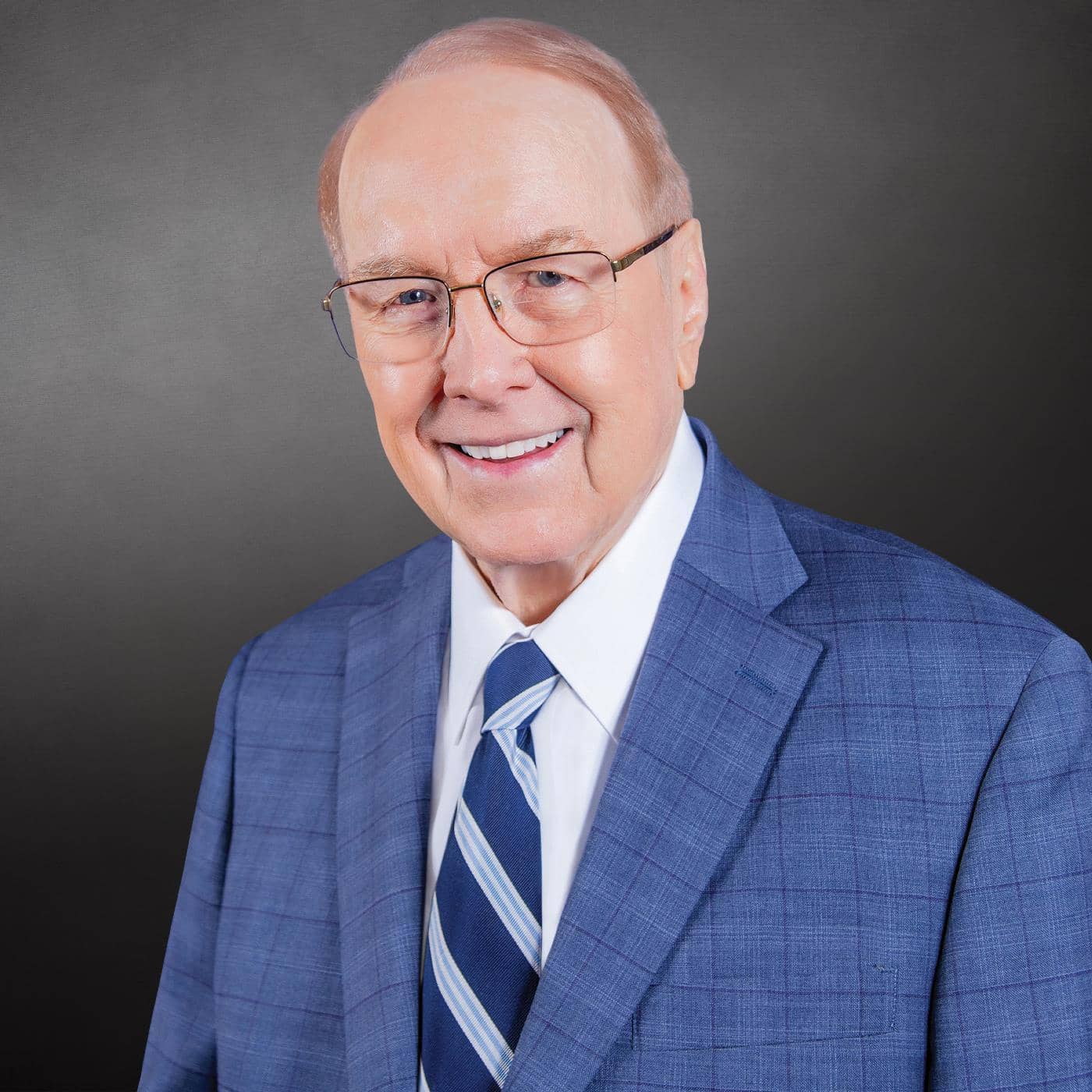


Many people struggle with alcohol and other addictive substances, but very few actually receive treatment. Today on Family Talk, Bob and Pauline Bartosch, authors of Overcomers Outreach: Bridge to Recovery, reveal to Dr. James Dobson their past dependency on alcohol and valium. Ultimately, they both found hope and healing in the Lord, and through support communities in Alcoholics Anonymous and Al-Anon. Out of their experience, Bob and Pauline co-founded Overcomers Outreach, a Christ-centered addiction support group.
To support this ministry financially, visit: https://www.oneplace.com/donate/707/29
Broadcast: Overcoming Alcoholism Guest(s): Bob and Pauline Bartosch Air Date: September 13, 2024 Listen to the broadcast Dr. James Dobson: Roger Marsh: Welcome everyone to Family Talk. It’s a ministry of the James Dobson Family Institute supported by listeners just like you. I’m Dr. James Dobson and I’m thrilled that you’ve joined us. Well, hello friends and welcome to Family Talk, the broadcast division of the Dr. James Dobson Family Institute. I’m Roger Marsh. You know, it is no question that alcoholism can be devastating both for the alcoholic and for their immediate family. According to a 2023 national survey on drug use and health, nearly 29 million people in the United States have an alcohol use disorder, which is the clinical diagnosis for alcoholism. Here’s another amazing statistic. More than 10% of the children in the United States today live with at least one alcoholic parent. That’s right. 10% of the 77 million children. 3.3 million people between the ages of 12 and 20 have reported binge-drinking just in the last month alone. Alcoholism causes so many relational, financial, marital and even legal problems, not to mention all of the related health problems and the possibility of death. The fallout from alcohol addiction is almost always disastrous. Well, on today’s classic edition of Family Talk, Dr. Dobson is talking with a married couple who both struggled with and ultimately overcame addiction. After finding freedom, they dedicated their lives to helping others break free from the cycle of addiction as well. Bob and Pauline Bartosch started Overcomers Outreach to assist those in search of recovery from addiction to alcohol, drugs and other substances. The focus of their ministry is to help others reach sobriety and to build and restore faith in Jesus Christ. Since the recording of this program, Bob has since gone home to be with the Lord. That happened back in 2006 and Pauline joined him in heaven in 2019. Well, although they are gone from this world, their ministry has continued on. Overcomers Outreach has over 500 gatherings that take place every year in the US, the UK, Canada and the Virgin Islands. All of these events emphasize helping people find freedom from addiction through faith in Jesus Christ. Now, Dr. Dobson interviewed Bob and Pauline several years ago, but as you’ll hear from the conversation, it’s just as powerful today. Maybe even more so now. 1Well, let’s join Dr. James Dobson and his guests, Bob and Pauline Bartosch right here, right now on Family Talk. Dr. James Dobson: Bob Bartosch: Pauline Bartosh: Dr. James Dobson: Pauline Bartosh: Dr. James Dobson: Pauline Bartosh: Dr. James Dobson: Pauline Bartosh: Dr. James Dobson: Bob Bartosch: Dr. James Dobson: Bob Bartosch: Well, we’ve invited a couple of guests to be with us today who’ve spent their adult lives trying to prevent alcoholism and to help those who are already snared by that addiction. They’re Bob and Pauline Bartosch who had a ministry called Overcomers Outreach, which we’re going to hear more about in a moment. Bob and Pauline have written a book called A Bridge to Recovery, which is based on Overcomers Outreach. As a matter of fact, it’s filled with stories of people who have been able to deal with an addiction of one sort or another. Bob and Pauline, it’s good to have you back. It’s good to be here. Great to be here. 16 years have gone by, nearly 17 since you were here. A lot’s gone on. Pauline, you’re about to retire or did just retire. We’re just on the edge of it. Yes, we are. But I don’t think we’ll ever retire from trying to be involved in people’s lives who are struggling with the addiction of alcohol and drugs because we’ve been there and we know how it feels as a family to be devastated by this terrible disease. Whyhaveyoudevoted your entire lives to that subject? I mean, it’s not a pleasant topic and people who are involved in alcoholism are frequently not pleasant people for a number of reasons. That’s so true. Yet you have poured your lives into them. Well, and a lot of people say, isn’t that terribly depressing to work with people like that? And yet when we see the miracles that happen when God intervenes and brings recovery to families and to individuals that , for all practical purposes their lives have been blown apart, it’s such a big miracle that we dare not be quiet about it. These two folks have both been addicted to substances. Pauline, yours was Valium and Bob, yours was alcohol. That’s right. Let’s go back and tell that story very quickly again. I was raised in a wonderful Christian home. I went to a Christian college studying for the ministry. I had my first drink at the age of 24. I was rebelling against some of the man-made rules that I had been taught, and for probably 10 years, I 2consider myself to have been a social drinker. And by that, I mean I could take it or leave it. There were times when I’d overshoot the mark and then the next morning I’d have the decision to make the physical pain, and I always decided the fun I had the night before was worth the pain I was going to suffer the next morning. But about 10 years down that road, I crossed that line where I would try and stop and found out that I couldn’t. And that was really a very bad feeling because most things did not have control of me like that. But alcohol had me whipped. And the sad thing is we were raising three sons who were teenagers then, and it was unpredictable for them which dad would come home at night, the drunk one or the sober one. Dr. James Dobson: Pauline Bartosh: Bob Bartosch: Dr. James Dobson: Pauline Bartosh: Dr. James Dobson: Pauline Bartosh: Dr. James Dobson: Bob Bartosch: Dr. James Dobson: Bob Bartosch: And Pauline now, you all were married at this time? Oh, yes. Yes. And what were you experiencing? Well, I suddenly had a different husband than the one I had married because whenwegotmarried, he was studying for the ministry, and of course alcohol wasn’t part of our lives at all. But then both of us went into a period of rebellion and got caught up in that lifestyle and it just destroyed us. You got into Valium because you were trying to escape from Bob’s alcoholism? Well, I went to my Christian doctor and shared a little bit of the story that was going on in my homeandhesays, “You know, if you just take a little bit of this, it’ll maybe ease some of your despair.” And I found that it did. It was kind of an insurance policy every day to take that Valium. But then one day I realized that wedidn’t have just one addict, now we had two. And here I had been looking downmynoseatBobfor his drinking, and yet I was numbing my spirit each day with a little pill. What waslife like at that time with two addicts in the same house? Well, every Sunday you would’ve seen us in church. That’s one way life was like. Wemight have fought all the way to church, but once we hit the parking lot, on would go the big smile. Did people not know? No, wehid it from people well, and that’s what’s so sad. There’s so many people in church that have these problems and are afraid to share them with anybody. So they’re sort of forced to hide it because you can imagine what would’ve happened if my alcoholism had become known. In fact, one of my best drinking 3buddies was a pastor, and after I got sober, I wanted to share with him what God had done in mylife and he wouldn’t return my phone calls. But if you think through his situation, where could he go for help? He couldn’t go to his church board and say, guys, I’m having a problem with booze. And so it took a serious accident. God got his attention and he’s sober now back in the ministry in another denomination, but lots of times the church is not a safe place to be with these kind of problems. Dr. James Dobson: Bob Bartosch: Dr. James Dobson: Bob Bartosch: Pauline Bartosh: Dr. James Dobson: Pauline Bartosh: Dr. James Dobson: Pauline Bartosh: Dr. James Dobson: Pauline Bartosh: Dr. James Dobson: Were you able to work? Yes. Of course, I was my own boss, and so I’ve never been fired. Yeah. There’s part of the problem. And I’ve never been arrested for driving under the influence, although I should have many, many times. But I was able to do my job. I was the one that was hiding it. I worked harder at hiding it because I was the one that would think up the excuses and tell little lies to cover up what was happening. I was denying it too. I just couldn’t imagine that this was happening to us, and so I called it by a lot of different names. Like I told our kids that he was senile early and one time I cooked up a good brain tumor for him, and I had all these reasons why he was behaving the way he was behaving, but I was every bit as crazy as he was. One of the characteristics of the families of an alcoholic is that they don’t want anybody to know. The whole family begins to hide it, don’t they? Oh, we’re wonderful at it. And becomeenablers. Were you an enabler? Oh, absolutely. Explain what that means. Yes. In fact, I think really if I had been able to step out of the way and let my husband hit his bottom earlier, he would’ve gotten help earlier. But I was always there to save him. I was there to pour the booze down the sink. I was there just to make sure that nobody knew. And I really think that if I had let go and let God like they talk about in the 12 step programs… And that’s difficult to do because wejust want to hang on to a corner of it. We just think that we can think of something to fix this person, and nothing that I tried fixed him at all. It just made it worse. So an enabler is someone who, by their behavior, makes the problem worse. 4Pauline Bartosh: Yes. Dr. James Dobson: Bob Bartosch: Dr. James Dobson: Pauline Bartosh: Dr. James Dobson: Pauline Bartosh: Dr. James Dobson: Bob Bartosch: In thinking that they’re trying to fix it and make it better. Well, for instance, Mondays were never very good for me and they’re not good for most alcoholics because we usually have done a lot of drinking over the weekend. But on Mondays, I could always rely on Pauline calling the office and telling them I was home sick. And she’d do that faithfully until finally she got involved in a 12 step group and that behavior changed. Then that was very, very painful for me. All right, that turns the corner into the way out for you all. Pauline, you sought help first. Yes, I did. And I think that’s why love your book, Love Must Be Tough because all those principles are right in your book there about tough love and it’s so important. But I didn’t just waltz into a 12 step group on a nice warm, sunny day because I had nothing else to do. I was there because I was hurting desperately. I could see my marriage was going out the window. We had already tried divorce and had gone back together and I was at my wits end. And I had gone to a counselor and he insisted that I go to a group called Al-Anon Family Groups, and I said, “Well, maybe.” And it took another year for me to get there. We resisted. By the time I got there, I walked into that room with the biggest plastic smile you’ve ever seen because I was used to doing that at church. In fact, I walked in with a little list of questions on a little piece of paper and all I wanted was answers to my questions so that I could rush home and fix it. Don’t you wish it was that easy? They just said, “Keep coming back, honey. It works.” Bob, did you know that she had gone to Al-Anon? I don’t even remember whether I did or not. I must have because things were changing so rapidly around our household. Not only not calling the office, but I used to come homedrunk and beable to pick a verbal argument with Pauline. Then myresponse would be to her, “Well, if that’s the way you feel…” And then that gave me permission to go back out and drink some more. Well, she gets into Al-Anon and I try and pick a fight with her and she wouldn’t react. She’d just smile and say, “See you later.” Then she’d take off and go to a meeting or something. They call it release with love. But the year prior to even Al-Anon, I had sought help for my problem and the first place that I went is the first place I think many of your listeners would go, and that’s to my local pastor. And his suggestions to me were good. He told me to go home and read the Bible and pray and I would do that and then I’d get up and mix myself another drink. 5He wasunaware of what addiction is all about. He was looking at it strictly from the spiritual point of view and overlooking the emotional and physical. Dr. James Dobson: Bob Bartosch: Dr. James Dobson: Pauline Bartosh: Dr. James Dobson: Pauline Bartosh: Bob Bartosch: Dr. James Dobson: As though it were a rational process. Yes. And so in my case, the ministry I went to wasn’t much help. My next place to go for help was my medical doctor and he prescribed Valium for me. So I was drinking and taking Valium, which in the alcohol field we refer to that as a Hollywood death. That’s the way a lot of motion picture stars die unintentionally because it has a synergistic effect, mixing alcohol with Valium. Wewenttoamarriage counselor because our marriage was certainly in disarray and he washelpful in opening up lines of communication using empty chair techniques and different things, but he really didn’t address the alcohol problem too much. Pauline would say, “Well ask him about his drinking.” And he’d say, “Well, how much do you drink?” And I’d say, “Oh, one or two now and then.” And he’d look at Pauline and he’d say, “Well, that’s not very much.” So he didn’t lead me to any place where I could get help. It took this second year until Pauline got into Al-Anon, and then that’s when I got some help. Okay, truncate that story now. You are in Al-Anon, Pauline and Bob, you haven’t gotten the message yet. How do you get from there to wholeness? I had to start with myself. I had to get my focus off of Bob and put it back on the Lord again. And I learned that from a traditional 12-step group to put my eyes back on Jesus Christ. They didn’t tell me to put my eyes on Jesus Christ. They talked about God as you understand him and of course that person is Jesus Christ in my life. But when we’re so busy as family members trying to fix somebody and figure everything out, we don’t have time to really ask for his help. And usually we go to him with a list of instructions of the things he should be doing instead of saying, God, what is it that you want for my life? I want your will in my life. And sometimes we forget that he has the best in mind for us. How’d you get Bob there? I didn’t. Well, we were going to a Garden Grove community church and we were in a small, they called it talk-it-over group, and Pauline shared with a prayer partner the fact that I had an alcohol problem. Now it just happens that this couple that she shared it with worked at a large firm in Southern California that had an employee assistance counselor. And so I was invited. I didn’t want to go, but I didn’t have much choice. I was tired of my suitcase being out on the front porch. So I was invited down. Love must be tough is what it’s called. I got it from your book. Pauline Bartosh: 6Bob Bartosch: I was invited to meet with this alcohol counselor and found out that he’d been a sober member of Alcoholics Anonymous for about 25 years. And the first thing he did, he gave me a 40 question test and I lied on every question. So I think the first thing your listeners need to know in dealing with this problem is that alcoholics are not truthful. We can’t be because if we’re truthful, then we have to get in touch with what’s wrong and do something about it. So it took another year and then I finally went back to that counselor again and he told me about Alcoholics Anonymous and I went to my first meeting. They started talking about 12 steps to recovery and I was so foggy, it took me several months to even be able to identify what they were talking about. I pictured a building with some steps going up to it. But I finally was able to catch that idea and I had to admit that I was powerless and that I was whipped, and that’s where it all started. By giving up and letting God take over. Dr. James Dobson: Bob Bartosch: Dr. James Dobson: Bob Bartosch: Dr. James Dobson: Bob Bartosch: Dr. James Dobson: The Christian community has often been critical of this 12-step program. Explain why andwhat’s your answer to that? Well, you’re absolutely right, and we fight this every day. In fact, Jesus is not mentioned in the 12 steps of AA. And when I say 12 steps of AA, those are the ones that other groups have adopted, either Narcotics Anonymous or whatever. This is one of the reasons why we started our Overcomers group where people could come and where we could talk freely about Jesus. But Overcomers was never meant to be a replacement. It’s just a bridge between the two. As a matter of fact, in some of the preparatory material I got for today, you had said, Bob, that there’s a 25% greater probability that people in the church who are involved in alcoholism will hide it than those whoYes. We think in a normal non-church population, one out of 10 people who drink will become alcoholics. We’ve got to be fair, that means that nine out of 10 people who drink will not. So just because somebody has a glass of wine with dinner doesn’t mean they’re going to be an alcoholic. But in a church situation, particularly the evangelical church, you can pretty well throw away that one out of 10. It’s much closer to three or four out of 10, and wefeel that it’s because we drink with guilt. And of course a guaranteed way to get rid of guilt is to have another drink. So people in churches who start drinking are really setting themselves up for having this problem. Well, we’ve talked several times about the Overcomers group that you all started. I understand they’re between 800 and 1000 of those groups now. In every state, I think 12 or 13 foreign countries. And that has all come since you were here in 1980. That’s right. Bob Bartosch: 7Pauline Bartosh: Yeah. We had a vision to start one group and look what God did. Dr. James Dobson: Pauline Bartosh: Dr. James Dobson: Pauline Bartosh: Bob Bartosch: Dr. James Dobson: Bob Bartosch: Dr. James Dobson: Bob Bartosch: Dr. James Dobson: Be moreexplicit about what goes on there. How does that differ from a 12-step program? It doesn’t replace it. No. And the wonderful thing about it is we use the same 12 steps. We haven’t changed a single word in those 12 steps, but we use the Bible with the 12 steps because the steps come right out of the Bible in the first place. That’s right. And wegettopray together and we care for one another in wonderful ways because we’re all in the family of Jesus Christ. We’re trying to reach two different populations. One, people within churches whohave these problems who for whatever reason they have would not go to an AAmeeting, but they’ll come to an Overcomers meeting. And we’ve found, however, if they use that as their only resource, many of them will fall flat on their face because one meeting a week isn’t enough for somebody coming out of an addiction. So we plug them back in to a traditional group that meets their needs. But the second population, we don’t want to overlook that. There are literally thousands of people in groups such as Alcoholics Anonymous who are getting tremendous help for their problem. And they know there’s some kind of higher power that’s doing it, but they’ve never identified who that higher power is. And of course, we know who that is. It’s Jesus Christ. And so we invite people from 12-step groups and we have to do it in a proper way. You don’t just raise your hand and say, “Hey…” Here I am. Yeah. But after the meeting, you can go to a person… Where it really comes up is where they have trouble with step three on who God is in their life. And I’ll simply go up to a person and say, “I appreciate what you’re sharing. And a lot of people have had that same struggle and for some of us, we found the answer for us to be Jesus Christ. And we have a meeting that meets up.” And I tell them where it is, where we use these exact same 12 steps. See, that gives it… Legitimacy. Yeah. Legitimacy for them. Only we talk about Jesus. And we’ve had many, many people from just the local meeting that I go to who come to a Overcomers meeting and have found Christ as their savior. Let’s suppose we’re talking to people out there who are desperately in need of your program. How do they find one? Well, they certainly could call our office or they could call your office or write. Bob Bartosch: 8Wecould send them alisting of meetings in their state or in their area. They could get our book, the Bridge to Recovery, which gives these 31 stories of people from all addictions, not just alcohol. In fact, at the office now, more than half of our phone calls have to do with sexual addiction, which seems to be the… Dr. James Dobson: Bob Bartosch: Pauline Bartosh: Dr. James Dobson: Bob Bartosch: Dr. James Dobson: Bob Bartosch: Dr. James Dobson: Pauline Bartosh: Dr. James Dobson: Pauline Bartosh: Dr. James Dobson: Pornography is just crazy. It’s where alcohol was 20 years ago. Oh, it’s crazy. Absolutely. All right, we’ve got time left just for these two questions. The first one to you, Bob, and the second one to you, Pauline. Bob, I’d like you to talk to the person who’s listening to us who’s never admitted to himself or herself that they are an alcoholic and they happen to be listening to the radio today and they heard this. What do you say to them? Well, if alcohol is affecting any part of your life, whether physical, mentally, financially, or any way, you need to get help. And there is help available and the availability that seems to help more people than any other in our country is Alcoholics Anonymous. And I would suggest that you run, not walk to a local meeting of AA. And you’re not likely to whip it on your own because there is a chemicalVery few Lone Rangers in recovery. We need each other. Absolutely. Pauline, talk to the families of an alcoholic who are enablers and who have not yet approached it in the way that you did. They’re still trying to fix the problem. I guess the main message that I want to convey here today is that there is hope. You maythink there’s just no hope at all, but I have good news for you. There is hope because I’ve been in that hopeless spot. I know how it feels. I’ve tried the divorce and I’ve done all those things and I am to a place now where I’ve seen literally thousands of people get help by reaching out and getting help for ourselves. And the Lord was there when you needed him too. The Lord was there. We have to start with ourselves, put our focus upon him. He will give us new ways of dealing with this alcoholism problem. Different ways than we’ve ever figured out before. I thought I had it all wired and all figured out before, but I didn’t until I let go and let God and let him do it his way. Well, you guys look great. Pauline, and no one would ever believe that you’d been addicted to anything but love. And it is neat to see you here after all these years and then Bob, and to see what the Lord has done with you all and we would like to stay in touch with you. 9Bob Bartosch: All right. Pauline Bartosh: Roger Marsh: Announcer: Thank you. Well, there’s always hope when you lean on the Lord. Amen. If you are struggling with alcoholism, I encourage you to reach out to the Substance Abuse and Mental Health Services Administration’s national hotline. That number is 1-800-662 and the letters H-E-L-P. It’s a free call and it’s a confidential hotline that is available every day, 24 hours a day, seven days a week. If it’s easier, you can reach them by texting them at the number 988. And by the way, if you’d like to learn more about Bob and Pauline or the ministry of Overcomers Outreach, visit today’s broadcast page at drjamesdobson.org/familytalk. Pray, engage, vote. Think about those words for just a moment. We as believers need to put our faith and patriotism into action, but sadly though, many Christians don’t take the time to get out and vote at all. The future of America is at stake right now, and if we stand together and vote, we really can create positive changes in our country and in our neighborhoods. If you’d like to learn more about the latest national ballot issues and policies that affect you and your family, be sure to check out the Countdown to Decision 2024 resources here at the Dr. James Dobson Family Institute. Simply go to drjamesdobson.org/countdowntodecision2024. While you’re there, check out the Countdown to Decision 2024 podcast. That podcast features some familiar voices who will inform you about all the things you need to know for this year’s election. It is our prayer here at the Dr. James Dobson Family Institute that all of us will have the courage as believers to get out and vote this election season, whether voting early or on November 5th. Again, for election resources from the Dr. James Dobson Family Institute, go to DrJamesdobson.org/countdown-to-decision-2024. Well, I’m Roger Marsh. Thanks so much for joining us today here for another edition of Dr. James Dobson’s Family Talk, the voice you trust for the family you love. This has been a presentation of the Dr. James Dobson Family Institute