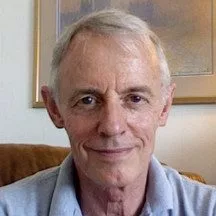


Cook further navigates through the layers of pain experienced due to childhood woundedness, an integral aspect of the human journey. He elucidates how the lack of love and traumatic experiences in formative years exacerbate human pain but underscores the transformative power of faith in Christ as a liberating force that challenges legalism and perfectionism, providing a framework for believers to embrace brokenness, live without condemnation, and redefine their identity beyond addictions and historical pains.
SPEAKER 01 :
So we continue to look at this verse regarding righteousness by faith in relation to the troubles, the pains of life, the addictions, the psychological factors that we intercept by faith in Christ’s righteousness. Let’s look at the verse. It’s Romans chapter 9. Paul’s talking about the salvation of Israel, how they missed it, and then he’s talking about how the Gentiles gained it. What shall we say then? That Gentiles who did not pursue righteousness have attained to righteousness, even the righteousness of faith? Now, you remember yesterday I referred to three pains. The pain of being human in our fallen state, the pain of being wounded in our childhood days which comes through to our adulthood, and the pain of escaping from the pains which creates more pain. Let’s explore that a little bit, shall we? The issue of the pain of being human. Let’s remember that humanity is not normal. That is, humanity is not in a normal state. It has fallen from grace. Somehow, sometime in the past, at the creation, our first parents fell from grace. They were in perfect harmony with God. There was beauty, peace and joy, fulfillment, harmony with our emotions and our will. But all that went awry when mankind pulled away from God and began to experience the devastating guilt and shame and fear. All that is described symbolically in the book of Genesis, chapters 1 through 3. Lots of it is literal, some of it’s figurative, but you’re going to have to sort that out. But what we do know from that is that guilt caused mankind to pull away from God, fear Him when He came walking in the garden, and they hid themselves from that fear and guilt. and they clothed themselves because they now felt ashamed. Well now, that guilt, shame and fear is part of what is natural to humanity now. We are in a state in which we are ruled by sin and death. The kingdom of Adam is the kingdom of sin and death. So we live with a broken humanity. But now, that is a pain. It is a pain of guilt, as I say. It’s a pain of shame, and it’s a pain of fear. We fear God. We pull away from him. Now, the message of the gospel is, is to relieve that pain. Not to take it away, though, totally. It doesn’t totally go away, but we intercept it regularly by faith. We affirm and thank God that there is no condemnation because Jesus has taken our judgment. We are no longer afraid of God because we affirm and assert that by faith Jesus has brought us into the kingdom of God. The righteousness of Christ is upon us. We are no longer judged as sinners. And we don’t have to be afraid of God. But, of course, all of that that I’ve just described is by faith. which means that it is not natural to the human heart. The human heart is naturally possessed by guilt and shame and fear. Now then, what happens with that pain in the lives of people who are not Christians is to try to run away from it, to try to avoid it, to not face up to it. And thus, people hide themselves in ways that relieve the pain. So much of human life is about relieving pain, relieving pain by escaping into habits or pleasures or denial that enables us to keep functioning even in the presence of our pain. So you see, what I’ve talked about just now is the natural pain of humanity, that’s number one, and the escape from pain, that’s number three. But what about number two? Well, that’s where we have pain from our woundedness in childhood, where there might have been abuse, or there might have been neglect, or there might have been tragedy by illness, or the divorce of parents, a broken family, poverty, whatever distress there might have been in childhood. That affects a child’s sense of well-being. and his sense of safety in the world. The absence of love is devastating upon a child. Now, as that child grows without love or unmet love needs, then there is more pain, and that pain is piled on top of being human. So we have more reason to escape. If we do not know Christ, we have not only the pain of humanity, but also the pain of our woundedness in childhood. If we do know Christ, we have the pain of our humanity because we’re fallen sinners, and even though it’s not charged against us, our humanity does not function well. and then we have the pain of our abuse or woundedness in childhood, but then we must learn how not to escape from that, but to explore it. So first of all, then, we have become Christians, believers in Christ, because God has revealed himself to us, and we need no longer try to modify ourselves improve, change, correct our humanity. Now don’t misunderstand me. I’m not saying we don’t overcome a sin or a problem. but we do not let our humanity, by the pain that it brings us from the guilt and the shame of its brokenness, we do not let that humanity lead us to try to remove it, to perfect it or to change it. The humanity that we live in will only be changed at the coming of Jesus Christ, as I said yesterday, when this mortal shall put on immortality and this corruptible shall put on incorruption. When we receive a body like Christ’s body. Now, why is it important to say this? Because there are many, many, many Christians who get terribly confused about this and they actually try by legalism and perfectionism to eradicate their sinful nature. You cannot eradicate your sinful nature. You can have faith in Christ and learn that your sinful nature is not charged against you, that it cannot separate you from God, that it cannot condemn you, and you can learn to realize that it does not define you anymore, because Christ defines you. But to try to eliminate its brokenness is a delusion. Humanity will only be healed from that human nature when our Lord Jesus returns. Why is that so important to say? Because you don’t want to waste time trying to do the impossible. You, by faith in Christ, affirm that your humanity has no power to condemn you. Now, look at the importance of this in relation to addiction. Let’s suppose you have an addiction to alcohol. and you recognize that it is breaking your body down and your mind, and it is creating enormous delusions, ruining your family life, ruining your finances. And what you try to do so very often is to confuse your addiction, which is an escape from pain, with the pain itself of your broken humanity. And when you do that, you’re trying to, I don’t know how to describe it, you’re simply trying the impossible. So what we learn by faith in Christ is that we are no longer defined by our alcoholism, for Christ has now defined us in his righteousness. We learn that we are no longer separated from God by our addiction, because Christ has taken our judgment upon the cross, and we are counted as if we were righteous and whole. And in the very midst of a desire for drink or a failure in regard to that habit, we recognize that Christ still has reconciled us and we are not separated from him. Now, all of those recognitions come under the Third point that I made, the third pain, which is the pain of escape. We no longer need to escape because we’re not judged and we’re not defined by our addiction and what have you. But we do not try to eliminate all of the desires that go into making decisions drink desirable, because some of those desires, though they belong to our woundedness in childhood and can be possibly healed, some of those desires, though, also belong to our simple broken humanity which we live in, which we are, as Paul calls us, an earthen vessel, and we live with that humanity until Christ comes. And so we say, Father, I am burdened by my humanity, but I thank you that I do not have to let it rule me or define me or separate me from you or cause me to feel ashamed and guilty because Christ has taken the judgment for that humanity and I’m no longer defined in it. Now, when you learn to do this, you are dealing with the first pain, the pain of being human, by faith in Christ. not by an attempt to go to a counselor or a support group or some such thing in order to eliminate it. Separate the two pains, and you will discover that you have halved your problem. Separate the two pains, and you will discover that you have halved your problem. Now, regarding the pain number two, the pain of abuse in childhood. As I mentioned the other day, you can learn to face this. You don’t have to escape as much as you did before you became a Christian. Because once Christ has been received into your heart, and you have been born again, and you know you are now reconciled to God, the pain of your broken humanity is greatly reduced. And so you can look at the pain of your woundedness from abuse in childhood and say, okay, I’m still reconciled to God, and I’m still counted as righteous. I don’t have to define myself by what happened in childhood either. So now, I can look at what’s going on, and I can begin to evaluate it and learn what to do with it. And that we will look at next time. Thanks for joining me today. You’re listening to How It Happens with Colin Cook, which you can hear any time of the day or night on your smartphone. Simply download a free app, soundcloud.com or pudbean.com and key in How It Happens with Colin Cook when you get there. Please consider a donation. This is listener-supported radio. You can make your donation online at faithquestradio.com or send your donation to Faith Quest, P.O. Box 366, Littleton, Colorado, 80160. I’ll see you next time. Cheerio and God bless.