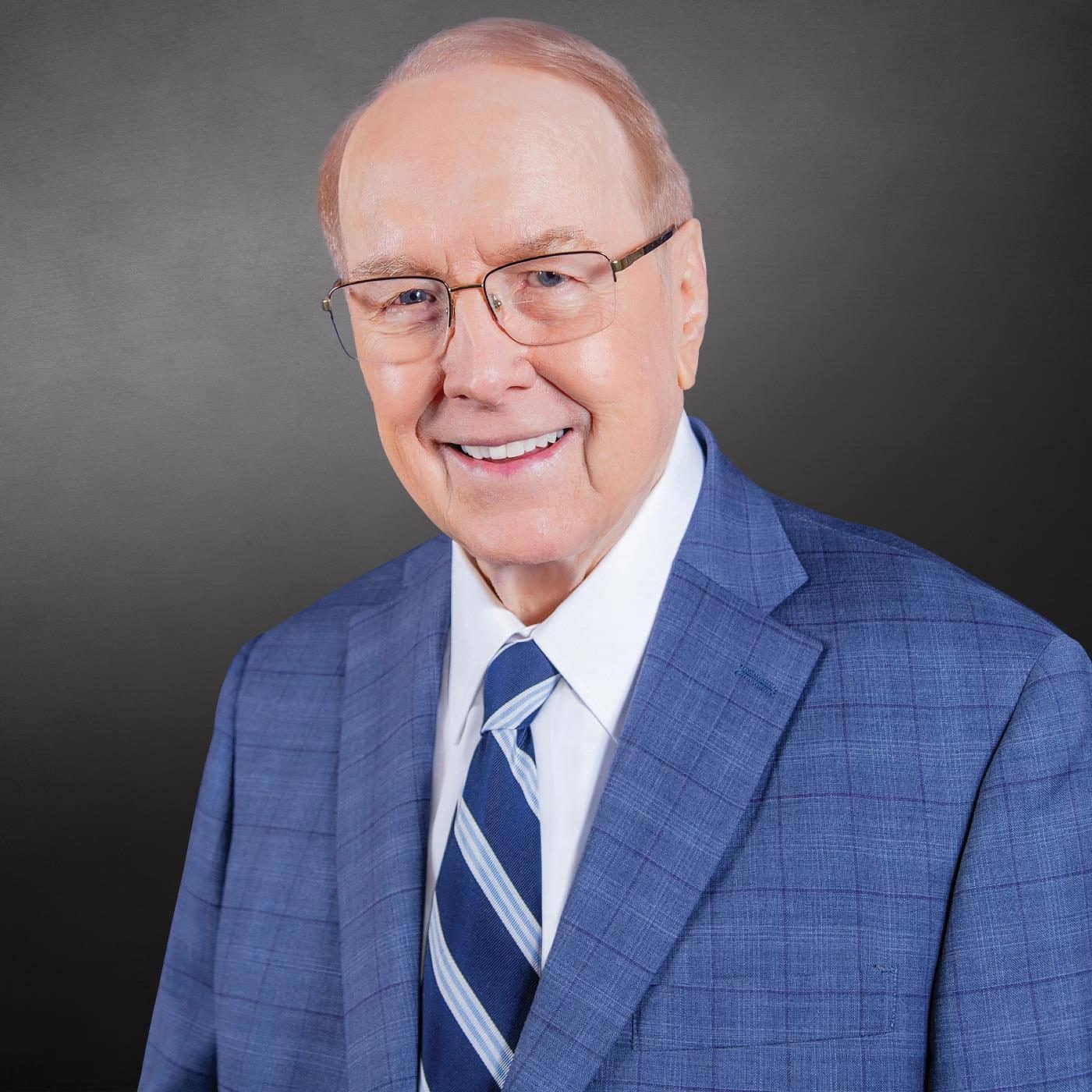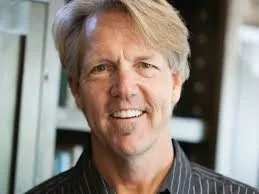

In an era where technology meets ethics, Dr. William Lyle offers eye-opening revelations about modern advancements in fetal care, proving pre-born children are indeed patients. With profound dedication, Dr. Lyle challenges us to see beyond the political rhetoric and understand the moral implications underlying choices surrounding life’s beginning. Tune in to hear conversations that might redefine your perspectives and inspire action in protecting those without a voice.
SPEAKER 02 :
Welcome everyone to Family Talk. It’s a ministry of the James Dobson Family Institute supported by listeners just like you. I’m Dr. James Dobson and I’m thrilled that you’ve joined us.
SPEAKER 01 :
Well, welcome to Family Talk. I’m Roger Marsh. Here at the Dr. James Dobson Family Institute, we have named the month of January Sanctity of Human Life Month. It’s a time when we reflect on the undeniable worth of every person from conception to natural death. Now, on today’s program, we’re going to feature a remarkable conversation featuring Dr. James Dobson and his guest, Dr. William Lyle, an obstetrician-gynecologist whose dedication to defending pre-born children has transformed countless perspectives. You’ll hear the extraordinary medical interventions now possible for babies still developing inside their mother’s wombs, procedures that undeniably prove that these patients are exactly that, patient’s deserving of care, protection, and dignity. Dr. Lyle’s insights remind us that the question isn’t whether these lives are worth protecting. The question really is whether we will have the courage to stand up for them. Here now is Dr. James Dobson with his guest, Dr. Bill Lyle, on today’s edition of Family Talk.
SPEAKER 02 :
Well, I feel very honored today to have a guest that I have just recently become acquainted with. And I have come to respect him more than I can say. And I think you will see why as we listen to the interview today. He’s here in the studio with us. He is a former chairman of the Department of Obstetrics and Gynecology at Sacred Heart Hospital in Pensacola, Florida. But he likes to call himself the founder of ProLifeDoc.org. That’s a ministry devoted to using the tools of modern medicine to demonstrate the life and the personhood of the individual within the womb at all stages of gestation. And you’re going to see why that is so important in a moment. He is Dr. William Lyle, and I can tell you that his greatest passion is is protecting the unborn child and making the case for that baby. He is, as such, I’ve referred to him as one of the best friends that the unborn child has. Dr. Lyle, what a pleasure to have you here today.
SPEAKER 03 :
Well, thank you very much. It’s an honor to be here, and I’m looking forward to discussing the things that I have just been passionately holding since 1999. Ever since 1999, when I finished my residency program, I was looking to see where should I practice my medicine. And after four years of college, four years of medical school, four years of residency, my wife and I looked at opportunities, and there was a practice that was available in Pensacola, Florida, that no longer practiced obstetrics. However, he did practice gynecology, but more importantly, he was the largest provider of abortion services in our tri-county area. We negotiated with him. We purchased the practice. We had a restrictive covenant signed by him whereby he could not practice medicine in our tri-county area for the next two years, which essentially put him into retirement. And he left the country to go back to Sweden. But we stopped all the abortion services on day one, and we stopped all referrals. But it’s also his equipment that I now travel around the country demonstrating the brutality of abortion in the first, second, and third trimester, but then also using the modern technology to show the personhood and the personality of the life within the womb.
SPEAKER 02 :
When you and I had lunch together recently, I said, and I knew the answer to it, but I want you to answer it again. What drew you? What caused you to say, this is where I will spend my life?
SPEAKER 03 :
I don’t think anybody, when they enter into medicine, know 100% what it is that they want to spend the rest of their life practicing. During my rotations throughout medical school, I realized that the only time that a patient was excited and happy to go to the hospital was when she was going to have a baby. Nobody’s excited about their shoulder surgery. Nobody’s excited about their gallbladder surgery. But everybody’s excited about going to labor and delivery and having their baby. So it’s Women who are healthy, doing a very natural thing, and seeing this amazing gift of life. So that drew me into doing my residency in obstetrics and gynecology. When I took over the practice in 1999, it was on a Sunday afternoon after church when I went upstairs to the procedure room at this office, which I had never visited before. And when I went up the set of stairs to the upstairs where the procedure room was, I couldn’t help but realize that over the past several decades, thousands of women had gone up those same stairs with a baby with a heartbeat inside their womb, had had a procedure done, and then walked down another set of stairs on the other side of the office, no longer carrying that baby within their womb. And it was then that I saw the abortion equipment. I saw the abortion machine. I saw the operative suite. And I realized these are my peers performing these procedures. People who have spent their lives studying how to have healthy moms and healthy babies are the same peers that are taking those lives. So I committed myself at that point that, yes, I was going to try to practice obstetrics and gynecology to the best of my ability. But I felt a definite calling of God that I have a duty and a responsibility with my knowledge and experience to use these tools that I have to show the personhood and the personality and do my best to defend the unborn.
SPEAKER 02 :
Well, how do you get that done? You speak often and suppose you’re standing in front of 500 people and you want them to leave knowing. the value and the worth and the dignity of every one of us, including those not yet born. How do you get that across?
SPEAKER 03 :
I’ll start off with visuals. We have turned into a society that is so filled with visual learning. We see videos on YouTube. We see things on our smartphones and on our tablets. And that is reality for us. The instruments of modern obstetrics allow us to see the heart beating on the baby five weeks after conception. We can actually do a blood test on the mom seven weeks after conception, and we can look at the DNA from the baby, which is circulating in the mom’s blood. And we can separate that DNA out, and we can look for different problems with the baby. We can actually see babies that are anemic, where their blood count is severely decreased because antibodies are crossing the placenta and are attacking the baby’s blood supply. We can use an ultrasound and we can look at the speed of the blood cells in what’s called the middle cerebral artery in the brain, and we can determine if the baby’s blood count is low. If we don’t do something, the baby will die while in the womb. We can actually guide a needle into the umbilical cord of the baby as early as 18 weeks gestation, check the baby’s blood count, and give the baby a blood transfusion right there. We might have to give the baby a blood transfusion every two or three weeks for the rest of the pregnancy. So we treat the baby as a patient on the inside.
SPEAKER 02 :
These are things that could not be done just a short time ago, aren’t they?
SPEAKER 03 :
We would never have thought that we would be able to use an ultrasound to look at the speed of the blood in a baby’s brain and see if the baby was anemic. The modern technology has allowed us to guide a needle into the small blood vessel in the umbilical cord. We can not only diagnose problems, but it’s not just a matter of diagnosing the problem early. We can intervene. And if we don’t intervene, then these babies would die before they were born. There’s a condition called bladder outlet obstruction where, for whatever reason, the bladder is not able to empty the urine into the peritoneal and the amniotic sac around the baby. And if we don’t do something about that, the pressure builds up, the kidneys can’t function, and the baby is born with non-functioning kidneys and dies a few days after the baby is born. We can actually guide a little stent into the baby’s bladder, and we can relieve that obstruction. The urine is allowed to pass out from the bladder into the amniotic sac around the baby. The baby does well. The kidneys are still perfusing. And then when the baby is born, a urologist can then properly repair. So at early gestations, we diagnose problems with the babies, but then we treat them. If we did not intervene, these babies would die.
SPEAKER 02 :
Mm-hmm. I’m a little older than you, but do you remember when abortion on demand became legal and the radical pro-abortionists, the feminists, were telling the nation that that baby in the womb was just a blob of tissue? It was meaningless protoplasm. Do you remember those words being used?
SPEAKER 03 :
I was eight years old in 1973 when Roe v. Wade essentially made abortion on demand legal in the United States. But even when I was older, I can still remember when that pregnancy on the inside was referred to as a blob. I have video of my daughter when she was 12 weeks along, only a couple inches from the top of her head down to her bottom. jumping and sliding up inside of my wife’s womb. She had the hiccups in another ultrasound, and her hiccups would actually physically make her move. We can see a baby’s heartbeat five, six weeks after conception has happened. You know, so when you refer to the – when they were referring to the baby as a blob, the baby is not a blob. But when a baby has gone through an abortion machine, which essentially has the same horsepower and electric motor as a garbage disposal underneath the kitchen sink, of course it doesn’t look like a baby anymore. Any more than going to the grocery store and looking at hamburger on the meat section saying, well, there’s no way that could have ever have been a cow. It doesn’t look like a cow to me. It’s something in cellophane. That was never a cow. Yes, it was. Just like the babies that were the product of an abortion no longer look like in a baby, but they had heartbeats. They had fingers. They had toes. We can do surgery on these babies. We can do fetoscopy. We can actually put a camera on the inside. So, yes, they are babies. Yes, they are not blobs. And, yes, they deserve our protection.
SPEAKER 02 :
You described when we were having lunch together, if a needle is put into the womb after a certain number of weeks, and if the baby moves in a way that just touches the needle, he or she will recoil from it. He obviously feels pain.
SPEAKER 03 :
There’s no doubt about it. When a baby is inside the womb, and for whatever reason, we have to do an amniocentesis where we guide a needle inside. into the sack around the baby to remove some fluid. We do our best not to hit the baby, but the babies are alive. The babies are moving around inside. They’re moving their arms. They’re moving their legs. They’re twisting. And sometimes a baby will inadvertently brush their bottom or an arm or a leg up against the needle. The immediate response that the baby has is that the baby’s heart rate first goes up. And the baby, even though they don’t know what that noxious stimuli was over on that side of the womb, will immediately physically move away from that noxious stimuli. The only reason why the heart rate would go up and the only reason why the baby would move away was because they’re feeling that pain that’s coming from that needle tip against their skin. And if they’re reacting that way to just a needle, I cannot imagine the pain and suffering that they experience when somebody is reaching in and grasping them with the tools of an abortion.
SPEAKER 02 :
These are very disturbing things that you’re saying, and some people who are listening would find them uncomfortable to hear. What do your audiences say when you explain what’s really happening here? and the personhood of a baby that’s being sacrificed.
SPEAKER 03 :
They’re shocked as far as the development of the baby and how the baby truly is a person and has surgery that is performed to save their lives. But then we also will then, in a bloodless way, demonstrate how an abortion is performed in both the first, second, and third trimester. I like to start off my talks showing ultrasound images and discussing surgery on the baby on the inside. We’re doing such advanced surgery on these babies up at Children’s Hospital of Philadelphia, at Johns Hopkins University, at Vanderbilt University. One of the examples is with the surgery that’s being done on babies with spina bifida. We all remember the picture of little baby Samuel Armas, the picture of the baby whose hand poked out through the uterus while they were getting ready to do surgery.
SPEAKER 02 :
I wrote one of my monthly letters with that picture.
SPEAKER 03 :
It’s amazing. It’s an amazing story. I was actually given a talk at the Georgia Right to Life in Atlanta a few years, and a young man came up to me afterwards, and he said, Hey, Dr. Lyle, could I get my picture taken with you? I said, Absolutely. He says, You use my picture all the time. I looked at his name tag, and it was Samuel Armas.
SPEAKER 02 :
Oh, you don’t mean it.
SPEAKER 03 :
Samuel had come—
SPEAKER 02 :
Isn’t that right? Let’s describe it again. During the procedure, surgical procedure, this unborn baby reached out of the incision and grasped the thumb or finger of the surgeon.
SPEAKER 03 :
Correct. Samuel had a defect in his spine, and there is still a trial going on called the MOMS trial. And the MOMS trial is the Management of Meningomyeloceles Study, where they’re actually looking at these universities and these centers, specifically Johns Hopkins, Children’s Hospital of Philadelphia, and Vanderbilt, to see if we do surgery on these babies while they are still in the womb, if they do better than if we wait until after they are born. and then perform the surgery. And what the data has shown is that not only do the babies have less scarring when they recover inside the womb, but their long-term physical status is better. They have less problems with inability to move their legs. They have less problems with ambulation. They have less problem with control of their bladder. So Samuel was getting a surgery done, and his mother’s womb had been opened with a small incision, just like a C-section. But Samuel was only… Less than 24 weeks gestation. And while they were trying to manipulate Samuel to get access to his spine to repair the defect where the nerves of his spinal cord were actually exposed, his arm and hand popped out. Well, it was a great picture. Michael Clancy took the picture of Samuel’s arm, and it was an amazing point in history, and it told the story. But they weren’t there to do hand surgery. They weren’t there to high-five Samuel. They were there to do surgery. So they just casually pushed the arm and the hand back into the womb. They performed the surgery on his spine. They closed the womb back up. And then weeks later, Samuel was born by a C-section. So Samuel, when I asked him, I said, were you a person there on the inside? He paused and he said, yes. Of course I was a person. You know, Samuel now walks well. Samuel goes whitewater rafting, and it was an honor.
SPEAKER 02 :
Oh, come on. Nope, he goes whitewater rafting.
SPEAKER 03 :
Is that right?
SPEAKER 02 :
That’s a point of praise, I tell you.
SPEAKER 03 :
It’s amazing. You know, Samuel was at a gestational age at that point that if he was born— He would not have been able to survive on the outside. Yet at that gestational age, he’s actually had surgery on his spine. So was Samuel a person? Does Samuel have personhood? Does Samuel have value? Absolutely, Samuel. Absolutely.
SPEAKER 02 :
In the eyes of the law, he’s worthless.
SPEAKER 03 :
If the mother were to choose to take the life of Samuel and some mothers who have a baby that is diagnosed with a spina bifida defect in the spine, some moms will make that choice. When we look at twins, twins are amazing. I just want to give a brief description of something called delayed interval delivery. Not many people have heard this term. But this will occur maybe once a year, maybe once every two years, where the most recent case was a mom who had presented with identical twins at about 25 weeks gestation. She’d been contracting. She was in active labor. And before we could do anything, she had delivered the first baby. That first tiny baby went to the intensive care nursery and was immediately placed on a ventilator, was given all sorts of support, just like any of us would have if we had had a heart attack. the baby had rights and the baby had protection over in the intensive care nursery the second twin still remained inside of mom we were able to start her on medications and actually stop her labor and we counseled mom we said we have two intensive care nurseries here at this hospital we have one down the hall where your first baby is in that has all the technology the nurses and the physicians and that baby is doing well but the other intensive care nursery is inside your womb And that was the intensive care nursery designed by God. And right now, it is doing a better job of supporting your second baby than what all the technology can do on your first baby down the hall. Well, we counseled her, and she was able to retain that pregnancy for an additional five weeks. But the real key is that the first baby that’s in the intensive care nursery has all the rights and protection of any of us if we had had a heart attack or we’d had a stroke and we’re in an intensive care unit. However, the second baby inside the womb, if mom were to choose, she could choose to terminate and abort that pregnancy that is still inside of her womb. How does our geographic location either give us rights or take away our rights? You have two babies that were conceived at the same moment in time from one egg and one sperm.
SPEAKER 02 :
They have the same genetic code.
SPEAKER 03 :
Exact same genetic code. Yet one is delivered and is in the intensive care nursery and the other remains in the womb. Yet one has protection by the state and has rights. Yet its identical twin still in the womb does not have those same rights. But that’s a delayed interval delivery. And those are the kind of things that I like to try to discuss to say this makes no sense.
SPEAKER 02 :
I have tears in my eyes from hearing you describe that situation. It illustrates the tragedy. of the Roe v. Wade decision and the court decisions that have come down since then. And to arbitrarily say one baby is entitled to life and all the protections that are available to every human being by law, and another one that can, at a whim, be allowed to die or you can even take his life. I mean, that’s awful.
SPEAKER 03 :
I’m from Pensacola. If you travel over to Pensacola this time of the year, you will see lots of signs that say, warning, sea turtle nests. Do not disturb. You will be fined or you can be imprisoned. And it gives the state statutes and it gives the federal statutes. These unborn turtles, these turtles that were left in the sand by their mother, have more rights and protection than the unborn. In 1973, the Endangered Species Act was passed. And that’s the federal law that provides this protection for these unborn turtles left in the sand. Yet in that same year, 1973, was when the Supreme Court decision of Roe versus Wade said, you know what? We do not value and we do not protect the lives of the babies that are unborn. How do we have a society that will say, we’re going to put you in prison if you disturb an unborn turtle. We will fine you if you disturb an unborn turtle. Yet we won’t provide the same protection for the unborn babies.
SPEAKER 02 :
The same thing is true for eagle eggs.
SPEAKER 03 :
Correct.
SPEAKER 02 :
And there’s all kinds of protection. At one point, I don’t know if it’s still true, there was a $25,000 fine for destroying an eagle’s egg. And yet a baby, a baby, a baby’s fresh from the hand of God. I know the answer to this, but I want to hear you articulate it. How does God see that little unborn child?
SPEAKER 03 :
I think it’s very clear the way that God looks at the unborn. We look at Jeremiah 1.5, and God is saying to Jeremiah, God says, you know, Jeremiah, before I formed thee in the belly, I knew you. Before thou camest forth out of your mother’s womb, I sanctified thee. God didn’t only know Jeremiah, he sanctified them. He set him apart for a purpose to be a prophet for the nation of Israel while he was still in the womb. You know, you read in Psalm 139, 13, and 14 where the psalmist is looking up to God and he’s saying, you form my inmost being. You knit me in my mother’s womb. How wonderfully you’ve made me. God has a relationship with us while we are in the womb. We are all created with a purpose. When you look in Genesis, you know, God says, you know, let us make man in our image. You know, very different from any other part of the creation in that we were created in the image of God. We’re separate. We’re unique. We’re different. So if God has this relationship with us because, number one, we’re created in his image, and God has a relationship with us while we were still in the womb. One of the other things that is said in the Bible is that God’s saying there are six things that the Lord hates, and one of those is hands that shed innocent blood. And I cannot come up with a better definition of hands that shed innocent blood than the hands that are taking the lives of the unborn, the most innocent among us. So is abortion a sin? Absolutely. Is the abortionist committing a sin? Absolutely. Is any sin that I’ve committed sin? forgivable without the blood of Jesus. No, I cannot get into heaven and I do not deserve heaven unless it is covered by the blood and the sacrifice of Jesus.
SPEAKER 02 :
And the mother who kills that baby can find forgiveness too.
SPEAKER 03 :
Absolutely. We cannot condemn because none of us have lived a perfect life. There was one person who lived a perfect life and that was Jesus Christ. When we look to see how do I live my life, the only example we can truly look to is our Lord and Savior Jesus Christ. Is abortion a sin? Yes. We’ve all sinned. The people, both men and women who have been involved in abortion, need to understand. not just from me speaking. They need to understand that from their pulpit. The truth needs to come from their pulpit and says, is abortion a sin? Yes. But can the blood of Jesus cover and forgive that sin? Yes.
SPEAKER 02 :
And the great God of the universe embraces them.
SPEAKER 03 :
And they are forgiven.
SPEAKER 02 :
And forgives them.
SPEAKER 03 :
You know, God doesn’t expect perfection out of our lives, but he does expect direction. And when we realize the errors of our ways and we recognize that gift of salvation and forgiveness, which is available to us through the blood of Jesus… That’s when we can say, I recognize that was a sin. I’m going to change my direction, and I’m not going to make that mistake again.
SPEAKER 02 :
Our time has gone by much too quickly today, and you have so much to say to us, if you will. You have come here from a long distance, and I would like you to stay right where you are, and I want to continue the conversation. We’ll let our listeners hear it next time. Thank you very much.
SPEAKER 1 :
Thank you.
SPEAKER 01 :
Dr. William Lyle’s work proves what many have tried to deny for decades, that the tiny lives we are fighting for aren’t abstractions or political talking points. These are real patients who respond to treatment, who feel pain, and who deserve our protection. On today’s edition of Dr. James Dobson’s Family Talk, we’ve been revisiting a compelling conversation with Dr. Dobson and his dear friend, Dr. William Lyle, the pro-life doc. Be sure to join us again next time as Dr. Lyle will continue sharing his passionate defense of life. Now, as we observe Sanctity of Human Life Month, I want to tell you about a special resource we’ve created to commemorate this important observance. Dr. William Lyle has written a moving tribute to Dr. James Dobson, tracing his nearly 50-year crusade for life, from his early radio broadcasts educating families about the unborn to his role in shaping the pro-life movement that ultimately helped overturn Roe v. Wade. You’ll find today’s broadcast embedded right there on that page. So when you go to jdfi.net, you can also read about Dr. Dobson’s remarkable legacy in the pro-life movement, as well as hear this special broadcast all in one place. Go to jdfi.net to experience it all together. By the way, the title of the piece you’ll be looking for, the blog post is Dr. James Dobson, A Modern William Wilberforce in the Long Crusade for Life. You’ll find that along with today’s broadcast at jdfi.net. Well, I’m Roger Marsh, and on behalf of all of us here at Family Talk and the Dr. James Dobson Family Institute, thanks so much for listening today. Be sure to join us again next time right here for the conclusion of Dr. Dobson’s conversation with Dr. William Lyle about how pre-born lives matter. That’s coming up right here on the next edition of Dr. James Dobson’s Family Talk, the voice you can still trust for the family you love. This has been a presentation of the Dr. James Dobson Family Institute.