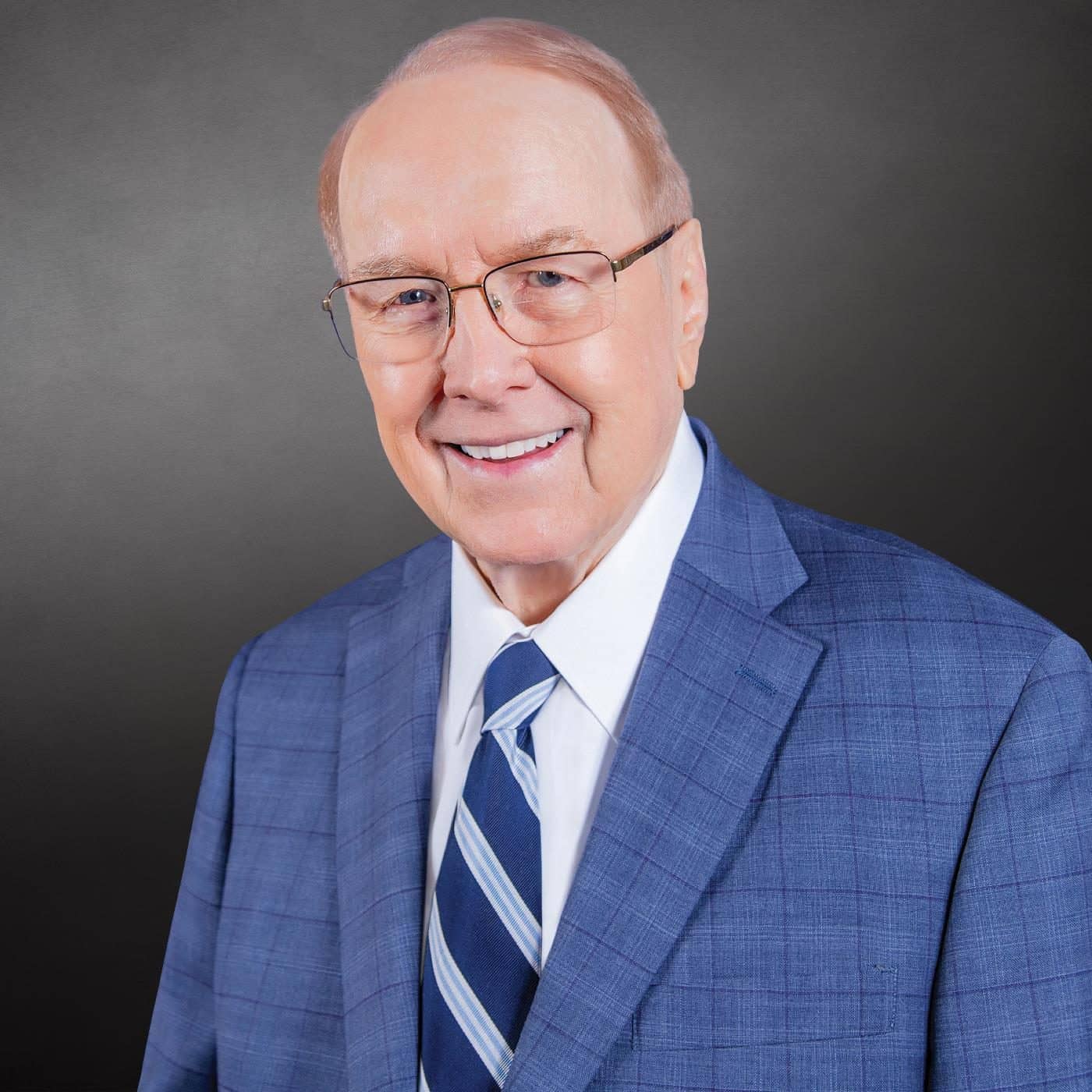


Join Dr. James Dobson and Gary Bauer in a vital discussion on the lasting implications of Roe v. Wade and its recent overturning. This episode explores the history, legal challenges, and societal impacts of this landmark decision. They delve deep into how state laws were shaped and the role of the Supreme Court in influencing American culture.
SPEAKER 01 :
Welcome everyone to Family Talk. It’s a ministry of the James Dobson Family Institute supported by listeners just like you. I’m Dr. James Dobson and I’m thrilled that you’ve joined us.
SPEAKER 02 :
Well, welcome to Family Talk, the broadcast ministry of the Dr. James Dobson Family Institute. I’m Roger Marsh, your host for the broadcast today, joined in studio by Gary Bauer, our Senior Vice President of Public Policy here at the Dobson Policy and Culture Center. Gary, it’s an auspicious day today. I’m grateful to have you with us here on the program.
SPEAKER 01 :
Well, it’s always great to be with you, Roger, but you’re right. There’s some big things happening that’s of great concern to all of us that believe in faith, family, and freedom. And one of those big issues is the sanctity of life, something that always was a tremendous part of Dr. James Dobson’s legacy and priority. And this time of year in January is the time when we mark That really sad anniversary of so many years ago when the court ruled that somewhere in our Constitution, there was a right to destroy innocent human life in the womb.
SPEAKER 02 :
Yeah, it’s interesting, Gary, when we talk about this, because looking back at Roe versus Wade, which passed on January 22nd, 1973. There were so many people who thought that this was good for liberating women, giving them the freedoms that they were somehow being denied. And years later, I remember even Ruth Bader Ginsburg, who was obviously the most far left leaning member of the high court. even she went back so far as to say, you know, that was pretty much judicial overreach at that point. I mean, the fact that the Supreme Court was kind of inventing this, it’s always right to privacy laws, right? You know, the woman has the right to not have to report any of this. And if she wants to go ahead and do it, same things happen in the LGBTQ community. And we see years later that that one decision put us on the trajectory for 65 million plus children that we know of. And I say that we know of because my home state of California, the People’s Republic of California, will not report on the actual number of abortions being committed in the Golden State every year. So that 65 million is just kind of a rough estimate. But the fact that Roe v. Wade opened the floodgates for that kind of activity, it’s jaw-dropping, Gary, for people like you and me who we get together, you know, like we just did in the holiday season with our children, our grandchildren, and wonder how many grandchildren, how many great-grandchildren people will never see simply because the Supreme Court decided that women should have the right to legally kill their children in the womb. It’s just, it’s breathtaking, isn’t it?
SPEAKER 01 :
It is breathtaking. And, you know, I think a lot of people have forgotten about this if they ever knew it, which is before that Supreme Court decision, this issue was being handled by the United States, each of the individual states. So states like New York, which, of course, tend to be more liberal than the rest of the country, had a fairly permissive abortion regime. You could get an abortion fairly easily in the state. Other parts of the country, through their legislatures, had passed laws that were more restrictive. So the country had worked out the issue. And it varied from state to state. And then all of a sudden, here comes the Supreme Court. and attempts to force on the entire country one approach to the issue. So that one decision wiped out literally 48, 49, 50 state laws on abortion. And then in addition to that, it basically took the debate over the issue out of the public square. States were allowed to do a little bit here and a little bit there. But if you did anything that went to the central point of abortion on demand, the Supreme Court would just say, no, you can’t do that. And so it became a pressure cooker. with millions of Americans wanting to stop this carnage and finding out that virtually no matter what they did, they weren’t gonna be able to do it because of this one Supreme Court decision. And it really was, it was a ill-conceived decision. I mean, when you read it, it just didn’t make any sense. In fact, Roger, I think in many ways, and I know that Dr. Dobson believed this, This was the worst violation of human rights since the Supreme Court all the way back in the 1850s ruled that slaves were not men. They were not human beings. They were the equivalent of a horse to be ridden. Well, we look back on that Supreme Court decision, right, and go, oh, my God. How? How could a court do something so evil? And then you go on fast forward to 1973, and they did the same thing. They said a whole class of human beings, our unborn children, had no rights we were bound to respect. They were the legal equivalent of a styrofoam cup that you could throw out your window. from your car.
SPEAKER 02 :
The fact that when you look at how dramatic the Roe versus Wade decision was on January 22nd, 1973, to take it all the way back over 100 years and realize that that same level of inhumanity being ascribed to a certain portion of the population, that here we were 120 years later in American history, And as we prepare to celebrate our 250th anniversary, we still hadn’t gotten it right. And people who look to the Supreme Court as their ultimate God, if the law is their God, which a lot of secularists will, they’ll say the quiet part out loud. We believe the God of the Bible. We believe all those moral standards that God set forth in his word are literally inalienable rights endowed by our creator. I mean, that’s the basis of our constitution. But now you see where the battle lines were being drawn. And what happened on January 22nd, 1973, taking just those few states where abortion was legal and now making that the federal law, it really threw things out of whack, especially when you consider, Gary, I know you explain this a lot on your Defending Faith, Family and Freedom podcast, but I’d love for you to go back over this. The fact that there was so much trumped up, if you will, manufactured information, right? with regard to the so-called scientific studies that said, well, we have to have abortion on demand because if we don’t, all these women are going to die. You know, we heard about the coat hangers. We heard about the back alleys. And when you find out years later how much of that was fabricated, I mean, it was just they were talking points more than anything else. It really makes your blood boil.
SPEAKER 01 :
It does, and we’ll never fully be able to understand the cost to the country. Say, you know, 65 million innocent unborn children. How does one even begin to think about that? That’s a holocaust many, many, many times over. And it is, I think, a matter of great shame for our country’s history that that happened in 1973. And it took all the way up until just a couple of years ago to reverse it. You know, Roger, I came across this not too long ago when John F. Kennedy was president in a press conference saying, I think a reporter, and I think it was probably an anti-Catholic reporter, said to President Kennedy, do you feel a need in your administration to do anything about the out-of-control population growth in the world?
SPEAKER 02 :
Yes, the ZPG, I remember those days.
SPEAKER 01 :
Right, right. And Kennedy said, no, no, we’re not going to get into that. I mean, he said, if you’re going to get into that, then inevitably you’re going to start talking about abortion again. And I don’t think anybody wants to go down that road. So John F. Kennedy thought the very idea of talking about the possibility of abortion was such a disgusting thing to contemplate that he didn’t even want to go down the road. He was it was off limits or whatever. And it wasn’t that many years after his presidency. that you had the Supreme Court give us abortion on demand.
SPEAKER 02 :
Incredible. And when you think about this, Gary Bauer is my guest today here on Dr. James Dobson’s Family Talk as we commemorate the anniversary of the passing of Roe v. Wade and know that Roe has since been overturned. So January 22nd, 1973, the day it was signed, basically passed by the Supreme Court. But then June 24th, 2022, the day that it was overturned, And we’re going to take a look in just a moment at what’s happened since then. But think about how that was kind of a shot across the bow in the culture war with regard to families and women’s rights. And there were certain parts of the population that really did need to have a boost. I mean, there were certain areas where people were being abused. You know, held back and repressed. We understand that. But abortion overpromised and underdelivered. I mean, just in a spectacularly awful fashion that it took probably another 10 years or so where the church, largely the Catholic Church, it was driving it. was protesting, was showing up at abortion clinics. You know, all those crazy RICO laws were enacted to stop these people from keeping abortion clinics from operating because it literally was sought as the solution. As you mentioned, the people who are concerned about needing zero population growth because we’re going to overpopulate the planet, well, now abortion was the solution. And the idea that it was, I mean, it took somewhere to the late 70s, early 80s, where there was this guy, he had a radio program called child psychologist. He’d written a couple of books. I think you might’ve known him, Gary. His name was Dr. James Dobson. Started speaking up on broadcasts and in publications and asking the question, wait a minute, people are people. It doesn’t matter how small you are, you know, from the moment of conception. And Dr. Dobson really became, I know Dr. William Lyle, the pro-life doc, recently referred to him as the William Wilberforce of the pro-life movement. Gary, you were getting to know Dr. Dobson right around the time that he was coming into this prominence. Talk about what those days were like.
SPEAKER 01 :
Well, that’s right. So I’m at the White House working for Ronald Reagan. And Ronald Reagan famously was pro-life and it was a big part of his political identity. He unfortunately signed a bill which when he was governor of California, that made it a little bit easier to get an abortion. And he said later it was one of the biggest mistakes of the time that he was governor and that he basically had misunderstood what the legislation was doing. But yes, Dr. Dobson began to talk about this issue a great deal. And we had a pro-life president. And so he and I, Dr. Dobson and I, he called me at one point at the White House. My secretary rang in and said, I think it’s your doctor on the phone. And I thought, my doctor? My goodness, is something wrong? And I picked it up and it wasn’t my doctor. It was Dr. Dobson. Yeah. At any rate, we started working together on a whole lot of things. And I know this may seem like ancient history to some people, but, you know, today I think everybody understands between the two political parties, the Republican Party is predictably pro-life. It’s been pro-life for a number of decades. And the Democrat Party, I mean, I’m not making a partisan point here. They’re very proud of it. They say, in their words, that they’re pro-choice. But in the presidential campaign that happened in 2024, Kamala Harris ended up spending several hundred billion dollars running ads only on one issue, the abortion issue. She thought that that was going to be the issue that would send her into the White House as president of the United States. So they are all in on this. But back when Dr. Dobson and I started working on it, The Republican Party was, broadly speaking, pro-life, but not everybody in the Republican Party. And so every four years, there was an attempt to water down the pro-life plank in the platform that was put in there when Ronald Reagan ran for president. And I’m proud to say that Dr. Dobson and I and a little lady named Phyllis Schlafly and a handful of other people really led the battle every four years to keep the pro-life plank in the Republican platform. And we succeeded. And the rest is history because all of that led to our current president, President Trump, in his first term, appointing three justices to the Supreme Court that understood Roe versus Wade was bad law. And also, I think more importantly, understood that a child in the womb is a human being, is a person. And by being a person, they were covered by our Declaration of Independence, which where it says we hold these truths to be self-evident that all men are created equal and endowed by their creator with certain unalienable rights. It means rights that not only can’t be taken away, they’re rights that you can’t surrender. Because it would be like saying to somebody, hey, would you like my heart while I’m still alive? Well, you couldn’t do that, right? So these are rights so fundamental that it’s like the right to breathe. And among these, the Declaration of Independence says, among these are the right to life and liberty and the pursuit of happiness. Well, even the founders before sonograms realized that without the right to life, the other rights were sort of beside the point. And so Roe versus Wade was, in addition to everything else, a violation of our founding principles and the battle that Dr. Dobson was one of the main leaders in of getting that reversed and has restored in many ways our republic to the original idea that our liberty comes from God. And one of the most important things God gives us is the right to life.
SPEAKER 02 :
Talking with Gary Bauer today on this special edition of Dr. James Dobson’s Family Talk. I’m Roger Marsh, and we’re discussing the sanctity of human life. Of course, Dr. Dobson was such a passionate voice standing up for the pre-born, the unborn, if you will. And I think about that, Gary, the timeline when you were working in the Reagan White House, and of course, Dr. Dobson then was kind of co-opted by the president to come in and address the family values that he was addressing on the radio and his books. And then your relationship, you know, has been, had blossomed from there right up until Dr. Dobson went home to be with the Lord last August. But those principles are still at the core. They’re the heartbeat of the James Dobson Family Institute. And that’s why it’s worth noting a couple of things. First and foremost, From the time you and Dr. Dobson met to when Roe versus Wade was overturned, in spite of the fact that you were doing such great and good and godly work, and we had men and women of character who were running for and winning offices and being elected to the highest office in the land on down, it still took 40 years for Roe versus Wade to be overturned. And I want you to address that if you would. I know you talk about this a lot in your Defending Faith, Family, and Freedom podcast, and you write a lot about it too in your end of day report, which a lot of our listeners get. But talk about the fact that even though most Americans knew abortion was wrong, you were literally ending the life of a preborn child. The child’s rights were being denied. I mean, there was so much focus on mom’s rights that we weren’t paying attention to the baby’s rights at all. But even then, it still took 40 years. I mean, just over four decades. for the tide of popular opinion to turn around to where appointments made by President Trump in his first term wound up to pay some huge dividends for the sanctity of human life. Talk about what that says about our culture and how things have shifted away from the biblical values that we were founded on.
SPEAKER 01 :
You got a couple of hours, Roger? That’s a very profound question. I mean, it was a combination of things, right? The People were voting for pro-life presidents, people like Ronald Reagan. I mean, Reagan won a couple of landslide elections. But there was not always, when we elected pro-life presidents— there wasn’t always a high enough degree of, what’s the right word? They weren’t always careful to make sure that the people they were putting on the court actually would do the right thing on the issue. And this phrase came up that used to drive me nuts. Some Republican candidates, my old friend George W. Bush, who I ran against in some primaries in 2000, said over and over again that he would have no litmus test for who he would put on the Supreme Court. He said that when I would challenge him and when I would say, Governor Bush, will you promise to only put pro-life justices on the Supreme Court? And he’d go, no, no, no, Gary, I’m pro-life. But he said, I don’t have a litmus test. Well, that’s ridiculous. Of course you do, Governor. You would never put a bigot on the Supreme Court, right? No, he said, I would never put a bigot on. Well, that’s a litmus test. And Dr. Dobson believed, and I believe, that saving innocent unborn life, pre-born life, that that should be a litmus test too. But there were a number of Supreme Court justices nominated by Republican presidents. They got on the court, and then they didn’t do the right thing. So when President Trump ran the first time, he abandoned that whole—of course he did. He abandoned that whole litmus test thing. He said, I’m only going to put people in the court that will overturn Roe versus Wade. And the result of that was that all those appointments he made, there were brutal battles. I mean, just brutal. horrific battles over whether they would get confirmed or not. But they finally did. But no, Roger, you’re right. I mean, it took 40 years. And one of the, there was two huge downsides that it took so long. One was just that the carnage went on for 40 years. But the second thing that happened because it took so long was that an abortion culture firmly took root. So you had generation after generation of young women coming to age in America. And whereas in the past, our culture would say to a young woman, you know, one of the most wonderful things about being a woman is that as a woman, you bring life into the world. And this is a wonderful, wonderful thing. It’s part of God’s creation. Well, over those 40 years, young women were told one of the great things about being a woman in America is that nobody can force you to carry a pregnancy to term. You can get rid of that pregnancy any time that you want. And so when the road was heading in the direction of a pro-life outcome, we saw this tremendous backlash. You know, Roger, I think people have already forgotten that Senator Schumer, a pretty powerful guy, he went to the steps of the Supreme Court and he pointed back at it and he said, if you take away the right to abortion, you won’t know what hits you. You will pay a price for doing that. And then when somebody, and we still don’t know who, leaked out the Supreme Court decision that would overturn Roe, leaked out the first draft, That caused this just explosion of outrage and an attempt to intimidate the Supreme Court justices into not overturning Roe. And it even went so far, Roger, as one fanatic out in California flew all the way across the country for the specific purpose of assassinating the three Supreme Court justices themselves. that Donald Trump had put on the Supreme Court, and he did it over this issue. And by the way, Roger, we since found out that gentleman, and I used the word lightly, that that individual was also transgender. So it was an early sign of the violence of abortion, but also the violence that increasingly is associated with the transgender movement.
SPEAKER 02 :
It’s interesting that that keeps coming back into the conversation. And as we are continuing this conversation today here, as we commemorate what was the 53rd anniversary of the signing of Roe versus Wade, which has since been overturned by the Supreme Court decision four years ago, it’s interesting to see that the LGBTQ lobby keeps showing up more prominently in an area where Quite frankly, when it comes to abortion and the sanctity of human life in that regard, they really don’t seem to have a leg to stand on. Gary, we have come to the midpoint of our conversation here at the end of today’s broadcast, but I was wondering if you could join me again next time. We’ve got a lot more to talk about, including an article that you’ve written about a concept that is just completely unthinkable as to why anybody would continue to celebrate abortion in the culture that we’re living in right now. Can you join us again next time for that?
SPEAKER 01 :
Well, I got a lot scheduled, Roger. But in all seriousness, I can’t think of anything more important than to keep people focused on the value and importance of the sanctity of life. And yes, I would love to come back for another day.
SPEAKER 02 :
Friend, you’re listening to Dr. James Dobson’s Family Talk. I’m Roger Marsh. We’ve been featuring my conversation with Gary Bauer today here on the broadcast about the history of Roe versus Wade and the decades-long battle to defend the sanctity of human life. Be sure to join us again next time when Gary and I will continue this important conversation. We’ll be discussing what happened. after Roe was overturned on June the 24th, 2022, will also address some deeply troubling developments in our culture’s attack on children and the family. You will not want to miss out. Now, by the way, if you’d like to hear today’s program again or to share it with a friend or family member, just go to jdfi.net. You’ll find the audio there. And you can also subscribe to Gary’s podcast, Defending Faith, Family, and Freedom, to stay informed on critical issues affecting faith, family, and freedom here in the United States. Gary serves as our Senior Vice President of Public Policy here at the Dobson Policy and Culture Center. He writes a daily update, end-of-day update, also a weekly blog for us. And the Defending Faith, Family, and Freedom podcast comes out a couple times every month. Here at the Dr. James Dobson Family Institute, we remain committed to the principles that Dr. Dobson championed throughout his entire life, defending the sanctity of human life, preserving the institution of the family, and standing for biblical truth in our culture. These broadcasts are made possible through friends like you who share this vision with us. The 40-year battle we discussed today about overturning Roe v. Wade proves that defending life requires perseverance and unwavering commitment, and we can’t afford to let up now. If you believe that innocent life is worth protecting and our children’s future is worth fighting for, please consider partnering with us in this mission. Your gift of any amount helps us continue speaking truth and defending the values that built this nation. To make a secure donation, visit JDFI.net. That’s James Dobson Family Institute, JDFI.net. Or call us. A member of our constituent care team will be happy to walk you through the donation process. When you call 877-732-6825. That’s 877-732-6825. Well, I’m Roger Marsh. And from all of us here at Family Talk and the Dr. James Dobson Family Institute, thanks so much for listening today. Be sure to join us again next time right here when I continue my conversation with Gary Bauer discussing protecting our children and living in a post-Roe world. That’s coming up right here on the next edition of Dr. James Dobson’s Family Talk, the voice you can still trust for the family you love. This has been a presentation of the Dr. James Dobson Family Institute. Through our daily broadcasts, timeless books, and digital resources, we’re here with you every step of the way. Thank you so much for partnering with us. Together, we’re building a legacy of faith, family, and freedom that will endure for generations to come.