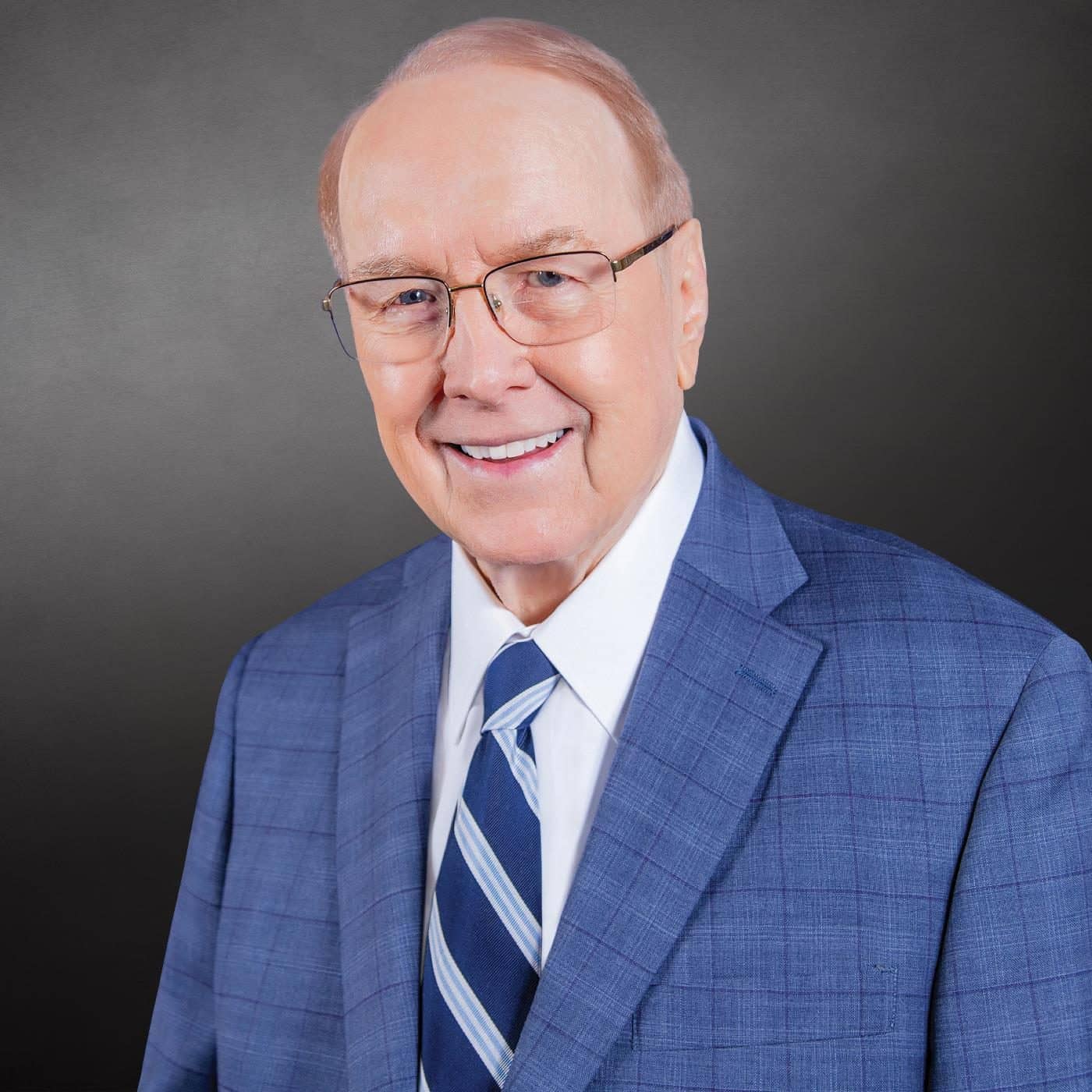

In this emotionally charged episode of Family Talk, we celebrate what would have been Dr. James Dobson’s 90th birthday. Although his passing last August marked the end of an era, the legacy he left behind continues to impact countless lives today. Through cherished memories and heartfelt tributes, we explore the immense influence Dr. Dobson had on individuals like Vice President J.D. Vance. Witness the ways Dr. Dobson’s messages on family and faith continue to inspire hope and foster understanding across generations.
SPEAKER 03 :
Welcome everyone to Family Talk. It’s a ministry of the James Dobson Family Institute supported by listeners just like you. I’m Dr. James Dobson and I’m thrilled that you’ve joined us.
SPEAKER 01 :
Well, welcome to Family Talk, the broadcast ministry of the Dr. James Dobson Family Institute. I’m Roger Marsh, and if you’ve been a fan of Dr. Dobson over the years, you may know that today is a very special day in the history of the life of Dr. James Dobson and also the history of our ministry. Today, April 21st, 2026, would have marked Dr. Dobson’s 90th birthday. Of course, Dr. Dobson went home to be with the Lord last August 21st at the age of 89. But what a powerful legacy he left for us to continue here at the Dr. James Dobson Family Institute and on our Family Talk broadcast. So I encourage you to visit drjamesdobson.org today. You’ll see a lovely tribute that we have up there for Dr. Dobson, also some recommendations about special resources. And we encourage you to also drop us a line and share a birthday greeting for Dr. Dobson with the Dobson family. And if you will, you can honor his legacy and memory by sharing how he encouraged you as a parent or as a spouse or even even as a grandparent. Again, you’ll find that special birthday tribute for Dr. Dobson at drjamesdobson.org. And speaking of tributes and Dr. Dobson’s impact, I want to start off today’s broadcast by sharing something special with you that happened just last week. Vice President J.D. Vance was recently at the University of Georgia for a Turning Point USA event when a student in the audience asked him which voices helped to shape his conservative convictions when he was growing up. Take a listen to what he had to say.
SPEAKER 02 :
When I was a kid, and I was kind of developing my politics, there was actually a radio host, James Dobson, who was really influential to me. And he was a good Christian guy, he talked about the family, he talked about things I cared a lot about, and I came from a broken home, so when he talked about the ways in which a broken home had a negative effect on kids, it made sense to me because I was seeing it in my own life, and then here was a guy who was actually talking about it. And what I liked about him is that he didn’t talk about it in this judgmental way, right? He wasn’t attacking a kid like me who didn’t have everything handed to him. He was just explaining in a very real world with a fundamentally Christian underpinning, here’s what happens when things are broken.
SPEAKER 01 :
Well, what a wonderful tribute. And you know, Dr. Dobson really did have a way of speaking truth with compassion. And that voice is still reaching people today through the Dr. James Dobson Family Institute. By the way, it’s worth pointing out that the very message that shaped a young J.D. Vance growing up is the same kind of message you’re about to hear on today’s Family Talk broadcast. We’re about to bring you the conclusion of a powerful presentation from the Bringing Up Boys DVD series, one where Dr. Dobson speaks very directly to parents about reaching the hearts of their sons. Dr. Dobson will be sharing why the choices you make when your kids are watching shape their faith more than any lesson you might ever teach them. It’s truly a matter of what is caught more than what is taught. He will also challenge parents to slow down the frantic pace of family life before it robs you of the years that matter most. So whether you’re in the thick of raising young kids right now or you’re preparing to let go of that string, you won’t want to miss the timeless wisdom that you’re about to hear during the next half hour on today’s special edition of Dr. James Dobson’s Family Talk.
SPEAKER 03 :
When I was five years of age, almost six, my father was an evangelist. He felt that’s what God had called him to do. And I could travel with them up until that time. But when I hit school, there was a problem. What were they gonna do with me? My dad and my mother were very close and my dad did not feel like he could go without my mother. And so he left me, they left me with my great aunt and my great uncle for as much as six weeks at a time. And I remember sitting there feeling abandoned and feeling lonely. I was in a completely new environment and that was very, very difficult for me. And my parents came home oh, after four, five, six weeks, and then they’d leave and then they’d come back. After about five months of that, they came home and my dad looked at me and he said to my mother, Jim is becoming more like them than he is us. And he bought a home in Oklahoma City, and left my mother at home. Tremendous sacrifice he made. And let me have her. We both needed her. Let me have her. And she stayed home with me for the next 10 years and my dad would come and go as he was able. The reason that that worked is because when he was home he was mine and we did all kinds of things together. And he built the relationship when he was home. But he made an incredible sacrifice for 10 years alone out there when the woman he needed and the woman he loved was at home with me. Then when I turned 16, I got testy like most 16-year-olds do. And I started giving my mother a hard time. And I remember the night that it came to a head and she wanted me to do something. And I just more or less said, if you don’t like it, that’s too bad. And I had just challenged her authority in a way I’d never done before. I’ll never forget what she did. I was around the corner listening to her. My mom went to the phone, called my dad, and she had a very simple message for him. She said, I need you. And I was absolutely shocked by what my dad did. He came home, he put our house up for sale, and took a church 700 miles away, and moved our family to South Texas. and was at home with me during my last two years of high school so he could be with me. One encounter and my dad flat out canceled his life and changed everything and became a pastor for two years so that we could be together. And when I talk about him with this reverence, with this love, the fact that this ministry here is dedicated to him, this is the reason. Because of the sacrifice that he made. He paid an enormous price for me at a time when I needed him. And he saved me. He saved me. Who knows what I would have done? I was heading in the wrong direction. I was going over the cliff. And he pulled me back because he cared enough about me to make that kind of sacrifice, win your children to Jesus Christ. Nothing else even comes close to that. Nothing comes close. You know, you can… Think about all the things you might accomplish and all the wonderful possibilities that could occur in your life. Is there anything that touches that? I mean, this is the only way that you can be together for eternity. If you don’t get that done, you’ll never see them again. And the scary thing is you have such a short window to do it. Between 14 and 18, there is only a 4% chance that your kids will find the Lord if they haven’t done it already. And after 18, there’s a 6% chance for the rest of that individual’s life. So it’s only a 10% chance if you haven’t done it by 14. There are exceptions to it, obviously. But for the most part, if you don’t do that early, and yet we are failing to get this done. We’re failing with our kids at this most important assignment. We have spent more money on education and on medicine and on entertainment than any generation in history. And yet this generation does not know who they are. They don’t know why they have meaning. They don’t know what they’re here to do. They can’t answer the major questions of life. They don’t know who put them here or why. or what they’re supposed to do, or if there are laws, if there are rules that they’re supposed to follow, if there is someone keeping score, if there is a God, and if so, does he know them? They don’t know if there’s life after death. They don’t know if they’re gonna be held accountable for the way they’ve lived their lives. See, we did a focus group, a number of focus groups when I was writing Life on the Edge for those between 16 and 26. And we ask them, what’s important to you? What’s significant? The one word that came out of that is meaning. This generation, including this generation of kids from Christian families, does not know why it has meaning. They don’t know why there is significance in their life because meaning comes from answering those questions. If you can’t answer those questions, you don’t have meaning. And yet, listen to this statistic. The Barna research shows that 68% of the people who call themselves born again Christians do not believe in absolute truth. And 84% of Catholics do not. And 85% of the general population do not believe in absolute truth. Folks, if you don’t believe in absolute truth, you don’t believe anything is absolutely true by definition. Not the deity of Christ, not the authenticity of the scriptures, not the relevance of the Bible. You don’t believe anything because if there is no absolute truth, there’s not one thing that is absolutely true. 68% of those of us who call ourselves by the name of Christ do not believe in absolute truth. I have to tell you all, you feed that watery soup to your kids and they’ll spit it out. if that’s the best you’ve got to offer them, if all you can say to your kids is we don’t know right from wrong and there is nothing you can count on and nothing that is invariably true, then the next generation is gonna take that and magnify it and there’s gonna be even less commitment to truth and values. We’ve gotta do better than that. You know, because our kids are lost and they’re watching you. Your kids are watching you. When our son was about, I think he was about 10 or 11, may have been 12, we were into the skiing scene because that was our primary way as a family of being together. And we had a little policy in our family that you probably won’t identify with, and I certainly understand if you don’t. Very few Christians see this the way I see it, but I was raised this way, and this is what I believe. We didn’t ski on Sunday. We just didn’t feel right about doing that. That’s the Lord’s day. And so we would go skiing on Thursday night. We’d ski Friday and Saturday. And then we would go to a little church service there in Mammoth, California, where we would ski. And then we’d drive home that afternoon. That was just our policy. We never skied on Sunday. We went with some friends, another family. We got up there on Thursday night and a huge blizzard came in. And on Friday, when we would have skied, it was awful. And we were socked in. And we couldn’t ski. We spent all day sitting in the lodge. And Saturday was the same way. And we all had cabin fever. Even the dog had cabin fever. We wanted to ski so badly. And wouldn’t you know, Sunday morning turned out gorgeous. All this wonderful new snow. and all of this beauty out there. And we get up and everybody wanted to ski. And I began thinking about that. And I began kind of compromising a little bit. And I just said, well, you know what? Let’s go ahead and ski today. It’s first time we’ve done it on Sunday, but let’s go ahead and do that. And we’ll have a little service for ourselves on Sunday afternoon. And so that’s what we planned to do. And everybody’s getting ready to go skiing. And in a few minutes, Shirley came up to me and she said, Jim, you better talk to your son. It was always my son when Ryan needed talking to. She said, you need to talk to your son. And I went down and found Ryan. He was crying. I said, Ryan, why are you crying? And he shocked me down to my toes. He said, Dad, I have never seen you compromise before. You stood for something. You know what’s right. And you’ve told us this is right. And now just because it’s something we want to do, you are compromising. And he was just very upset, very upset. And I said, Ryan, I mean, he was a conviction committee of one. And I said, Ryan, you’re right. You’re right. I have compromised. And I don’t feel good about it either. And I call the other family up and I said, listen, you do whatever you want to. I mean, this is just our policy. You guys go ahead and ski today. We’re going to go to church. And I just really feel like this is what we ought to do. And they said, no, you know what? We don’t feel good about it either. And so we canceled the ski trip. We all went to church and we decided that maybe there’s another way to skin this cat. And I called home and he called home and we canceled everything we had on Monday. We stayed another day. We had one of the best ski days that we’ve ever had on Monday. But I had no idea that Ryan was watching me. You know, every move I made, why would that matter to him? Why would he cry? Because I had come to represent right and wrong to him. There’s some things that are not right. And I presented it to him and then I had contradicted it. Your kids are watching you as well. I want to just put a ribbon on what I’m saying today. These are such important principles. We’ve been talking about them throughout in this book on bringing up boys. This is the most important thing in the book. It’s not new. There’s nothing new under the sun. But it is, I think, something that we need to give the highest priority to, the ultimate priority, because it’s over so quickly. You know, it is done so quickly. Irma Bombeck. It’s gone on now, but she wrote some wonderful stuff. I absolutely love Irma Bombeck’s writings and her sense of humor. But some of the things she wrote were not funny. Some of them grabbed me by the heart. And one of them had to do with this latter end of parenting. She said that raising kids is like flying a kite. You get the kite together and you put the string on it and you put a tail on it and you take it out in the road with your kids and you’re running down the road, you’re trying to get this thing in the air and it won’t fly and there’s not enough wind and you go back in, you put a longer tail on it and you run and you’re huffing and puffing and the thing is bouncing along back there and you can hardly get it off the ground. You think you’re never gonna get that accomplished. And so as time goes on, it begins to gain a little altitude. And then there is the absolutely terrifying moment when the thing is kind of going back and forth and you’re afraid it’s going to hit the trees or the telephone lines or the electrical lines. And you’re not sure you’re even going to be able to keep this thing airborne. And then about the time you’ve despaired of it, the wind catches it. and it takes a big upward surge and all of a sudden you’re letting out all this line and you just can’t keep up with it and it’s pulling on the line and you’re trying to hold on to it and it gets way out there till it’s just a little pinpoint in the sky and then before you know it, you’re at the end of the string And so you hold your hand up like this and you’re on your tiptoes and you’re holding on to it and it’s pulling. And the moment comes when you have to let go. And it soars free into God’s blue heaven. And for the first time in 20 years, the kite is free and so are you. And that moment comes ever so quickly. We’ve let the kite go for both our kids. It was very, very hard. One of the most emotional things I’ve ever done in my life was seeing Ryan, the youngest, go out off to college. I cried for three days. I thought I couldn’t take it. But it’s God’s plan. And there comes a time to let it go. And it’s a wonderful sense of having done the job right, not perfectly, but having done the job to the best of your ability when it comes time to let go of the string. And that’s what this parenting responsibility is all about for boys and girls. Some of you kind of feel this the way I do, don’t you? Anybody have anything to say? Any thoughts? Yes, sir.
SPEAKER 04 :
I have five boys, five sons. The oldest, Kyle, is with us here today. He just finished up with the Institute here. And the youngest is 10. And so a lot of what you’re saying, I guess I can truly relate to. And the most important thing that God has revealed to me is that, yes, who they are in Christ is what matters. And it’s my job to get them that. And so I’m thankful for the Institute. I’m thankful for my boys. They’re great.
SPEAKER 03 :
It’s been good having you here. I hope you’ve enjoyed that responsibility and that opportunity. Let me say to you all who are a little younger perhaps, that when you come to the end of your life and you’re looking back, what will matter most to you? Any of you thought about that? Will it be the buildings that have your name on them? Will it be the books that you wrote? Will it be money that you made? Will it be great accomplishments professionally? Will it be a business that you built? What is going to matter? When you look back and you think that’s at the top of the list, what’s it gonna be? You know, I’ve had an opportunity to experience that because I’ve had a heart attack and a stroke. And I know what it’s like to look death straight in the face. So I’ve been there. I’ve already experienced it. The Lord was kind to heal me and I’m probably healthier than I’ve been in 15 to 20 years. At least I think I am and certainly feel that way. But I have still come up to the door and looked at it and then turned and looked back. So I’ve been there. I can tell you something. If my experience is of relevance at all to you, those things that I mentioned don’t matter to me at all. They’re not significant. What matters to me is who I loved and who loved me and what we did together in the service of the Lord. Nothing else makes much sense. And if you feel that way, especially those of you who are younger, if you feel that way now, why not live that way when you’re young enough to make the difference? You know, if that really is what matters to you, then change that pace of living that has you exhausted. The characteristic of the American way of life is this frantic, frantic pace that leaves everyone just in a state of frenzy where you’re at each other’s throats because you have nothing left to give and you jam so much into your day that there’s no time to love or care or laugh or be. No, that’s the way we live our lives. And boys don’t cope with that very well. Boys even more than girls have a tendency to get in trouble when that happens because they don’t know who cares about them and they need to be guided and shaped and they need to be trained. They need character development. They need their fathers involved with them especially. And what I’m saying has a ring of validity to you. I hope that maybe you will live by that during the younger days of your life. Some of you have already said goodbye to a boy or girl and sent them out. You’ve let the kite go. For those of you who still have them at home, there’s no higher priority. There’s nothing that outranks this. Give it your best. And I pray that God will bless you as you do. Thank you all.
SPEAKER 01 :
When you come to the end of your life and look back on it, what’s going to matter the most? It’s not the buildings that you’ve owned or the bank account that you amassed, but it’s who you loved, who loved you, and what you did together in the service of the Lord. That is the heart of what Dr. James Dobson shared with us today here on Family Talk, a presentation from Dr. Dobson’s classic Bringing Up Boys DVD series. If you missed part one of this broadcast or if you’d like to hear today’s program again, go to jdfi.net. Well, the timeless wisdom you heard on today’s broadcast is just as relevant now as it was when Dr. Dobson first shared it. That’s what makes his teaching so remarkable. It doesn’t expire. Here at the Dr. James Dobson Family Institute, we are committed to stewarding that legacy, making sure these timeless biblical principles reach a whole new generation of moms and dads who need them. Through daily broadcasts, online resources, and our extensive digital library, we are bringing Dr. Dobson’s trusted voice to younger families who are just now beginning the parenting journey. But we can only continue this work with the support of friends like you. Your gift today helps us preserve and to share this wisdom for years to come. You can make a secure donation when you go to jdfi.net. And by the way, why not make a donation today in honor of Dr. Dobson’s 90th birthday? That’s jdfi.net or give us a call at 877-732-6825. That’s 877-732-6825. Now, if you’d prefer to write to us, here’s our ministry mailing address, Dr. James Dobson’s Family Talk, or you can use the initials JDFI for short. P.O. Box 39000, Colorado Springs, Colorado, 80949. Well, I’m Roger Marsh, and on behalf of all of us here at Family Talk and the Dr. James Dobson Family Institute, thanks so much for joining us today. Be sure to join us again next time right here for another edition of Dr. James Dobson’s Family Talk, The Voice You Trust, for the family you love. And happy 90th birthday in heaven, Dr. Dobson. This has been a presentation of the Dr. James Dobson Family Institute.