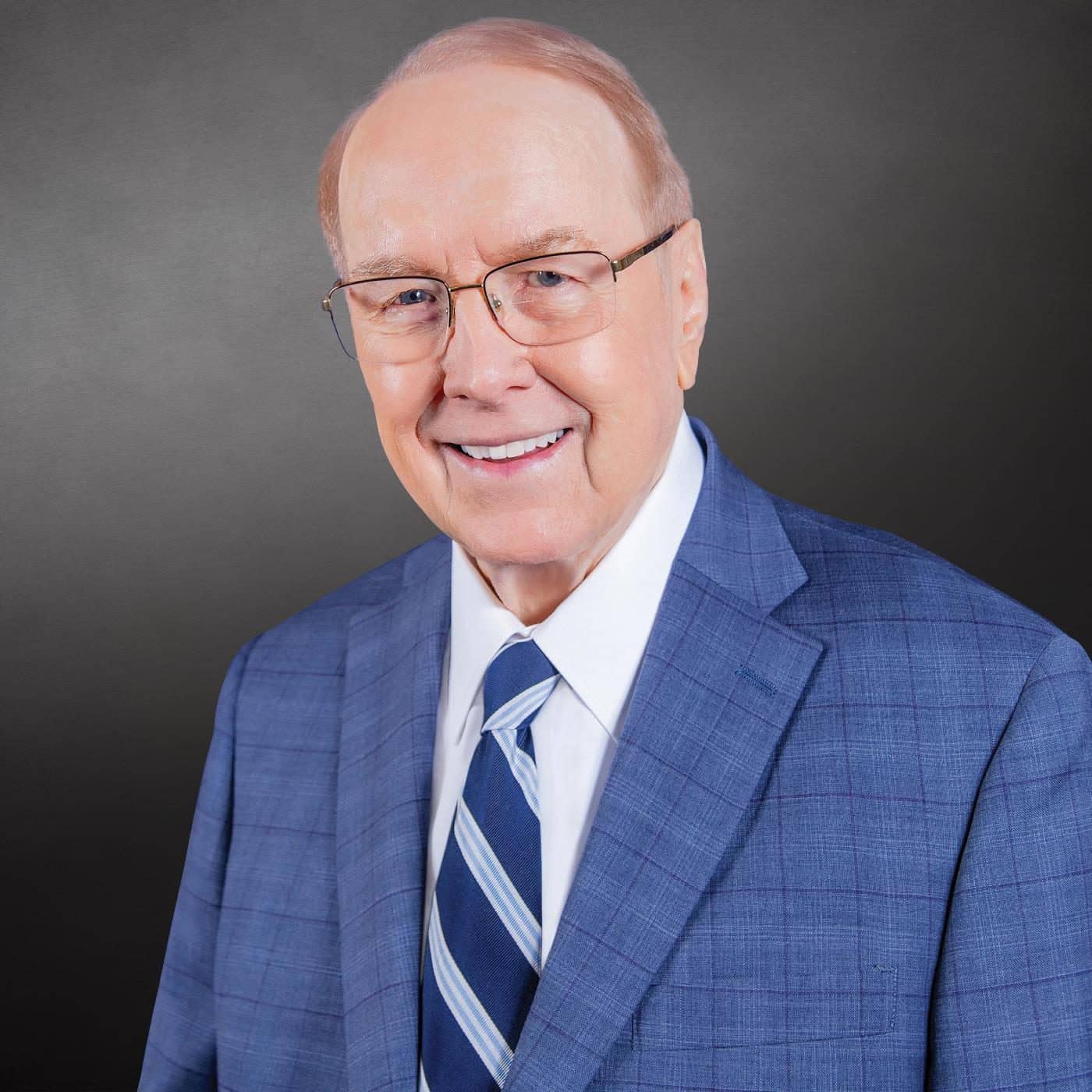
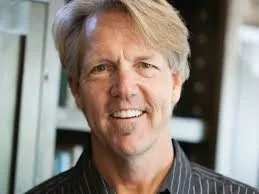

In today’s episode of Family Talk, host Roger Marsh welcomes author and counselor John Eldridge. Together, they explore the erosion of faith in modern times due to constant internet exposure and cultural shifts. John discusses insights from his latest book, ‘Experience Jesus, Really,’ and shares the importance of maintaining a vine-branch relationship with Christ. In a world riddled with chaos and uncertainty, Eldridge offers guidance on finding refuge, strength, and wonder through everyday practices.
SPEAKER 02 :
You’re listening to Family Talk, the radio broadcasting division of the James Dobson Family Institute. I am that James Dobson, and I’m so pleased that you’ve joined us today.
SPEAKER 01 :
Well, welcome to Family Talk, the broadcast division of the Dr. James Dobson Family Institute. I’m Roger Marsh in the co-host seat today, and we have a very special guest on the program. You may be familiar with him. His name is John Eldridge. Now, John is a best-selling author, counselor, and teacher. He is the president of Wild at Heart Ministries, based right here in Colorado Springs. Wild at Heart is a ministry devoted to helping people discover the heart of God. to recover their own hearts in God’s love and to learn to live in God’s kingdom. John Eldredge is the author of many best-selling books, including the aforementioned Wild at Heart, also Captivating, Get Your Life Back, and his newest book, which we’ll be discussing today, called Experience Jesus, Really, Finding Refuge, Strength, and Wonder Through Everyday Encounters with God. John and his wife, Stacey, have three grown sons, and they make their home right here in Colorado. John Eldredge, welcome back to Family Talked.
SPEAKER 02 :
Yeah, thank you, Roger. It’s good to be back with you guys. It’s been a while and I love what you do. So thank you for having me.
SPEAKER 01 :
Well, you know, it’s interesting because we’re in interesting strategic times right now. I mean, we see end times things happening. We see cultural shifts happening to where it seems like if you’re a Christian now or you live by Christian values, you’re kind of in the minority as opposed to the majority, which is new for a lot of people. But it’s interesting because in your newest book, one of the things that you point out is that our faculty of faith has been eroded by something most of us are unaware of, and that is we’ve become disciples of the Internet. And that phrase, Google is God, if you will. Help us understand what some of these characteristics are, because I’m sure a lot of people are saying, wait, no, I use my smartphone. It doesn’t use me. But the reality is, as you bring a point in your book, we are becoming disciples of the Internet.
SPEAKER 02 :
Yeah, look, it’s not an insult. It’s just a fact, okay? I know you like to think of yourself as a disciple of Jesus. However, all day, every day, we are all looking stuff up, right? Okay, what’s the proper temperature to bake a potato again? And Andrew Jackson, was he the 13th president? I’m trying to help my kid with his homework, all that, right? Okay, here’s the thing. Because every day you get on, the new research is telling you, oh, all that stuff we told you yesterday about vitamin B12 or the proper way to exercise, yeah, that’s not true anymore. We’ve got a new expert who’s contradicting everything. Or yeah, and then you go on with the global news. Oh, what you thought was going on in Ukraine, that’s not really what’s going on. Okay. That erodes our capacity to believe. We just don’t trust much anymore. We’ve got a real prove it to me attitude. And you would think we could keep that confined to our Google search, but it’s a faculty within you. You begin to bring that That distrust actually into your relationship with God. It’s like, well, I’m just not sure. I mean, Roger, the Barnett data that came out, they did that longitudinal study. One in every two Christians has walked away from the faith. In the last 20 years in America, and in the developed world, in the developed West, you go, wait, 50%? Like, what is happening to faith right now? Why is it being, you know, sort of subtly eroded? And I think one of the reasons is, yeah, we’ve just had the… This relationship with the Internet for more than two decades now, every single day, all day long. And it’s made us all really weary skeptics instead of trusting, you know, childlike believers. Yeah.
SPEAKER 01 :
You know, it’s interesting, John, as you bring this up, I’m thinking with your background in counseling, John has a master’s in counseling from Colorado Christian. Of course, Dr. Dobson with a PhD in clinical psychology, he focused on child issues and that was his real strength and sweet spot for many, many years. And yet now you and I could go on TikTok or Instagram or something like that. And I was watching a… It was an interview with an author that you and I both know. I won’t mention her name here on the program. She was being interviewed by a guy who’s doing like a marriage and parenting thing. He has a million followers on Instagram. I have no idea who this guy is. I have no idea what his background is. But I wonder how many people are looking and saying, well, you know what? He’s got a million followers, so he must be true. Yes. And he could just be telling us stuff that he, like you said, he Googled, found a couple of pieces of information, has a really great compelling presentation. Two years later, we might find out he’s an ax murderer or something like that. But that’s kind of our brains have been rewired. And you’re right, that skepticism really has crept in to what we do, what we believe, what we think.
SPEAKER 02 :
Yeah, it was literally a conversation. I was chatting with a dear man over coffee just an hour ago. This is a guy who loves Christ. He is all in. He wants to be a disciple. And I was telling him something that I’m learning about life and faith. And he’s like, you know, I’m just not sure I believe any of this stuff anymore. Literally what you and I were talking about was coming out of his mouth. This guy has a graduate degree. He’s deeply mature. But there it is. There’s the suspicion, the unbelief, because of all the exposures and the exposés, right? That’s really contributed to it as well. And even now, if you want to convince someone of anything, you have to trot out the latest research.
SPEAKER 01 :
Right.
SPEAKER 02 :
Yeah, it’s not enough to say, hey, did you know that the Psalms, you know, encourage us to trust in the Lord? You’ve got to go, actually, new brain research shows that if you pray, you become a more peaceful person. And then people go, oh, okay, well, I think I want to pray.
SPEAKER 01 :
It’s incredible the season that we’re living in. And John Eldredge has really, you know, pointed out a couple of things here with your last book, Get Your Life Back, Everyday Practices for World Gone Mad. And now this new book about experiencing Jesus, really, I mean, finding refuge, strength, and wonder through everyday encounters with God. What has been the biggest shift you’ve seen culturally, John, from the time you wrote Get Your Life Back to what you’re working on right now?
SPEAKER 02 :
Okay, so Get Your Life Back came out. This is a very important conversation. I’m glad you asked this. Get Your Life Back came out in 2020 during the pandemic. And of course, you plan a book a whole year ahead of time, so we didn’t know, but Jesus knew. And it was the perfect book to come out because it is about getting out of the chaos, getting out of the news, getting back into a more centered place in your life and God. Since then, the world has actually gotten more unstable. Uncertainty is what you wake up to every morning. What’s the new thing, right? Oh, it’s tariffs. Well, oh my goodness, should I buy a car now or do I wait? It’s just uncertainty. What is the world gonna be like? It’s constantly changing. And for human souls to live in constant uncertainty is very fatiguing. People are tired. Here’s the problem. When you’re tired, you don’t make good decisions. We all know this. The best marriage counsel I ever got when Stace and I were getting married, they said no important conversations after 9 p.m. Just don’t bring it up because you’re both tired. It’s not going to go well. Okay. Well, now we have a world that is in a state of constant uncertainty. You know, what’s the new news in the Middle East? You go, oh, the hoodies are now shooting down this. Okay. Tired souls make poor decisions. And some of those poor decisions are away from your quiet time. I’m too tired to pray. I don’t want to read the scripture this morning. Yeah, I don’t want to listen to some worship this evening. I’m too tired. I just want to scroll on my phone. But it is conditioning the human soul away from from the very thing we need which is the vine branch relationship with jesus yeah you’re just too tired to do it and you’re not sure you trust it anymore so we start giving up the life raft That’s going to get us out of the madness. And that’s in the last four years since Get Your Life Back. It’s not like the world has become rosier. Yeah, things have become more uncertain, more unstable. And so these practices that the saints and the church down through the ages have really encouraged people to do to stay in God, stay rooted, stay grounded. People are abandoning because they’re just too tired to do it.
SPEAKER 01 :
You know, it’s interesting talking with John Eldridge today about his brand new book, Experience Jesus, and we’ve got a link for it at drjamestobson.org. I was talking with a college administrator, Christian University in Southern California. This is probably two, three years ago. And he said the paradigm shift that he’s noticed, even on Christian campuses, is it used to be when a college student went on, you know, 18, 19, 20 years of age, they enrolled in school and they went to learn. And the whole idea was, you know, we’re going to open up the world to you and show you all these different possibilities. And you’re going to leave here with the preparation you need, the training for whatever discipline you’re going into. He said, now it seems like, and this was anecdotal, but I’m sure there’s research that backs this up. The whole purpose of the collegiate experience is to make you more confused. to question everything that you thought was true and right and whatever, and to leave with this piece of paper in your hand that says, I know something, but also the uncertainty. And you have a quote in your book that I want to get your reaction to when you say, life with the internet has severely eroded our confidence that we can even know the truth and even know what’s true while it accelerates our drive to get the truth. Is that why we’re so exhausted, John Eldridge?
SPEAKER 02 :
Yeah, exactly. Yeah, it’s intellectually fatiguing. It’s mentally draining. And I want to say with all love and respect, even many Christian universities, because what they have felt is these kids have grown up in a greenhouse Christianity. They haven’t faced the real world. We need to shake them. All three of my sons went to Christian universities. We need to shake them up. We need to show them how real the world is, the suffering out there. But the human soul was actually never meant to be exposed to to the suffering of the world. Only God is omniscient. Only God is omnipotent. But the internet life and the cell phone life has created, the whole world shows up on your phone every morning. Here’s the heartache in Australia. Here’s what’s going on in Rwanda. Here’s what human trafficking is doing. That also, people have compassion fatigue. So the whole idea, the whole reason I wrote the book, Roger, was to invite people back Into the simple practices that restore the vine branch relationship. So I love Psalm 1 because it reflects on what we’re saying. Psalm 1 says, it’s talking about you be like a tree planted by a stream of water whose leaves never wither. And you’ll bear fruit in every season. So it’s about resilience. But it starts with blessed is the one who doesn’t walk in the way of the sinner or sit in the seat of the mock. It’s like what you give your attention to frames you. The last thing you think about at night and the first thing you think about in the morning are the strongest determinants of your mental health. The last thing at night, first thing in the morning. You know most people take their cell phones to bed with them. And the last thing they’re doing is scrolling. Okay, so the last thing you’re getting is chaos, trauma, uncertainty, heartache, or just silly Instagram reels, cats doing tricks and stuff. Yeah, but you’re not that tree that’s rooted and grounded in the river of God and the river of life. You’re not being nourished as a human being. And then first thing in the morning, you know what we all do? We pick up our phones.
SPEAKER 01 :
Exactly.
SPEAKER 02 :
And then you’re right back in the matrix.
SPEAKER 01 :
Yeah. Incredible. It’s amazing when you think about, I love the title of your book more and more as we’re having this conversation with John Eldredge, Experience Jesus, Really, Finding Refuge, Strength and Wonder Through Everyday Encounters with God. As you mentioned the opening lines of Psalm 1, I kept thinking to myself, well, based on what you said earlier, that tree that’s planted doesn’t ever get too tired to receive the nourishment.
SPEAKER 02 :
Right.
SPEAKER 01 :
I can’t imagine the roots going, now we’re good.
SPEAKER 02 :
Yeah, exactly.
SPEAKER 01 :
Okay.
SPEAKER 02 :
And what Psalm 1 is about, and this will help people, we’re going to come at it from another angle. Psalm 1 is about what has your attention. Okay. So you’re not thinking about this, you’re thinking about that. Okay. Because it’s about meditating on the word of the Lord. That’s what makes you that resilient tree. I think it’s helpful for you to understand right now, everybody, the war is for your attention. And AI and all the analytics know you intimately. They know exactly what to throw at you. You know, I’m on an online Bible thing the other day, looking up some Hebrew words and that sort of thing. And you know, the little ads that pop up, they are, here’s the piece of hunting gear I want. Here’s the down jacket I want.
SPEAKER 01 :
It’s like they’re listening to your conversations. Yeah.
SPEAKER 02 :
Holy smokes.
SPEAKER 01 :
Yeah.
SPEAKER 02 :
And it’s perfectly designed to seize your attention. So the war right now is for your attention. If you get on YouTube, it knows exactly what you’ve been watching, and it gives you those sensational headlines. Guess what happened when Trump said this? And you go, ooh, click, click, click, click, click. OK. The war is for your attention. It’s important for you to know that because your attention is something that you want to steward and fight for. So for example, I’d strongly recommend people leave your phone in the kitchen. Please don’t take it to bed. Buy yourself a $9 alarm clock every Okay. And when you come out in the morning, and this is my discipline every day, when you come out in the morning, your phone is face down on the counter and you’re not going to pick it up because what you’re going to do is you create a little bit of sacred space in your morning. Yeah. Make your cup of coffee, stand at the window and say your prayers for heaven’s sakes. Read a little scripture. Give that sacred space to be the tree that that’s planted by the river because you’re giving your attention back to God. You’re letting him have your attention. And this is how you fight the war. Like you take hold of your attention again. Don’t let these folks hijack it.
SPEAKER 01 :
Interesting. I think of especially you have three sons. I raised three on my own. My wife and we were a blended family. So we’ve got six and are yours, mine and ours collection. And now we’ve got grandkids and they are everywhere. And that whole attention thing, look out. I mean, because we have one who literally came out on the second push and he hasn’t stopped moving for two and a half years. I mean, they just go and they go and they go and they go. And what you’re talking about, John, is just really, it’s great parenting. It’s great learning. I mean, for us to just say, look, our attention is the commodity of the day, and that’s who the enemy is fighting with us for our attention. And we’re talking about wanting to experience true communion with the Lord. In the book, you talk about… people who are professing Christians, or maybe they’re brand new Christians, but they really don’t fully understand what communing with the Lord looks like. Does it mean going on a retreat somewhere? Does it mean, you know, like you said, taking that first hour of the morning and just being in stillness and simplicity? How do we do that during the day?
SPEAKER 02 :
Yes, yes, this is so good, Roger. Okay, so I’ve been a Christian therapist now for 30 years, and I wrote the book out of my own heartache for my clients. So many of them wait. They wait until there’s the big crisis. My spouse just left. We just lost a child. My husband lost his job. We just discovered our son has a fentanyl addiction. They wait until the crisis. To find God. Where is God in all this? I’m like, folks, that’s like learning to ski by doing double black diamonds. You don’t wait until the uber moment, the big, you know, you start on the bunny slope. You make it your practice. You make it your habit. You build intimacy with God before the crisis hits. This is so important for people because they wait for the crisis and then they pray. Where are you, God? That’s a very difficult thing to do. It’s hard to find God in the crisis. It’s hard even for mature people. Okay. So what I’m recommending is the return to the practice of communion with Christ. And now, let me say why. Because we’re disciples of the internet, we have a very left-brain approach to everything, even our spiritual life. The left brain is reason, content, analysis, critical decision-making, right? I mean, the left brain. The right brain is relational connection. The right brain is romance, love, joy is located. Joy is located in the right brain. Okay. So we’re very left brain. So when we if we do have like a quiet time, it tends to be very content oriented. Oh, I’ve got to read. I’ve got to read. You know, this man, I got to get three chapters in today or, you know, I’m halfway through this book. I need to finish this book or there’s this great podcast. OK, that’s not the same thing as practicing the presence of God. Okay, so good old Brother Lawrence. He was the Carmelite friar who wrote the famous book, Practicing the Presence of God. And he said this. He said, I don’t understand how people of faith can live without the practice of the presence of God. He says, for my part, I have learned to commune with him even in the kitchen. So he worked in the kitchen in the friary. Apparently, he was a very clumsy guy. And they wouldn’t trust him. They wouldn’t trust him with anything other than doing the dishes.
SPEAKER 03 :
Mm-hmm.
SPEAKER 02 :
He says, even in the kitchen, in my day to day, I have learned to experience the presence of God with me. And because of that simple, beautiful life, even governors and bishops and leaders would come to him, this humble kitchen guy, because he had such a rich, beautiful relationship with Jesus. So that’s communion that’s different than content. That’s right brain as opposed to all left brain. So what I’m inviting people back into, and you have to have somebody to show you how to do this, inviting people back into practicing the presence of God. So when I wake up in the morning and I make my cup of coffee and I stand by the window, the first thing I start doing is I just say, I love you, God. I love you, Father. I love you, Lord. Loving God opens the soul to his presence. I love you, Jesus. I love you. And I’m not first looking for answers. And I’m not looking for the new big, you know, idea, the new content, you know. Oh, did you know what the Greek word, you know, means for you? Okay. Those things are important. But right now what I’m looking for is the presence of God with me. Because that’s what nourishes us. When Jesus says, hey, I’m the bread of life, he literally means I want to nourish you. I want to strengthen you. I want to give you what you need each day. So the invitation is let’s get a little less, a little more right brain, a little more relational, and a little more connection with God at the start of our day and frankly during the day.
SPEAKER 01 :
You know, you have a quote in the book, John Eldredge, the book, of course, that we’re talking about is experience Jesus really finding refuge, strength, and wonder through everyday encounters with God. You have a quote in the book I’d love to get your reaction to, especially in light of what we’ve just been talking about, because Mr. Left Brain here is really, I love Greek and Hebrew definitions. That’s the whole concept of just saying, hey, you have a beautiful home, beautiful backyard, beautiful family. Why aren’t you just, you know, enjoying God there? One of the things that you wrote in the book, the new book, We’re all looking for home. Humanity is in exile and we are feeling threadbare in the soul. Is it possible that the internet has made us more looking to things and content to create that home environment instead of just saying, look, home is where Jesus is. And if I’m where Jesus is and my family’s where Jesus is, everything else is going to be an outflow of that.
SPEAKER 02 :
That’s beautiful, Roger. Yes, that’s really good. So we’re living in very unsettled times, which makes people feel uncertain. Folks, what I want you to pay attention to is where do you go for comfort? And where do you go for assurance? Is it scrolling? Is it food? Is it binging Netflix? Where do you go? Is it alcohol? What are you using, particularly now at the close of your day when you come home and you’re just rattled, you know? What do you use for comfort and assurance? Because the invitation of God is, I want to be that for you. I want to be your safe place. Like Psalm 91, the Lord is my refuge, my fortress. In other words, God is your safe place. In him, your cortisol levels literally drop. In him, your anxiety comes down. In him. But it’s something, as A.W. Atosha says, that you must choose. Tozer says God waits to be chosen. So it’s important for us to go, okay, I’m living in uncertain times. If the war is for my attention, yeah, where do I go for my happy place? Where is it that I go to feel better? And if it’s not the Psalm 1 experience of the presence of God… It’s not going to work. We all know that. Alcohol doesn’t work. Food doesn’t work. Netflix doesn’t work. We want to be those people who, while the world is going nuts, our neighbors see us and go, why are you so peaceful? Why are you so gracious? You’re so kind. Where’s this coming from? Where’d you get that?
SPEAKER 01 :
And I want that. Yeah. Boy, this is a powerful conversation, and we’re just getting warmed up. We’ve kind of reached the midpoint of our discussion, but we’re out of time for today’s broadcast. John Eldridge is the author of the brand-new book called Experience Jesus, Really, Finding Refuge, Strength, and Wonder Through Everyday Encounters with God. We’ve got a link for the book up at drjamesdobson.org. John, this has been such a great conversation. Can we ask you to come back next time and continue the discussion?
SPEAKER 02 :
I would love to, Roger. That’d be great.
SPEAKER 01 :
Well, a big thanks to John Eldridge for being our guest on the broadcast today here on Dr. James Dobson’s Family Talk. I think many of us can relate to the habit of checking our phones first thing in the morning, but John offers a refreshing alternative, and that is encouraging us to start our day with simple expressions of love toward God. You’re listening to Dr. James Dobson’s Family Talk and our enlightening conversation with John Eldridge. You can listen to this program again or share it with a friend when you go to jdfi.net. And don’t forget that’s also where you’ll find a link to John’s outstanding book called Experience Jesus, Really? Finding Refuge, Strength, and Wonder Through Everyday Encounters with God. And in a world filled with so much noise and distraction, families need that kind of steady, faith-filled guidance now more than ever before. And your partnership makes this all possible. Now, you can stand with us in this mission when you visit JDFI.net. Our website is absolutely secure to receive your donation. Or if you’d like to speak with a member of our constituent care team, you can call 877-732-6825. That’s 877-732-6825. Well, I’m Roger Marsh, and from all of us here at Family Talk and the Dr. James Dobson Family Institute, thanks so much for joining us today. Be sure to tune in again next time when we’ll continue this compelling conversation with author John Eldredge, discussing how you can cultivate genuine intimacy with Jesus in our distracting world. Till then, may God continue to richly bless you and your family. I’m Roger Marsh, and from all of us here at Family Talk and the Dr. James Dobson Family Institute, thanks so much for joining us today. Be sure to join us again next time right here when we continue our compelling conversation with author John Eldredge discussing keys to really experiencing Jesus. That’s coming up on the next edition of Dr. James Dobson’s Family Talk, the voice you can still trust for the family you love. This has been a presentation of the Dr. James Dobson Family Institute.