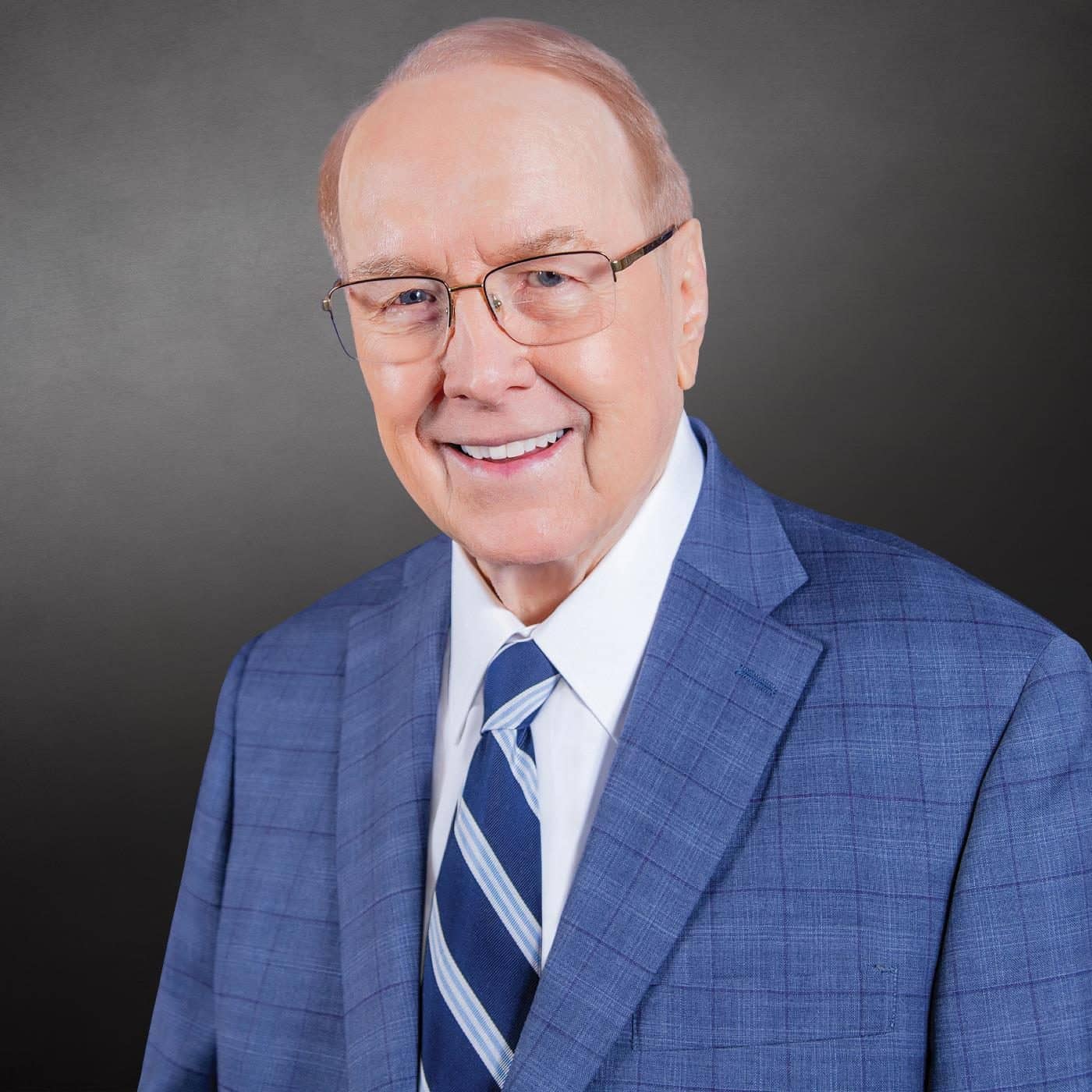

In this enlightening episode of Family Talk, James Dobson hosts John Eldridge, inviting listeners on a journey to experience Jesus more deeply. Engage with powerful insights into how the modern world challenges our sense of certainty and security, presenting an opportunity to rediscover spiritual refuge and strength. Eldridge’s new book, ‘Experience Jesus, Really,’ becomes a focal point of discussion, highlighting ways to encounter God in everyday life and instill peace amidst chaos.
SPEAKER 01 :
Welcome everyone to Family Talk. It’s a ministry of the James Dobson Family Institute supported by listeners just like you. I’m Dr. James Dobson and I’m thrilled that you’ve joined us.
SPEAKER 03 :
Well, welcome back to Dr. James Dobson’s Family Talk. I’m Roger Marsh in the co-host chair once again, joined for this conversation by John Eldridge, a continuing conversation with the bestselling author, counselor, and teacher, a master’s degree from Colorado Christian University in counseling, 30 years experience as a counselor and As an educator, he’s the author of several books. Wild at Heart, of course, is the classic and also captivating Get Your Life Back, which he was on with us a few years ago to discuss with Dr. Dobson. And the new book that we’re in the conversation about today is called Experience Jesus, Really? Finding Refuge, Strength, and Wonder Through Everyday Encounters with God. John and his wife, Stacey, have three grown sons, and they make their home right here in Colorado. And John, it’s so good to have you back here for day two about this conversation here on Dr. James Dobson’s Family Talk. Thanks for joining us again.
SPEAKER 01 :
Yeah, thank you, Roger. It’s good to come back because what we’re talking about is so life-giving for people. Okay, so going back to unsettled times. So we’re living in very unsettled times, which makes people feel uncertain. Folks, what I want you to pay attention to is where do you go for comfort? And where do you go for assurance? Is it scrolling? Is it food? Is it binging Netflix? Where do you go? Is it alcohol? What are you using, particularly now at the close of your day when you come home and you’re just rattled? What do you use for comfort and assurance? Because the invitation of God is, I want to be that for you. I want to be your safe place. Like Psalm 91, the Lord is my refuge, my fortress. In other words, God is your safe place. In him, your cortisol levels literally drop. In him, your anxiety comes down. In him. But it’s something, as A.W. Atosha says, that you must choose. Tozer says God waits to be chosen. So it’s important for us to go, okay, I’m living in uncertain times. If the war is for my attention, yeah, where do I go for my happy place? Where is it that I go to feel better? And if it’s not the Psalm 1 experience of the presence of God… It’s not going to work. We all know that. Alcohol doesn’t work. Food doesn’t work. Netflix doesn’t work. We want to be those people who, while the world is going nuts, our neighbors see us and go, why are you so peaceful? Why are you so gracious? You’re so kind. Where’s this coming from? Where’d you get that? And I want that.
SPEAKER 03 :
Yeah.
SPEAKER 01 :
All right. So let me swing over to the good side for a moment. So campus revivals going on in the U.S. Lots of young people coming to Christ in London. There’s a huge evangelistic movement going on in the Islamic world right now. God is moving. very, very powerfully in the world right now. I think we’re on the brink of perhaps another great awakening. We could be in the brink of being the people that get to see just this wonderful resurgence of people coming to Christ. Look at all the famous atheists like Russell Brand and others who are coming out saying, I’m in for Jesus. Even Joe Rogan, who hasn’t yet converted, he’s come a long ways. Yeah, now, and he’s not hostile to it anymore. He’s curious. He’s having Christian apologists on his podcast, for heaven’s sakes. Okay, don’t you want to be the neighbor that people come to and go, hey, I’ve got some questions about God. I’ve got this spiritual hunger, and usually it’s out of crisis. You know, I got the text yesterday, just yesterday. some dear friends lost their son. I want to be the person they text. I want to be the person they call. I want to be the person that people… So that we can be a part of what God’s doing in the world. Well, you need to be the person that people see as rooted and grounded, right? That’s the Psalm 1 thing. They look at you and they go, man, I just… I love your marriage. I love the way you are with your kids. I see you with your kids out in the front yard. I just love the kind of dad or mom you are. We want to be those people in a moment where God really could be breaking out. Well, in order to do that, you don’t wait for the crisis. You cultivate the intimacy now. We’re talking about a deep intimacy. actual, existential, ontological, experiential relationship with Jesus Christ.
SPEAKER 03 :
Yeah, it’s interesting. You have a quote in the book where people are driven so much by feelings, you know, that whole your truth and what’s your experience and that type of thing. And in the new book, you say, if God doesn’t feel near, oftentimes we conclude he must not be near. Whatever scripture says, if we don’t feel that we can find refuge, we conclude that we aren’t safely tucked into it. And then I love this one. Living feeling to feeling pulls us further into the wilderness. Talk about why so many people are falling victim to this line of thinking.
SPEAKER 01 :
Okay, so let’s look at the global mental health crisis for a moment. So anxiety rates have never been higher in the world, and particularly among young people. 42, 44%, so nearly half, one in every two young people reports a profound struggle with anxiety. I don’t think that’s because they’re weak. I think they’re the canary in the coal mine. I think they’re telling us as a young person, hey, the world is really uncertain. The world is a really troubling place. You look at the heartache in Africa. You look at the heartache in the Middle East. I don’t know what to do with this. Okay. The thing is this. When the Psalms invite you, for example, Psalm 91, but also Psalm 27, Psalm 46, to take refuge… in God. He is an ever-present help in time of need. What people have learned to do, we’ve been conditioned to operate on the basis of our feelings, because there’s a great difference. This is good news, folks, by the way. This is good news. There’s a great difference between feeling safe and actually being safe. People with a fear of heights… They walk to the edge of the, you know, the office window on the 20th floor of a building, they’re going to freak out. They’re going to start feeling, you know, anxiety and maybe a little sweaty. Okay, they’re perfectly safe. They’re not going to fall. They’re okay. This is our life in God. You are perfectly safe. You are situated in the love of God. When Jesus says, no one can snatch you out of my Father’s hands. But in order to experience that, you have to first trust the truth of it. We’ve got to flip the scales because, yeah, just because of the way that the world became very existential and very feely and truth was oriented, you know, based around how you feel. You got to get out of that. That’s madness. You come back to this is what’s true. I’m going to believe it, and I’m going to let that shape my feelings. So, practically, very practically, I have in the start of my journal every day, I have a list of truths, biblical truths that I need to say out loud to myself. I just know I need this. Okay. So, for example, I grew up in an alcoholic home. Okay. And my mother went back to work. I have no memories of playing with my mom. I have no memories of reading with my mom. And so I grew up almost like a street kid. My fundamental wounds are attachment wounds, abandonment, and betrayal. Okay, so I need the verse, I will never leave you, I will never forsake you.
SPEAKER 02 :
Mm-hmm.
SPEAKER 01 :
I need that, especially when things don’t look like it. It’s like, uh-oh, can’t make that trip this year. Uh-oh, we got a bad diagnosis from the doctor. Okay. I literally have to say that out loud every day to myself. I have a list of truths. You’re loved. You’re chosen. He’ll never leave you. If we will anchor our lives in that, in the truth of God, we can then move into the experience of it, which is peace and joy and rest. And we are meant to experience it. It’s just that you don’t start with experience. You start with the truth, and the truth will get you back into the lovely experience of communion with Christ.
SPEAKER 03 :
helping a younger generation understand that there is the truth as opposed to your truth or my truth, oftentimes that just becomes a political talking point. But you’re saying it’s a spiritual reality that we all have to deal with. And this is a generation now, Generation Z, Generation Alpha behind them, that are literally, they’re seeing the world the way it is. And I was thinking about, you mentioned, we were talking in the first segment about the internet and the things you find on the internet. I don’t know if you’ve seen the picture or not. It’s a guy, probably 18, 19 years of age, right before he goes off to World War I, just a photograph of him in his military outfit. And a picture of the same guy in the same uniform four years later, after he’d been serving in World War II, rather. And he looks like he’s 70. His face is all withered. And as they say, he’s seen some things. And And it’s interesting how we grew up in homes where our parents might have seen things or our grandparents might have seen things, and they just plowed through them, you know, nose to the groundstone. And now we’re facing a culture where a lot of young people are saying, in addition to I don’t know where the real truth is, I see the horrors of the world, and it’s kind of freaking me out a little bit. So, I mean, this is really helpful, I think, for us who are parents and grandparents to say, if you’ve got kids or grandkids that are feeling this way, don’t just say, well, in my day, you know, we just… But really meet them where they are. It’s a wonderful holy moment, it sounds like.
SPEAKER 01 :
Yes, yes, it is. Because Gen Z is looking for Christ, by the way. Yeah, big time. Hey, the number of Bible sales among Gen Z, first time Bible purchases, first time, is up like 30%. God is moving. He’s coming into the anxiety, you see. Yeah. Right. Yeah. I mean, to use the war analogy, there’s no atheists and foxholes. Right. are single young men. It’s the last group anyone would have predicted. Yeah, you’d think families, right? Or maybe older people, you know, coming into retirement, looking for community, that sort of thing. The Orthodox church, I don’t know if you’ve been to an Orthodox service, is three hours long. And there’s no pews. You stand. You stand the whole time. Gen Z is looking for the real deal. They’re like, don’t entertain me. Don’t coddle me. I need something real. Take me into an actual experience of God. And the churches and the parishes that are growing are the churches and parishes that where young men and women are experiencing the presence of God. And that’s what we want to get back to, because the Christian life was always meant to be deeply experiential. You know, and David says in Psalm 63, he says, I have seen you. I’ve seen you, God, in your sanctuary. I’ve beheld your glory. And then he says these wild things. He says, your love is better than anything in life. And you nourish me like any more than any great feast. Now, I used to read that and go, I believe you, David. I believe the scriptures, but I can’t say I know that to be true for myself. I don’t know that your love is better than the vacation I’m looking forward to. I don’t know that your love is better. than the car I want to buy, right? Okay. But as we come in, as we become the people of Psalm 63, as we become the people of Psalm 1, as we become people who can honestly say to our neighbors, hey, let me tell you about how wonderful God is. I don’t just have ideas about him. I know him. Okay, so you said you like the Greek and Hebrew. Yeah. Let’s go there for a minute, because I think folks will enjoy this. The Hebrew word for knowing is yada. And the Greek word for knowing, when it talks about knowing God, the Greek word is gnosko. You know these things. Mm-hmm. Gnosko and yada are deeply experiential knowing. In fact, the Jewish idiom that would use gnosko for marital relations, like deep, intimate knowing, so that you can know about something that’s left brain. Oh, I read a news report on that. I heard the new research on that. It’s you can experience friendship with someone. You go, oh, no, I know Harry. I know him well. He’s a really good man. That’s very right brain. The right brain is very relational. The scriptures are inviting us into both. You have the undeniable bedrock truth of scripture, but it’s supposed to bring us into the more right brain, gnosko, yada. I actually know you, God.
SPEAKER 02 :
Mm-hmm.
SPEAKER 01 :
And this has been lost because of the era that we’ve lived in. We’re grandchildren of the Enlightenment. We’re very, very fact-oriented. But the churches that are growing and what Gen Z is looking for is a deep, actual experience of the living God. And I want to be the kind of neighbor that they go, oh, well, Eldridge does. That guy down the street, I don’t know. He’s a little quirky, but he seems to know God. Yeah.
SPEAKER 03 :
Yeah, it’s wonderful as you’re thinking about that experiential component that is missing for so many people. And we’re talking with John Eldridge about his brand new book called Experience Jesus, Really, which we have a link for at drjamesdobson.org. I was thinking about a young woman I met up with at a, we were at a conference together, works in the industry. We’ve known each other for many years. And she recently left the evangelical church and joined an Anglican church. She lives in Nashville. And I said, what is it about it? She said, well, I like everything you were just describing. And she said, we take communion every week. And there’s something really cool about going up to the altar and taking communion and knowing that the whole body of Christ is doing this together. Yeah. Not just the people in my row, not just the people in my building. And I thought, wow, she gets it. I mean, everything you’re describing, she knows the left brain side, but she’s got the right brain side happening. And this is the place where it’s coming together. And we really need to pay attention to that, especially as we are shepherding the next generation and not just saying, the flip of that, and I see this on the internet a lot, is the Gen Z millennial generation gets to adulthood and and abandons their parents because they’re like, hey, there was something weird going on and I just can’t be around that. I mean, it really helps us to mitigate those differences a little bit more, don’t you think?
SPEAKER 01 :
Yeah, it does. It does. And helps us to be more compassionate. Let’s be more compassionate with their anxiety. It’s not just because they spend a whole bunch of time on their screens. They’re being exposed to the trauma of the world. And that’s a real thing. That’s heartbreaking. Yeah. I think we can be more compassionate towards their anxiety. I think we can be more forthright in their search for God, not by giving them platitudes, but the most powerful thing you can do is bear witness to what God has done in your life. And so you can say, you know what? Two years ago, we were out of money. We didn’t know what to do. We got down on our knees and pray. And I swear to you, there was a knock at the door. and someone was dropping by to help us out. These are biblical stories, right? Yes, they are stories of the intervention of God. So, parents, this was us with our kids. If you want to transmit your faith to your kids, it’s not just scripture memory, although I love that. You tell them stories about the intervention of God. Oh, we were praying one time. It was snowing so hard as we were trying to get to Grandma’s house, and we prayed. And you’re not going to believe this, but the snowstorm stopped. Or a highway patrol guy suddenly appeared in front of us and guided us through the storm. All those answers, all those tangible experiences of God coming for you, that’s what captures a child’s imagination. Or you’re in prayer, and you heard Jesus say something to you. Really? You heard from Jesus? Same thing with Gen Z and frankly, any adult at this point. People want, I think the human race is aching for a genuine experience of God. And so the more that we cultivate it and go, oh, just last week I was at work. It was a really tense meeting. I actually thought I was going to lose my job. I went outside, walked around the building. I prayed, came back in. Everything changed. It was like the tension left the room, the conflict. You want to tell stories of God.
SPEAKER 02 :
Yeah.
SPEAKER 01 :
His faithfulness, his goodness. Well, in order to do that, you have to have those stories.
SPEAKER 03 :
Yeah. We’re talking with John Eldredge today here on Dr. James Dobson’s Family Talk. The brand new book is called Experience Jesus, Really. It’s such a wonderful title. The sub is Finding Refuge, Strength, and Wonder Through Everyday Encounters with God. As we’re winding down our conversation, I wanted to ask you about prayer because I know for a lot of people, there are a lot of different impressions of prayer. As a matter of fact, we have a young woman who’s friends with one of my daughters. And she grew up in a Buddhist home and now they just don’t have any kind of faith, but they love hanging out with our kids and whenever something’s going on at church, they’re the first ones there. And one time we were blessing a meal over, you know, just out at a restaurant somewhere. And afterwards, Amy pulls me aside and she goes, hey, that grace speech thing that you just did. I said, yeah. She goes, where’d you learn that? I said, well, I was just asking for a blessing for the food. She goes, yeah, but you talked about other people too. Is that like a, is that written down somewhere? Yeah. And I said, no, no, that was just God, me having a conversation. It wasn’t rehearsed or anything like that. And so the term grace speech is kind of stuck in our family, you know, when we think about people who are outside the faith. But talk about how this essential opportunity we have to really experience Jesus doesn’t have to be rehearsed, but what God does to us when we open up our hearts to him in that way.
SPEAKER 01 :
I am so glad you asked that piece. So that’s Ephesians 3. Paul is praying. He says, Father, strengthen us in our inmost being by your presence within us so that Christ may dwell in our hearts.
SPEAKER 03 :
Love it.
SPEAKER 01 :
Okay. So this is the new idea, folks, is that when you are praying, you’re not trying to throw long balls way up to heaven.
SPEAKER 03 :
Right.
SPEAKER 01 :
Jesus Christ is closer to you than the air that you breathe. Because he actually dwells in your inmost being. And if you read the prayer life of the saints and sages down through the ages, you know, Martin Luther, Thomas Aquinas, Augustine, you will discover a common thread. They knew how to commune with Jesus inside their own heart.
SPEAKER 02 :
Yeah.
SPEAKER 01 :
He’s not far away. He’s on the plane with you. He’s in the carpool line with you because he’s so close. So what I want to suggest, you talk about prayer at the end, is that you begin to practice, Jesus, you are right here with me. You are within me. And I love you here. I love you right now. And as you love him in that close, close way, you’re actually going to experience his presence more and more. And it’s like riding a bike or playing an instrument. You get better as you get the hang of it. And you will begin to have very rich morning or evening times with God that will make you that tree that is evergreen and always bearing fruit.
SPEAKER 03 :
Love that. John Eldridge, can I put you on the spot here as we wrap things up? Would you close us out in prayer, especially thinking of those who are longing to experience Jesus deeper? I mean, to have that sense of wonder again that they really need.
SPEAKER 01 :
I would love to. Yes. Lord Jesus, you are looking for us more than we are looking for you. You want intimacy with us more than we want it with you. But I need your help. I need your help, Lord. And so I’m opening my heart to you. And friends, if you’ve never done that, this is a good time to do it. I open my heart to Jesus Christ. Right now, today, I open my heart to you. And that you would come and live within me. And Jesus, right here and now, you know, for many of you have been believers for years. As you live within me, I need a deeper life with you. I need a deeper knowing. I need a Gnosko Yada knowing. Would you awaken my ability to be aware of your presence, to hear your voice, and to linger with you each day in a rich communion, heal the vine branch relationship. In the name of the Lord Jesus, we pray. Amen.
SPEAKER 03 :
Amen. What a beautiful closing thought to wrap up our conversation with John Eldridge today here on Dr. James Dobson’s Family Talk. Again, the new book is called Experience Jesus, Really? Finding Refuge, Strength, and Wonder Through Everyday Encounters with God. And we have a link for the book and also John’s ministry up at drjamesdobson.org. John, always a pleasure. Thank you so much for sharing of your time and of your heart with us and with our listeners. And we appreciate you being with us today here on Dr. James Dobson’s Family Talk.
SPEAKER 01 :
Roger, thank you. And thank you for all the beautiful episodes that people can go listen to in your library here at the podcast. You’ve had beautiful people on. So I encourage folks, go back in the library and listen to the older shows.
SPEAKER 03 :
Thanks, John. Appreciate you. Well, a big thank you to John Eldridge for being our guest today here on Dr. James Dobson’s Family Talk. And also, John, thanks for that kind endorsement of the Library of Resources we have available on the JDFI website. You know, I don’t think we’ve ever had a guest recommend our library like that before, but, you know, there really are some great past episodes there. So thanks, John, for recommending that our listeners go to JDFI.net. Now, if you’d like to listen to today’s edition of Family Talk again, or share it with a friend. That’s the same website you’ll look for, jdfi.net. That’s also where you will find a link to John’s book that served as the basis for our discussion over the past couple of broadcasts. It’s called Experience Jesus, Really? Finding Refuge, Strength, and Wonder Through Everyday Encounters with God. The distinction John made between knowing about God and truly knowing him is really at the heart of everything we talked about on these two broadcasts. And his new book offers a roadmap for moving from head knowledge into that deep experiential relationship with Christ. Well, in addition to the extensive library of fantastic episodes John Eldridge just mentioned, there are lots of other resources available on our website at jdfi.net, and I want to draw your attention to one of them today. It’s a free 10-day email series called When God Doesn’t Make Sense. You know, there are times when we struggle with heartaches and trials that are so severe, we can’t really understand how God could let them happen. In those situations, he seems not to make any sense at all. I think we’ve all been there. Well, based on Dr. James Dobson’s best-selling book with that title, When God Doesn’t Make Sense, these insightful messages can strengthen your faith and show you how dark valleys can bring life’s greatest blessing, which is a closer walk with the Lord. To start receiving the free 10-day email series called When God Doesn’t Make Sense, simply go to jdfi.net and enter those words When God Doesn’t Make Sense in the search bar. Again, you’ll find that information at jdfi.net. Here at the Dr. James Dobson Family Institute, we are working every day to promote and teach biblical principles that support marriage, family, and child development. Programs like the one you heard today are only possible because friends like you are praying for us and you believe that this mission matters. Your gift of any amount allows us to continue broadcasting biblical truth to families all across America and literally all around the world. To make a secure donation, visit jdfi.net or call 877-732-6825. A member of our constituent care team will be happy to assist you when you call 877-732-6825. Well, I’m Roger Marsh, and from all of us here at Family Talk and the Dr. James Dobson Family Institute, thanks so much for listening today. Be sure to join us again next time right here for another edition of Dr. James Dobson’s Family Talk, the voice you can still trust for the family you love. This has been a presentation of the Dr. James Dobson Family Institute.