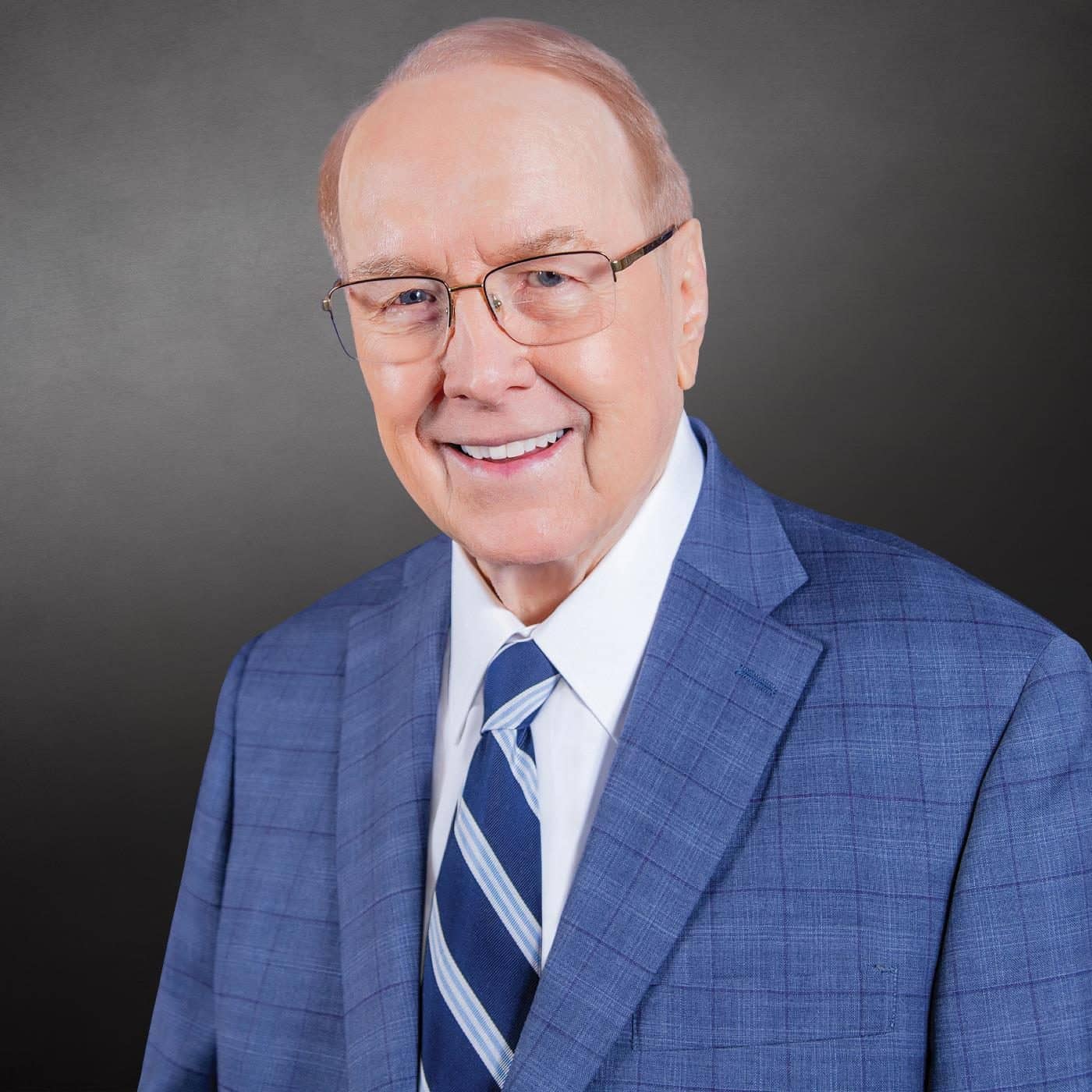

In this compelling episode of Family Talk, Dr. James Dobson reaches back into the archives to unearth a riveting conversation with three men who transformed their lives through faith. Franklin Graham, Raul Rees, and Mike McIntosh share their desperate struggles, from near-violence and substance abuse to the point where they each found salvation. Through raw and honest dialogue, these men lay bare their early years of rebellion and the pivotal moments that led them to dedicate their lives to serving others.
SPEAKER 05 :
Welcome everyone to Family Talk. It’s a ministry of the James Dobson Family Institute supported by listeners just like you. I’m Dr. James Dobson and I’m thrilled that you’ve joined us.
SPEAKER 02 :
Well, welcome to Family Talk, the broadcast division of the Dr. James Dobson Family Institute. I’m Roger Marsh, and if you’re a parent who’s been lying awake at night wondering if your rebellious child will ever come back to the Lord, I have good news. Today’s program is for you. We are reaching back into our archives to bring you a powerful conversation from four decades ago when Dr. James Dobson sat down with three men who were once angry, defiant, and lost to but who each encountered Jesus Christ and went on to become pastors and ministry leaders. One grew up with an abusive, alcoholic father and was literally holding a loaded gun waiting to kill his wife and children when he heard the gospel on television and surrendered his life to Jesus Christ. Another came from a broken home and endured the trauma of abuse, lost his brother in a car accident at the age of 15, and literally then spiraled into heavy drug use. That was before God pulled him back from the brink. And the third, well, he is the son of Billy Graham himself, who rebelled not out of trauma, but simply because he wanted to live life on his own terms. The men in question are Franklin Graham, Raoul Rees, and Mike McIntosh. Each took a different path into rebellion, but they all found the same way out. Here now is Dr. James Dobson to introduce our three guests on this classic edition of Dr. James Dobson’s Family Talk.
SPEAKER 05 :
This program has a very interesting twist to it, I think. It started with an idea. Most of our programs begin with an idea that we think might be helpful to someone or useful in their family life or useful to the Lord. And I had an idea that I thought would make a good broadcast. But it occurred to me that there are now religious leaders, Christian leaders, who are very effective for the Lord, who have large ministries and a great following. And yet they came the path of rebellion. When they were teenagers, they were very difficult to get along with and their parents had all kinds of problems with them. And so I thought it would be interesting to bring these stories. three men into the studio and asked them what were they thinking back there? What was the source of all that anger and all that rebellion and all that resistance against their parents? You know, help us understand. What I was really trying to do is to get a fix on what goes on in the mind of a teenager and to give some encouragement to the parents who have one Who’s going through that, that maybe your son or daughter could go on to become a great Christian minister. You know, don’t despair too quickly on what’s going on during those years of hormonal upheaval. And so that was the idea behind the program. And yeah. We brought these three men in the studio. And the first voice that I want to identify is that of Franklin Graham, who now serves as the president and CEO of the international relief agency, Samaritan’s Purse. But he remains equally committed to evangelism as his father was and is, Dr. Billy Graham. This year, he’s going to be speaking at several high energy revival festivals around the world, including one in Angola. and the Ukraine, and even in my old neighborhood of Shreveport, Louisiana, where I was born. Many people have seen the Time magazine earlier this year, which listed Franklin as one of the 25 most influential evangelicals in America. The second voice was that of Mike McIntosh, who’s been a pastor of a thriving congregation at Horizon Christian Fellowship in the San Diego area for the past 30 years. He’s the founder and president of Horizon International. and the evangelistic arm of his church, which ministers throughout the world in areas such as Poland, Romania, and China. Mike also serves as president of Youth Development International, an organization which provides assistance and counseling to thousands of young people across North America. And finally, another friend of mine, Pastor Raul Ruiz, who has since 1979 led two different Calvary Chapel congregations in Southern California and is currently based in the city of Diamond Bar. He was born in Mexico City. Raul endured a very rough childhood and is now passionate to reach the lost for Christ. He has two purple hearts for his service in Vietnam. And he has earned an eighth degree black belt in martial arts. So those are the three individuals, the three voices. And we brought them in the studio for over an hour. And what we’re going to hear now is that blast from the past, from 1986. 1986. It has been said, Raul, that you were perhaps the world’s most unlikely individual to have become a minister. Explain what that means.
SPEAKER 04 :
Well, I was one of those rebellious teenagers, not only in my teens but also in my adulthood, where I didn’t really like anybody. My problem was never drugs. I just had a real hatefulness in my heart for people because of the things that I had seen when I was a kid. And I grew up with that real deep in my heart.
SPEAKER 05 :
What was your early childhood like?
SPEAKER 04 :
My early childhood was I was born in Mexico City where my dad was an alcoholic. He was a businessman, but he had problems drinking real bad, abusing of my mom and the children, coming home and beating up on my mom and not being able to really speak to us, but by pushing and shoving and breaking things and coming home with his hands bloody from fighting in the streets and doing people in. Did he ever abuse you? He abused me a couple of times, but see, I was so uptight and so mad that I always think in my mind of going into the kitchen and grabbing a knife and cutting his throat. That was my picture in my mind.
SPEAKER 05 :
You really wanted to kill him?
SPEAKER 04 :
Yes. As a matter of fact, when I came back from Vietnam, one time I was just back and he shot me. You know, he pushed me. And I went into the kitchen. I grabbed one of those big butcher knives. I said, next time you touch him, I’m going to cut your throat. And he knew then that he had to put a stop to it because I would do it. Would you have done it? I would have done it in my heart.
SPEAKER 05 :
Were you also rebellious against the school and against all forms of authority?
SPEAKER 04 :
Yes, I was mad. I mean, the police right here in Ballin Park, you know, they knew how I used to be because I would rebel against everything and anything. And the reason for that, I believe in my heart, is because I was angry at my mother and my father. And I wasn’t getting love. I felt I was like the guy that was always going to be the rejected one. I was never going to amount to anything. And they would always praise my brother and my sisters, but they would never praise me. How in the world did you come to know the Lord out of that atmosphere? Well, about 1972, I had gotten married to a Christian woman that was backslidden and had given her life back to the Lord. And the Lord Jesus Christ had been really dealing with my life, but I wasn’t aware of it, where my wife was praying for me, and I had come home to kill my wife that night, my kids, because she was getting ready to leave me after five and a half years of abuse. You were sitting there in the living room with a gun waiting for them to come home. Right. And see, I did the same thing my dad did. I started abusing my wife and my children, and I was tired. I was making all kinds of money in the martial arts, and I was doing good secular-wise, but not… In the Lord. And that night, I loaded my gun and waited for her to come home. And she never did come home. And Pastor Chuck Smith was on TV during the hippie movement. And I turned the television on. They were giving testimony. And that night, the Lord spoke to my heart. And I accepted Jesus into my life. Isn’t that incredible? I had a total change.
SPEAKER 05 :
Were you really a new creature?
SPEAKER 04 :
Oh, yes. You know what? It was like a weight of blackness in my heart that was lifted up in my soul. And I felt the Holy Spirit come into my life.
SPEAKER 05 :
How old were you at that time?
SPEAKER 04 :
24 years old.
SPEAKER 05 :
Did your relationship with your wife then begin to… Tell me what happened.
SPEAKER 04 :
My wife didn’t believe it. My wife, when she came home, she was at church, and so I ran to this church to go to the altar call, and I came back home. I knocked on the door, and I said, Honey, guess what? I am born again. And she closed the door right on my face. She didn’t want to believe it, so she opened the door, and it took about a year to really see the change in my life as she began to see me get into the Word and drive out to Chuck’s church and begin to get rooted and grounded in God’s Word.
SPEAKER 05 :
And then you started your own ministry with seven or eight people.
SPEAKER 04 :
Right. The Lord gave me a calling to start to have a Bible study in my home, to go back to my old high school and start ministering to the young kids. And we started with seven kids. And for about four years, we had about 25 people. And then it just blew up afterwards. The Lord just really blessed us.
SPEAKER 05 :
5,000 people on Sunday now. That must be staggering to you, given where you came from.
SPEAKER 04 :
I can’t even believe I ministered the gospel, but it’s really exciting. Yeah.
SPEAKER 05 :
Well, our second guest is Franklin Graham, who’s president of Samaritan’s Purse, which is an international ministry that provides assistance to missionaries and national pastors, among other things. He’s also president of World Medical Missions, which is a sister organization to Samaritan’s Purse. Franklin, you also came through a time of rebellion, did you not? Yes, sir. That’s correct. And it started very early or during the teen years?
SPEAKER 01 :
I would have to say it probably starts early and develops more as you get into your teenage years. And really, I never rebelled against anything that my parents taught or what they stood for. I just decided I was going to live my own life. And I was going to do those things that made me happy, those things that pleased me. And I was going to taste and sample and take a bite of everything, whether my parents liked it or not.
SPEAKER 05 :
There will be those who are listening to us who connect your last name, Graham, with your accent and will recognize who your father is, of course, Dr. Billy Graham. Did you rebel against being his son and being in the limelight? What did that influence have on the rebellion that you later experienced?
SPEAKER 01 :
Not as much as people would think. My father was very wise, and of course my mother. They raised us children, not in a country club type setting. We lived in a very rural area of western North Carolina in the mountains. And so we were not under the glass, so to speak. We were just accepted for who we were. If I had lived in a city where we would have had a lot of contact, it would have been very difficult for me. in some cases, because people expected me to be something that I wasn’t.
SPEAKER 05 :
Did you resent the notoriety that your father had?
SPEAKER 01 :
Sometimes I did. I can’t explain it. Yes, you do resent it. You resent all of his attention going to other people. You resent the fact that he comes home and he’s tired and you want to go play ball and he doesn’t. You resent the fact that he gets on an airplane and then he’s gone for six weeks or two months.
SPEAKER 05 :
He traveled nine months out of the year when you were little, didn’t he? I think I read that.
SPEAKER 01 :
That’s correct. I remember there was one time he was gone for one period, six months straight, when he had crusades in Australia. But God made up for it. God always sent another man to be in my life, a man that was a father-type image, who at that particular period of my life met a particular need. God used men at the right time. My father never deserted us. He loved us. And when he came home, he tried his best to make his time with his quality time. And he would try his best to go camping and do the things that he didn’t care about. But he would do them anyway with us children.
SPEAKER 05 :
In an article I read, you said you always had access to him.
SPEAKER 01 :
Always had access. I can never remember a time where my father has ever locked the door and said that we couldn’t see him. If I wanted to see him, I remember I was little. He sent me to a boarding school in New York. He was afraid that I was going to turn out to be a real hick, I guess, there in the mountains of North Carolina. But I went to a boarding school in New York, which I really hated and really dreaded. I was leaving for school, and I needed some money, and he was having his board meetings there in Montreat, and I wanted to go in and see him. I’d already said goodbye to him, but I was really wanting to get some more money from him. But I remember I went to the board meeting, and T.W. Wilson, his assistant, was there, and I said, Uncle T., which that’s what we call him, would you mind going in and asking Daddy if he could just come here for a moment? He said, no, Franklin, you come on in the room. And I walked into the room and my father stopped the whole board meeting, introduced me to all of his board members. And then he took about 30 or 40 minutes with me. And most of the time we were just a general conversation. But yet he took that time. And that’s all of his life. He’s always done that. He’s taken time with his children. I don’t care if… as the president of the United States. And he took me to the White House when I was young, where just he and I would go spend the night with President Johnson. And then later when President Nixon was in the White House. So he would do things with me.
SPEAKER 05 :
Now, comparing your background with Rawls, he had something to rebel against. He was unloved. He was abused. He saw an awful lot that made him angry. You’re saying your rebellion did not grow out of legitimate reasons. It was just there for some reason.
SPEAKER 01 :
Well, I think it’s legitimate reasons. I think it’s just the evil nature of man’s heart. Yeah, that’s good. And I was wanting all of those things in life that I thought would please me, that Christian parents are telling you not to have. The girlfriends… or whether it’s the drinking, or whether it was tobacco or marijuana. These are things that I was going to find out for myself, and I wasn’t going to take advice from my parents. So it was just the evil nature of the heart of Franklin Graham.
SPEAKER 05 :
Not all rebellion grows out of parental mistakes. Boy, I wish every Christian knew that. Some rebellion is just in the heart of men. Franklin, as you say, some of it is just an independent desire for power and for selfishness and I’ll have my own way. And while your parents made a lot of mistakes, Raul, and I’m sure yours did too, Franklin, nobody’s perfect, but yours represented a free choice and kids do have a free choice and we have to recognize that. And it isn’t appropriate in every context to say, where did I go wrong? When you’ve given the best you’ve got and it wasn’t good enough. You found the Lord about 20, 22 years of age, I guess.
SPEAKER 01 :
I was 22 years old when I really gave my heart to the Lord and made him the Lord of my life. At the age of eight, I invited Christ into my heart. But be honest, I don’t think I really made him the Lord of my life. I don’t think I knew what lordship meant at eight years of age.
SPEAKER 05 :
If you learned at 22, you did better than a lot of people do. Yeah. Well, our third guest is Mike McIntosh, who is the senior pastor of the Horizon Christian Fellowship in San Diego. Mike, I know that you experimented with drugs. Franklin, you mentioned marijuana. Is that as far into the drug lifestyle as you went? Yes, sir, that is. Yeah, you got into heavier stuff, didn’t you, Mike?
SPEAKER 03 :
Right. Franklin, I’d like to touch on a couple of things he brought up. One is that he said it wasn’t when he was a teenager that the rebellion started. It started earlier than that. Yeah. That’s how it was with me, too. It just really came to fruition in my teenage years. And secondly, though his father traveled, he recognized the strong need for a father figure in his life. And I didn’t have the father figure. That always made me a little uptight. You were from a broken home. From a broken home, right. My father, who’s still alive, is an alcoholic and a gambler at 78 years old. And I never knew my father. In fact, in the last four years, he’s the most I’ve ever seen him in my life. And that was through him seeing me on television and preaching in the Portland Coliseum one night. But I had a stepfather, and I thought my stepfather would be the answer, and took me off the farm from a foster home. And then when he divorced my mother, my life began to fall apart at 10, 11, 12 years old. And by the time I got to high school— That’s when all the hostility that was in me from the time I remember back to four or five years old just really came unglued. You were abused when you were in that foster home, weren’t you? Well, later when I had my experience with LSD through… A psychotherapy, it came out that that was a big part of my problem that I had repressed over the years that the man of that house had molested me a couple of times. I would never confront that issue in my life. I always wondered why I partied so much and chased so many girls and I realized I was trying to identify my masculinity. and to repress that and uh i had so much bitterness and hatred and anger as a little guy from that having happened to me and i was always a a fight away from anybody that would light my fuse you know mike we uh we played a trick on you and raw and i don’t know if you all know it yet this may come as a surprise to you but uh we called your mothers and we talked to them i called your mom and uh
SPEAKER 05 :
or at least a member of our staff did, and ask what she remembers about your rebellious adolescent years and so on. And she wasn’t aware of a lot of it. Oh, really? You got away with it. But she said the worst rebellion occurred when your brother was killed in a car accident.
SPEAKER 03 :
That devastated me. When I was about 12, I made a commitment to Jesus. I said I wanted to accept him as my Savior in a Baptist church and never followed that up, though I was the president of our youth group in high school. At that time, it was the largest high school west of Mississippi. And I was trying to find Jesus, but I had nobody guiding me to the scriptures or discipling me. And that afternoon when a friend of my brother’s pulled up beside me on the street and said, get in the car. And I said, what’s the matter? And they said, we want to tell you that your brother was killed today in an auto accident. I was 15, and my life was never the same from that time until about 30 years old, even after having been a Christian. Wow. The bitterness I had against life coming from the broken family, the alcoholism in the family, living in a foster home, having nobody to help me, though I was always trying. I was given a real sharp mind by the Lord. That made me so angry at life that I predetermined in my heart that I was going to push and push and push and push until I met somebody big enough to set me down. Of course, I ended up being Jesus Christ.
SPEAKER 05 :
If we had to characterize what you were feeling at that time by one particular emotion, would anger… Be the emotion. Raul, is that what you were feeling? That was what I was feeling, yes.
SPEAKER 04 :
You were mad. Real mad. Who were you mad at? I was mad at everybody. My mom, my dad, my brothers, my sisters, the whole world. The police? The police, everybody. School teachers? Everybody. I mean, they kicked me out of school so many times that I didn’t even care.
SPEAKER 05 :
Why were you so angry? I mean, you’ve told us about this stormy, troubled childhood, but is there anything else we can get a handle on?
SPEAKER 04 :
You know what, Dr. Dobson? I think deep down in my life, you know, looking at everything in my life, going to nightclubs with my dad and seeing my father getting drunk.
SPEAKER 05 :
That’s still tender down there. Isn’t that interesting? All those years… Later, you can still feel what you felt at that moment.
SPEAKER 04 :
It was a real hard part of my life. Yeah.
SPEAKER 05 :
Did you stand and watch him?
SPEAKER 04 :
Oh, yeah. He would leave me outside while he got drunk.
SPEAKER 05 :
Did it embarrass you? Yes, it did. Franklin, how about you? Is there that kind of anger? Were you feeling the same things?
SPEAKER 01 :
No.
SPEAKER 05 :
Or you were just looking for life?
SPEAKER 01 :
I was just looking for life and was on kind of a roll. I wanted to get all that I could get. And there were things that I was forced to do that I didn’t want to do. I had to go to school to New York. And that’s the last place I ever wanted to go was up north. I was a southern boy. And… and to put me into that type of setting. And then I got into high school. In the South, we were taught respect for our parents, for our teachers. And I went into a private school in New York where the children showed absolutely no respect for anybody or anything. Total disrespect for authority. And I just have to say that that rubbed off on me. And As a result of that, going back south to finish my education, I had no respect, and I just was going to get all I could.
SPEAKER 05 :
That confirms a view of mine. I’ve watched that happen, where you have a class that starts in kindergarten and the first grade and the second grade, and a large number of those kids stay together throughout the elementary school years. And if they get four or five bad teachers— Teachers who allow them to get away with the kind of thing you’re talking about. Or if the principal does not represent somebody that they respect, you can establish disrespect in their minds. You can give them a disdain for authority that follows them into adolescence and even into adult life. You can destroy kids that way. That’s why I feel so strongly about discipline in the classroom. And I know you guys feel the same way about that. Right. Raul, we passed over your emotion there pretty fast. But isn’t it interesting that at your age and with the success God has given you and the ministry that he’s placed you in, that there’s still that tender spot there from childhood. Those years stay with us forever, don’t they? You just never get away from it.
SPEAKER 04 :
It’s like I remember the story where you could get a board and you could nail the nails, take the nails out, but the scars remained. Yeah. And it’s always there in my heart. But, you know, it’s neat to see the Lord Jesus Christ work in my life and working in all these guys’ lives. I love these guys.
SPEAKER 05 :
Have those experiences now made it possible for you to understand other people in your ministry who are going through those kind of hard times?
SPEAKER 04 :
Yes, it’s really neat because He’s given me a real compassion for those. I like working with these tough guys, you know, because I can really relate to them. Because deep inside, we really want to be humbled by the Lord.
SPEAKER 05 :
Well, gentlemen, we’re just getting started. We’ve just met you and there’s a whole lot more that you can say to us. So let’s just continue the conversation next time. And we all appreciate your opening yourself in that way.
SPEAKER 02 :
What a gift it is to hear from men who have literally walked through the fire and come out on the other side with a testimony that can strengthen someone else’s faith. It’s just so amazing to see how God used all three of these men during their earthly existence to have an impact on the kingdom in such a powerful way. And now here once again is Dr. James Dobson with some closing thoughts.
SPEAKER 05 :
We’re talking to some parents today who I think needed to hear this and frankly, to hear the rest of the interview next time. I know we all make mistakes and the Lord is wonderfully able to restore the years, the locusts they’ve eaten. as evidenced by the testimonies that we heard today. But perhaps there’s a mom or a dad listening out there who needs to be reminded of just how far-reaching their impact is when they pursue a divorce or when they don’t deal properly with a child’s addictive behaviors or when the parent themselves is alcoholic or has other problems that aren’t handled. Two of the men we heard from today still have the scars from what happened back there. Yes, the Lord can heal those wounds, but wouldn’t it be better if they were prevented in the first place? Maybe that’s one of the messages from this interview.
SPEAKER 02 :
Well, I’m Roger Marsh. Thanks so much for listening today. Be sure to join us again next time for part two of this classic interview featuring Franklin Graham, Raoul Rees, and Mike McIntosh. That’s coming up right here on the next edition of Dr. James Dobson’s Family Talk, the voice you can still trust for the family you love. This has been a presentation of the Dr. James Dobson Family Institute.