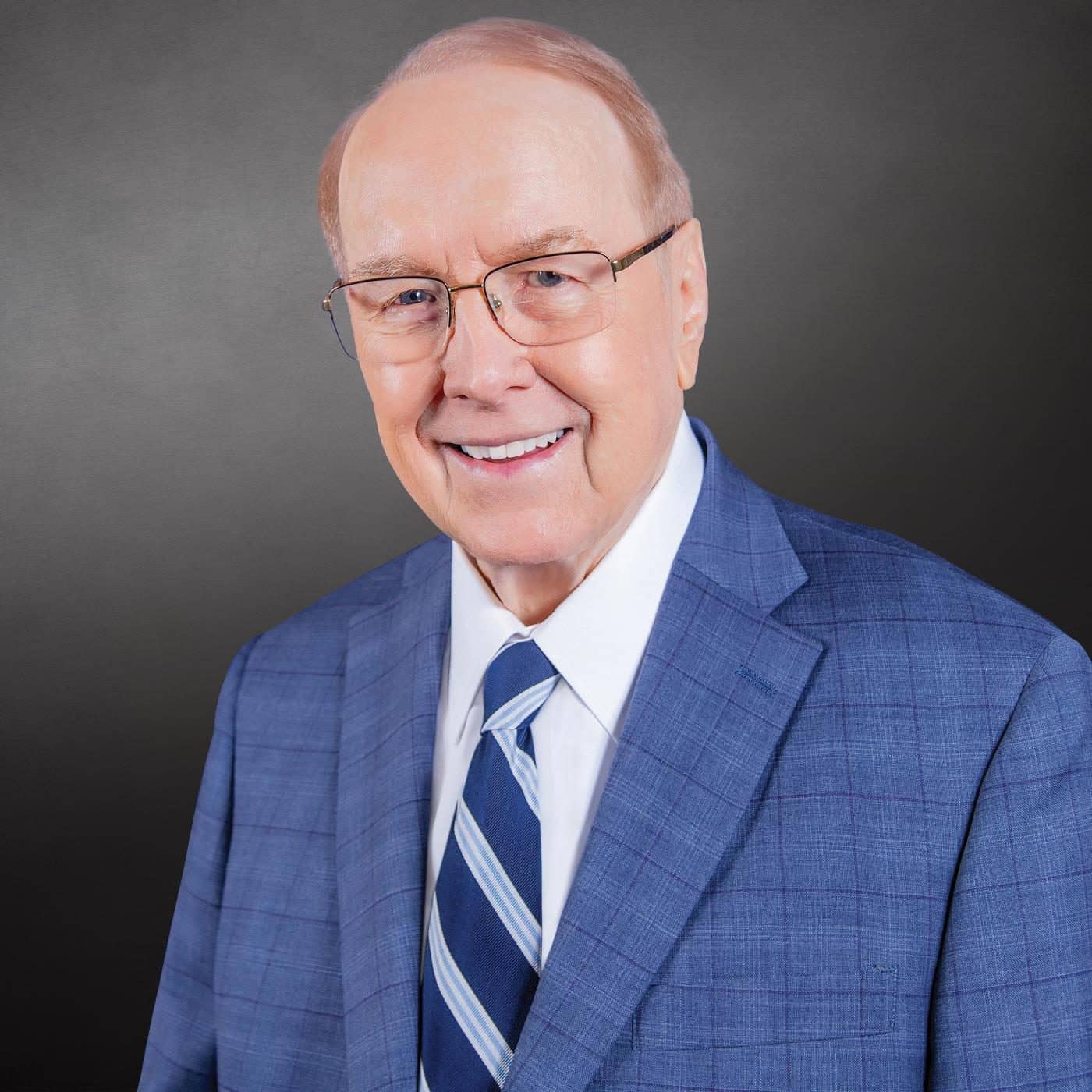

In this enlightening episode, Dr. James Dobson engages in a riveting conversation with Dr. Ted Behr, an influential figure in Christian film circles. Dr. Behr discusses his journey from a secular background in Hollywood to founding Movie Guide, offering families a vetted resource to ensure their entertainment aligns with Christian values. His personal story of transformation highlights the power of redemption and showcases his commitment to transforming the entertainment industry from within. Tune in as Dr. Behr shares insights on striking a balance in a culture that often glorifies the very values families strive to shield their children from.
SPEAKER 01 :
Welcome everyone to Family Talk. It’s a ministry of the James Dobson Family Institute supported by listeners just like you. I’m Dr. James Dobson and I’m thrilled that you’ve joined us.
SPEAKER 02 :
Well, welcome to Family Talk. I’m Roger Marsh. You know, with so much entertainment available today, how do we as Christian families navigate what’s worth watching? Well, our guest today here on Dr. James Dobson’s Family Talk has dedicated his life to answering that question. Dr. Ted Behr is the founder and publisher of Movie Guide. a trusted resource that helps families make wise entertainment choices. He’s also chairman of the Christian Film and Television Commission, working to influence Hollywood from within. Dr. Baer holds degrees from Dartmouth College, New York University School of Law, and Advanced Theological Studies. He’s the author of numerous books, including Real to Real, 45 movie devotions for families. But Dr. Bear’s story isn’t just about critiquing movies. It’s about redemption. Growing up in Hollywood as the son of actors, he discovered faith later in life and now uses his insider knowledge to transform the entertainment industry and guide families toward content that honors God. Today, Dr. James Dobson welcomes Dr. Ted Behr for a conversation about faith, film, and reaching Hollywood for Christ on today’s edition of Dr. James Dobson’s Family Talk.
SPEAKER 01 :
You know, we have talked extensively on this program about the moral decline in this country. And we continue to see Western nations, not just America, but in almost all Western nations, deteriorating. And it’s alarming to see just how wicked and perverse the culture has become. And a large share, not all of it, obviously, but a share, of that decline is related to the entertainment industry and the attribution of the moral deterioration can be traced to that source. That’s an overstatement. I know the news media and the book industry and many other sources play a role, but certainly Hollywood and the entertainment industry are certainly at the top of the list. And this wickedness is given center stage today and is regularly celebrated by the culture. When horrible, evil things take place, it’s as though there’s been some kind of victory. Christian parents are on the hook today because they have to identify the threats to the value system that’s being taught to their children in public schools frequently and certainly on the Internet, and it seems like it’s coming from every side. And their job is to protect their kids from these influences. And we’re going to talk about that today because we have in the studio with us a man that I respect very, very highly. I’ve known him for many years. I call him Ted, but his name is Dr. Ted Bearer. And he’s doing as much to defend righteousness in the culture and especially in the entertainment industry as anybody I know. He’s a film critic and an author. He has actually written 35 books. He’s the founder and publisher of Movie Guide. We’re going to talk about that today. It provides families with an in-depth look at movies through the lens of biblical teaching. He’s also chairman of the Christian Film and Television Commission, which seeks to redeem culture by informing the public of the efforts of media and the entertainment industry to change the culture. Dr. Baer has a wide educational background. I’m going to take the time to tell you what it is because I think you need to know. He graduated from Dartmouth College, summa cum laude, with a comparative literature degree. Then he received a Juris Doctorate from New York University School of Law and attended seminary for a while. He is also the recipient of a Doctorate of Humanities from Belhaven College. And like I said, he’s authored 35 books. Ted, I’m delighted to have you back with us today.
SPEAKER 03 :
Oh, it’s great to be back with you. I consider you one of the great friends and one of the great blessings to the Christian community. So thank you, Jim.
SPEAKER 01 :
Well, you’re kind. Did I overstate what’s happening in the culture today? I know that you feel… That there’s a lot of good that’s going on too. And I don’t disagree with that.
SPEAKER 03 :
Look, there’s always been people that are attacking Christians. In Rome, it was abhorrent as they were persecuting. But, you know, you had a small group of apostles who overturned the Roman Empire, which was – In the fullness of time, it was a Kairos moment. A lot of them paid for it with their lives. They paid for it with their lives. And we need to be able to do that today to stand for it. And Wilberforce and people throughout history have stood against the forces. So I think that you would agree with me. that we’ve got the wheat and the chaff. The wheat is always growing up with the chaff. There’s some good wheat out there. When the evil triumphs, it breaks my heart. Usually the Christian films do better. The more Christianity put, usually it does better. Last year, just as an example, movies with positive Christian content, strong Christian content, mentioning Jesus, a strong Christian worldview, and all of that averaged about $55 million at the box office. Movies that were anti-Christian averaged about $7 million. In the top 10 movies, 80% of them had strong Christian content or worldview in the United States. And in the top 25, there were only one with perverse content, which you would consider perverse content. So they don’t usually do well. But sometimes audiences get confused. This is why we do movie guide. We’re concerned about audiences so they can make wise choices. I was on a radio show. You know the host. And – Somebody called in and the boy said, I’ve got discernment. That’s why I can go to these bad movies. You know, we have to reach these kids and the parents. And then one host said, my daughter was going to a movie, read the movie guide review and decided not to go because of what she read in it. I want to see these people make the decision, the kids, the 14 to 24 year olds to support the good and reject the bad.
SPEAKER 01 :
And the movie guide does a review of the movies and And warns parents about what’s not good for their kids and so on.
SPEAKER 03 :
And we don’t tell people to go or not go because you immediately get the backlash from kids. What we do is we try to help people develop discernment. So we say this could be great quality but it’s an abhorrent film or it could be not so good quality but it’s a – wonderful Christian film that you should support for its acceptability. And we go into the acceptability. We do 150 criteria, and the criteria help you make a decision that this is what I want to see, this is what my children should see, and give you a reason for it so you can argue the case for what you want to support.
SPEAKER 01 :
You’ve been at this a long, long time, as long as I’ve known you. Right. But you did not grow up in a Christian home.
SPEAKER 03 :
No, I grew up in the entertainment industry. My parents were stars, and I loved my parents.
SPEAKER 01 :
Your father was Tex Allen.
SPEAKER 03 :
Tex Allen. He made 12 Texas Ranger movies. He rated next to Tim McCoy, another star that people don’t remember, but he was a great star. And he did 62 movies. He won the box office award in 1936. And my mother won the Wampus War, the Western Association of Motion Picture Distributors. And so they were significant. Fame is fleeting. But I grew up as really in the far left and in a world that didn’t have faith and values.
SPEAKER 01 :
And you had all that academic training. But you really never encountered Jesus Christ, or at least you never understood who he is.
SPEAKER 03 :
Well, I wouldn’t have found him in any of the schools I went to, you know. I found him much later, after getting out of law school. some friends of mine. I won’t tell you the back story, but we were doing a lot of nefarious activity, and they said, can you help us start a film company? Would you do the legal work? So I did the legal work, just like the form I signed with the organization. And I said, now you’ve got to pay me, and they couldn’t pay me, so I had to raise the money to pay myself. And during that process, which was really a horrendous process, the industry is built on this whole house of cards, And so during that process, four women were interested in my father. My mother died when I was young, and they were all Christians. They’d all come to Christ through Billy Graham. They all loved Billy Graham. One of them supported Billy Graham to the millions of dollars.
SPEAKER 01 :
What a testimony.
SPEAKER 03 :
And they witnessed to me, and I would reject it. And finally they said, read the Bible. You’ve had all this education. So I didn’t want to read it. But when I did, when I started reading Matthew, halfway through Matthew, it changed my heart. And then— I went to one of their friends’ house, and she said, would you like to accept Jesus as your Lord and Savior? And I said yes, and I married my wife a week later. So they took. I stopped the drawings. Now, why did you do that?
SPEAKER 01 :
What drew you? What voice did you hear inside that said, I want a friendship with you?
SPEAKER 03 :
You know, if you had to boil it down to the simplicity of the gospel, one, that all these things that I had done, which were nefarious, a lot of drugs— Not bad. Bad enough that if I talked about it here, they’d kick you off the air. So I threw a big drug party at Dartmouth, and I showed one of my father’s movies, one of his old horror films, and— And one boy whose father was the head of MGM blew his brains out and another boy lost his brains. And so it hurt a lot of people. And, you know, when I read the good news, one that John 1010, that the thief comes to steal, to kill and destroy. And that’s often the case in our lives. He wants to steal our happiness, our joy. He wants to steal our possessions. He wants to steal our marriages. He wants to steal our children. And when he can’t do that safely, he kills and then he destroys. And Jesus says in that verse, he said, but I come to set you free and give you abundant life. And all the things I had before… are nothing compared to what I have now. I don’t have a big salary. I’m a missionary, but I have more today. I’ve got a loving group of children, and my children are all missionaries and conservative. My son in Iraq, who’s a major, preached at his little church service last week. I’m happy about this.
SPEAKER 01 :
I’m enjoying it. You actually went to seminary. But not to become a pastor or a member of a church?
SPEAKER 03 :
I didn’t know anything about Christianity and I figured this would be the – I love school. Look, I’ve studied in a lot of schools. Not on my resume as I studied at Northwestern University Graduate School of English with Torciano. When I was working for NASA, I studied at Columbia University Film School. I just like school. So you throw me into a school and I’m equipped to do well in school. Some of my favorite people who are successful in life. are not successful in school. But seminary was terrific. I had some great professors. Very few of them knew the Lord. One had gotten a double PhD from Lund. And I don’t know whether you know about Lund, but that was the most conservative seminary in Europe for many years. And you preach, they had a cross built in front because one person in the 17th century forgot to talk about the crucifixions. And they put a cross in front of the pulpit.
SPEAKER 01 :
You know, I wonder if we don’t share something in common with regard to the work that we’re now doing. If I had to answer the question, what do people say about you when they come up to you? And it’s usually about raising their children. And then if I ask them, what do you think I do? What do you think? Focus on the family and the previous life and Family talk now. What’s my primary objective? And they will say to save families, to make marriages better, to raise children. All those things are good, but they’re secondary. My number one objective is to introduce people to Jesus Christ. And that powers what you’re doing.
SPEAKER 03 :
That’s what I want to do. We do this big gala in Hollywood. We give out awards. One of the heads of the studio came and said, you’re the only one that will give us an award for the studios anymore for a big film like Incredibles 2 or Boss Baby, 490 Mames. So we give out awards. We get there, all the team, and we preach the gospel. We just give them the good news. And it’s like going to church. And we have wonderful people come. We have wonderful—C.C. Winans came last year.
SPEAKER 01 :
How common is it for a producer or director or somebody of substance in Hollywood, if there is such a thing, to call you on the phone and say, Ted, I want to know more about your faith?
SPEAKER 03 :
Well, about faith, it’s probably once or twice a month or so. But ask for help. to reach the Christian audience is almost every day. And sometimes it gets to be so many. Today I had a director who’s been directing for 25 years and he wants me to look at something and another one who was a star in television wants me to help him with this. So every day somebody’s asking. Are they open? Are you winning people to the Lord? We see people coming to Christ the most. At my class that I’m teaching in two weeks, I have one of my best friends. And he had written and directed over 150 films, including some of Oliver Stone’s best movies. He did Path to 9-11. which was a great success on ABC. He was Muslim. His son came to my class and took the class, a little four-day class that I do. He wrote a script that was abhorrent, and he came to Christ and then went to Reformed Seminary, and his father has come to Christ, and he went from making very violent movies to making Young Messiah. So we see people coming to Christ all the time.
SPEAKER 01 :
Is there anything that gives you a greater thrill than that?
SPEAKER 03 :
Nothing. The more of these people come to Christ, the better. And every time we see them as an opportunity to witness and an opportunity, it’s good news. When I go out on stage, which is what I was going to say, to talk to them, to tell them that the good does better at the box office, my message is to bring them good news. I’m there to help them see the truth that will set them free.
SPEAKER 01 :
So people really get a fix on you. The name of the organization is that the primary organization that you founded and are running now in Hollywood is?
SPEAKER 03 :
Well, we have two parts. One is Movie Guide, and one is the Christian Film and Television Commission. And those two parts correspond to how we fulfill our mission of redeeming the movie industry in specifically. And we’ll talk about – if you want to talk about television, which is a disaster and other things. Television is a disaster. It is. And we can talk about why it’s a disaster. But the two parts, one is to influence the people making movies because they’re a small tribe of people who need Jesus more. They’re just like a tribe in the middle of Laos or Cambodia or anywhere else. They need Jesus. And then to influence people to make wise decisions. It always breaks my heart, even with people that I know well, to have them go to a bad movie. We have such – life is short. And if you have – Hollywood used to come out with 2,000 movies a year. You couldn’t see them in a lifetime. So you’ve got to be discerning and that means making wise choices. So Movie Guide reaches the public and the Christian Film and Television Commission is – The restatement of the purpose of the old Protestant film office, which we inherited all the files. So we’re listed with the Writers Guild. We’re listed with different guilds. I’m a member of the Producers Guild. And we go in there and say, we’re here to help you. Reach a bigger audience. Let me make that as clear as I can. Every week, about 25 million people, 22 to 25 million people go to movies and about 118 million people go to church. And then that increases at Easter and Christmas up to about 141 million. Used to be bigger. We know that, Jim. But it’s still seven times bigger than the box office. So when Bill McCann or anybody is talking about the Producers Guild and saying the most powerful audience is kids and Hispanics and African-Americans and et cetera, how do you reach these people? If you’re reaching my wife’s Argentine, that culture, the Spanish-speaking culture – You’re reaching about 18 million people, 20 million people if you’re reaching the African-American. And all of those are increasing. But the church is the biggest people group in this country. We’ve taught Hollywood that this is the group that they have to reach.
SPEAKER 01 :
When we had lunch together a while back, I told you. that there is a world-famous photographer in Hollywood who’s made his living photographing stars and the significant people in Hollywood. And he is very well known and very well paid for what he does. I’ve known him for a long time. He’s a solid Christian man. I don’t want to give his name because I haven’t gotten permission to do that. But I don’t think he would mind because what he said to me that day really made an impact on me. He’s left Hollywood. He closed down his photography studios and gave up the lucrative assignment that he had with people and moved to Denver. And I said, why did you do this? And he said, Hollywood has become so evil and so wicked, I couldn’t stand it anymore. How do you cope in that world?
SPEAKER 03 :
Well, Hollywood is a term that covers a lot of people. It’s just like talking about the church in the United States. When Hollywood talks about the church, I try to tell them there are many different groups within the church. There’s Catholics, which are about 63 million strong. And then there’s the Southern Baptists, which are close to 20 million strong. And then the Lutherans, which are about 12 million strong. And they all have different makeup. And if you take one and extrapolate for the whole – and the same thing is true in Hollywood. You’ve got probably the most debauched and cynical group happens to be actors because actors are in the most vulnerable position. And we were talking about at lunch how actors control the Academy Awards. And they are the window dressing on the set. So they’re often forced to do things that are terrible and they become inured of doing things that are terrible.
SPEAKER 01 :
Is the casting couch still in effect?
SPEAKER 03 :
You know, I love the new rejection of the casting couch. I think it’s one of the best things that’s happened. I think there’s some excesses there like any movement, but it’s a great thing. But on the other side, they’re producers. One of them is sitting here, worked for one of my favorite movies, The Perfect Storm, and they’re some great producers. They’re some great – most of the stuntmen I know are very strong Christian. My friend Bob Yerkes, who started one of the founders of the Stuntman Association, train Circus of the Stars and he’d get somebody up there who was famous like Brad Pitt and he’d get them up on the trapeze four stories up and he’d drop them and he said, have you accepted? You know where you’re going if you fall. So there are a lot of good people and we just have to reach the other people. They all need Jesus. They all need Jesus. Do they sneer at you? No. I’ve said this to you before and The last time we did an interview. I think sometimes it’s more difficult within the Christian community than it is within Hollywood. I’ll give you an example. I was doing witnessing in Africa and I was doing four films. And I came through a little village and a lot of people have had this happen. And this woman comes out and she says, how do I accept Jesus? And then I was in Sri Lanka shooting a film and a guide said, how do I accept Jesus? And the man said, well, he never changed. In Bombay, I taught at the Bombay Communications Institute. 99% of them came to Christ. The man who ran it said, you shouldn’t have talked about Jesus. This is terrible. And one of them was a banker. He stayed a banker. He led over 60 people to Christ. Another one started churches for 20,000 people, took lepers into his home. They made a difference. Now, I don’t see them as being the enemy. I think sometimes the difficulty is in the community of Christians. There are Christians that are living a double life. They’re going to bad movies. They’re doing nefarious things, but they’ve put on the patina of being Christian. Our goal is to live the cross every day so that we can reach people for Jesus Christ. That’s our whole goal.
SPEAKER 01 :
Well, I’m always lifted by talking to you, Ted, because – In the midst of a very, very pagan world, you see what Jesus said, that the field is white unto harvest.
SPEAKER 03 :
Amen.
SPEAKER 01 :
And that we really still can introduce people to Christ even in a world like that. Ted, this time passed very, very rapidly, and there’s more that I want to talk to you about. You’ve written a book called Real to Real, R-E-E-L to R-E-A-L. And the subtitle is 45 Movie Devotions for Families, including scripture and the values that we’ve been talking about. Would you come back and let us talk about this book and make people more aware of what it is? Not only this book, but you’ve written 35 others. And I want to hear more about what’s on your heart.
SPEAKER 03 :
Good.
SPEAKER 02 :
Dr. Ted Behr’s passion for reaching Hollywood reminds us that no industry is beyond the reach of the gospel. You’ve been listening to Dr. James Dobson’s Family Talk, featuring a fascinating conversation with Dr. Dobson and his guest, Dr. Ted Behr. They’ve been discussing faith, film, and finding redemption in unexpected places. And if you missed any portion of today’s broadcast, or if you’d like to share it with a friend or family member, visit jdfi.net. Every day, families all across America face challenging decisions about entertainment, education, and values. Through these Family Talk broadcasts, we’re working to equip parents with biblical wisdom and practical guidance for navigating these cultural pressures. From defending the sanctity of human life to promoting God-honoring sexuality and religious freedom, this ministry stands firm on the principles that build strong families and a religious culture. But we can’t do this work alone. When you support the Dr. James Dobson Family Institute, you’re helping us to reach millions with the truth of the gospel and biblical principles for marriage, family and child development. And your partnership enables us to continue producing programs like the one you heard today and to provide resources that strengthen families when they need it most. Your gift of any amount makes a real difference in helping families stand strong for their faith. And you can make a secure donation when you send your tax-deductible contribution through the mail. Our ministry mailing address is Dr. James Dobson’s Family Talk, P.O. Box 39000, Colorado Springs, Colorado, the zip code 80949. Once again, our ministry mailing address is Dr. James Dobson’s Family Talk, or just use those initials, JDFI for short, P.O. Box 39000, Colorado Springs, Colorado, the zip code 80949. You can also make a secure donation when you go to JDFI.net. That’s JDFI for James Dobson Family Institute.net. or call a member of our constituent care team. That number is 877-732-6825. Well, I’m Roger Marsh, and from all of us here at Family Talk, thanks so much for listening today. Be sure to join us again next time right here for part two of Dr. James Dobson’s conversation with Dr. Ted Baer, their topic, Real to Real, R-E-A-L, How Families Can Become Discerning Moviegoers. It’s coming up right here on the next edition of Dr. James Dobson’s Family Talk, the voice you can still trust for the family you love. This has been a presentation of the Dr. James Dobson Family Institute.