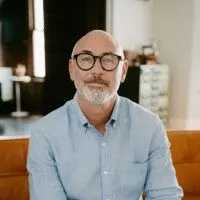

Mike Trime talks with Brian Orme, the Chief Executive Officer of Global Christian Relief (GCR). Brian brings over eight years of senior leadership within the organization and extensive expertise in global ministry operations. Orme previously held roles as chief field operations officer and vice president of communications, significantly expanding Global Christian Relief’s global impact across the Middle East, Africa, Asia, and Latin America. His strategic vision and operational acumen have enhanced Global Christian Relief’s ability to deliver culturally sensitive, highly effective support to persecuted Christian communities.
SPEAKER 01 :
It’s Mike Truman of Crawford Media Group. Today we’re joined by Brian Orme. Brian is with Global Christian Relief. We want to talk to you, Brian, about Pakistan and what’s going on there as you rescue Christians that are being persecuted and are in a really tough spot. So welcome.
SPEAKER 02 :
Thanks so much, Mike. It’s great to be here with you.
SPEAKER 01 :
Brian, so one of the first things we want to do is just tell people about Global Christian Relief. We have listeners who may have heard some of the other interviews that you and I have done, and they may not have. So give us a little bit of a background.
SPEAKER 02 :
Sure. Global Christian Relief is an organization that empowers persecuted believers around the world to not only survive, but really thrive and be a light for Christ in their communities. And again, this isn’t tough to reach places like Iraq and Nigeria and India and Pakistan and Afghanistan and many others. And God is moving in a powerful way around the world, but our suffering brothers and sisters oftentimes need to know that the body of Christ is staying with them, to know they’re not alone, and to have the resources that they need to be a light for Christ. And that’s where Global Christian Relief comes in. And again, our other vision is to mobilize the U.S. church to connect with their persecuted family and be encouraged in their faith and be a part of this global movement.
SPEAKER 01 :
So, Brian, how do you get believers here in the States to understand that how different it is in some of these countries. It’s just, you know, we get safe and we think here we’re persecuted. And it’s like, you know, most of the time it’s not anything like what happens in these other countries, including Pakistan.
SPEAKER 02 :
Yeah, we do it through powerful storytelling, Mike. And I do believe in the power of stories to shrink people. the distance between us. For me personally, I had some struggles in my faith early on. I had been praying for God to encourage my faith, and God used the persecuted church, hearing the stories of people who’ve given up everything for the name of Jesus, and in many ways were left with just a shirt on their back, but still found ways to give thanks and have joy because their faith endured, because they found Jesus was enough. And those are the things that shaped me and have shaped me, and I know it will shape others as well, too. So we mainly use stories. That’s video stories, written stories, a lot of social media that really bring these stories to life and guide people in the church here in the U.S. to hear those stories, to engage those stories, to pray along with their brothers and sisters as well, too. But like you mentioned, a big part of that is just understanding the depth of the persecution that’s happening around the world today. And it is amazing. unimaginable in some ways. And it’s well beyond our current kind of bubble in the U.S. in our context here, that there are people that are fearing and fleeing for their lives because they call on the name of Jesus. And I would say this too, Mike, it’s really important for listeners to know that the stories of the persecuted are not about just darkness and heaviness and and violence and attacks and discrimination, those are part of the story. But the most important part is the fact that God is working. And these stories will often, again, encourage you. And when you see believers who’ve lost everything and still have joy, it does something really powerful, kind of unlocks, I think, another dimension to our faith to see that, again, the story that we’re following in the global church throughout history, that God is still working just like he was in the book of Acts.
SPEAKER 01 :
Is it possible, Brian, that because we have so much stuff, we have so many riches relative to the rest of the world and so much here to distract us, that there is some beauty of a simple gospel out in some of these countries where they don’t have all the stuff, yet they’re more joyous in the Lord than we are a lot of times?
SPEAKER 02 :
Yes, you hit it right on. And I do think And we’ve been blessed so much here in the U.S. I know different people have different circumstances, and it doesn’t mean we don’t have tough times, but it does mean that we’ve been given so many resources, so many protections here in our country. And when you see someone else, again, who is, again, willing to say yes, no matter the cost, or even again like a stripped down underground church service like one I attended in Iraq last year or the year before last. Things like that are so powerful to see that like again, we in often ways need to strip our faith down to that core and to know it’s real. And it’s a blessing sometimes to go through a hardship and come out the other end. And we know throughout scripture that God uses suffering and trials to refine faith. And so I think you take away a lot of those sufferings and trials, and it becomes tougher to know what kind of believer are we really, and how close to the Lord are we really becoming? And again, it’s not like we’re asking for persecution. Nobody wants that in their lives. Somebody’s praying for that. But it does mean that when you see that happen, and again, if you’re just connected even to the stories, It shapes your faith in different ways. You look at the church differently. You look at your neighbors differently. You look at the Bible that you have on your desk differently because there’s many people around the world who can’t own a Bible of their own without the fear of arrest or the fear of imprisonment because of that Bible.
SPEAKER 01 :
We’re speaking with Brian Orr. Brian is the chief executive officer of Global Christian Relief. And Brian, tell us about Pakistan, the work you’re doing there. Frame for us the situation. Share a couple stories, if you would.
SPEAKER 02 :
Would love to, Mike. Pakistan is dear to my heart, dear to the heart of GCR. It is a fortress for Islam. There’s less than 2% of the population in Pakistan are Christian. And it’s an overwhelming majority from Islam. And the struggle is that believers are pushed down, discriminated against. Often, I mean, there could even be mob violence. There’s blasphemy laws that often get leveraged in ways to take advantage of Christians. And these blasphemy laws basically say, I mean, you can’t speak out anything against Islam and you can’t evangelize to a Muslim. And if anything you’re doing is seen in that lens whatsoever, then you can be arrested, reported, taken in. Or again, if at the worst case scenario, it could draw a mob because people hear that and see that you’ve done something against the Prophet Muhammad or the faith of Islam and they come to attack. and these things are across the country and it’s also really important to know that the majority of believers in pakistan are working in very tough conditions they’re impoverished and many of them are working in places like the brick kilns which we talk about there’s 20 000 brick kilns across the country of pakistan And many of these Christian families basically fall prey to predatory loans. And so they have an issue. And I’ve talked to hundreds of these believers in the brick kilns, and many of them, it might be a medical situation, or they needed to borrow something for food because they went through a hard time, or borrow something to have a wedding for a family member. And they really believe that they’ll pay it off within about a year. and then that small loan garnishes their wages as high interest and then over time it grows and so they can never catch up and they oftentimes don’t even know what that final amount is because the owner can kind of add to it change it how they see fit and take advantage of those impoverished believers and then one year turns into two turns into 10 turns into 20 then you have generations of these christian families who are locked in the brick kiln over a very small debt that’s been inflated and they’re trapped and so what we’ve seen is the power of coming into these situations it’s a delicate situation and it’s really interesting that even in pakistan the actual bonded slavery or bonded debts it’s illegal But the government turns a blind eye because it’s kind of the infrastructure that runs their economy. And it’s what it’s what has been done for generations. So we come into the situation, meet with these believers and save context, hear their testimonies, validate their stories, and then work very carefully and cautiously with these brick kiln owners to release them of their debts and to provide an income generation project that matches the family skill set. We train them in one. We give them financial literacy training so they never fall back in debt again, and also provide the regular care and community building with some self-help groups that we’ve provided in some of these communities too. And all that is doing is bringing them out of the slavery and breaking the bondage of discrimination and persecution, allowing them to experience freedom for the first time for some of them in all of their lives, and then giving their children, the next generation, hope to be in school, to grow, and hopefully have a job where they’re free and not in bondage slavery in the brick kilns. And I’ve seen, again, firsthand these powerful stories of watching that process happen And sitting with an elderly man like Azib, and the first time I met him, you could just see the despair. He had strong faith. He even talked about the fact that we were brothers in Christ and we prayed for each other’s families, but he had no hope. He had been in bond and slavery for over two decades. His family was helping him. They were all making bricks, more than $2,000 a day to cover their wages, but also try to make a little bit so they could eat and things like that. And we were able to partner with Azeeb and to see his debt paid off, to give him an income generation project. Like I mentioned, the literacy training that they had, financial literacy training that they desperately needed. And I’ve been back to see Azeeb four or five times since and the countenance and the opportunities for his family. have radically changed. His kids are now able to leave the brick kilns to go to school. He has a young son who’s got a government job and is also helping with the family. But it’s one of those things where they had never imagined that it could happen. But the thing that warms my heart, Mike, is that many of these believers have been praying for years and years that god would hear their prayer that they would find freedom again and to be a part of that story to be a part of their answered prayer deliver that answer to them and see their faith come alive that god heard their prayers and as he was saying it was like Moses coming to free the Israelites from the brick-making in Egypt, and now they have been freed. And it’s, again, to me, something that’s challenged my faith, encouraged me. But we’ve seen story after story after story of hope and freedom and new life because they’re just simply out of debt. And those debts can average from $800 to $1,200. That’s typically what it takes to free a family in the brick kilns. But the resolved and the eternal impact is unimaginable. It’s so powerful.
SPEAKER 01 :
So Brian, the couple of minutes we have left, it sounds like you are able to follow these families all the way through and create kind of a generational break that makes a huge difference for them. Are you using people on the ground? What are you doing? And then tell us how our listeners can get involved so we don’t miss giving them that information.
SPEAKER 02 :
We’d love to, Mike. We have team members and partners who are working on the ground who’ve been involved in doing different services in the Burke kilns for a number of years. And so they’re there on a regular basis. We have a couple pastors. We have other leaders who are overseeing the projects and working with these kiln owners. and making it work across the board. And so we are not going in and just paying off a debt and then leaving and hoping they work and then come back to visit. We have people on the ground on a regular daily and weekly basis who are connecting with the families, who are seeing things through, who are giving them accountability. So then again, our goal would be that none of these families go back to debt and all of them can eventually leave the kilns for good and have a separate life outside of that as well. And I would just encourage All the listeners here, if you go to gcrelief.org, gcrelief.org, you can see on the homepage the stories, and you can easily connect to learn more, read some more accounts of these families. But this summer, we’re trying to make the goal of releasing 100 families from bonded slavery in the brick kilns of Pakistan, and we believe it’s going to have a powerful, eternal significance when we do that.
SPEAKER 01 :
Brian, the money involved, $800 to $1,200, somewhere in that range, I think is what you said. That’s really – that’s very doable, right? I mean, even some families could say, well, we’ll take that on. We’ll do that.
SPEAKER 02 :
Completely. That’s the thing that we think is powerful is that any family – Again, it could be a little bit more of a sacrifice for some and not a sacrifice at all for others, but as little as $800 to $1,200 will free a family from this generational bondage and be an answer to their prayer. And to us, again, it’s a powerful thing for someone to step in and say and raise their hand and do that. If God’s moving on your heart to do that, visit our website, check out the stories. You can give right there and make a powerful difference. And we’re going to follow up on our website later and with our supporters. And you can subscribe to our email and the homepage as well to let you know when we hit that 100 family marker and have a great celebration as well. And so, again, to me, for whoever’s listening, It’s something super tangible that you can step into and even do as a family, read the stories, adopt a family and pray for them. But you can make an eternal significance by just stepping into the website, making a gift and being committed to praying.
SPEAKER 01 :
Well, Brian, we make a priority to interview you and some of your teammates because it’s important. We feel like this is important. This is a way to help Christians in Pakistan, some of the other nations that we’ve talked about, but specifically now we’re focusing on Pakistan in a really tangible way, and it’s very doable. Now, you said GC, so gcrelief.org, right? Right.
SPEAKER 02 :
Correct. So it’s Global Christian Relief, but just the initials for gcrelief.org. And you can also visit us on Facebook, on Instagram, and also our YouTube page. You can search that up with Global Christian Relief and watch recent stories. But encourage any believer out there, no matter if you’re going to give or not, to engage the stories of your persecuted family. I have no doubt that God will use it in your life to strengthen your faith and connect you to the global church in a way that you’ve never been connected before.
SPEAKER 01 :
It’s Brian Orme, Global Christian Relief. Brian, thank you for taking the time with us.
SPEAKER 02 :
Thanks so much, Mike. It’s an honor to be with you. Really appreciate it.