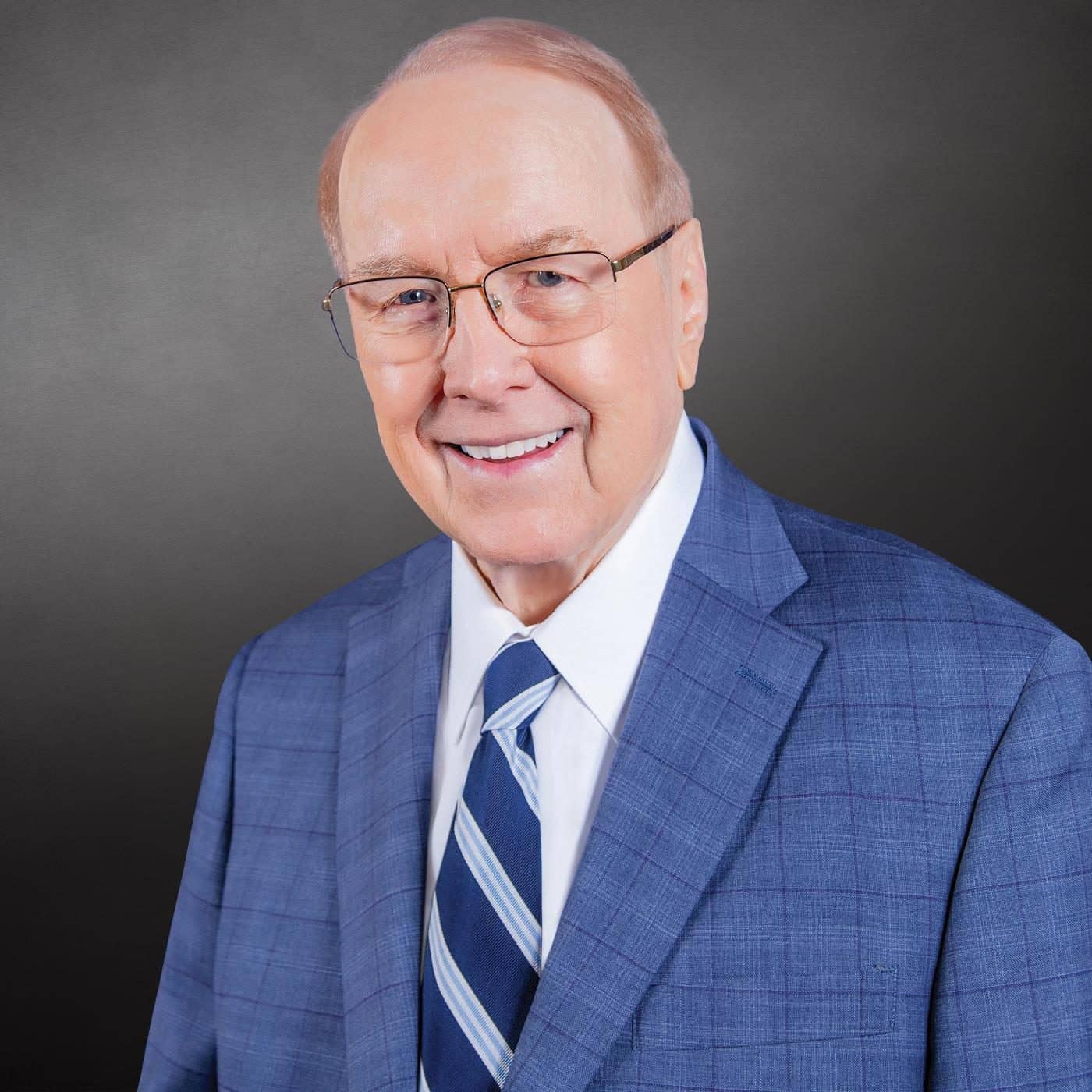


In this enlightening episode of Family Talk, Dr. James Dobson sits down with the esteemed late Dr. Archibald Hart to explore the pervasive and often unaddressed emotion of resentment. Described as the ‘cancer of the emotions’, resentment is something that inflicts deep wounds in both our personal and spiritual lives. Tune in to discover how our experiences from childhood influence this emotion and how it subtly manifests in our adult relationships. Delving deep into scripture, Dr. Hart illustrates the power of biblical forgiveness as the ultimate remedy to this silent ailment.
SPEAKER 03 :
Well, hello, everyone. I’m James Dobson, and you’re listening to Family Talk, a listener-supported ministry. In fact, thank you so much for being part of that support for James Dobson Family Institute.
SPEAKER 01 :
Well, welcome to Dr. James Dobson’s Family Talk. I’m Roger Marsh, and on today’s program, we’re bringing you a classic conversation about an emotion that affects nearly all of us, okay, all of us, yet often goes unrecognized and unaddressed. The emotion is resentment, and it’s one that our guest calls the cancer of the emotions. On today’s edition of Family Talk, we’ll hear Dr. Dobson having a conversation with his good dear friend, Dr. Archibald Hart, a pioneering voice in Christian psychology who served as dean of the School of Psychology at Fuller Seminary. Dr. Hart went home to be with the Lord in 2021. Before that, though, of course, he was a world-renowned expert on brain research and stress and authored over 35 books during his remarkable career. Of course, Dr. Dobson and Dr. Hart were the best of friends. And on today’s program, Dr. Hart will explain why resentment is so destructive, how it develops from childhood, and most importantly, how biblical forgiveness offers the only lasting solution. Now let’s listen in as Dr. James Dobson and Dr. Arch Hart explore this crucial topic on today’s edition of Family Talk.
SPEAKER 03 :
Why are we so subjected to this bitterness and anger and resentment that should not affect those who are in Christ Jesus? Why does that plague us like it does?
SPEAKER 02 :
Its origins are back in early childhood. Right from the beginning of our existence, we have a need to protect ourselves, a need to defend ourselves. And the need to fight back, the need to protect ourselves gives rise very early to feelings of resentment. We stall them up. We delay our need to hurt back.
SPEAKER 03 :
In the early stages of childhood now, you don’t delay them. If somebody irritates you and you’re two years old, you throw your Tonka truck at them.
SPEAKER 02 :
You respond by hurting back. If somebody hurts you, you hurt back. If Jimmy, you know, tramps on your foot, you tramp on his foot back right away. If he hits you in the stomach, you hit him back right away. We have this instinct of protection, one might say, of defending ourselves. And shortly after that, you begin to learn that that’s not acceptable. And so you learn a new behavior. Mommy says, don’t do that, Johnny. Stop doing that. And so we delay it, and we wait until we’re around the corner, and then we will strike out. After a while, it moves from the physical protection to the psychological protection. Much of the hurt is emotional, psychological. It isn’t physical. And so it becomes an emotional game we play, and we delay the hurting back. Sometimes the delay is so long that the feeling we have waiting to hurt back, waiting to get our revenge, is the feeling of resentment. and we can carry it on for an awful long time.
SPEAKER 03 :
In other words, in the delay itself is a storing up process. You have these feelings that your impulses would lead you to deal with, and instead of dealing with them, you put them in some kind of tank, in some kind of memory bank.
SPEAKER 02 :
We store them up as hurt memories, which later can recreate in us the need to hurt back again. The… It starts out as protection. It later becomes a need to hurt back, a need to pay back the hurt that has been given to us. And that’s revenge. And that is revenge. And so the revenge and resentment and anger are all very, very closely tied. The initial feeling is one of anger. Since we cannot give vent to that anger right away, we cannot hurt back right away, we store it up as resentment. to be paid back at a later date.
SPEAKER 03 :
Now, we may have difficulty remembering our multiplication tables and difficulties remembering the items we were to buy at the grocery store or what have you, but we have a perfect memory for this kind of resentment.
SPEAKER 02 :
Resentment seems to impact us so deeply, seems to involve so many deep emotions that the memory of hurt is a memory that doesn’t fade easily. We can forget everything else, but we will not forget the hurts that have been caused to us.
SPEAKER 03 :
I would like to invite those who are listening to us to think right now of the time when they were 8 or 10 or 12 years of age and go directly to one of those moments of pain. And you may have forgotten the name of your teacher at that time or the name of the street you lived on or your telephone number, all those very familiar things at that moment. But you still recall those events when you were stung and you were hurt.
SPEAKER 02 :
You can recall them years ago. I was speaking to a man just recently. 65 years of age who could vividly recall something his mother did to him when he was three years of age vividly and the hurt that it caused him is so deeply embedded and of course over the years has become exaggerated and distorted yes so that now he has tremendous hatred towards his mother who is dead of course and to whom he can’t you know he can say nothing there’s no way he can You can’t even deal with it now. You can’t even deal with it now. But the resentment is like a cancer. In fact, I call it the cancer of the emotions because it eats away at us and destroys both our physical, spiritual health as well as our psychological health.
SPEAKER 03 :
Arch, why does that enter into the Christian life? There’s no place for that. The Lord said, vengeance is mine. Revenge is mine. We have no reason, no excuse for that kind of behavior. Why is it still a problem for Christians?
SPEAKER 02 :
It’s a problem for Christians because… We’re all human, and the mechanism is a very basic, fundamental human mechanism. The wonderful thing about being a Christian is that God has addressed this issue very, very specifically. And so he has provided us with a very clearly defined set of principles that we should follow in dealing with our resentment. And the Sermon on the Mount, especially the latter portion of Matthew 5 from verse 38 onwards, is addressed very specifically to this problem.
SPEAKER 03 :
All right, before we talk about the right way, let’s talk about the wrong way. How do people deal with resentment? If I resent you or my mother-in-law or my sister or somebody, how is that manifested in our relationship? What are some of the clues that show that there is a bad feeling there?
SPEAKER 02 :
The most important clue is the fact that we feel anger towards the person. We display that anger not always directly. We use passive ways. We’re negative. We’re obstructionistic. We may even be depressed around the person who is causing us our resentment. There are many ways that we can mask our resentment and show it in other ways. Even punish them by being rude to them. The need to hurt back… The need to pay back the hurt that has caused you sets you up with a need to punish them. And that’s what you want to do. So every opportunity you get, you punish them. You don’t respond. You don’t reply. You don’t respond to them when they talk to you. Mary calls out to her husband, John. John, please come here and help me. And John stays in the other room. He doesn’t come anywhere near because he feels resentment towards Mary.
SPEAKER 03 :
Humor can also be a tremendous weapon in punishing people, can’t it? You say it as though it’s supposed to be funny, but you both know that it was designed to hurt.
SPEAKER 02 :
Everybody who’s involved knows what the real message is. Humor, especially sarcasm. I think sarcasm is the worst form of all humor. I don’t think sarcasm should be a part of a Christian’s behavior because sarcasm always hurts. It’s always a cover for resentment. It’s always a way of hurting back the hurts that have been caused to you. People even resent God, don’t they? Feelings of resentment can be directed towards God, especially if the person causing you the hurt is no longer available to you to deal with. And then we find a scapegoat. And often God is the great scapegoat for all our resentment.
SPEAKER 03 :
Boy, you’re in tough, tough water when you start resenting God because there’s nowhere to go with that. There’s no one to whom you can appeal. If you resent someone else, you can say, God, help me with this feeling that I have. But if your enemy is God… Then you’re lost.
SPEAKER 02 :
Then you’re… I do believe that God understands this about us and receives that resentment from us for what it is, which is a desperate cry for help on our part. And hopefully we’re sensitive enough to God and his spirit so that we begin to receive the message back from him, which is one of acceptance and love. And now let’s get to the real problem, and that’s the resentment.
SPEAKER 03 :
In your clinical work, Arch, how commonly do you find kids who have grown up resenting their parents? Is that almost universal? It seems like it.
SPEAKER 02 :
I don’t suppose it really is. Because the sample of people I see is not… typical necessarily of the general population. As a clinician, one sees a particular type of person, someone who is seeking help. But I think most of us have feelings of resentment to our parents that we have to resolve sometime or other if we’re going to be full people.
SPEAKER 03 :
You know, that’s a phenomenon that interests me and in some ways depresses me because parents love their kids and they sacrifice a great deal for them. You know, to even bring them into the world is a costly thing, physically and emotionally. Bring them through the toddler years, chase them around, try to keep them from killing themselves, go through all that early childhood means. You do it because you love your kids. And then for the typical situation… To be all of that love and all that giving and all that sacrifice, and there’s no better word for it, to wind up with a feeling of anger and hostility and resentment on the part of the recipient of all that love. There’s something wrong with that.
SPEAKER 02 :
It doesn’t seem right. It seems like you pay the price for being a good parent forever afterwards in terms of resentment on the part of your children. But I think it is important to realize that a lot of these feelings of resentment by children towards their parents are not justified. And I think young people today have to understand that often it’s those who are nearest and dearest to them, those they love the most, their parents, for example, who are the recipients of scapegoating, the dumping of all the feelings of frustration and so on you have against the world on those that you love the most. And so a lot of these feelings are not justified. And in therapy, as you work and talk with people like this, gradually they discover that it wasn’t mommy who did that or daddy at all. It was their projection or their scapegoating on parents.
SPEAKER 03 :
You made that point the night I heard you speak to the crowd, and I thought it was beautifully stated because many parents then receive that resentment from their kids and respond in guilt. They believe what their children say to them. Sure. They’re charged with all of these crimes and they stand guilty as charged. And then the rest of their life they feel bad about what started out to be a love relationship.
SPEAKER 02 :
That’s true of the husband-wife relationship very often also. It’s, you know, why do I get all the resentment from the spouse of mine? Well, it’s because you’re the closest one. Not because you deserve it. Not because it’s legitimately directed at you. Just you’re a convenient scapegoat.
SPEAKER 03 :
In marriage counseling, one of the major tasks is to deal with resentment, isn’t it? Hostility, deep hostility between husband and wife.
SPEAKER 02 :
It’s a major task in the marriage relationship. In fact, it’s a problem wherever two people have to relate closely and intimately.
SPEAKER 03 :
What are some of the most common sources of resentment that you deal with there in the therapeutic relationship?
SPEAKER 02 :
I suppose that if I were to single out one theme, one cause of frequently occurring resentment, I would say that it has to do with the love needs of individuals, not having your love needs met, not feeling respect, not feeling unconditional acceptance. It seems like love today is distorted. It’s conditional. Everybody loves for reasons, for conditions. I love you if you love me back and so on. And so much hurt, much resentment focuses around or is caused by people whose love needs are not being met. They feel rejected. They feel that they’re not accepted for what they are, but rather for what they can do and what they can provide to the other.
SPEAKER 03 :
All right, we’ve documented pretty well that resentment is there in most of us, if not all of us. What’s the effect of it? What does it do to us physically and emotionally to carry around a load of resentment?
SPEAKER 02 :
The effect of resentment on our bodies is something that has always fascinated me. And I am convinced after many years of clinical practice that much high blood pressure, much cardiovascular disturbance, many gastrointestinal disturbances and so on are the consequence of resentment. And Hans Selye, the great stress psychophysiologist, said that of all the emotions, the one that is most destructive to the body is resentment. The need, the carrying or the harboring of a need to hurt back, the harboring of a grudge. And so we pay for it. In terms of destruction, the burnout of our bodies. Those are the physical consequences. Of course, there are other psychological consequences. It destroys our ability to love. And as Christian people, we are commanded to love one another. And there’s no way we can love when we harbor resentment.
SPEAKER 03 :
The beautiful thing that you said earlier was that Christianity addresses these kinds of issues. It doesn’t sweep them under the rug. It admits that they exist and tells us what to do with it.
SPEAKER 02 :
It has the remedy. It doesn’t deny that the problem exists. It provides the solution to the problem.
SPEAKER 03 :
All right, Art. The problem of resentment is there. We’ve all felt it and dealt with it. But the Bible has some principles, as you said earlier, that will help us deal with it more effectively. Give us some of those solutions. This is not something that we need struggle with through a lifetime. There are some answers, some biblical, spiritual answers to the matter of resentment. Where do we start?
SPEAKER 02 :
Absolutely, Jim. One of the thrills about being a Christian psychologist is that when confronted with a problem like resentment, where you know that a secular psychology has no answer. I mean, secular psychology says, go out and beat their heads off. Now, that may be an adequate therapeutic style, but it’s not a satisfactory lifestyle. And Scripture very clearly requires that we control our anger and And to control your anger, you’ve got to resolve your resentment.
SPEAKER 03 :
Even if you get a temporary release from resentment for having done that to somebody else, they then resent you. It’s a chain reaction. And that sets off another round of assault.
SPEAKER 02 :
And it goes on and on and on. And this is where I believe Christ, in the Sermon on the Mount, gives us beautiful solution to the problem. And the solution is in the concept of forgiveness. You’ll recall that in Matthew 5, the Sermon on the Mount, where Jesus reminds his listeners that the old law said, an eye for an eye and a tooth for a tooth, which means, in terms of resentment, that if somebody hurt you, you had every right to hurt them back. But now Jesus comes in with realizing that that just creates chain reactions, you see, that we’ve got to stop the cycle somewhere. And the wonderful thing he has given us is the concept of forgiveness. In this portion on the Sermon on the Mount, the person who hurts us is referred to as our enemy. And an enemy in the scriptural sense is anyone who has the potential to hurt us. We don’t have to think of people across the water somewhere as being our enemy. Right in our home. It can be our own children. Anyone who has the potential to hurt us. And we are told very clearly to love our enemies. In Matthew 5, 44, he says… Love your enemies, bless them that curse you, do good to them that hate you, and pray for them which despitefully use you and persecute you. Now, in Romans 12, Paul talks about our relationship to our enemy, and there he makes it very clear that we have to forgive our enemy. And there’s only one way to deal with resentment, and that is to forgive those who hurt you.
SPEAKER 03 :
Arch, is that within the grasp of people who deeply resent, people who have been hurt and cut as a child, who grow up wounded, who grow up with the scars of parents who have assaulted them and torn their self-esteem down? They’re now 40 years of age. The parents are 60 and are still rejecting them and are still agitating them. Can they just take that scripture and throw a switch and say, now I will no longer feel that way about it. I’m going to feel differently. I’m going to forgive you.
SPEAKER 02 :
I think it’s not as simple a matter as throwing a switch because the message of God to us is a message which changes our whole belief system. You remember the parable that Jesus told in response to Peter’s question. How many times must I forgive my enemy? And then he tells the parable, which is the parable of the unjust servant. The one servant who would not forgive. even though he had been forgiven by his master. And the message that comes to us from that parable is that we’ve got to put our hurts, the hurts that people cause us, alongside the hurt we cause God. And when we do that, honestly… A wonderful thing happens to our belief system. We begin to see the hurts that others cause us in the perspective of the hurt we cause God. And that does something to our belief that we have a right to hurt others back. And that’s… leads us then to the point where we are able to move ourselves to the place of forgiveness. Now I think that the reason we have trouble with forgiving those who hurt us is because we don’t have a good definition for forgiveness. I have defined forgiveness in this context as surrendering my right to hurt you back if you hurt me. I have a right to hurt you back if you hurt me. That is my human right. But if I hurt you back, then you’re only going to have a need to hurt me back. And we’re going to perpetuate this thing ad infinitum. So I’m going to stop the cycle by surrendering my right. And I’m doing so on the basis that I see how much I have hurt God. And I put that alongside the hurt you’ve caused me. And I say that the hurt you have caused me is insignificant when compared with the hurt I caused God. And so I can surrender that hurt.
SPEAKER 03 :
Boy, that’s a beautiful perspective on life.
SPEAKER 02 :
The wonderful thing then is that when I do that honestly, and I may have to repeat it many times through the day or through the week, it’s not something that’s going to magically take my resentment away, but every time I feel the memory coming back, every time I feel the resentment surging in my body, I surrender it. I surrender my right to hurt back. It’s not that I forgive the hurt that you caused me. No. But that I no longer see my light to get you back.
SPEAKER 03 :
But you obviously deal with people in a therapeutic situation who need your help to accomplish that. You would not be seeing them in therapy if that were not the case. Some people have this deeply rooted feeling who do require a third person perhaps to help them make that transfer and do that forgiving. Is that correct?
SPEAKER 02 :
That’s absolutely true. And sometimes people have to get in touch with their resentment. And so the therapeutic setting may be used for a while to help someone really get in, to realize how much resentment they have. Because the trouble with resentment is we don’t always know we’ve got it, you see. And so therapy, but therapy can only take us so far. It can only bring us to the point of realizing it. And it comes to the point when we have to acknowledge that God does the punishing around here and not us. He evens the scores, not us. And we have to sacrifice that right to revenge, that right to hurt back to him.
SPEAKER 03 :
I think this is a fascinating subject, Arch, having to do with the theology of emotions, which has been a subject that’s interested me a long time. Anger, for example, I think can follow the same sort of model that you’re giving here. The Bible says, be angry and sin not. Now, what’s the difference between those two? One is that you can’t help the biochemical reaction, the feeling that you have.
SPEAKER 02 :
The feeling is always legitimate.
SPEAKER 03 :
Yes, and it’s set off by the autonomic nervous system, and it’s not something that you can totally control. Feelings are amoral. They come whether you ask for them or not. But when it says be angry and sin not, the sin that can attach itself to anger is the sin involving the desire to hurt, to slash, to cut, to wound. And we are responsible for that half of it.
SPEAKER 02 :
That’s right. See, I make the distinction, as you do, between anger as feeling and anger as behavior. Anger as feeling is always legitimate. But anger as feeling is a sign. It’s a symptom. Something’s wrong with your environment. Something’s wrong with your life. Deal with it. Most of us, though, take that symptom, the anger feeling, and convert it into behavior, action.
SPEAKER 03 :
Which resolves the anger feeling, but in the consequence causes… And yet Jesus made it clear that it’s possible to hate and not carry out that hatred and yet be guilty of murder. So that it doesn’t have to be overt behavior. It can actually be an emotion too.
SPEAKER 02 :
It can also be an emotion because we harbor it. And it’s damaging because ultimately it determines our behavior.
SPEAKER 03 :
When it becomes willful, then it becomes dangerous and sinful. Arch, say something directly to… to the person who’s listening to us now, not to masses of individuals, but to one person who is listening to the radio at this moment who has those wounds that go all the way back to the toddler years maybe or certainly in childhood and who has gone through the stress and the depression and all the symptoms that we talked about and has that so deeply ingrained in their character and their personality now. what hope can you offer them for coping with this at this moment?
SPEAKER 02 :
The hope they have is the freedom which Christ can give them from those shackles. Because no matter how deeply they’ve been hurt, no matter how legitimate those hurts are, no matter how many years that hurt has gone on for, when you collect it all together and Place it alongside the hurt that you cause God. It is insignificant. It is a pittance compared with the mammoth debt that you owe God. You must, if you realize that, freely let it go. Freely let it go.
SPEAKER 03 :
And in so doing, you’re entitled to the forgiveness of others whom we have hurt. And all of us are guilty in that score as well.
SPEAKER 02 :
Yes, because we are not only the recipients of hurt, we are often the givers of hurt. And there are many people who probably have resentment against us also. And the only way you can level the score, the only way you can wipe the slate clean, is to put it alongside what God has done and let it go.
SPEAKER 03 :
Dr. Archibald Hart, this has been an extremely meaningful discussion. We believe in what you’re doing, and it’s always encouraging to me, Arch, to find professionals who love the Lord like I do and who believe in those biblical principles and are out there trying to hold a family together. I find encouragement just in what you believe and the way you say it. And I appreciate you being my guest today.
SPEAKER 02 :
Thank you very much, Jim. It’s been my pleasure.
SPEAKER 01 :
Dr. Hart’s definition of forgiveness really cuts to the heart of the matter, doesn’t it? Surrendering my right to hurt you back. Today on Dr. James Dobson’s Family Talk, you’ve been listening to a classic conversation featuring Dr. Dobson and his good friend, Dr. Archibald Hart, about overcoming resentment through biblical forgiveness. Dr. Hart went home to be with the Lord in 2021. Of course, Dr. Dobson went home to be with the Lord a couple of months ago, and what a great reunion that is for those two dear friends. Now, if you missed any portion of today’s broadcast, you’ll want to go back to drjamesdobson.org forward slash family talk if you’re not there already. Now, if today’s discussion about forgiveness resonated with you, I want to tell you about a free resource that can help strengthen your most important relationships. Our Conflict in Marriage email series addresses one of the biggest sources of resentment between husbands and wives, and that is unresolved disagreements. Now, to receive Dr. James Dobson’s email series called Conflict in Marriage, simply go to DrJamesDobson.org and search for that title, Conflict in Marriage. That’s DrJamesDobson.org. Every day, the Dr. James Dobson Family Institute works to preserve marriage and family by promoting biblical principles in homes all across America. To make a secure donation, go to drjamesdobson.org. That’s drjamesdobson.org. Well, I’m Roger Marsh. Thanks so much for listening today. On behalf of all of us here at the JDFI, we’re so glad you tuned in. Be sure to join us again next time right here for another edition of Dr. James Dobson’s Family Talk, the voice you can still trust for the family you love. This has been a presentation of the Dr. James Dobson Family Institute.