



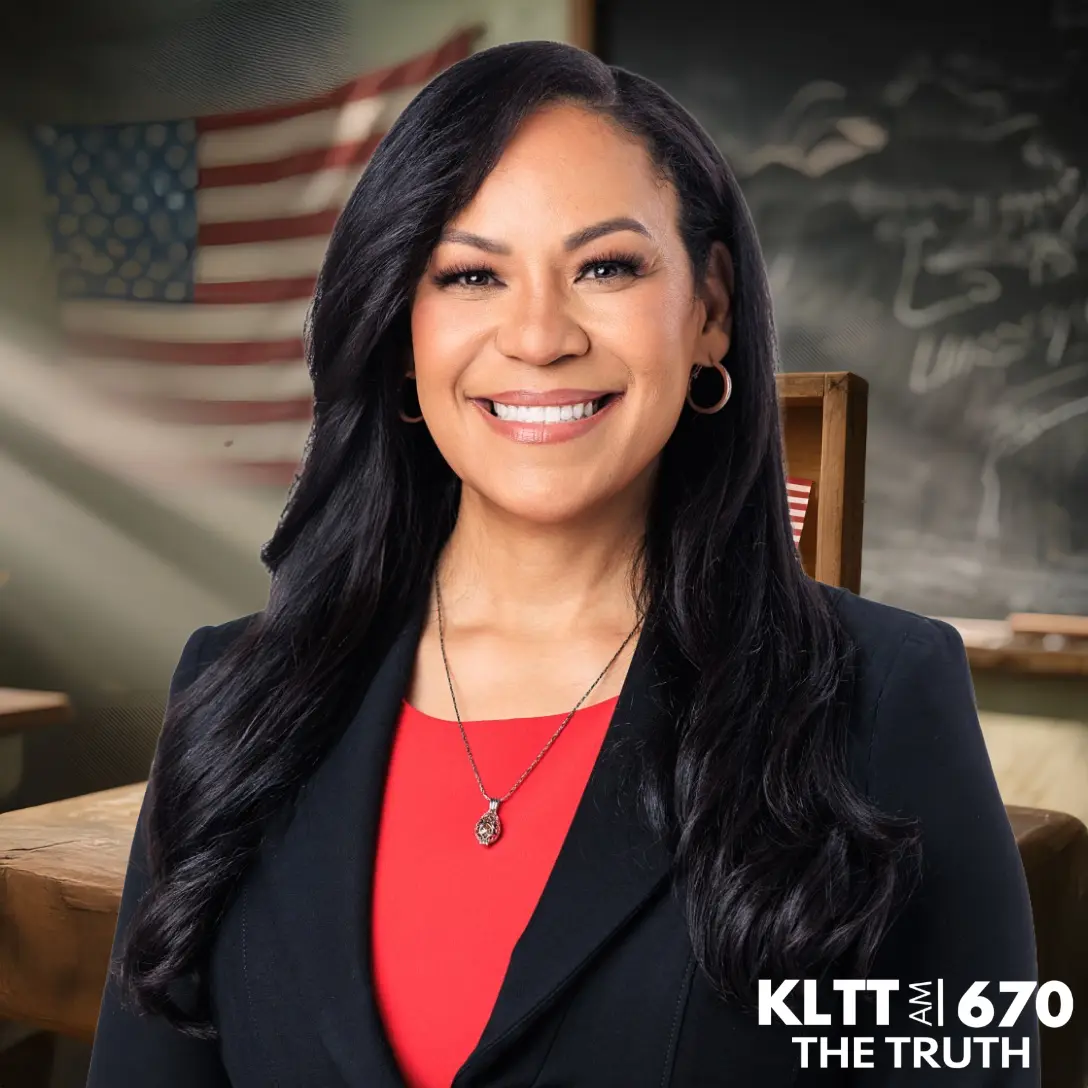
Join Priscilla Rahn as she explores the pressing issues of education reform in America with guest Brandon Price. From the introduction of Excalibur Classical Academy’s mission to the challenges faced by students in inner-city schools, delve into the conversation about what true education means in today’s world. Learn how societal factors and political dynamics influence the access and quality of education, and discover why Brandon believes the dismantling of the Department of Education could be a pivotal step forward.
SPEAKER 01 :
Welcome to Restoring Education in America with Priscilla Rahn. She’s a master educator and author leading the conversation to restore the American mind through wisdom, virtue, and truth.
SPEAKER 03 :
Well, hello, everybody. Welcome to Restoring Education in America. I’m your host, Priscilla Rahn, and I am so excited that you decided to join the conversation today. I wanted to remind you about something exciting happening this fall in the 2026 school year, a very new Classical Private School is opening called Excalibur Classical Academy. Their mission and vision is restoring America’s heritage by developing servant leaders who are keepers and defenders of the principles of freedom for which our founding fathers pledged their lives, fortunes, and sacred honor. And they are looking… to enroll kindergarten through third graders, inaugural families. There are special scholarships and incentives for you. So please go to their website to find out more and to get a tour and to meet the headmaster, which is yours truly. You can go to their website, Excalibur Classical Academy dot org. And if you’re interested in applying to teach at the school, please send your resume through the website. Well, today I have a very special guest who is an education activist and all around really cool guy. He is a fellow Project 21 ambassador, and I’m going to bring him to the stage right now. Hello, Brandon Price. How are you?
SPEAKER 02 :
How are you? How are you?
SPEAKER 03 :
I’m doing great. I’m really appreciative that you have carved out some time to just have a conversation today about education. But before we get into that conversation, I’m going to share a little bit of your bio with our listeners. So Brandon Price is a conservative political commentator from Detroit, Michigan, an advocate for education reform and school choice. Brandon’s media presence includes appearances on MSNBC, Fox News, CGTN America, Al Jazeera, Newsmax, C-SPAN, NPR, BET, The Daily Signal, and other major outlets. Brandon’s political career began at Howard University, where he earned his bachelor’s in business administration, followed by a master’s in global affairs from Rutgers University. While at Howard, he served on Capitol Hill under former U.S. Speaker of the House Dennis Hastert, gaining firsthand experience with legislative operations and federal strategy. In 2010, Brandon was appointed by New Jersey Governor Chris Christie as Director of Education and African-American Affairs, where he led early childhood education and urban development initiatives. In 2021, he was appointed by Delaware Governor John Carney to the state magistrate screening process, contributing to the review and selection of judicial candidates. Brandon has held influential fellowships with the Heritage Foundation, United Nations Foundation, National Urban League, United Way of Delaware, and the Veterans Empowerment Organization of Georgia. He currently serves on several boards and is a member of Alpha Phi Alpha fraternity. Only one. OK, so I went OK, so everybody’s an alpha. Not everybody’s an alpha, but like so many of my friends are alphas. And you guys are a really tight crew. And I went to your website and I looked at some of the initiatives that you are doing. So Alpha Phi Alpha College Life to Corporate Life Initiative. focuses on preparing young men for real careers through mentorship, professional development, and partnerships with employers. So from your perspective, Brandon, what lessons from that initiative should our education system adopt to better connect education for our young men?
SPEAKER 02 :
So a couple of things. First of all, thank you for having me on your show. Education doesn’t start in the classroom. And I think that’s the challenge that people can’t get around is they, when you think education, old school, you think of four walls, a teacher standing in front of you and a lesson plan that you may or may not read. To me, education starts the minute that a kid comes out of the womb and it’s, what do you see? What do you hear? What are you exposed to? That’s your education. And I always say, you know, As a kid growing up from Detroit, you know, for me, the first education I got was the streets. And so it was my cousins who would come in and had fresh clothes but never went to work. It was my siblings who I saw getting pregnant before they were 18. It was the things that I saw in the streets growing up as a kid that made me say, I don’t want to do that or I don’t want to go down that path. I think that’s important for Children of color and people who are over schools with children of color, because our kids, frankly, deal with things very different than their white counterparts deal with. And I’ll give you a perfect example. When kids in the suburbs get up in the morning, they can get up. They can go to swim practice. They can, in some cases, walk to school. They have a two-parent household. They have breakfast in the morning, and they’re going to school with their bellies full. Now, why is that important? That’s important because now the hunger piece has been resolved. How am I going to get to school has been resolved. Who’s going to pick me up has been resolved. So that kid is already prepared to learn, right? The flip side to that, Some of our kids, especially if it’s inner city, Baltimore, Chicago, D.C., Philadelphia, L.A., New Orleans, you might have two parents in a household. More than likely, you don’t. You may have other siblings, so that means the attention is less on you and more on everybody in the house. You may or may not get breakfast because mom’s got to be out to her job before yours. And now you’re worrying, trying to figure out how you’re going to get to work, which now poses a threat because… It’s still dark in the morning. Crime is all around you. And so what’s happening is learning becomes a second ordeal for that kid because he’s got to try to survive first. And that is, I think, our children’s biggest challenges is Every child of color in a community that’s ridden with crime, drugs, poverty, these are champions because they’re literally surviving every single day and they can’t Factuate on what is this teacher telling me when I got to figure out how I’m going to eat at night? And you’d be surprised. I mean, I’ve dealt with schools where kids in so many places are dealing or seeing drug deals. They’re seeing people get shot. They’re seeing crime. They’re seeing prostitution. you want this kid to learn how to read canterbury tales when they’re dealing with this so so we’re not i mean it’s not just education not only just a crisis but i believe it is truly our civil rights issue of this time and i can tell you in the 60s i used to watch The videos of Little Rock, Little Rock Nine, where, you know, these black kids couldn’t get into this school. It literally took the governor and the president of the United States to say, let these black kids into the school. Now our kids can’t get out. And so when you talk about failing schools, the reverse has happened where. You know, kids couldn’t get in. Now they can’t get out. And now and I’ll call it on the air. But we have a certain faction of politicians on the left that don’t want to see black children succeed. Why do I say that? Because the reality is I don’t want to hear what you say. I want to see how you vote. And it’s just very disheartening to see that black parents are allowing their politicians to not support their children’s biggest, most important jewel, which is their education.
SPEAKER 03 :
Brandon, you’re bringing up so many great points. So let’s talk about that. I’m sure you’ve seen the data. About 80% of Black and Hispanic parents are pro-education choice. They want to have options because they’re seeing that the public education system has not been serving their children with fidelity. Yet the Democrat Party and the teachers union has been constantly opposing any sort of initiatives for vouchers or school choice or even the president’s tax credits that are available to states right now. In my state in Colorado, our governor is the first Democrat governor to opt in to the education tax credits, which is really good for us here in Colorado. But what do you feel about President Trump’s decision to sign his executive order to eliminate the Federal Department of Education? Do you think that’s good for us? Is that an opportunity? What are your thoughts?
SPEAKER 02 :
Well, I’m a local control guy. And so to me, I think we need to not only disband the Department of Education, but I think we need to immediately shut down failing schools. And here’s why. Does your kid have time for a school to get it together? I don’t think so. And so for me, it’s and again, I go back to we we have to have a racial conversation if we’re going to talk about education, because it’s a racial issue. When you look at the fact that white parents are not going to allow their kids to sit in a failing school district. They’re involved in the parent teachers union, excuse me, in the PTA. They’re involved in the school. They know, you know, they know when their kids are not having homework, they’re asking questions. And so the challenge becomes, when are we as people of color going to recognize that our kids are being duped? They’re being bamboozled. And there I mean, it’s no coincidence that prisons are 85 percent black. Why do you think that is? Because the kids can’t read or because they don’t have parents that are prioritizing their education. You know, I once knew a guy. I did a show one time and this guy said it was a great tagline, but he was a drug dealer who ended up becoming a professor. And he said, I sold dope, now I sell hope. And I said, that’s a great tagline because it’s real in that people are going to survive. And this is what’s so deep and important about why education has to matter in 2026. When you think of a young child and if they can’t read, if they’re not reading to a sufficient level, if they can’t do basic math, if they can’t just do the reading, writing, math, and arithmetic, if they can’t do those simple things, what you’re doing is you’re handicapping not only them, you’re handicapping society, and you’re handicapping tomorrow’s workforce. So then you start to think, well, who’s going to be my next engineers if you can’t do basic math? Who’s going to be my next lawyers if you can’t read or you can’t interpret what you read? Who is going to be, I mean, you know, and this is important because not only are we creating through failed education, creating a society of underdevelopers, But this is also in how we vote, how we think. There’s no shock that with failing school districts across the United States, we’re seeing a rise in entitlements programs because they can’t do anything. I mean, we need to have some straight up conversations now. And to me, it is a crime. where you pay a teacher, you show me what industry, Priscilla, where I can come to work, not do my job or not perform well at my job, and not only keep my job, but get a lifelong pension? I don’t think so. But that’s what we’re doing in education. So I laugh when, you know, I used to have a guy, rest his soul, this guy’s name was Ron Russo. And he was a big charter school guy in Delaware, which is where I live. And he said, education is a business. The kids are the product and the parents are the customers. That’s what it is. And if any business, a restaurant business, cable business, if I don’t get my groceries, if I don’t get what I paid for, there’s a problem. And what’s happening is parents are not getting what they paid for. And some may say, well, public schools are free. Well, not really, because your taxpayer dollars are paying for it.
SPEAKER 03 :
OK, Brandon, so again, you’re bringing up all the hot button issues for me. You know, when we talk about, let’s go back to the parents, because we know that’s where the missing link is. And we look at our urban school districts, Baltimore, Chicago, Denver, even L.A., i know in our community our parents love their kids they’re doing the best that they can but there’s a glitch like they there’s something missing in this message that you’re talking about where why aren’t our parents getting up you know 20 minutes early to make sure kids have cereal or breakfast before they go to school or on time like what where are we missing the message why are we still voting for democrats who are not supporting our children the way they need to be supported
SPEAKER 02 :
You know, it’s a great question because I think it’s a racial conversation, but it’s one where I think our people and I’m going to include me in there because I’m part of our people is we are redirecting the racial aggression to the wrong group. And I’ll give you an example. There was a time that when my parents were coming up, when I was coming up, you had to be in school on time. You had to get up and do chores. You had a parent or two that were making sure that you had your homework, did your homework, and completed your homework, and turned it in. And what we’re seeing is it’s a breakdown of society where people, because of the economy, which is a factor of education, because of what the amount of things that people are subscribing to marriage breakdowns i mean so so you can’t have the education conversation priscilla without talking about everything else and what’s happening around you so you know when you go to to the you know you go to the block you know my parents still live in detroit still live where i grew up uh on the west side of detroit And you see three things. I guarantee you, Priscilla, you go anywhere in the United States, you go to Black Neighborhood, you’re going to see three things. Churches, which is declining in memberships across the nation, liquor stores, and strip clubs. This is what you see. And you ask yourself, you say, why do I continue to see those three things? And I’m about to blow your mind, Priscilla, because they’re economic revenue boosters.
SPEAKER 03 :
Bro, I thought you were going to say barbershops.
SPEAKER 02 :
I’m sorry, barbershops too. Barbershops too. That’s four. But they’re economic revenue boosters because at the end of the day, people like being entertained. People drown their sorrows in a drink. people like to look good, barbershops and beauty salons, and people like to feel good, but don’t like to be held accountable. That’s why you have those four energies. Now, how does that relate to education? Because the reality is those are the four things that growing up, you see, you’re used to, and you trust. And so your barbershop, or in your case, your beauty salon or stylist, She is not only your salon, but she’s your counselor. She’s the person that you talk to when things are rough. And so when you think about it, if you’re taking the skill sets out of what a barber possesses, what an owner possession of a liquor store or a wine and spirit store, what a pastor and things that he has that possesses, you know, now you’re saying, well, Outside of those four things, what else could you have used those skill sets for? Right. So, again, going back to what is education, it’s not just the four walls and a teacher. It’s the education of knowing what skills that you have and having mentors that can help prepare you. And I can tell you the worst thing. And this may be controversial on your show. I’m a controversial guy. The worst thing that could have ever happened, in my humble opinion, was integration. Because what it did is it took people of color, doctors, Black doctors, Black lawyers, Black judges, Black business owners, and it said, you no longer have to stay in your community. You can go elsewhere. So that’s detrimental because if I’m a kid and I’m waking up seeing two parents, parent getting in his nice Cadillac, going to work, coming back home, nice homes that don’t have Cheetos and all over the grass, but actually are kept well. It does something to you. So kids, in 100 Black Men, we say kids will be what they see, right? If I see it, this is what you’re gonna be. And so now when I go to school and I have black teachers, black male teachers, which there’s a shortage, that’s another conversation. Now I can go to school and say, I can actually become this because I’ve already seen it. right and this is critical priscilla because our kids aren’t seeing that you know my dad uh became one of the first black state troopers uh at a time in michigan when you didn’t have black state troopers he’s one of the first and he became a black state trooper because as a kid during the riots He saw a black state trooper who shook his hand. That’s how he. And so when you think about the power of proximity, Priscilla, that is education. So that made what my dad was learning in the classroom relevant because he was able to say, I know what I want to do. So how do I apply it? Our kids don’t have that.
SPEAKER 03 :
If you’re just tuning in, my guest today is Brandon Price is an education activist and podcast host. We’re having a great conversation. When you bring that. topic up of integration, that is a new hot topic amongst us in the Black community. We’ve been talking about where did we take that turn? Obviously, we could point to the 60s where a lot of that new legislation was instituted and where we started to see things change in our community. Number one is the two-parent household. But Brandon, you brought up the term creativity. And obviously, we know that creativity starts in the mind. And when I was growing up, there was a United Negro College Fund commercial that said, the mind is a terrible thing to waste. And I remember sitting in front of the TV, like you said, seeing the images and saying, oh my goodness, I can’t let my mind go to waste. I’m going to have to go to college and learn and be smart. I literally remember thinking that when I saw that commercial. But now we’re in this age of AI. So if you take a community of young people in the Black community who are already behind in literacy and in math, and then you add this AI age where now everything’s fast, you don’t have to create as much, you can just go to the computer and technology. How do you think that’s going to impact our community and our students? Is it going to be a negative effect or a positive effect?
SPEAKER 02 :
Well, even with AI, you still got to verify. And you still have to have somebody, you know, you can’t, it’s interesting. People are like, oh, I’ll just have my AI write my papers. Yeah, but AI is being conducted because somebody put the information in. You still got to fact check it. You still got to know it. And so I think technology for us is a gift and a curse because what it’s done, it’s made learning easier. the challenge with that is if you’re not already applying yourself or being taught how to apply yourself it doesn’t really help you and so i think ai you know you mentioned shows back in the day um you know uh the united negro college fund mine’s a terrible thing to waste you know and then uh you know even when you start i don’t remember the drugs commercial that this is your brain on drugs Any questions? You know, so to me, one thing I admired as being an 80s kid, I’m an 80s kid, is there were things that were put out there to make you think. And my concern with the technology today is we’re telling people how to think. We’re not asking them or challenging their thought of making them understand or think for themselves. I am a big believer, Priscilla, that in order to fix education, we’ve got to completely dismantle everything that we know presently as education. And we’ve got to challenge young people, not only to say, what do you want to do, but how do we help you get there? And pushing the concept that failure is okay. It’s okay to fail. I failed many times, right? And because I think what’s happening, like, I’ve never been the type of person, Priscilla, that believes everybody gets a gold star. It’s not reality. It’s not the way the world works, right? And I think we as people of color, when we’re communicating with our children, we’ve got to have very different conversations than their white counterparts. And that’s just reality. you know our conversations has to be you got to be twice as better why because it’s the truth our conversations has to be um making sure that you do what you say you’re gonna do making sure that you follow through making sure that uh you understand what you’re reading i had a professor No, a teacher, high school teacher named Mr. McDonough, God rest his soul, older Irishman. And when he would have exams, pop-up quizzes, he would give you a chapter to read. And the next day he would give you a phrase and you had to tell him who said it, what was the context, when did they say it in the book? So basically, if you didn’t read it, you got proven that you didn’t know what you were talking about. But I tell you what he was doing, and this is what they do in the suburbs, right? is he was preparing people to be critical thinkers, right? And It’s interesting because I went to a high school, all boys Catholic prep school out in the suburbs, but I lived in the hood. So I had a lesson and it’s not anything new. Many kids of color have this, what I call this dichotomy of operating in two different worlds, right? My siblings lived in the same household as me and our lives turned out drastically different because I had been exposed. And I think, you know, if it were for me, you know, in terms of people always talking about busing and taking children out of the neighborhood into the suburbs, I’m almost thinking, why not? Here’s a revolutionary concept for your show. Why not bring the educators from the suburbs back to the hood? Because what that’s saying, it’s so psychological, Priscilla. What it’s saying is in order for me to achieve, I got to come to where you are. No, no, no, no, no. Why don’t you come back here and change the way young people think? And that’s been a big challenge for a lot of people is they think better is outside their neighborhood. It’s not. It’s not.
SPEAKER 03 :
Well, Brandon, I’m looking at the time and we have to land our plane here before we go. I know we could talk about this for a long time. We’ll have to have you back. But where can people find you and follow you on social media?
SPEAKER 02 :
Brandon Bryce dot com champion for our kids. Our kids matter. Teachers unions don’t. That’s me.
SPEAKER 03 :
Well, there you have it, ladies and gentlemen. And to my listeners, thank you so much for tuning in. Catch me next time. And remember, educating the mind without the heart is no education. So seek wisdom, cultivate virtue, and speak truth.
SPEAKER 01 :
Thanks for tuning in to Restoring Education in America with Priscilla Rahn. Visit PriscillaRahn.com to connect or learn how you can sponsor future episodes to keep this message of faith, freedom, and education on the air.
