



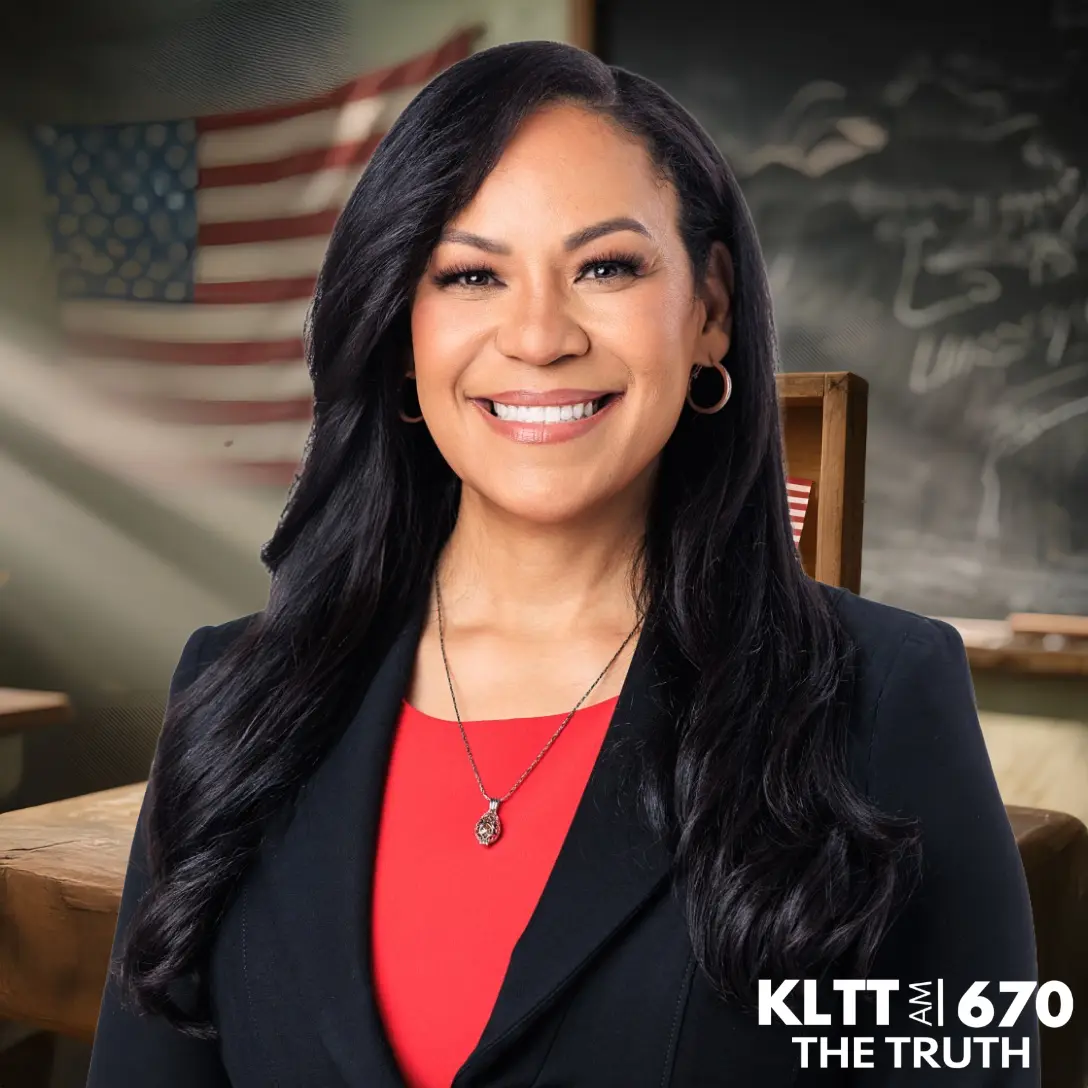
In this thought-provoking episode, Priscilla Rahn and Melanie Collette delve into the controversial landscape of educational equity and the implications of modern grading practices. They discuss the substantial financial investments in educational materials that, according to them, disproportionately benefit some at the expense of true educational development. With a critical lens, they examine how these practices may inadvertently hinder the very students they claim to support, pointing out alarming omissions of essential life skills in current educational strategies. Tune in as they explore these challenges and advocate for a return to age-old educational principles that focus on virtue, character,
SPEAKER 01 :
Welcome to Restoring Education in America with Priscilla Rahn. She’s a master educator and author leading the conversation to restore the American mind through wisdom, virtue, and truth.
SPEAKER 05 :
Well, hello, everybody. Welcome to Restoring Education in America. I’m your host, Chrystilla Rahn. Happy Martin Luther King Jr. Day. I’m so glad you decided to tune in. And I have a dream, too. I have a dream. that we’re going to actually educate our children without all the woke nonsense but i have really good news for you there is a new private school that’s opening this fall in centennial it’s called excalibur classical academy and their mission and vision is restoring america’s heritage by developing servant leaders who are keepers and defenders of the principles of freedom for which our founding fathers pledged their lives, fortunes, and sacred honor. They’re opening K through three this fall. Please go to their website for more information. It’s ExcaliburClassicalAcademy.org. You can find out all about it, but bring your children so that they can have a chance at the American dream. But today’s a special episode. A lot of us have the day off. I’m going to bring my good friend to the stage, who’s a fellow educator. Welcome, my friend, Melanie Collette.
SPEAKER 04 :
Howdy. Thank you for having me again. I appreciate you.
SPEAKER 05 :
Of course. You know, we talk every now and again, and you’re doing the thing on all the social media platforms, Newsmax. I hear you talking about all of the latest stuff. And I love talking to you about education. And I said, let’s let’s connect on Martin Luther King Day and let’s talk about how far we’ve come. And I don’t know where this conversation is going to go, but we were a little hot and bothered about a book called Grading Forever. Equity. Okay. So let me, let me just cue this up. I am a teacher in Denver public schools. All of the teachers got this book during COVID and I did the math. So we have 6,000 teachers in Denver public schools. I looked it up. It costs 25 bucks a book. You do the math. That’s $150,000. Now let’s say we got a discount. Let’s say we got a teacher discount of 20%. That’s still $120,000. Now you multiply that to all of these big urban school districts across the nation. Which school districts are we talking about, Melanie? Well, I just happened to do a little research. Livermore Valley Joint Unified School District, LA Unified School District, Napa Valley, Oakland, Pasadena, Pittsburgh, Pleasanton, Orange Unified, San Jose Unified, San Leandro Unified, Santa Ana Unified, Santa Barbara Unified. Santa Clara, Sonoma Valley, West Covina, Placer Union High School District has publicly described working with Joe Feldman, the author, since 2016. But then when I went and looked up their academic data, there was no improvement in the academic data in 10 years. Look at that. OK, but here’s my problem, Melanie. I don’t know if you have. OK, we’re talking about how far have we come? Equity. When I saw this, the first time I just saw the title of the book, they handed this to me. I was like, you’ve got to be kidding. So then I went to the website and I’m like, OK, how are they defining equity? This is from the website. And this is a smorgasbord of like woke terminology.
SPEAKER 04 :
I love it. Let’s go. Let’s go.
SPEAKER 05 :
Here we go. We believe in the moral imperative to disrupt harmful cycles of systemic barriers that preserve and promote white supremacy and other harmful cycles of power and privilege and to amplify the voices of those historically underserved or silenced so that we can create environments that are more just, and that allow for all people to succeed. We do this by engaging in the work of, wait, anti-racist practices and behaviors, both individually and collectively, and by utilizing structures and systems that counteract institutional, and implicit biases. Okay, how many dings? I was like, we got academia and education policy spaces often normalizing this Marxist terminology. Okay, your turn.
SPEAKER 04 :
And they expect us to read this foolishness and not roll our eyes. Seriously, reading that foolishness when you go to, because I’m sure that was followed up by some professional development, where some high paid facilitator came in and taught you about how that book was so wonderful and how it was especially good for black and brown kids. And I want to make sure that your listeners and people who are viewing this video understand. Priscilla, did you all pay for that book yourself? Where, pray tell, did the monies come from, that $150,000? Where did that money come from that paid for that book? Taxpayer dollars. that’s right taxpayers also i i need and even if you don’t live in colorado it was still your taxpayer dollars because i’m sure the feds give the state money and the state distributes the money so either way no matter where you live in this country it was still your money that paid for that foolishness You know, I didn’t see anything about that in the writings of Martin Luther King. I saw things about equality in the writings of Booker T. Washington or W.E.B. Du Bois or Charles Drew. Any of these figures, weren’t they working within the same history? And arguably, worse history.
SPEAKER 05 :
Okay, so to your point, Melanie, when we look at someone like Booker T. Washington, who was promoting independence and entrepreneurship and these types of skills in the Black community, I’m not seeing this in Grading for Equity. And here’s my criticism of authors like this, okay? I’m sure he’s a nice gentleman. Joe Feldman, I don’t know you. I’m sure your heart is in the right place. I’m sure he means well. But this is part of the problem coming from two black females who are educators. OK, you spent three years in the classroom, three years as a classroom teacher. And you went to an Ivy League school and decided there was money in research because, you know, Melanie, let me tell you something. This is from Defending Education website. From 2014 to 2025, 42 school districts across 11 states have paid consultants $9,203,420 for equitable grading professional development. That’s just equitable. It’s a giant grift. He found a path. He found something. Let me put equity in the title. Look how big. How big the title is. Equity. Grading. And here’s the problem that I have. It says, with this approach, teachers base grades on students and, of course, command of material without consideration of attendant factors such as homework, extra credit, or soft skills. Soft skills. I’m going to come back to this. Behaviors such as punctuality. attendance, handing in assignments on time, and class participation. Learners are afforded extra time and can retake tests or other assignments to demonstrate mastery or raise a grade. So here’s the problem. We’re not teaching or grading the soft skills anymore, but those are the skills that Ivy Leagues and employers are looking for. So it’s no wonder we’re graduating kids who can’t look you in the eye, shake your hand, show up on time for work. Bye. You know, stuff like that. And so we’re not supposed to teach or assess or grade or hold young people accountable. And they grow up to be adults. And you wonder why they can’t function in society. And they’re expecting the government to do everything for them.
SPEAKER 04 :
That’s exactly right. You hit the nail on the head. And I have literally said to counselors, to facilitators, so how do we explain to hiring managers that kids don’t understand why things need to be handed in on time if there’s no consequence? for handing things in on time all of this has to do with what you are graded on and also when kids graduate i believe that parents hiring managers colleges expect that those kids come with a certain amount of knowledge and also a certain amount of soft skills like being on time for class like handing in things one time, all of those things. And, you know, this grading for equity thing also gave birth to things like no zero policies and grading safety nets and all of those things and floors and ceilings and all of that absolute abject foolishness. And so here’s the thing, you know, we as academics, we love our study. There are no studies. that say that this is inherently harmful. There are no studies. However, as you pointed out in your open, there is plenty of anecdotal evidence to be had. There are business articles that have been written about it. There are news segments that are being done about the absolute incompetence of kids these days to the point where do you know, I know entities in large companies that are no longer even considering whether or not you have a college degree because a college degree is basically trash at this point. Like if you have an undergraduate degree, that’s like 13th grade. This is not for everybody, not only all degrees, okay? But what I’m telling you is there are college professors who are having this problem. There are plenty of schools who are lowering the standard because of what has happened in public school. tons of remedial classes that need to be taken, tons of kids who don’t understand why, oh yes, you’re getting graded for absolutely everything. And yes, I’m going to give you a zero if you don’t show up to my class. We’re doing our kids a disservice because while the grades are improving, and this is what they use as evidence of success, which is wild to me. Well, yes, the grades are better if you’re cooking the books. Of course, the grades are better. I don’t even understand the reasoning. Oh, it’s showing that kids are graduating more and that the grades are better. Well, yes, because you’re not grading them accurately.
SPEAKER 05 :
Melanie, to your point, okay, I went to the bibliography. Okay, is this grading fragment?
SPEAKER 04 :
Yes.
SPEAKER 05 :
And I was like, okay, so where’s the hard and fast research? The bibliography references are not like research. They’re articles. They’re articles or other books from other writers and authors. And I’m like, so this is a theory and it’s based on critical theory. Now, we can all do our own like research. So I did. So this is my hard and fast theory. research that I did on Friday, I went around to my colleagues. I had about 30 minutes before the bell rang. And I was like, well, let me just ask my colleagues what they think about this grading for equity. So I spoke to 13 colleagues. So here was the question. My question was, Are you doing the grading for equity? Are you giving 50% to the students who are not turning in work? Because that was what we were told to do. We were told if a student doesn’t turn in work and there’s a zero, don’t give them a zero, give them a 50%.
SPEAKER 04 :
So 50 free points. 50 free points. For each, and people need to understand this, for each grade. So if you give out 20 assessments or 20 assignments and the kid doesn’t hand in any, let’s say, he will have a 50 for the marking period.
SPEAKER 05 :
Right. Okay. Of the 13, 12 of them said yes, they comply with this rule. grading policy and then I said well do you agree with the grading policy and all of them said no except one teacher one white male teacher said I’m apathetic I don’t care I’ll just do whatever I’m told to do like I just don’t that sounds right that sounds probably close to retirement We have teachers complying with this rule because they’re being told. Now, listen, the district’s very careful how they say this. They say, we’re requesting that you do this. Well, if your boss comes to you and says, I’m requesting that you follow this policy. And then followed by like hours of professional development training. Now, here’s the thing. The author is calling it points, but it’s percentages. If you have a whole pie, it’s 100% of the pie. If I give you half of a pie, it’s 50%. There’s not points. When I’m giving you a grade, if you turned in no work, it’s a zero because you turned in no work. Why am I giving you 50% if you turned in no work? And you know what? The kids have figured this out that they can do almost nothing. And at the last minute, do the crocodile tears. and ask their teacher for extra credit or, what do I need to do? I just need to pass. I just need to pass. And the teacher’s like, well, here, do this. Or let me just give you a 50% on all these zeros that are missing grades and do this one assignment, and that’ll get you up to passing. So no, it doesn’t make it better for the kids. It makes teachers more lazy. Because if you know the monkey’s off your back, I’m not going to have to hear from parents, why is Johnny failing class? I can just do the bare minimum, no accountability, wash my hands and send these kids off in their merry way. But when you look at the data in all these school districts, none of their improvement, if there is any improvement, is tied to the grading policy. There’s no correlation. But this man is making thousands of dollars. and the industry of equity in our schools. Oh, I’m getting so heated.
SPEAKER 04 :
But wait a minute. I think before we even continue with this conversation, we need to talk a little bit about why we come up for Joe Feldman. We can talk a little bit about that. No, for real. No. I know you probably don’t want to do it. I’m not interested. No, I don’t care.
SPEAKER 05 :
Go ahead.
SPEAKER 04 :
I mean, you’re coming for him, but you’re being like all professional and like nice and stuff. And I’m fitting in like not be nice right now. So I’m going to tell you what happened. So the last time I was on Miss Priscilla Rahn’s wonderful show, we did some clips, clicked it up, posted it on social media. And Mr. Joe Feldman decided to bring himself over to the XP and tell us that we didn’t know what we were talking about. And after all, he should know because he wrote the book. And I said, oh, really, sir? So basically, you’re saying that our experience with these principles on the ground are inaccurate or relying. What are you saying? And I haven’t heard from Mr. Joe Feldman since. So when you see this clip, Joe Feldman, feel free to join me and Priscilla or just me alone anywhere, anytime, any video.
SPEAKER 05 :
I’m gonna bring the temperature down a little bit.
SPEAKER 04 :
And we can talk all about the book. Okay, listen. And all about the little principles and how you feel about black folks and whether or not they’re able to achieve
SPEAKER 05 :
OK, but this low, the low expectations, this is what gets me. But here was his response to the clip. OK, he said it’s neither forced floors or government driven mandates. That is not true. Well, government driven mandates. Of course, there’s no law that says you have to give a student a 50 when they have turned in no work, of course. Forced floors, when you’re in these urban school districts and everybody, when districts have used taxpayer dollars to buy this book and they give it to all of the educators and they do professional development over it and they bring it up every beginning of the new school year and say, fix your grading. Here comes the report cards are coming, fix your grading. Right.
SPEAKER 04 :
But Priscilla, remember he was responding to, I think specifically, the clip where I told the story about how when I turned my grades in to be verified, I was told that there was a floor and a ceiling and that I could not give a kid a five. that it had to be a 50. And then I could not give a kid 101% that they earned.
SPEAKER 05 :
But Melanie, Joe Feldman said he should know that that’s not true. I should know, he says. I’m reading from his… I wrote grading for equity. If Ron, if Ron wants to know what I’ve written and how it makes classrooms more rigorous and fairer meritocracy, she or anyone can reach out. Well, sir, I’ve been engrossed in your book. I have read. Look at that. Look at the sticky notes. of all the places that I disagree. I have been an educator for 32 years, national board certified master educator, licensed principal, and now headmaster of a new school that’s opening this fall. Okay, so I think, you know, I actually have teaching experience, significant classroom experience in a few different school districts. So we are colleagues, Joe, we are colleagues. And I take this very seriously.
SPEAKER 03 :
Are you?
SPEAKER 05 :
We are. I don’t know, Joe. We might be able to have an iced tea together. We might be able to share a you know, an Arnold Palmer or whatever. Okay. But here’s my point, Joe, this is not helping the community that you are profiting off of. You are literally like, I see you grifting so bad, you and people like you. Okay. Who think you’re going to come and save the black community. You’re going to save the children. And you think it has to do with meritocracy. This has nothing to do with meritocracy. You’re advocating for students to not have the soft skills to go in front of a Harvard University admissions counselor and be able to compete with other young people who have these skills that you are saying are like white supremacists. Kids are bartering for their grades. And I would like to see the hard evidence. Because in Denver public schools where I teach, we’ve had this book. for years oh by the way he okay he came out with a second edition in 2023 because that was when like oh dei de let’s do a new version so you can buy the new version but kids are bartering for their grades they know they don’t have to do the work and that they’re gonna get the soft-hearted, but the reality is life doesn’t work that way. But let’s see, you know, how far have we come? Let’s see what the first Black president and his wife had to say about how far we’ve come since, you know, the 60s.
SPEAKER 02 :
Good morning, Whit. Former President Barack Obama now explaining why reparations for Black Americans were not on his agenda during his presidency.
SPEAKER 03 :
As Black History Month comes to a close, former first couple Barack and Michelle Obama are speaking out on race in America. In America, liberty, justice, and accountability are not for all.
SPEAKER 05 :
It’s not for all. Okay, the last time I checked the laws, There’s nothing some white person can do that I can’t do. Okay, let’s not talk about all like, oh, don’t show your ID. Don’t ask for an ID because, you know, that’s racist. But there’s been broad assumptions. Going back to grading for equity, there are broad assumptions about the constraints faced by students of color and low-income students, which unintentionally position these students as uninformally disadvantaged students. less agentic or less capable of meeting shared academic expectations so feldman he frames mastery based grading as a way of correcting historical imbalances okay yes let’s go to content mastery we want to focus on content mastery but first of all teachers need to be able to teach content they need to be actually teaching content in order for students to be assessed on the content
SPEAKER 04 :
Kids have to actually learn the content. The content has to be able to be taught, and we have to be able to expect the kids to learn it. Did I tell you about how I did an opener on how to do a budget, and I asked the kids to divide 100 into three parts, into three different percentages, as to how you would spend your money? Say you got $100, what percent would you save? What percent would you… spend, and I was doing the math in my head, and they thought it was a magic trick, and I had to explain to them that, yeah, well, when I was, seriously, when I was, the first kid raised his hand and said, 30, 30, 30, and I’m like, no, that’s 90, that’s three parts, but that’s 90, and then I started doing various iterations of that, like 50, 20, 30, something like that, right, and I started doing that, and they were looking at me like, how are you doing that, and I said, it’s math it’s like really simple math and they’re like yeah but how do you know and i said oh because if i didn’t learn it then i failed and i got left back and and that was like a thing back in the 70s when i was in school it’s not a thing now but melanie
SPEAKER 05 :
Our kids, their after school life is so terrible. All of them, the black and brown kids, when they go home, they don’t have, they’re not capable of finding a space to sit down and read and do their work. I mean, we have to make sure that when we’re grading, that we keep that in mind, that we have to assume that about the demographic.
SPEAKER 04 :
one principal told me that black students people of color often start on first base while white students start on third base and then he gave the highly racist example of how you know if there’s a project that needs to be done at the last minute his single mother might not be able to go out and get the materials and things needed because they can’t afford it this is the foolishness that they the and i don’t mean to pick on people but like how dare you be white and look at my face and tell me that my dad was a phd please get away well this is the problem ellie that like there’s this assumption all the time and when you raise a generation
SPEAKER 05 :
of people who keep hearing, of black people who keep hearing, like, I’m a victim, I’m a victim, the world is not a fair place, then you get adults who sound like this.
SPEAKER 04 :
Can you provide a definition for the word woman?
SPEAKER 05 :
Can I provide a definition? Yeah. I can’t. You can’t? Not in this context.
SPEAKER 02 :
I’m not a biologist. So you believe the meaning of the word woman?
SPEAKER 05 :
Both of our faces are like, she just took us back. But this is what we’re teaching young people, and then they grow up. So what good does it do if you go to Harvard? What good, Joe, if you go to Harvard, okay? Yale, all of these places, if you can’t function in society and think, how far have we come since Martin Luther King? We are not being judged on the content of our character. I have race fatigue. It is so frustrating. I’m taking students on a field trip. It’s called Revolutionary Roots because it’s America’s 250th birthday.
SPEAKER 04 :
Hey!
SPEAKER 05 :
Costs a little under three grand. You with it? Oh, yeah. Miss, are you going to have scholarships for the kids? It’s like, why? Why should I assume my students can’t afford $3,000 to go on? So you want me to just assume that my students can’t afford $3,000, our parents can’t afford $3,000?
SPEAKER 04 :
Well, because, you know, Black kids are broke, you know. Like, I just, this is the assumption. And I don’t understand why they think it’s okay to make those assumptions and say them out loud. And it’s to say we could do a whole show on, you know, discipline equity. Discipline equity as well, because we know that that is also a thing. Right. And so I think in the name of trying to help you have condescending and probably inadvertently racist books, I’m going to say I’m going to assume inadvertently racist. I don’t understand how these people can write the things that they write about black people. And say that these negative traits predominantly belong to black and brown people. And this is why we need to help them. And I don’t see how they don’t say. What a terrible and racist thing that is to say we should be dealing with people as individuals. Content of character, individual ability, and not based on color. And not for nothing, there’s plenty of white kids that have the same issues. And I would argue that a lot of them are socioeconomic. Parent involvement is absolutely key. And that is not what they teach you in schools. They teach you that the end-all, be-all are the teachers. But then at the same time, they’ll tell you that, well, you know, most black and brown people are broke.
SPEAKER 05 :
What? Listen, sis, I’m looking at the time. We got to land our plane. So here’s the thing. We can do a part two, right? Here’s my advice to school districts. Checking off a box and saying, oh, look, we bought these books. It says equity on it. Okay. We’re, you know, DEI is over. We’re done. DEI. Thank you, President Trump. We’re done. We’re done. He brought us a lifeline for all of us educators and especially black educators. So glad because now we can actually get to the teaching and educating of our students and stop grifting behind this false narrative of who we are and how we can learn. You had a friend, right? Uh, Zaretta Hammond, I love her book, Culturally Responsive Teaching in the Brain. She talks about brain science and how kids learn. That’s all you need to know. Okay, that’s all you need to know. That’s right. Where’s my book? I have it up here somewhere. That’s right. That is what you need to know. But it makes me sad. She’s writing like, you know. I’m like, Zaretta, I love you. I heart you. No, talk to Joe about this. It has nothing to do with how kids learn or how you learn. You know, ignite, chunk, chew, review. I do that. That transformed my lesson plans. My kids were learning and engaged. That’s what we need to be. That’s it. That’s it.
SPEAKER 04 :
Yeah.
SPEAKER 05 :
Anyway, that’ll land my plane to my listeners. Happy Martin Luther King Jr. Day. Thanks for tuning in and catch me next time. And remember, educating the mind without the heart is no education. So seek wisdom, cultivate virtue and speak truth.
SPEAKER 01 :
Thanks for tuning in to Restoring Education in America with Priscilla Rahn. Visit PriscillaRahn.com to connect or learn how you can sponsor future episodes to keep this message of faith, freedom, and education on the air.
