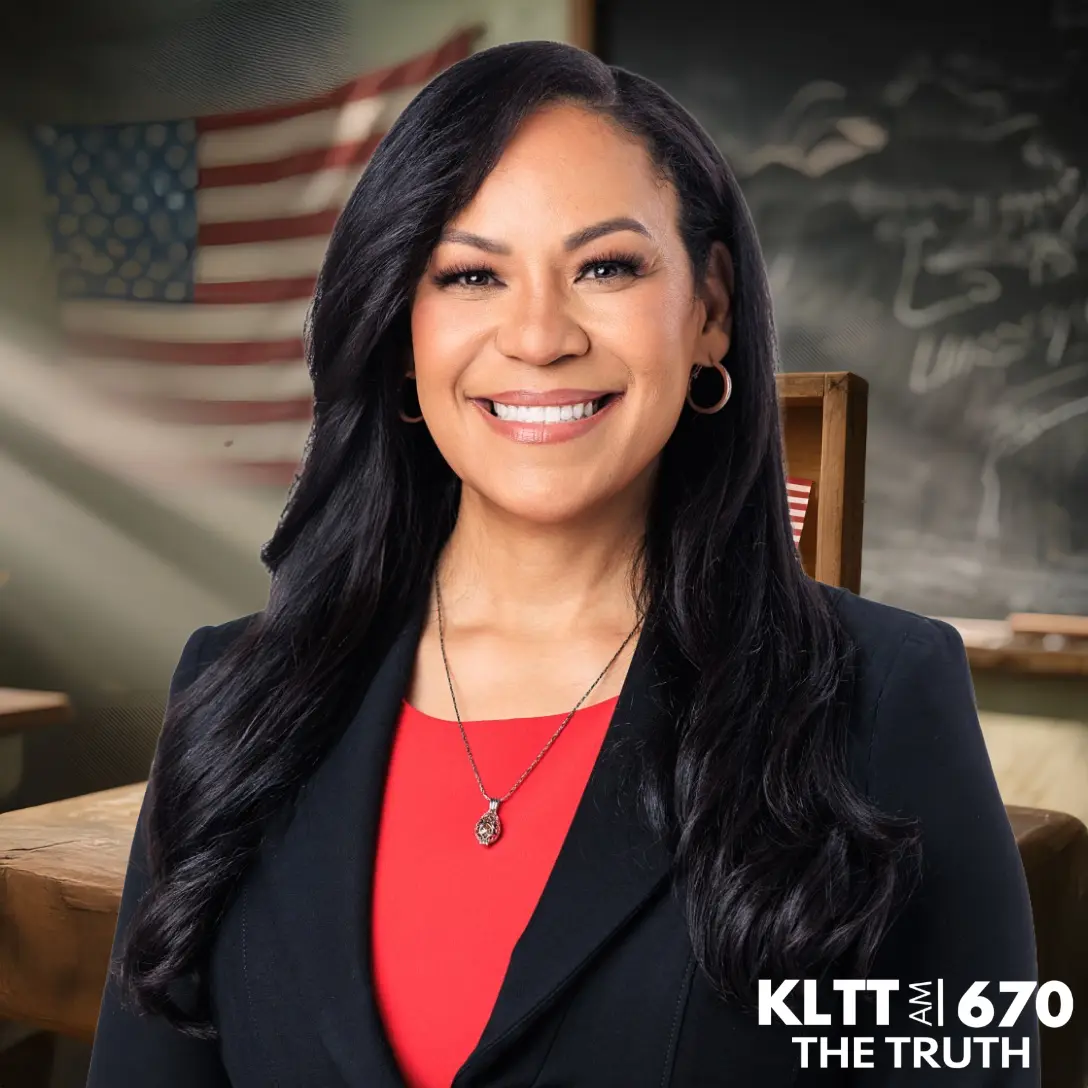

Join Priscilla Rahn as she navigates through the potential and promise of a new educational institution, Excalibur Classical Academy, offering full scholarships to families. Discover how this new school in Centennial, Colorado aims to develop servant leaders grounded in America’s founding principles. Priscilla also shares updates on her volunteer work with the Denver Police Chiefs Community Advisory Board, exploring local initiatives around counterterrorism education and the strategic rollout of new license plate cameras in Denver.
SPEAKER 03 :
Welcome to Restoring Education in America with Priscilla Rahn. She’s a master educator and author leading the conversation to restore the American mind through wisdom, virtue, and truth.
SPEAKER 01 :
well hello everybody welcome to restoring education in america i’m your host priscilla rahn and i’m so excited that you’ve decided to join the conversation today we are winding down the school year but parents are actually already starting to look for a school for their children for the fall especially if they’re going to be entering kindergarten and i have great news for you there’s a new private classical school called Excalibur Classical Academy, and they are opening in Centennial, Colorado, and their mission and vision is restoring America’s heritage by developing servant leaders who are keepers and defenders of the principles of freedom for which our founding fathers pledged their lives, fortunes, and sacred honor. And something that’s really exciting about this new school is that they are offering 100% tuition scholarships for all families this fall. So please go to their website, ExcaliburClassicalAcademy.org, to learn more. And they’ll be happy to share a little bit more about their curriculum with you and a lot more about their 10 core values. I know you will love it as a parent because… I’m just going to say I’m going to be the headmaster and I really want to partner with parents and support you in the journey as the first educators of your children. OK, so this episode, I want to talk about some community updates. And so let me start really briefly about the Denver Police Chiefs Community Advisory Board, which I volunteer on. Just a quick update. We had our meeting yesterday. Last week, and we started off with a tour of the counterterrorism education lab in Denver, which is really fascinating. I really would encourage you to take your children there if they’re in middle school or high school to learn about how to look for signs of terrorist behavior because it starts with hate speech. And hate speech can include anything from religious hate speech, political hate speech, behaviors that are very violent. And so if you can look for those things, then you can start to thwart potential behavior. Fortunately, our government has gotten a lot better at identifying counterterrorism cells. and potential behavior by looking on social media. And they’ve had a lot of success in thwarting some really bad behavior. So Counterterrorism Education Learning Lab in Denver. The second quick update I want to give you is around the flock cameras. The contract with Flock actually ended April 31st. There are currently no Flock cameras in Denver. They’ve all been taken down. All of the Flock data has been destroyed, and the Denver Police Department did receive a certificate from Flock stating and verifying that all of the data is gone. So the new company that is the license plate readers in Denver is Axon. That was just approved seven to six by the Denver City Council. It only costs $150,000. This is well under the $500,000 threshold that you normally would see when taking a proposal to the Denver City Council. So it’s not necessary for the Denver City Council to give their approval, but Mayor Johnson did request that this conversation take place and that the Denver City Council approve this. So the good news about Axon, the data is not shared with anybody, especially the federal government. If the federal government or any other agency wants to access Axon, license plate data, they have to file a request with the Denver Police Department. There are only 50 cameras that have been purchased, which is less than half of what they had with Flock. And so they’re having to be really strategic about where they’re placing these new Axon cameras. No district in Denver is going to have an excessive number of cameras. So every district is going to have pretty much an equal number around three cameras. And going into the 2027 budget, it’s likely that the Denver Police Department will see another flat budget. So they are concerned because, you know, there’s no such thing as a flat budget. So you’re going to have to end up cutting somewhere. And so they’re looking at that. There is some legislation that the Denver police chief is looking at when it comes to the reduction of max sentences for low level charges. So in the next time that I give you guys an update, I will bring some of those bills to you because the legislative session will be over. And so we’ll know a little bit more. And the last thing I want to tell you before I go to my next community update is the Denver Police Foundation is honoring our Heroes Annual Gala Wednesday, April 15th at the Hilton Denver City Center. Tickets are $250, but that includes cocktails, dinner, silent and live auction and live music. And you will be donating to something very, very important, supporting our Denver Police Department families and all that wonderful stuff. So, yeah. Okay, guys, so this past weekend was the Colorado GOP State Assembly, and I was the teller chair, but I’m going to bring my two friends who are very involved and who were delegates to the State Assembly to the stage, and we’re going to give a very quick update. Welcome, Honorable Stephanie Hancock, and welcome, Mr. Honorable… Hi, Hancock.
SPEAKER 1 :
Hello.
SPEAKER 01 :
Hi, guys.
SPEAKER 04 :
Hello.
SPEAKER 01 :
Hello. I see you guys are in your respective spaces to be on this conversation today. Okay, so… For those people who don’t know Stephanie, she is an Aurora City Councilwoman, and Mike is her awesome husband, and they’re a power couple, and they went to Pueblo this past Saturday to be delegates for the annual state assembly. And for those of you who not really politically involved, it’s where over 2000 Republicans vote for who is going to be on the primary ballot. So when you get your primary ballot in June, if you’re a Republican, Everybody on the ballot is Republican. So you don’t have to guess who’s a Republican, who’s unaffiliated, who’s Democrat, who’s Tea Party, who’s anything. They’re all Republican. OK, so that is the foundation. So let’s talk about from the beginning. OK, credentialing started at 7 a.m. Everything was supposed to start at 9 a.m. What was that process like for you?
SPEAKER 04 :
Stephanie, you go ahead.
SPEAKER 02 :
Well, we, you know, drove down to Pueblo. We got there at seven, stood in line for about an hour or so. And it was 40 degrees. So it was pretty chilly. And credentialing, the line wasn’t moving at all. So they had some sort of a technical difficulty, couldn’t print the tags. And, you know, in years past, you got your tag in the mail and you were supposed to, it was your responsibility to make sure you brought it. And you got tagged in when you went to assembly. This year, they’ve gone to paper everything. And so they were doing those on site, which took three and a half hours. We actually didn’t all get credentialed until after 12 o’clock, which was a huge problem. And the thing about it is, although this took forever, people were surprisingly calm. No fistfights broke out. There wasn’t any screaming or anything like that. But people were just worn out before we even got started.
SPEAKER 04 :
Yeah, and I guess the thing that I would say is that while it was a long process and people were a bit frustrated about it, it also gave us time enough to stand in line to get to know people and people with some really fantastic stories. And you felt that you gained some new friends while going through that process.
SPEAKER 01 :
Well, see, OK, you guys are seeing the glass half full and I’m so proud of you for, you know, making lemonade out of lemons. I noticed. OK, so I was the teller chair. I didn’t have any part in the beginning parts of the credentialing. My part was to count the votes. So in the meantime, while we were waiting for the credentialing report. i decided to go outside and meet people in the line so i went all the way down both lines there were two lines coming in from two different directions so i started on one side and i started talking to every single person and those lines were long and i introduced myself and i said i’m the teller chair and here’s what you can expect when it comes time to vote And you can use black, blue ink or a pencil. Please don’t fold your ballot. You know, all of that stuff so that people who may not have read an email that outlined the process, I was able to connect with people and reiterate, make sure that they all understood what the process was going to be like. And so like you guys, I met some amazing people and they were so patient and Some of them were frustrated. I get it. I was a little bit of a punching bag. And that’s okay because I was the face. And I think when you volunteer, I’m not an elected person in the state party. I used to be. I used to be the vice chair. But when you have some sort of position, people feel a lot better when they can just exhale and share their frustration with somebody, even though they know there was one guy who kept stopping me and kind of yelling at me. And I was like, that’s OK. You can you can, you know, tell me what you’re frustrated about. And he goes, I know you’re not to blame, but you’re the one that’s standing in front of me. And so you’re going to get it. And I’m like, that’s OK. I wish I could do something for you. Is there anything I can do for you? And he’s like, no.
SPEAKER 02 :
But yeah, I think some of the time that people just. You know, we really got a chance to have some conversations with people and hear their stories and find out where they came from. I mean, folks were coming from the Western Slope, from northern Colorado, from all over the place. And some this was their first time attending a state assembly. And for them, It kind of left them wanting because they expected it to roll a lot differently. And frankly, I did too, because we’ve been doing this process for so long. But because of the huge changes that happened going back to paper, it really made this the contrast between having electronic registration and entry as opposed to paper. definitely made an impact on how the day went.
SPEAKER 01 :
So Michael, let’s play Monday morning quarterback. Okay. If you could make a recommendation on how to improve the process next time, what are some of your thoughts about how the party can make it a smoother and faster process?
SPEAKER 04 :
Well, I think the biggest thing from my perspective is to do a lot more work to make sure that those credentials arrive in people’s mail somehow ahead of time. It seemed like the day of and attempting to do something like that the day of was not good at all. And the other thing is that you always want to stay on time, on schedule. So the idea that you advertise that things are going to be starting at 9 o’clock, and you don’t end up starting until 12, you can’t really have that. And so what I would say is that you need to get people engaged that have done this sort of thing before. It seems to me that a lot of the institutional knowledge has been lost because of the turnover. And part of that has been because Sometimes we have factions that like, you know, they want to seize power and they do in the party and they just discard the prior people that were there versus finding ways of working together to make the experience really great. Because of the fact that Stephanie mentioned, I met at least two or three people who This was their first time and they had high expectations for what was going to happen. And I think we let those people down and we’re going to need to follow up to make sure that, you know, we keep those people engaged.
SPEAKER 01 :
You know, you’re bringing up a really great point about volunteers, that there is a need to. recruit and retain volunteers who have high executive functioning, especially at the top levels, because the chairs are responsible for the caucuses, right? So you have that, that’s the first step. And then they have their county assemblies and their congressional district assemblies and their house district assemblies and all these assemblies. And then they have to elect delegates to the state assembly and then do a quick, quick turnaround to get that list to the state party. So that’s all 64 counties. and all of these districts that have to do this. So I think you’re right. Having a very fast, streamlined, reliable process of getting that information to the state party so that the state party can then turn around and print name tags and send those out, at least to the county chairs so that they can distribute it and the house district chairs and all that. Well, actually the counties because… It’s more organized because you don’t know who’s going to be an alternate, who needs to be elevated. There’s that whole process. And that also took a little bit of time based on who showed up at the state assembly. So there’s a lot of moving parts. So great recommendations. Let’s talk about once you got inside. and once things started rolling well you guys went inside a little bit later because you were so helpful at the pop-up bookstore because michael you’re an author and you were so helpful i kind of recruited you literally at the last minute can you stand at the pop-up bookstore where we were selling books from uh different conservative authors and then i came and relieved you and then you were able to go inside stephanie what was something cool that happened when you went inside and you were waiting right
SPEAKER 02 :
Yes, we were waiting. We went inside. I heard the speaker, one of the speakers, which who is he?
SPEAKER 04 :
Got Pressler.
SPEAKER 02 :
Yes, Pressler. Oh, man, he was dynamic talking about really how and why the GOP should coalesce, band together, and work together to win elections. From my perspective, it has always been my thought about the GOP. Their job at the state level is to help win races. Bottom line, nothing else. Win races. Get GOP representation at all levels of government, from the top of the ticket all the way down to where it really, really matters. which is local government, you know, city councils, commissionerships, all of those things. We need to work hard at every single level. And he talked about that at great length, which was really inspiring. And the crowd was with him the whole time.
SPEAKER 01 :
Yeah, Scott Pressler, I follow him on X and he has been a go-getter with registering people to vote and getting out the vote. And I think that’s something critical because if you don’t engage with your neighbors, a lot of times they’re so busy, they don’t know who’s running. They don’t know who their current legislators are. They’re just so busy with their families and their jobs. that it takes this face-to-face knocking on their door and saying, hey, have you registered to vote? Do you know what the issues are in our state? And he’s just been a great example. And I agree, he brought a lot of energy to the assembly. So for, again, our listeners who don’t know the purpose of the assembly is for governor, U.S. Senate, treasurer, secretary of state, and attorney general attorney general thank you i was like which one did i say that we were voting on who was going to get their name on the primary ballot and at assembly well there’s three ways you can get your name on a ballot number one go to assembly and get at least 30 percent of the delegate vote or you can petition on Or you can do a hybrid petition and assembly. And if you do petition and assembly, you only need to get 10% at assembly. So let’s talk about the governor’s outcome. There were like 900 people running for governor. I’m being silly. The two that came out with enough percentage of votes were Scott Bottoms. He received 963 votes, which is almost 45%. And then Victor Marks received 833%, which was almost 39%. And then Jason Meisel, who’s a county sheriff, received 254%. He did not make the ballot, but he came in third. So the three candidates who are going to be on the Colorado primary ballot are Republican Scott Bottoms, Republican Victor Marks, and Republican Barb Kirkmeyer. So in order, because Scott got the most votes at assembly, he’s going to be top line. So his name is the one you’re going to see first. Then you’ll see Victor Marks and then you’ll see Barb Kirkmeyer. So knowing a little bit of what you know about these three candidates, were you surprised at the outcome? And do you have a prediction or an assessment of these three different candidates and how they will appeal to the state of Colorado?
SPEAKER 04 :
From my perspective, it happened just as I thought it would. It was real clear to me for quite some time that Scott Bottoms and Marks were the guys that were going to have the majority of the people there. And of course, Kirk Meyer isn’t taking the process through the assembly. She’s running the other route. And so it’s going to be interesting to see how that all turns out.
SPEAKER 02 :
Who survives the primary that’s coming up? They are distinct individuals. They have distinct strengths. While Kirkmeyer is a politician that has a lot of legislative experience, I mean, she’s been a solid performer in terms of the House and the Senate, and she’s a longtime political animal. I mean, she’s been on there a long time. But People look at personality and flash and sparkle. And with that said, Victor Marx has been a huge meteor on the landscape lately because of his story that has been crafted, who he is. He’s the… You know, the guy that’s riding in on the white horse and he’s going to coalesce everybody and we’re going to have a kumbaya moment. And he’s going to be that guy that’s going to wrangle everybody together. And then you got Scott, but, you know, you got Bottoms. He’s there and he’s talking. He’s also a political animal as well. And he brings his own unique flavor. If people love him or they don’t, I think people have had some really definite feelings about how they feel about Scott Bottoms. They either like him or they dislike him a lot. So it’s going to be really interesting to see, you know, with the banter that has been going on, not only in social media, but on the radio, you know, through the public medium, how this is going to turn out. It’s going to be an interesting time. I can’t prognosticate about who’s going to be there. I have my own thoughts about who I think will probably land on top. But the thing that concerns me the most about this gubernatorial race is that they’re going to go into the buzzsaw of the Democrat machine. So whoever that person has ends up being, they better be prepared for what’s coming.
SPEAKER 01 :
You know, you’re making a great point because we operate in a little bit of a silo. We have a lot of conservative friends and we hear what each other has to say. But when you look at the numbers in Colorado, obviously it’s unaffiliated, then Democrat, then Republican. A lot of people have left both parties because they don’t like what they’re seeing in each of the parties. Although Obviously, just because you’re unaffiliated, clearly you’ll lean one way or the other. You know, there’s there’s there are social issues and policy issues that attract you the most. Living in Colorado, knowing that we have some pockets of deep conservatism and then we have some pockets of deep liberalism. Who of the three do you think can take on challenger, either Michael Bennett or Phil Weiser? Who do you think can appeal to the most voters in Colorado, knowing that it’s still going to be an uphill battle? But who do you think has the best chance of appealing with their message?
SPEAKER 02 :
Wow, that is a really tough one. Because when you look at policy issues and what this state is facing with a $1.3 billion deficit, with crime just running rampant, with the social issues, immigration issues, all of those things that we’re facing in this state, when you look at it from a policy perspective, I think Barb Kirkmeyer is the most prepared to give a cogent argument about it. But again, a lot of people, because they They like Flash and they like the sparkly, shiny objects. They may point to Marx because he’s out of left field. They know his story that has been crafted about him. And so they’re like, wow, he could be the guy that rides in and upsets the apple cart. And then with Bottoms, he’s another one that’s been on the political landscape for a long time. I think no matter which one is chosen, they’re all they’re all three going to have a hard road to hoe. I just I want to sound optimistic, but frankly, up against this Democrat machine, it’s going to be a difficult challenge.
SPEAKER 01 :
So, Michael, I see you shaking your head. So what’s your analysis? What do you think it’s going to take? Do you think we have a chance as Republicans to get a Republican governor?
SPEAKER 04 :
We have a chance if there’s a candidate that can focus on attracting those unaffiliated conservatives right? And those people that might consider themselves to be somewhat reasonable and rational, um, unaffiliated that were were Democrats as well. Um, and right now. I don’t see people speaking in those broader terms and staying focused on what I would call those issues that are the 80-20 issues. There are a lot of issues that are being brought up and none of which I’m going to mention right now that are just like… most people don’t care about, except for those small groups that are really stuck on certain issues. And so they’ve got to find a way to reach out to the broader audience. And like I said, at this point, I can’t really see anyone that’s doing that. And given that fact, it doesn’t look good at the moment.
SPEAKER 01 :
Well, let’s quickly go into the topic of election integrity because this was one of the first times that, well, this was the first time that the GOP used a machine. The machine was not connected to the internet, was not connected to Bluetooth. We had paper ballots, just like a regular ballot where you had to bubble in and it scanned the image of the ballot and then did a quick tally of all the ballots in your opinion. And just because you’re my friend, you don’t need to, you know, say what you think I want to hear. But I’d like to know from your opinion, do you feel like the process was clear that there was integrity and that everything was truthful in your opinion with the process?
SPEAKER 04 :
I thought the process was really good, albeit a bit slow. When I heard that there was a machine in the time that expired in terms of a result coming out, I thought that was a little bit long. But in terms of the integrity of the process, I thought it was really excellent. uh you did everything that i thought you should have to to make sure that people understood that there were no ballots uh pre-loaded in the ballot boxes that sort of thing um and just the people that manned those boxes and the process they had of checking people off uh and ensuring that only credential people actually um submitted their ballots i thought it was excellent actually
SPEAKER 02 :
I would concur. I think the same thing. I thought it was an excellent process. But what I found just really hysterical was the fact that you explained it to people like they were in the second grade and yet someone still submitted the wrong ballot. I was like, what is happening on the planet that, you know, despite the clear, clear directions that people still messed it up. But other than that, I felt like. It was a very, the process was full of integrity. You did an outstanding job, you and the team, of making sure that it was clear, that it was fair, and that it was accurate.
SPEAKER 01 :
Well, I think that is all you can ask for is that people trust the results and that they felt like that the process was clear and above board. And so really quickly, the other results for Treasurer Kevin Grantham, for Secretary of State James Wiley. For Attorney General, there are two candidates, Michael Allen and David Wilson. And for U.S. Senate, Mark Baisley. And so those were the results. And hey, guys, I’m sorry to say we’re out of time. We have to land our plane. But thanks for the analysis of the State Assembly and for your time. And to my listeners, thanks so much for tuning in. Catch me next time. And remember, educating the mind without the heart is no education. So seek wisdom, cultivate virtue, and speak truth.
SPEAKER 03 :
Thanks for tuning in to Restoring Education in America with Priscilla Rahn. Visit PriscillaRahn.com to connect or learn how you can sponsor future episodes to keep this message of faith, freedom, and education on the air.