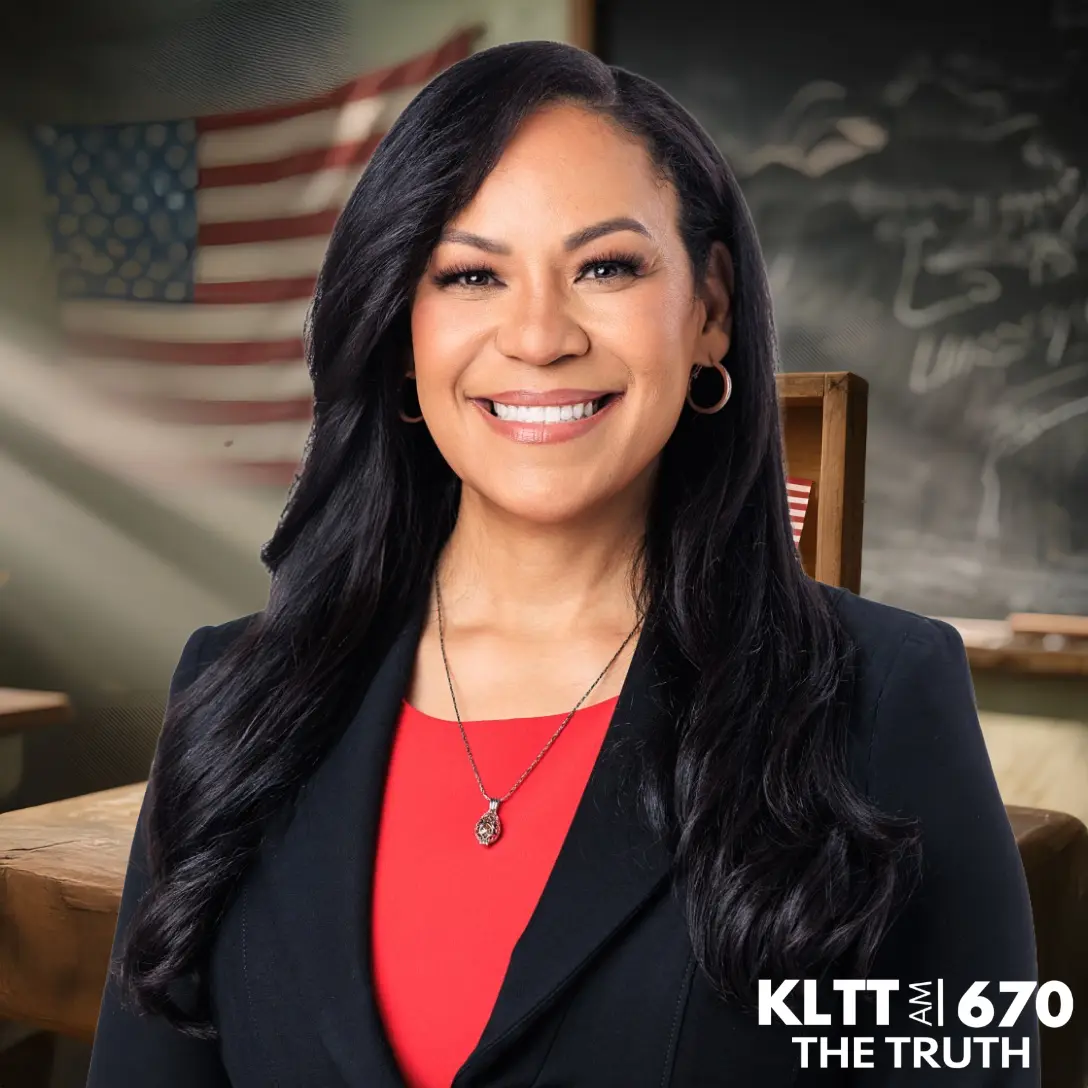
Join Priscilla Rahn as she discusses the journey of revitalizing education in America, focusing on Excalibur Classical Academy’s mission to restore American heritage. Tanya Van Beber, an esteemed educator and former state representative, enlightens us on the importance of choice and stakeholder involvement in the academic world. Explore the significance of integrating virtue, wisdom, and truth in learning environments across the nation.
SPEAKER 01 :
Welcome to Restoring Education in America with Priscilla Rahn. She’s a master educator and author leading the conversation to restore the American mind through wisdom, virtue, and truth.
SPEAKER 02 :
Well, hello, everybody. Welcome to Restoring Education in America. I’m your host, Priscilla Rahn, and I’m so excited that you’ve decided to join the conversation today. 2026, it’s a big year. America’s 250th birthday. You know, I can’t stop talking about it because it’s such a momentous year for us. And this fall, a new private classical school is opening. It’s called Excalibur Classical Academy, and their mission and vision is restoring America’s heritage by developing servant leaders who are keepers and defenders of the principles of freedom for which our founding fathers pledged their lives, fortunes, and sacred honor. And they’re opening their school in Centennial, Colorado, which is a suburb of Denver. And they’re opening right around the corner from Maggiano’s Little Italy, if you know where that is. So if you have a young child who’s starting kindergarten through third grade this fall, please go to their website, ExcaliburClassicalAcademy.org. And of course, they’re hiring for some great teachers who are going to love your children and they are going to support parents and their right to choose. And talking about school choice and having options for parents is my special guest that I am going to bring to the stage. Welcome the Honorable Tanya Van Beber. Nice. Thank you.
SPEAKER 03 :
Yes, it’s a pleasure to be here. I have the utmost respect for you and what you’re doing. And so it’s just a pleasure to be able to visit with you today.
SPEAKER 02 :
Well, I know you are a mover and shaker and doing so many amazing things. But before we get into the conversation, I’m going to share a little bit of your bio with our listeners. Tanya VanBeber is the executive director of Wave of Hope Homeschool Enrichment, a third generation Colorado native and former state house representative for District 48. Tanya has dedicated her career to advancing educational excellence, family rights and community development. With over 17 years of classroom experience as an educator at university schools, charter school, and Greeley Evans District 6 administration, Tanya taught reading intervention, world and American history, leadership, seven habits for highly effective teens, and was a curriculum developer, professional development presenter, and instructional coach. She holds a master’s degree in educational leadership with a principal’s licensure from Regis University and a bachelor’s degree in social sciences psychology from the University of Northern Colorado. As a mother, former foster parent, and advocate, Tanya has championed school choice, foster care, and adoption reform constitutional rights, and parental rights throughout her career. A graduate of Leadership Program of the Rockies, she remains actively engaged in her rural Weld County community, where she has lived her entire life. And I got a sliver of your schedule today, and I am so grateful. So fellow LPR grad, Tanya, what year did you graduate?
SPEAKER 03 :
I should know this. Yeah, but like the back of my hand. I want to say it was… So I want to say 2018.
SPEAKER 02 :
Okay, so before COVID. Okay, so I don’t know how much has changed since I graduated in 2023, but the principles are the same, right? Yes, that’s right. So are you doing anything exciting for 2026 for America’s 250th?
SPEAKER 03 :
Well, you know, we’re not. I’m not. But I was so blessed and honored to be able to go to the inauguration. And so over the course of my lifetime, I’ve taken well over a thousand people to Washington, D.C. as an educator. And so I was in schools for quite some time, worked with kids and families for over 30 years, but at the charter school for 17 and then in the district for another five. And so just in this for the last couple of years. But yeah, I would love to be out there at this, you know, this year for that. That would be really a dream come true. I, my heart as a historian, absolutely adores and loves the Williamsburg area and just all of that, because, you know, those are where the greatest thoughts of one of the greatest nations, the greatest nation on the planet emerged from, you know, from the mind of John Adams to, to the mind of Thomas Jefferson and so forth, the greatest people that had this beautiful vision for pure equality, pure freedom, and the steps to get us there. So the short answer is no, but the long answer is, man, if I can get back there, I absolutely will.
SPEAKER 02 :
So you’ve been a classroom teacher and you’ve worked in administrative roles and you’ve been a lawmaker and now you’re a homeschool enrichment leader. What did each of these roles teach you that the others couldn’t?
SPEAKER 03 :
You know, when it comes to – I guess let’s just start at the beginning. Let’s go all the way back to the beginning. For me, getting my teaching degree was all about I’m passionate about learning. There’s no – that’s the start, that’s the beginning, and that’s the middle, and that’s the end. And at the end of the day, for me, this is all about ensuring that – whoever I come into contact with, I don’t care what their age is. Um, it can be five, it could be 105. For me, this is about helping other people reach their full potential and lifelong learning. We can always learn from others and we always, to me, I feel like we should always be in a state of self-reflection, self, uh, growth, self-correction, um, and course correction to be able to take us wherever our dreams, you know, allow us to go and, um, I just want somebody’s life to be better off after having been a part of my life. And so for me, that was where teaching began. Leap forward to being in education for quite some time. I think for me, it was what can I impart about teaching? how this country came to be and how did the great, amazing qualities that we possess as humans allow for that kind of thing to happen. And of course, the beautiful part of being in America and talking about our roots and our foundings is we were the light of the world for everybody else. It wasn’t like other countries had a constitutional republic with democratic principles, but none of them brought all of those things together to allow for this country’s ideal to be put onto paper to say that we are equal and we should be able to pursue life, liberty, and the pursuit of happiness. And so for me as a teacher, it was imparting not only those kinds of ideals, that kind of history, but then now let me help you reach your highest potential as an educator and so that when you leave this classroom, you know when you walk out of my room, everything we did is real life. Everything I imparted to my students should apply to the real world. And if I’m not pulling in those real world things and how to apply them, how to take action on them, how to be a part of this thing we call the social contract here in the United States of America, then I wasn’t doing my job. Then as I fast forwarded to an administrative licensure, Once you hit a certain level where you’re running those groups and you’re running those clubs and you’re running those things and all the different things and the layers that are required either by law or that just make your system a great system for kids because you want to be child-centered and family-oriented. We want to be lockstep with parents in that discussion. they are entrusting their children to us. And so we as teachers ought to be their greatest champion, their greatest ally, their greatest cheerleader in that family to help their children, especially if they’re going to give us the blessing of being able to help support their children all day long. And then from there, I fell in love with instructional coaching. We are the one career where You know, every other career, you’re constantly working in collaboration with your peers on a professional level and teaching. It becomes very much a good luck. The door shut. See, let us know if you have any issues. And that should not be how professionals are treated. And so instructional coaching was a wonderful way for me to go in and say, not only have I had my boots on the ground right there beside you. But at the end of the day, I’ve got a few tricks and we’ll see if they work. I’ve got some tips. But the teacher should drive that discussion. The kids and the family should drive that discussion. I’m just coming in as a third party saying, I’ve got one more set of eyes, a couple more brain cells to add to the discussion so that what we do for kids really helps them the most. And so when the opportunity arose for something like this, where we have that homeschool hybrid philosophy of Parents, you’re in charge, right? You’re the sovereign entity over and with your children. And we, again, are in that spot of blessing and luxury that if you want us to support you in that process, we’re happy to do that.
SPEAKER 02 :
So Tanya, you’re working in a homeschool enrichment program. For people who don’t really understand what that is, we know that it’s state tax dollars going towards homeschool enrichment. But can you talk a little bit more for those parents who may not know what that is and how they can access that as an option for their children?
SPEAKER 03 :
Absolutely. So one day a week, which is we’ve chosen Fridays this year and it can change every year. But we we decided to move to Fridays because there’s several kinds of enrichment programs all over the place. And they they they change based on what their mission or their vision is. Ours is very much about. We just want to help those kiddos reach their highest potential and be the most productive kind of human they can be and they want to be, wherever life takes them. And I’m very community driven, you know, between my background and starting out with the community newspaper way back when, when it really was just news. And being the heart of the community all the way to today, I’m all about community. How do we help create a synergy, right? So I see us as that synergy with all these different careers, all these different things that kids could be exposed to from people presenting about different things, their different careers, their different passions, their different interests in industry or any of the pillars of society. all the way to kiddos are homeschooled. You know, they do want to get out and about. They do want to have friends. They do want to see their peers. And so we’re lucky enough to be able to a part of having them come together in a place where we can support, you know, all of the character driven kinds of things that the parents naturally want. Right. Good manners, good decision making, ethics, high morals, all those things, honesty. Please and thank you, you know, all the way.
SPEAKER 02 :
Definitely all of the soft skills that we’re not really teaching anymore.
SPEAKER 03 :
That’s right. And being able to get along with your peers, which is, again, another great soft skill. How do we help make sure that in relationship with your peers, you say what you need to say, you learn how to, you know, move on from conflict, how to navigate conflict, all those things. You know, that’s what kiddos are learning every day. So that’s the heart of our enrichment. And if you go to our websites, which is www.waveofhopehse, which stands for homeschoolenrichment.org, or if you go to the private side of things, so that’s the public dollars, the private dollars families would pay to be a part of our classes, that’s www.waveofhopelearningcenters.org. And then they can see that there’s all kinds of electives. And because we’re on year two, We’re blowing it up. We’ve got all these kinds of new things that we’re starting. You know, when I wave the magic wand, I hope within five years, we’ve got band, quieter, choir, theater. We’re starting the garden, gardening and the greenhouse work right now as we speak. In addition to all of the other things like the arts and sensory for the smaller kiddos and literacy and tapping into community presenters and going to see community things and in action, right? That’s how we transfer that learning to real world knowledge.
SPEAKER 02 :
Well, Tanya, you’re bringing up so many wonderful points about, you know, teaching students those transferable skills, applying the lesson to real life situations. What do you think in all of your years in education, where have schools struggled in your opinion?
SPEAKER 03 :
Well, I think over time, you know, when I first started over 20 years ago, there was very much the heart of a collaborative process. Now, granted, I was in a charter school whose very heart of that charter school was guided advisory, which means you have 19 little cherubs that come to you. And every day you see them every single day. And you’re taking care of the whole domain, the whole child. And, you know, back in the 60s and 70s, when you look at metadata, And you look at all the studies that were ever done about all the different contents, every grade level. The one thing that came out of that time period was the heart of the child’s, the driver, they’re the stakeholder. And so that was the model that I was able to teach in for 17 years. And I loved every second of it because a kiddo could start from this place and we met them where they were. And then with the collaboration of the child and the parent, We were able to make a plan and the kiddo could be a deep, deep part of that plan and move it forward. And we were there to support parents. We were there to support children. And we were all learning from each other and how to make that happen. And it was a beautiful thing. Somewhere along the way, we started saying, Parents, we got this. You don’t need to come in. Don’t step in. Kids, we got this. You don’t need to step in. You don’t need to push in. And that’s a space where, yes, the teacher’s the authority, right? We’re there to make sure everybody’s safe as that authority figure in both behavior, emotional, social, intellectual, physical. We are responsible for the whole child. And somewhere it was fragmented. Somewhere it became fragmented. somewhere it became a situation where we’re not working as a team. But when you look at the highest performing public schools in the nation, they still have that whole child model. They still believe in that cooperation. They still believe in that collaboration. And when you can bring all of that to the table, those kiddos are going to go far. It doesn’t matter their demographic. It doesn’t matter their socioeconomic level. It doesn’t matter any of the finite criteria you could label someone with, none of that matters when it is truly a collaborative process.
SPEAKER 02 :
If you’re just tuning in, my guest today is the Honorable Tanya Van Beber. She is now the Executive Director of Wave of Hope. So, Tanya, you spent many years in the state legislature where you were making laws. What do you think, as an educator, is the disconnect between what you know as an expert educator and the lawmakers making laws around education?
SPEAKER 03 :
You know, this is such a complex topic. But if I had to think about, you know, the buckets of information and how we might want to dissect all of that, I would say when we stopped encouraging the collaboration, when we kind of started departing from that, as I just referenced, and they weren’t part of that conversation, when parents stopped being a part of that conversation, and it now becomes this huge legislative issue. monster that’s made into sausage and nobody loves to see how the sausage is made. And yet that’s the most beautiful thing about a constitutional republic with democratic principles. Everybody gets a voice. It’s we the people. And so for me, it’s about not having enough stakeholdering. You should be increasing the stakeholdering, not decreasing how many people have a voice in that conversation. That’s the first thing. The second thing would be when you don’t listen to all of the stakeholders, you now start driving things that people go, no, that doesn’t work for us. Or that’s not your job, right? That’s not your place to do that with my child or to say on my behalf as a parent. That’s your role, right? There’s some places and spaces that really are clear boundaries. And unfortunately, I feel like some of those things took on legislative space and probably did not, should not, and cannot be something that we dive into and say, we are the know-all, be-all, and it becomes law. Local government is the most important government. And I think that saying should transfer into education. Why? Because all education is local, right? I don’t send my child to Virginia to go to school. They went to Greeley. They went to my backyard where I’m the parent, I’m the community member, I’m the taxpayer. So when you start cutting out those voices, cutting out those stakeholders, the train is going to jump the tracks and go down a road that it wasn’t meant for. And I do believe those are two major buckets. And then take it a step farther. When you start having people make legislative decisions that really start going into what should be taught and exactly how it should be taught, again, you’re starting to tread on the territory of local control. Local control, when it is overreach into that from the state or federal level, is always going to be a disaster and vice versa. When you don’t, when there’s not a clear parameter under the constitution of the United States, under the state constitution, when those things start to overlap in ways that do not serve the child right here, right now, and their families, you are going to have a disconnect. And that’s my perspective. I don’t speak for wave of hope on that. That’s just me as a mom. That’s me as a voter. That’s me as a constituent. That’s me as a taxpayer. And that’s me as a professional educator.
SPEAKER 02 :
Tanya, you use the word stakeholder and I have to chuckle because you and I were in that generation where we did view parents and community members and educators all as part of the stakeholder conversation. But we saw during COVID, parents were called domestic terrorists and they were separated from the education process and they were not made welcome into the schools. Now, you’ve also been a foster parent. Are schools equipped to serve foster and at-risk children, or are we asking them to fit into a system that doesn’t really see them?
SPEAKER 03 :
You know, I would say the schools that I’ve been fortunate enough to be a part of, I was overjoyed to see they were taking every step they needed to to be equipped. And like any system, right, it’s an ever-growing, ever-evolving system. that is always hoping to do better. Our teachers, our parents, our students, our staff, they’re always, I’ve never seen somebody walk in the door and say, here I am, I’m here to fail and I’m here to blow it up so it fails. I don’t see that. That’s not reality. All these places are people. Buildings are not the things that make things happen. It’s the humans that come into those buildings in the relationships that they have using the processes and procedures in place to help kiddos. And so I will say I’ve been very fortunate to see really robust conversations around foster kids. around parents. And I think it’s changing again for the better. There’s no doubt about it. Our foster children being pulled from their home through no fault of their own are the most vulnerable population you will ever see in society.
SPEAKER 02 :
Yeah, I don’t think people realize when foster care children graduate from high school, they are out on their own. A lot of them end up sleeping in their cars during Christmas break, when they’re in college, like they don’t really have a home. And that’s just a forgotten population. We think we’re taking care of them through high school. But then when they graduate from high school, they don’t always have a family to go back to.
SPEAKER 03 :
Well, and that’s just it, which is why I made it a It was a very big deal to me when I went into the legislature that we looked at the systems that weren’t working. You can say that the cliche lived experience is cliche, but it’s not. I was an adoptee. That’s something folks don’t know, right? I was a foster baby and fortunate enough to be adopted into a family that made sure I had everything I needed and then even better, went into a school system that made sure everything I needed was there. Thank God for Eaton Schools. Shout out to them. I got everything I needed to go out and go, yep, I can be a teacher and I can help children. But when I look at District 6, when I look at university schools, they absolutely have people in place. to do that and and i loved seeing that those conversations really take off as i was leaving but when i went into office i will say that’s why i ran the bill that when those kiddos became 18 rep doherty doherty and i ran a bill and she’s now senator doherty ran a bill to ensure that when they turned 18 with their cooperation we made sure we didn’t just leave them hanging because i got to tell you when you do that as a school system when you don’t have those things in place that is going to cost the system in every way possible, at every level possible. It’s going to cost the system more medically. It’s going to cost the system more from a mental health standpoint. It’s going to cost the system more from the standpoint of criminality, the judicial system. If we don’t ensure kids have what they need to be a productive citizen in the world they live in, it’s going to cost us more. And so to be able to look back on my life and say, all these things tied into all these different spaces, it served me greatly as a legislator. Because then I was able to speak to my fellow legislators on the side of Democrats and say, my fellow friends across the aisle, have you ever thought about this as a parent? I know you have kids. Think about this unintended consequence if you run it like that in your bill. And I’ve been able to go to Republicans on my side of the aisle and say, listen, my friends, are you really thinking about what it will cost society if we don’t push in for the kids who are most vulnerable in our society? And that’s our foster kids. They’ve been in foster care forever, but they’re waiting on their forever home. That should not be a space that we make as legislators with unintended legislation. or without creating great criteria as legislation that solves the problem.
SPEAKER 02 :
Tanya, you bring up so many great points, and it is better to invest in them in the classroom. That’s why it’s so important that in our schools we are teaching those soft skills and having them prepared for the world without the need of the government helping them later on. Where does this passion come from, Tanya? Take me back. Why did you become an educator, and why are you so passionate about this topic?
SPEAKER 03 :
Well, I mean, you think about it. The first time you hear someone say, you know, you have some great skills. I mean, I had these phenomenal teachers and these phenomenal parents who said, kiddo, you got some potential. And I go, yeah, I love doing these kinds of things. I love these hobbies. I love these things that interest me as a kid. And then to find out, did you know you were born at 22 weeks? What? Let us tell you about that. That’s where it starts. And then I find out because I didn’t, I didn’t have any idea. I looked like my, my family that adopted me. I was adopted at nine months, and my adoption was final on Valentine’s Day, right before I turned one years old. And so I was so blessed to be able to be adopted very, very young as a baby. My parents wanted to keep me, and I’ve reunited with my entire family. So I’ve had the best of both worlds. I’ve gotten to meet all the bio folks and go, huh. those are my people. And that explains why I do that. Or that explains why I have those little idiosyncrasies. But I also just, you know, had never any idea that I wasn’t in this family that adopted me. And so to find out that you fit just simpatico with both spaces really gave me a unique, I think, viewpoint. Fast forward and find out not only was I this preemie, But then to find out, because I got what I needed from my family that adopted me, I got what I needed from an amazing public school system. I was so happy to find out that, okay, this is why I’m achieving the way I am. It’s these great teachers. It’s this great family beneath me. Then look at that and go, okay, not only that, but man, did I have great teachers. And they’re the ones that cause, in addition to my own parents, me to fall in love with the learning. I had a whole system beneath me. Parents helped me fall in love with learning. My school helped me fall in love with learning. And then I got to college and went, well, you know, I love singing. I love playing my instruments and doing my art. And then someone said, man, with what you do and how passionate you are about learning, have you ever thought about teaching? And I thought, Ooh, that’s awesome. And then I thought, and I love people. I love learning from the relationships I’m in and I love hearing what someone else’s story and it makes me a historian. And boy, I think that was it. When I found out that those doors could open and I could play in all the arenas, science, medicine, anatomy, biology, math, physics, art, band, choir, all of it. I thought, yeah, that’s gonna be where I go.
SPEAKER 02 :
And so that’s what I did. Tanya, that is so beautiful. Take a quick second and brag on your son really quickly.
SPEAKER 03 :
Well, my son is named Scott Van Beber. He has a website and it’s called www.vanbebervocals.com. He currently sings the anthem for the Eagles. He’s an operatic trained tenor and did vocal training with the Loveland Opera Theater, the great Dr. Juliana Hoch. He’s been all over Europe a couple of times, into Spain, pushed into Spain. been at wesley chapel the parthenon st mark’s in venice the cathedrals of paris um zermatt in switzerland where the olympics has been held he has been in Places that just dreams come true. And so he’s been all over the world and offered a lot of great, amazing opportunities to train with world famous opera singers. We’re actually leaving tomorrow morning to go watch him for a few minutes in the studio, finish up his first album. He’s going to launch his solo first album. Boy, does he have a gift from God. And we’re just excited to hear him share that with the world.
SPEAKER 02 :
Well, Tanya Van Beber, thank you so much for your time. And to my listeners, thank you for tuning in and catch me next time. And remember, educating the mind without the heart is no education. So seek wisdom, cultivate virtue and speak truth.
SPEAKER 01 :
Thanks for tuning in to Restoring Education in America with Priscilla Rahn. Visit PriscillaRahn.com to connect or learn how you can sponsor future episodes to keep this message of faith, freedom, and education on the air.