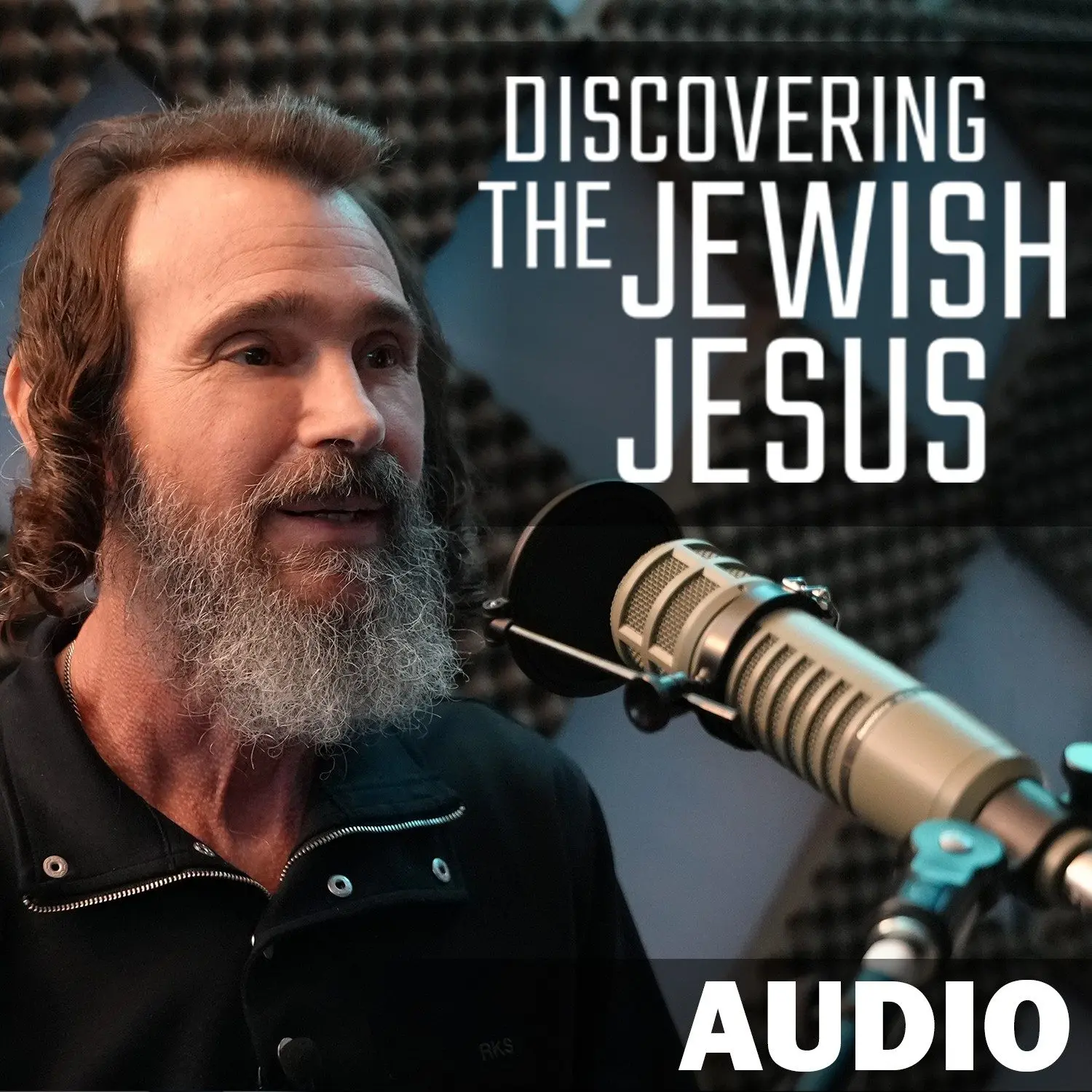


Join Rabbi Schneider and host Dustin Roberts in a compelling exploration of one of the most challenging aspects of faith: the struggle with sin as expressed in Paul’s epistle to the Romans. Delve into an insightful discussion that unravels the profound inner conflict that believers face, the separation from sin achieved through baptism, and the strength found in spiritual empowerment. This episode offers thoughtful interpretations of Romans 7, providing comfort and understanding while affirming the reality of our human flaws and God’s abiding love for us.
SPEAKER 03 :
In our lives, if we’re truly overcomers, if we’re truly going to be champions in God, it’s all about us developing a relationship with God through the Spirit, and we’re focusing on that.
SPEAKER 01 :
Welcome to Discovering the Jewish Jesus with Rabbi Schneider. My name’s Dustin Roberts, and I’m your host. And Rabbi and I are right here in the studio today, continuing the Book of Romans season two, where we’re exploring Paul’s epistle. Now, today I think is going to be a really special episode because we all sin and wonder, why do I keep sinning even though I don’t want to? And I think we’re going to address that in a big way today. Rabbi?
SPEAKER 03 :
This is going to be a powerful episode, and I think it’s going to be very interesting to you that are listening today because we’re going into a portion of Scripture that’s actually been debated for many years. We’re going to be talking about how Paul was dealing with sin, and the debate among scholars is, is he talking about his life before he met Jesus? Or is he talking about his life after he met Jesus? So Dustin and I are going to be sharing with you today what our thoughts are. I think you’ll find it interesting, helpful, and I believe it will also be comforting for many of us today. All right, here we go. We’re Romans chapter 7, verse number 15. Hear the word of God. Paul says, So Paul is feeling this struggle inside. He has a desire to act one way, but he finds himself behaving in a way that’s contrary to his inner desire. He picks up and he says, but if I do the very thing that I do not want to do, I agree with the law, confessing that the law is good. In other words, even though he’s doing something that he doesn’t want to do, because he knows it’s wrong, he’s agreeing with the law. He continues, so now, no longer am I the one doing it,
SPEAKER 01 :
but sin which dwells in me. It sounds like he’s not taking responsibility for his sin, actually, and that seems like a complication and maybe a problem.
SPEAKER 03 :
It really is, but it’s so comforting when we understand that when God looks upon us, he doesn’t define us by the sin that he sees in us. He sees us in Christ. Amen. And we’re going to keep talking about this because it really can help us knowing that God is merciful and compassionate to us as we’re overcoming and struggling. Paul’s speaking, “…so now no longer am I the one doing it, but sin which dwells in me. For I know that nothing good dwells in me that is in my flesh.” For the willing is present in me, but the doing of the good is not. Dustin, thoughts?
SPEAKER 01 :
Well, the willing is in me, but the doing of the good is not. He’s like, I’ve got something willing in me to not sin, but I can’t do it. He’s saying, like, there’s something still in here that’s causing an issue for me.
SPEAKER 03 :
Yeah, it’s like the imprint of God is in him, but he lacks the power to obey. But Paul’s going to give us an answer. Let’s continue on. For the good that I want… I do not do, but I practice the very evil that I do not want. We have spiritual eyes, so we understand what’s going on, but the natural world, they’re looking at this as like, foolish, what is this guy talking about? It’s like he’s separating himself as being two different people living in the same body. And they’re like, just stop doing it. Exactly. Next verse, verse 20. But if I am doing the very thing I do not want, okay, that means he’s sinning now. He doesn’t want to sin, but he finds himself doing it at times. So he says, but if I am doing the very thing I do not want, I am no longer the one doing it, but sin which dwells in me. And this gets back to the point that you made a second ago, Dustin, that it almost sounds like he’s not taking responsibility for his sin. We know that’s not what’s going on here.
SPEAKER 01 :
Thoughts? I think you’re right. We do know, because we’ve got the whole context, we know Paul’s definitely not saying, I’m not taking responsibility. We’ve read verses before this in our other message of the series saying, you know, I don’t want to keep sinning. There’s no justification to continue in sin once you’re saved. So he’s clearly trying to tell us that there is a separation, though, that baptism that took place from the last episode. If you haven’t heard the last episode, everybody, I encourage you, go back and listen to the one before this one, because Rabbi gives some understanding on baptism that I believe is super special. But we were talking about how baptism, the old things are passed away, all things have become new, and he’s defining that separation here on how it’s not him sinning anymore, but there’s that sin there, so he’s separating himself from that.
SPEAKER 03 :
Exactly. It’s like there’s… an objective reality that when we’re baptized into Messiah, we’re baptized into His death, and our old life is no more. We’re separated from sin to live a life as we come out of the waters of baptism alive unto God. And as we mentioned, some people, when they’re immersed in water at baptism, they experience an immediate empowerment, and it’s a powerful experiential encounter for them. But the truth is, is that there is a time through which we must move to, to fully enter in to this objective reality. In other words, we come out of the water recognizing that we’re new creations in Christ, that we’re to consider our old nature gone, and we’re now walking in newness of life. But it doesn’t mean we’re not going to still have to battle and fight because reality is, as Paul indicates here in verse number 21, I find then that the principle that evil is present in me, The one who wants to do good. And this is where the debate takes place as to whether Paul was referring to his condition before being born again. Or is he talking about his condition now that he is saved? What do you think, Mr. Dustin? What say, Dustin?
SPEAKER 01 :
I can see the question and why people would be thinking both, but I definitely believe in the context here that Paul is talking about after he’s been saved. Because I don’t think he would be wrestling with this as much if it was before his salvation, but I think he wrestles with it because he is saved and he’s like, I’ve got this problem and I want to do good, but I’m struggling. Exactly. I mean, consider lust, for example.
SPEAKER 03 :
You don’t stop having to resist lust after you’ve been saved. I mean, lust doesn’t just leave you because you’re flesh. Someone also, for example, that would maybe have lust towards food Most people that have had a lust for food and are obese as a result, they don’t suddenly not have a lust for food anymore. That may happen in rare situations that God gives somebody that instantaneous deliverance. But generally speaking, we come out of the waters of baptism, and now we have to resist lust. And the allure of it or the draw of it is still there. So Paul says, “…I joyfully concur with the law of God in the inner man, but I see a different law in the members of my body, waging war against the law of my mind and making me a prisoner of the law of sin, which is in my members.”
SPEAKER 01 :
Wow. I love that. And I love what you’re sharing about lust, Rabbi. Before, you know, he could lust and there was no consciousness of it or care. Maybe some people, but once you get saved, there’s this inner thing in the inner man saying, I don’t want this anymore. And that’s the war he’s experiencing now of saying, I’m struggling with this, but I don’t want to do this anymore.
SPEAKER 03 :
Yeah. Understand that we are not making room to tolerate sin because this was Paul’s condition. We’re not saying that we settle for this state, and we’re not saying that we should be comfortable in this state. He’s looking to Jesus for complete deliverance. He’s warring to overcome. He’s just aware of the problem.
SPEAKER 01 :
Yeah, and it’s really clear that Paul is not condoning sin because as we read previously, he’s saying, should I continue sinning now that grace abounds? May it never be. He definitely isn’t justifying sin, and that’s really important because of what he’s About to say next.
SPEAKER 03 :
And you know what I love about this, Dustin, is the fact that if Paul dealt with this issue, if he realized that in his own body, he referred to it as his own body, his own flesh, he was drawn towards sin, if the great apostle Paul was dealing with this… And God loved him and had mercy on him and didn’t forsake him. And Paul didn’t forsake his calling. God still used him. If God had mercy on Paul in this state, it helps us to understand that God loves us and has mercy on us when we’re going through our battles. I just love the fact that God is patient with us. And I think that if we don’t appreciate that God understands that we’re human, that God understands that it’s in our nature to struggle with sin, if we don’t understand that, we’re going to feel accused and rejected by God.
SPEAKER 01 :
Yeah, that’s absolutely right, Rabbi.
SPEAKER 03 :
And it doesn’t give us an excuse to sin, as we said, but it helps us to understand that as we’re overcoming sin, as we’re resisting sin, as we’re crying out to Jesus, like Paul said, who will give me victory? Thank God to Christ Jesus that will give me the victory. As we’re overcoming and resisting and fighting every day, God loves us in the midst of the battle, even when we fail.
SPEAKER 01 :
Amen. Friends, thanks so much for tuning in to Discovering the Jewish Jesus with Rabbi Schneider today. We’ll be right back to our conversation on Romans in just a minute. But I want to ask you something. Is it ever a challenge to connect with God first thing in the morning? That’s why Rabbi has launched A Minute with Rabbi. It’s a quick one-minute devotional to help you start your day with encouragement and truth. And you can find it on your favorite podcast platform, And we want to thank you for your generous support, the listeners like you who make all of this possible. And if you feel the Lord leading you to support us, I want to ask you, would you consider today giving a financial gift? If you want to donate or become a monthly partner, just call us. Our number is 800-777-7835. Or visit our website, discoveringthejewishjesus.com. And let’s jump back into our study now on Romans. Rabbi?
SPEAKER 03 :
You know, Dustin, as we’re continuing to meditate on this reality that sin is still within our bodies, even though we belong to Jesus, when we understand what Paul is teaching here in the next verse, in Romans 8, verse 1, when he says, “…therefore there was now no condemnation for those that are in Christ Jesus.” He gets done saying this just after he got done saying that he found the principle that evil was in him. But he says, but there’s no condemnation towards me in Christ Jesus. And what I think is really helpful for us to understand, Dustin, is we need to have patience and be merciful and forgiving towards ourself.
SPEAKER 01 :
You know, the enemy, the accuser of the brethren, it’s really easy to get caught up in either our own thoughts, maybe even what other people are saying about us, or the thoughts the enemy is putting in our head, and to feel condemned when we sin and allow it to separate us from God.
SPEAKER 03 :
Yeah, yeah, yeah. You know, the devil’s always there accusing, you’re a phony, you’re whatever it is. But Paul’s saying, hey, listen, I find that in me that I’m sinning and I’m doing what I don’t want to do. But he said, but thanks be to God that gives me the victory. I’m going to overcome this thing. God still loves me. And then he says verbatim, therefore, there is now no condemnation for those that are in Christ Jesus. Dustin, I think we really need to get it firmly ingrained in our heart that God loves us.
SPEAKER 01 :
So let me ask you this. Someone says, okay, I know God loves me, but gosh, I’ve sinned a hundred times and I’ve repented a hundred times and I’m still messing up. I don’t want to, but I still am. Help us, Rabbi, help me understand how do we really walk through that daily in our walk with God and overcome?
SPEAKER 03 :
You know, it really gets down to the verse where we see it highlighted that when they were about to anoint a king of Israel, all the ones that they thought were going to be God’s choice, the big strong ones, were overlooked. And then little David, the shepherd boy, was anointed king, and people were questioning it. And the Lord’s response to that was, “…man looketh on the outside.” but the Lord looks in the heart. So in relationship to this question is, it’s not so much what we’re doing on the outside that God is evaluating us by, it’s what our heart motive is. If there’s a big yes in our heart towards Jesus, and we’re striving to overcome, The grace and the forgiveness and the love and the mercy of God is continually being poured out on our life. I think judgment comes when people are willfully choosing to sin and hardening their heart towards God. And there’s a big difference. It might look the same. The two people might be doing the same exact thing. But God might have mercy on one and his love is being extended towards one but not towards the other. Because one is reaching out in his heart towards the Lord and wants to overcome. Like Paul said, he wanted to do the right thing. And the other person doesn’t even want to do the right thing.
SPEAKER 01 :
That’s the key statement right there. Paul said, I want to do the right thing. And that’s what we have to ask ourselves today. Are you wanting to do the right thing or are you just doing whatever you want?
SPEAKER 03 :
Yeah, and I think one of the ways that we can know the answer to the question, and that is, is the desire really there is, is there fruit? In other words, it’s not that we’re perfect, but are we progressing? You don’t go from being a zero to being a hero overnight, but are you living more righteously this month than you were last month?
SPEAKER 01 :
Amen. For the law of the spirit of life in Christ Jesus has set you free from the law of sin and of death. For what the law could not do, weak as it was through the flesh, God did, sending his own Son in the likeness of sinful flesh, and as an offering for sin, he condemned sin in the flesh. Help us to understand what you think Paul’s communicating there. Well, I think he’s saying that he’s going back to that issue of, was the law righteous and good? Yes, it was righteous and good, but it was not able to give freedom from condemnation. But Jesus’ death, the fulfillment of the law, he now sets us free from the curse of the law.
SPEAKER 03 :
Exactly. Let’s listen again. So what is going on here is that the law demanded something. It demanded obedience. But mankind, because he’s flesh, wasn’t able to live up to the obedience that the law required. So the law was demanding something from the outside. But the command from the outside was not enough to give a person the power to actually perform what it demanded. So the answer to how is it then that we can do what the law demands is that God gave us his son, and when we receive his son, we receive life. This is why Paul says, for the law of the spirit of life in Christ Jesus. has set you free from the law of sin and death.” So the law was used to get man to live righteously by putting an external demand on man, and the external demand could not bring man into a place of walking obediently with the Lord. But when we receive the Spirit of God, that Paul calls here the law of the Spirit of life, we’re infused with the divine nature, and we’re empowered now to live in obedience. So it’s a supernatural birth.
SPEAKER 01 :
I’m thinking this shows us exactly why Jesus is the only way to heaven. We couldn’t live in obedience like you said, and other religions, Muhammad, no price was paid for that lack of obedience. No offering was made, but Jesus was that offering for sin like we read. And this is what gets us right with God.
SPEAKER 03 :
Yeah, he paid the price for our sin, and then he empowers us to live righteously. So look at verse number four here. Paul says, “…the requirement of the law might be fulfilled in us who do not walk according to the flesh, but according to the Spirit.” who walk by the Spirit. So by receiving the Spirit of Jesus, we’re actually empowered to live in the righteousness of the Mosaic law, not by the letter, we’re not under the law, but by the Spirit of it. So for example, when the law says, do not commit adultery, But Jesus says, I say to you, if you look at a woman with lust in your eyes, you’ve already committed adultery. So how is that possible? It’s possible because we become empowered by the same spirit that raised Jesus from the dead. It’s not that there’s not a struggle that’s still there, but now we have the power to overcome it.
SPEAKER 01 :
Amen. Amen. We’re feeling empowered today, friends. I hope you’re feeling empowered to walk in the spirit. Amen.
SPEAKER 03 :
Continuing out of the fifth verse, for those who are according to the flesh set their minds on the things of the flesh, but those who are according to the Spirit, the things of the Spirit. In other words, Dustin, we’re focusing in our lives, if we’re truly overcomers, if we’re truly gonna be champions in God, it’s all about us developing a relationship with God through the Spirit, and we’re focusing on that. The people that are in the world that are of the flesh, they’re not focusing on building up themselves in the Holy Spirit. They’re focused on, you know, the things of the world. And if you focus on the things of the world, that which you can see, this is not from the Father. It’s from the world. And those that follow that direction are going to pass away.
SPEAKER 01 :
I love this because Paul’s giving clear direction of what we need to be thinking about. He’s telling us we’ve got to be aware of where our minds are going. And if we’re saved, we need to be conscious of the thoughts that we’re thinking so that we’re walking with God.
SPEAKER 03 :
Yeah, and what Paul keeps hammering down here is this inner mystery of the answer to this struggle that we have against sin, that the mystery to victory lies in the fact that God’s Spirit is in us. So he picks up at verse number… 9 here, he says, however, you are not in the flesh, but in the Spirit. Even though we still have flesh, we don’t identify with our flesh. That’s why Paul said, if I sin, it’s no longer me doing it. He’s identifying with the Spirit in him. So Paul says here, however, you are not in the flesh, but in the Spirit, if indeed the Spirit of God dwells in you. But if anyone does not have the Spirit of Christ, he does not belong to him. And so we’re going to continue on with this in future discussion here, but I just really want to focus everybody’s attention today. Ask the Lord, beloved friends, to give you revelation of the mystery. that Christ dwells in you. And when you start to become more and more aware of this fact, you’re going to find yourself more and more empowered to overcome sin in your life. And as you move into this victory, your peace is going to grow and your ability to apprehend God’s love for you is going to grow because you’re going to be strong and you’re going to be able to stop the intrusive thoughts of the enemy. I am so thankful that God is using my life to be a blessing to his people. And I wanted to share with you that not only are we spreading the gospel through television, radio, on the ground crusades, but we’re doing other things that you may not be aware of. For example, we are right now putting together one of the hugest initiatives that we’ve ever launched as a ministry. It’s called Awakening Israel, or the Israel Awakening, to reach Jewish people with the gospel. Because when there’s a mass of Jewish people, beloved one, that have been reached for Yeshua and have come to faith in him, that is going to usher in Messiah’s return. So I want to thank you for your financial support today. We need your financial support. So when you sow your finances into this ministry, there’s fruit here. I want to ask you today, would you help us? Because truly, my beloved friend, I can’t do it without you. That’s the truth. If you feel the Lord knocking on your heart, just leading you to a Make an offering to Father God for the spreading of his kingdom through this ministry. The scripture says, don’t delay when the Holy Spirit’s speaking to you. That’s what we want to do, beloved. And you know what? There’s always a blessing for obedience. I love you. Thank you in advance for your support and shalom.
SPEAKER 01 :
Amen. We’re fulfilling scripture by taking the gospel to the Jewish communities in Israel and around the world. So would you consider supporting this ministry by giving a gift today? Call us at 800-777-7835. or you can give online at discoveringthejewishjesus.com. And you know, we understand that we could never reach all the people around the world who are exploring the depths of Scripture with us each and every day without you. So we want to thank you for your generous financial support and your faithful prayers, especially since we’ve launched our Israel Awakening Initiative campaign. Right now, we have a series of powerful billboards placed strategically throughout Israel that lead people to a website all about Yeshua and how He fulfills Messianic prophecy. They’re declarations of truth that the Jewish people can see every single day in cities all across the Holy Land. also putting digital ads out there in Israel that say the same thing. Imagine a Jewish person who’s never heard about their Messiah having their life changed through this campaign because listeners like you gave financially. So would you give today? Go online to discoveringthejewishjesus.com or call 800-777-7835. That’s 800-777-7835. Or mail your offering to Discovering the Jewish Jesus, P.O. Box 777 Blissfield, Michigan 49228. Now here’s Rabbi with the Aaronic Blessing.
SPEAKER 03 :
In the Old Testament book of Numbers, we find a blessing God speaks over His children through Moses and Aaron. It carries the idea of favor and expression. Open your heart to the Spirit and the Word today and receive Father’s goodness into your life with confidence.
SPEAKER 02 :
Yevarechech Yahweh, vayishmarecha. Yair Yahweh, panavelecha, vichunecha. Yissa Yahweh penavei lecha ve’asem lecha. Shalom.
SPEAKER 03 :
The Lord bless you and keep you. The Lord make His face shine on you and be gracious to you. The Lord lift you up with His countenance. And the Lord give you, beloved one, His peace. God bless you and shalom.
SPEAKER 01 :
I’m your host, Dustin Roberts, and this program is produced and sponsored by Discovering the Jewish Jesus. Join us again next time when Rabbi Schneider faces Paul’s dilemma of doing what he hates head on. That’s Wednesday on Discovering the Jewish Jesus.