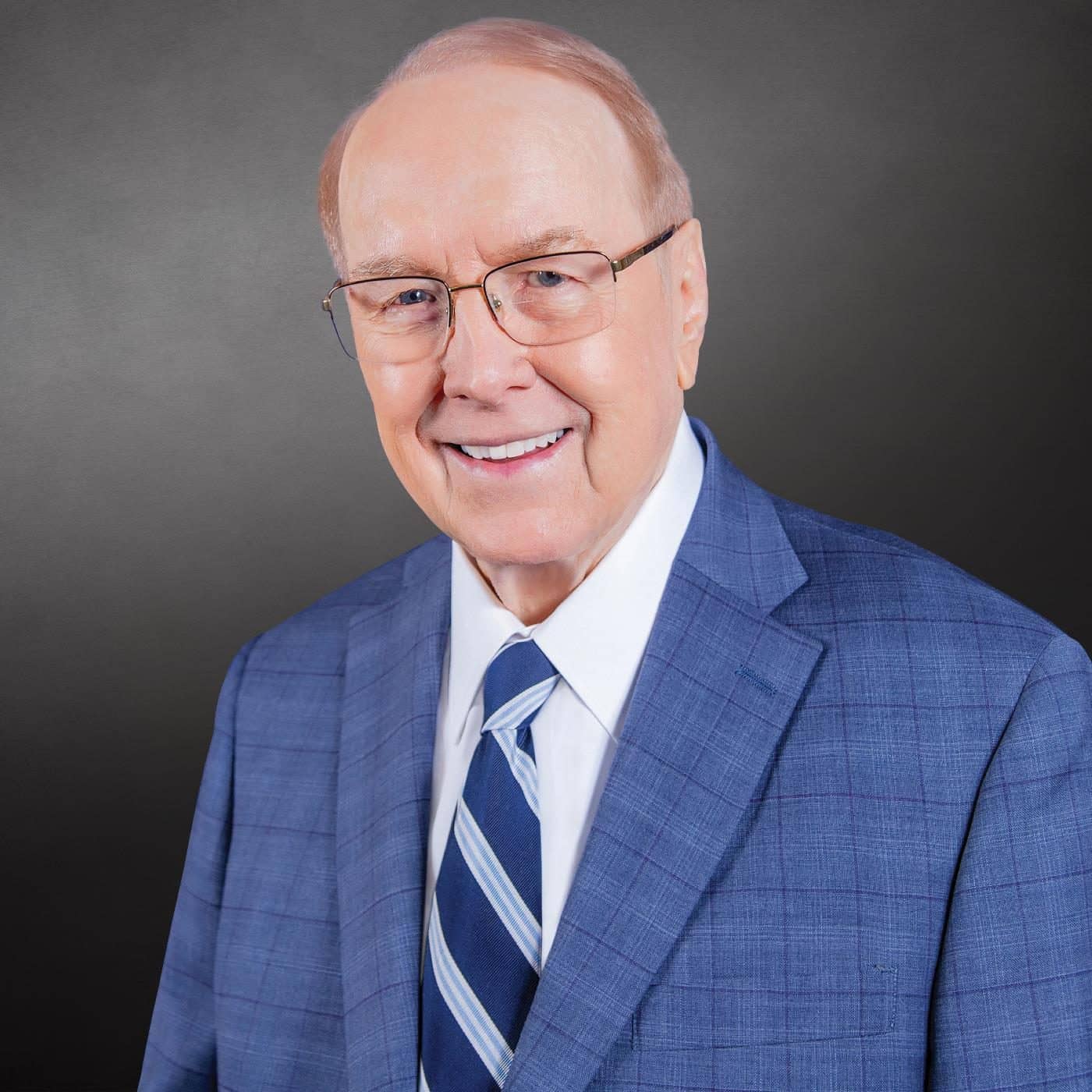

In this enlightening episode of Family Talk, Dr. James Dobson and Gary Bauer welcome Mark Johanson, a distinguished military veteran with a rich history of service in the United States Air Force. As a third-generation veteran, Mark shares his compelling journey from the Air Force Academy to his esteemed role as assistant deputy undersecretary for space at the Pentagon. Through captivating anecdotes, listeners will discover how faith guided his path amidst the challenges of military life and how he continually found power in his spiritual beliefs.
SPEAKER 03 :
Welcome everyone to Family Talk. It’s a ministry of the James Dobson Family Institute supported by listeners just like you. I’m Dr. James Dobson and I’m thrilled that you’ve joined us.
SPEAKER 04 :
Welcome to Family Talk. I’m Gary Bauer. I’m glad to have you with us on the show today. You know, this is going to shock some of you. Now, you might want to sit down. There are actually a lot of Christians in Washington, D.C., in all branches of government. Throughout American history, God has used these men and women to the benefit of our country and to advance the gospel of Jesus Christ. Now, look, being a Christian, and I’m one of them, being a Christian in Washington, D.C., can be a challenge. This is a city filled with people committed to the getting of power and keeping of power. That’s not really consistent with the message of Jesus Christ. But nonetheless, it’s possible to overcome all that. But you almost have to be a saint to do it. And we have one of those saints today as our guest on Family Talk. His name is Mark Johanson. He’s a third-generation military veteran whose desire to lead boldly has been greatly rewarded over the years. Wherever his journey took him, Mark has served our Lord, his family, and our country admirably, going above and beyond the call of duty. Mark is a graduate of the United States Air Force Academy. He earned a Bachelor of Science in Biology. He served as Deputy Director and Intelligence Officer for the Defense Support Program in Denver. Mark eventually went on to earn his Master’s of Science in Atmospheric Sciences from Creighton University in Omaha. This degree in physics centered on satellite remote sensing. Don’t go to sleep out there. This is all important stuff, folks. In fact, Mark was doing these things long before they were talked about in a normal household in America. But if you’re paying attention, these are all big deal issues right now as America goes into a very dangerous era of where war may very well be war conducted in space. His degree centered on satellite remote sensing. It led him on a journey, which eventually culminated with his appointment to the position of assistant deputy undersecretary for space at the Pentagon. After completing his distinguished governmental career, Mark spent the final decade in the private sector, but with a company that we’ll talk about a little bit because it’s a household word and one that is intimately involved in our lives. So Mark has had an incredible career, but he didn’t do it alone. He met the woman who would become his wife. Mark and Sherry would go on to enjoy 45 years of marriage together, and we’re going to talk about all of that. But, Mark, let’s get right into it.
SPEAKER 02 :
Well, first of all, I have to kind of push back on this saint, this saint business. You know, Augustine of Hippo said there is no saint without a past, and there is no sinner without a future.
SPEAKER 04 :
So I’ve got quite a past.
SPEAKER 02 :
So.
SPEAKER 04 :
Well, we use that same word loosely around here. At any rate, you know, I mark when we’re personal friends just for the sake of our audience knowing that.
SPEAKER 02 :
What, about 30 years now at least?
SPEAKER 04 :
It’s been a second, that’s for sure. You know, just reminding myself as I was looking over some of your background and so forth, You come from a family background in the military. So why don’t we begin a little – talking about that a little bit. But also because of that background, was it expected that that’s what you would do too?
SPEAKER 02 :
Yeah, a very good question. Not exactly, but it certainly – gave me ideas that I would like to serve in the military. Grandpa was an old, tough cavalry officer, and it was pretty neat because he’s working for Black Jack Pershing, you know, the hero of World War I, down in Fort Huachuca in Arizona. And he, along with this lieutenant by the name of Ike Eisenhower and this captain by the name of Douglas MacArthur, they are— taking on Pancho Villa and the Raiders from Mexico as they come across the border. Then they’re chasing them back into Mexico and using their .45 calibers to make the point. And so, you know, I think the Arizona border was well protected at that point.
SPEAKER 04 :
Yes, yeah. And, of course, that’s one of the big issues even today, right?
SPEAKER 02 :
Amen, amen, absolutely.
SPEAKER 04 :
It’s been amazing, dude.
SPEAKER 02 :
But so Grandpa is very important to my walk in faith as well. So I’ll start with him, and then I’ll get into Dad. Well, maybe I’ll jump to Dad. Dad was a fighter pilot. He flew in three wars, World War II, P-51 Mustangs in Europe, and got over there right after the Battle of the Bulge and flew. And then he was a lucky guy to go to Korea and fly the F-86s. And then he got a little bite of Vietnam. He got to go there as well. So three in a row, fighter pilot. And I remember he was kind of loose with his faith a bit. And his statement was, you know, God is my co-pilot. And then Grandpa moved in with us. He had Parkinson’s, and it was a later part of his life. But he lived with us for three years. And every morning I’d get up, and he would be on his knees crying. with the Bible open, reading passages, praying. And, I mean, this tough cavalry officer walked with the Lord. I mean, he really had a close relationship with him.
SPEAKER 04 :
Wow, that must have had a real impact on you.
SPEAKER 02 :
Huge, huge. And I would ask him, Mom would fix breakfast for both of us before I went to school, and he would tell me what he’d been reading, what it meant. And so I came to the Lord at 12, 13 years old because of him.
SPEAKER 04 :
Through your grandfather?
SPEAKER 02 :
Yes, through my grandfather.
SPEAKER 04 :
Yeah, so when I was growing up, there were some issues with mom and dad. My dad was an alcoholic and it was my grandmother who would come to the house early on Sunday morning. and take me to church because neither my mother or father were in a position to do that. He would be sleeping off what had happened the night before. She would be exhausted. And I think back on that, I’m sure you do too, that God used a grandparent to be so key in coming to faith.
SPEAKER 02 :
So we have some, both you and I have something to learn about that, being grandparents now, right? Yes.
SPEAKER 04 :
Well, and all the people out there that are grandparents today, you know, you can play a tremendous role in the lives of your grandsons and granddaughters.
SPEAKER 02 :
And then that’s clear in Scripture, isn’t it? Yes. Talking about grandparents and feeding into their kids and then the next generation.
SPEAKER 04 :
Yes. There was also some question about what kind of reputation you ended up having in school when you came to Christ. Was it—well, you tell us what it was.
SPEAKER 02 :
Well, I had a lot of growing to do, but I had this feeling I needed to do what was right and follow what the Lord taught us in Scripture. So I became a bit of a goody two-shoes in high school.
SPEAKER 04 :
No, Mark, really?
SPEAKER 02 :
Really? No, in fact, they call me the introvert. But by the time I got to college, I became a little hedonistic. I understand how so often in our church, and I know you’ve heard this too from younger people, they say, oh, well, we left home. We left the family. We left the support systems that we were kind of used to. We go to college, and then you run into different challenges. And, of course, you’re growing. You’re maturing. Your body is growing. Your mind is going off into, especially if you’re a man, right, going off into different things. Yes. And then it was very interesting because I went to the Air Force Academy, and I’m trying to decide what I wanted to do. But as you asked me early on, I thought, okay, I’ll do what the old man did. I’ll fly and fight. I’ll become a pilot and go to the Air Force Academy. And I’m glad I did. It was a great experience. I learned a lot. But I kind of turned my back on the Lord. What happened was the Supreme Court came and did their decision on there would no longer be a mandatory chaplain in the academies. Or a chapel, I’m sorry, chapel. Yes. And so they shut that down. And I was in the choir and I was in the chapel and I was working with the chaplains and I really loved it. And I have to admit that I became lazy. I said, oh, well, okay. The Supreme Court said we don’t have to go. Well, you know, I’ll do other stuff.
SPEAKER 04 :
You know, Mark, people may not be old enough to remember this, but in 1962, they took school prayer. The Supreme Court took school prayer out of the schools. The next year, they took Bible reading out of the schools. Over the years, it got worse and worse for even a teacher bringing a Bible to school and putting it on her desk and reading it during her lunch hour. became a threat, you know, that some child might see it and be— Yeah, it’s incredible. And then you get into the 70s, and you experience in the military academy with that Supreme Court ruling—
SPEAKER 02 :
Right. But I’m ashamed to say that it affected me. It should not have. It should not have. But the Lord took care of that. I think I have a theme of the providence of God because I’m trying to mature and I’m trying to figure out where I’m going. And the Lord always reaches in. He allows me to fall a bit, and then he kind of pulls me out of that, and I mature. I learn from my mistakes. And then I slowly but surely mature more as a Christian in my faith and walk after him. And then I get a challenge. I always get a big challenge. It’s as if the Lord is saying, okay, now it’s time for the challenge. Let’s see how you do.
SPEAKER 04 :
Well, you know, an unchallenged faith ends up not being very strong, right?
SPEAKER 02 :
Well, that’s true.
SPEAKER 04 :
God brings these things to us because he wants to see if it’s a serious faith.
SPEAKER 02 :
But he sent me on probably the most on-fire cadet ever. that I have ever met in my life. It was Stuart Parton. And so all of a sudden, he shows up. He’s my roommate. The first thing he does when I walk in, he says, hey, I’m Stu Parton. Do you know my Jesus? Wow. And I’m thinking, what? That’s almost a joke, right? Yeah. That’s a Bible cover or whatever is what the society says. Oh, and he was. Praise God he was. He came over, he stuck his finger in my chest, and he said, so do you know Jesus? And I said, and, you know, oh, sure, you know, sure. But he didn’t let me off. I mean, he kept after me, and it really brought me back.
SPEAKER 04 :
Have you stayed in touch with him?
SPEAKER 02 :
Oh, yes. Unfortunately, he passed about three years ago. Okay. Yeah.
SPEAKER 04 :
Isn’t that amazing, though, that you could have been, you know, any number of people you could have met might have led you in a different direction.
SPEAKER 02 :
Absolutely.
SPEAKER 04 :
But God brought that particular cadet.
SPEAKER 02 :
But since we brought him up in the church that you and I both attended for many years, his dad was a retired brigadier general and attended that church. And then he passed. So Stu came with his family, and I had the opportunity at the memorial service to sit down with his kids. I had two daughters and a son. And I said, I want to tell you something about your father. He led me to Christ. He at least made sure that I didn’t fall off the edge of the cliff and forget the Lord. He brought him back into my life.
SPEAKER 04 :
I bet they loved hearing that.
SPEAKER 02 :
I loved to have that opportunity. It was great. Yeah.
SPEAKER 04 :
You know, since you’re talking about him and you mentioned similar things, did you find, were you surprised by the number of men and women in the military that were followers of Jesus?
SPEAKER 02 :
Oh, absolutely. Let me tell you one story, and that has to do with the superintendent at the Air Force Academy. This is really cool. Lieutenant General Albert Clark. So I got to know him because for some reason I kept being grabbed for either – I was semi-fluent in Spanish because dad was over in Madrid and I went to kindergarten, first and second grade, and they were Spanish school. So I had to learn the lingo pretty quickly. And so I kept being grabbed whenever they had visitors, like the chief of staff of the Brazilian Air Force, and then he brought a bunch of cadets. And admittedly, they speak Portuguese, but they understood the Spanish just fine. And they brought in the Spanish chief of staff from Madrid, and they visited. Anyway, I got to know— the three-star because he’d have a reception, and then I would go in, and he recognized me. He got to know me, and he was very kind, and he was kind of a Clint Eastwood type. In other words, he didn’t say a lot, but when he said something, you better listen. He was that kind of great leader. Anyway, to get to the point. He was the senior officer in Stalag, which is featured in the great movie The Great Escape. He went through that in World War II. He was shot down as a pilot, and then he’s in that Stalag, and he’s the senior officer from the U.S. side. And he was in charge of purloining and grabbing things to set up the escape. That was his job. So he was kind of the logistics thief in the Stalag. So he had this background.
SPEAKER 04 :
This relationship of – maybe it seems ironic to people, this relationship between – Christ and the American military. There’s a theme here. There’s incredible, some of the most incredible inspirational stories I’ve told over the years and speeches and so forth are stories about followers of Jesus Christ in various positions in leadership, or maybe just, you know, an average guy in the military who do incredible things for the Lord.
SPEAKER 02 :
And So let me bring back General Clark. I went too long on some of this. But quickly, I found out that he had written a book. So I got a hold of that book. And in it, he says, up until the moment I was a POW, I was a careerist. I was looking at every possibility of promotion. I was focused on my career. I ended up as a POW. And I realized I wasn’t in charge of my life. Mm-hmm. And they had quite a few folks that were killed or shot in that camp, especially after the escape. They went through the camp and shot anybody that they could find that they thought was involved. Fortunately, he escaped or he did not. He was not shot. But in that pamphlet, he says, when I became a POW, I said, I’m not in charge. I’ve never been in charge. And he turned his whole life over to God. He said, God, my hands are off. I mean, there’s no way I can do this. And the Lord blessed him, and I was so happy that he was our superintendent. He was a man of God, too.
SPEAKER 04 :
I know you’re familiar with the old saying that there are no atheists in foxholes, right? I mean, and what it means is, I mean, there are obviously atheists that have served in the military. But when you’re in a foxhole and suddenly you realize you may not leave that foxhole alive.
SPEAKER 02 :
Yeah, absolutely.
SPEAKER 04 :
There’s a way that that concentrates the mind. And often people will accept God or accept Jesus at that last moment, right? that they’re on planet Earth.
SPEAKER 02 :
Let me add to what you just said. I think it’s very interesting, C.S. Lewis and J.R.R. Tolkien in World War I. I mean, that’s when they really faced the Lord. I mean, they have people dying all around them and their best friends and everything. And in their history, you read about that, and it says that they really changed their perspective and they really solidified their search for the Lord. Yeah.
SPEAKER 04 :
At my house, I’ve got a little tiny pocket Bible that has a metal cover. And these Bibles were given by the United States government to everybody in the American military on the way to Europe to liberate the continent. And nobody said anything about the separation of church and state. And there are an incredible number of stories about of men whose lives were saved not only by reading the Bible and so their eternal lives were saved, but there were men that were saved because the bullet hit the Bible with the metal cover.
SPEAKER 02 :
Wow, with the metal cover. And that saved their lives.
SPEAKER 04 :
My gosh. Yeah.
SPEAKER 02 :
You bringing that up, I’m sure you’ve been to Gettysburg. Yes. But it’s interesting because in a display there, they have the standard uniform of a Union soldier, and then they have a standard uniform of the Confederate soldier. And both of them have a copy of the New Testament. And it just made me weep. I’m thinking— Brother against brother and Christian against Christian in that war.
SPEAKER 04 :
Lincoln actually brought it up in some speeches that were – that both sides prayed to the same God for victory and only one’s prayers – are going to be answered. And the other side will have to deal with that fact, you know. That’s true.
SPEAKER 02 :
That’s like football games, right? It is.
SPEAKER 04 :
Not that I pray over football games. So, Mark, your faith is through everything you’re doing, but I couldn’t help but obviously notice, and I knew anyway, that this theme of space, I mean you’re guided by your desire to be in the heaven with God someday. And maybe coincidentally, the part of the military that you spent your time in has a lot to do with space and defending our country in space. What led you in that direction for that to be the particular thing you were interested in?
SPEAKER 02 :
Well, I had always been interested in the space operations. That was a love of mine. And then when I lost my visual acuity in my senior year at the Academy, I called Dad, and I have to admit that’s one of his finest moments because I thought the old fighter pilot’s going to say, what, you’re not going to go fly? You know, what are you wasting your time there for? And he immediately said, well, you know, Sometimes God does things and takes us in a direction that we don’t expect, and we look back on it, and I’m thinking, is this my dad? I’m amazed. It was like his finest hour, and he said, you know, you really like space. Why don’t you look into that? So these are the early years. I mean, the Air Force was just kind of scratching the surface with a global positioning system and a few things like that. So I grabbed on, and I am so grateful. Once again, the Lord provided a door that I had not thought about and opened it.
SPEAKER 04 :
Not to go too far afield, but it’s really depressing, I think, or disappointing that presidents that have had an understanding of how important space is going to be to our future security, Ronald Reagan, who started Star Wars, and he became the The brunt of late night comedian jokes and a lot of people in Congress, what is he talking about? This is a pipe dream. And then Trump started the Space Force. I almost felt like I was living through the Reagan years again because he was mocked for the same thing.
SPEAKER 02 :
Isn’t that ridiculous? Being mocked to try to defend life in our country? And people – and they laugh at that? I mean why shouldn’t we try to protect our country?
SPEAKER 04 :
There was a poorly done movie on Netflix a few weeks ago. I think it was called Dynamite House or House of Dynamite or whatever. But it was about – One missile being launched somewhere and headed to the United States and they couldn’t figure out why it was launched, where it was going. But the thing – the one thing in the movie that really reflected reality is most Americans think we already have a system.
SPEAKER 02 :
Amen.
SPEAKER 04 :
That will knock those things in.
SPEAKER 02 :
We don’t. No, we do not. We have a very limited capability. We can knock some out. In other words, if there’s a couple launched, we could probably get them down. But if there’s a salvo, there’s no way. No way. No way.
SPEAKER 04 :
Mark, the time is just flying by and there’s so much more about your life and your story and your lovely wife that we want to make sure people hear about. Is there any way you could come back and join us again tomorrow?
SPEAKER 02 :
Oh, absolutely. I’d love to do that, Gary. Thank you.
SPEAKER 04 :
Fantastic.
SPEAKER 01 :
While you’re listening to a special edition of Dr. James Dobson’s Family Talk, I’m Roger Marsh, and we’ve been enjoying a fascinating conversation featuring Gary Bauer, our Senior Vice President of Public Policy here at the Dr. James Dobson Family Institute Policy and Culture Center, and Gary’s guest, Mark Johanson. They’ve been discussing faith, military service, and God’s guiding hand through unexpected turns. Now, if you missed any part of today’s broadcast, or if you want to share it with a friend, just go to jdfi.net. And be sure to join us again next time when Mark will return to continue his story, including sharing how he met his lovely wife, Sherry, and what God taught them through 45 years of marriage together. Again, you’ll find part one of this program at JDFI.net. Now, if you’re married or planning to be someday, I want to share with you about a free resource that might just spark some meaningful conversations in your home. The title is The Undeniable Differences Between Men and Women, and it explains how God designed men and women uniquely not to frustrate each other, though sometimes it might feel that way, but actually to complement one another in beautiful and purposeful ways. Drawing from Dr. Dobson’s decades of research and counseling experience, This resource helps couples understand why they think and approach life so differently. And when you begin to grasp these God-given distinctives, well, you can stop fighting against them and start appreciating how they actually strengthen your marriage relationship. You can download your free copy of the resource called The Undeniable Differences Between Husbands and Wives when you go to jdfi.net. And speaking of strong relationships, the Dr. James Dobson Family Institute exists because of the faithful partnership between this ministry and listeners just like you. For 15 years now, we’ve been standing firm on biblical principles, defending the sanctity of human life, championing religious freedom and equipping families to thrive in an increasingly challenging culture. These daily broadcasts reach millions through radio podcasts and digital platforms, but they depend entirely on the generosity of friends who believe families need a trusted voice rooted in scripture and timeless truth. And your gift of any amount makes a real difference to donate securely. Visit jdfi.net. You can also call a member of our constituent care team at 877- 732-6825. That’s 877-732-6825. Or write to us. Our ministry mailing address is Dr. James Dobson’s Family Talk, or you can just address with the initials JDFI for short. P.O. Box 39000, Colorado Springs, Colorado. The zip code 80949. Well, I’m Roger Marsh, inviting you back again next time for part two of Gary Bauer’s conversation with Mark Johanson, discussing seeing God in space and serving him on Capitol Hill. That’s coming up right here on the next edition of Dr. James Dobson’s Family Talk, the voice you can still trust for the family you love. This has been a presentation of the Dr. James Dobson Family Institute.
SPEAKER 03 :
There’s a fancy word for kids who don’t do well in school, the ones who turn in sloppy work and goof off whenever possible. With today’s Dr. Dobson Minute, here’s Dr. James Dobson. We call these kids underachievers when they have the brains to do schoolwork, but they just don’t choose to use them. So what’s a parent to do? help him establish a system for studying turn off the television set and make sure the proper investment in homework is made number two stay in close contact with his teachers and number three seek tutorial assistance to provide the one-on-one help that may make the difference Having offered that advice, however, let me now speak out of the other side of my mouth. There are some hardcore underachievers who seem determined to fail in school. For them, no amount of pushing and shoving will get them motivated. In those cases, I recommend that you go with the flow and accept the child just as he is. For more information on this topic, visit drdobsonminute.org.