
This episode features a passionate conversation with Linda Smith, the founder of Shared Hope International, who details her journey from a U.S. Congresswoman to a leading activist against sex trafficking. Linda shares harrowing stories of children being exploited and reveals the systemic failures that often criminalize victims rather than protect them. Together with Dr. Dobson, they discuss urgent legislative changes and the role of faith and community in combating this persistent evil. Discover how Shared Hope International is making strides to ensure justice and how you can be part of this mission.
SPEAKER 03 :
Hello, everyone. You’re listening to Family Talk, a radio broadcasting ministry of the James Dobson Family Institute. I’m Dr. James Dobson, and thank you for joining us for this program.
SPEAKER 02 :
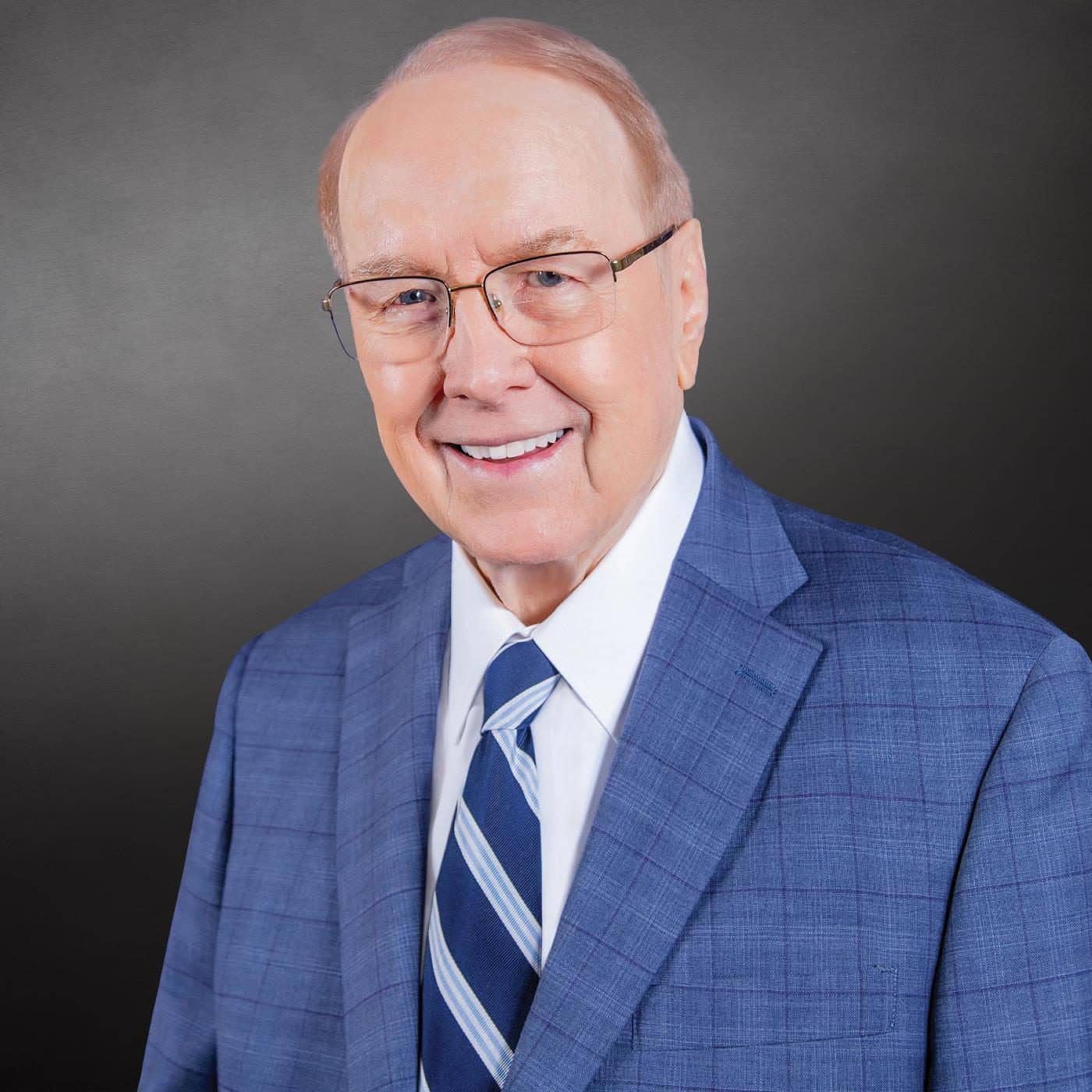
Well, welcome to Family Talk, the broadcast ministry of the Dr. James Dobson Family Institute. I’m Roger Marsh. And on today’s edition of Family Talk, we’re going to have a very serious heart-to-heart conversation about how bad the situation is and what can be done to stop it. Joining Dr. James Dobson in the studio today will be the former Congresswoman from Washington, Linda Smith. The Honorable Linda Smith served Washington state legislature from 1983 to 1993. before winning a seat in the U.S. House of Representatives as a write-in candidate in 1994. However, she quit her political career in 1999 after witnessing the horrors of sex trafficking in Mumbai, India. Linda Smith is now the founder of Shared Hope International, which is an organization designed to bring justice to the perpetrators of the sex trade and to restore the women and children whose lives have been ruined by it. On today’s edition of Family Talk, Dr. Dobson will talk with Linda Smith about why she started Shared Hope and the legislation they are trying to pass to bring an end to sex trafficking here in the United States. Now, before we begin today’s broadcast, it’s important to note that today’s program may not be suitable for younger children, so parental discretion is advised. Okay, with that said, now let’s dive into this important conversation on today’s edition of Dr. James Dobson’s Family Talk.
SPEAKER 03 :
I want to tell you, those who’ve just casually tuned in today, maybe you were driving down the freeway and you’re spinning the dial and you came across us. And I want to tell you and everyone who’s listening today that if the topic we’re going to talk about does not grab you by the heart and give you a passion for an end to an evil that is almost impossible, unsurpassed around the world, I think this is it. If this does not grab you by the heart, there’s something wrong with you. And it’s not a new matter to us. As a matter of fact, my introduction to it came in 2003 when I had a guest on the program that really got to me and I never forgot it. And I think she will tell you that was a significant moment for both of us. Her name is Linda Smith. She was in the U.S. Congress from 1994 to 1999. Linda, I’m so glad to have you here.
SPEAKER 01 :
Oh, I love this. It just feels like old times, but we’re just the same, aren’t we?
SPEAKER 03 :
You started an organization called Shared Hope. And you’re still the head of it. And it’s an international organization on behalf of children who are being abused, children who are being sexually trafficked. Start by telling us where that passion came from, because you went to the front of it. And it was so important you were willing to leave the Congress to deal with it. What is going on here?
SPEAKER 01 :
Well, as a member of Congress, we would get lots of calls, but I could only give maybe five minutes to each call. But if it was a person of faith, our office was instructed to answer that pastor, that reverend, that missionary, their needs, because so many members of Congress were not working with Christian organizations or acknowledged what Christian organizations can do. And so I get this call and I’m told about children being sold for commercial sex in Mumbai, India. And the guy talked and talked. I thought he was exaggerating. But then I couldn’t sleep that night. So we had five days between votes during the Clinton impeachment votes. And I just got on a plane privately funded because I didn’t know what I was going to do. And I went to India where children – were being sold for sex. And many of them resembled my 11-year-old granddaughter. And my heart was broken. And God does what he does. He just showed me James, what I believed. And that is faith without works is dead. So what was I going to do with this child?
SPEAKER 03 :
Now, that was one country. Yeah, that was India. But it’s worldwide now. And it’s in the United States. Now, when you were in the Congress, this is what you discovered. That is, the man that walks, he is like a person who obtains a prostitute. He is not booked. But the girl… is considered the prostitute. And she is the one who is treated like a criminal. I can’t believe that. I have a daughter and a son. They’re grown now. The thought of either one of them being abused in this way grabs my heart. It’s what I mentioned earlier. If you don’t feel that, there’s something wrong with you, but it’s going on. And perhaps a million a day…
SPEAKER 01 :
It is so hard to comprehend because we don’t see it. Just like I didn’t know before the night that I held that first little girl in my arms that was being trafficked and she was very sick. I didn’t know that this was happening. In America, when Shared Hope International did the research on trafficking in America, I was just as shocked to find out that there were middle school kids that were the product that were being sold to ordinary men just like in India. Here in the United States. by the nature of us calling them prostitutes anywhere in the world, by that nature, we automatically made the prostitute the bad person by labeling, and the man not quite as bad had he not brought money to the crime. So when he brings money to the crime, instead of being a rapist, a kidnapper, a person that violates these children, he then becomes not as bad. So that’s a cultural issue in America, and I think it’s a faith issue. God doesn’t like it when we label another person and make them lesser because of a label. He didn’t like it, doesn’t like it when we call an unborn baby tissue or fetus, and he doesn’t like it when we call a child a prostitute and deny them justice.
SPEAKER 03 :
Let’s get this straight. This child has no choice in the issue whatsoever. That child is delivered to this man.
SPEAKER 01 :
You know, when you look at domestic trafficking, often it would be like my little Lacey. Her dad was in Iraq. Her mom had two jobs at a nursing home. And she watched her little brother and sisters, this 12-year-old girl. The traffickers built a relationship with her at Starbucks. Sounds very American, doesn’t it? And over the time, this young man got to know her, a friendship, right at Starbucks. And eventually, he took off with her and sold her to five other men and then said, I’ll get your 10-year-old sister. Loyal to her little sister, she was prostituted when her mom thought she was going to youth group at her church. Now, this is how they’re working today. She was on her 13th birthday is when he turned to her. Now, this is more likely trafficking in America because we know youth, their brains aren’t done until they’re 23 to 25. And so you get these young girls, starry-eyed, and this older teenager, early 20s guy will build a friendship. And the girl always feels older than she is. That’s just human nature. And before long, they’ll convince them they’re beautiful, their eyes sparkle, and then they take off with them. And then they do always the same thing. I’ll get your grandma. I’ll get your sister. I know where I got you. When we discovered this, and I presented it to the U.S. Congress as the only and first research on domestic trafficking in the United States, they were having their mouths hang open like, how come we didn’t know? I said, I didn’t know either. And if I didn’t have all this undercover footage, all of this buying and selling I’m seeing on all of this footage and all of these transcripts and documents, I wouldn’t believe it either. But dear friends, my old colleagues, I sat there and said to them, it’s American men buying American kids and we have to stop it. Shared hope went about then. instituting a law change in all 50 states. We have a legal institute called the Center for Law and Justice on Domestic Minor Sex Trafficking. And one by one, as we’ve rallied the legislators, as we brought along activists, we’ve brought the 50 states to having laws that do two primary things. They make her a victim of a crime, and they make that buyer a man committing a serious crime, not a misdemeanor.
SPEAKER 03 :
It’s a felony in every… Stayed in the nation.
SPEAKER 01 :
It’s now a felony in every state when we started. But it was not then. And that was just eight years ago. The biggest challenge we have and the reason I think this program is important is that bias I talked about, that little 13-year-old girl, she was arrested several times. That one, that her dad was in Iraq protecting our country. And every time she was arrested, she was put in jail and strip searched. And she was the criminal and told she was the criminal. That little girl is not the criminal. That 17-year-old that I saved about – I actually saved about the same time, she’s not the criminal.
SPEAKER 03 :
How many states is that still the law?
SPEAKER 01 :
The problem, we’ve got 27 states that still have that law.
SPEAKER 03 :
Linda, come on.
SPEAKER 1 :
27.
SPEAKER 03 :
27 states, they still consider the child criminal? The perpetrator?
SPEAKER 01 :
They do. Now, the interesting thing is they’ll overhear in other parts of the law. They’ll say, we know she’s a victim, but we still want to keep this part of the law so we can arrest her for a day and get her away from the pimp. Well, that’s just another trauma. You’re not going to protect that kid by arresting them in a day. And you know when they let them out, the pimp still knows where their family is. They still know what foster care home they came from. That kid is not safe just because you arrested him a day. But what other victim of a crime do you arrest for the crime committed against him and put them in jail? It is one of the greatest civil rights violations, human rights violations. And we as believers have to go back to what God says. And he says each person is individually made and loved. And we can’t be labeled by what sin does against us. And in fact, not even by the sin we commit.
SPEAKER 03 :
Yeah. Linda, let’s go back to 2003. I was heading up Focus on the Family at that time and doing a radio program. I was there for 33 years. And you came and told me this story. You had just recently become aware of the scope of it at that time. And I tell you, you set me on fire. And we talked about the Implications of it and what people can do about it. Take me back to that moment.
SPEAKER 01 :
Well, in 2003, Shared Hope and the War Against Trafficking Alliance we formed with the State Department held the first world summit on trafficking of all kinds. I brought with me to meet you two of the traffic victims, two of the kids, two of the young women. You let the American people know about domestic trafficking because I started talking about what I was finding in America and it wasn’t any different than around the world. But you woke up people to trafficking of children, to the evil of commercial sex. It is not a victimless crime. It’s going young. From that, all over the United States, there are people to this day that say, the reason I got active is I heard you and Jim Dobson, or Dr. Dobson is usually what they call you. I heard it, and it got my heart, and I started thinking, and… They got busy. So you have planted seeds all over the United States. I’m hoping people today will say, we’re going to stand against the injustice. We’re going to stop this injustice. And one thing we’re going to do is change our language. We’re not going to call kids prostitutes. Number two, we’re going to change the law that calls them prostitutes. And we’re not going to allow them to be arrested.
SPEAKER 03 :
Why don’t we call it pedophilia? when a grown man will abuse a child, a legal child, why is that not pedophilia?
SPEAKER 01 :
Well, I agree with you, but I have a lot of those scientific types around me that think they have different descriptions. But no, I agree with you. Those are babies. They’re our kids. They deserve to be protected. They don’t deserve to be sold. And any man that preys on them in any way, and sometimes women, but usually men, should go to jail. If we don’t go upstream… to where the trafficking is created to the buyer and what creates the buyers, we’re going to lose. So this month, we are passing a bill that simply says this. If you are online facilitators of delivering a kid to that place, That hotel room or any kind of prostitution, the kid is a traffic victim and you’re a criminal, you the facilitator. So we’re winning some battles there because most of the delivery is online. The recruiting of kids is online.
SPEAKER 03 :
Let me illustrate and ask you more about what you just said. Through your efforts, the Congress is about to pass a bill. that addresses the issue you’ve been talking about. Tell us what that bill is going to do.
SPEAKER 01 :
Well, the bill will simply say that if you’re facilitating trafficking online, no matter how big your corporation is, you’re facilitating trafficking. You’re a part of the Trafficking Act. And that those kids and young women and boys have an ability to bring you into a criminal or civil charge. They can say they were a part of my trafficking because that’s where I was trafficked. It’s a huge thing.
SPEAKER 03 :
To this point, they have no power.
SPEAKER 01 :
To this point, the Communications Decency Act, which is a very complicated law, was being interpreted by the federal courts to not allow any online seller, facilitator of a trafficking act of selling a kid to be criminalized. The law says simply, and the judges that are sympathetic have actually said, the law says they cannot be brought to trial. You cannot bring an action to a facilitator online. a third-party facilitator that builds a website, creates it for people to be sold on, they cannot be charged. Now, if this passes today, Shared Hope International and other groups have come together, the National Center for Missing and Exploited Children, and we’ve rallied the people around the nation.
SPEAKER 03 :
Linda, I want to go back just briefly. I want to carry on what we’re saying here, but I want to go back to a comment we made about Google. and others that are facilitating this wickedness. We really ought to put some flesh on those bones to explain and so people understand. What is Google’s role in this?
SPEAKER 01 :
Well, often we use Google to represent the tech industry as a whole. The tech industry as a whole fought any type of legislation that would limit any kind of interaction online. We object to that.
SPEAKER 03 :
Including the abuse of children.
SPEAKER 01 :
Well, the result is the abuse of children on sites that hide behind law. And they have a framework, what is called a platform, where kids are sold. And, yes, they did defend their right.
SPEAKER 03 :
They’re not doing the selling, but they facilitate it.
SPEAKER 01 :
They facilitate it, yes. And so there isn’t one monster. I often use Google and Goliath terms. Together, they’re both big. And yet, I don’t want to bring Google down. I want them to do good things. I just want them to understand and all the tech industry that we will protect the children in America.
SPEAKER 03 :
Now, this circles back to me in a way you would not know. I was on eight commissions in earlier lifetimes. With Reagan. With Ronald Reagan first and then others after that. One of them had to do with abused and exploited children. And so we were dealing with the issue you’re talking about then. I’m embarrassed to say that we must not have gotten it done because it’s still going on.
SPEAKER 01 :
You know, the delivery system has changed. We used to think we had fought pornography because we regulated and were able to look at places. Pictures are created, right? Well, what happened on the Internet is pictures are taken and sent in a second. So our fight has gone online. So, no, you made a huge advancement by the work you did. The work you did on revealing the damage of pornography and acting on pornography ties tightly to what we’re doing now. Some of the research has come over the years about what pornography does to the brain to make a person compelled to do bad things to another person. We have a conference that’s called the JUST, which is Juvenile Sex Trafficking Faith Conference. We have those scientists. They’re saying just what you said so many years ago. And that is this is dangerous. It’s destroying our boys. It’s dangerous. Well, it is the creation of the mindset of the buyer that would drive. This market.
SPEAKER 03 :
That’s where I link in again because I was on the Attorney General’s Commission on Pornography. It was another of the eight commissions I served on. Ronald Reagan was in the White House and he was behind the effort to address pornography and especially child pornography. But he went out of office in 1989. And George Herbert Walker Bush came in and he continued to fight it but not with a lot of passion. And then when he lost to Bill Clinton, the whole effort was discarded and the Department of Justice lost interest in it. And it was not funded, and all of our work began to dissipate.
SPEAKER 01 :
Well, I would hope to encourage you in that the seeds of some of that got into the hearts and minds of research in many places that have our same faith. And some of the greatest research on the mind and the damage is coming out of people of faith, but they’re using science. And that is showing clearly what happens to the little boy’s brain.
SPEAKER 03 :
So you’re encouraged even though we’ve still got a huge problem.
SPEAKER 01 :
I’m encouraged because I think when people hear what they’ve heard today, they’re going to take action and we’re going to take this on. We’re not going to have a state in the union where they call that child a prostitute or where they’re not aware of what pornography is doing to create their little boys into buyers.
SPEAKER 03 :
We’ve got about two minutes left. Linda, let’s make good use of it. What else do you want to tell us?
SPEAKER 01 :
I think it’s really important that everybody does something. Now we’re not all called to the same ministry. God put blinders on me. And now for 20 years, all I think about is fighting the evil. that would be called child sex trafficking now. And that is what I do. But we’re all responsible to protect the people around us. Learn how the traffickers work. Understand how to protect your children. You can go on to Shared Hope’s site, and there’s all kinds of downloadable information. Every bit of research we have is there for you. There’s some books that don’t cost hardly anything. You can get them on Amazon. Amazon for practically nothing too. But if you go online, you can get a book on America. It’s called Renting Lacey. And it documents the research we did for your government, but in a novel form. And you go in and you understand trafficking. If you want to protect your children, go and find Chosen. It’s very easy to get. It’s a 21-minute film. You can go onto our site and you can show it to your kids and it teaches them how traffickers work.
SPEAKER 03 :
Linda, we’re really out of time now, but you’re writing a book on this subject. Explain it real quickly.
SPEAKER 01 :
I’m writing a book on domestic minor sex trafficking and going all the way back to 1910. But then I fast forward to close to the time you and I had our program, and I show what the modern abolitionist is doing. And it will talk about the faith community’s leadership in this, which I think will be interesting because it will be a secular book, and it’s going to talk about really what people of faith have done too.
SPEAKER 03 :
You know, Linda, today this message is aimed primarily at women. Women are the mothers. Women have the heart for children. Imagine your own child being trucked off someplace and that child probably came from a broken home and doesn’t have stability and love at home. And to have that youngster abused in this way by multiple men for money is evil and wrong. You know what Jesus said about it? Anyone who would hurt one of these little children, it would be better for them that a millstone was put around his head and was thrown into the water. That’s the way Jesus feels about it. We allow this at our peril. And, you know, abortion, the other things that we have fought that are evils are near the top of the list. But this one’s got to be in that same category. And we’ve got to do something about it. Your organization is called Shared Hope International. And you’re still, you’re not only dealing with this problem in the United States, but around the world. It must break your heart.
SPEAKER 01 :
When your heart breaks and God heals it again with his love. And he says, for your weak heart. Yeah, that’s where I’m strong.
SPEAKER 03 :
In most of those countries, there’s no law against this.
SPEAKER 01 :
Well, if there is, it isn’t enforced. And in America, let’s face it, we’re getting laws, but it’s not always enforced here either. So, again, I say, well, if a man knows in his heart what is right and doesn’t do it, to us it’s sin. Each person needs to take what they’ve heard and do something.
SPEAKER 03 :
Linda, you’re a hero to me. I told you that.
SPEAKER 01 :
That’s special.
SPEAKER 03 :
And it’s good to have you back here. I’m glad to know you’re still at this. You don’t seem to have grown weary in doing good at all. You’re still on the front lines. Well, you are too. I thank you for that. Thank you. And keep us informed, will you? Thank you.
SPEAKER 02 :
A powerful conversation today here on Dr. Thank you very much. Women and children are trafficked across international borders. Some international and non-governmental organizations actually place the number as much higher. And the trade is growing. It’s estimated that at this time, there are as many as 100,000 people being trafficked in the U.S. alone. So please be in prayer. Many of these people involved are children or underage teenagers, and they’re separated from their families. And please don’t forget them each and every day. Now, as we conclude today’s broadcast here on Dr. James Dobson’s Family Talk, thank you for remembering that the reason we are able to bring information like this to you and your family each and every day is because of your prayers and faithful financial support. You can always give a gift over the phone. Our customer care team is standing by to take your call right now. When you call 877-732-6825, that’s 877-732-6825. You can also give a gift online when you go to drjamesdobson.org. Or if you’d like to send your tax deductible donation through the postal service, Dr. James Dobson’s Family Talk, P.O. Box 39000, Colorado Springs, Colorado, 80949. Well, I’m Roger Marsh, and on behalf of Dr. Dobson and all of us here at the JDFI, thanks so much for listening today. Be sure to join us again next time right here for another edition of Dr. James Dobson’s Family Talk. This has been a presentation of the Dr. James Dobson Family Institute.