



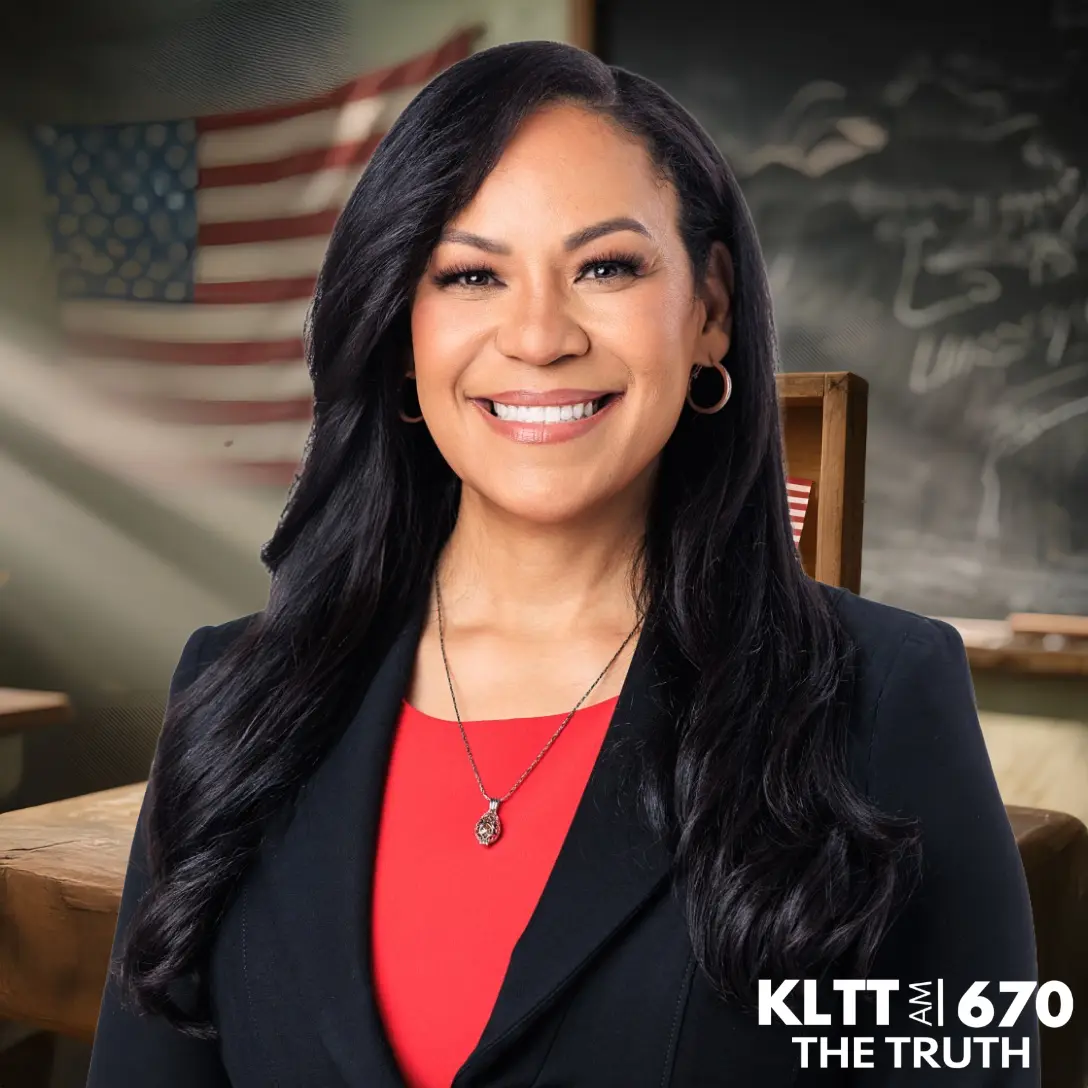
Join Priscilla Rahn and her guest, the Honorable Stephanie Hancock, as they delve into the complexities of diversity, equity, and inclusion in the educational landscape. Together, they analyze the case of Mark Phillips, a student beatboxer who stood against policies he viewed as discriminatory. Through this insightful discussion, we understand how the narratives of talent and ability often clash with institutional policies, redefining what true equity should look like.
SPEAKER 01 :
Welcome to Restoring Education in America with Priscilla Rahn. She’s a master educator and author, leading the conversation to restore the American mind through wisdom, virtue, and truth.
SPEAKER 03 :
Well, hello, everybody. Welcome to Restoring Education in America. I’m your host, Priscilla Rahn, and I’m so excited that you decided to join the conversation today. You know, there’s so much going on in the education landscape, and sometimes I cannot believe the things that I see in the news. Recently, a student acapella group at Kent State University called Vocal Intensity Acapella reportedly implemented a policy restricting certain solo audition opportunities to people of color, with members saying this was to avoid cultural appropriation. A student named Mark Phillips, described as a three-year member of the group and its beat boxer, objected to that policy, asking group leaders why excluding students based on race aligned with both the group’s and the university’s anti-discrimination policies. We need to talk about it. And here to talk with me is my dear friend, the Honorable Stephanie Hancock. Hi, Stephanie. Hi.
SPEAKER 02 :
Hi, Priscilla. I’m so excited to be here. Thank you for inviting me.
SPEAKER 03 :
Well, you’re one of my BFFs and you are the perfect person for me to bounce this off of. But before we get into the conversation, just in case somebody doesn’t know who you are, I’m going to share your bio with the listeners. Mrs. Stephanie Hancock is a U.S. Air Force veteran, artist, entrepreneur, and public servant with a dynamic and eclectic career in spanning the arts, business, nonprofit work, and government. Her artistic journey began with the famed US Air Force Tops in Blue and Air Force Band, and she has since become a longtime presence in the Aurora community theater scene, working as both a performer and director with multiple theater companies. A da jazz record recording artist, Stephanie has released several CDs, including This Happy Madness, a collection of classic jazz standards. In 2015, she co-founded 5280 Artist Co-op, a collaborative platform created to showcase and elevate local Aurora talent across disciplines, including music, theater, poetry, writing, and fine arts. She’s a 2023 graduate of Leadership Program of the Rockies. Stephanie is a wife, mother, and grandmother. She currently serves as Aurora City Counselor for Ward 4 and sings on the worship team at Brave Church. How do you do it all?
SPEAKER 02 :
Oh, my goodness. It sounds like a lot when you say it like that.
SPEAKER 03 :
I had to cut it down. Like all my friends are doing such amazing things and you’re right there. And I think, man, I’m trying to keep up with you because every time I call you, you’re sitting and you’re going here.
SPEAKER 02 :
It happens like that sometimes. I mean, you take on one thing and then you’re like, yeah, I can do that. Yeah, I can do that. Before you know it, you’re doing like 80 different things.
SPEAKER 03 :
Well, I always say the busiest people get the most done. But what I wanted to talk to you about is this crazy story that I read about at Kent State. Listen, they were forbidding white students from auditioning for certain solos that they deemed only for people of color. Okay, now they have policy on equity. yet they were restricting students from auditioning. And look, in my opinion, there’s no such thing as white music and black music. There’s just music. And this was my biggest pet peeve when Denver Public Schools basically said, you know, if you’re teaching strings, violin, orchestra, you know, and you’re playing classical music, that’s, that’s too white. And I’m like, classical music is not white music. opera is not white music. And this is why for so many generations, we didn’t see a lot of diversity in the opera or in the symphony because of this narrative that it wasn’t accessible. So let’s get back to, this is 2025. OK, now you’ve been a career singer. You sang for the military. This was your job. You are an amazing musician. I want to get your your opinion about this student who was a beatboxer and, you know, thought that maybe everybody should have an equal opportunity to audition for a solo.
SPEAKER 02 :
Absolutely. I mean, this, frankly, this thing boggles my mind, really. The fact that this woke agenda has gone so far as to prohibit people from doing something that they love. I know some white beatboxers that can really handle a beat. You know, I can’t do it to save my life. It is not something that just because you’re black, you automatically can do it. And just because you’re white, you can’t. And when they talk about cultural appropriation, Anybody who lives in America has culturally appropriated from somebody, if you really want to get down to the nitty gritty. I mean, this country has taken cultural things from all kinds of folks and blended it in to make it uniquely American. So to say that someone, because they’re white or they’re black, can only be in this box, I mean… There was a time, and I understand that people thought, well, opera was too highbrow for certain groups of people. And then comes Porgy and Bess. And it’s still being performed today. And I understand that sometime in the next few years, it’s going to be open so that everybody can perform it. Now, it has been exclusively only for Black people. casts now it’s going to be open so anybody can do it to me it’s about talent it’s about ability I that’s what I like about blind auditions because when you’re not seeing the person you can’t make any judgments about them it’s based strictly on their talent and for me I’ve always gotten a thing where I’ve auditioned for roles and people tell me I’m not black enough and I’m like Okay, make that math math for me. I’m not really getting it, you know, and it’s like they have this stereotype that they expect us to live in. And when we don’t fit it, it kind of messes up the narrative that they have in their head, which I think is totally unfair. I applaud this student standing up saying this is this is actually. discrimination what you’re doing here where’s the DEI where’s the equity and inclusion here this is totally wrong and I’m glad that he stood up for himself so you know what happened when he went so this the student’s name is Mark Phillips is he black
SPEAKER 03 :
No, but he’s a beatboxer. No, no, but he looks cool because I went to his, I looked him up on Instagram and he looks pretty cool. He looks like a really cool guy. Been involved in the music ensemble and his Instagram is very, he’s like, I’m a student. I’m a working man. um my major is communications journalism and a minor in theater performance um as for work i’m a chemical specialist at clean express auto wash so he’s hard working okay he’s working while he’s going to college he’s passionate about literature theater and other creative art forms and he says i have been known For my intense work ethic and ability to work excessive hours to assure I can meet my needs and pursue my goals in life. And while he’s doing this, Stephanie, he’s saying, excuse me, kind of reminds me of Frederick Douglass, where he was holding the government accountable for their words in the Constitution. It’s like you said this is what you stand for. Now stand for it. Right. So he’s saying to the university, you have this equity policy and I love singing. And I, I see that you’re only allowing people with a certain skin color. I mean, you’re darker than me. So, I mean, if you’re not black enough, then definitely I’m not black enough. Okay. So, So only black people can audition for a solo. It has nothing to do with meritocracy. It has nothing to do with soul. You know, you know what it reminds me of stuff is my husband. I remember the first time I saw Darren come out on a stage with a saxophone and the whole band was black. Okay. The drummer, the bass player, everybody was black. And then here comes Darren, the only white guy on the stage. And I remember thinking, what’s he going to do with that saxophone? I don’t see how he’s in the mix here. And I prejudged him until he started playing his saxophone. And you’ve heard him play. That man has soul coming out of his DNA, okay?
SPEAKER 02 :
Yes, indeed.
SPEAKER 03 :
So… Here’s what he said. I fully respect concerns about authenticity, but I also believe that whoever gives the strongest performance should be given the chance, Phillips wrote in the email. Art, music, and culture are meant to be shared and celebrated, not gatekept. And then he goes on to say… What I really want is for people to bring common sense back and stop pretending that people of color are oppressed in this country. I want people to realize that we are meant to celebrate what we have in common instead of dividing and fighting over our differences. And so when he talked to the university, Stephanie, they put him like on probation. Because he dared to push back on what is a racist policy. Now, how fair is that, Stephanie?
SPEAKER 02 :
That is insane. They’ve just gone too far. From my perspective, it is insane. I think we’d be having a different conversation if a Black student said the same thing. There have been things that me on City Council I’ve been able to say to people that I could get away with because of the mindset that people have. Like, this is the box you’re in, you know, brown person, and this is the box you’re in, not brown person. And for me, It’s insulting to me as an individual. It’s insulting, particularly from an artistic perspective, to my talent and my ability. I should be able to step up to the plate and do exactly what is required. Now, if you’re looking at the stage picture as a director, I’m looking at the stage picture and I want to see how it’s going to line up and how it’s going to look from the vision that I have in my mind. And I don’t pick you because you’re not fitting the exact character stage picture that i want that’s one thing but to tell me in mass because i happen to be a certain skin color that i don’t even get a chance to audition that’s crazy that’s wrong it’s disrespectful to the craft it’s disrespectful to the artists because i’ve heard people of all different you know skin tones and colors bring the heat when it comes to doing soulful gospel opera, jazz. I mean, these kids that are performing nowadays, they do things that are beyond nature. I think these kids are freaks of nature the way they perform nowadays. Just the quality and just the expertise and the dedication and just the feeling. I feel that every time I see it. I mean, some of these young people, when I hear them play and sing, they just bring me to tears. And that’s what you want.
SPEAKER 03 :
Yeah, that’s not what we’re supposed to be teaching as music educators, that music is what touches you. And there’s all these different genres and it shouldn’t matter the style because we can flip the script. Like I said earlier, where you have a young black student who picks up a cello. or a double bass and goes to a school of the arts and then auditions and ends up playing in a symphony. You know, the first time you go to a symphony and you hear that sound, how does it not touch you anyway? Yeah, right. So when when I see that the university accused the student, Mr. Phillips, of violating the university’s anti-discrimination policy, they accused him of violating the policy and placing on probation, preparing him for disciplinary process. And he would have to plead his case before the entire campus.
SPEAKER 02 :
That’s crazy. It’s discrimination on its face. He’s challenging. And I applaud this young man for challenging this discriminatory policy because it’s it’s it flies in the face of the very thing that the school is supposed to stand for and for them to go after this student and be punitive. I don’t even have words to express how backwards and crazy this is. I think the pendulum has just swung too far with this diversity, equity, and inclusion thing. I don’t think it serves us or helps us. It perpetuates victimhood and a perpetual underclass. They’re putting people in categories saying, okay, because you look this way, you’re not only in the perpetual underclass, but you’re You don’t have the ability or the talent or the virtue or any of the things to participate in society, which does not do us any good. And we all as a society are less as a result.
SPEAKER 03 :
Listen, we are not a monolith. Not all black people can play basketball. Not all Black people got the ability to keep a steady beat.
SPEAKER 02 :
And I know a few.
SPEAKER 03 :
Not all Black people can sing a solo. All right. So I don’t know where in the minds of the university this, I don’t know if it was the university or probably like the ensemble, the head of the ensemble, the vocal intensity.
SPEAKER 02 :
So how many Black students do they have in this vocal intensity group right now?
SPEAKER 03 :
I mean, that is a great question, but you know, Stephanie gospel is the only style of music that black people know how to sing. Don’t you know that? Like we can’t sing anything else. We can only sing gospel and jazz. Those are the only two things that we’re able to sing. And so that’s a safe space. And so therefore we cannot allow anybody else to come into our space without and try to perform the music stylistically better or more in tune or anything like that. We cannot do that.
SPEAKER 02 :
Well, I think Leontyne Price would beg to differ. One of the finest sopranos that ever took the stage in the opera world. And you know, really, when you think about gospel, just the word gospel is good news. Good news. When we think about it from a theological perspective. Gospels should not be relegated to a sound. We are telling the good news of Jesus Christ through the song. And so it doesn’t, you don’t have to do a bunch of runs and a bunch of high notes and a bunch of screaming and hollering to get the gospel out. I’ve heard the most soul touching songs that are just simple and quiet and powerful. you know, really promote the good news of Jesus Christ and that we are touched and changed by it. So for someone to say this is how it’s supposed to sound, I frankly, I’m insulted by that as well.
SPEAKER 03 :
I feel like we need to call Cece Winan so she can do a masterclass on exactly what you just said. And I think it’s just the perpetuation of a stereotype of who we are as a community. Because what if you’re a Black child who was adopted by white parents. We see this all the time. Or vice versa. I mean, we’ve got to stop prejudging people by ethnic race, OK? We just need to stop doing that, especially in an institution of higher learning. And I think the government really needs to investigate this scenario. And here’s what’s sad, Stephanie. We’re talking about a young man who loves music, is in this elite ensemble, He’s chastised, put on probation. He says in this article, the eagerness to twist my words shows a lack of honesty and critical thought. He added denying opportunities based on skin color is discrimination by definition. And you know what he ended up doing, Stephanie? Rather than sit here and fight with the university, he quit the ensemble.
SPEAKER 02 :
Which diminishes that group. It would diminish that group because music is the only, for me, music is the place where all things are equal to me. If you have the talent and ability, you can sit in and you can play. You can sing. You can play your instrument. I mean, it’s an opportunity for all of us to express ourselves in a way. Now, jazz offers a lot of freedom. You can go sideways and do lots of improvisation and play. For people to think that that’s an easy thing to do, it is not. It is not. There are people who practice their whole life and still can’t improvise, you know, the way like Ella Fitzgerald or like Sarah Vaughan. I wish I could walk in their shadow. I just think it’s so wrong that we put people in these boxes and we tell them, this is where we want you to stay, so stay here and don’t move out of it. It’s wrong. And we diminish everyone by doing that.
SPEAKER 03 :
If you’re just tuning in, my guest today is the Honorable Stephanie Hancock. She is a city councilwoman, but she is an amazing singer and a mom, a wife, a grandma, and just all around cool person. And we’re just having a great time. We’re BFF. So you’re getting to be a little bit of a fly on the wall on pretty much how all of our conversations sound when we’re talking. It’s like, can you believe this? Can you believe? I cannot believe this has been my experience and what we’re seeing in the world. And it’s 2025. We’re getting ready to go into 2026. And there’s still policymakers who do not understand anti-discrimination. So here’s another quote. From Mark Phillips, my only crime was advocating for equality for everyone, regardless of skin color, Phillips said. I raised a valid concern, discussed the definition of discrimination, and held a mirror up to what they were doing. In their eyes, anti-white discrimination is okay, but challenging that precedent isn’t. And he just named it. You can be racist against white people. That’s okay.
SPEAKER 02 :
And that’s just lunacy. That’s lunacy. It’s hypocrisy. And it is racism. It is racism. And people, they’ve gone so nuts with this DEI woke stuff that it doesn’t even make any sense anymore. It is just… Like you said earlier, meritocracy, let the best person with the best skills get the job. Period. End of discussion. You’re not doing me a favor as a black person by giving me a role that I didn’t earn or deserve, because then I start to think that every role that I get is something I deserve because of the way I look. And we’ve had this, if it’s not black, it’s being pretty. If you’re pretty, you get to get special privileges that average looking people or not so attractive people get. Okay, pick your poison. You’re just picking these things and you’re labeling them and you’re expecting people to live up to these unreasonable, ridiculous expectations. And the thing that makes me upset about this is that People clutch the pearls when you call them out on their hypocrisy and they don’t want to admit that they’re wrong. People, you’re wrong. Stop it. Let these children do their work. Let them be musicians. Let them be actors. Okay.
SPEAKER 03 :
I’m going to be someone on the side of the university. Okay. But Stephanie… This was a composition by a Black composer. It’s a Negro spiritual, and it’s only appropriate that it’s sung authentically by someone who’s Black.
SPEAKER 02 :
No, I’ll have to call a foul on that one. No, because you can teach someone how to sing it the way you want it sung. People have been doing it for time and memoriam. You know, I think back when my mom was a kid, there was a song, Splish Splash, I was taking a bath all about a Saturday night. It was by Bobby Dylan. Everybody thought he was black until they saw him. And they freaked out. Another one, even more common, Bobby Caldwell. What you all do, do for love. I thought he was Black because the first time I saw his album cover, he was in silhouette. And I just knew he was Black. And then when I saw him, I was like, well, We’ll just close the book on that 1 because he was the man had sold all the way down to his baby toe and he was an amazing writer and an amazing guitarist and amazing musician. And he was white as the driven snow. Did anybody disregard him? Because. of his talent? No. Well, he’s white, so he can’t sing. No. He was a million selling Grammy winning artist who was respected because of his craft. And that’s where we have to, that is the plumb line. If you’re trying to make it somewhere else, then you’re disparaging everyone that would listen and everyone that wants to participate. It’s just wrong.
SPEAKER 03 :
So what should we do about these DEI policies that, I mean, okay, listen, we want to be anti-discrimination. We want to have equal opportunities for all students. You’re in policy governance, okay? Should we have some sort of equal opportunity offices to make sure there’s no discrimination happening or how do we enforce it so that it’s, actually not hurting any demographic of students.
SPEAKER 02 :
You said a key word there, force. Why do we want to force anyone to do anything? I believe this country was not founded on force. It was founded on freedom. Therefore, if you want to come to the table and you have an idea and you have a talent and you have a skill or ability, bring that to the table. I don’t believe I need to beg anyone to be included in their reindeer games. I think this idea that we should be forcing people to be you know, collaborate with each other. I don’t think that does us a favor. And I know I’m probably not going to be very popular for saying this, but that’s okay with me. Talent cream always rises to the top. It always does. So just be you, do you. And when people see your talent and ability, they’ll come flocking to you.
SPEAKER 03 :
Stephanie Hancock. I went back and looked to see if I could find a statement from the university. There is no formal statement in response to the student bringing a complaint, which I find really interesting. And I know that different folks, reporters have reached out to the university to see if they could get a statement and a rationale. And I’m just surprised that there’s no verified public release from Kent State confirming exactly how the university is responding internally toward the group’s policy of Philip’s concerns. There’s no clear indication that there was any formal complaint. So it sounds like Mark, complained to the university and but didn’t do a you know how there’s like a formal intake well if you’re really unhappy here’s where you go go to the website fill out a form and don’t call us we’ll call you there’s no evidence that he went through that um but he ended up walking away and that makes me really sad because here’s a young man who’s paying all this money to go to to go to college he’s involved in an extracurricular activity that he loves And now he doesn’t feel like he’s part of the community. And this is the ramification of what this university did. They’ve ostracized a student for no reason other than the fact that he’s not Black. And that’s not his fault. He has no control. He’s not trying to be Rachel Dolezal and pretend like he’s Black and force his way into…
SPEAKER 02 :
Right. Do you remember that story of Rachel Dolezal? Yes, yes. She went for 20 years. Everybody thought with the hair and the adopted black sons and the makeup and everybody thought she was… And I thought, wow, that’s really interesting. This… Discrimination is discrimination, no matter who it belongs. And it seems to be appropriate and almost celebrated that you’re discriminating against whites. And the fact that he was a beatboxer, okay, he was a beatboxer in the ensemble. That was okay. Really? Okay, so who gets to decide?
SPEAKER 1 :
Okay.
SPEAKER 03 :
Mama Stephanie has spoken. If you thought she was talking tough when she was a mama, she’s a grandma now. And so she’s like extra, extra.
SPEAKER 02 :
Extra crisp. I’m extra crispy. If somebody tried to do this to one of my kids, you know, I… As they say, it would be on and cracking because I can’t understand why you would limit any student who’s paying money to go to the university, the opportunity to get the full experience that their dollars are buying at the university. You know, when you learn another person’s culture and their experience, you can appreciate it more. And remember, we are Americans first, first. And that’s the beauty of this country and that’s who we are. We have to remember that we are first and foremost Americans and every piece of culture, nuance, experience feeds the whole greater complexity and personality that our country has. And for us to try to separate it into boxes hurts us.
SPEAKER 03 :
Ms. Stephanie, I’m looking at the time and we need to land our plane. I so thoroughly enjoyed this conversation. And we’ll have to continue next time to my listeners. Thank you for tuning in. And remember, educating the mind without the heart is no education. So seek wisdom, cultivate virtue, and speak truth.
SPEAKER 01 :
Thanks for tuning in to Restoring Education in America with Priscilla Rahn. Visit PriscillaRahn.com to connect or learn how you can sponsor future episodes to keep this message of faith, freedom, and education on the air.
