
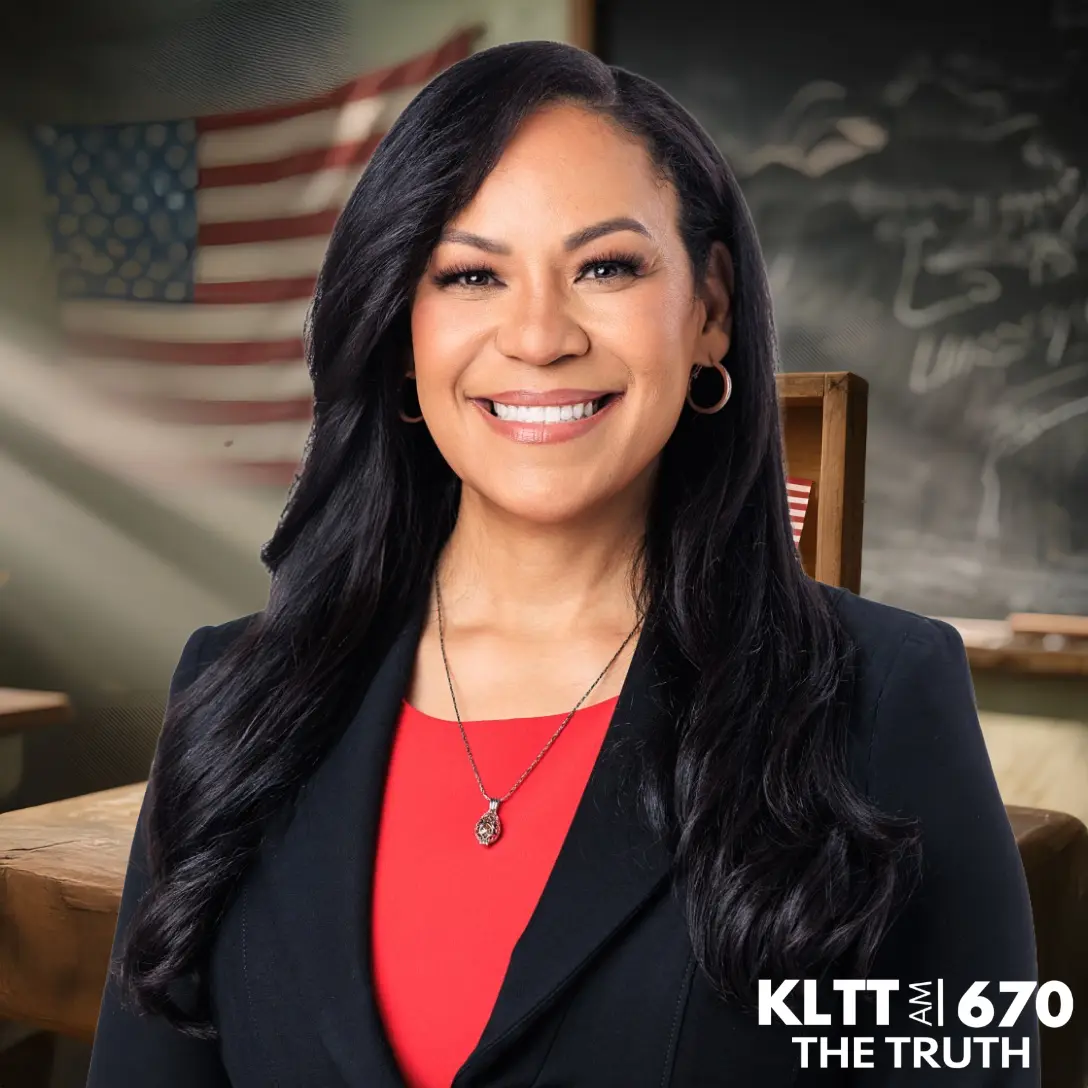
Tackling everything from the rising costs of insulin to the implementation of AI education tools, this episode of Restoring Education in America is a must-listen. Priscilla and Steve navigate the complex world of healthcare reform, discussing the implications of government involvement and the urgent need for healthier life choices. Discover insightful strategies for integrating AI into the classroom to enhance learning outcomes and foster critical thinking among students.
SPEAKER 02 :
Welcome to Restoring Education in America with Priscilla Ron. She’s a master educator and author, leading the conversation to restore the American mind through wisdom, virtue, and truth.
SPEAKER 01 :
Well, hello, everybody. Welcome to Restoring Education in America. I’m your host, Priscilla Ron. And I’m so excited that you’ve decided to join the conversation today. You know, we talk about all things education, but you can’t educate a nation that’s unhealthy. And here to talk about healthcare and AI and things that are going on in our nation is my good friend and my mentor, Steve House. Hi, Steve, how’s it going?
SPEAKER 03 :
It’s going very well. How’s it going for you?
SPEAKER 01 :
It’s going great. I’m so excited to have this conversation with you today. But before we get into our conversation, for those that don’t know who you are, I’m going to share a little bit of your bio. So Steve House spent more than 40 years working in the health care field in technology areas and also in politics for a decade. He held the position of state GOP chairman in Colorado in 2015 to 2017. He ran for governor of Colorado in 2014 and ran for the United States Congress in 2020, where he introduced a technology platform that included a new health care plan and a new approach to education. Today, he works for a large consulting firm that focuses on helping distressed hospitals become financially viable again, but it also includes opportunities for him as a certified AI specialist to work in education, healthcare, manufacturing, and other industrial areas on the impact AI can have on their futures. Wow. Okay, so… For my listeners, you and I met when you were, right after you were the chair of the state party.
SPEAKER 03 :
I believe that’s true. So it’s been a while.
SPEAKER 01 :
It’s been a while. And I remembered kind of being curious about how you could help me understand education policy. And our friendship took off from there. And you’re the one who kind of encouraged me to get involved in politics and the party. And I blame you for everything that I’ve been doing ever since.
SPEAKER 03 :
I wondered how long it was going to take before you blamed me and said, You’ve worn me out with this political thing. So hopefully we’re going to remain friends anyway.
SPEAKER 01 :
Well, yes, definitely, because I think what it did was it kind of got me off the couch and got me paying more attention to policy and helped me understand how important my voice is in the process of government and politics. going through leadership program of the Rockies and understanding the proper role of government. And since you’ve been in the healthcare industry, I’ve been really curious to learn from you. And so I’m excited to have you on the show today. So let’s jump right in. As a teacher, health care has been one of the most important things to me. And do you remember back in when Obama was president, he said, you can keep your health care and you can keep your doctor. But then next thing I know, my health care premiums went up and my copay went up. So from your perspective, Steve, what happens when the federal government becomes too involved in a complex system like health care?
SPEAKER 03 :
And you know what’s interesting about this, Priscilla, is that healthcare and education have a lot of similarities because they’re highly regulated industries and The impact, frankly, of technology and AI on both is very, very similar. When the government gets involved, they set rules that are broad-based. So everybody’s subject to the same rules. So part of the problem with Obamacare is that I have to be covered for breast cancer, you have to be covered for testicular cancer, and neither of us need those coverages, but there’s costs associated with that. So we’ve more than doubled premiums since Obamacare went into effect. But that’s the other side of that coin is one of the values of something like artificial intelligence. And I’ll go on record as saying that, you know, Stephen Hawking was right. You can’t let this get out of control because it could have a very detrimental effect to humanity. But there’s some real positives. But one of the effects you have with it is you can personalize. precision medicine, precision education, you can personalize it to the individual. And if we personalized health insurance to the individual and education to the individual, we’d see a really dramatic improvement in both.
SPEAKER 01 :
So in your work where you help distressed hospitals become financially viable, okay, what are the indicators of a distressed hospital and what are the steps that you take to help them?
SPEAKER 03 :
So most hospitals that are distressed and America’s probably got more than 50% of all hospitals have a negative operating income. So they’re losing money on the money they put into their daily operations and they bill patients and collect the money. It’s negative. Many of them cover that by having capital to be able to successfully keep going and run the business. But it’s getting worse and worse and worse because the The level of people on Medicaid is dramatically higher than it was two decades ago. The costs are higher than it is. The status of our health care is lower. So all of those things are contributing. It’s so negative net income, you know, on a downward spiral on spending, laying people off. There’s something on the order of seven or 800 hospitals in the U.S. right now, some in Colorado that are actually probably not going to make it another year or two. They will have to go away because they just can’t fundamentally make it work. And a lot of the problem is in rural areas.
SPEAKER 01 :
Yeah, I noticed in the past legislative session, the legislators talking about how to help rural hospitals. Do they just go away and then the people who live in those areas have to drive more miles to get to the next closest hospital? Or are they subsidized somehow by the state government?
SPEAKER 03 :
The actual, the federal government gave each state a portion of $50 billion to be able to, essentially a billion dollars each, doesn’t work out that way exactly, but to help those rural hospitals survive, it’s not enough. And quite frankly, if a hospital goes away, what usually replaces it is some smaller clinic, and then people will go to the clinic for something urgent and then be transferred to someplace else. Some of the parts of Southern Colorado, people in Pueblo, for example, you know, get transported in from south of Pueblo in the rural areas because there’s no access. Pueblo’s okay, but their hospitals are not financially doing that well either. So you put those kind of risks in play, and next thing you know, you have to go to Colorado Springs to get care from the southern part of the state, and that’s just not going to work.
SPEAKER 01 :
Well, maybe it’s a good time for people to really take charge of their health care. You know, I’m really excited to see what Mr. Kennedy is doing and making America healthy again. And every time I open up my social media, I see something about, you know, we’re taking all the toxins and the color and the dyes out of food. I think it’s going to be really helpful, especially for families that have lower income to be able to go and buy food and not have to worry that just because they’re buying something that’s not expensive. At least it’s healthy. Other nations do it. I think it’s really important that we do that here in the United States. How soon do you think we’re going to start to see some of these changes in the grocery stores?
SPEAKER 03 :
I think we’ll see them within this four-year term that Robert is likely in office with Donald Trump. The interesting thing about it is our kids are sicker than they’ve ever been. So if you tie back to education for a minute, how do you go to school and be functional when you just feel bloated from the way we treat grains and some of the stuff we feed them? I remember when I was in high school so long ago, I had a class. on social things, not social studies, but health and wellness kind of stuff. And they would teach us about, you know, diet and nutrition. And then you would go to the cafeteria for lunch and they violated all the rules. Right. So we were eating crappy food in the cafeteria for lunch, but we were being told in the classroom. The two have to go together. So what Robert’s doing, what Memonaz is doing, what Marty Macrae is doing are all really, really important, but we’ve got to adopt them. And then we have to actually follow through with what we do in the school itself when we’re providing lunches and breakfast. They have to be healthy.
SPEAKER 01 :
You’re 100% right on. When I was a principal in Alaska, I was in the bush in this little Yupik Eskimo village and we were off the road system. So there were no like real grocery stores, but these planes would drop off non-perishable food items. Okay. I cannot believe how many cans of Coca-Cola. These children were drinking. It was unhealthy. Like you talk about inflammation and toxicity and the fact that they just didn’t really have that much choice in the food that they were eating. It really made me sad that this is what the government was doing. This is how the government was subsidizing. These little villages was. flooding the villages with Coca-Cola. But I remember us talking once a while ago about insulin prices. I know in Trump’s first term, he was able to lower the price of insulin. And then Biden became president. And I think he claimed to lower the price. I don’t know. He did something. He blocked um uh the the decrease in the cost of insulin i think i’m remembering this right but what role does the government play when it comes to the cost of medicine it’s interesting because back in 1986 and and during the 2020 congressional campaign we talked about this specific subject because
SPEAKER 03 :
You had what was called the pharmacy benefit manager. They still exist. They were created in 86 on a safe harbor bill. They operate like a real estate agent. They’re supposed to take a small percentage to move drugs from manufacturers to the outlets like pharmacies, hospitals, doctors, etc. They take thousands of a percent of the cost. And it’s a great timely question because right now. The Department of Justice and 40 state attorney generals have sued the PBMs and three major insulin manufacturers for price fixing. And here’s the one example that is so crazy, which is insulin from Eli Lilly, for example, that should have a street price of $220 a month at the maximum. And it was being sold by Express Script, still is, even though there’s a lawsuit and they’re going to settle it. They still haven’t stopped this, but it sells from Express Scripts through your health plan for $16,400 a month. You don’t know that as a patient because you’re paying a small you know, copay or deductible, but the health plan is getting that. And you pay that health plan cost through your premium. So it’s ridiculous how the process works. But as you probably know from your political experience, pharma has more lobbyists than any other industry. They spend more money on TV advertising. They spend more money. There’s one lobbyist for every congressional member. And there’s many lobbyists that operate on the state level because they want to maintain high pricing.
SPEAKER 01 :
Wow. If you’re just tuning in, my guest today is Steve House. He’s a healthcare consultant, the former chair of the Colorado GOP, and my friend and mentor. And we’re talking all things healthcare and AI. So Steve, what concerns you about AI education? I mean, are you concerned about privacy, bias, misuse, or anything else, policy issues?
SPEAKER 03 :
I think, you know, governance is important. I liken this. I’ll give you a health care example and then weave it into education. And that is when MRI first came out, everybody believed it was going to be a fantastic tool. But it was initially dangerous because if you didn’t know what that magnet would do, if you walked in with a keys in your pocket or a screwdriver, it could be dangerous. So there was an educational period. AI has the potential to do amazing things in education and otherwise, but you got to make sure you set up governance and structure. So if you were running a school, you would probably want to look at some of the facts, right? I mean, there’s a study in Kenya where they used AI to augment a certain set of students in one year. They got eight tenths of a year additional education using AI versus a traditional student. So basically doubled their almost doubled their education in a single year by having AI be an effective teacher. It built lessons plans. It individualized it to where your skill set was. there’s so many advantages to that and the same is true in healthcare you you may have the same disease that someone else does but you’re different than that other person the more we can personalize instead of giving you a hundred milligram pill um we give you one that’s you know 81 milligrams because that’s what you actually need lessening the side effects and giving you a better opportunity, looking at your diet, helping to manage that for kids and everybody else. There’s a lot of advantages to what AI will do. My fear is in getting too dependent on it. And I don’t want AI talking to students about emotional, social things. I want it educating students. So we’ve got to be careful in that category for sure.
SPEAKER 01 :
Yeah, well, something to look at. I know that we’ve had lots of conversations. This year’s the first year where we had in my school district where we talked about how to use AI tools for lesson planning and for student work. And it’s been really interesting to find the balance because there are teachers who are resisting, right? It’s still the unknown. And students are getting really savvy about how they’re using the technology. So It remains to be seen, but that’s one of the reasons why I like classical education because kids actually have to open a book and use their mind, which is really going to be critical because I know educators are still talking about What’s the use of AI for the future? We still need thinking people. And I guess that’s a good segue to ask you, based on your work across healthcare and manufacturing and industry, what skills are most important that you think students need to have over the next 10 to 20 years?
SPEAKER 03 :
It’s social maturity. I mean, it’s really about the critical thinking skills and social maturity. My hope for AI is it can take care of some of the basics of, you know, like you said, setting up lesson plans, doing a lot of the work that teachers do that are relatively mundane. We talk about in health care wanting a doctor or nurse to operate at the top of their license. The same is true in education. If you’re a teacher, I don’t want you to do the things that are so mundane and not relevant to your students progression as a student. I mean, the graduation rates are what they are, but the actual education that people are coming out of high school with is a problem. I think some of that has to do with critical thinking. So what AI does do is it allows you to have a conversation. with a large language model, for example, and literally walk through a conversation until you get every answer you need to get to understand something, that would be a far better outcome than memorizing something, for example. And I think that’s why that Kenyan study was so significant, was people literally could have a conversation, get all the way to an outcome they needed, I want the teacher operating the top of their license, helping them mature, do social work, group work, understand how to present and talk and communicate, question how the world works, do all those things rather than just do the basics of memorizing math, science, physics, et cetera.
SPEAKER 01 :
You know, during the government shutdown, Steve, a lot of people were talking about some of the elements in the big, beautiful bill. I know President Trump has talked about his dissatisfaction with Obamacare and you know, the need to make changes. I couldn’t keep up, honestly, with all of the conversations and the debate in DC, but what can you share about, you know, the passing of the big, beautiful bill, the healthcare elements in it? Are we going to be able to see as just everyday citizens, a change in our premiums or offerings in health care. Just, you know, just talk in general about what came out of that whole big government shutdown.
SPEAKER 03 :
Yeah, the real reality of the Big Beautiful Bill was is it walked back the COVID-based subsidies so that people could not be subsidized for COVID-related stuff the way they were back in those days. And we put so much more money in it, it created a much bigger deficit. Fiscally, it hurt us. And we had to do it at the time of COVID, although I still believe COVID was created by the government, but that’s a different subject. The reality of it is, is that that money had to be walked back and eligibility for Medicaid had to be walked back a little bit too. It all falls under one really important umbrella. If you’re going to be healthy, you need incentive to be healthy. And right now, if you’re paying for someone to get care any time, any way they need it for anything they have and they have no accountability, no responsibility for being healthy, it’s never going to work. You’re basically funding a system of sick people, not a system of healthy people. So the hospitals are screaming right now about the reduction in Medicaid funding that they’re going to receive when some of this Medicaid stuff sticks in. But in reality, we got to do something with incentive. I need patients to get more than a Starbucks card if they don’t show up an ED all year because they actually walked 8,000 steps a day and reduced their mortality rates, et cetera, et cetera. But the incentive system is a de-incentive. Until that changes, nothing will change.
SPEAKER 01 :
You know, this idea of being healthy is really critical. So I decided last year to step up to be the wellness coach at my building. In Denver Public Schools, we have wellness volunteers. Well, we’re not volunteers. We get a little stipend to help. So I bring in chair massages. We do wellness challenges, Walktober, these types of things to help teachers be healthy, but also it’s the social emotional, because it’s very stressful. It’s become more stressful. In Denver, I’m on the Denver Police Chiefs Community Advisory Board. And when we were having that crisis at the border, We got like 40,000 migrants almost overnight. And I asked the police chief, why are we getting so many migrants? And he said, Priscilla, Denver is the cheapest bus ticket from the border of Texas. And then the mayor, Mayor Johnston, started buying hotels in the city of Denver. Wow. one of which the embassy suites, which is yards away from the middle school where I teach. And we got tons of children. We went from 600 to 700 students like really quickly. Some days we were getting seven new students a day. Yeah. And it was very tough to sustain teaching and teachers were getting burned out. And of course, these are children who were missing education. We don’t know how long their journey was. They didn’t speak English. And so you can imagine the stress levels of teachers and then the increase in the number of sick days that teachers were taking because it wasn’t necessarily just physical. It was social, emotional, even for them. to say this work is unsustainable. That’s a long way of saying, yes, I understand this importance of being healthy because you need healthy educators in order to teach kids and we need healthy kids. And so the whole system seems to be, as you say, not about health care, but we’re responding to sick care. So I don’t know what the answer is. quickly. I mean, three to four years is a long time for Americans to wait, but I’m glad that we’re on that trajectory to having better food and our nation. But employers are often saying that students aren’t graduating with the skills that they need. How can we as an education system align more with, like in your case, the healthcare system? Is there something that we can do to partner, something that you think we can change in what we’re doing?
SPEAKER 03 :
Yeah, absolutely. In fact, your example about the influx of children into that school is a good one because one of the really, really positive changes we’ve seen in places like Kenya, as I talked about, and other places is English as a second language could be entirely taught by AI. And students coming in who don’t know English have the same problems that students who start kindergarten with a 500-word vocabulary or less have. If you don’t understand the words, you’re never going to be able to framework it into your own absorption of the education you’re getting. So any student and this was something that I’ve had several superintendents of schools in the Colorado system tell me that students who come with 500 or words or less are probably going to fail high school. in kindergarten. What do we do? We don’t really do that much. We should take those kids out of the system, put them in a separate structure in order to get their vocabulary up to a thousand words. If you have 2000 words going into kindergarten, you go to Harvard or Yale at your discretion, because that just helps you so much. A lot of that has to do with parenting, but you can overcome both of those things with AI. and have those students learn english before they do anything else they will catch up at a rate faster than they’re falling behind because they don’t understand the language so use those tools to do it because that’s one of the most critical things when you get out of kindergarten you start in first grade second grade If you don’t have the vocabulary to understand, it’s just going to be a slippery slope to I don’t know what’s going on. I hate school. I don’t test well. I don’t understand well. I don’t get critical thinking. It’s got to be almost a an emergency urgent priority to increase the vocabulary of our children and their health and wellness so they can navigate school and get the most out of it.
SPEAKER 01 :
So Steve, when you ran for Congress, you had an idea. You introduced the technology platform with a new approach to education. Can you talk a little bit about what your idea was at that time?
SPEAKER 03 :
It was a combination of incentive and technology. It was even before large language models existed. But I told people that, you know, I think we’re on the verge of the greatest decade and a half of innovation in American history, and we need to prepare for that. ai was coming that was going to be part of it and we were doing machine language which is the early cursor of ai it was a combination of i want children to meet a vocabulary threshold like i’m telling you and that their health and wellness was understood going into it because if you came to school sick hungry um you had you know problems with your joints you were an early diabetic and you know, sixth grade, seventh grade, you needed to deal with that. Schools aren’t really supposed to be health care delivery systems. Schools are supposed to deliver education, but education helps them understand their health as much as it does learning critical thinking. So our thing was give them real incentive, real incentive regarding the food they eat, et cetera. I mean, if you paid money out of the system to people to be healthier and to have a higher vocabulary, the outcomes at the 12th grade level would be fantastically improved.
SPEAKER 01 :
So I know you’re a pretty healthy person. I know you like to exercise. And what advice would you give? What’s one thing you think parents and young people can do in order to live a healthier life?
SPEAKER 03 :
walk 8,000 steps a day. It’s 40% all-cause mortality reduction. Take your children for a walk. Make it a habit to get out of the house and go for a walk. It’s good for you. They may not like it at first, but if you have to give them some incentive, give them some incentive. Get them out to walk. And if you walk 8,000 steps, you don’t probably want to do that all at once, but You can, you know, make it a family thing that you go for a walk and you collect things along the way or you make it a game, you know, whatever you need to do, because getting outside is important, but the steps are more important than anything.
SPEAKER 01 :
So now with holiday season coming up, people can go online and buy technology since we’re talking about technology, smartwatch. If there’s any kids listening, tell your parents to go buy you the latest smartwatch so you can keep track of it. It’s amazing how accurate the technology is on your iPhone. I know I use my iPhone to track how many steps that I take. I think that’s really great. And I… Think that drinking water. I went to a wellness conference and the speaker said, as soon as I started drinking more water, it’s such a basic thing. You know, I felt better and I’m like, she’s right. So I forced myself to drink water. And when I drink more water, I actually feel healthier because your body needs to function.
SPEAKER 03 :
Without water, you get cramps at times. You get joint pain. Inflammation is a product of a body that isn’t completely satisfied with how you’ve hydrated it. I just turned 65, and I don’t have any joint pain anywhere in my body. primarily because I do focus on water and walking and movement. It’s really tough to live a life. If you got shoulder pain, knee pain, hip pain, you know, ankle pain, you know, just that kind of stuff back pain, you know, you get defocused on the pain and not focused on what it is you’re trying to accomplish. And I think it’s important to have the water. I think it’s a great suggestion. You really need to get, I think for most people, at least eight, eight ounce glasses of water a day would change your life. If you’ve maintained that, It’s an 8-8 strategy, 8,000 steps, eight glasses of water. Watch what happens.
SPEAKER 01 :
I was told I can’t count my coffee.
SPEAKER 03 :
Coffee dehydrates you. It does not hydrate you. On the other hand, coffee, some of the flavonoids and stuff in coffee is not bad for you. One or two cups a day actually reduces your risk in a number of diseases.
SPEAKER 01 :
So I can’t count coffee and I can’t count, you know, a glass of wine in my eight ounces of water.
SPEAKER 03 :
You should offset those with eight ounces more per drinking a glass of wine.
SPEAKER 01 :
Okay. Okay. Okay. Well, hey Steve, I’m looking at the time and we have to land our plane. I’ve really thoroughly enjoyed learning from you about healthcare and AI. To my listeners, thank you so much for tuning in. Catch me next time and remember that educating the mind without the heart is no education. So seek wisdom, cultivate virtue and speak truth.
SPEAKER 02 :
Thanks for tuning in to Restoring Education in America with Priscilla Ron. Visit PriscillaRon.com to connect or learn how you can sponsor future episodes to keep this message of faith, freedom, and education on the air.


