


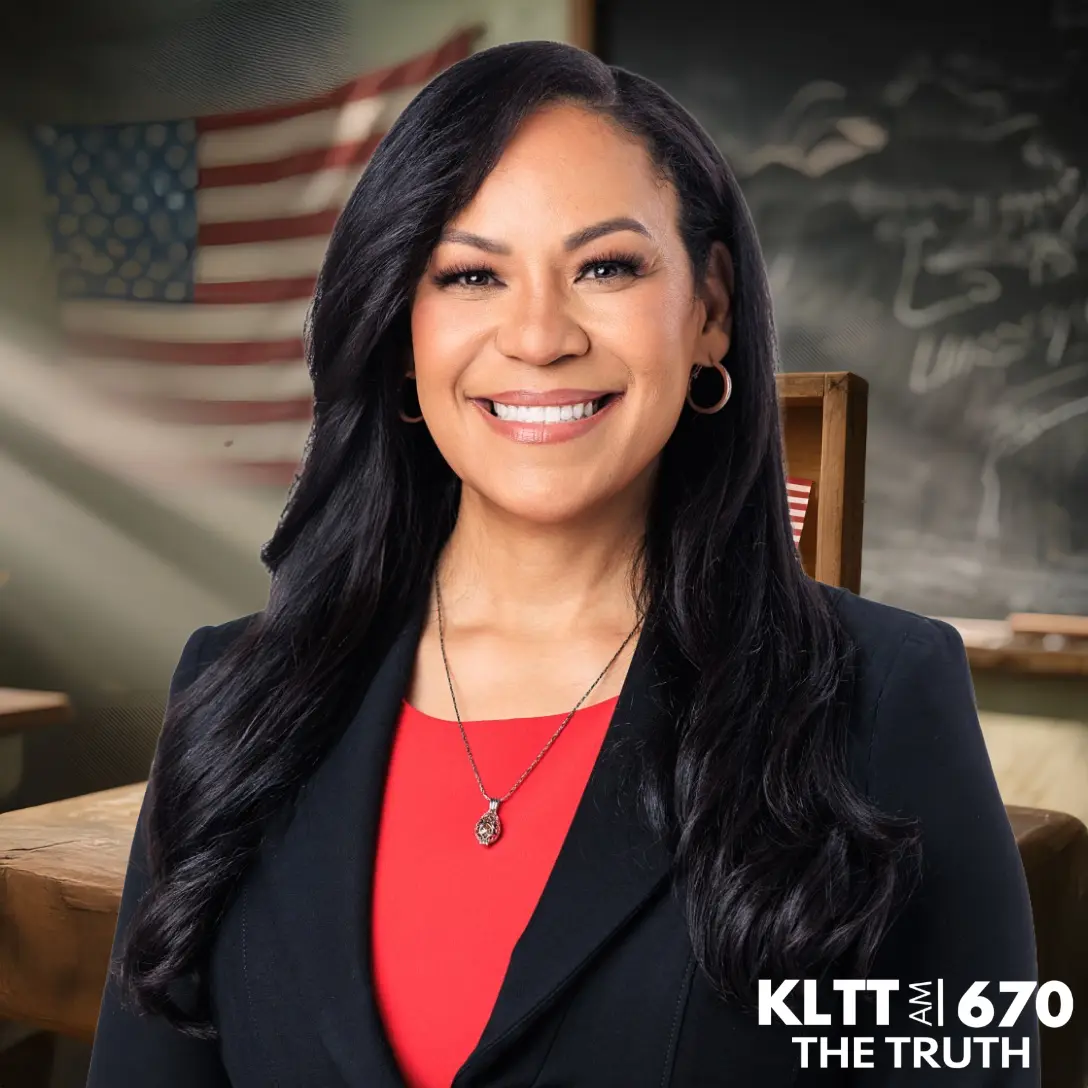
Join Priscilla Rahn in a thought-provoking episode of Restoring Education in America, as she sits with the illustrious Lenny McAllister Jr. Dive into the nuances of school choice, as Lenny shares personal insights from his journey through education, national politics, and media. Learn how his family’s legacy ignited his passion for reform and hear candid discussions on the importance of adapting school systems to benefit individual students. Discover why true choice goes beyond public versus private narratives and how paths are as unique as each learner they serve.
SPEAKER 02 :
Welcome to Restoring Education in America with Priscilla Rahn. She’s a master educator and author, leading the conversation to restore the American mind through wisdom, virtue, and truth.
SPEAKER 01 :
Well, hello, hello, everybody. Welcome back to Restoring Education in America. I’m your host, Priscilla Rahn, and I’m so excited that you’ve decided to join the conversation today. You know, on my show, we talk about all things education, and I’m so excited to bring my good friend, and I guess you could call him my mentor too, Mr. Lenny McAllister Jr. Welcome, Lenny.
SPEAKER 03 :
How are you doing today, ma’am?
SPEAKER 01 :
I’m doing great, my friend. I always like to start out with sharing the bio of my guest. And your bio is like five pages long. So I had to shrink it down because we only have 30 minutes, OK? I’m going to share your bio. Lenny McAllister graduated from Davidson College with a degree in history. He is the senior director of school development at Stride and a senior fellow with the Commonwealth Foundation. where they work to expand school choice and promote free market ideas. Previously, he was the CEO of Pennsylvania Coalition of Public Charter Schools and adjunct professor of African-American history at La Roche University. Lenny has spent years working in both state and national politics, the civil rights community, and extensive work in the media. In 2016, Lenny was the Republican candidate for U.S. Congress in Pennsylvania’s 14th District. Lenny has appeared regularly as a nationally renowned op-ed writer, political analyst, and media staple in outlets like Radio New Zealand, Sirius XM Radio, Red State, CNN, MSNBC, and Fox News. He has also been a featured speaker at events including the Pennsylvania Leadership Conference, CPAC, the State of the Black Union, and the Essence Musical Festival. And you have your own Sunday night radio show. Yes. Lenny is the proud husband of Lanny, proud father to his four children and now grandfather to one granddaughter. What are they going to what is she going to call you?
SPEAKER 03 :
Whatever she wants, she’s probably going to call me. Hey, can you can you give me five dollars? I’d like to get some candy. So whatever that name ends up being is probably going to be some kind of request that will have me wrapped around her little finger and we’ll be good.
SPEAKER 01 :
I was going to say with the photos I’ve seen of your new beautiful grandson, look at the smile that you have already thinking about your granddaughter and the legacy that that that her she has in you as a grandpa. I mean, it’s just amazing. She’s already got you wrapped around.
SPEAKER 03 :
Well, she does. And the bottom line is my daughter has a daughter. So when you have that dynamic going on, it’s one of the proudest feelings you can have.
SPEAKER 01 :
So Lenny, you’ve had a remarkable journey from Davidson College to national media, civil rights advocacy, and political leadership. But what originally inspired your passion for education and education reform?
SPEAKER 03 :
For education, my parents. My parents came from inner city Pittsburgh. They went to Citadel League schools. They graduated from Westinghouse, George Westinghouse High School here in Pittsburgh. And they were basically children of the civil rights movement. They grew up in the 50s, graduated in 61, and they went through a lot of turbulence in America, and they knew that education was the key to allow their children to have the chances that they did not necessarily have. So my dad, who is an Army veteran, who literally worked as an orderly in hospitals, went back to school while he was working as an orderly to get a technical degree in order to get a job initially at General Electric, then with Honeywell. That was a job that put a roof over my head, bought the house that is still in our family to this day, and put his three kids from him and my mother, who were junior high sweethearts, in public schools in some pretty turbulent times through some of the best schools in western Pennsylvania. and a daughter that graduated with honors from Hampton University, a son that graduated from the University of Pittsburgh, and a son that, after dropping out of college, went back and graduated from Davidson College.
SPEAKER 01 :
So that’s the connection. OK, and to you and Davidson. OK, well, we’ve been having this national conversation around school choice. You have chosen to send, I know, two of your boys to private Catholic school. If you talk to public educators, they have an idea of what school choice is. But if you talk to conservatives or Christians or some certain parents, they have a different interpretation of what school choice is. What do you think is the misconception? Because there’s fighting going on between these two groups. What’s the biggest misconception that you’ve seen around this concept of school choice?
SPEAKER 03 :
That school choice is actually choice. Sometimes the best choice for a child is the local public school. Sometimes the choice for a child is a cyber environment where they’re going to school online, and that could still be a public school. For some children, it is a Catholic school. For some children, it is a small Christian school. For some children, it is a private school that is non-religiously affiliated. For some children, it is homeschool. School choice is is true choice that best fits that individual child i can tell you that i i have four children i actually have five because i consider my son-in-law my son but i did not raise him but there are four children that i cut umbilical cords for and there’s a very strong likelihood that all four of those kids will go to four different high schools now my daughter has a master’s degree She is an award-winning, she was an award-winning graduate student while she was in grad school. My son graduated cum laude from NYU after going to a private school. So one kid went to a private Christian school. One kid went to a private non-religious affiliated school. The third kid is going to a Catholic school and has been in Catholic schools his whole life and is now in a Catholic high school. And the fourth one may go to a Catholic high school, but different than the one that his brother’s going to. Why does that matter? Because even in school choice, there’s a diversity of choices based on what each individual child needs. My oldest son, Peace, knew he was going to go to NYU since he was three years old. And that’s exactly where he graduated from college from. You know, the 16 year old has a wide range of different talents and abilities. The 12 year old is in this this mode of self-discovery now growing into his academic, you know, personality and his persona. They’re going to have different paths more than likely. And when you extrapolate that across the diversity of our country, I think the misconception is that people believe that school choice means anti-public school, drain public schools at every single dollar and demonize schools. public schools. That’s not what school choice is. School choice is to find the best ways possible so that the next generations of Americans can keep America safe through a bolstering economy, innovation, and the knowledge of civics and constitutionality that keeps our community strong.
SPEAKER 01 :
That’s a great analysis. I haven’t heard someone break it down quite the way you did, but that’s why you’re the expert in this space of education. So what do you say when critics say, oh, well, private schools and charter schools are stealing money away from public schools and it’s not fair? Have you had to answer to that?
SPEAKER 03 :
Very much so. And I’ve done so publicly, both in print and in spoken word. And the truth is the money belongs to the student and the families. They are taxpayer dollars that are allocated for a student’s education. So that money should follow the child where the child is. The money does not belong to the school district. Now, I understand that school districts will say, well, we have fixed costs and we put these costs out there already. And if you remove the child from the environment, these fixed costs are there. However, at the same time, some of the fixed costs that they are talking about are not just school buses and buildings. They’re also talking about planning for teacher pensions. They’re talking about investments to pay for teacher pensions. They’re talking about the expansion of the administrative state in public schools. In fact, if you look at the enrollment numbers of public schools over the last 60 years versus the expansion of the administrative state in public schools, you’ll see that there was a steady growth. public school enrollments that’s actually been going down over the last several years but there’s been an expansion of the administrative state and the cost therein affiliated to the administrative state namely salaries and pensions going to adults so what i would always say is you know the education realm is supposed to be a vocation not an industry it’s supposed to be something for kids to get the best of life from, not something for adults to make a lifestyle from. And if we mess up those priorities, you’ll continue to get the system that we have right now, which is a system that continues to spend more and more and more on adults And the kids get less and less out of the system. That’s not going to be good enough for a modern day America or a future America. We have to change the dynamic. And part of changing that dynamic is ensuring that the money follows the student, regardless of where the student actually learns day in, day out.
SPEAKER 01 :
If you’re just tuning in, my guest today is Lenny McAllister Jr. He’s the former CEO of Pennsylvania Coalition of Public Charter Schools, but he’s way more than that. He’s a policy expert and he’s my friend and my mentor.
SPEAKER 03 :
Well, I appreciate that.
SPEAKER 01 :
Yeah, you’re awesome. We did some great work together on Red State on the Red and Black show. Yes. Some of those episodes you can still find. I have a few on my website, PriscillaRon.com. And I just I loved that. those hours together and bantering and talking about current events um and learning from you know dr chris oh my gosh may he rest in peace he was so amazing dr m indeed yeah um so anyway that’s fun because i always say the the interviewer becomes the interviewee now you you are the master at media um so you can you can give me your feedback after this is over okay But, you know, now the big conversation, we’re seeing more parents pulling their kids out of public school, putting them even in the classical class. I’m starting to see classical education making a big.
SPEAKER 03 :
It’s making a comeback indeed.
SPEAKER 01 :
Yes. And so then the conversation is now turning to AI and this battle of the mind, right? If you’re in a classical education setting, it’s very intentional about developing the human. There’s more traits other than like rigorous education. If you go to a classical school, they’re teaching you how to become a thinking, well-adjusted human being. AI is doesn’t really fit into that. They don’t go hand in glove in a classical setting. But we’re seeing more hybrid education and the introduction of AI. What are your general thoughts about not just technology, because we’re not just talking about a computer in the classroom, but we’re talking specifically about AI generating thoughts and assignments. Do you have any thoughts about that?
SPEAKER 03 :
The bottom line is AI is supposed to be a tool. It could be a wonderful tool. I mean, it’s just like a car. I mean, you can drive a car and it can do fantastic things. It can get you coast to coast and allow you to see the beauty of the United States of America. It can also be something that you can drive 90 miles an hour through a 15 mile an hour school zone and have very tragic results. It really is in how you use the tool that’s there. And when it comes to AI, we have to understand that AI cannot replace the guidance and the mentoring that we’re supposed to be providing for each subsequent generation we can’t use ai as an excuse to lay down our obligations as adults to teach kids the nuances of life the bottom line is because we have gone through certain experiences that they are going through currently There’s an obligation that we have. There’s an opportunity that we have to teach them things that AI just won’t. AI can try to deduce based on scenarios and obviously being able to process wide ranges of data in a very short period of time. But there’s something to be said about learned life experience. There’s something to be said about a hug. There’s something to be said about looking a child in the child’s eyes and saying, I believe in you. Seeing the human soul is going to always be invaluable. And that is something that you get, whether it’s in a spiritual environment in school or in a secular environment in school. The soul supersedes all that. And there’s a level of emotional intelligence that comes through in how we educate that is extremely important for kids to be able to get. Those oftentimes are the things that get kids from being stuck to being successful.
SPEAKER 01 :
Oh, yeah, you use that word, soul. You can’t get invited to the barbecue if you don’t have soul, right?
SPEAKER 03 :
That was part of the password for Undercover Brother. If you haven’t seen the movie, go check it out. For those of you that have, don’t hold it against me.
SPEAKER 01 :
Okay, so you were also an advisor before. at the Heritage Foundation. Yes, I was. Right? You’ve taught college-level African American history. Okay, let’s just talk about it.
SPEAKER 03 :
Okay.
SPEAKER 01 :
Why understanding African American history is so important for our young people.
SPEAKER 03 :
I think primarily because the nuances of African American history and how it’s taught generally is to go through Black History Month, highlight civil rights leaders, and then subsequently end this story on February 28th. What I had an opportunity to do when I taught African-American history at LaRouche University, which I will forever be grateful for that opportunity, I was able to talk about how the plight of the African in America from the 1500s on through to the 1800s was seen in every aspect of life. That for example, slaves used the codes that were on the books before the Revolutionary War to be able to free themselves. It didn’t happen very often, but there were a few cases in the Commonwealth of Massachusetts, for example, to be able to show people that, among other things, you had African Americans that were involved in every single layer of America, including economic trade, including the abolitionist movement before Frederick Douglass, including the government, not just post-Civil War, but influencing the government during the Civil War and having correspondences with some state legislators as well as some courts and having a back and forth relationship, being able to be part of the fabric of America in a way that is tangible and meaningful and show that all the way throughout. On top of that, when you start talking about the core original sin in America, slavery, to be able to show students that the issue of slavery divided the country for decade upon decade upon decade until the 1860 election. One of the examples and exercises we did in my class that I still will never forget is I made my class one time be the House of Representatives in 1820 and be the U.S. Senate in 1859. I gave them biographies. I gave them political aspirations, and then I gave them an issue to debate, whether it was the Missouri compromise with the House of Representatives or the issue of slavery in the impending 1860 presidential election. And I made them argue those issues within the confines in the context of the biographies that they were given. They could not pick and choose their biographies. They were who they were. And by the time we got to the second debate, Priscilla, I assure you, people were yelling and screaming at each other in class. And it was then that they realized, oh, we’ve been learning this stuff for weeks on end. We’re getting tense with each other. And this class ends in 35 minutes. And then I was able to turn around and say, imagine the tensions in the country. This is after the conflicts with Nebraska. in Kansas. This is after Dred Scott in 1857. This is after some of the other issues. This is during the second Fugitive Slave Act. And this is when they did not know who was going to be president of the United States. And they did not know what they were going to do with the issues of slavery. You have, I made one kid, for example, Priscilla, be a senator from Western Virginia in 1859. And he had no say so over the planter that was a multimillionaire from Eastern Virginia. Well, the kid wrote me an email and said, can I just be the senator from West Virginia? And I replied to him. I said, yes, in 1863, you can. However, this debate is in 1859 and you’re still part of the great Commonwealth of Virginia. You have no say so. He was frustrated during that debate. It allowed them to see just how the experiences of Africans in America and then African-Americans changed. influenced America all the way through, good, bad, and different. And on top of that, all the different ways that African Americans had to overcome obstacles, economic, educational, societal, in every step of their lives. They were able to see everything from redlining in the 1900s all the way back to slave codes and all the way back to the laws against teaching black people how to read. These are some of the things I didn’t say. One final thing. One of the final assignments I made them do is I made them walk through a Walmart. Now, mind you, this is in 2017. So this is before Aunt Jemima and Uncle Ben were pulled off the shelves. I made them go look for slave references on their shelves at local supermarkets. They were able to find at least five. And then for them to understand, okay, you heard about all these stereotypes. You’ve seen all these caricatures. You’ve seen all these obstacles. What do you think it means to still see these things in your face in 2017? Is this good? Is this bad? Is this historic? Is this reflecting upon one’s history? Or is this perpetuating stereotypes? And they were now able to have an intellectual conversation about things like that based on the history they learned going all the way back to the 1500s. They didn’t even realize that there was a slave contract that was given back and forth between the Portuguese, the Spanish, then to the British. the Belgians even, before it got to the British, before we even got to Jamestown. Most Americans don’t have this information. Teaching African-American history at the college level allowed the students that I had the blessing to teach to be able to walk through the rest of their lives with a different type of knowledge.
SPEAKER 01 :
You know, well, my guest today is Lenny McAllister. He’s the former CEO of the Pennsylvania Coalition of Public Charter Schools, former Republican congressman, candidate, and just all around great husband, dad, and now grandpa. You know, we were not taught this. I was not taught this in school. You’re 100% correct that Black history was reserved to you know, 28 days in February, and we only learned about the civil rights movement and Martin Luther King Jr. And I mean, I wasn’t until, it wasn’t until I was in college that I even learned who Frederick Douglass was. I mean, this is what’s so sad that we have young people who only hear the negative part of our history, but they don’t understand the great contributions of young of African Americans, Washington, Douglas, the Tulsa, unfortunately what happened in Tulsa with Black Wall Street.
SPEAKER 03 :
Wilmington riots and some of the issues where literally people were in office And they were chased out of office. They were literally forced to abandon their land, their possessions, where they had grown up and lived their whole lives. In fact, there are items that we learned as well, Priscilla, where people often wonder about the lack of generational wealth. within the African-American community. And there are books that we were able to reference during that course that talked about how African-Americans owned land after the Civil War, but because of domestic terrorism, a lot of those folks ended up leaving the land just to go and do the Great Migration up north to save their lives. There are other instances of people that were through hook and crook They lost their land by way of, you know, ever changing tax codes or the way that communities were redlined where some communities, you know, the land valuation was done at one percentage. And then on the black part of town, it was done at a different valuation. Some parts of property had sidewalks and sewage. The black parts of town had no sidewalks, no sewage. And this went on throughout the earliest parts of the 20th century, where they were still having these fights and cancer alley and the like going up to and abutting into the 21st century. These are things that people don’t realize when you then look at and say, well, why does the African-American community have issues with education? Why does the African-American community have issues with wealth where the average single white female for example, in the Western Pennsylvania region, is worth roughly $80,000, $90,000 in mean worth, whereas the average single African-American woman in the same region has a net worth of $5. Literally, they did a study that said if an African-American woman was white in the same region with the same job and the same background, would probably live five years longer just by that one simple change based on economics and opportunities and things along those lines. People don’t realize that some of these things have ties to 100 years ago. And the only way you realize that is by looking at the history, acknowledging the history, and then saying, how do we as unified Americans move forward to optimize the talents of all of us versus demonize one versus another?
SPEAKER 01 :
Yeah, I mean, to your point, having run for office and been around politics a long time, what’s the missing link between our elected officials and some of these policies to address the disparity that we continue to see? I mean, what do they not understand that’s not helping decrease this economic and education gap?
SPEAKER 03 :
They don’t understand their obligation to learn history and they don’t understand their obligation to be visionary. They do not want to make a history that is worth living and talking about moving forward. Therefore, you have a bunch of people that have leadership titles that are not leaders. Unfortunately, that’s what we need. We need less people with titles. We need more people with the mantle of leadership in their hand and willing to walk forward with people and know the truth, some of the ugly truths, but still love the people they serve, even the ones that may not like them and they may not like themselves. Loving people you serve has nothing to do with liking personalities. It has everything to do with understanding the mission, understanding where you came from, and understanding how to provide solutions. I think what we don’t have these days, Priscilla, whether it’s in education or in other aspects of our public policy, is we don’t have people that want to be renowned and known by people that will never see their face. They don’t want to do things for people that will never know their name. That’s leadership. Can you serve somebody that will not be born until five years after you pass away? If you can provide a legacy with what you know, what you’ve learned, and what you’ve done, and you can provide a better life for that individual, that’s leadership. That’s legacy. Too many people just want to be popular. We need more leaders that are willing to be historic and leave a legacy that’s worth standing on.
SPEAKER 01 :
Wow, Lenny, I’m looking at the time and I can’t believe we need to land our plane here to be continued. Tell the listeners, where can they find you and follow you?
SPEAKER 03 :
Well, they can find me every Sunday at from 2 to 5 Eastern, which would be noon to 3 Mountain Time, on NewsRadio KDKA. Just go to odyssey.com. That’s A-U-D-A-C-Y.com. Look for my show, Lenny McAllister. You can also find me on the podcast Beyond Bias with Leon and Lenny. That is Beyond Bias with Leon and Lenny. Just look for that online. That is with award winner. He’s a Muhammad Ali Humanitarian Award winner, Leon Ford. and me. So I’m the one that’s pushing the broom, if you will. And of course, you can find me online. You can go to LennyMcAllister.com or you can follow me on X on other social media platforms.
SPEAKER 01 :
Well, thank you for the conversation. We’re going to have many, many more. And to my listeners, thank you so much for tuning in. And remember, educating the mind without the heart is no education. So seek wisdom, cultivate virtue, and speak truth.
SPEAKER 02 :
Thanks for tuning in to Restoring Education in America with Priscilla Rahn. Visit PriscillaRahn.com to connect or learn how you can sponsor future episodes to keep this message of faith, freedom, and education on the air.
