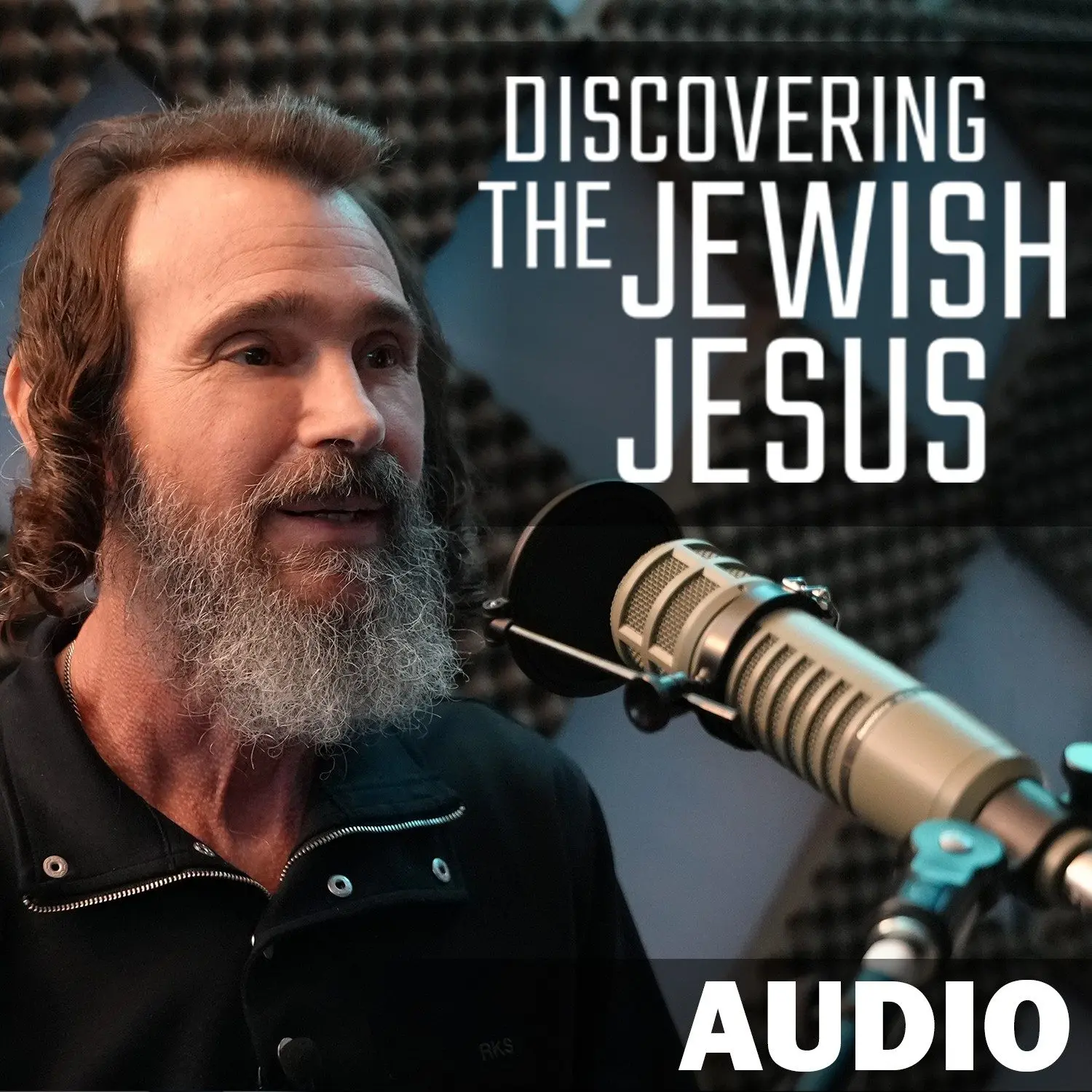

Join us for a fascinating episode of Discovering the Jewish Jesus as we travel through the heart of the desert to explore a life-size replica of the ancient tabernacle. Rabbi Schneider shares his personal journey and challenges faced getting to this sacred site, uncovering the spiritual significance and biblical patterns that the tabernacle represents. Gain new insights into how the structure symbolizes our soul’s preparedness for God’s presence and Jesus’ fulfillment of the sacrificial system.
SPEAKER 03 :
Father’s desire is to dwell with us, but what we also learn is that there needs to be a biblical, spiritual pattern in order for him to be able to come close. In just a moment, I’m gonna take you to a life-size replica of the tabernacle and teach on it. But before we go there, I wanna tell you how difficult it was to get to this tabernacle. We were in the middle of the desert in Israel, and my production crew’s car broke down. It must have been 110 degrees outside with the sun blazing as they were sweating and fitsing in the middle of the desert trying to get that spare tire on. We couldn’t get a new tire because it was Shabbat. So they had to drive an hour after they changed that tire on a spare tire, but by the grace of God, they eventually made it to the tabernacle. I want you to know, going to Israel is always an adventure. And even though God is everywhere on the planet, present to us all, somehow, in some way, there’s an extra anointing on the land of Israel. It really is elevated above the earth in a special and supernatural way. So today, thank you for joining me on this edition of Discovering the Jewish Jesus. I’m going to take you now inside the tabernacle. And I believe that as I do, God is going to impart things into your spirit. They’re going to transform you, energize you. It caused your faith to increase and cause you to fall deeper in love with him. Father God desires to be close to his people. And he said, Moses, I want you to build me this Mishkan. I want you to build me this tabernacle that I might dwell with my people. We learn once again that Father’s desire is to dwell with us. He wants to have communion with us. He wants to have a relationship with us. But what we also learn is that there needs to be a pattern, a biblical spiritual pattern in order for him to be able to come close. The teaching of the tabernacle is a prophetic shadow of the things that need to be in place in our own souls so that the Lord Jesus can dwell within us. Walk with me now as I take you on a journey through the Mishkan, through the biblical tabernacle. The walls that surround it are 150 feet long, 75 feet wide, and about seven and a half feet tall. They were tall enough so that people that were on the outside couldn’t see what was going on on the inside. The dimensions that separate the actual outside from the tabernacle was designed to cause people to understand that their sin had separated them from God. In other words, these walls, the 150 feet long and the 75 feet wide, that barrier, that fence, is meant to teach us that there’s a separation, that sin has separated man from God. But listen to this. In God’s mercy, even though man’s sin has separated him from God, which is evidenced by the walls, God in his mercy, however, made a way in. This is the entrance. We don’t know exactly if it was right next to the outer fence or whether it was a few feet away. The Bible just isn’t clear about it. But what we’re going to do now is we’re going to go into the tabernacle through, beloved, the one entrance. Now hear me. Remember, I said that there was a structure, a fence, all the way around it, 150 feet long, 75 feet wide. This is the only entrance in. And the entrance, notice once again, is symbolized with this beautiful fabric as opposed to the fence, which is just one color. This right here, the fact that it’s one way in, represented by this door with beautiful colors, it represents Jesus who said, I am the way. No one comes to the Father but through me. Jesus also described himself as the door and the gate and the only way into the Father. And the fact that the tabernacle only has one entrance in represents this, beloved ones. In the outer court of the tabernacle, there were two pieces. There was the altar and then there was the brass laver where you would wash yourself. We actually get the word lavatory from the brass laver. It goes all the way back to ancient Israel. But this was the altar. This is the first piece of furniture that the worshiper would have come to. And what the worshiper would do is he would bring his sacrifice with him. And depending on how much money he had, that would determine whether it was a goat or a lamb. But if he didn’t have as much money, he might bring a bird. But let’s say, for example, that the worshiper had brought with him a lamb or a goat as a sacrifice. What the worshiper would do is he would place his hands on the head of the animal sacrifice. And the Hebrew actually tells us in the book of Leviticus that he actually pressed his weight onto the head of the animal. Symbolically, what he was doing is he was putting his hands onto the head of the animal, leaning into it. Symbolically, he was transferring his sin. As he pressed onto that animal, he was transferring his sin, beloved, into that animal. Then the priest would take the animal and they would bind it on the altar by the four horns and they would put it to death and smear the blood around, once again showing us that there is no forgiveness of sin without the shedding of blood. This is one of the most primary teachings and fundamental principles of the entire Word of God. Going all the way back to the Passover where the Israelites took the blood of the lamb and put it over their doorpost. And because they were in a home that was covered with the blood, judgment passed them over. Same truth we see on Yom Kippur, the Day of Atonement. The high priest brought the blood of the bull and the goat into the Holy of Holies. So through the entire Passover, Torah, in Hebrew Bible, we see that God grants forgiveness when an innocent life has been given in the place of the guilty and it was shadowed in the Torah with the innocent animal dying. And then Jesus fulfilled it once and for all and said, I’m the one to which all these animal sacrifices pointed to. And now that Jesus has himself been crucified and his blood shed, no more animal sacrifices are ever necessary again.
SPEAKER 01 :
This is Discovering the Jewish Jesus, and Rabbi Schneider will be right back. But first, I want to ask you the most important question you could ever be asked, and that’s, do you know Jesus Christ as your Lord and Savior? If you haven’t yet invited Jesus into your heart today to lead your life and ask God to save you from your sins, I want to invite you. Do that right now. If you’re ready, then I want you to pray this prayer with me. Father God, I repent of my sins, and I ask you to cleanse me with the blood of Jesus. I accept Jesus Christ, your Son, as my Lord and Savior. Help me to follow you all the days of my life as you show me how. In Jesus’ name, amen. Friend, if you just prayed that prayer, I’m so excited for you. Let us know by clicking find Jesus at discoveringthejewishjesus.com. And now here’s Rabbi.
SPEAKER 03 :
So let’s continue on. This again is where sin was taken care of. The worshiper brought in his animal. The animal was put to death in the worshiper’s place. The blood was shed, signifying that a life had been given because the Bible says that the life of the flesh is in the blood. And I’ve given it to you on the altar, saith the Lord, to make an atonement for your soul. Leviticus 17, 11. Now, every day, notice once again, we’re not inside the actual tabernacle yet, we’re in the outer court. So we haven’t actually gone into the tabernacle, we’re just in the outer court. The two pieces of furniture, once again, the altar that I just mentioned, where we have forgiveness of sin, and then we have the brass laver, which speaks about cleansing, and every day, The priest had to come to this brass laver, and it was actually made from the mirrors of the women that ministered outside the tabernacle, Exodus 38, verse eight. It’s made of brass, it was filled with water, and every day the priest would come and wash her. What do you think they saw when they looked over the brass laver that was filled with water? They saw a reflection of themselves. That’s why it was made once again from the mirrors of the women that ministered outside the tabernacle. Now this is a very important spiritual principle. The point is that the Lord was cleansing the priest And the way that he cleansed them was, of course, in the natural. It was with the water that was in the basin. But the principle, the mystery of this is that when they looked over the basin, when it was filled with water, they saw a reflection of themselves. That’s why the Lord was so specific when he said that this brass laver had to be made from the brass of the mirrors. that the women outside the tabernacle used as they ministered. You see, a mirror is used to show us a reflection of ourself. And what the Lord is teaching here at a deeper level is that if we want to be cleansed of sin, If we want to be cleansed of sin, we need to be able to look at ourselves. And as we look at ourselves through the light of His Word and through the light of the Holy Spirit, what happens is, as we agree with what God shows us about ourselves, as we accept the conviction of the Holy Spirit, What happens is we’re cleansed of sin because if we confess our sin, He’s faithful and just to forgive us our sin and to cleanse us from all unrighteousness. So cleansing comes when the Lord shows us Himself by the Spirit We agree with him, and then what happens is we’re washed of the sin. So at a deeper level, that’s what this brass laver symbolized. Again, surface level, they washed with the water, got the sand off them, et cetera. But deeper level, it was used as a prophetic shadow to show us that in order to be cleansed of our sin, we need to be able to look at ourselves and agree with what God’s word says, because he’s faithful and just to forgive us and cleanse us from all unrighteousness when we agree with what he shows us about ourselves and come into agreement with his word. Well, beloved, I’m going to take you now inside the actual tabernacle. All the walls are covered with pure gold. And notice the beautiful fabric above me here and the beautiful symbolism of the divine. Now, inside the holy place, we have the golden menorah, we have the table of showbread, and we have the altar of incense. In back, you’ll see a curtain, and behind that curtain is the Holy of Holies, where the Ark of the Covenant is. I’m going to be going over to the golden lampstand, or the golden menorah. This is one of the main official symbols of Judaism. You’ll see on much Jewish displays, you’ll see the picture of this menorah. Now, this menorah is different than what some may see with a nine-tiered menorah because the nine-tiered menorah is a Hanukkah menorah. But the menorah in the tabernacle in the Mishkan, notice it was seven branches as opposed to the nine-tiered menorah for Hanukkah. Now, I want you to hear me. This is very important. This golden menorah was made from one piece of hammered gold. In other words, these different sticks that are part of this lampstand here were not attached to it. They were never separate, but rather, this was all formed and molded out of one piece of gold. This was one big lump of gold that was hammered out to form the seven different lampstands. I want you to think about this. In the book of Revelation, chapter number one, where John is brought before the throne of the Lord, he hears the voice of God coming to him saying, from he who was, from he who is, and from he who is to come. And he said, listen, from the seven cities spirits that are before the throne. You see, beloved, the menorah, the light that’s coming from the menorah represents the Holy Spirit. You would not be able to see anything at all. It would be pitch black because, again, the roof is covered, the sides are covered. The only light is the light that’s coming from the golden lampstand. And the point is, we’re in the holy place. This is the place where we can perceive the things of God. This is the place of revelation. And the concept is, is that we can’t grasp God’s mind by relying on the natural sun. The natural sun is outside. I’m talking about the sun that shines, you know, on the animals and the plants and on the earth. We can’t perceive deep revelation oftentimes through the natural sun. To be able to receive God’s thoughts, we need to be able to receive it through the light of His Spirit. So inside this holy place, we have no natural light. The only light we have is coming from the golden menorah, which represents the light of the Holy Spirit. You see, David said, in thy light, there is light. There’s different types of light in the world. Even the devil disguises himself as an angel of light. But when we have God’s light, we’re able to truly have, beloved ones, the thoughts of God and perceive the depths of the Spirit. Now, the life in the menorah is what gives us the ability to perceive the other objects that are in the holy place here. And so I’m going to take you next to the table of shewbread. There are six loaves on this side, six loaves on this side, for a total of 12 loaves. These 12 loaves stand for the 12 tribes of Israel. They were also known as the bread of presence. And the Torah tells us that God’s eyes were continually upon them. And again, they represent the tribes of Israel. So this speaks to us of several things. Number one, that the Lord is saying, my eyes are always on my children. And then the priests would actually eat the bread on the Sabbath and then replace it. The truth that we find from this is that because this is called the bread of presence, meaning God’s presence, the truth is is that we eat God’s presence. We live by the presence of God. God alone is our source. Once again, it’s called the bread of presence. There’s 12 here representing the 12 tribes of Israel. And every Shabbat, the priests would eat it and replace it. They would eat the bread of presence. So what the Lord is saying is that I am your source, just like Jesus quoted from when he overcame the devil in the wilderness when he said, man shall not live by bread alone, he was quoting from the book of Deuteronomy, but by every word that proceedeth out of the mouth of God. And so the bread of presence here, God is always looking at his people because he loves them, and he is our source of life, he is our presence. Let’s continue on now, beloved, to the altar of incense. The altar of incense was the place where they would burn continually a special recipe of incense that was prescribed by the Lord. It wasn’t just any incense. It was an exact mixture that was specified in the Torah. The incense was always burning. And the Bible tells us in the book of Revelation, chapter 5, verse 8, that rising incense represents, listen, the prayers of God’s children, the prayers of the saints. And because there was no wind in here, the smoke of the incense went straight up. And this speaks to the fact that our prayers should ascend straight up to God. Sometimes when people pray, it looks like they’re praying, it sounds like they’re praying, but they’re not really praying in the true sense because sometimes what they’re doing is they’re praying to impress somebody else. or they’re praying in a way that they think it will impress other people. And when they do that, their prayers aren’t going straight up, their prayers are going outward. Maybe they’re standing up and they’re praying and it sounds real sanctimonious, but what’s in their heart really is, I want to sound good in front of these people that are listening to me pray. That isn’t prayer that ascends straight up. But the prayers, beloved, that truly please God are prayers that arise straight up, just like the smoke of the incense in the tabernacle here arose straight up, beloved ones, to the Lord. So you’ve seen here that inside the holy place, we have the three primary objects of the golden menorah, the table of shewbread, and the altar of incense. A lot that we’ve learned today, but the primary thing I want to communicate to you, beloved ones, is this. The Lord told Israel to build this Mishkan, this tabernacle, so that He could dwell with His people. He desires to be close to us. He desires to be close to you. But in order for Him to dwell with us in the intimacy that He desires, our lives have to be in order. Our soul has to be in order. And that’s what these things teach us. It’s a pattern for how to walk in intimacy with God. So I pray today that you’ve learned that we need to rely on the light of the Holy Spirit. We need to be convinced that God loves us and to eat of His presence. And we need, beloved, to be bathing our lives and saturating our lives in prayer. Prayer is just reaching out to God. It’s just talking to Him. And we can develop a continual state, beloved, of being conscious of His presence. The other day I was walking through the streets of Jerusalem and I saw on my right a beggar. And there’s so many people begging for money. I just kept going on this particular occasion. But after I passed him, I felt bad. I felt like I should have blessed that person with the financial gift. and it grieved my heart that I didn’t, and I covenanted in my heart with the Lord, Lord, let me not miss an opportunity like that again. Well, praise God, on my way back, he was still there, and I was able to bless him with the gift from the Lord, you know, just with a financial blessing. The reason I tell the story is that oftentimes we mean to do well, we mean to make an offering to the Lord and give, but we sometimes are so busy, we’re moving so quick, we don’t do it. Well, I say that to say, this is our last chance. We’ve come to the very end of the year. If the Lord has put it on your heart to present an offering to him through Discovering the Jewish Jesus, I want to encourage you, this truly is our last chance. I want to thank you for your love and financial support. Because of you, beloved, we’re able to do what we’re doing and reach the world with the gospel.
SPEAKER 01 :
Thanks, Rabbi. And friends, if God is calling you to give an end of your gift to discovering the Jewish Jesus, don’t delay. Give today. Call 800-777-7835. Once again, that phone number is 800-777-7835. or you can give online at discoveringthejewishjesus.com. You can also send your donation in the mail to us at Discovering the Jewish Jesus, P.O. Box 777 Blissfield, Michigan 49228. That’s P.O. Box 777 Blissfield, Michigan 49228. And we know that we could never reach all the people around the world who are exploring the depths of scripture with us each and every day without you. So thank you for your generous financial support and also for praying for us, especially during this season. And then don’t forget, as the year draws to a close, we want to bless you with a free gift. It’s our Self-Deliverance Teaching Bundle. And it’s an engaging resource that includes Rabbi Schneider’s step-by-step PDF guide. And it explains how to recognize spiritual footholds and close open doors that the enemy might have in your life. Rabbi will teach you to use scripture and you’ll also receive an MP3 audio file with prayers that you can model. So claim your free self-deliverance bundle today at myfreegift.com forward slash freedom. That’s the only way you can get it. That’s myfreegift.com forward slash freedom. Now let’s turn things back over to Rabbi as he concludes today’s message from our Holy Land series with God’s special and sacred blessing. Rabbi?
SPEAKER 03 :
In the Old Testament book of Numbers, we find a blessing God speaks over his children through Moses and Aaron. It carries the idea of favor and expression. Open your heart to the Spirit and the Word today and receive Father’s goodness into your life with confidence.
SPEAKER 02 :
Yevarechech Yahweh, vayishmarecha. Ya’er Yahweh, panavelecha, vihunecha. Yissa Yahweh, penavei lecha ve’asem lecha. Shalom.
SPEAKER 03 :
The Lord bless you and keep you. The Lord make His face shine on you and be gracious to you. The Lord lift you up with His countenance. And the Lord give you, beloved one, His peace. God bless you and shalom.
SPEAKER 01 :
This program is produced and sponsored by Discovering the Jewish Jesus. And I’m Dustin Roberts. Come back next week when Rabbi Schneider takes us on a journey through the Holy of Holies. That’s Monday on Discovering the Jewish Jesus.