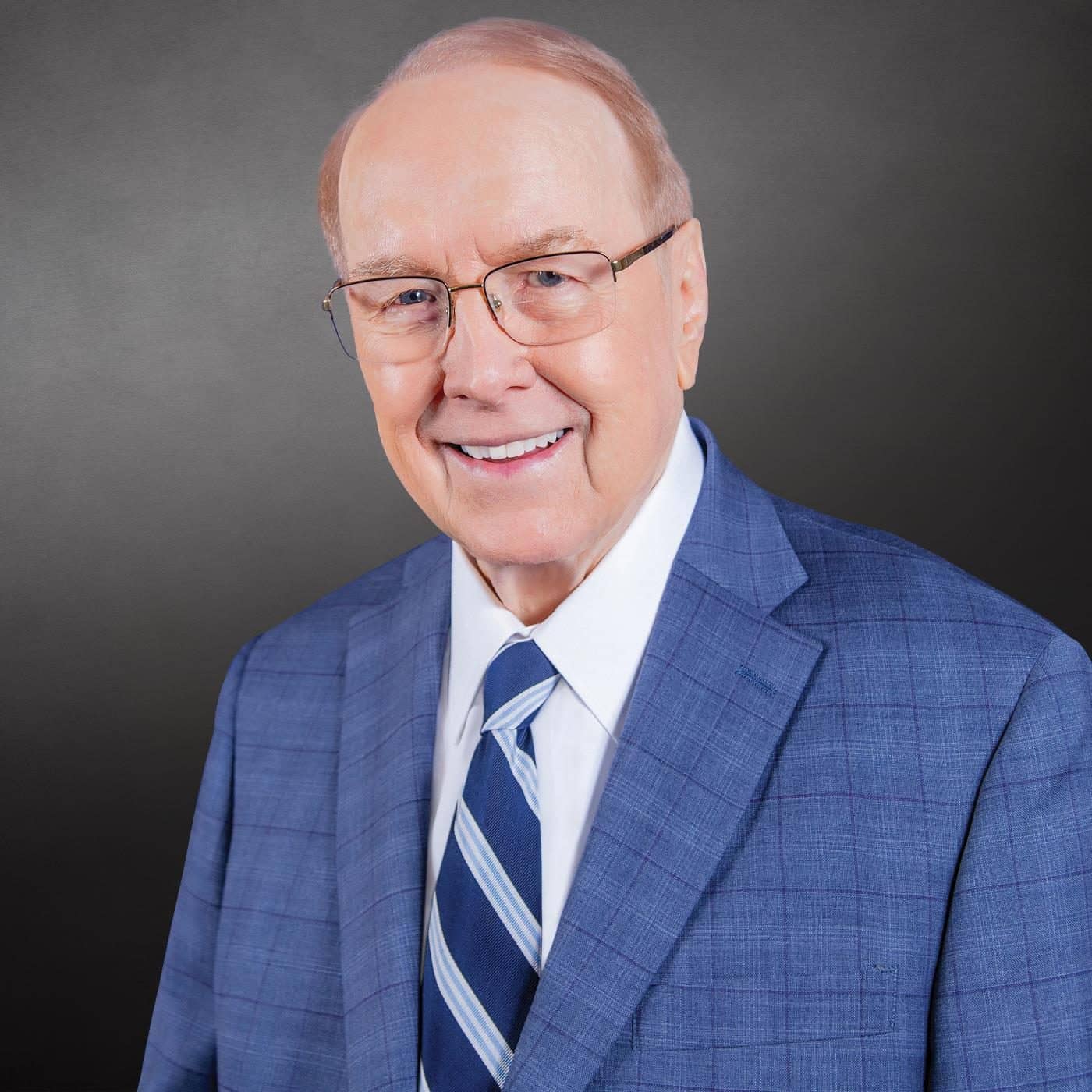

Join us on this special edition of Dr. James Dobson’s Family Talk as we delve into the critical role of grandparents in nurturing a biblical legacy. Dr. Dobson and Larry Fowler discuss the immense impact that grandparents can have as spiritual leaders, sharing stories and strategies to influence their grandchildren’s lives meaningfully. With Grandparents Day approaching, this thoughtful conversation invites listeners to see their role in a new light and offers guidance on navigating the spiritual journey with the younger generations.
SPEAKER 03 :
You’re listening to Family Talk, the radio broadcasting division of the James Dobson Family Institute. I am that James Dobson, and I’m so pleased that you’ve joined us today.
SPEAKER 01 :
Well, welcome to Family Talk, the broadcast division of the Dr. James Dobson Family Institute. I’m Roger Marsh. You know, when you think about your relationship with your grandchildren, what comes to mind? Birthday parties? Soccer games? Spoiling them with gifts or maybe home-cooked meals? Well, while those things are wonderful, God has something far greater in mind for you in your role as a grandparent. And on today’s edition of Dr. James Dobson’s Family Talk, we’re going to revisit a conversation Dr. Dobson had with Larry Fowler, founder of the Legacy Coalition, and they’ll be exploring the biblical calling of grandparenting. With over 50 years in children’s ministry and as a grandfather of seven himself, Larry brings unique insight into this often overlooked ministry opportunity. Now, as we are remembering the life and legacy of Dr. James Dobson, and with Grandparents Day coming up this Sunday, we thought it appropriate for us to revisit this conversation Dr. Dobson had with Larry Fowler about the godly influence and opportunity of grandparenting. During today’s conversation, you’ll discover why Scripture calls us to think not just two, but four generations ahead. You’ll also learn how grandparents can become powerful spiritual influences in the lives of their grandchildren, and why this role might be one of the most important assignments God will ever give you in your later years. Here now is Dr. James Dobson to introduce today’s broadcast.
SPEAKER 03 :
Larry, how many grandparents do you think there are in the United States, and how many of them have a faith in Jesus Christ?
SPEAKER 02 :
Well, our government census says there’s somewhere around 75 million grandparents. And from what we know of other studies, about 40% of our generation professes to be born-again believers. So we extrapolate that there are about 30 million Christian grandparents in America. And Dr. Dobson, each one of those on average has four grandchildren. That means that we have the potential to impact 120 million of the youngest Americans. We could start a national revival through the grandparent-grandchild relationship. We could still save this country if we just exerted our influence with those in our own families. We could change this nation.
SPEAKER 03 :
If that won’t stir the hearts of the grandparents who are out there, I don’t know what would. And what a ministry, my goodness.
SPEAKER 02 :
You know, we have an opportunity still to do a lot to impact our country. And I think about the things that are happening at the elementary school close to where I live. I can’t do much about that. I can’t do much about the universities. Can’t do much about the politics. I can’t do much about a lot of things. But you know what? I can do something about my grandkids. And so can every grandparent that’s listening. If we would all band together and use our spiritual influence and apply truth and grace, both to our grandparent-grandchild relationships, we could change this country. I believe it with all my heart.
SPEAKER 03 :
Larry, how do you begin talking to your grandchildren about the Lord? How do you make that meaningful to them? Because, you know, unless they’re unusual kids, they get bored real quick. How do you take the gospel directly to them?
SPEAKER 02 :
Well, a lot of different ways. Number one, we tell our own story.
SPEAKER 03 :
Is that a scriptural precept?
SPEAKER 02 :
Well, it’s a scriptural example for us to follow. Moses, when he was leading the children out, he said, you tell your children and your children’s children about all the things that you’ve seen. And he was talking about the plagues and all that happened. He said, you tell them what your eyes have seen. And if we’ll follow that example, We will tell our children what our eyes have seen of God’s goodness. So we’re to share our faith stories with them. We’re to bless our grandchildren. That’s something that we do on a regular basis. We use the Levitical blessing. And we say that over our grandkids all the time. Describe that for us. How does that take place? I’ll tell you. Our youngest grandson is now five. when he was two, he would spend the afternoons with us and he’d take a nap. And right before it was time for nap, my wife, Diane, would say, Micah, it’s time for your nap. And he would scream and holler, no, don’t want to take a nap. And she just wouldn’t listen to him. She’d say, Why don’t grandpa give you a blessing before it’s time for your nap? And this little guy that can’t stand still for anything, something would happen to him. He would come over and he would stand in front of me and he’d stand still of all things. He put his hands down to his sides. I put my hands on his head on either side. I look him in the eye, give him a great big smile. And I’d say, Micah, the Lord bless you and keep you. The Lord make his face to shine upon you and be gracious to you. The Lord lift his countenance upon you and give you peace. Now go take your nap. And you know what? He never protested his nap after I did the blessing on him. That is incredible. That’s a wonderful story. Yeah, and I believe the blessing is the opposite of prayer. Prayer is talking to God on behalf of others, at least intercessory prayer. Blessings are talking to others on behalf of God. I am speaking God’s words of favor into the lives of my grandkids. That’s such a powerful thing to do. You know, as a spiritual patriarch, who better than me to pronounce God’s favor into my lives and my grandkids? Now, when they live at a distance and when they’re teenagers or older, you don’t do it the same way, but you adapt according to how old they are and the opportunities that you have. Have they believed what you taught them? the jury’s still out on the younger ones, you know, cause they’re, they’re five, seven and nine, but we see their faith growing and doing well. The older ones. Yes. We’re so thankful. Their faith is solid. And, you know, they were in that marriage that fell apart and then they lived with us and we’ve watched their faith grow and they’ve each had their own journeys, but they are firm in their faith.
SPEAKER 03 :
You know, I mentioned in the first program that, uh, My parents talked about the Lord all the time, and it was my great-grandmother and my grandmother that did the most effective job. But if you can believe this, I learned to pray before I learned to talk because I was imitating the sounds that my parents made when they prayed when I didn’t even know the meaning of the words. Yeah. I mean, you can’t start too early. No, you can’t. I mean, you grab whatever opportunities are there for you. When I was four years of age, I went to an altar and I gave my heart to the Lord, which was the most significant moment of my entire life. And it affected every aspect of my life. Shortly after I became a follower of Jesus in that sense, I was riding my tricycle. And I had a wreck. And I primarily hurt my hand as I was going down. And I was really wailing over that. And I went to my mother and I was just crying and I was hurting so badly. And my mother said, why don’t you pray about it and ask Jesus to take the pain away? And I said, okay. And so I prayed my little prayer and then I went to crying again. And she said, well, what did Jesus say? And I said, he said, I’m busy right now watering the flowers and trees, but I’ll get to you when I can. That was an illustration of how even an accident became a point of teaching for my mother.
SPEAKER 02 :
Well, you know, another thing we do right now that’s really working well with our three youngest ones is they watch Superbook. And Superbook is an animated Bible story series. And I want to tell you, my grandsons love Superbook. So this is a shout out to Superbook. So we watch it. We talk with them because then that starts a conversation. the Bible stories and they’re dramatized really well. So that starts the conversations. Then we do try to follow Deuteronomy six as our children do, you know, talk about it when you sit in the house and when you walk by the way, and when you rise up, in other words, it just becomes a part of the daily routine to talk about the Lord. And that’s what you talk about. That’s Deuteronomy six.
SPEAKER 03 :
Then really the whole passage is, is relevant to this discussion. Start right there and you’ll find out what is not suggested by Moses. It is called a commandment. These commandments I give to you this day to do these things.
SPEAKER 02 :
And most of the time we think about that as a verse for parents, a passage for parents. But if you go to verses two and three, it mentions your children and your children’s children. So that actually is a command for both parents and grandparents. It sure is. I think this is one of the things that gives grandparents who have an adult child who’s walked away hope, and that is a new strategy. Our generation grew up with a high, high view of scripture. And I know you’re right there with me. We value truth so much. We look for churches that teach the truth. We teach the Bible. We go to Bible conferences and seminars and everything. When grandparents have children or grandchildren that are struggling in their faith, I think it’s important for them to think about representing Jesus to them. Well, what does it mean to represent Jesus? Go to John 1, 14. And the last phrase where it says, Jesus was full of grace and full of truth. We have to be full of grace and full of truth to our children and to our grandchildren. I think it’s pretty easy for us to be truth to them. We like to tell them the truth. It’s a lot harder to be full of grace. And you know what’s fascinating to me, Dr. Dobson, is even though Jesus was 100% truth and 100% grace, when he dealt with people, especially when he dealt with sinners, he most often led with grace, not with truth. That’s true. You think about the story of the woman caught in adultery. You know, these men bring this woman to Jesus, and they ask Jesus to speak truth about her. They said, we caught her in the very act, and The law says to stoner, what do you say? They were wanting Jesus to pronounce truth, and he refused. Remember, he started writing in the sand.
SPEAKER 03 :
And his last gracious words to her were, go and sin no more.
SPEAKER 02 :
Yeah, and that actually was the truth that he was leading up to. Everything that he’d done before that was grace to this woman. And I remember one time talking with a group of grandmas about this, and they had been trying to speak truth into their children’s lives, their adult children’s lives, who had walked away from faith. One lady told me, my church has just been telling, just give them the gospel, give them the gospel, give them the gospel. They’ll come around. In the meantime, her son was a declared atheist. I said, so how’s it working? Well, not too well. He said, the wall seems to be getting higher. Well, I said, so how long have you been doing this? She said, about 10 years. So you’ve been leading with truth for 10 years. Yeah, hadn’t had any result. How about if you do what Jesus did and start leading with grace? And leading with grace is not to the elimination of truth.
SPEAKER 03 :
It’s so that they will hear truth. There were so many examples where kindness preceded the obligations of the faith.
SPEAKER 02 :
If there is a blame to be laid at our feet, our generation’s feet, for the rapid change of culture and the aversion to evangelical Christianity, it’s because we have been guilty of not balancing grace and truth well. We speak truth, but we don’t often lead with grace well.
SPEAKER 03 :
That’s not to say that a message of condemnation of sin.
SPEAKER 02 :
Exactly. The grace may be in the way we say it. The grace may be in the timing, especially when it’s with our own children.
SPEAKER 03 :
Tell me if you discipline your grandchildren.
SPEAKER 02 :
Yes, because when they’re in our house, of course, we’re the authorities. When their parents are present, we do not. When their parents are present, they are the ones that are primary disciplinarians. And when we have them, we do everything that we can to adapt the same standards and practices that our son and daughter-in-law do. We don’t want to have conflicting discipline systems. We want to make theirs work. So we do everything we can to use theirs and to use it effectively.
SPEAKER 03 :
Well, let’s go to the really tough question. What if your children, the parents of your grandchildren, are not believers and really don’t want you to introduce them to Christ?
SPEAKER 02 :
Well, there are still things that you can do to impact your grandchildren for Christ without words. I have a great story for you. I was teaching a seminar about this and a lady, very refined looking lady, I found out later she is a university professor. She stood up and she said, but Mr. Fowler, what do I do? My son has said I can see my granddaughter or I can talk to her about God, but I can never do both because the minute that I mentioned God to my granddaughter, I will never be allowed to see her again. And she said, what do I do? And so I tried to encourage her to pray and to be a good example. There’s more to the story as a Paul Harvey, the rest of the story part of the song. But that next summer, she determined she was going to spend time alone with that granddaughter. She honored what her son said because she knew she would be cut off if she didn’t. They went on a trip to New York City together, the two of them. And on that trip, the granddaughter forgot her camera, a very expensive camera her dad had bought for her, forgot it and left it in a taxi. And they got out of the taxi and realized it was gone. And the granddaughter was just horrified. The grandma said, well, I’m going to pray. She didn’t mention God. So she said, I’m going to pray. And the granddaughter said, well, I’m crossing my fingers. And grandma said, well, I’m going to pray. Well, to make the story short, the next people that got into the taxi cab found the camera, decided they wanted to try to get it back to who lost it. They went to all the work to find out who the fare was and the camera before, where were they picked up. And when this grandma and her granddaughter got back to their hotel, the camera was waiting at the front desk.
SPEAKER 03 :
Isn’t that wonderful?
SPEAKER 02 :
The grandma said, see, my prayer got answered. She didn’t mention God, but she allowed her lifestyle and her prayers to still have. And I’ll tell you what, that’ll have a huge impact on that granddaughter.
SPEAKER 03 :
Never underestimate what kids are picking up below the surface. Yes. They’re watching. They remember. And they’re influenced by very subtle things that are past. You don’t have to beat them over the head with it.
SPEAKER 02 :
Deuteronomy 4.9 starts with the command of watch yourselves. Meaning watching your own spiritual life. You know, this ought to be the time of our life that we are the most godly. We ought to be the least critical, the least cynical, the most hopeful, the most grace-filled that we’ve ever been in our whole lives. And the power of that kind of a lifestyle, with or without words, in the lives of our grandchildren has an incredible, incredible impact.
SPEAKER 03 :
Well, I’m talking today with Larry Fowler about the most important subject I can imagine that having to do with winning your grandchildren for Christ and being the kind of godly grandparent that I think is not only scriptural, but it’s the substance of this second part of our lives. You get another chance. You raise your children, and then you get an opportunity to have an influence on the next generation, and we certainly want to capitalize on that. Larry, there are a couple of questions I want to ask you about your own ministry. What are you and the Legacy Coalition doing specifically for churches? You told us in the first program that there’s not much going on there in the grandparent, grandchild area. relationship that the church deals with. What are you doing to change that?
SPEAKER 02 :
We’re providing the churches with the tools for small group classes, for seminars, for sermons, for everything that we can, because I believe in the local church. And if this focus on grandparenting does not get into the minds and hearts of the leaders of the local church, it’s not a sustainable momentum. We have to have the involvement of the local church across America in order to reach the hearts of all the grandparents. So we now have several hundred churches that are carrying on ongoing classes or meetings of some sort or another for grandparents. There are many examples of churches that are doing something like once every six weeks, Just having a gathering of grandparents to encourage them, to get them to pray together for their grandkids, to just give them the tools on how to overcome problems like distance. And so we’re trying to equip the churches with tools to do that.
SPEAKER 03 :
You know, I believe that there are many pastors out there who have never thought these things that we’ve been talking about these two days. I believe they’re willing to focus on grandparenting. And we want to make sure that they can get in touch with you if they want help with that. We explained that at the end of the last program. Tell us again how people, how churches, how pastors, how grandparents can tap into the work that you’re trying to do.
SPEAKER 02 :
Well, it’s really simple. We just want to direct them to our website because everything is there, all the contact information. That’s LegacyCoalition.com. Let me speak to the pastors for just a second. I want to tell you pastors, if there are some of you that are saying, you know what, we got to reach the young people. And sometimes when pastors say that, the older half of the congregation will feel put on the shelf or marginalized. I want to tell you, if you give them a vision for grandparenting, it’ll stop the crankiness and they will align with your vision to reach the younger generations. You see, that’s our whole passion too. This isn’t about just making life fun for grandparents in their older age. It’s all about influencing the youngest generation. It’s really the creation of a mission, isn’t it? Intergenerational discipleship. That’s what we’re doing. Get your older folks to align with that. And I’ll tell you what, they may not care so much about the kids in the youth group that they don’t know who they are, but I’ll guarantee you they care about their grandkids. And you can leverage that passion that they have for their grandkids in a way to increase the fervor for ministry in the older folks where they’ve kind of lost it.
SPEAKER 03 :
Have you done any writings about older Christians who might be available to help the single mother or single father who do not have the other spouse to help them?
SPEAKER 02 :
No, but we have written about something. And in fact, I have a passion about this, and that is to help the grandparents who are raising the grandchildren.
SPEAKER 03 :
Oh my, that’s extremely important. And there’s more and more examples of it out there.
SPEAKER 02 :
And you know, when there’s a single mom, most single moms have some sort of support system. The very nature of the situation in which grandparents get custody of grandchildren usually means there’s nobody else in the family to do it. And so they not only are all alone in trying to raise these kids, they’re tired.
SPEAKER 03 :
Listen, my heart goes out to them because they finished their job and they thought that parenting and raising children was over. And all of a sudden they have the ultimate responsibility for these kids. My heart really goes out to them.
SPEAKER 02 :
And they often find that out in a moment. You know, somebody shows up at the door and say, here, if you don’t take these kids, they go into the foster system. And just like that, their world has changed. I want to speak to the grandparents on your program. If you know of grandparents that are raising grandkids, consider a ministry of being the grandparents to those kids because their own natural grandparents can’t. They are parenting. They need grandparents too. And you could come along your friends who are raising grandkids and be the grandparents that they can’t be.
SPEAKER 03 :
We’ve been talking to Larry Fowler. He’s a new friend of mine. I love what you have to say. Thank you for being our guest on these two programs. Please come back and let us know how you’re doing. Okay.
SPEAKER 02 :
I’d love to. Thanks so very, very much.
SPEAKER 01 :
When you consider how your prayers and influence could shape not only your grandchildren’s lives, but their children and even their children’s children, it puts your role as a grandparent in a whole new light, doesn’t it? You’ve been listening to a special edition of Dr. James Dobson’s Family Talk, as we’re revisiting Dr. James Dobson’s inspiring conversation with Larry Fowler, founder of the Legacy Coalition, talking about the godly influence and opportunity of grandparenting. with Grandparents’ Day coming up this Sunday. We thought it was an appropriate time to revisit this story, especially when you consider, too, we’re seeing all these pictures on social media of Dr. Dobson and his two grandchildren, Lincoln and Lucy, and the memorial posts that have been all over the world celebrating the life and legacy of our founder and chairman, Dr. James Dobson. Now, if you would like to hear this program again, or you know a grandparent or two who needs this kind of encouragement, you can share the audio with them online at drjamesdobson.org forward slash family talk. By the way, while you’re online with us, be sure you also check out the memorial page we have dedicated to Dr. Dobson’s life and legacy. Of course, we continue to appreciate your prayers for his wife, Shirley, daughter, Danae. son Ryan, daughter-in-law Laura, and of course those two grandchildren we mentioned, Lincoln and Lucy. You can find those memorial resources available to you at drjamesdobson.org. And while you’re online, be sure you also leave your favorite memory of Dr. Dobson. Maybe it was a word that he spoke on the radio touched your life during a very, very tender time in your marriage, piece of advice perhaps that you received from one of his books or one of his online devotionals that helped you improve a relationship with a child. All of that information is available at drjamesdobson.org. And thank you for remembering that in addition to your prayers, this ministry is made possible because listeners like you believe that biblical principles should guide our families through every generation and Dr. Dobson’s intent. upon his passing was that his ministry legacy would continue. When you support the Dr. James Dobson Family Institute, you’re investing in resources that help families navigate today’s challenges while holding fast to timeless truths. Now you can make a secure donation at that same website, drjamesdobson.org, or you can call us, a member of our constituent care team will be happy to walk you through the donation process at 877-732-6825. That’s 877-732-6825. Well, I’m Roger Marsh. Thanks so much for tuning in today. And be sure to join us again next time right here for another edition of Dr. James Dobson’s Family Talk, the voice you can still trust for the family you love. This has been a presentation of the Dr. James Dobson Family Institute.