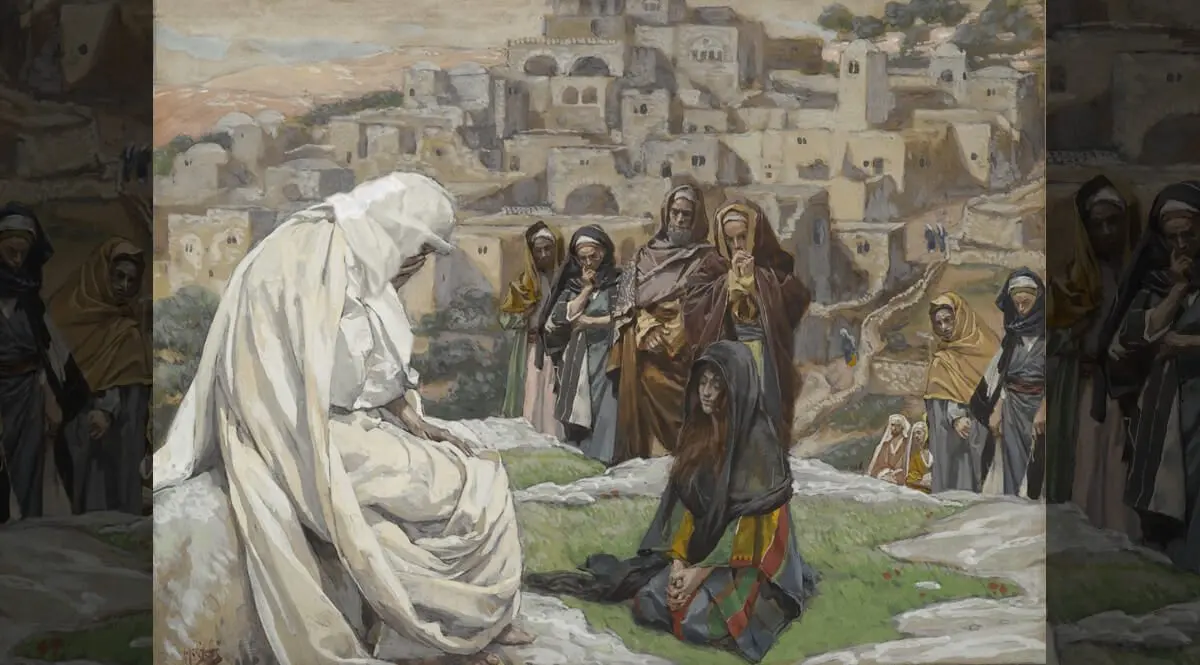
Jesus defies explanation. You can’t just put him in a category and then say you have him figured out. Nearly every conventional idea of Jesus is contradicted by the basic source documents—the four gospels of your New Testament.
On the one hand, you have the gentleness of Jesus, meek and mild. On the other hand, you have Jesus kicking over the money-changers’ tables in the temple and driving them out. You have Jesus who wouldn’t break a bruised reed or raise his voice in the streets. On the other hand, you have a vengeful Christ returning to make war and
SPEAKER 02 :
The CEM Network is pleased to present Ronald L. Dart and Born to Win.
SPEAKER 03 :
Jesus defies explanation. You can’t just put him in a category and then say you have him figured out. Nearly every conventional idea about Jesus… is contradicted by another conventional idea about Jesus, and they all come from the same basic source documents, the four Gospels of your New Testament, Matthew, Mark, Luke, and John. On the one hand, you have a gentle Jesus, meek and mild. On the other hand, you have Jesus kicking out the money changers out of the temple, turning their tables over, whipping animals and driving them through the whole mess, who is angry, really, because of what they’ve done in the temple. You have Jesus who wouldn’t break a bruised reed or raise his voice in the streets. On the other hand, you have a vengeful Christ returning to make war and to destroy his enemies in Revelation. John, in his gospel, is at some pains to recall and present those sayings of Jesus that identify him as God, the Son of God, even the God of Abraham. And then he turns right around and presents Jesus so human that he is overcome with grief and weeps along with Mary and Martha at the death of Lazarus. It’s fascinating when you really begin to study this man because he is certainly one of the most remarkable figures, regardless of what you may think about his deity. He’s one of the most remarkable figures in the history of man. One day, for example, he had delayed his return back to Bethany because Lazarus was sick. Mary and Martha had sent word to him. He had delayed. He delayed deliberately. He told his disciples, I’m not going down there right now. He actually arrived four days after Lazarus had died. And when he got there, Mary came to him and saw him and fell down at his feet and said, Lord, if you had been here, my brother would not have died. Now, that’s tough. That’s a hard thing to have to take from people that you really love and care about. Because he did. He loved Lazarus. He loved Mary and Martha, you know, their sisters. He thought, you know, these were his people, as it were. And he was not there. He was not there on purpose. And to be reproached for it? It’s in John 11, verse 32. In verse 33, it goes on with the story and says, When Jesus saw her weeping, and all the Jews were weeping that had come with her, He groaned in the spirit and was troubled, and he said, Where have you laid him? And they said to him, Lord, come and see. And Jesus wept. And the Jews said, Behold how he loved him. And I think they have it right. I think they have it exactly right. Some people say that Jesus wept because of the hardness of all the hearts. He looked at all these people around here and saw all their weeping and how unbelieving they were, and he wept about those people. I don’t think so at all. I think he wept with Mary and Martha. He was grieved. He felt the human emotions that were ebbing and flowing, and he loved Lazarus. Some of them said, well, couldn’t this man who opened the eyes of the blind have caused that even this man should not have died? And Jesus again, groaning in himself, comes to the grave. It was a cave. There was a stone lying against it. And Jesus said, Take away the stone. Martha, the sister of Lazarus, said, Lord, by this time he’ll be stinking. He’s been dead for four days. Now there’s something here that’s easy to miss. In the whole story of all this, where it talks about how Jesus delayed his coming and how he was ready to go, but he said, no, I’m not going to go yet. And he finally told the disciples, Lazarus is sleeping. What he meant, Lazarus had died, and he still came late on purpose. And by this time, the expectation is that the body has begun to decay. Okay, well now, why did Jesus delay? If he was going to heal him anyhow, why not come down and prevent his death? Why let Mary and Martha grieve for four long days? And Jesus said to her, didn’t I tell you that if you would believe, you would see the glory of God? So they did as he instructed. They took away the stone from the place where the dead was laid. And Jesus lifted up his eyes and said, Father, I thank you that you have heard me. I know that you hear me always. But because of the people who stand here, I said it so that they may believe that you have sent me. It’s interesting what he’s saying here. He said, I know you hear me all the time. I know I could have walked up here and just pulled Lazarus out of here, but I actually prayed so that the people here around would know that it was you who sent me. And when he had said this, he cried with a loud voice, Lazarus, come forth. And he that was dead came forth, bound hand and foot with grave clothes, staggering out of the mouth of the cave. His face was covered with a napkin, and Jesus said, Loose him and let him go. Now, does an answer occur to you as to why Jesus waited this long? Down through history, and even in John’s day, there was a belief that the spirit of a dead person hovered around the body for three days, presumably ready to return if the person was not really dead. And stories abound of people who were thought to be dead, but who turned out not to be dead at all. There was so much belief in this that I heard that they put a bell above a burial with a string down into the casket so just in case the person really wasn’t dead and he revived, he could ring the bell and they could dig him up. Sounds a little far-fetched, but not entirely. A friend of mine who used to fly dead bodies from place to place for funeral homes in his plane had a scary night once. He was ferrying a cadaver from one town to another through East Texas thunderstorms on a dark and wild night. It may have been the turbulence, but he looked over his shoulder once during the storm, and the body was sitting up. At least that’s his story, and he’s sticking to it. Jesus delayed to the fourth day because in so doing he established once and for all his power over death. There’s no argument here that Lazarus just wasn’t really dead, that he’d fainted or passed out or was in a coma and that he came to. You couldn’t argue that because we have come to the place now to where the body would have begun to decompose, way beyond anything the Jews would have believed was a revival, because he wanted them to understand that he had the power to raise the dead. It must have been really a thing for them to see. Then many of the Jews who came to Mary and saw them believed on him. You know, I would think so. But some of them went their way to the Pharisees and told them the things that Jesus had done. You know, it’s hard to imagine the conflict that this produced in the minds of the people who were there. Because they couldn’t help but believe in Jesus. They couldn’t help but believe he had the power over death. They saw this man dead. They saw that he was buried. They saw him walk out of the tomb. And they couldn’t deal with it. But at the same time, they knew that the religious leadership, the religious establishment, the people that they looked to and trusted, that they did not believe in Jesus, that they did not believe he was come from God. And so naturally, some of them went to the Pharisees in confusion and wanted to know, well, what is this? We thought you said that Jesus was not of God, and here he has raised this man from the dead. What are we supposed to do about this? Well, the chief priests and the Pharisees got a council together and says, What are we going to do? This man does many miracles. If we let him thus alone, all men will believe on him, and the Romans shall come and take away both our place and our nation. The whole thing was political. It’s really hard to understand, isn’t it? Here’s a man who thousands of people had seen heal people at one time or another. They had seen him heal the blind. They’d seen him heal the lame. They had seen a man born blind who can now see. You know, when you really understand all this stuff, when you actually see it with your own eyes and you’re standing there and a dead man walks out of a tomb after he’s been dead for three and a half to four days, you know, you see all this stuff. They’re staring you in the face. How can you then, in the face of all this witness, conclude, this man is nothing but pure trouble for us. If we let him alone, we are going to lose our authority entirely. It’s incredible. Lord Acton said power corrupts. Absolute power corrupts absolutely. Well, so be it. It is clear enough that power corrupts. Power blinds. Because here were people who simply could not see, deal with, or accept the implications that this man, whom they were coming to hate, was actually sent by God. One of them, named Caiaphas, being the high priest that same year, said, You don’t know anything at all, nor consider that it’s expedient for us that one man should die for the people and that the whole nation perish not. Funny, isn’t it? He actually prophesied on this occasion that one man was going to die for the people. But I don’t think he understood it the way we understand it at all. Why it would be that the Romans would come and take away their place in nation isn’t clear. I guess they expected the Messiah to come, and if the Messiah came, he would lead a rebellion, and then the Romans would come rolling in on top of the rebellion, and then it would all be over. And yet there’s no indication anywhere in anything Jesus said or did that implied that he would have led a rebellion against Rome. There was no evidence of it. But they were simply scared to death. The high priest Caiaphas did not speak this of himself, John said. Being high priest that year, he prophesied that Jesus would die for the nation, and not for that nation only, but that he should also gather together in one all the children of God that were scattered abroad. That’s a statement of staggering importance. It explains Jesus’ other sheep reference where he said, Other sheep have I which are not of this fold. I’ve got to go get them, and there’ll be one fold and one shepherd. So Caiaphas prophesied this. Then from that day forward they took counsel together to put him to death. Behold, the power of politics. Think about that.
SPEAKER 02 :
I’ll be right back. Will God heal the sick today? Really? We know he can heal the soul, but what about the body? And when you have prayed and have not been healed, is it because you have no faith? Write for a free copy of a presentation called, Does God Heal Today? Write to Born to Win, Post Office Box 560, White House, Texas 75791. Or call toll free 1-888-BIBLE44.
SPEAKER 03 :
That is free of charge, no obligation. So grab a pencil and a piece of paper. We’ll give you the address and the phone number again before the end of the program. The materials that we offer you free of charge on this program are paid for by our listeners just like the program is. Now when you look at what we’re looking at here in John’s Gospel, with the overt actual attempt to kill Jesus, with people taking counsel together to put him to death, You can begin to understand perhaps some of the concern that’s been expressed in some quarters by Mel Gibson’s movie, The Passion. Because The Passion apparently is going to tell the simple truth about what happened in the last hours of Jesus’ life. And the fact that it was the Jewish establishment in Jerusalem that wanted Jesus dead. It’s a fact of the Gospels and something that has to be dealt with. It’s not a reason to persecute the Jews today or the ordinary man in the street because Jesus’ disciples were all Jewish to begin with. The believers were Jewish. So why persecute Jewish people? But, of course, people do crazy things. And God knows the Jews have suffered terribly at the hands of Christians, which is not justified by the fact, whatever you think about the fact, that Christ himself suffered at the hands of a handful of Jews in the first century. Well, Jesus, therefore, walked no more openly among the Jews, but went from there into a country… near to the wilderness to a city called Ephraim, and he stayed there with his disciples. And the Jews’ Passover was near at hand, and a lot of people went out of the country up to Jerusalem before the Passover to purify themselves. It was a very important day in their year. And they looked for Jesus when they got there, and they spoke among themselves as they stood in the temple. It was the constant topic of conversation. What do you think? Do you think he won’t come to this feast? Now both the chief priests and the Pharisees had given a commandment that if any man knew where he was, he should show it so they could take him. Well, six days before that Passover, Jesus came to Bethany where Lazarus was who had been dead, whom he had raised from the dead, and they made him a supper. And Martha served. Lazarus was one of those that sat at the table with Jesus. It’s something to consider. Here’s a man who was dead, four days dead, and Jesus raised him from the dead, and now he’s able to sit at table and eat with him. Then took Mary a pound of ointment of spicknard, very costly, and anointed the feet of Jesus and wiped his feet with her hair, and the whole house was filled with the odor of the ointment. That’s a really touching thing. You know, it’s difficult maybe to realize as you cast your mind back down through two millennia to try to understand what was going on. But Jesus had, apart from his love for mankind, he had very close personal friends whom he loved and who loved him dearly. They loved him because he was the Son of God. They loved him because he was the Messiah. But it seems evident to me that they also loved him personally. But one of the disciples, when he saw what Mary had done, he said, Wait a minute, what are you doing this? Why didn’t you sell this ointment for 300 pence and give it to the poor? Guess who said it? It was Judas Iscariot. He said this, not because he cared for the poor, but because he was a thief and had the bag, and he carried around whatever money that they had. You know, you look back all this time, you think about Judas, and you really wonder how in the world a man could have been close to Jesus for as long as he was and have stolen from him. I mean, what did he need? I mean, their wants were taken care of. They had a bag in which they bought whatever they needed. They had a place to sleep. They had food to eat. They had people who would take care of them. They had work to do as they went up and down the hills and preached and talked to people. But it wasn’t enough for Judas. He was a thief. And the sad thing about all this is, you know, Jesus knew who he was from the beginning, and Jesus still cared about Judas. The psalm that deals with this says, “…my own familiar friend in whom I trusted has lifted up his heel against me.” The scripture combining the New Testament with the Old seems to be saying that Judas is a figure whom Jesus regarded as a familiar friend whom he trusted. Now, don’t misunderstand me. What it says is that Jesus placed his trust in him. He knew that Judas was a thief. He knew that Jesus was going to betray him right from the very beginning. And yet he still placed trust in him and called him a friend. It really makes you think, doesn’t it, how that Jesus was able to love and care for and call a friend, a man who he knew was going to stab him in the back. Well, Jesus said to Judas, let her alone. Against the day of my burying has she kept this. For the poor you always have with you. I’m not going to be here forever. Much of the people, the Jews, therefore, they knew he was in the house. And they kept coming there. They didn’t come for Jesus’ sake only. They wanted to see Lazarus, whom he had raised from the dead. That’s typical. It’s just typical. You know, word spread all over the landscape about what Jesus had done with Lazarus, and they wanted to see this man. They wanted to say, oh, look, that’s the man. He was dead. Look, he’s alive. But the chief priests consulted that they might put Lazarus to death. because that by reason of him many of the Jews went away and believed on Jesus. I should not laugh. It’s just the absurdity. It’s just the tragic absurdity of this poor man who was dead. Now he’s alive, and they want to go out, and now let’s kill him so people can’t go around and look at him and believe on Jesus. The desperation of these men has an almost comic quality about it, but in truth, there’s really nothing funny about it at all. It is a terrible tragedy for them. On the next day, many people had come to the feast. They heard that Jesus was coming to Jerusalem, and they took branches of palm trees, and they went out to meet him, and they cried, Hosanna! Blessed is the King of Israel that comes in the name of the Lord. Apparently, there’s a huge gathering of crowds. And Jesus, when he’d found a young ass, he sat there on, as it is written, Don’t be afraid, daughter of Zion. Your King comes, sitting on an ass’s colt. Now, unless you misunderstand, the importance of this is their Messiah, their king, was to come to them not on a horse or a chariot as a conqueror, as a ruler at one harsh and waking war, but humble, sitting on an ass’s colt, gentle, no threat. His disciples didn’t understand this at the first, but when he was glorified, they remembered the things that were written of him and that they had done these things to him. I think that’s an interesting passage because John, writing rather late in the course of things, I think, actually looks back and says, you know, we just didn’t get it at the time. We did not understand it. It was only after the fact that we began to really put this thing together. Well, the people that were with him when he called Lazarus out of his grave and called him from the dead bear record. And for this cause, people also met him that they would see him that had done the miracle. And the Pharisees said among themselves, Don’t you see how we are accomplishing nothing? The whole world is gone after him. It must have been terrifying to these men because they saw their power, their influence, their authority vanishing like smoke in the wind. Think about it.
SPEAKER 02 :
I’ll be right back after this important message. Music If you would like to share this program with friends and others, write or call this week only and request your free copy of The Gospel of John, number 8. Write to Born to Win, P.O. Box 560, White House, Texas 75791. Or call toll free 1-888-BIBLE44. And please tell us the call letters of this radio station.
SPEAKER 03 :
About this time, something unusual happened that Jesus took as very important. There were certain Greeks among those that came up to worship at the feast. The same came to Philip, who was a Bethsaida of Galilee, and desired him, saying, Sir, we want to see Jesus. Now, what is fascinating about this is these were Greeks who believed in God and who came up to worship at the Feast of Tabernacles. They weren’t Jews. And Philip came and told Andrew, and Andrew, they came and told Jesus, and Jesus answered them, saying, The hour has come that the Son of Man should be glorified. This is what we must expect to take place. That if Jesus is going to be here, he’s going to do his work, surely it will be done among the Jews at first. But it is going to have to go elsewhere as well. We can’t stop it. Verily I say unto you, except a corn of wheat fall into the ground and die, it abides alone. But if it die, it brings forth much fruit. Now, what a thing to say in response to this. He just told them, now the time has come that the Son of Man will be glorified. My, the whole world is hearing us. Then he turns and says to his disciples, except a corn of wheat fall into the ground and die, it abides alone. It’s true. You know, a little grain of corn, a little grain of wheat, that’s all it is. You can eat it. It’s gone. But if you put it in the ground and let it die, which it does, it brings forth much fruit. He that loves his life shall lose it. He that hates his life in this world shall keep it to life eternal. We can’t hang on to this life at all costs. In fact, there are any number of costs that might be far too high to retire to retain this life. If any man serve me, let him follow me. And where I am, that’s where my servant is going to be. If any man serve me, him will my father honor. Now is my soul troubled, Jesus continued to say. And what am I going to say? Father, save me for this hour? For this cause I came to this hour. That’s a troubling thing. He’s trying to explain to his disciples, which they really didn’t get yet, that he was going to have to die. He says any man that loves his life is going to lose it. And he says, my soul is troubled. This is not easy for me. What shall I say? Father, save me from this hour. There’s hardly a point in saying that because this is why I came to this hour. Father, glorify your name. And then all of a sudden there came a voice out of the sky saying, I have both glorified it and I will glorify it again. The people that stood by heard it, said it thundered. Somebody else said, no, no, an angel spoke to him. And Jesus answered and said, no, this voice came not because of me. It came for your sake. I didn’t need to hear it. I already knew it. Now is the judgment of this world. Now shall the prince of this world be cast out, and I, if I be lifted up from the earth, will draw all men unto me. This he said, John tells us, signifying by what death he would die. And you know what he said is so true, that him being lifted up between heaven and earth, him hanging there on that Roman stake or cross, whatever it was, and pouring out his life’s blood, enduring the pain and the suffering of that long night and then the next morning the cross itself, This is something that all men can see and deal with and understand. This man suffered and died for me. The people answered him and said, well, now we’ve heard out of the law that Christ abides forever. And how do you say the Son of Man must be lifted up? Who is the Son of Man? You know, we thought you were the Messiah. Everything was about this was Messiah this and Messiah that. But the Messiah is going to go forever. What about how come you’re going to die? And Jesus said to them, yet a little while is the light with you. You’d better walk while you have light, lest darkness come upon you. For he that walks in darkness doesn’t know where he’s going. While you have light, believe in the light so you can be children of the light. And he spoke these things and left and hid himself from the crowd. Time had come to get away from them. And what he is saying here is very sobering. He says there is a period of time in which you can walk in the light and you can see where you’re going. You’d better get it done while you can see, because the time is going to come when you can’t see. Though he had done many miracles before them, yet they couldn’t believe on him. That the saying of Isaiah the prophet might be fulfilled, which he spoke, Lord, who has believed our report? And to whom has the arm of the Lord been revealed? Therefore they could not believe, because Isaiah said again, He has blinded their eyes and hardened their heart, that they should not see with their eyes, nor understand with their heart, and be converted, and I should heal them. What a thing to say! They actually didn’t have a chance. And these things said Isaiah when he saw his glory and spoke of him. Nevertheless, among the chief rulers, many believed on him. But because of the Pharisees, they did not confess him, lest they should be put out of the synagogue. For they loved the praise of men more than the praise of God. What a tragic indictment that men, for political reasons, would turn their back on the Son of God.
SPEAKER 02 :
Call us at 1-888-BIBLE44 and visit us online at borntowin.net.
SPEAKER 01 :
Christian Educational Ministries is happy to announce a new full-color Born to Win monthly newsletter with articles and free offers from Ronald L. Dart. Call us today at 1-888-BIBLE44 to sign up or visit us at borntowin.net.