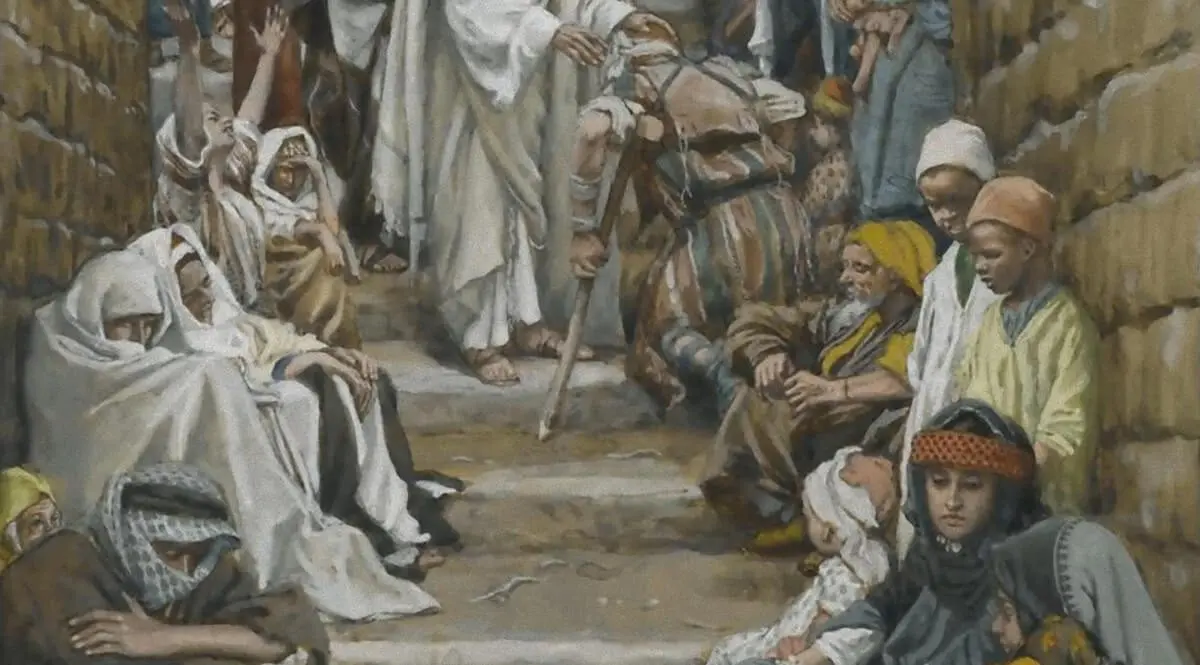
In this intriguing episode, we delve into the profound role of healing in Jesus’ ministry. We explore the idea that healing was not just a sympathetic gesture but a powerful demonstration of Jesus’ authority over sin, offering a vivid metaphor of salvation. The episode examines the nuanced understanding of salvation beyond mere religious experience; it’s about restoring and reviving life from the damage and destruction we face daily.
SPEAKER 03 :
The CEM Network is pleased to present Ronald L. Dart and Born to Win.
SPEAKER 02 :
Have you ever wondered why healing played such a big role in Jesus’ ministry? Well, probably not, because given the power, it certainly seems like the most natural thing to do. I mean, what would you do? You had the power to make the blind see, the deaf hear, and the lame walk. What would you do? Well, wouldn’t you go down and visit your local hospital and straighten out a few problems? If you could actually make cancer go away with a touch of your hand, I wouldn’t be surprised if many of you know people that you’d be willing to get on an airplane and fly halfway around the world just to touch them and relieve them of the pain and the suffering that they’re going through. But, you know, the real mystery may not be so much why Jesus healed. as to why, often, he did not heal. When you realize that Jesus did not empty every sickbed in Israel, you suddenly bring into focus the truth that when he did heal, apparently he had a reason in mind or some motivation for it beyond the mere feeling sorry for people. You know, compassion is a wonderful thing, and I think it would be compassion and love and a myriad of like things inside of you and me that if we had the power, that would drive us up one street and down another looking for people who are sick to relieve their pain. I’ve got two hospitals, three, four actually in my community here that I could be very happy going around and emptying out the hospitals if I didn’t get shot somewhere along the way for doing so. But I’d be very happy to do that. So Jesus’ compassion cannot be called into question. But there were times when he healed, and there were times when he did not. Now the one thing that Jesus’ healing did, though, was that it proved beyond a shadow of a doubt that he had the power to forgive sin. Because he could heal the ravages of sin in the lives of people who came to him. He could heal and do away with what sin had done to them. He was demonstrating his own power over sin so that you and I could believe in it. Healing is, you know, in a way, a metaphor of salvation. Well, no, no. It’s more than a metaphor. It’s what salvation is. A repairing of destruction, a putting right of things gone wrong, the healing of a life, the giving of the beginnings of hope in a person. Getting down inside of us and taking hold of those things that are coming unstuck and unraveled. The healing, for example, of a withered arm is one thing. The healing of a withered life, a withered soul, a withered heart. I suspect you have known at times in your life what it’s like to feel, the word for it is desiccated, dried out, worn out, just with nothing left to go on. The question is, is there someone who has the power to heal not only the withered arm, but the withered soul. Well, Jesus’ healings were a kind of salvation. In his healings, he proved that he had the power to save. Do you suppose it’s possible that we’ve minimized salvation in making it kind of a religious experience? What do I mean by that? Well, I mean you ask a person, have you been saved? He said, yeah, I’ve been saved. Well, when were you saved? He said, oh, it was back in last year sometime. I went to church in a revival, and the preacher was very effective, and I went down the aisle, and I gave my hand to the preacher and my heart to the Lord, and I was saved. Salvation, then, is kind of a religious experience. It’s a changing of one’s eternal home, a changing of a destination, a rescuing of a person, perhaps, from hell or ultimate destruction. But what if salvation is not only a saving from something, like future destruction, but a restoration of things already destroyed? To restore in a person’s life the things that we have spoiled, that we have ruined, to give us back things that we have thrown away. What if salvation really is salvation? You know, it may also explain why people whose lives are working just fine have no time for God. What? Me be saved? Saved from what? My BMW? Save for my $100,000 a year job? Save for my good health? Save for my wife, my pretty little children? What do you mean, get saved? You know, it is really only when the destruction in your life becomes apparent to you that you feel the need of a rescue and of salvation. And coming to God is not really just an intellectual exercise, although I think some people think it is. It’s something we can just prove. We can go through and get all our ducks in a row, and we can say, well, yeah, here’s what the Bible says here, and here’s what the Bible says there, and I can be convinced of an argument. And as a result of being convinced of an argument, I can declare myself to be a Christian, be baptized, and all that stuff. And now I’m off on a new life. Is that what salvation is? You know, the theme in the gospel accounts, in Matthew in particular, of healing as a rescue, is one of the very strong developing themes here. For example, in Matthew 9, verse 18, he says, While he spoke these things to the people standing around, there came a certain ruler and worshipped him, saying, My daughter is even now dead. If you will come and lay your hand on her, she’ll live. Well, Jesus got up and followed him, and his disciples went along with him. Now, we’re going to face here not merely a matter of the making well of a person who is sick. We’re going to come to a life that has been completely destroyed by sin, not necessarily the girl’s sin, but perhaps of others. And we’re going to restore the person who is dead to life. Well, as he went down the road, a woman who was diseased with an issue of blood for 12 years came behind him and touched the hem of his garment. Now, mind you, he’s on his way to do a healing, and he doesn’t have any clue about this woman being next to him. She doesn’t speak to him, doesn’t know anything about him. She just spies him and says, now, if I can just touch the hem of his garment, I’ll behold. But Jesus turned around about it, and when he saw her, he said, Daughter, be of good comfort. Your faith has made you whole, and the woman was made whole from that hour. Made whole. So what has happened to a person who is sick is that they are no longer whole. They are part. They are damaged. Something has been taken away from them. And I can only imagine the debilitating nature of 12 years with an issue of blood and the constant weakness and frustration and the dealing with the problem day in and day out. In her mind, she said, if I can just touch the hem of his garment, I will be made whole. Now, you might be surprised to know that this hem of Jesus’ garment was not merely the hem like you have down at the end of your trousers or on your coat jacket. It actually was the ribbon or thread or tassel of blue that every Israelite was supposed to wear. The law in question is found in Numbers 15 and verse 38, where God told Moses to speak to the children of Israel and bid them that they make fringes upon the borders of their garments throughout their generations, and that they put a fringe of the borders, on the fringe of the borders, a ribbon of blue. And it shall be to you for a fringe that you may look upon it and remember all the commandments of the Lord and do them, and that you seek not after your own heart and your own eyes after which you used to go a-whoring. Now, what’s this all about? Well, the Israelites were supposed to put some sort of tassel or some sort of little fringe made. It actually died by the use of a dye made from a certain muscle at that time, which actually came out to be more like a violet or purple than blue. And they were supposed to take this and make a fringe or a tassel that they put on the corner of the garment. What for? Well, it was a little visual reminder. It says kingdom of God. It says commandments of God. It says obedience to God. It reminds them that they’re supposed to do what God said instead of chasing around after their own desires and lusts and what have you and the things that destroy their lives. So it was a reminder that you may remember and do all my commandments and be holy unto your God. Now, what probably comes as a surprise to you is that one of these would be being worn by Jesus. that he wore them, you know, especially to people who adopt the anti-law idea that’s so prevalent today, to realize that Jesus wore that little fringe of blue as a reminder to keep and obey the commandments of God. Well, total surprise. Now, this was a badge, as it were, I think, that said to the whole community that you honored the law. Wearing one of those today, I’m afraid, would send no such message. It may not have the same meaning at all. And there’s another problem, of course. Visual reminders like that, after a while, you don’t see them any longer. You take them for granted. The Bible said, for example, to put the Ten Commandments on the doorpost of your house, to put them over the lentil, put them where you’d see them coming in, going out. I don’t have it on the lentil exactly, but I’ve got the Ten Commandments on the wall next to the door of my house. I know it’s there because I remember putting it there. I don’t know it’s there because I saw it this morning because when you go through your house, you don’t see things that have been there all along. You only really are aware of them if they’re gone. But every once in a while, I notice that that plaque is there, and I think about the Ten Commandments and what they mean to me. Of course, the truth is that when you have God’s Spirit, Those laws are written in your heart and in your mind, and you’ve internalized the standards of conduct taught in the Bible, and hopefully far more than something on your wall. You will be obedient to God because you do remember. Now, I can’t say if the woman touching Jesus’ fringe had any great theological significance. But, you know, she may well have considered herself to be a sinner, and she may have thought that touching the ribbon of blue or the fringe might have been meaningful to her, that I am coming back to and I’m reaching out and I’m touching that symbol of the law on this man’s garment, for I know that if I will do that, I will be made whole. We’ll go down to the ruler’s house and we’ll consider the daughter who was made whole in just a moment.
SPEAKER 03 :
Will God heal the sick today? Really? We know he can heal the soul, but what about the body? And when you have prayed and have not been healed, is it because you have no faith? Write for a free copy of a presentation called Does God Heal Today? Write to Born to Win, Post Office Box 560, White House, Texas 75791. Or call toll free 1-888-BIBLE44.
SPEAKER 02 :
Now, when Jesus came down to the ruler’s house and he saw the minstrels and the people making a noise, what you’re talking about here is the enormous mourning that went on at a death. And Jesus walked up and said, move away, please. The maid is not dead. She’s just asleep. And they laughed him to scorn as well they might. I mean, it’s pretty well established the girl’s dead. But when the people were put out, he went in and he took her by the hand and the maid caught up. She just came back to life, and he picked her up. And the fame thereof went abroad into all that land. Having the power to raise the dead is the ultimate healing, you know. It’s the ultimate salvation. It’s that final saving of us from the worst and ultimate end of man, death. That’s what salvation is. Later, Jesus would say, all power is given to me in heaven and in earth, power over sickness, power over disease, and finally power over death. Well, when Jesus left there, two blind men followed him, crying, saying, son of David, have mercy on us. And when he came into the house, these two blind men came to him, and Jesus said to them, do you believe that I’m able to do this? I mean, you’ve been following me around all day saying, oh, Jesus, son of David, have mercy on us, have mercy on us. Okay. Do you believe that I’m able to do it? And they looked at him and said, Well, they didn’t look at him. They couldn’t see him. They said, Yes, Lord. So he touched their eyes and he said, According to your faith, be it unto you. Now, there’s nothing so terribly complicated about faith. I think all of us know that healing is a matter of faith. And I have an idea a lot of us feel guilty and feel that, well, it must be because we don’t have very much faith that we haven’t been healed. But again, there’s nothing very complicated about it. In the nature of things, faith is simple. You either believe or you don’t. But there is something that causes one to believe, isn’t there? Take the testimony of Matthew that we’re reading in this book. I’m reading to you, or perhaps you’re reading out of your own Bible there. The testimony of Matthew. Do you believe that Matthew is telling you the truth? I’ll tell you, if you do believe that, it’s got enormous consequences, doesn’t it? Or do you believe Matthew is lying, or exaggerating, or writing fiction, or telling you the truth some of the time and not telling you the truth other times? Which is frankly useless if someone who tells you the truth part of the time can’t be believed any of the time. So what about Matthew? Is he telling the truth or isn’t he? Well, if you say, yeah, he is, then you have said, I believe him. You know, if you serve on a jury, you can hang a man based on what you believe. Sure you can. That’s what every jury does. They decide on life imprisonment. They decide on capital punishment, putting him on a gurney and sticking a needle in his arm and killing him with it. or as I think it is in one state, shooting him. Whatever it is they’re going to do, they make those decisions based upon what they believe. They didn’t see the crime. All they have is the testimony of the witnesses. The only thing they have seen is the physical evidence that was brought before them. And you and 11 other jury members, having seen all that, have to decide what you believe. And what you believe is important enough to hang a man. Now in this case, you are a jury of one. Do you believe that Matthew is telling the truth or not? Do you believe that Jesus is able to heal or not? Do you believe he is able to save or not? Well, the two blind men did believe, and their eyes were opened. And Jesus straightly charged them, saying, Now see that no man knows this. Now that is really interesting. This is not what one would have originally thought. You remember I asked the question, Have you ever wondered why Jesus healed? Now there are a lot of people who would tell you, I think, or perhaps would believe just tacitly, that one of the reasons that Jesus healed was as a form of advertising. Now, here I am on the radio. I can put my voice out all across the country, and thousands of people can listen to it. But, you know, when you’re one man wandering around the dusty streets of Jerusalem, not everybody knows you’re there. So you need something to get their attention. So maybe that’s what healing was. It was to get the multitude’s attention and get everyone together so that Jesus could then preach to them and get them the truth in their minds and get them to change their lives, right? Well, no, because having done this, he told them, don’t tell anyone. No, that was asking an awful lot of these two guys. I don’t think, I don’t know if I could have kept it quiet if I’d been blind and all of a sudden now I could see. But I don’t think Jesus was playing games. I think he meant what he said. Don’t bother telling anybody about this. Let’s keep it quiet. Well, he went about the cities and villages. He taught in their synagogues, and he preached the gospel of the kingdom, and he healed every sickness and every disease among the people. Now, don’t get carried away by the fact that, oh, he healed every one of them. Well, in this particular occasion at this time, he was healing every or all, which is a generalization because there are other places that make it very clear that he didn’t heal everyone under every circumstance. But when he saw the multitudes, he was moved with compassion on them because they fainted and were scattered abroad like sheep having no shepherd. He just saw that here was a great multitude of people, and they were coming to him and coming to him and coming to him, the sick and the diseased and the hurt and the lost and the hopeless, looking for something. I expect an awful lot of the people who came to Jesus really didn’t even know what they were looking for. They just knew that there was a great big hole in the middle of their life and something out there somewhere might fill it. And Jesus, seeing all of them and realizing the state they were in, really felt sorry for them and felt compassion. And he said to his disciples, The harvest is plenteous, but the laborers are few. Pray you, the Lord of the harvest, that he will send forth laborers into his harvest. I guess there are just never enough people who care enough to carry the message, to take it personally one-on-one to a person who doesn’t have it, to spend the time sitting at the bedside of a sick person reading the Bible to them and maybe answering questions if they have any. There just, Jesus said, aren’t enough people who care, and there probably never will be. Continue in Matthew chapter 10 and verse 1. When he called his twelve disciples to them, he gave them power against unclean spirits to cast them out and to heal all manner of sickness and all manner of disease. Now, here comes an interesting stage development in Jesus’ work. Now, instead of it just being him going about from place to place healing people, now the twelve are going to go out from place to place healing people. We’re not told a great deal about this, but Jesus is actually breaking them into what is going to be their life’s work. We get the names of the twelve apostles, Simon, who is called Peter, and Andrew, his brother. There’s then James, the son of Zebedee, and John, his brother, Philip, and Bartholomew, Thomas, and Matthew the Publican, whose book we are reading, James, the son of Alphaeus, and Labaius, whose surname was Thaddeus, and Simon, the zealot, and Judas Iscariot, who unfortunately also betrayed him. Now what follows here is Jesus’ first commission to his disciples to go forth and preach the gospel. It was a kind of solo mission. He would not be with them. The mission is very specific, but it’s not a permanent injunction of method in evangelizing. It’s going to become apparent later. because later he’s going to give them very different instructions. But there were some very important lessons, though, for these men to internalize before they went out on this evangelistic trip. We’ll talk about that in just a moment.
SPEAKER 03 :
For a free copy of this radio program that you can share with friends and others, write or call this week only. And request the program titled Matthew 17. Write to Born to Win, Post Office Box 560, White House, Texas 75791. Or call toll free 1-888-BIBLE44. And tell us the call letters of this radio station.
SPEAKER 02 :
These 12 Jesus sent forth and commanded them, saying, Don’t go into any city of the Gentiles, and into any of the city of the Samaritans don’t enter. Go ye rather to the lost sheep of the house of Israel. Now, as I said, this is a very specific type of mission that he’s sending them on. The commandments he gives them here are not what he intends for them to do every time they go out. So this time, they’re not even to go into the way of the Gentiles. That’s something that’s going to be changed later. But for now, he is restricting their scope to only the lost sheep of the house of Israel. As you go, he said, preach, saying, the kingdom of heaven, the rule of God is at hand. Heal the sick, cleanse the lepers, raise the dead, cast out devils. Freely you have received, freely give. Just let it all hang out. When you encounter somebody that’s sick, heal him. When you encounter a demon, cast that thing out. Don’t provide, this is interesting, either gold or silver or brass in your purses. Don’t provide any paper money for your journey. No letters of credit. Don’t take two coats. Don’t take an extra pair of shoes. And don’t take any staves. Why? Why? Because the workman is worthy of his meat. He expected these guys to live off the people they were serving. He said, you’ll run into hospitality. There’ll be someone that will take you in. If you’re going to need a coat, somebody’s going to have to give you one. If your shoes wear out, somebody’s going to have to buy you a pair. Don’t bother taking anything extra with you. And no money. going to get kind of hungry sometime if you don’t happen to have somebody to help you along the way. You know, when you think about it, this commandment to these fellows as they went out on this first journey put a lot of faith down in there. You had to actually have some trust as you went out to do this, but you also had another funny little thing that happened. Somewhere in the back of your mind ought to be the thought that you ought to be nice to people. Because there’s no point in going in and ringing somebody by the nose, metaphorically, you know, using a figure of speech, or insulting them, or arguing with them, or bickering with them to the point that they throw you out in the street. You will be nice to your host. You will be courteous and thankful and grateful to the people that are taking care of you. Or you’ll be a guest of the street. You’ll be on your own, and you won’t be very effective for very long. So there were two lessons, one faith, and the other one is behavior, demeanor, attitude toward the people to whom you are ministering. Now, lest you misunderstand that, listen to the way Luke put it in chapter 10, verse 4. He said he has his record of what Jesus had to say. Don’t carry a purse, nor script, nor shoes. Don’t bother saluting any man by the way. And whatever house you enter, say, Peace unto this house. And if the Son of Peace be there, your peace shall rest upon it. But if not, it will return to you. And in the same house remain, eating and drinking such things as they give you, for the laborer is worthy of his hire. My goodness, do you realize that he is saying that they who preach the gospel should live of the gospel, that it’s okay? to give food and clothing and raiment and money if necessary to a man who’s out there preaching the gospel. Then he has this interesting statement, going out from house to house. Some people have used this to say, well, you shouldn’t go door to door like some people who are evangelizing do, but that’s not what Jesus is talking about here. He is saying that if you don’t like the food in the house you’re in, don’t get up and go to some other house. Eat what is set before you, right? Eating and drinking such things as they give you. And don’t go from house to house looking for better. It’s corrupting. So the lesson to the disciples was a lesson in humility, a lesson in faith, a lesson in service, of being kind and gentle and good to people. Now, you know I said earlier that this is not the permanent instructions of Jesus. This time they were to go out there and not take any money with them. They were to let people out there support them. Now, when he gets to the later instructions in Luke, the 22nd chapter, Jesus said to them, verse 35, When I sent you out without a purse and script and shoes, did you lack anything? And they said, No, nothing. And then he said to them, But now, he that has a purse, let him take it. And likewise his script. And he that has no sword, let him sell his garment and buy one. Basically what he’s telling them is that where you’re going now and the work you’re going to be doing from now on is going to be a very, very different kettle of fish entirely. And so consequently when Paul and Barnabas were sent on their way by the church in Antioch to do that first missionary journey of Paul in the book of Acts, they were supported by Antioch. Antioch sent them out, which means Antioch gave them the wherewithal to go when they went. So try not to draw any hard and fast conclusions from Jesus’ instructions to his apostles here as he sends them out. This is a first-time shot. They’re learning a lesson that has to be learned here, and it’s not necessarily the way things are going to be done from there on out. When we return to Matthew’s account in chapter 10, verse 16, he explains a little further. Behold, he said, I send you forth as sheep in the middle of wolves. Be wise, you serpent. Be harmless as dove. Beware of men. They’re going to deliver you to the councils. They’ll scourge you in the synagogues. You’re going to be brought before governors and kings for my sake for a testimony against them and the Gentiles. Now he’s projecting out further in the future when he says this. And it has to do with why he gave them a different set of marching orders later on. Because later on, it was going to become much more dangerous. He continued in verse 21 to say, It’s the winners, those who win, who hold on to the end. Until next time, this is Ronald Dart reminding you, you were born to win.
SPEAKER 03 :
The Born to Win radio program with Ronald L. Dart is sponsored by Christian Educational Ministries and made possible by donations from listeners like you. If you can help, please send your donation to Born to Win, Post Office Box 560 White House, Texas 75791. You may call us at Stay in touch with the new Born to Win with Ronald L. Dart app.
SPEAKER 01 :
This app has all of your favorite Ronald L. Dart radio messages, sermons, articles, and it even has a digital Bible. Simply search on the iOS or Android app store to download it for free today.