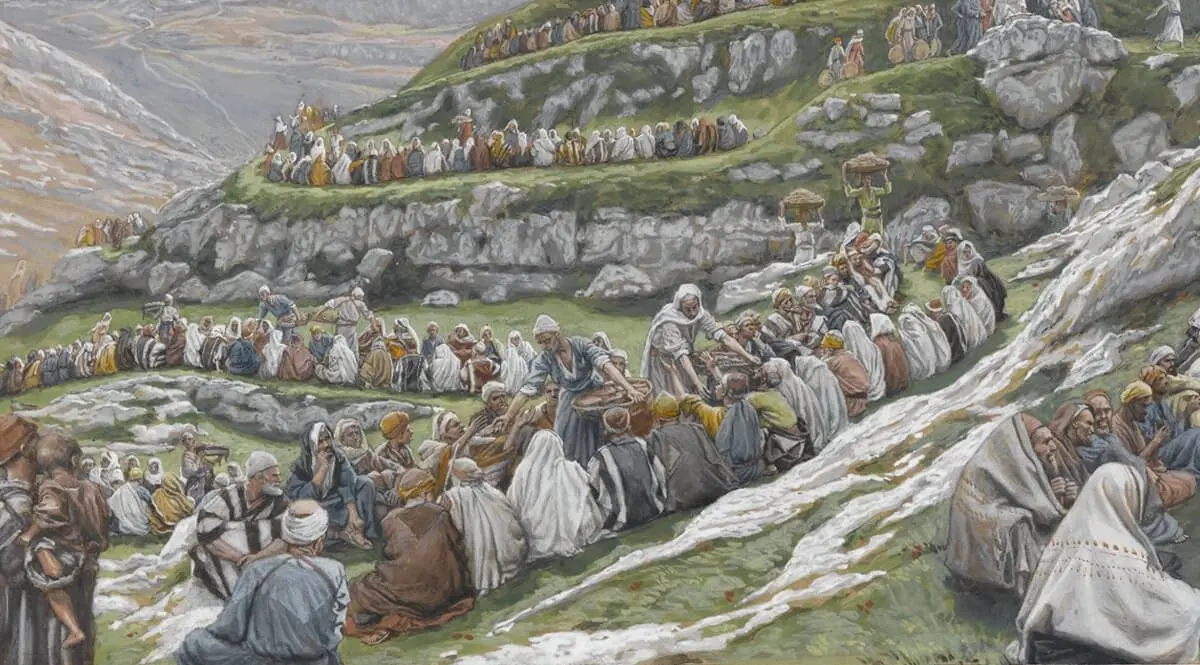
Join us in this enlightening episode as we explore the profound compassion of Jesus, illustrated through the extraordinary event of feeding over 5,000 people with just five loaves and two fishes. We delve into the lesson of abundance and the significance of Jesus’ miracle not just as a biblical story, but as a testament to catering to human needs with divine generosity. Discover how this story encapsulates the idea that our physical needs are of great concern to God and why miracles matter in the journey of faith.
SPEAKER 02 :
The CEM Network is pleased to present Ronald L. Dart and Born to Win.
SPEAKER 03 :
Even when Jesus went to the desert to be alone, he could not get away from the crowds. There’s nothing terribly remarkable about that, I suppose. You know, if you had a little girl that had cerebral palsy or leukemia and wasn’t expected to live, how far would you carry her to reach a man who could make her every whit whole and to heal her completely? You’d ford every stream. You’d climb every mountain, as the song goes. You would do what you had to do to bring that little girl to the feet of the master who could heal her, give her a long life where she could have children and your grandchildren and live to old age and certainly outlive you. Jesus the man was, after all, a man of some feeling. He could be firm, maybe even hard when he had to be, but he was also capable of great compassion, of feeling sorry for people who were sick and who were hurting. On a particular occasion, it’s in Matthew 14 and verse 13, he had gone out into a desert place to be alone. John the Baptist had been murdered, and he had heard of it and was deeply moved by it and wanted to be alone. But when the people heard where he was, they followed him on foot out of all the cities. And so when Jesus, I guess, went forth and saw them and saw this tremendous multitude, in fact, it numbered well over 5,000 people by the time they all got out there and gathered around him, he was moved with compassion toward them, and he began to heal the sick people. Jesus could not turn these people down any more than you could. I mean, here you are. You had intended to have a vacation. You intended to be alone. But you have the power to heal this same little girl who has cerebral palsy or who’s dying of leukemia. You’re not going to do it. You’re going to say, hey, I’m on vacation. I’m not paid for this. This isn’t my job. I mean, everybody’s got to have some time alone. Well, you don’t think that way, and Jesus didn’t think that way either. He healed their sick, and he couldn’t turn them down. Now, the occasions in the Bible where you do find Jesus sort of stiffing people a little bit or stiff-arming them, it generally has to do with their attitude or circumstances because there are some people who came to Jesus rather arrogant, in an arrogant fashion, and he didn’t cut those people very much slack. But these people had followed him out of the desert impulsively in hope and with very little thought or preparation of what they were going to do when they got out there. They knew the master was out there, and they wanted to be there. So when it got to be evening, the disciples came to him saying, Look, this is a desert place, and suppertime has already passed. Send the multitude away so they can go into the villages and buy themselves some food. And Jesus said to them, they don’t need to depart. You give them something to eat. Now, this is really revealing. I think the disciples must have stared at him for a moment in disbelief and thinking, what’s the matter with you? We don’t have any food here. But even though Jesus was out there to be alone, he really did not want to send these people away. He could have. He could have said, no, hey, shoot, you all go and get yourself something to eat and come back in the morning after we’ve all had some rest. But he didn’t. He didn’t want to. The sheer joy of healing the suffering and the sick had bound him to this crowd. Those healed did not want to go away, and he did not want them to go away. I think I understand that. When you have shared something so very special with someone, You want to linger in the afterglow, to feel it, to think about it, to prolong the moment. And I think that’s why Jesus didn’t want to send them away, and I think it’s why they didn’t want to go away. The disciples, though, thought he was dotty. He said, what do you mean give them something to eat? We don’t have anything here. We’ve got five loaves and two fish. And Jesus said, bring them here. Let me have them. He commanded the multitude to sit down on the grass. And he took the five loaves and the two fishes, and he looked up to heaven, and he blessed, and he broke, and he gave the loaves to his disciples, and the disciples then passed it out to the multitude. You know, you have to wonder… If you know this story, you know the story is that they fed everybody with that five loaves and two fishes. And you wonder, here you are. You’re one of the guys handing this stuff out and going around from person to person. How long did it take you to realize something special is going on here? Did you get through 12 people? Five loaves, two fishes. You break them up. You hand some to this person, hand some to that person. At what point did these guys realize that something incredible was coming down here? that they had more fish and loaves after having given away what they had than they did when they started. Well, they all ate and were filled, and they took up of the fragments that remained over twelve baskets full, and the ones that had eaten were about five thousand men beside women and children, from five loaves and two fish. Now, if you wish, you can look for some overarching significance in this event, some great spiritual truth. But be careful in the process that you don’t lose the down-to-earth truth. And the down-to-earth truth is that Jesus cared about these people. They liked him, and he liked them, and he wanted to linger with them. just like you would rummage through the pantry to find something for supper for someone you loved. I mean, there’s got to be another can of chili in here somewhere. There’s got to be some bisquick. We can make some biscuits and have some chili, and there’s some cheese in the refrigerator, and let’s make do on what we’ve got. Why should you have to leave and go find something to eat somewhere else? This is what we do with people we like. Jesus did the same thing. He simply shared what was at hand with them, And he made it reach. I’ll grant you, he had skills that some of us don’t have. We add a little more water to the pot of soup, perhaps, another can of tomato soup in there to make it stretch a little further. But he had ways of stretching it that we don’t have. But in a way, the motivation, what moved him, was the same as you when you try to make what you have stretch to feed unexpected company. Now, human needs, human needs like food and clothing and shelter, are matters of concern to God. He cares enough to meet those needs. I think that’s fascinating in this thing. Jesus didn’t come out here and say, oh, well, I’m spiritual and I’m on about spiritual things and this is not spiritual. Take them into town and feed them. No, no, no, no. Human needs matter. Physical needs were matters of concern to him, and he cared enough about people to meet those needs. And since Jesus came to reveal the Father to us, we know then that the Father cares about our food, our clothing, and our shelter. Now, Jesus, though, did something a little bit more than that. He met the needs abundantly. He wasn’t stingy in the things that he gave them. He didn’t try to hold back. He didn’t give them enough so that the last bite of food satisfied the last child, and that was all there was. Everybody could sort of dust the breadcrumbs off their hands and say, boy, that was good, and there’s nothing left over. No, no, no. They did not run out of food when the last child was full. Every person had all he could eat and then some. I suppose they could have put it in pockets or rolled it up and put it under their arm and planned to take it on with them. And in spite of all that the people ate and took with them, they gathered up what was left and they had 12 baskets full of food. So God is not stingy. He figures if he’s going to do a miracle, he might as well do a big one. If he’s going to meet the needs, he might as well meet them well, truly and fairly and abundantly and over and above and beyond. So when you pray and you ask God to give you something, don’t necessarily expect him to just let you get by. He wants better than that for you. Remember, Jesus came to reveal the Father to us so we would understand what the Father is like through Jesus and the way he lived while he was in the flesh. We understand the Father. Think about that, and I’ll be back after these words.
SPEAKER 02 :
Will God heal the sick today? Really? We know he can heal the soul, but what about the body? And when you have prayed and have not been healed, is it because you have no faith? Write for a free copy of a presentation called Does God Heal Today? Write to Born to Win, Post Office Box 560, White House, Texas 75791. Or call toll-free 1-877-7000.
SPEAKER 03 :
After all this, I guess Jesus still wanted to be alone because he urged his disciples to get into a ship and to go ahead of him to the other side. While he sent the multitudes and the crowds away. And when he had sent the crowds away, he went up into a mountain apart to pray. He had finally gotten a chance to be alone. And when evening came, he was there by himself. But the ship was now out in the middle of the sea, tossed with waves, for the wind was really contrary as they were trying to sail across. And the fourth watch of the night, very late, Jesus went to them walking on the sea. Now, this is really kind of interesting in a way. It’s rather lighthearted in a way of Jesus to do this. It’s what I would call a lighthearted miracle because he didn’t have to do that. He could have saved their lives out there by calming the sea. He could have gone by ship himself later. None of this stuff makes a whole lot of sense in one sense of the word except for the fact that Jesus just wanted to do it. So what he did instead of getting on the boat or what have you, he just walked out to them where they were, on top of the water. I don’t think he was showing off, but I think he had a reason for what he was doing. And as he got out there toward the ship, walking on the water, the disciples saw him, and it scared them slap to death. They said, ìIt’s a ghost! It’s a ghost!î And they started crying out for fear. Not only we’ve got a storm, our boat’s about to go down, there’s a ghost ready to walk out here to us, we see, on the water. And Jesus spoke to them and said, Be of good cheer. It is I. Be not afraid. I can hear the disciples now saying, Well, that’s easy for you to say. This boat’s about to go down. But even at this point, they don’t know who it is. They’re just not sure about what’s happening. Jesus is saying, Be of good cheer. be of good cheer. That’s what we see in television commercials where people are having a party. He’s saying, hey, what are you guys worried about? Cheer up. Be of good cheer. It’s me. You don’t have to be afraid. Well, Peter, realizing that whoever the spirit of this ghost was, was claiming to be Jesus, said, Lord, if it’s you, bid me come unto you on the water. And Jesus said, come on ahead. And when Peter was come down out of the ship… He walked on the water to go to Jesus. How far did he get? One step? Two step? Three steps? We just know that for a moment he was successful. But then he looked around. And he saw the wind and the waves, and it scared him, and he started to sink. And he cried out, saying, Lord, save me, save me. And immediately Jesus stretched forth his hand and caught him and said, Oh, come on, you little faith. Why did you doubt? Now, this interaction, I think, is really kind of amusing. Jesus had a serious reason for the miracle of walking on the water, but there was nothing to be served by Peter walking out to him. Not really. Unless, of course, it was to teach Peter a lesson. I almost get the feeling that Jesus was enjoying this, that he really would have liked for Peter to have succeeded. You know, you can do this. How many times have you told people, maybe you’re skiing on a mountainside somewhere, and you ski pretty well, and this person’s trying to learn how to ski, and you say, look, you can do it. Come on down this slope with me or ride up this lift with me. You can do it. And the guy says, you’ve got to be kidding. There’s no way I’m going to get on that thing. There’s no way I’m going to go up there. There’s no way I can go down this slope. I’ll die. I’ll be killed. I’ll break my neck halfway down. You say, come on, you can do it. Jesus said to Peter, come on, you can do it. And I think he would have liked for Peter to have been able to do it. May have known he was not going to, but would have liked for him to. You know, the best analogy I can think of is when you’re teaching your little boy to walk. Now, tell me the truth. When you first start out, this little tyke’s going to walk across and hold the coffee table right now, and you’re trying to talk him into turning loose of the coffee table, and you walk over here to me. Do you really believe that he’s going to make it all the way over to you the first time through without falling down? He’s going to bump his little bottom on the floor, isn’t he? And he’s probably going to cry. And you’re going to prop him back up on the coffee table and urge him to try again. And he will try because he wants to please you and he wants to do what you do. He wants to be able to walk. And it’s almost the same sort of a thing. You know he’s going to fall. You know he will never learn to walk unless he does try. Even so, Peter would never learn to walk on water unless he got wet. Jesus, in some ways, seemed almost fond of chiding the disciples about their lack of faith. He would almost as though he’d put an elbow in their ribs every once in a while and say, What’s the matter with you? Why can’t you do this? This is not that hard, fellows. Just believe. Have faith. Trust. You can do it. I think there was a rebuke intended, and yet he knew they could not function at his level. Not yet, but he knew there was going to come a time when they would function at his level, because he told them later, he said, the works that I do shall you do also, and greater works than these shall you do, because I go to my Father who is in heaven. Oh, so he really did expect of them miracles, great works, faith. And so he didn’t hesitate to jab them from time to time because they weren’t there yet. And you know, if you don’t move a child to go beyond its limits, if you don’t make him keep trying, if you don’t encourage him to come on, come on, you can do it, you can do it, and let him fall and get up and help him up and let him try it again, the child’s not going to learn to walk anytime soon. Well, when they had come to the ship, The wind ceased, just stopped as soon as Jesus got to the ship. You would have thought as one of the disciples, you’d say, well, Lord, couldn’t you have done this a little quicker? Did you have to wait? I mean, why didn’t you just say this out there somewhere? Stop, wind, let me get over there to the boat and calm things down. But no, it wasn’t until he actually got to the ship and put his foot in it that the wind ceased. Then everyone in the ship came and bowed down to him and said, Of a truth, you are the Son of God. They all knew it. It’s odd in the way of what it takes to convince some people. Think of what they’d already seen. If they had fed 5,000 people on some loaves and fishes and all the sick people that had been healed and lame people who could walk and blind people who could see and But it takes a little bit of convincing, I guess, for some of us. But when they were gone over, they came to the land of Gennesaret. And when the men of that place had knowledge of him, they set out to the country all around him, and they brought in everybody they could find that was diseased. And they besought him that they might only touch the hem of his garment. And as many as touched were made perfectly whole. That expression of the hem of his garment, that’s the tassel that all Jewish males wore, a tassel of blue, to say to the whole world that they were commandment keepers. Jesus, like all the rest of the men of that time, wore one of those, and of all of them, he was the one who really was a commandment keeper. And it’s interesting that all these people who were coming to him just wanted to touch that tassel, that fringe, that blue fringe, that said he was a commandment keeper. and they themselves would be made perfectly whole. Then came to Jesus, after this, some of the scribes and Pharisees. This is Matthew 15 and verse 1. These were scribes and Pharisees out of Jerusalem, saying, Why do your disciples transgress the tradition of the elders? They don’t wash their hands before they eat bread. Now, what is that all about? In a modern context, it doesn’t say very much. Why in the world would they be worried about the fact that guys didn’t wash their hands before they ate? It’s something we all ought to do, and I certainly hope you teach your children that. But at the same time, there’s nothing religious about it. It’s just hygiene. Why then this issue? Well, there was an ongoing debate among Jewish theologians of the day as to whether it was sufficient to keep the written law of God or whether one had to keep the traditions as well. These traditions form a body of dogma that is often referred to as the oral law. In other words, in the Old Testament economy, there was an oral law and a written law. The written law, if you have a Bible, you have it. It’s all that stuff that’s written down in the first five books of the Old Testament called the Pentateuch or the Torah, which contain all the commandments, instructions, and guidance that God gives to man. Now, in addition to that, there was a tradition of the elders, a tradition of the Jews, that they had built up over time that had all kinds of information about how to keep the law. What do you do in this circumstance? What do you do in that circumstance? And one of those traditions said you’ve got to wash your hands. But they didn’t just wash their hands. They scrubbed them all the way up to the elbows. And it was a ceremonial or a ritual cleansing of the hands that they were engaged in here. Now, the Pharisees by this time had come to see Jesus as being in the opposite theological camp. In other words, he taught that one must obey the written law, not necessarily the oral law. And in fact, he was doing quite a lot of changing of the oral law that they knew and that they respected. The problem was that the oral law should have been founded on the written law, should not contradict the written law, and it was oftentimes very far off the mark. He’s going to challenge the tradition of the Pharisees on this particular point, on one of these points.
SPEAKER 02 :
But I’ll tell you about that when I come back after these words. For a free copy of this radio program that you can share with friends and others, write or call this week only and request the program titled Matthew number 25. Write to Born to Win, Post Office Box 560, White House, Texas 75791. Or call toll free 1-888-BIBLE-44. And tell us the call letters of this radio station.
SPEAKER 03 :
By this time, Jesus is getting a little bit tired of the scribes and the Pharisees. And so when they come to him with a little bit of pomposity saying, Well, we want to know… why it is that your disciples eat bread without washing their hands according to the tradition of the fathers. And Jesus answered and said, Why do you transgress the commandment of God by your traditions? I mean, we’ve got this big argument going back and forth about whether it’s the written law that we’re supposed to obey or the traditions of the fathers. And you’re making a thing out of the fact that they’re not keeping the tradition of the fathers. What I want to know from you is, why do you, by your traditions, transgress the written law of God? For God commanded, and this is written down, folks. It’s in the Ten Commandments. It’s engraved in stone. Honor your father and your mother, right? It’s in there. And he that curses father or mother, let him die the death. Now you say, Jesus said to these rather pompous individuals, whoever shall say to his father or mother, it is a gift by whatsoever you might be profited by me, and does not honor his father and mother, he shall be free. Now the word in Greek is korban. In other words, it is korban. By whatsoever you may be profited of me is rather a bad translation. What it means is simply this, that if a man’s father and mother are in need, and he’s got money, and maybe or whatever he said he’s going to give this money to God, if you come up and you say, well, I’m sorry, Mom. I’m sorry, Dad. I can’t give you anything. It’s Corbin. It’s already dedicated to God, and I can’t help you with it. If he does that, you say, and does not honor his father and mother, he shall be free. By the way, in the Greek, the word for honor has a little bit of a double meaning. It means on the one hand respect and honor as we use it. It also has, like we have the word today, honorarium, which implies a sum of money given to somebody. And so the idea is your mom and dad need money, and you’re not going to give them the money, but because you’re doing it for religious reasons, you’re free of the obligation. Jesus said, no way, no way. You can’t set someone free from the obligation to honor his father and his mother, and that means to take care of them if necessary. If they’re poor, if they don’t have any money, that overrides your gift of Corban and what you think it might have. That’s a first responsibility is the responsibility of parents under the Ten Commandments. Now, there is no commandment sufficient in itself that needs no interpretation. I can understand that. But the interpretation of the Pharisees and the scribes had the effect of negating the underlying law, which was by far more important than any of their traditions. Now, as I said, Jesus was getting a bit tired of these individuals. And when he made this statement, saying, ìLook, youíre going to give me this stuff about whether my disciples washed their hands or not. I want to know why youíre transgressing the written law of God with your tradition.î You hypocrites! Now, this is Jesus speaking. It’s in Matthew 15, verse 7. You hypocrites! Well did Isaiah prophesy of you, saying, This people draw near to me with their mouth, and they honor me with their lips, but their heart is far from me. How could he tell? Verse 9 says, Because in vain do they worship me, teaching for doctrines the commandments of men. Whenever you start substituting the traditions of men for the commandments of God, which were written and engraved in stone long ago, and are there for us to obey and thereby honor God in the process of obeying, anytime you do that, you are worshiping God in vain. So then he called the multitude together and he said, look, I want you to understand what’s at issue in this particular situation. The Pharisees have made an issue of my disciple eating without washing their hands. Not that which goes into the mouth defiles a man, but that which comes out of the mouth, this defiles the man. Now, don’t miss this. The defilement Jesus is speaking of is spiritual. Strychnine entering into the mouth will surely do you in. It just won’t do you any spiritual damage in the process. In fact, spiritual things won’t mean much to you shortly thereafter. So he’s not saying that things that go in through the mouth cannot harm you physically. Every fool knows that, and Jesus is assuming he’s not talking to fools. It is not that which goes into the mouth that defiles a man, but that which comes out of the mouth that defiles a man. He’s talking then about spiritual defilement. So be sure and teach your kids to wash their hands before they eat. The Pharisees were on to ceremonial cleanliness as though it conveyed some religious benefit. Jesus was not impressed. Then came his disciples and said to him, Do you know that the Pharisees were offended when they heard what you said? And he answered and said, Every plant which my heavenly Father has not planted shall be rooted up. Leave them alone. They are blind leaders of the blind. And if the blind lead the blind, both of them will fall in the ditch. I suppose the lesson from that is you ought to give heed who your leader is. Well, Peter spoke up and said, Lord, declare to us this parable. He thought he had another riddle on his hands, and Jesus said, Wait, are you without understanding? Don’t you get it that whatever enters into the mouth goes into the belly and goes out into the latrine? But those things that proceed out of the mouth, they come out of the heart, and that’s what really defiles a man. For out of the heart proceeds evil thoughts, murder, adultery, Fornication, theft, lies, blasphemies, these are the things that defile a man. But to eat without washing your hands, that does not defile a man. It’s a singularly perverse thing, I think, for men to substitute the scrubbing of the hands and of technical ideas of cleanliness with for cleaning up their lives and cleaning up their hearts and putting those things out of their life that should not be there. And so, until next time, this is Ronald Dart reminding you,
SPEAKER 02 :
Don’t forget to wash your hands. The Born to Win radio program with Ronald L. Dart is sponsored by Christian Educational Ministries and made possible by donations from listeners like you. If you can help, please send your donation to Born to Win, Post Office Box 560, White House, Texas 75791. You may call us at 1-877-7000. 888-BIBLE44 and visit us online at borntowin.net.
SPEAKER 01 :
Stay in touch with the new Born to Win with Ronald L. Dart app. This app has all of your favorite Ronald L. Dart radio messages, sermons, articles, and it even has a digital Bible. Simply search on the iOS or Android app store to download it for free today.