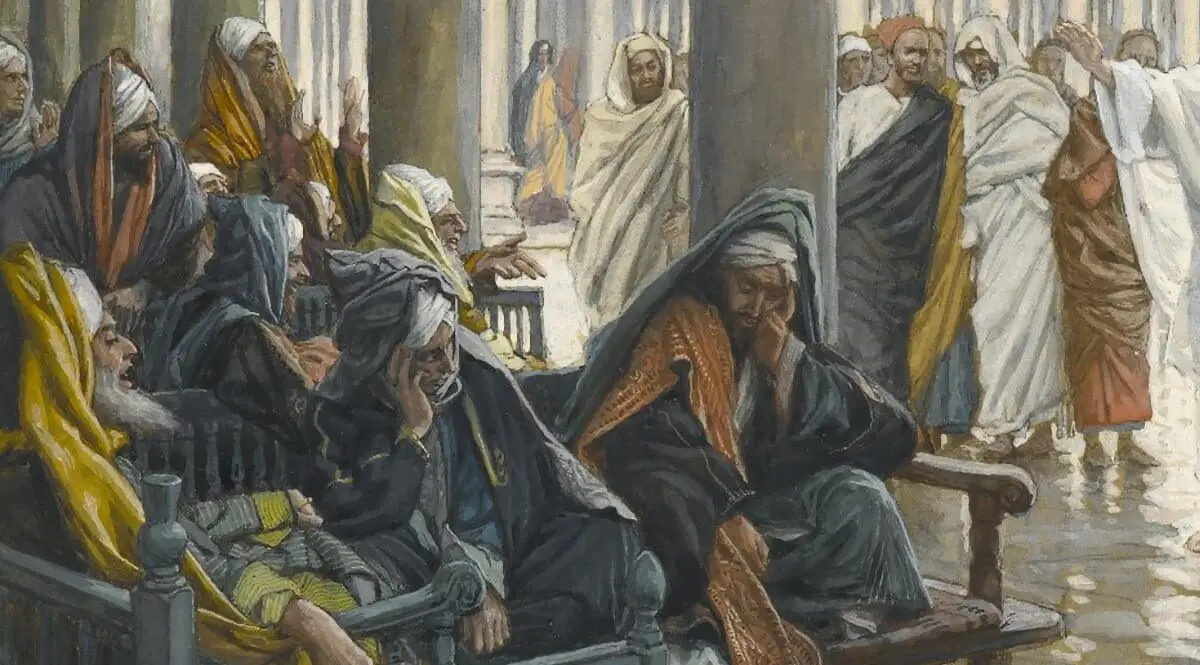

In this episode, we delve into the stark contrast Jesus made between true religious practice and the hypocrisy of the Pharisees and scribes. Ronald L. Dart dissects the words of Jesus from the Gospel of Matthew, illustrating how Christ called out the duplicity in religious leadership. Jesus urges His followers to view each other as brethren, warning against the creation of hierarchies and titles that exalt some over others, insisting on humility and communal equality among His followers. Listeners will gain insight into the nature of proselyting and evangelism — two practices often conflated but fundamentally different. Dart illuminates
SPEAKER 02 :
The CEM Network is pleased to present Ronald L. Dart and Born to Win.
SPEAKER 03 :
I know that Jesus was a gentle man. I am certain that he was kind, that he was merciful, and of course very gentle in the people he dealt with. But you know, at the same time, he was straight as a die. He was totally honest. And sometimes honesty, well, honesty can be brutal. He could look a man straight in the eye and tell him he was a hypocrite because that was what he was. I mean, when you see a man and he is something, you can tell him that, can’t you? Well, of course, sometimes you can and sometimes you can’t. But from Jesus, that’s what you got. Now, a good example of this is found in the 23rd chapter of Matthew. On this occasion, there’s an assembled crowd. And he speaks to them and says, now, the scribes and the Pharisees sit in Moses’ seat. All therefore whatsoever they bid you observe, you do that. But don’t do after their works, for they say, and they do not. Now, nowadays, we think of a government divided into three branches. We have the legislative, the executive, and the judicial. The separation of powers and the checks and balances is fundamental to our legal system. But Moses was all three to Israel. He was a lawgiver, a legislator. He was the executive, and he was also the judge. But as the burden grew over time in ancient times, the responsibility of judging, in other words, a judiciary, was distributed to a system of judges. The judges were a legitimate authority in the community, and their judgments took on the force of law. If you took your brother to court and you went in there discussing some question of where a boundary was, whenever the judges handed down the decision on where the boundary was supposed to be, that’s where it was. Now they did not regulate every aspect of a person’s life. They didn’t come into your home on their own authority. They were only involved in questions as the questions were presented to them. Their job was making judgments for the community. Now at the time Jesus made this statement about the Pharisees sitting in Moses’ seat, well the Pharisees were the political party that dominated the judiciary. That’s not hard to understand. Now, what you should know is, and some people seem to make this mistake, Jesus does not affirm the Pharisees. He does not affirm their authority in broad terms, but only in the narrow aspects of their office. In other words, they can act as a judge as long as they’re sitting behind the bench. When they get out behind the bench, don’t do what they do. Plainly, Jesus felt the judiciary was corrupt at the time. That did not in any way justify ignoring their civil decisions, but it did say that their moral authority was bankrupt. He went on to say of these men, they bind heavy burdens and grievous to be born, and they lay them on men’s shoulders, but they themselves will not move them with one of their little fingers. Now, this is typical of the legal class, and I guess it has been that way down through time. They make all kinds of laws. They’ll make all sorts of judgments that bind you and I as to what we have to do with our lives. But they, well, they’re lawyers. They’re above the law. They know how to get around the law. They make the law for you and me, but they can always find a way to do what they want to do. And frankly, whenever you get a civilization or a system, a legal system, where the lawyers and the judges are no longer subject to the law, you’re in a lot of trouble. Continuing about these men, he said, They do to be seen by men. They make broad their phylacteries. They enlarge the borders of their garments. Now, for your information, the border of the garment was the fringe or the tassel on the edge of the garment. There was a symbol in those days of a man who was committed to the law. You had a ribbon of blue or a tassel of blue. You put it on the corner of your garment. And that was to say to the whole world, I’m a law keeper. So in those men’s case, even their little hymn of their garment was a lie. So he says they enlarged the borders of their garments, and they loved the uppermost rooms at feasts, and the chief seats in the synagogue, the chief seats were the seats that were right next to the, right closest to the scrolls of the law. So even that was symbolic. And they loved the greetings in the markets, and they liked to be called of men, Rabbi, Rabbi, Rabbi. And Jesus said, Don’t you be called Rabbi, for one is your master, even Christ. You should know, by the way, the Greek word that is here translated master means teacher. But, of course, at the time the King James translators did their version of this, the word master and teacher were basically synonymous. What’s that all about? You know, it’s a little hard to figure after reading this how Jesus intended that it be taken. Roman Catholics commonly call their priest Father. And one wonders, well, how do they manage that in the light of Jesus’ simple statement, don’t call any man on the earth your father? Well, we commonly call men teachers, and that’s what the Greek means when it says masters. And how can we do that when Jesus said, don’t call any man your teacher? You know, later on, Paul will refer to himself as a kind of father to one of the churches he started. He speaks to Timothy as he’s my own son in the faith, as though he is Timothy’s spiritual father in a sense. And so the metaphor of a father or the fact of a person who teaches other people seems to be accepted. And one wonders, then, where does this admonition of Jesus come from? Well, in years not long after this, and it probably was developing in Jesus’ day, there was a kind of caste system relative to religious leaders. In later years, we know that the office of rabbi was highly exalted among some Jewish communities. There were rules that one could not walk ahead of or even alongside your rabbi. A man could not speak to the rabbi first, but had to wait to be spoken to. Now, Jesus seems to be insisting that his disciples not allow such a caste system to exist among them. It’s highly unlikely he meant that you could not call your dad your father. Look back at the way he put it. He said, Don’t be called rabbi, for one is your master, even Christ, and all you are brethren. In other words, he wanted the church, his disciples, this group of people, to look upon themselves as more of a homogeneous body of brethren so that you don’t get this one person or another in the group. He becomes exalted over the other. That seems to be the purpose of what he is saying. Because of the contrast with having individuals who carry big titles, he says you’re not to be that way. You are all one. I suppose in a way it’s out of this particular thought that many churches today will refer to their preachers and deacons and sometimes to one another as Brother Smith, Brother Jones, sometimes using first names, Brother Bob. Well, Jesus tied it all up by saying, And whosoever shall exalt himself shall be abased, and he that shall humble himself shall be exalted. So the whole theme seems to be that don’t follow the example of the Pharisees and self-exaltation and status and high office. I mean, you guys are brothers. Act like it. And then, at this point, he starts to address the scribes and the Pharisees directly. Up until this point, he’s been saying, well, now, all you people out there, you have to follow the legal injunctions of the scribes and the Pharisees, but whatever you do, don’t follow their example, and don’t go to this thing of being exalted. Humble yourselves. Be brethren. Now, it’s almost as though he turns and pivots and speaks to the scribes and the Pharisees directly. And the first words out of his mouth are, But woe unto you, scribes and Pharisees, hypocrites. Now that is tough language. We’ll talk some more about this tough language of Jesus when we come back.
SPEAKER 02 :
Join us online at borntowin.net. That’s borntowin.net. Read essays by Ronald Dart. Listen to Born to Win radio programs every day, past weekend Bible studies, plus recent sermons, as well as sermons from the CEM Vault. Drop us an email and visit our online store for CDs, DVDs, literature, and books. That’s borntowin.net.
SPEAKER 03 :
I should probably tell you right off that the Greek word – that’s the word – we get the word hypocrite, by the way. It is a Greek word. Probably did not quite carry the sting in that society that the word does today. You look somebody in the eye today and call him a hypocrite, and he’s liable to punch your lights out. But when Jesus said that, the word basically meant actor, stage actor, or play actor. And that’s bad enough because what he’s really doing, he’s telling the Pharisees that you’re actors. You don’t believe this. This isn’t coming from your heart. Woe unto you, scribes and Pharisees, you hypocrites, because you’re shutting up the kingdom of heaven against men. You’re not going in yourself. Neither are you suffering them that are entering to go in. Woe unto you, scribes and Pharisees, you hypocrites! You devour widows’ houses and for a pretense make long prayers. Therefore you’re going to receive the greater damnation. Wow. Well, now, let’s see if we can understand what this is all about. Remember, these people are lawyers and judges. Now, you know that lawyers and judges, between them, especially if they’re working together, can gather up a lot of real estate over time. They can make loans to people. They can take mortgages out on property. They can foreclose on those mortgages. Think about it for a little while. Do you see what he means when he said, you devour widows’ houses? A man dies. Some smooth lawyers move in. And the first thing you know, this poor lady is out on the street or she’s out gleaning in the fields like a poor person. And her house, her land, her husband’s property is gone. The only thieves out in society, you know, it’s not limited to burglars and muggings and armed robbers. There are a lot of thieves carrying legal degrees that have certificates all around their walls that wear black robes when they come into the courtroom. There are thieves in the world who are a part of the legal system. Now, he says, woe unto you, because you devour widows’ houses, you use the legal system to steal someone’s property, and you go straight into the temple and stand before God and make a great long prayer in the presence of the people who are there. You’re going to receive, he said, greater condemnation. Greater condemnation than what? Well, I can only conclude from this that if you’re going to be a thief, you are better off not to be a religious thief. It’s bad enough that you take advantage of the widows. It’s bad enough you steal someone’s property. But don’t do that and then come into God’s house and stand there and make a long prayer. Jesus told these same men that the harlots would go into the kingdom of heaven ahead of them. Now, that’s not to say that the harlot doesn’t have to repent, but the thing is the harlot knows what she is. She’s not pretending to be one thing while she’s something else. These men were pretending to be religious while they were thieves. It’s as simple as that. You know, there’s a broad assumption that religion is for Sunday, and it doesn’t affect what you do the rest of the week very much. Maybe it’s the theology that says that, well, the law of God is abolished. Maybe that’s what does it. It doesn’t matter what you do so much as long as you go to church. Is that what it is? Well, Jesus answered that error once and for all. If you’re going to foreclose on the widow, don’t bother coming to church and leading us all in prayer. Your life had better match your religion. If it doesn’t, you’re going to be held far more responsible. The very fact of coming before God, making a pretense at religion, has a multiplier effect on the punishment God would have in store for you for your sin. Give me a straightforward thief any day over a religious hypocrite that makes a pretense of serving God a cover for his theft. At least with a thief, I know how to protect myself. But Jesus wasn’t through with these guys. He said, Woe to you, scribes and Pharisees, hypocrites! For you compass sea and land to make one proselyte, and when he is made, you make him twofold more the child of hell than yourselves. You know, it’s hard to imagine how Jesus could have said anything any stronger than that. But what did he mean by that, being twofold more the child of hell than yourselves? Well, consider for a moment the difference between proselyting and evangelism. Because in a sense, what we’re talking about here is going out and making a convert. In the New Testament, there’s a lot said about evangelism, about getting the good word out. Let me digress just a moment to explain one small thing. The word gospel, so often translated in your New Testament, comes from a combination of two Greek words, one for good and the other for message. It just means good message. If you want to transliterate it in English, it comes across as evangel. And then we change it around by saying to evangelize or evangelism. or evangelist, for that matter. And in all of these things, we mean a person who puts the good message out, or the practice of putting out the good message, or the act of putting out the good message. This is what all that stuff means. So we’re going to talk for a moment about the difference between proselyting, making a convert, and putting out the good message, because there is a difference, isn’t there? I think I would define it, at least for the purposes of our discussion here, by saying that proselyting is the practice of converting a person to your own party. Evangelizing, on the other hand, is the practice of trying to or putting the good message out to a person in the hopes that the person will convert to God. There’s a difference between them. To proselyte, you generally would use what in the political world they call wedge issues. In other words, in politics, we tried to divide the voters out there up into blocks. And we know that the Democrat voters in Southern California are split over the issue of immigration. And so if we go into Southern California to campaign as a person who is of the other party, then what we would do is we go in there and we talk a great deal about immigration and use it as a wedge to split Democratic votes off to vote for us. It’s the way it’s done all the time in politics. You may not have realized it, but it’s done all the time in religion as well. It’s not good enough in proselyting to try to just convert a person. You’ve got to split them away from the group they’re with, cause them to become attached to your group, and to enlarge and increase your own political party. Now, what the Pharisees were doing was going out and making all these proselytes, theoretically turning their hearts and minds to God. But in truth, they were really turning their hearts and minds to them and their own party, their own way of doing things, their own approach to God and religion. Evangelism is a matter of just getting out the good message of Jesus Christ. There was a man named Philip. one of the early evangelists, as a matter of fact. And God told him one day to get himself down to the road that went out of Jerusalem and headed off to the south, which he did. And along that road, he met an Ethiopian who was on his way home. The story is an interesting short little interlude in the Bible, but it’s there, I think, for a reason. Because as Philip joins himself to this man, he hears him reading aloud to himself out of the book Isaiah. He says, “‘Do you understand what you’re reading?’ And the man says, well, no, not really. How can I understand it unless somebody explains it to me? So Philip stepped up into his carriage, and as they went on down the road, he started at the very place the man was reading in Isaiah and began to preach to him Jesus. Well, as they went along, and as the message unfolded, when he got to the place where Philip had more or less completed it, they came to where there was a water tank by the road. And the Ethiopian said, look, here’s water. What hinders me from being baptized? And Philip said, now think about this a moment. Philip said, if you believe with all your heart, you may. There was no consideration here of joining anything, least of all some religious political party. The man says, I believe. So they got down out of the chariot, went down into the water. Philip baptized him. And perhaps one of the most significant events of your New Testament, he let him go home by himself. He baptized him and let him go. He wasn’t converted to Philip’s church. He wasn’t converted to Philip’s political party. He was converted to Jesus Christ. and let go entirely on his own. So Jesus, in talking about these Pharisees, basically says what you’re trying to do is just make him a member of your own political party. You’re not turning these people to God. Then in verse 16 he continues. He’s not through with them yet. He says, Woe unto you, you blind guides. You say whoever swears by the temple, that doesn’t amount to anything. But if you swear by the gold of the temple, well, then you’ve got to come through. That figures. You know, the temple itself isn’t anything but the money. Now that’s the thing. You fools and blind! Now he’s really getting serious with them. Which is greater, the gold or the temple that sanctifies the gold? And whosoever shall swear by the altar, you say, it’s nothing. But whoever swears by the gift upon it, well, he’s guilty. He’s bound by that. You fools and blind! Which is greater, the gift or the altar that makes the gift holy to God? Whoever therefore shall swear by the altar swears by it and everything on it. Whoever swears by the temple swears by it and on him that dwells therein. And he that shall swear by heaven swears by the throne of God and by him that sits thereon. Folks, look, what you’re talking about, whenever you lift up your hand and you start swearing, you’re calling God as a witness to what you’re doing. Let’s stop trying to do all this nitpicking and hair-splitting that you fellows seem to be so good at. Woe unto you, scribes and Pharisees, you hypocrites! You pay tithe of mint and anise and cumin, and have omitted the weightier matters of the law, judgment, mercy, and faith. This you ought to have done, and not to have left the other undone. Oh yeah, you ought to tithe. Jesus did teach tithing. Make no mistake about that at all. But visualize a Pharisee sitting at a table with all of his mint leaves out in front of him. And he counts them out. One, two, three, four, five. And he comes to the tenth one and he sets that aside for God. Really careful about that. But when it comes to judgment and mercy and faith, they were bankrupt. He went on to tell them that they were blind guides because they would strain at a gnat while they swallowed a camel and worried about all the tiny things while the big things passed them by.
SPEAKER 02 :
I’ll be right back in a moment. For a free copy of this radio program that you can share with friends and others, write or call this week only. And request the program titled Matthew number 34. Write to Born to Win, Post Office Box 560, White House, Texas 75791. Or call toll free 1-888-BIBLE44. And tell us the call letters of this radio station.
SPEAKER 03 :
Now, I should probably put a little disclaimer in here and tell you that not all Pharisees in the first century were evil men. I mean, a lot of them were very religious, very pious, very dedicated to God. What Jesus is doing here is nailing a particular class of people called the scribes and Pharisees. These were the people who were the lawyers, and that’s why he holds them so strongly to task on this. Woe unto you, scribes and Pharisees, hypocrites, because you may clean the outside of the cup and platter, but within they are full of extortion and excess. Don’t miss that word extortion. Extortion is when you threaten to do someone harm unless they pay you money. It can be blackmail. It can be you say, I’m going to reveal this about you, whatever it is. But it puts a person in a position of accepting money to keep from hurting somebody. That’s the kind of people that he was talking to here. So don’t feel no need to apologize for the fact that he called them hypocrites. You blind Pharisee, cleanse first that which is outside the cup and platter, that the inside may be clean also. Woe unto you, scribes and Pharisees, you hypocrites! You are like whited sepulchres, which appear beautiful outside, but within are full of dead men’s bones and uncleanness. Even so, outwardly you appear righteous unto men, but on the inside there is nothing but hypocrisy and iniquity. Iniquity is another interesting word. It comes from the Greek and means, in the simplest possible terms, lawlessness. Woe unto you, scribes and Pharisees, hypocrites, because you build the tombs of the prophets and you garnish the sepulchres of the righteous. Now, he’s looking at these men now before him, and you’re going to hear his ire beginning to rise. It’s almost like his gorge is coming up. He has about had all he can have of these self-righteous hypocrites who are standing there looking at him when he knows what’s going on inside of them. He says, woe to you because you build up the tombs of the prophets, and you garnish the sepulchers of the righteous. You’re going out and doing all these good works. You go out to the cemetery. You put flowers on all the tombs of righteous people. And you say, well, if we had lived in the days of our fathers, we would not have been partakers with them in the blood of the prophets. Now, what Jesus is thinking of here is, is the fact that in the Old Testament, he was the one who sent those prophets. He’s the one who sent prophets down to them to tell them of their sins and to tell them to turn their life around, to tell them to turn back to God. And if they didn’t turn back to God, they were going into captivity. So he sent along a prophet. What did they do with the prophet? Stoned him to death. He sent him another prophet. What did they do to him? They laid him out on the table and sawed him in half. They killed these men again and again. And they go out and they say, well, if we had lived in the days of our fathers, we would not have been partakers with them in the blood. We wouldn’t have done that. And Jesus said, you’re witnesses to yourselves that you’re the children of the men that killed the prophets. Go right ahead. Fill up the measure of your fathers, you serpents, you generation of vipers. How can you escape the damnation of hell? Now, the problem at this point is, how does he convict them? Because they will still stand before him saying, No, no, if we’d been there, we wouldn’t have done it. How can you say that about us? We’re religious people. We’re righteous people. He then goes on to say, Wherefore, behold, look. I’m going to send to you prophets and wise men and scribes, and some of them you shall kill and crucify. Some of them you’re going to whip in your synagogues, and you’re going to persecute them from city to city. The challenge is going to come. I’m going to send men who are going to come to you with the Word of God, and you’re going to wind up whipping them in your synagogues. You’re going to kill some of them. You’ll actually cause others of them to be crucified, and that he was talking about himself. Why am I going to do this? so that upon you may come all the righteous blood that has ever been shed upon the earth, from the blood of righteous Abel to the blood of Zacharias, whom you killed between the temple and the altar. You can’t stand over here and tell me that you wouldn’t have done it. You’ve already done it. Verily I say unto you, all these things shall come upon this generation. O Jerusalem, Jerusalem. You that kill the prophets, you that stone them that are sent to you, how often would I have gathered your children together like a hen gathers her little chickens under her wings, and you wouldn’t have it. Behold, your house is left to you desolate, for I say unto you, you’re not going to see me again until you say, Blessed is he that comes in the name of the Lord. I know I told you in the beginning of this program that Jesus, while he was in the flesh, was a gentle man. I know I told you that he was kind and merciful. But if he is God, and he is God, then he must also be just. And justice requires that men who are murderers at heart, men who are thieves at heart, finally come to face what they really are. And when all is said and done, that has to apply to you and me just as much as it did to the Pharisees. We’ve got to have truth when we come before God. Until next time, this is Ronald Dart.
SPEAKER 02 :
Remember, you were born to win. The Born to Win radio program with Ronald L. Dart is sponsored by Christian Educational Ministries and made possible by donations from listeners like you. If you can help, please send your donation to Born to Win, Post Office Box 560, White House, Texas 75791. You may call us at 1-888-BIBLE44 and visit us online at borntowin.net.
SPEAKER 01 :
Stay in touch with the new Born to Win with Ronald L. Dart app. This app has all of your favorite Ronald L. Dart radio messages, sermons, articles, and it even has a digital Bible. Simply search on the iOS or Android App Store to download it for free today.