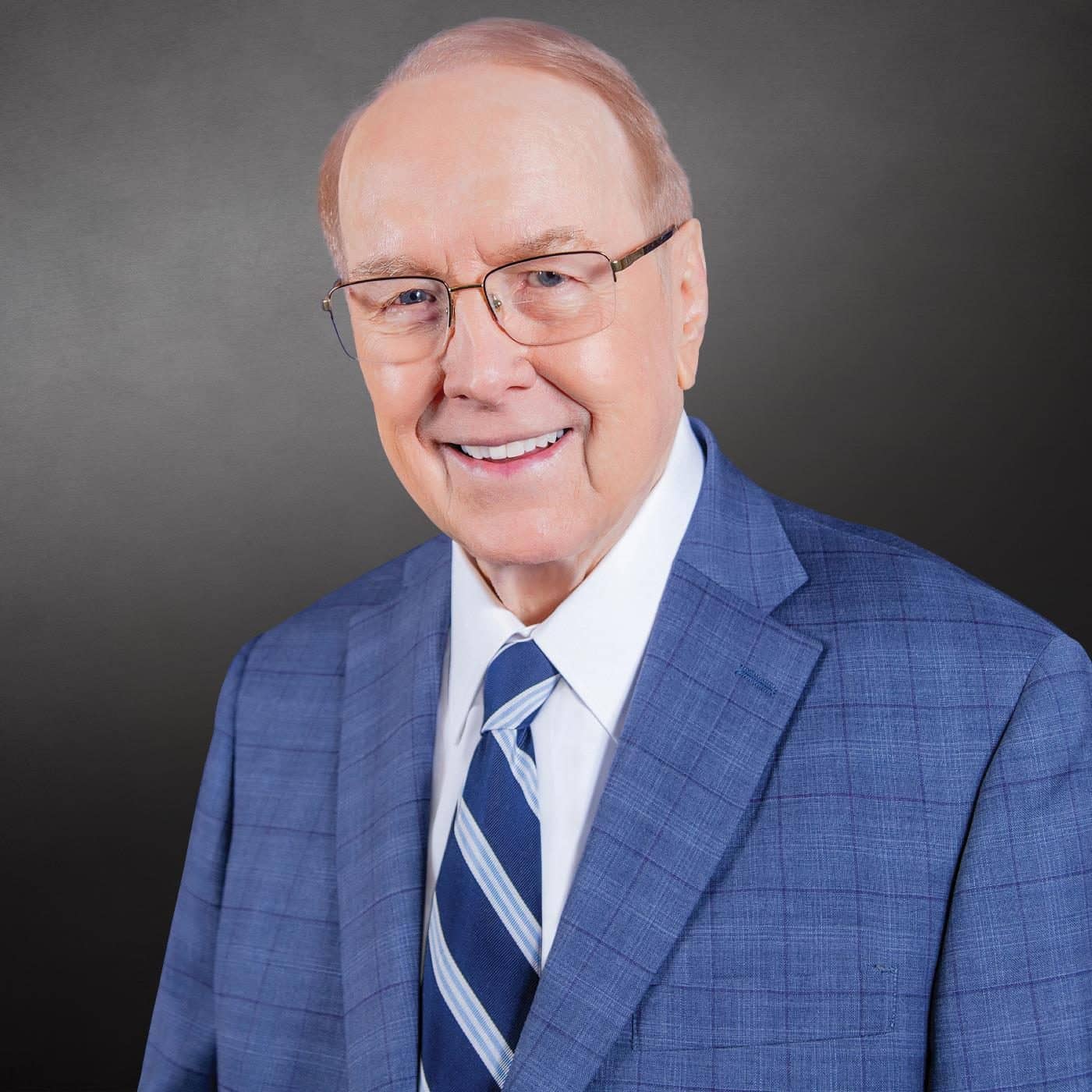

In this engaging episode of Family Talk, we delve deep into the intertwining of faith and finance with authors Bill and Dana Wichterman. As they revisit their compelling book ‘Stewards, Not Owners: The Joy of Aligning Your Money with Your Faith’, we explore how biblical principles can guide our financial decisions. The Wichtermans share their wisdom on moving beyond traditional tithing, viewing all possessions as under God’s stewardship, and finding joy in generosity.
SPEAKER 02 :
Welcome everyone to Family Talk. It’s a ministry of the James Dobson Family Institute supported by listeners just like you. I’m Dr. James Dobson and I’m thrilled that you’ve joined us.
SPEAKER 03 :
Well, welcome to Family Talk. I’m Roger Marsh. You know, money is one of those topics that can make even the most confident among us feel a little bit uncomfortable, right? Whether we are worried about having enough, anxious about saving wisely, or just uncertain about how our faith should guide our financial decisions, money matters touch every aspect of our lives. Well, on today’s edition of Dr. James Dobson’s Family Talk, we’re continuing an enlightening conversation with our guests, Bill and Dana Wichterman. The Wichtermans are the authors of the groundbreaking book called Stewards, Not Owners, The Joy of Aligning Your Money with Your Faith. Bill Wichterman brings decades of experience in law and politics to the table, including serving as a special assistant to the president in the White House. Dana Wichterman spent her career in international economic development and now helps Christians deploy their charitable capital through impact investing. On the last edition of Dr. James Dobson’s Family Talk, Bill and Dana Wichterman challenged us to move beyond viewing tithing as simply God getting his cut to embracing our role as stewards of all 100% of what God has entrusted to us. They emphasize that generosity is like a muscle that needs to be exercised, starting small and growing stronger through practice. On today’s edition of the program, they’ll dive deeper into practical wisdom about saving versus hoarding, the joy of generous giving, and how to invest in ways that honor God. Here now is our host, Gary Bauer, Senior Vice President of Public Policy here at the JDFI, along with his guests, Bill and Dana Wichterman, on Dr. James Dobson’s Family Talk.
SPEAKER 02 :
Well, welcome back to Family Talk today. We’re really blessed to have back with us Dana and Bill Wichterman that have written a just fantastic book about everybody’s favorite subject, money and how to handle it in a Christian way. And we had a great conversation about a lot of things that I didn’t know and will benefit from. And so Bill and Dana, we’re really pleased to have you back to continue this conversation for Dr. Dobson’s loyal audience around the country.
SPEAKER 04 :
Thanks, Gary, for having us back.
SPEAKER 02 :
Thank you so much. You know, I’ve talked with Dr. Dobson about this a number of times. God was not surprised when we were born in America, right? I mean, he knew exactly where we were going to be born and explaining to children that even before they knew they existed, God gave them probably the greatest blessing you could possibly get to be born in a place where even with all the challenges we have, there is so much opportunity and there’s so many people in the world, you know, that would love to be in a country that has as many opportunities as we have. There’s no question about that. So, Bill, you alluded earlier to hoarding, and it’s a danger to be avoided. But, you know, I must admit, I have a tendency maybe to over-save. And I think part of it, even in this late stage in life, is because I saw how much my parents wrestled with the tensions of finances. And even today, it’s an incredible percentage of Americans that are one missed paycheck or one emergency of, let’s say, $1,000 cash that they would need away from being in trouble. So how does one guard against not being in that kind of a desperate situation but constantly worried about it and putting money aside to deal with something that may never happen?
SPEAKER 04 :
Americans are not necessarily great savers relative to lots of other parts of the world. And Proverbs talks about the importance of being more like the ant than the grasshopper. And not enough of us are like the ant. We really do need to be saving for the future. We don’t want to become wards of the state or of our family. Again, my parents were wonderful. They weren’t savers, and we kids in the later years had to support them financially. So that is not ideal. You need to be clear-eyed about your future needs. That’s on the one side of the biblical ledger. And on the other side, there are all these warnings against… essentially storing up riches for yourself and hoarding. And so the question is, between saving for the future and hoarding, where are we supposed to land? And that’s between you and the Lord. That’s you and your financial advisor. We highly recommend a financial advisor who has been kingdom certified, which means that they’ve gone through this biblical course about how to see all of money as belonging to the Lord and to help think that through with somebody else. But neither extreme is wise in our opinion.
SPEAKER 02 :
You know, a lot of the parables revolve around money, which is interesting. I guess, you know, there’s a few things in life that almost always lead to sin when they’re mishandled, whether it’s greed, the desire for money, power, looking for more power, sexual gratification, which leads to all sorts of things, pressures on marriages, cheating, all the rest of it. I’m astonished, however, that so many churches, particularly it seems the trend is in the big mega churches, have ended up blowing up over financial mishandling of what God had blessed them and entrusted with them. Why do you think that is? Because you would think that— with people and leadership that should be in the word, that that would be the last place you would find the mishandling of funds.
SPEAKER 01 :
Yeah, you would think, except C.S. Lewis reminds us the church is a hospital for sinners, right? And so sinners are going to be in church, which is why I think we have to understand the dangers of money and why there should be adequate, very strong measures to verify and have accountability within churches and non-profits, Christian non-profits. Yes, you want to have trust, but you trust and verify because, again, we are all sinners and money is one of those temptations that I think is, you know, from time immemorial is a temptation. So I think we have to just start with the assumption that something’s going to be tempting and we need to have multiple ways of accounting, open books, etc., So I think the church has done two things, though. It’s also said that profit is not necessarily a good thing, right? That if you make a lot of money, then okay, you’re not, you better just be giving a lot of money to the church, because actually that profit is kind of downplayed in our culture. And Bill and I say, no, making profit, like you’re supposed to put a seed in the ground so that you multiply your resources, not just so you get a seed back. And with money… accumulation and management, you can do a whole bunch of good work or you can do a whole bunch of evil. So the issue is, is the profit made in a God-honoring way? And then is it deployed in a God-honoring way? So it’s like fire. Fire can be a really good thing in our culture. It can also be a real danger. And I think churches need to handle money in that way as well.
SPEAKER 02 :
Bill, I think particularly I’ve noticed this among a lot of men I’ve known over the years. They’ve got a great idea. They want to start a business. And so sometimes they’ll neglect a lot of other things, including giving to the Lord because they want to build this great business and they’ll do the giving later. Is that something that is common? And how can somebody avoid that kind of thinking? Yeah.
SPEAKER 04 :
Yeah, I think the word that Scripture uses is firstfruits. That’s why, I’ll just say it, Gary, that’s why we tithe on gross, right? We did right from the beginning because before the tax man comes, our giving to the Lord. So we think that the priority in your heart should be that giving right away. It doesn’t really matter how poor or how rich you are. And in fact, studies have shown on this on a per-person basis, poor people don’t give a greater percentage of their income away than rich people do. And generosity is- The widow’s mite, right? Yes. And it’s a blessing to us. And so it is true that there’s times where you really need to be saving, but I sure wouldn’t want to be starting a business at the expense of feeling like I’m cheating the Lord. You want the Lord to be fully in that business. The cattle on a thousand hills belong to the Lord. He’s not short on money. And so I personally, the way we’ve lived, even when we were in, you know, living a very, very poor lifestyle, we always thought that comes first. I think that’s biblical.
SPEAKER 02 :
Yeah, that’s a great answer. Now, in the book, you’ve highlighted actual real people and told their stories about how they’ve done this in a way that is pleasing to the Lord and good for their souls. Is there anybody you’d like to share a little overview of a story about that might resonate with our audience? And you did this With people from all backgrounds, all political philosophies, they’re not all people that necessarily vote the way you and I might vote on Election Day.
SPEAKER 01 :
Yeah. Well, first of all, I’d like to say we highlighted 24 stories because we think that people really learn by exemplars and by stories. I remember years and years ago hearing about someone who gave away 50% of their income, and I was like, wow. Wouldn’t that be? It was like a dream of mine. But I thought, oh, I’ll never get there. And at some point, the Lord blessed us so much that we were able to get there. But it started as a dream in our hearts because I’d heard of someone who actually lived that way. So we wanted to profile these 24 people who are actually surrendered very different ways online. All over the world, rich and poor. And let me just tell you, because Bill can tell maybe an individual story or two, but I’d like to say all 24 of those people have increased intimacy with the Lord, increased sense of contentment, satisfaction, feeling a purpose and meaning, less anxiety and worry. greater sense of peace, and then a real sense of joy. And it’s not a burden anymore. It’s not like saying, oh, I have to give so much, like I’m giving away. No, it really becomes, it is better to give than receive. And you start to experience the joy of that. And so that’s why in our title of our book, we say the joy of aligning your money with your faith, because it really is a fruit of living this generous lifestyle. And they’ll tell some of our stories.
SPEAKER 02 :
Yeah, Bill, before you do that, I mean, there are actually studies that show the old Saul about it’s blessed to give, you know, and that it actually does psychologically and physically do wonderful things for the giver in addition to the person that accepts it with the right spirit. Right.
SPEAKER 04 :
It’s so true. And in these 24 stories of just regular old people whose stories haven’t been told before, as Dana said, there was this pervasive sense of joy. And if you’re worried this is like we’re calling you to a funeral, I’d say that they all would, all the people profiled in our book would say this is more like a carnival. Like you’re a kid at a carnival with a handful of free tickets in your hands. The joy that you get from giving is just amazing. And I don’t think that’s just for certain kind of people. I think once you lean into that, as Dana said, it’s something which comes. I think of Scott Friesen. So Scott Friesen wanted to be rich when he was a kid. He grew up in North Carolina. Turned out after working at a campus ministry for a few years, he went into business and he was very good at business. And he started and then sold three different companies. By the time he was 40 years old, he had all the money he needed to live for the rest of his life. He could be like that guy in scripture, you know, we could just build bigger barns. And the Lord said to him, keep working so that others might live. Essentially, Scott, I’ve given you this gift of money-making and entrepreneurship. Now deploy that for my glory. So Scott Friesen has now invested, whether through himself or with other people, we’re part of that, $250 million in businesses in Africa. And what he does, he provides jobs with dignity for people in Africa. And these aren’t like arts and crafts jobs, kind of fake jobs. These are real jobs doing construction. He’s got orchards, he’s got tech companies. And what happens is you’re teaching a man to fish instead of giving him a fish. And he’s done the math. Thousands of people are working in Africa today because of his investments. Guess what? Scott hopes to get all that money back and more at market rate returns so that he can keep doing that. This is like the goose that lays the golden egg. I think it’s one area the church has been underappreciating, Gary, the role of for-profit business in addressing the world’s problems. We often think, well, it needs a nonprofit to handle that. We think that big problems need for-profits to handle that. And Christian-led businesses, led according to Christian principles, they’re a way to be ennobling, dignifying, and bring joy to the world.
SPEAKER 02 :
Speaking of businesses, some people do well enough that they’ve got money to invest in stocks. A lot of people don’t, but we, again, are a country where for millions of Americans, whether they do it directly or they do it through maybe a retirement account that somebody else is managing and picking the stocks. But if you all invested in the stock market, to what extent do you bring – Or should you bring biblical principles to what companies you’re willing to invest in? You know, is it okay to invest in a company that builds casinos? That might be an obvious answer to that one. But what about a company that is making a good bit of its profit with factories it has in communist China where Christians are persecuted and slave labor is being used? In fact, I think there’s somebody out there now that has a mutual fund that assures you he’s done all the work and the money is only going to companies that pass a certain set of biblical guidelines.
SPEAKER 01 :
So Gary, you’re so right. In the past, it was more difficult to find out which companies you could invest in that were run according to biblical principles, or at least were not harming people. But now there’s much more product on the shelf. But what I would say was I made the mistake of thinking that if we got a kingdom financial advisor, that it would cost us a lot more money. And what happened is because of their wisdom and their knowledge, they were able to save us money. And help us to do what you call a negative screen, where you would look through your investments and say, what companies do I not want to be invested in? I don’t want like hotels, hotels, there’s certain hotels that their main profits are over pornography. So it’s like, I wouldn’t have thought hotels would be a problematic area. But, you know, so if you want to pull those out of your portfolio, if you want to pull Disney out of your portfolio because you don’t agree with their values or whatever, there’s ways to go through and take out the negatives, the companies you do not think are bringing flourishing to the world and not reflecting God’s values. And then there’s even another way to increase what we call positive screening, which is to build in what you’re investing in, in companies that are doing good in the world, that are having the kind of impact that you would like to see. And there are more products like that. Bill can share a few of those.
SPEAKER 04 :
Yeah, Gary, this would have been hard, as Dana said, maybe 20 or 30 years ago. Now it’s easy. There are 250 funds that are led by Christians that align with biblical principles in the US that you can invest in now.
SPEAKER 1 :
250.
SPEAKER 04 :
And if you want to just have a stock fund, which is with biblically aligned, publicly traded stocks. You could do that. Sovereign’s Capital has one such fund, which they launched about a year ago. There are so many, Eventide is another one. Again, if you get a kingdom advisor, financial advisor, it’s not going to be hard to find any of these. It’s just hard if you just talk to your regular advisor, he or she might not have any clue about this. But once you come into this ecosystem of Christians aligning their money with their faith, You’re going to find so many resources, and you won’t find that you have to become a stock analyst spending all your time checking out every investment.
SPEAKER 02 :
I had no idea. I mean, I’ve heard of a couple of these funds that specifically try to meet this goal, and I’ve talked to some of those folks. I’ve had sort of a hobby of investing, so I do a lot of my own research, but I had no idea that there were as many as 250 possibilities out there. That’s great to know. I don’t think this is out of your bailiwick, particularly you, Bill, because you’ve been involved in government and politics in a political way. I think more than you, Dana. I might be wrong about that. But I’ve noticed a tendency to confuse Jesus or distort Jesus with Karl Marx. That is, there are folks out there that take the teachings of Christ, which clearly are about helping the poor and the downtrodden and the prisoner and the homeless, and they turn that into a juxtaposition with Christ. Big, powerful government using the force of law to take one group of people’s hard-earned money and give it to the places that government decides is the best way to help the poor. And I worry about that because I think a lot of particularly young Christians may get a little confused about it if they’re not grounded in the faith.
SPEAKER 04 :
No, it’s true, Gary. In fact, in general, conservatives are better givers than those on the left. But look, we get really excited about the money that we can be giving from our portfolio. And for me, I don’t want to get political, but I mean, I’m a conservative, not despite my care for the poor, but because of my care for the poor. I’m convinced it’s the best way to help and lift up the poor. But whatever your political philosophy is, You have an obligation as an individual to be caring for the least of these, as Jesus describes them. You’re supposed to care for the widow and for the orphan. And James says, you know, you tell me you’ve got religion, show it to me by how you act. And do you care for the least of these? And if you don’t, if you say to somebody who’s in need, well… you know, be blessed, hope it goes well with you, and you do nothing about their physical needs, that’s a religion that James says is worthless. We’re excited about, though, the way that giving can happen. So because of our conviction that God does love profit, when it’s properly, non-exploitably earned. We’re really excited about helping bring for-profit businesses to the poorest parts of the world, whether that be in the US or in developing world or wherever. We think that helping that small entrepreneur in the Matheri slum of Nairobi, we’ve been there, who had an internet cafe with one computer and she wanted to have a few more computers and she needed a loan. That joy that comes from giving a loan to somebody like that so she can make her own money. Is she going to be then driving, you know, a Cadillac? No. That might mean that because of her multiplication of her income, she’s now got a dwelling with a cement floor instead of a dirt floor. And now she has access to indoor plumbing. But the point is, it’s bringing them up the ladder. And we think that for-profit business is just something to be celebrating.
SPEAKER 01 :
And Gary, I’d like to say it’s really capitalism that has lifted the poor out of poverty. We went from, I think, in 1980, 47, 48 percent of the world was living below the poverty line. And now it’s eight and a half percent. So even though the population has grown and there are still too many people, I think 700 million living below the poverty line, it was capitalism that brought the large bulk of humanity out of poverty and then being able to have money for their health care, their education. all kinds of things. So really capitalism done in a godly way with the right morals has been the best way to solve global problems. And it’s God’s way for flourishing.
SPEAKER 02 :
This has been a fantastic time to see you both and to talk with you both. Really appreciate having you on Family Talk. Folks, tune in every day for Family Talk as we bring you more news and information to help you navigate modern America and all the challenges to our faith. God bless you, and we’ll talk to you again soon.
SPEAKER 03 :
When we understand that we are managing God’s portfolio, not our own, it really does change everything about how we view money, doesn’t it? You’ve been listening to Dr. James Dobson’s Family Talk, where we featured an eye-opening conversation with Bill and Dana Wichterman about discovering true joy through biblical financial stewardship. Now remember, you can listen to today’s conversation again at jdfi.net. And while you’re there, be sure to check out the Wichterman’s book. It’s called Stewards, Not Owners, The Joy of Aligning Your Money with Your Faith. It is filled with even more practical wisdom for experiencing the freedom that comes from surrendering all of our resources to God. Well, Easter is just one week away. Matter of fact, we’re seven days away from Good Friday. Easter, of course, is set apart to reflect on the sacrifice Jesus made for each and every one of us. And we invite you to take a moment to prepare your heart for the coming Easter celebration and Holy Week, which starts on Sunday, by exploring the content at our homepage at jdfi.net. Conversations like the one we shared today and on the last broadcast remind us why the Dr. James Dobson Family Institute exists. It’s to help families navigate life’s practical challenges through the lens of biblical truth. Every day, we hear from listeners who tell us how these broadcasts have transformed their faith, strengthened their marriages, and help them raise godly children in an increasingly secular culture. When you support this ministry, you are helping us continue bringing trustworthy Christian voices to families who are seeking God’s wisdom, and your partnership enables us to produce these daily programs and maintain our extensive catalog of digital and print resources, which, by the way, you can access at our website, jdfi.net. Now, if you can make a gift today, you will help us reach even more families all across the country. And you can do so when you call a member of our constituent care team. They’re standing by waiting to take your call at 877-732-6825. That’s 877-732-6825. If you prefer, you can write to us. Our ministry mailing address is Dr. James Dobson’s Family Talk, P.O. Box 39000, Colorado Springs, Colorado. The zip code Once again, our ministry mailing address is And to make a secure donation, visit jdfi.net. I’m Roger Marsh, and on behalf of all of us here at Family Talk and the JDFI, thanks so much for tuning in today. Be sure to join us again next time right here for another edition of Dr. James Dobson’s Family Talk, the voice you trust for the family you love. This has been a presentation of the Dr. James Dobson Family Institute. The freedoms we enjoy today were hard won by those who came before us and it’s up to all of us to protect them. We’re committed to defending religious liberty and the timeless values that shaped our nation. Through our broadcasts, articles and resources, we equip you to stand for godly principles in your own community. So thank you for partnering with us to protect faith, family and freedom for future generations.