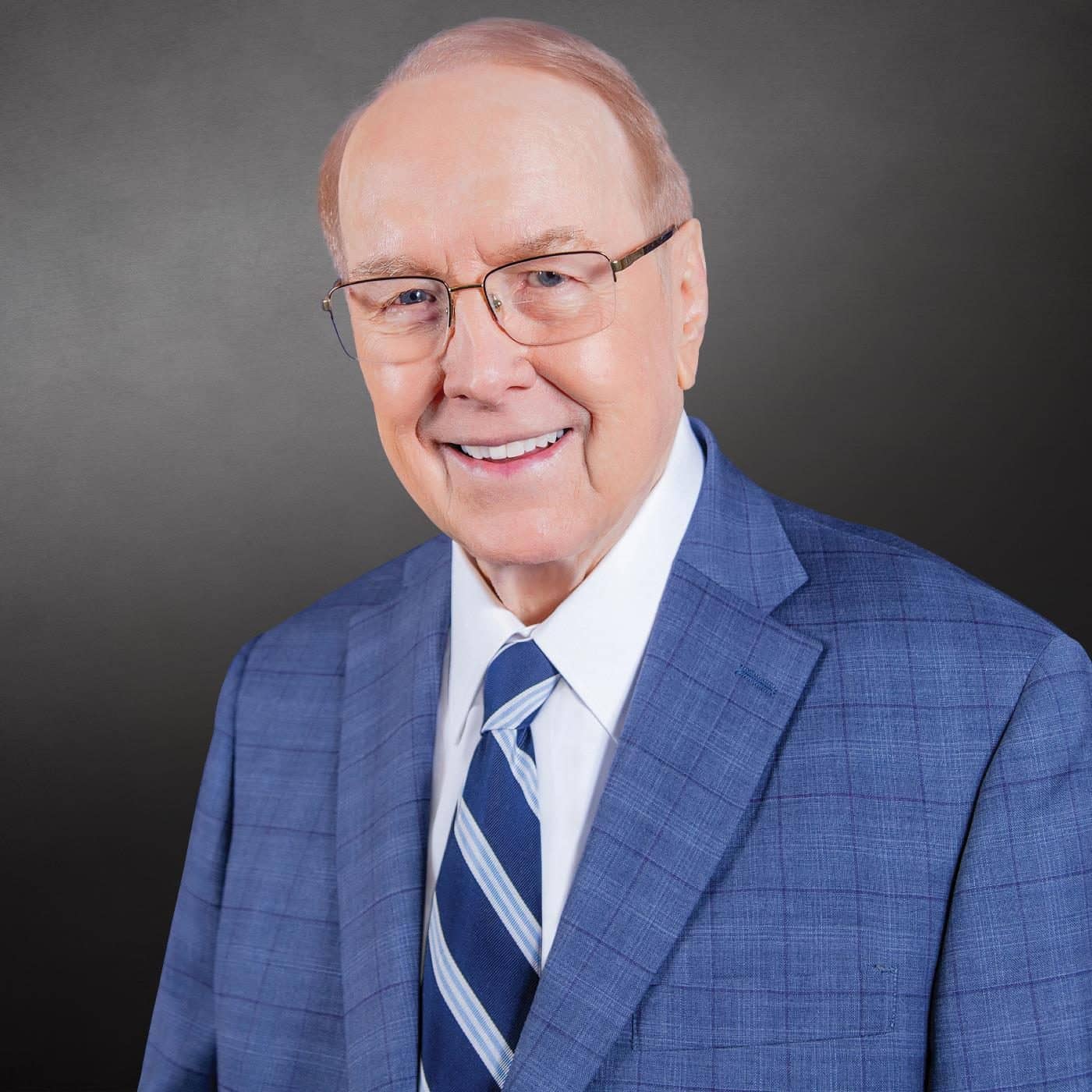

Listen as Randy shares his profound experiences as a juvenile court judge and reveals the moments that led him and Marsha to pursue a new calling. Amidst the challenges of contemporary culture, the Heckmans advocate for the inherent value of every child, reflecting on their past decisions and the future they hope to foster. Dr. Dobson and the Heckmans further explore the enduring impact of faith-driven family values, urging listeners to consider their roles in shaping a godly legacy in an ever-evolving world.
SPEAKER 04 :
Welcome everyone to Family Talk. It’s a ministry of the James Dobson Family Institute supported by listeners just like you. I’m Dr. James Dobson and I’m thrilled that you’ve joined us.
SPEAKER 02 :
Well, welcome to Family Talk, the broadcast division of the Dr. James Dobson Family Institute. I’m Roger Marsh with a question for you. As a parent, do you ever wonder if you’re truly making a difference in this world? You know, your days are likely filled with endless tasks like cooking meals and tackling mountains of laundry, shuttling children to various activities, working, and somehow managing your household through all of this. Well, if that sounds familiar to you, today’s conversation might bring you some much-needed perspective and encouragement. Today here on Family Talk, we’re continuing Dr. Dobson’s classic interview with Randy and Marsha Heckman, a couple who have raised 12 children while maintaining successful careers and ministry involvement. We’ve selected this conversation because of the timeless biblical principles discussed, even though it was recorded a few years ago. Now, Randy Heckman currently serves as the executive director of the Grand Awakening, a ministry dedicated to inspiring prayer for revival in West Michigan. He’s worn many hats throughout his career, licensed attorney, prosecuting attorney, juvenile court judge, and also founding executive director of the Michigan Family Forum. Marsha Heckman serves as chief assistant of the Grand Awakening and works alongside Randy as both his partner in ministry as well as his greatest supporter. Today, Randy and Marsha will share about a significant life decision they made when Randy chose to leave his judgeship to found the Michigan Family Forum. Their story of prayer, discernment, and trusting God offers valuable insights for anyone seeking direction. So let’s listen in now as we continue discussing the joys of raising a large family with Randy and Marsha Heckman and our own Dr. James Dobson on today’s edition of Family Talk.
SPEAKER 04 :
John Lofton, Jr. And the title of it is, Yes, Abortion is a Personal Issue. And I didn’t know this about John. This is what he wrote. As I watched the pro-life marchers come to Washington, D.C. this year, I thought again, as I do every time they come, of my youngest son, Andrew, who is 19. And I thought about how I was almost, but for God’s grace, a party to his murder in the womb. I remember well when I first learned that my wife, Barbara, was pregnant with Andrew. It was early in 1970. I had two children, Grace, my oldest, and John III, and my wife and I had just sat down to eat dinner after she had gone to the doctor because she wasn’t feeling well. When I asked Barbara what the doctor had said was wrong with her, she didn’t answer me right away. I asked the question again. “‘Well,’ she replied, somewhat sheepishly, “‘he said I have a very common illness,’ and she smiled. “‘I am pregnant.’ about two months pregnant, and everything’s fine. But for me, everything wasn’t fine. No way. The last thing in the world I wanted was another child. We didn’t have enough money to have a third child, and well, well, I just didn’t want to have another kid, period. I felt angry. I felt trapped. So being the know-it-all young conservative I was, but not a Christian, I had a quick solution. Abortion. Nonchalantly and between bites of food, I said firmly, you’re going to have an abortion. But I had seriously misjudged my wife’s willingness to do whatever I said. Just as firmly, in fact, more so, Barbara said to me, I am not going to have an abortion. I will divorce you and leave you before I will have an abortion. Shortly thereafter, at my wife’s request, I met with her doctor, a good man who had delivered our other two children. He, too, opposed the abortion idea, pointing out that the unborn child in my wife’s womb was developing fine and was healthy. Thus, he wondered, why would I want an abortion? I had no good answers. I mindlessly repeated the arguments which I had heard somewhere. What my wife was pregnant with wasn’t really human yet. It was just a blob of cells, a bunch of tissue, etc. But my heart wasn’t in any of those statements. To make a long story short, my wife gave birth to Andrew. And not long after this—I don’t remember how or where— I came into possession of some pro-life literature and pictures which showed conclusively that my unborn third child was, indeed, a living human being. Needless to say, I was, to put it mildly, greatly relieved by what I had not done. I was and remain extremely thankful to God that Andrew was not aborted. I’m glad my wife refused to compromise on this issue. So when I write about abortion, it is not an abstract issue. For me, too, it is, as they say, a personal issue, a very personal issue. And the person involved is Andrew Buckley Lofton, who has grown up to be a fine young man. But even if he wasn’t, he didn’t deserve to be murdered in his mother’s womb. That drama is going on all across the country. Marcia, you have tears in your eyes again.
SPEAKER 01 :
I didn’t want to. I just was thinking, too, how when I prayed that prayer that day, it’s like I… You know, you don’t understand how important it is to give him lordship of this because I would have been telling God, you know, what to do. I don’t want any more children. And Susie wouldn’t be there. And look at Susie.
SPEAKER 04 :
You went right through this that John is talking about.
SPEAKER 01 :
Well, I didn’t realize how important then because I wasn’t pregnant yet, but I was close. I mean, I could, you know, I was like deciding that.
SPEAKER 04 :
And Randall, you came closer to experiencing this, didn’t you?
SPEAKER 03 :
Oh, absolutely. In fact, I was looking for any excuse to get a vasectomy and pull the plug, as you will. I thought, hey, this is enough. We really need to do what other couples do at this point. You have the children you want, and then you decide when you’re going to quit, and you quit. But God just, in His grace, stopped us and told us in our hearts, something’s not right here. And then we just little by little have been able to figure out what’s this all about. And I really think this is such a key issue in our country today and the future of our culture.
SPEAKER 04 :
I have never known anybody, maybe they couldn’t be honest about it, but I have never known anyone who considered abortion and then didn’t have one, allowing the child to be born and knowing that child who has said, I made the wrong choice. When you can hold that individual and you know who they are and you begin to bond with them, you realize how wrong it is. That’s the perspective from which this act becomes so terrible. That’s right. You see what you were really doing. Right.
SPEAKER 01 :
Because I could have been pregnant and made the same decision. It’s like I was at the same deciding point almost. Right.
SPEAKER 03 :
See, we make the mistake of thinking that if we lose a million children in America because people have other priorities and they either abort them or just decide not to have them, well, we can replace that million children from America with a million kids from India or some other country. But when God makes a child, has a child in his mind he wants to create, he throws away the mold. Each child is of infinite value and is a unique creation of God. All 10 years are totally different. Totally different. And it’s going to be so exciting to see what God has planned for their lives. They are going to help the future of this country without question in their own way.
SPEAKER 01 :
And I think it makes a difference how I treat them. If I think, yeah, I made you kids, your attitude gets so different. angry when they’re bad it’s like I was I thought I could have prevented this child here a strong-willed one instead of this is God’s creation here it’s not mine gives me a more a better respect for them you know we get to keep praying as we got criticized for this thinking and
SPEAKER 03 :
But can I tie into this thing as it ties into child abuse and neglect? If we believe that we are responsible for making our children physically, what I make, I own. What I own and am displeased with, I can break or misuse. Child abuse, which takes so much of my time as a juvenile court judge. including sexual abuse. Notice if I have unmet needs or if I am frustrated with my child, I could have prevented you. It seems to me that the mentality that says that I own my child, at least in part, feeds this mentality of child abuse. It’s an entire degradation of the value of life, isn’t it?
SPEAKER 04 :
That’s exactly right. Let’s talk a little bit about your experience as a juvenile court judge. You have been a judge for 15 years. You’ve seen a lot of kids coming through. Oh, thousands. You love those youngsters, too? I do. Who are in rebellion, and many of them have been convicted of drug abuse and breaking and entering.
SPEAKER 03 :
So many of these kids, of course, come from just deplorable situations. That doesn’t excuse their conduct, but I do. God has given me a love for those kids and for their parents. We have child abuse and neglect cases and adoption cases as well.
SPEAKER 04 :
Now, you’re leaving the bench to take over the coalition in Michigan. What’s the name of it? It’s called the Michigan Family Forum. Yeah. The purpose of it is to deal with these pro-family issues and morality and some of the things we’re talking about today. That’s correct. Marsha, Randall probably won’t say it about himself. I’d like you to say what the kids who have come before him feel for him now that he’s leaving the bench.
SPEAKER 01 :
Well, we were driving along. We were having one of our Friday night dates or something. I tried to keep in touch here and still have fun together and everything. And he was saying, you know who’s the saddest about me leaving my judgeship? I don’t remember what I guessed, but he said, these teenage girls. One of these girls, and there’s lots of them that my caseworkers are saying are calling collect to their caseworkers and saying he can’t leave. Because, well, the one particular one he was talking about to me had kicked the caseworker and spit on her. And she was in tears on the phone to the caseworker saying he can’t leave because he and you, my caseworker, are the only ones that understand me.
SPEAKER 03 :
I was so amazed to hear that because I see these kids in my court and I’m fairly firm with them. But to help them, you’ve got to have a degree of firmness. It just blew me away to think that these kids who were so upset, at least on the outside in my court, would want me to remain a part of their lives. But as you think through it, and the caseworker said, you know, I think it’s because they never had a father. I never had a father that loved them enough to set limits for them and be there for them. And I was as much as they’ve ever had. It was a major decision for you to leave the bench, wasn’t it? It definitely was. I was looking for any reason to say no to leaving. Because, again, I’ve had great opportunities in the job, both locally, statewide, and even nationwide, to have an influence. And so to leave, I had to really be convinced that I could be more effective in being part of this coalition as compared to what I was able to do as a judge.
SPEAKER 04 :
Explain now the coalition idea, Randy, because there are 16 of these currently developed in 16 states, and we hope to have coalitions in all 50 states before very long. Explain what they’re designed to do.
SPEAKER 03 :
Well, the coalitions have a number of factors, but basically we’re talking about an education and research organization at its heart. And it’s designed to work with all the organizations in the state of Michigan, ours is, that are trying to push and strengthen the family. You did a very courageous thing.
SPEAKER 04 :
You had, I believe, a 16-year-old girl come before your court. Thirteen-year-old. Thirteen, who was a ward of the court. Right. Which means you make the decisions, some important decisions about her life. And she was pregnant, and she was petitioning to have an abortion because she didn’t want to carry the baby. And you turned her down. You took a lot of heat for that.
SPEAKER 03 :
I really did. She was four to five months pregnant, and the law was relatively unclear. This was back in 1982. Right. It still is relatively unclear as to what a judge in my stead should do under those circumstances. But I looked at what I thought the law would be, and that would be to ignore the rights of the unborn child and simply look to the best interest of this 13-year-old girl who was pregnant wanting the abortion. And I stayed up all night the night before the opinion trying to figure out what I was going to do and how I was going to say it. But the bottom line is that after taking the testimony, I ruled that even ignoring the best interest of the baby, it still would be better for her not to have the abortion. But I went on to editorialize, which judges can get in trouble doing, but I wanted to do it anyhow, just to say that even if the evidence had gone the other way, that is that it would somehow serve the emotional best interest of this 13-year-old to get the abortion, I would not grant it because I consider that an unjust act for me to do. Ended up making headlines around the country, and I got letters from all over the country on that. Most of them angry? No, no. Actually, eight to one were positive. Is that right? Believe it or not.
SPEAKER 01 :
You would say, well, I’m here to protect children, not kill them. That’s right. That’s my job.
SPEAKER 03 :
I mean, I’m a juvenile judge to protect kids from abuse, and here I’m going to order the killing, merciless killing, of an unborn baby. That’s preposterous. I’m not that schizophrenic.
SPEAKER 04 :
Randy, describe in just a moment or two some of your other experiences on the bench. You’re leaving it now. What has that been like? Give us a feel for what you’ve learned, what you’ve seen.
SPEAKER 03 :
Oh, it’s been a fascinating 15 years. We see just families from all over the landscape coming. We see certainly a lot of delinquent kids involved in drug abuse, breaking and enterings, and some homicides and other sorts of things, armed robberies. Is it changing over time? Last year, we’ve really seen a significant increase in the crack cocaine problem. We have 12-year-olds selling crack cocaine on our street corners. We have the mothers who are addicted to crack. We see those cases increasingly where they will sell, literally sell their children to get their next hit of crack cocaine. It’s incredible. We’ve been involved in lots of sexual abuse type cases. In fact, I’ve been involved to help set up programs in our community to better respond to incest cases. And we have an excellent program that helps kids in the long run and families in the long run. We’ve got a program for adolescent sexual offenders, which is a growing problem that I’ve helped to put together. I’ve enjoyed the cases. It’s been a fascinating history. Time for me to just see people, to interact with these hurting people, to learn for myself, where did these people go wrong? What can we learn from their experience to help me, even in my own life and family? And how can I be of help to these people? How can I help get them back on track? And some are able to do that. But what I’ve really enjoyed, too, is the helping to set up some of these programs to better respond to problems. That’s been an exciting part, too.
SPEAKER 04 :
Marcia, women tend to be a little more security and stability oriented than men, especially those that have 10 kids. They tend to think about the future and about their financial well-being and don’t like change a lot. How do you feel about Randy leaving this prestigious judgeship to take over a new coalition like this and having to forge a whole new responsibility?
SPEAKER 01 :
Well, it does take some courage because it is kind of unknown, you know, what we’re getting into. And frankly, when he first mentioned it and what the pay would be like that, I wouldn’t even… Can we make it? I wouldn’t even want to talk about it, really, because here he’s a judge, you know, and he hasn’t been grumbling about his job. I’ve been praying over the years for him because I’ve always thought maybe God has something else. And I… There’s a prayer that God would fill him with wisdom and knowledge that he could know all the will of God in the first part of Colossians. And I just wanted to pray that for him every day almost. I would think that just because I want God’s best. And I’d say, how do you feel like going on a trip or something? He’d say, did God speak to you at all or anything? Because I just had this sense. He’d say, no. You know, nothing particular. In fact, lately he’s been giving up all his rights. He’s been saying, you know, I just want to go God’s way. If he wants me to be a judge the rest of my life, I’ll do that. And I thought, oh, great. Well, that’s okay. But then he goes, like, willing, whatever you want, God.
SPEAKER 04 :
And you feel he is definitely leading you.
SPEAKER 01 :
But then still, I thought, this wouldn’t be it. You know, do you want to become… This is a step down, and this can’t be it. I didn’t even want to talk about it. He didn’t even want to talk about it. Why would it make sense? But then this person who’s in charge of getting the director for Michigan fouled it on his heart so much. They didn’t want to just get anybody. They wanted somebody that was overqualified almost for this job. They wanted… God to do some work in Michigan. There’s people in Michigan that love people and care about our state. And they wanted God’s choice for a person. So this guy persistently called him back and said, I just feel you’re the one for the job. So that grabbed Randy’s heart. He said, maybe I ought to pray about this. He told me and I thought, oh, really? But then I thought, and he, and oh, then we went through all this, you know, prayer and And I just didn’t have a peace about it. And I don’t know, because we do. I mean, what we’re even saying about children is kind of unusual, pro-child. It’s not our message. We feel like God’s writing it on our heart. And we thought, well, we’ll have to tell them how we feel about children, you know, not just abortion for life, but how we feel about kids. We want to be honest. So we told this person, Kevin, who was in charge of getting the person from Michigan, how about it. And he just said, that’s great. We want somebody who loves children, who wants God’s will and wants God’s will in Michigan and in our country. So then we still didn’t know. We went to talk to Dr. Dobson, too, because he’s kind of—you’re an authority, you know, on this whole—you thought it up. Really?
SPEAKER 03 :
The coalition. You’re responsible, I think is what she’s trying to say.
SPEAKER 01 :
We want him to know how we feel, too, about this. And we shared with you at breakfast, you know, that morning, how we feel about kids. And you just listened, and you said, I just want you to tell the country about how you feel about kids. Would you come on our show and tell them? And something in me kind of clicked in that when you said that, and I thought— I didn’t know what I wanted to say, but I thought, I want to be on his team. If he’s gutsy enough to share this message with our country, I want to be on that team. And I’ll be on that team because I know that God’s going to take care of me. If he would leave our 12-bedroom house, he’ll take care of us because he’s God.
SPEAKER 04 :
I say it again to those who are listening. How comfortable are you out there? As you watch obscenity and profanity and evil all around you, and as you watch our schools begin to be infected by secular humanism, And you see school-based health clinics coming in so the kids can be taught that safe sex is really the answer to the problem of disease. And abortion is a solution if that doesn’t work. As you see these things happen, what are you going to do about it? I want to speak to the lawyers who are out there. Randy, you’re an attorney. You could be making a lot of money. It’s not terribly difficult for a lawyer to make $150,000 or $200,000 today, certainly if he lives in a city and he’s aggressive and intelligent. He can make a lot of money. You could make a lot of money. There are an awful lot of attorneys listening to us right now. I hear from them. I know they’re there who do not give pro bono time to the pro-life movement and the pro-family movement. I’m not throwing stones at anybody, but the ACLU has incredible quantities of pro bono time, free time, given to their cause. Do they really care more about their agenda than we do ours? It’s not until We began to develop the attitude that you all are demonstrating and leading us in. You’re doing a better job of it than I am, that we’re going to save this country and the Western world. Canada’s in the same mess that we are. And that’s why I wanted you to come here and share your story, not only about kids and about material things, about your love for the Lord.
SPEAKER 03 :
but this great zeal to do what he wants you to do. Well, I really have hope for our nation. I think God has put it on my wife’s heart and my heart to get involved in this. I don’t consider this a sacrifice. I consider this a privilege. I look at my 10 children and I say, what am I going to be giving to them into their future and to their peers that we’re going to be giving to? And I’m thinking that God has not given up on our culture yet. He’s put it on our hearts to become involved in this. I know he’s raising up other people to get involved. And it’s got to start with us. I’ve got to look in the mirror and say, am I the husband I should be? Am I the father I should be? If not, God, help me to be the husband and father I should be. Help me to get my life and my family going God’s way. Never perfectly, but going God’s way. Help me to encourage the people I go to church with to do the same thing. Help the people in our community to do the same thing. There’ll be a fight, yes, but it’ll be built on a foundation of God’s strength and righteousness. And we will change this country, not by just putting a shell, a legal shell over the top, but working from the guts, from the inside. It’s going to change by God’s grace. He cares about us and we’re going to see change.
SPEAKER 04 :
That is not only the hope of the future. It is the only hope. That’s right.
SPEAKER 02 :
Amen. And you’ve been listening to Dr. James Dobson’s family talk and a remarkable conversation featuring Dr. Dobson and his guests, Randy and Marsha Heckman. I truly appreciate how the Heckmans challenged our perspective and our culture’s prevailing attitudes about family size and priorities. As Randy so powerfully stated during today’s program, when God makes a child, he throws away the mold. Each child is of infinite value and a unique creation of God. Their testimony isn’t just about raising a large family. It’s about recognizing the inherent worth of every human being and being willing to stand for that truth, even when it’s unpopular. By the way, if you missed any portion of today’s broadcast or you’d like to share it with a friend or relative, go to drjamesdobson.org forward slash family talk. While you’re there, you can learn more about the book called Sweeter by the Dozen by Randy Heckman, which further explores their family’s journey. And with Mother’s Day coming up this Sunday, we want to honor the incredible women in our audience with a special gift. You know, motherhood is both a profound blessing and it’s also perhaps the most challenging job on the planet. That’s why we’ve created the Empowering Moms email series. It delivers five minutes of practical parenting wisdom, timeless scriptural truths, and uplifting prayers straight to your inbox each and every day. Now, this free resource is designed to inspire and encourage you in your irreplaceable role. To receive yours, simply enter your name and email address when you go to drjamesdobson.org and you’ll start receiving this free daily boost of motivation. We call it our Empowering Moms series. Again, that’s drjamesdobson.org. God bless you. God bless you. Now, you can make a secure donation online at drjamesdobson.org. You can make your tax-deductible donation over the phone when you call 877-732-6825. Or if you’d prefer to send your donation through the U.S. Postal Service, our ministry mailing address is Dr. James Dobson’s Family Talk, P.O. Box 39000, Colorado Springs, Colorado, 80949. Well, I’m Roger Marsh, and on behalf of Dr. Dobson and all of us here at the JDFI, thanks so much for joining us today. Join us again next time for another edition of Dr. James Dobson’s Family Talk.
SPEAKER 03 :
This has been a presentation of the Dr. James Dobson Family Institute.