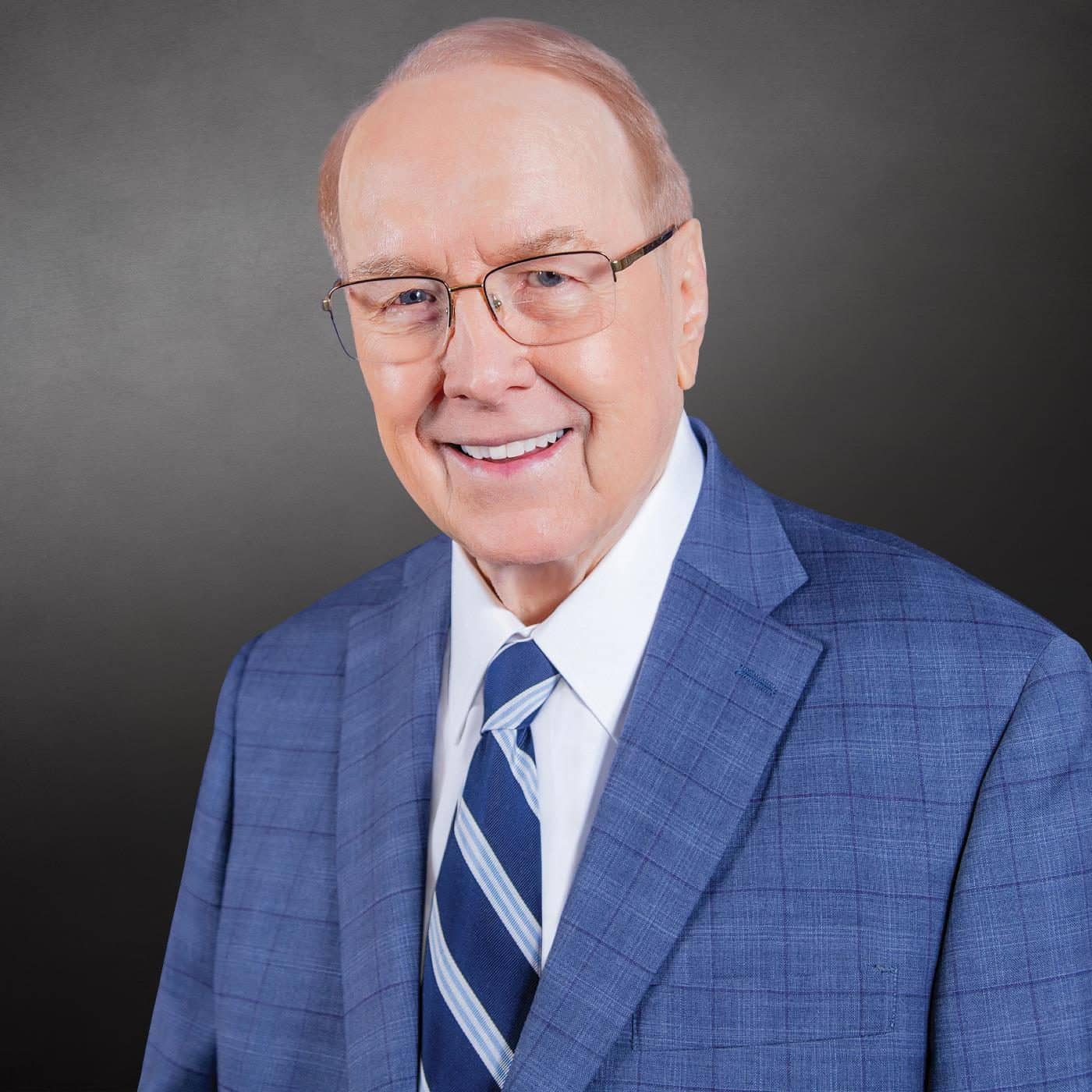

In this captivating episode, Dr. James Dobson continues his engaging discussion with Pastor Dan Fisher about the vital history of America’s fight for liberty. Discover the fascinating origins of the phrase ‘separation of church and state’ and learn about the Black Robed Regiment, brave men of the cloth who donned preaching robes by day and army uniforms by night. Explore how these historical narratives apply to modern-day challenges and why the church must stand at the forefront once again.
SPEAKER 03 :
Well, hello, everyone. I’m James Dobson, and you’re listening to Family Talk, a listener-supported ministry. In fact, thank you so much for being part of that support for James Dobson Family Institute.
SPEAKER 01 :
Well, welcome to Family Talk, the broadcast ministry of the Dr. James Dobson Family Institute. I’m Roger Marsh. You know that phrase, separation of church and state, has been weaponized against people of faith for decades. But did you know those words don’t actually appear anywhere in the U.S. Constitution? That’s right. This widely misunderstood concept has been twisted to silence Christian voices in the public square. Well, on today’s edition of Family Talk, we’re continuing Dr. James Dobson’s eye-opening conversation with Pastor Dan Fisher about America’s original Black Robed Regiment, courageous pastors who led the fight for religious liberty during our nation’s founding. Pastor Fisher is the author of a book called Bringing Back the Black Robed Regiment. He’s also pastor of LifePoint Bible Church in Oklahoma City and a former Oklahoma state legislator who understands both ministry and government applications. During the next half hour, you’ll discover the true origin of the phrase separation of church and state, and you’ll also hear incredible stories of pastors who literally went from the pulpit to the battlefield. These men understood that faith and civic duty go hand in hand. So let’s get into it right now. Part two of Dr. James Dobson’s conversation with Pastor Dan Fisher on today’s edition of Family Talk.
SPEAKER 03 :
Pastor Fisher, it was such a pleasure to have you here last time. I’m kind of a history buff, amateur, like you say you are. Me also. You know, the Revolutionary War in that period fascinates me because the influence of the Second Great Awakening and how there was such spiritual fervor at that time. I want to start with a question, and it has to do with the separation of church and state. and how in the world we came to interpret the Constitution as saying, in effect, that the Constitution protects the government from the people instead of the other way around. I kind of fumbled with that, but you know what my question is.
SPEAKER 02 :
They would have thrown down their arms and gone home. The idea of the separation of church and state was so foreign to them that one of the historians from that period of time, a man by the name of John Thornton in 1862, wrote that the fathers of the republic did not divorce politics and religion, but they denounced the separation as ungodly. So they would have had such a violent reaction
SPEAKER 03 :
to this myth of separation of church and state. And it has taken root in the country. I was a guest of Larry King Live television show probably 20 times through the years, and he challenged me on that one day. He said, well, you know, the separation of church and state is in the Constitution. I said, sorry, Larry, it’s not. Oh, yeah, yes, it is. And I said, go check it out, Larry. It’s not in there. He never came back to me because the truth of the matter is— The Supreme Court makes its major decisions about religious liberty based on that myth, and it’s phony.
SPEAKER 02 :
Yeah. In fact, if you look at the First Amendment, the only group that’s limited in the First Amendment is Congress. It says Congress shall make no law. Well, when did a church become Congress or even a state legislature? The Bill of Rights, if you read the preamble to the Bill of Rights, they’re written literally in the preamble to limit the federal government, not the state governments, not churches. So the whole thing is a myth. The founders did not compartmentalize their lives into the sacred and the secular. That was foreign to them. And it’s been perpetrated now upon us.
SPEAKER 03 :
They used it to prevent prayer in schools and Bible reading in schools. It had nothing to do with the Constitution.
SPEAKER 02 :
No, in fact, even one of our own Supreme Court justices, William Rehnquist, Justin Rehnquist, said that the separation of church and state is not only bad history, it’s bad law and should be rejected.
SPEAKER 03 :
Where is he today? Yeah, right. All right. Let’s go back to the founding fathers and tell us where this separation of church and state originated. It started with Jefferson. Yeah, that’s right.
SPEAKER 02 :
Well, there was a group of Baptists in Danbury, Connecticut, who had heard that the federal government was going to establish a particular denomination as the national denomination. Thomas Jefferson’s the president at that time, so they write him a letter. And he writes back, trying to calm their fears, saying, look, the national government, the central government, the general government cannot do that. It’s limited. There’s a wall of separation protecting the church and the people from the federal government. Well, what modern scholars and those in the politically correct crowd have done is they’ve turned Jefferson’s statement upside down and pointed to the opposite direction from what Jefferson was saying. It’s a total fabrication. It’s a total lie.
SPEAKER 03 :
He was really saying that there can’t be a national government. or religious movement. Right.
SPEAKER 02 :
Yeah, and we all support that. Of course. He was saying the government doesn’t have the power to meddle in religious liberty. That’s a right of the people. So the wall of separation protects people.
SPEAKER 03 :
Turn that around and say the government has to be protected from the people. That’s ridiculous. Because the people, you know, it’s the government of the people, by the people, and for the people, as Abraham Lincoln said in Gettysburg. Yeah. Yeah, sure. And that made it very clear that came along later, but it is an expression of what the founding fathers intended.
SPEAKER 02 :
Well, there’s no question about it. You had mentioned earlier when we were visiting about what John Adams said about our Constitution. that it was written, holy, he says, for a moral and religious people, it is totally or completely inadequate to the government of any other. If you have a representative republic like we do, and the people get to choose their representatives, and the people are immoral, then we’re going to have an immoral government. This is pretty much what George Washington said in his farewell address, that morality and religion are the two pillars that hold up a republic. And you strike down morality, and he said you can’t have morality without religion, and he was thinking of Christianity. We all know that. You strike down morality, and then you strike down Christianity or the church. The republic falls. Dr. Dobson, we’re witnessing that right before our very eyes. We are. It’s collapsing. And this is why I believe the black regiment story is so critical because there was a time in America when the church led out in the defense of liberty. We didn’t bring up the caboose. We were the tip of the spear with this black regiment group. That’s why their stories are amazing. Well, let’s hear some of those stories.
SPEAKER 03 :
Let’s do. We were talking last time about the origins of the Black Robe Regiment. Yes, sir. Give us the 32nd version so people who didn’t hear that will know what we’re talking about.
SPEAKER 02 :
They were birthed out of the First Great Awakening. Preachers like George Whitefield, Jonathan Edwards were preaching in those days. These preachers come along. They see what’s coming on the horizon with the British tyranny. They began to preach principles of government from their pulpits. about tyranny, the responsibility of Christians to stand up. Then the Declaration of Independence is signed, and war begins at Lexington and Concord. And these pastors led the men of their churches, many of them, off to fight. So they stripped off their robes.
SPEAKER 03 :
Preaching robes. Yes, sir. And many of them had uniforms underneath. Yes, sir. And they went off to war.
SPEAKER 02 :
Yes, they went off to war.
SPEAKER 03 :
And these were people who had beforehand been rather pacifistic.
SPEAKER 02 :
Oh, yeah, sure. You know, for instance, one of the preachers that was on Battle Road, which is where the British retreated from Concord back to Boston after the Battle of Concord, one of those preachers had been a pacifist. He had said this, I’m not going to get involved in the war. But when he heard about the British firing on Jonas Clark, who was the pastor at Lexington, he was there on Battle Road, they said, fighting like a crazy man. And he had been a pacifist just 10 hours before. He survived the war. He did. He did. So you have all of these pastors. We had talked about Peter Muhlenberg, who was kind of the quintessential. Let me give you a story of a Presbyterian. Muhlenberg was a Lutheran. There was a Presbyterian pastor in Elizabethtown, New Jersey. named James Caldwell. And he was one of the hothead Presbyterians. And that day, the Presbyterians were the fiery preachers. And he would say things like, sometimes it is as righteous to fight as it is to pray. Well, he leads the men as a chaplain, but they were on the battlefields fighting as well. Well, when the British invade Elizabethtown, they kill his wife, Hannah Caldwell. One of the Redcoats goes into the Caldwell yard, shoots her through the window, and kills her instantly. The county of Union in New Jersey today has on their county seal that moment captured in artwork. Well, he helps to eulogize his wife as she is buried, then goes off to join his men at Springfield, New Jersey. When he gets there, they’re yelling that they’re out of wadding for their muskets. Now, without wadding to hold the shot tight in the barrel, those muskets are useless. So he jumps on his horse, rides down to the First Presbyterian Church of Springfield, New Jersey, loads up his arms with Isaac Watts hymnals, rides back to his men for throws the hymnals out at his men and tells them to tear the pages out and use the pages for wadding. So his men are stuffing Isaac Watts hymns down the barrels of their muskets, shooting at the British. And while they’re doing that, he’s yelling, give them Watts, boys. Put Watts into it. That’s the Presbyterian preacher, James Caldwell. Oh, my. Okay, tell me other stories. What happened there? Well, let’s talk about John Witherspoon. Now, John Witherspoon was a Presbyterian as well. He was the president of Princeton, and he was the only vocational pastor to sign the Declaration. In fact, when the delegates there were getting fearful of signing it, he gave a speech that inspired them to go ahead and sign the Declaration, which most of them thought was their death warrant. Well, he led out all through the war. Now, he never did lead troops onto the battlefield, but he was the one standing back there with moral support pushing. So you can see that the Black Regiment was not only on the battlefield, they were there in government. Now, take, for instance, Naftali Daggett. He was the president of Yale. When the British invaded New Haven, Connecticut, he and about 100 boys from the school there at Yale rode out and fired a number of shots at the British to slow their advance. They captured Daggett. He was a preacher and the president of Yale treated him so brutally that he died a number of months later from the wounds he incurred that day. John Treadwell in Lynn, Massachusetts. He was a pastor. It is said that he kept a loaded flintlock in his pulpit, and every Sunday he would walk into the pulpit with a Bible under one arm and his cartridge box under the other. Let me tell you one more. Thomas Allen was a pastor in Pittsfield, Massachusetts. And he was there at the Battle of Bennington, Vermont, on August the 16th, 1777. He led his men out onto the battlefield while wearing his preaching robe. When his men were lined up, he walked on out into the killing zone toward the British, stood up on a stump, and offered the British the opportunity to surrender before telling his men to open fire. They recognized him because some of the Tories in the British ranks were neighbors. And so they fired a volley of musket fire at him and they missed him, but they put a hole in his hat. He walked back to his men, stood beside his brother Joseph and said, Joe, I’m a better shot than you. You load and I’ll shoot. He fought all day long at the Battle of Bennington, Vermont. A few days later, he goes back home to his church. One of his church members says, Pastor, I heard you fought the other day like a common soldier. And he said, Oh, yeah, it was a tough fight and everybody had to do his duty. He said, But you’re a pastor. Did you shoot anybody? And he said, Well, I don’t know if I shot anybody, but I noticed behind a particular bush that there was a frequent flash. And every time that flash occurred, one of our men fell. So I took a steady aim and I fired at that bush. I don’t know if I killed anybody, but I put out that flash. That’s Pastor Thomas Allen.
SPEAKER 03 :
Well, we’re talking about your book, Bringing Back the Black-Robed Regiment, How the 18th Century Church Stood for Liberty and Why It Must Do So Again. And by the way, this book is loaded with information. Any of you who are interested in the history of this country must read this book, and I hope they’ll get a copy of it.
SPEAKER 02 :
Well, you know, Dr. Dobson, the story of this black-robed regiment is really the story of the church and its involvement in defense of liberty. If we don’t do what they did – and our liberties are at stake right at this moment. You said it a while ago. We’re in very dark days, and I think we’re on the verge. We’re the closest that we’ve ever been, certainly in my life, and maybe ever, to losing these liberties. If the church doesn’t lead out again – now, no one’s calling for war. I’m not suggesting that we go fight. There are political weapons at our disposal if we’ll use them, like voting. But if we don’t get involved, I think all you have to do is go to pre-World War II Germany. The churches there went silent. Now, there were some that didn’t. Dietrich Bonhoeffer is an example. But for the most part, the church in Germany kind of went silent. They were afraid of what the Nazis would do. And we see how that turned out. That’s what happens in a culture when the conscience – and see, I believe the church is the conscience, and the pastors are the voice of that conscience. When the conscience goes silent, then what happens to the culture? Right.
SPEAKER 03 :
Pastor, you have the heart of a pastor. You want to be of help to pastors. You’re not here to criticize them or to embarrass them or what have you. But your goal is to enlighten and be of assistance to those that are on the firing line. What do you got to say to them?
SPEAKER 02 :
Well, I think the first thing is they don’t need to fear. The only one they need to fear is God. and the tyranny of their government if they don’t begin to speak out. But as a pastor, I would be willing to help them. I’ve been there, done it. I don’t know everything, but I have done some of these things. I’ve served in the legislature while being a vocational pastor. My deskmate in the legislature my last term was a man out of my own church that ran for the House and won. We’ve done some of these things.
SPEAKER 03 :
You would get back to people who call and say, you know, you make sense to me. Show me how to proceed.
SPEAKER 02 :
If they will contact me, I will visit with them personally. I’m just a regular guy who wants to see our culture come back to some sanity and morality. We would bring our presentation to their church. We could do all kinds of things that would help build a fire, not only in the pastor, but their people. I would be willing to help. I don’t want to criticize. I want to link arms.
SPEAKER 03 :
That might be the greatest fallout from this program today and yesterday. Yeah.
SPEAKER 02 :
Yeah. You know, the one thing about the black regiment that they did do, they set aside their doctrinal differences to fight for the common cause of liberty. That’s where we are now. We’ve got to set aside our differences because if we don’t and defend liberty, our differences aren’t going to matter.
SPEAKER 03 :
We’re going to lose.
SPEAKER 02 :
Yeah, that’s right.
SPEAKER 03 :
Dan, I have. grave concerns about this country and where it will go if we don’t find our spiritual roots I’ve read a lot about Nazi Germany I have to admit I’m sure glad I wasn’t there at that time because the Nazis were so brutal they would torture you and they would kill you if you disagreed with them and so I understand in a way the church being intimidated by them because it was life and death But, you know, it was that way, too, in the early Christian church.
SPEAKER 02 :
The Book of Acts.
SPEAKER 03 :
In Rome. Absolutely. Will we have the courage to take a stand like that? Because it may come to that.
SPEAKER 02 :
It could. You know, here in America, we’ve enjoyed liberty for so long, Dr. Dobson. We’ve just taken it for granted. And we don’t know the price that was paid. I lived the majority of my life not knowing about the Black Regiment. I didn’t know that the Lexington Minutemen were led by a pastor and a deacon. I didn’t know that. I didn’t know that the church led out. I didn’t know of their boldness. I was robbed of that. Now I’ve discovered this truth, and I’m committed to getting the story out. That’s why we’ve done the book. We’ve done the DVD. I travel all over the country doing a live presentation in period costume, multimedia. I have sound and PowerPoint on a real large screen. I take all these relics. We were looking at some of those in your office a while ago. straight from the war hey trying to bring it to life let’s talk about that okay let’s do I would like the people to know you’re available for that describe it in greater detail and how can they reach you yeah well the best way to do it is just to go to my website danfisherbrr stands for blackrobedregiment.com and they can contact me there they can get the book they can get the DVD and I travel to do these presentations, and we travel with a huge trailer full of equipment. Dr. Dobson, I become, other than myself in the presentation, I act. I become Peter Muhlenberg, and then at the end, I become another pastor named John Rosbrug, who was literally bayoneted to death by the British when he was trying to surrender. He was a pastor. I tell this story, and I bring these relics with me. They get to see the whole thing. It comes alive.
SPEAKER 03 :
Well, you’ve got a musket that weighs about 500 pounds. You can hardly lift it.
SPEAKER 02 :
It’s a 78 caliber.
SPEAKER 03 :
I’ve seen this stuff that you have. I mean, it’s wonderful. There is a Bible that is made up of Psalms and Isaiah. Well, Isaac Watts.
SPEAKER 02 :
Isaac Watts. Yeah. Yeah. When I hold these relics, they’ve been there. You know, that one musket you were holding crossed the Delaware River on December the 25th, 1776. George Washington. Yeah, and was used at the Battle of Trenton, New Jersey the next day by a private named Isaac Cook. I know the man’s name that carried it. That big musket, that was carried by a colonial militia lieutenant named William Perkins at Breeds and Bunker Hill. It’s a 78 caliber. It’s like a cannon.
SPEAKER 03 :
It really is. You know, we’re talking to some pastors out there.
SPEAKER 02 :
Oh, I hope so.
SPEAKER 03 :
Who will become informed of the roots of our nation and how the church played such a key role. And many of them did pay with their lives.
SPEAKER 02 :
They did.
SPEAKER 03 :
And their sacred honor. That’s right. And we’re not asking people to do that.
SPEAKER 02 :
Dr. Dobson, you mentioned on the last program, I spent two terms, four years in the Oklahoma legislature while I was an active pastor. Now, I’m not saying that’s for every pastor, but our Christians could run for city council, school board, the state legislature, dog catcher. I mean, if we take the salt and light out of government, then we shouldn’t be surprised if our government decays and is controlled by darkness. You know, we were talking about Thomas Allen a while ago. He’s the one that said, I put out that flash. His brother, Moses Allen, died on a prison ship during the revolution while trying to escape. But his body was so emaciated when he jumped off the ship and tried to swim to shore, he drowned. See, and he was a pastor. These pastors paid, many of them, the ultimate price. I mean, even the president of Yale, Naftali Daggett, for Pete’s sake. The president of Harvard, Samuel Langdon, was a black robe guy. He was promoting that. I don’t think he went to the battlefield. But, I mean, we’re talking about… the intellectual leaders of the 18th century. I want the pastors and the Christians out there to know we’re not talking about a handful of rabble-rousers who were anarchists. I cover that in the book. These men believed that tyranny, if it’s unchallenged and unchecked, will snuff out the gospel.
SPEAKER 03 :
I’m holding a copy of the book, Bringing Back the Black Robed Regiment, How the 18th Century Church Stood for Liberty and Why it Must Do So Again. And on the back cover, there are these words. They were prophets of liberty and truth. These preachers were an essential part of the war for independence in 1776, and some of them even led their men onto the battlefield to face the coal, lead, and steel of the dreaded Redcoats. They were hated and feared by the British, who called them the Black Regiment. That’s where Black Road Regiment comes from. Who were they? They were America’s patriot preachers of the 18th century. We have a lot of pastors that won’t even ask people to register to vote according to their desires and their beliefs. It’s not that they’re standing up telling them to be a Republican or a Democrat. It’s that we will do okay if the majority of the people will simply give their 15 minutes to go vote.
SPEAKER 02 :
Dr. Dobson, this is not about parties. It’s about principle. And as goes the pastor, so goes the church. And as goes the church, so goes the culture. How can people reach you? DanFisherBRR.com. And we’d love to bring this to their church. Now, I don’t get up and talk politics. The pastors don’t have to worry. I don’t even mention Republican and Democrat. I talk about these men, what they did, and how the church must stand again or we’re going to lose everything.
SPEAKER 03 :
Dan, it’s wonderful to make a new friend. Oh, it’s been my honor. We’ve crossed paths once before when I spoke, but I don’t remember it. You do, but I don’t.
SPEAKER 02 :
I do.
SPEAKER 03 :
And I’m just pleased to get acquainted with you. We believe much the same thing. And I trust that God’s hand will be on you, will protect you. There are people who aren’t going to like you. There are people who would like to do you harm. And I pray that the Lord will stand over you and guard you and that he will bless your church. And thank you for writing this book. Oh, thank you. Thank you for having us.
SPEAKER 01 :
And that brings us to the conclusion of Dr. James Dobson’s conversation with pastor and author Dan Fisher on today’s edition of Family Talk. Today they’ve been discussing the true stories and the brave men featured in Dan Fisher’s book called Bringing Back the Black Robed Regiment. Now, if you missed any portion of today’s broadcast or if you want to share these inspiring stories with a friend, go to drjamesdobson.org forward slash family talk. There you’ll find the complete program along with information about Dan’s book. Again, that title, Bringing Back the Black-Robed Regiment. Find that information and more at drjamesdobson.org or when you call 877-732-6825. That’s 877-732-6825. Here at the Dr. James Dobson Family Institute, we are committed to preserving the biblical principles that have strengthened our nation for generations. When you support our ministry, you help to share timeless truths about faith, family, and freedom with millions of listeners all across America. And if you value the conversations you hear on this program, we invite you to join us in our mission. Your gift of any amount helps us broadcast these important messages to families who need encouragement and wisdom. And your gift right now, especially during these summer months, is even more special. You can make a secure donation online when you go to drjamesdobson.org. That’s drjamesdobson.org. You can also call us with your donation at 877-732-6825. That’s 877-732-6825. or to send your tax-deductible donation through the U.S. Postal Service, remember our ministry mailing address is Dr. James Dobson’s Family Talk, P.O. Box 39000, Colorado Springs, Colorado, the zip code 80949. Well, I’m Roger Marsh, and on behalf of Dr. James Dobson and all of us here at the JDFI, thanks so much for listening. Be sure to join us again next time right here for another edition of Dr. James Dobson’s Family Talk, the voice you trust for the family you love. This has been a presentation of the Dr. James Dobson Family Institute.