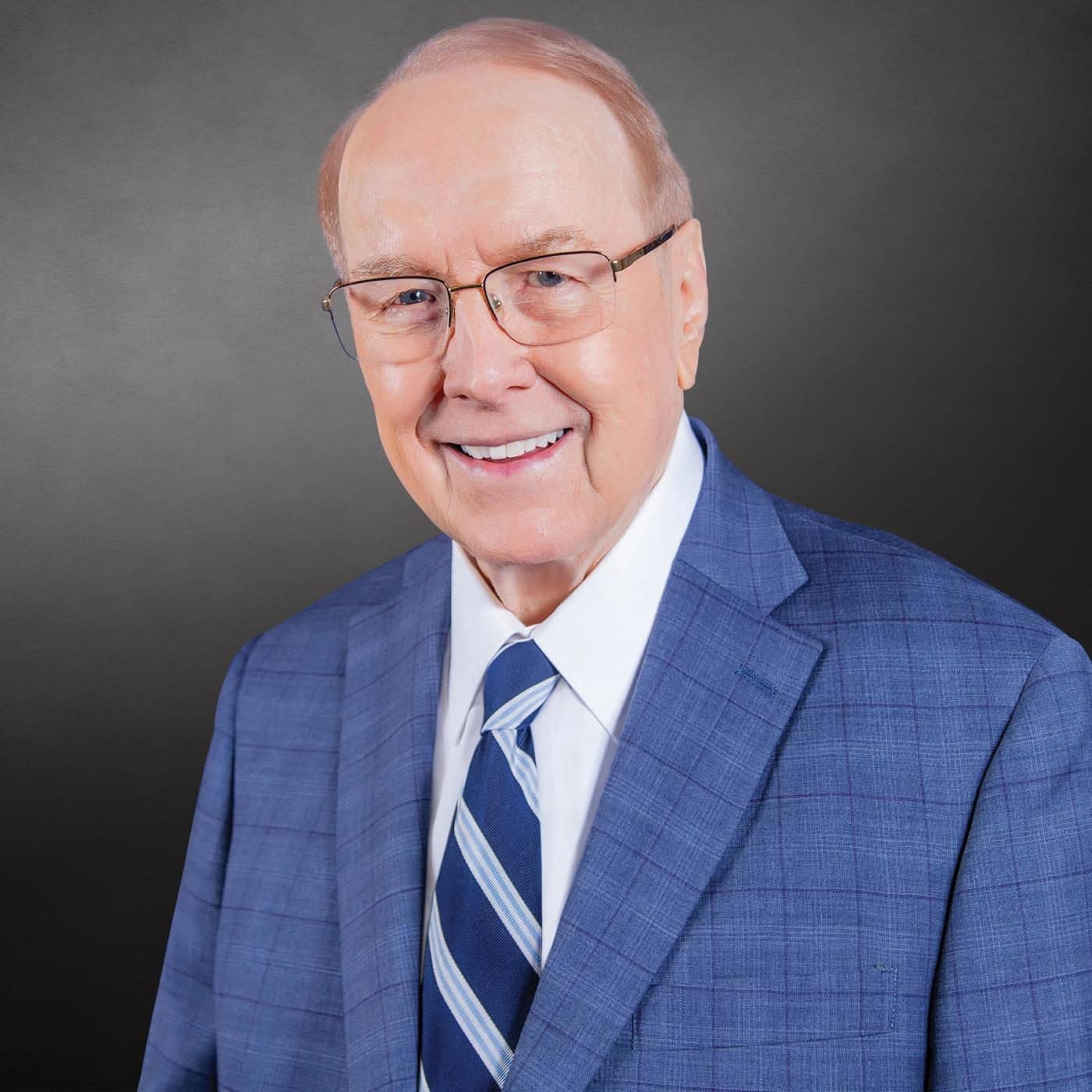


In this concluding episode of our series on ‘The Use and Abuse of Power,’ join Dr. James Dobson and his dear friend Chuck Colson as they explore the intricate dynamics of power through personal anecdotes and biblical insights. Chuck Colson shares unforgettable experiences, from his transformation after the Watergate scandal to founding Prison Fellowship Ministries and reaching the forgotten souls in some of the toughest prisons around the globe. Discover what it means to truly serve with humility and impact lives beyond the walls of power.
SPEAKER 03 :
Welcome everyone to Family Talk. It’s a ministry of the James Dobson Family Institute supported by listeners just like you. I’m Dr. James Dobson and I’m thrilled that you’ve joined us.
SPEAKER 01 :
Well, welcome to Family Talk, the broadcast division of the Dr. James Dobson Family Institute. I’m Roger Marsh, and today we’re bringing you the conclusion of a powerful three-part series titled The Use and Abuse of Power. It features Dr. Dobson’s classic conversation with his dear friend Chuck Colson. It’s a part of our Best of Broadcast collection here in 2025. And even though this program was recorded back in 1984, it’s a part of our best of broadcast collection here in 2025. Now that Chuck Colson and Dr. Dobson are both home with the Lord, enjoying a wonderful reunion, no doubt, the principles that are discussed in this conversation are even more important today than they were back in 1984. Now, you’ll remember that Chuck Colson’s transformation from President Nixon’s notorious hatchet man to a humble servant of Christ remains one of the most remarkable conversion stories of our lifetime. After serving seven months in prison for his role in the Watergate scandal, Chuck Colson answered God’s call and founded Prison Fellowship Ministries, dedicating the rest of his life to bringing hope to the incarcerated and powerless. Today’s Family Talk conversation couldn’t be more relevant as we navigate questions of power, service, and Christian witness in our own time. Dr. Dobson and Chuck Colson will explore what it truly means to serve God in positions of influence— Let’s listen in now to part three of this classic conversation.
SPEAKER 03 :
Before we went on the air, you were telling me about your visit to a prison. Was it in Lima, Peru? Lima, Peru, the Loren Gancho Prison.
SPEAKER 02 :
Share that story. Well, it’s reputed to be the worst prison in the world, and I think it deserves that reputation. It was just an incredible experience. We drove out of Lima, and the head of our ministry in Peru is a born-again Catholic. He’s a marvelous man, Manuel Bonamason. He was driving the car over this dusty road out in the Dust Bowl about 20 miles outside of Lima on our way to the prison. and about 55 miles an hour in his old Mercedes, beating up Quran. I looked out to the side, and I saw a group of campesinos walking along the road, carrying everything they own in little satchels over their shoulders. And I turned to Manuel, and I said, Manuel, stop, quick, because I’d seen a woman’s face in the midst of the campesinos. I said, stop, there’s a nun there. And he started laughing. He said, there’s no nuns out here. He said, they’ve been banned. A few weeks earlier, a nun had been murdered in the prison in the Council of Bishops for the Catholic Church, which is the dominant church in in Peru had banned all religious workers from going in the prison. The only people who were going in were our volunteers. I said, Manuel, I know she was a nun. Please stop the car. He said, was she wearing a habit? I said, no. How’d you know? It was her face. Uh, I really, it was an extraordinary spiritual experience. I saw the face of Christ in the midst of those campesinas. And, uh, So we drove up to the prison, which was surrounded by the army and difficult to get in. We were negotiating for about 10 minutes with these army troops to let us into the prison. And over the brow of the hill, up the road behind us, came this woman running, dusty feet, cloud of dust. And she was yelling, Chuck Colson, Chuck Colson, I’m Sister Anna. And I looked over at Manuel Bonalizan and smiled and he looked absolutely stunned. And this nun came up. She was from Detroit, Michigan. She’d been 20 years living among the campesinos. Every day she’d gone into the prison. She heard I was coming. She was banned from the prison, but she heard I was coming, and she asked if she could come down to the road because maybe she could get back into the prison with me. And this woman had an expression on her face that is difficult for me to describe. It was the radiance of Christ, and it came from being 20 years living as Christ’s person among the powerless and the helpless. And I saw it in her face in the most remarkable way. And as we were sharing before, Jim, some verses of Scripture that have had particular meaning to me where Jeremiah is called by God to go speak to the kings. And Jeremiah says to the king, he pled the cause of the afflicted and needy. Then it was well. Is that not what it means to know me, declares the Lord? See, to know God, to plead the cause of the afflicted and the needy, to help the oppressed, to work among the suffering people. As compared with knowing about God. Well, you see, the know there does not mean intellectually to know God. We can know God. The devil knows there’s a God. People know that there is a God. But to know him in the intimate sense of a relationship, to know him in the sense of our fellowship with him. I think what Jeremiah is saying, I believe what God is saying through Jeremiah is if you want to know me, that is to have fellowship. The way you and I have had a rich time of fellowship together today as two Christian brothers sitting with one another. To have that kind of fellowship with God, if you want that, you’re not going to see his face. But you’re going to have that fellowship with God when you plead the cause of the suffering and the hurting people for whom God has such compassion. And that’s the essence of justice in God’s eyes. And if you want to be close to God, if you want that intimate fellowship, you can have it by pleading the cause of the afflicted and the needy and helping the suffering people for whom God has such compassion. And I saw the visible manifestation of that passage of Scripture in the face of that nun. And I saw it among the powerless. You know, it was a very interesting experience walking through that prison. It was not an interesting experience. It was a chilling experience. I walked through the Lurangancho prison, and I was wearing leather soles, and no guards would walk through with us, by the way, because they take hostages regularly. But that’s my ministry, and that’s the place to go, and I didn’t give it a moment’s thought. We walked through, but my shoes began to slide over the slime on the floor, and I realized that it was the sewerage overflowing into the center of the cell block. The stench was so bad that it was almost irresistible to put your hand up and hold your nose. But if I did it, I would have offended the inmates. I walked the corridors of that prison. I walked the cell blocks. And wherever I had some tough men and they were armed, it’s a jungle inside. It’s terrible. They were armed. Oh, yes. A lot of them have knives and clubs. And there’s no guard walks in. It’s run. The law of the jungle prevails inside that prison. But I would walk by these cells and the men would grab me, literally grab me by the arm and pull me into their cell. and point proudly with a beaming smile on their face to their prison fellowship, in-prison, discipleship, seminar, graduation certificate. We put on a seminar in that prison in Laringancha. And the men went to it, and they get a certificate signed by me. And in many cells, that was the proudest possession of those men. They’d point to it, and then they’d point to themselves, and they’d say, see, me, me, me. And they would be beaming. And we met with about 30 men. And in one cell block, and one brought a guitar, and we sang. I had just the most exciting time at Christian Fellowship in that hellhole. And as I was leaving, one old man grabbed me, and he grabbed me by the hand. I’ll never forget. And he was clutching my hand, and he said, you great man, you great man, you come and you love us. And he was an older man, and you don’t cry in prison. Nobody cries in prison. But that fellow couldn’t restrain himself. He started to sob, and his shoulders were heaving, and he was all sweaty and smelly, and it didn’t make any difference. I just took him in my arms and gave him a big embrace as he cried his eyes out on my shoulder. And, you know, the interesting thing is I left that prison with that man having been in my arms and walked into the parliament and spoke to the president of the Senate, to the Commission on Human Rights, to the Supreme Court, all assembled. The powerful people of Peru came to hear me speak. And I still had the sweat of that old man on my shirt when I spoke to them. I preached in the prison in Costa Rica. Had a great meeting in the outdoor rally. And afterwards, some men came up to me and they – asked me if I would baptize them. And I said, no, go see your priest or minister. I didn’t want to be in the position of offending or proselytizing or anything else. And they said, well, we don’t have a priest or minister. The only people here are prison fellowship volunteers. I said, well, some of them are ministers. And they said, well, won’t you baptize me? They were so insistent that I finally turned to my assistant. I said, well, get me some water. And my assistant went over and got a bucket of water out of the horse trough and brought it back. And we had to leave the prison, having baptized several men and seen many come to the Lord. I had to leave that prison and go to the palace of the president who was receiving me that day. And President Monnier had me into his home. And I thought to myself as I walked through the door into his office, it was basically the cabinet room. How many times I’d walked into the Oval Office in the White House, the ex-Marine captain with my spit-shine shoes. Today I was walking in with mud on my feet, mud from baptizing guys in a prison to sit down with the president of that country and tell him about conditions in the prison. That doesn’t make any sense in human terms. No, it makes all the sense in the world. But you see, secular folks who are listening to us are saying, oh, that’s those Christians. They’re so heavenly minded. They haven’t got any earthly sense. The way to win the world is, of course, take over the power structures. Power structures of the world have never led us into anything except catastrophe, calamity, war, defeat, disaster. The hope is that God, the ultimate judge of righteousness, the ultimate standard of truth and righteousness, proclaims his truth as he often does to make folly of man’s wisdom impossible. Through the powerless. Because only when you’re powerless can you really see the strength of God. When I am weak, then am I strong. I’m convinced that the best things God does are the things that grow out of our weakness and our desperation. Never out of our strength.
SPEAKER 03 :
What do you say to those law-abiding citizens in this country who feel totally powerless today?
SPEAKER 02 :
Well, same thing I say to people in prison, and that is you’re never powerless because God has created you for a purpose. Your circumstances he knows. He is looking to the obedience of your heart, and you can feel. the power of a sovereign God in your life by your relationship with him. I have a 94-year-old woman in a nursing home by the name of Merti Howell. Her story is the concluding chapter of the book Loving God. She wanted to die a few years ago, and she really wanted to. She’d lost all of her family. She wasn’t able to walk. She was in a nursing home. She was living on Social Security. She was ready to go home, and she knew the Lord. And she said as she knew she was dying that she heard the words from Jesus, write to prisoners. And she thought, write to prisoners? I’m a country girl. We went through about the sixth grade of school. I don’t know how to write. But she knew that was a command. And when she got well from her illness, she wrote to the chaplain of the Atlanta jail and said, I need to write to inmates. God’s told me to. He put her in touch with us. Today she writes to 40 inmates worldwide. who call her Grandma. She has led more people to Christ. She has the most fulfilling life. I visited her nursing home in Columbus, Georgia, and it was an extraordinary experience. I went up to the ninth floor. Here’s this little bare-walled room. She’s got a 10-inch black-and-white television set. She’s got a Bible with big print. She’s got nothing else in this little room except a table and papers on it. And she corresponds with inmates. And I said, Merti, God bless you. Thank you for what you’re doing. She said, don’t thank me. I thank you. These are the most fulfilling years of my life. See, she has found what God is saying, to care for the poor and the afflicted and the needy is to know God. She knows God, not just intellectually, but in an intimate sense. And her life radiates it. So there isn’t anybody listening to us who is powerless. If you’re powerless, it’s because you’re taken in by the counterfeit values of this culture, which tell you that success and achievement and influence and prominence and celebrity is all that matters. And that’s false. What matters is your right relationship with the living God.
SPEAKER 03 :
And he has a special place in his heart for the powerless, doesn’t he? Isn’t that evident all through the Scripture?
SPEAKER 02 :
Oh, totally. Not only was the Bible written by powerless people, it’s written with instructions to the powerful that they should care for the powerless. The Jew should care for the sojourner who happens into their midst. And remember, you too were prisoners in Egypt, and I brought you out of bondage. I mean, God is constantly talking about people who can’t help themselves, and he’s got a special place in his heart. And I think people, when they come close to that relationship, Come closer to the Lord. They come close to that intimate fellowship. People are always saying to me, how can I get closer to the Lord? How can I get more spiritual? How can I grow? And start talking about the scriptural basis for sharing in the suffering that Christ has for all of us. That’s what draws you close.
SPEAKER 03 :
But talk to the person at the other end of the spectrum. We’ve talked about the powerless now. Talk to the very powerful. Talk to the corporation president who’s got 500 employees under him. Talk to the person who inherited $5 million.
SPEAKER 02 :
Well, there’s an anonymous saying. I don’t know who said it. No one does apparently. But it goes something like this. It says the poor are better off than the rich because the poor still think that money will buy them happiness while the rich know better. If you really are honest with yourself, you realize that the power you have is going to go sometimes. People in public office, they hate to retire because they can’t give up that power. And it’s a delusion. It’s a snare. It’s a trap. What you have in power and money and wealth and fame isn’t really going to amount to much. what’s going to matter is what’s going on in your heart, your relationship with God. And when you walk into your office and you look at that very impressive place and you look out over that sea of people you’re commanding their lives, that should humble you. That’s a trust God has given you. That’s a little bit of stewardship. And if you let it go to your head, you’re going to destroy yourself. A lot of other people. A lot of other people in the process. And I think you just have to daily give it up and say, God, this is yours. Let me be a servant today. Let me be a servant. Let me serve. Find me a way I can serve.
SPEAKER 03 :
I got to ask you a question. I have been invited to the White House a few times and there is a sense of awe at being there, the history of it, just knowing who’s been there and what conversations have taken place in the cabinet room and the Oval Office. But I’ll bet. With you having been on the other side of those invitations, people come in there with their knees absolutely quaking, don’t they? They come in there and just are bowled over by it.
SPEAKER 02 :
And, of course, when I was the president’s assistant, one of my jobs was to maintain liaison with all of the various special interest groups in the country, including religious groups. And I would bring in business leaders and labor leaders and farmers and educational leaders and religious leaders. And I found that often the most naive were the religious leaders. I think because they had come from a church background, they’d come from a more humble attitude about life, and they’d been less involved in the power structures. And what they would come in with, they’re going to pound on the president’s desk about this outrageous thing or that outrageous thing. And the lions of the waiting room became the lambs of the Oval Office. They would walk in and they would look around and they would see the flags and the great seal of the United States woven into the rug. And there would be almost a blinding light coming from behind the president’s desk as he would get up and shake hands and give them little trinkets. And you’d see them just melt. And the thing I worry about a little bit today, Jim, and it’s a very pertinent subject, is that we Christians who have a mandate – to be involved in every aspect of life. At least my theological perspective is that Christians belong in the media, and they belong in business, and they belong in law. Ministry is not just people who are full-time paid professionals. Ministry is every Christian’s duty to make an impact for Christ in every area of life. We belong in politics. Christians belong in government. Christians belong working for justice and righteousness in society, which means that we are concerned about the laws and the fabric of society as it is established by the political leaders because that promotes, that restrains sin and that promotes righteousness. There’s another half to that equation. You’ve got to be very, very careful. Nietzsche put it, when you fight a dragon, be careful you don’t become a dragon. When you begin to get into that political aura, that political battleground, where we belong, we’ve got to be voting, got to be instruments of righteousness. Be careful that we don’t get taken in and used by the political apparatus. See, I remember when I was in the White House, I looked over all the special interest structures and I looked over the religious leadership and I saw all the evangelical leaders and I got their names and invited them in for briefings and took them in. And the president would give them a little pat on the head in the Oval Office. And they all marched out of there just allies, friends. We made them friends. And you’ve got to be careful. I don’t think it’s wrong for politicians to try to use religious people. It’s understandable. They’re going to use anybody they can do to further their interest in power. What I say to the religious brethren, to the Christian brethren in particular, is don’t allow yourself to be trapped. Don’t get so impressed that we now have so-called power and political muscle in society that we sell ourselves out to any political movement. or that we make the gospel of Jesus Christ hostage to the political agenda or fortunes of any man or party. Ours is the kingdom which is transcendent of the kingdoms of this world, and the kings of this world will one day be the kingdoms of our Lord. And it’s awful easy when you begin to get invited into the White House and you begin to feel all that power and access or invited into the Congress or romanced by local politicians to suddenly believe that you’ve acquired political power. And then you’re afraid to take a stand for Christ that might upset that or you’re afraid to – to assert your independence if you have to. And you gradually get taken into where you’re the handmaiden of the politician. And he’ll do that to you. He’s in business to do it. He makes no bones about it. I was on the other side of the fence doing it. It was my assigned job. And it’s not wrong because it’s part of the political process. But it’s wrong if we’re naive enough not to see they want to use us.
SPEAKER 03 :
Now, historically, the Christian message has been it’s so evil and it’s so dirty. And that danger you talked about is so real that Christians have been told to stay out of it.
SPEAKER 02 :
You’re not saying that. No, and that’s why I said from my theological perspective, which is more a form view, which is that Christians belong in every aspect of life. I’m not a separatist. I don’t say stay out or keep your hands clean. I’m not an Anabaptist who turns my back. On the political process, I believe we belong involved and being instruments of justice. But I think we have to be careful that we don’t get co-opted by the system. Power itself is not evil. Power is inherently corrupting. God exercises power, sovereign power over the universe. God in creating the universe exercises power. And there has to be a power or the vacuum or absence of power leads to the worst kind of tyranny of all, which is anarchy, which is simply people in their sinful nature destroying one another. I mean, God exercised power over man when he put the first cop on the beat, which was the angel in the Garden of Eden with a flaming sword. And that’s the first evidence we have of government. That’s restraining man from his sinful state. That’s absolutely essential. It’s a question of how it is used. It is a question of whether it is as it is ordained of God or selfishly used by man. But in the process, we have to understand that whenever we have power, it becomes inherently corrupting to us because of our sinful nature. And the only antidote to that is to serve and to give it away and to return it to God and to seek the authority of God. There needs to be an authority structure in the family. There needs to be an authority structure in people. prisons, in every human relationship there needs to be an authority structure. But it should be as God is ordaining it rather than man in his sinful nature is seeking it to impose his will upon others. And that’s a very fine distinction.
SPEAKER 03 :
Power corrupts. Absolute power corrupts.
SPEAKER 02 :
Absolutely. But authority does not corrupt. And it is essential. It is essential. And man without it is left to total anarchy. And Paul, when he completed his first missionary journey, went back and appointed elders to have authority over the church. Right.
SPEAKER 03 :
Well, Chuck, this has been such a fascinating discussion of power. It is, as you said, a very complex topic because it involves the heart and soul of what it means to be human. This is built into our nature. Maybe this is part of the sinful nature of mankind with Eve saying, I know what God said, but I want the fruit in the center of the garden and I will do what I want to do. And Adam saying, Well, I think you’re right. I’ll go along with you. So that very first encounter with God that we know about was one involving power and how we control it and how it controls us. That’s exactly right. This has been very enlightening to me, and I’ll probably write my next book on it. Thanks for giving me your good ideas.
SPEAKER 02 :
Well, it’s been a great discussion and I think it’s one that hits right at the heartbeat of where so many millions of people are in our society today. Many who feel powerless and feel alienated because of the technology of our age and they sit back feeling helpless and therefore their powerlessness on one sense – is a cause of great frustration. On the other hand, people are struggling with power and how they exercise it in their families, in their workplace. It’s a very sensitive and difficult subject, and I hope we’ve made people at least, I don’t know if we’ve given so many answers, as we’ve made people at least think of the problems and maybe help them prayerfully deal with them in their own lives.
SPEAKER 03 :
Let me just ask you one last question. You and I are moving through the midlife years, and old age is coming. I hate to think about that, but it’s down there someplace. Yes. And with it comes the powerlessness that we’ve talked about. How do you see that prospect for your future, having had ultimate power and now having another kind of power through a ministry? How will you deal with powerlessness?
SPEAKER 02 :
Well, I think there has to be a peace that comes from the sovereignty of God. And how does a person who is a paraplegic, for example, deal with the awful feeling that their brain wants them to do something, but the body won’t respond. That’s the ultimate sense of powerlessness, I think. Can you handle it? I don’t know until I get there, but I’m going to do my best trusting that God will give me that certainty of being in his will that will enable me. Without God, no, I could not. I couldn’t have gone through prison. A man who was always in control of my own affairs suddenly to be thrust into a prison and absolutely helpless and powerless and strapped in. But I knew that God had not taken his hand off me. I knew there had to be some purpose. And I knew that God would see me through. And I think he will never tempt you beyond that which you can bear. And I think he will never put you in a situation that he will leave you where you can’t handle it. And just over that great river is ultimate power. Ultimate power. Ultimate paradise and peace. For eternity. Amen.
SPEAKER 01 :
Amen. Boy, those words sure are poignant now and a lot more meaningful knowing that Dr. Dobson received his eternal reward on August 21st of this year, and Chuck Colson went home to be with the Lord back in 2012. But Chuck Colson’s journey from the corridors of power to prison cells teaches all of us that true strength comes not from what we possess, but from whom we serve. You’re listening to Dr. James Dobson’s Family Talk. And we’ve just concluded part three of Dr. Dobson’s powerful conversation with Chuck Colson about the use and abuse of power. If you missed any part of this three-day series, you can hear the complete conversation at drjamesdobson.org. But better yet, if you’d like to have this program along with the other broadcasts that are now a part of this year’s 2025 Best of Broadcast Collection, we encourage you to drop us a line today. We’ll be happy to send you a copy. It’s our way of thanking you for your gift of any amount in support of the ministry here at the Dr. James Dobson Family Institute. And keep in mind that recently a group of dear friends established a historic grant for the JDFI. It’s the Dr. James Dobson Memorial Matching Grant. This remarkable gift provides matching funds through December 31st for up to $6 million. That means every donation you make, regardless of size, will be doubled, dollar for dollar, up to $6 million. If you gave $50, it becomes a $100 gift. If you give $100, it becomes $200. But I mentioned this earlier in the week, if you make a donation of $1 million, it will match to make it $2 million. This is an incredible opportunity, and it’s a statement of confidence for the only organization entrusted by Dr. Dobson to carry out his legacy and to expand his work to new generations and geographies. Your support today will help us continue broadcasting biblical truth to families all across America and literally all over the world. equipping parents, strengthening marriages, and sharing the gospel of Jesus Christ. Now, to participate in the Dr. James Dobson Memorial Matching Grant, simply visit drjamesdobson.org, and when you make a donation, we’ll be happy to thank you, not only by doubling the gift, but we’ll thank you by sending you a copy of this year’s 2025 Best of Broadcast Collection. Again, go to drjamesdobson.org. jamesdobson.org for more information. You can also call a member of our constituent care team. That number is 877-732-6825. If you’d prefer, you can also mail your contribution. Our ministry mailing address is Dr. James Dobson’s Family Talk, P.O. Box 39000, Colorado Springs, Colorado, 80949. Well, I’m Roger Marsh, thanking you for being with us today on behalf of all of us here at Family Talk and the James Dobson Family Institute. Please join us again next time right here for another best of broadcast entry. That’s coming up on the next edition of Dr. James Dobson’s Family Talk, the voice you can still trust for the family you love. This has been a presentation of the Dr. James Dobson Family Institute.