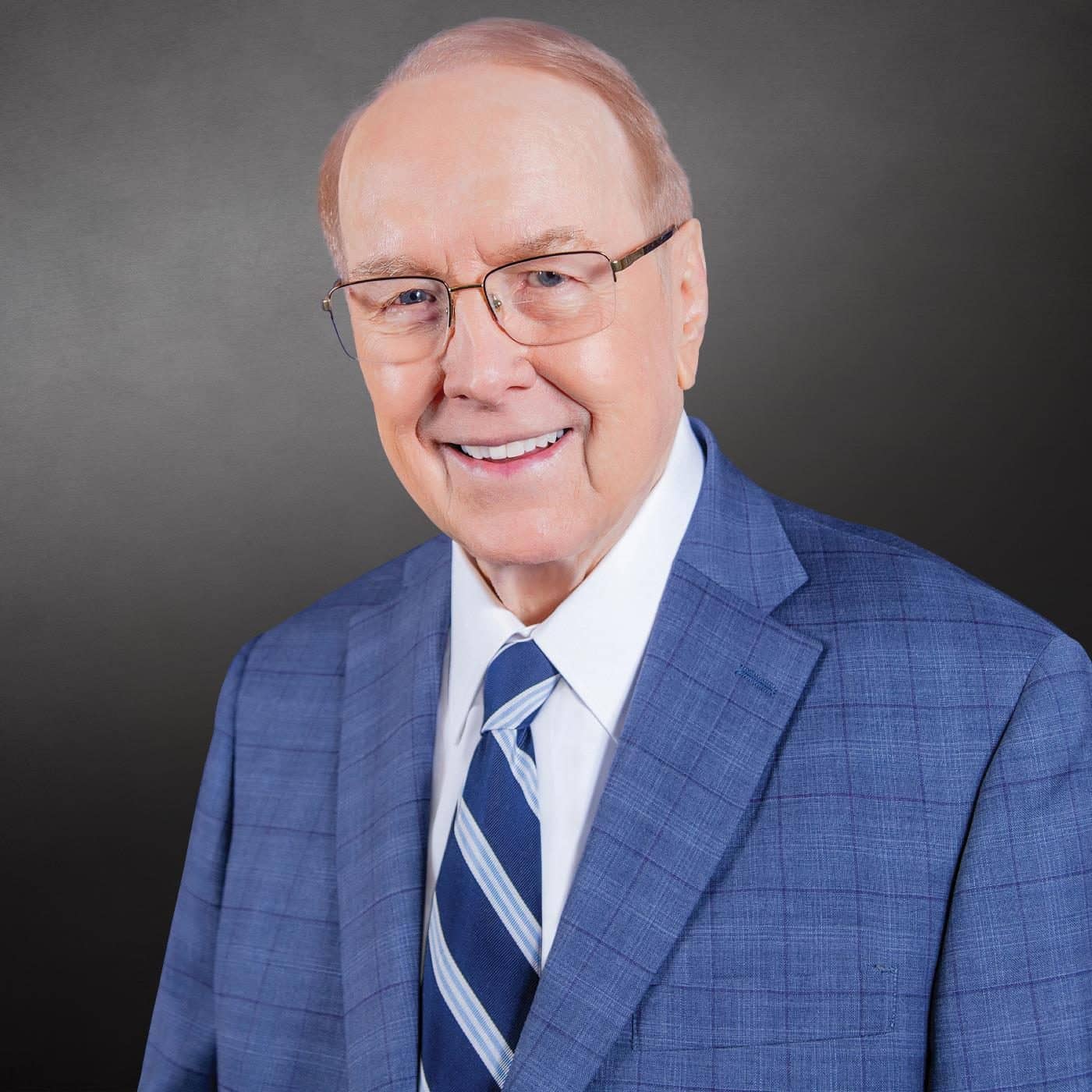
In this enlightening episode of Family Talk, Dr. James Dobson converses with Joshua Becker, founder of Becoming Minimalist and author of the new book ‘Uncluttered Faith.’ Joshua shares his personal journey of discovering minimalism and how it enhanced his life and spiritual walk. Explore the fascinating intersection of faith and owning fewer possessions as Joshua provides a fresh perspective on leading a life filled with purpose rather than possessions.
SPEAKER 01 :
Welcome everyone to Family Talk. It’s a ministry of the James Dobson Family Institute supported by listeners just like you. I’m Dr. James Dobson and I’m thrilled that you’ve joined us. Well, welcome to Family Talk, the broadcast division of the Dr. James Dobson Family Institute. I’m Roger Marcian. We have a great program for you today. Our guest here on Family Talk is Joshua Becker. Joshua is the founder and editor of Becoming Minimalist. Now, this is a website dedicated to inspiring others to find more life by owning less. Joshua is the author of four books, including a new one titled Uncluttered Faith – Own Less, Love More, and Make an Impact on Your World, which is out now and will be the topic of our conversation today. Joshua and his wife, Kim, have two adult children and they make their home in Arizona. And Joshua Becker, welcome to Dr. James Dobson’s Family Talk. It’s so good to have you on the program today.
SPEAKER 02 :
And it is even better to be here. Thank you so much for this conversation.
SPEAKER 01 :
It’s an important one for everybody. It really is. And I think there are a lot of people who are saying, OK, I get it. You know, there’s too much clutter in the house. If you’ve ever lived with a relative who might be I hate to use the H word, but might be a hoarder. You know, they I’ve met a lot of people who, you know, you don’t think you have. I want to make sure I have enough, you know, but then they wind up collecting too many things. But this whole minimalism movement might sound a little different to some people. For those who may not be aware, Joshua, help us get a working definition of what is minimalism.
SPEAKER 02 :
Let me start with the technical definition. Is that the way to say it? Okay. Here’s how I define minimalism. Minimalism is the intentional promotion of the things I most value in life by getting rid of anything that distracts me from it. So minimalism, when most of us think of the word, and I think the most practical way and what this conversation will mostly be about, it’s about owning fewer possessions. It’s not trying to get to the least amount of things as I can possibly survive on. It’s not a rigid set of rules where everybody’s minimalism is gonna look like everybody else’s. It is the realization that our possessions don’t make us happy. And it’s the further realization that a lot of our pursuit of possessions and accumulation of them are actually taking money, time, energy, focus that we could be directing towards things that matter most and matter more to us.
SPEAKER 01 :
That’s a really great definition because I’m sure there are a lot of people – I remember my wife and I have a blended family. We have six adult children, and all of them at one point or another have gone through the I’m going to make sure that I only have enough waste to fill a mason jar for a year type of thing. We’re going to get rid of everything and just go as really basic as we can. You don’t want to deprive yourself of the things you truly need. But toward that end, I love the idea that you help us take a look at this, not just in terms of what the possessions are, but what they require of us. Because a lot of people don’t realize. They think, well, if I get the better car, if I get the bigger house, this, that, the other thing, it sure will be nice to have. But then how much more maintenance? How much more money for the maintenance? How much more time do you spend working on those things? And it’s something, as believers, it really is kind of a delicate balance, isn’t it? It is.
SPEAKER 02 :
And the hardest part about it is that it’s so normal in our culture, in our society, in our world, to own so much stuff that it just feels like this is what life is supposed to look like. I’m supposed to have all these things. I’m supposed to constantly be buying things and looking for things on sale and saving things that I may or may not need in the future. And so Christ, Jesus calls us to a very radically different way of life, not— because he wants us to live a boring, miserable life, but because there are more important things that we can be living our life for than physical possessions and what this world offers. And so I think minimalism helps us kind of think through a little bit more, helps us recalibrate, helps us decide, yeah, you know what? I don’t need to own all these clothes in my closet if I only wear 20% of them. I don’t need a bigger house if I already have enough space for the family that I have today. So I think people find a lot of freedom in that. And just hearing that almost automatically makes minimalism start to sound a little bit more attractive to someone who might have been pretty defensive right at the beginning. So I wanted to mention that.
SPEAKER 01 :
Now, it’s interesting, Joshua, I was going to tease you a little bit because both of us are longtime ministry people. You spent a lot of time in youth ministry, so I’m sure minimalism wasn’t too difficult back then when you didn’t have anything because, you know, Youth pastors are always decorating their home in early hand-me-down and, you know, just whatever you can get your hands on to make it work. But in the book, Uncluttered Faith, you do talk about an epiphany that you had. And I think that’s helpful, you know, for us to, you mentioned, you know, it looks different for different people. What was it like in the Becker household? What was it like for you when you said, something needs to change and it’s not just getting rid of all my things?
SPEAKER 02 :
Yeah, that’s a great question and really a life-changing one as I look back on it. I grew up going to church. My grandfather was a pastor, so I grew up in the pew.
SPEAKER 01 :
I should mention, by the way, before we go any further, your grandfather’s Dr. Harold Salem, and one who we have honored deeply and dearly here on Dr. James Dobson’s Family Talk, and I know we have a lot of people who are big supporters of Dr. Dobson that also love the ministry and so grateful that Dr. Salem’s ministry continues. So don’t run past that because that’s very important, the legacy that he established for you. Okay, continue.
SPEAKER 02 :
Yeah, I learned a lot from him about life and even learned a lot from him on my journey towards minimalism. So I spent 15 years as a pastor. The way I explain it is I spent 15 years as a pastor and yet It was my unbelieving neighbor who opened my eyes to what Jesus had been inviting us to all along concerning money and possessions. The very short story is I was cleaning out my garage on a Saturday morning. My son, Salem, named after my grandfather, Harold Salem, by the way. My son, Salem, was five years old at the time, and he was in the backyard, as any five-year-old would, asking me to come play catch, asking me to come play with him. But I was stuck on this garage project after the winter. One thing leads to another. I’m working hours on this garage, spending all Saturday morning into the afternoon on it. I have a conversation with my neighbor. I was complaining a little bit about how much time had gone into this project. And she changes my life. She says, you know, that’s why my daughter is a minimalist. She keeps telling me I don’t need to own all this stuff. And I remember looking at my driveway just filled with all these dirty, dusty possessions I’d pulled out of the garage to hose it all down. And I would have said, just like anyone else, that my possessions aren’t making me happy. But as I’m looking at this pile of things, I looked in the backyard and there was my five-year-old son swinging alone on the swing set in the backyard where he had been all day by himself. And I suddenly realized that that all my possessions weren’t just not making me happy, but all of my possessions were actually taking me away from the very thing that did bring me happiness and meaning and purpose, fulfillment in life. And that was, for me, the light bulb moment. And I think it’s the light bulb moment for somebody else who needs to hear this, that, yeah, our things aren’t making us happy, but it’s something very different when we realize they might actually be taking us away from the very life that does.
SPEAKER 01 :
Boy, that’s powerful. And just the possessions are taking your whole time. And what a revelation. But it’s interesting how your mind just gets used to saying, God’s provided these things and I need these things. Well, maybe that wasn’t what God’s intent was, but we, you know, kind of spiritualize it sometimes. And I appreciate your honesty, you know, and sharing that candid moment about how your relationship with your son kind of fueled this passion for minimalism. And then As far as the book, was there kind of a revelation that led you to say, I need to put this down in book form? I mean, you’ve written about this and you’ve got the website, but especially this new book, Uncluttered Faith. What was it that was the genesis of this resource?
SPEAKER 02 :
That very weekend, I started a website, a blog called becomingminimalist.com, where I was just writing about what we were getting rid of, what we were learning. One of the reoccurring themes on the website became, anytime I saw my life improving because we owned less stuff, I would put a short little article entry. Easy things like, it’s easier to clean my house. I’m saving more money. I’m finding gratitude and opportunity for generosity. And I’m becoming a better example for my kids. Like just these, like 20, all these running life-giving benefits. At one point we’re decluttering, I don’t know, like the third bathroom in our home. Okay. And I turned to Kim and I’m just thinking about all these good things that were coming into my life as I began owning less. And I turned to her and I said, where’s this been my whole life? Like, how come no one told me about minimalism? I’m in my mid thirties. I’ve never heard the word. I’ve never heard the idea. Where’s this been? And I stopped myself mid paragraph. Because it occurred to me that my neighbor wasn’t the first person to tell me about the benefits of owning less. Jesus was saying the exact same thing 2,000 years ago. But for some reason, I used to read what Jesus said about giving away money and giving away possessions and thinking… I can see how that would help the poor. I can see how that would maybe get me rewards in heaven. But man, that sure sounds like a crummy way to live life today. Until we started actually doing it and discovered, no, go figure. Jesus knew the best way to live life. And the best way to live life isn’t carrying around a whole bunch of possessions that we don’t need. So that began to change the whole way I read Jesus’s teachings. I began to notice so much of this teaching about simplicity and about purposefully owning less and taking hold of the kingdom of God rather than the kingdom of the world. And so that was the start of what eventually became a book 15 years later.
SPEAKER 01 :
Wow. I think that’s so interesting with Joshua Becker having this conversation about uncluttered faith today here on Dr. James Dobson’s Family Talk, because it does kind of hit us right between the eyes. I love what you were just saying about the fact that oftentimes we think about, well, things that we can use to bless other people, that’s fine, and I don’t need that many, that’s good. But we really don’t take that third piece of the puzzle, which is not what’s in it for me, but how is this going to transform me? And the fact that there are so many examples in Scripture all throughout, and one of the examples that you use in your book, you talk about the parable of the four soils in Luke chapter 8. And you’ve got a term, third soil culture. Kind of give us an overview. I’m sure most people are familiar with the parable, but the four different soils where the seed is sown. And then talk about how this really does kind of relate to the way we buy things, hold on to things, value things.
SPEAKER 02 :
It’s one of the reasons Uncluttered Faith is such an important book for us as individuals and for the church, capital C. It’s one of those stories that you’ve heard and we know, but when you see it through this lens, you begin to see the meaning in much deeper ways. The parable of the four soils, as we know, one of the first parables that Jesus tells is one of the only parables that he explains, too, by the way, which is fascinating. Mm-hmm. But the first seed, just the birds come and grab it, nothing happened. The second seed doesn’t grow any roots, and so it withers away in the sun. The third seed grows roots, but Jesus tells us the fruitfulness is choked out by the weeds and the thistles. And then just the fourth soil, just the fourth soil is the fruitful one. Jesus tells us exactly what the weeds are that chokes out the fruitfulness of our faith. They are worries, riches, and pleasures. Worries, riches, and pleasures chokes out the fruitfulness of our faith. I remember telling a friend about this, a pastor friend of mine actually, and he said, doesn’t it say the love of riches? And I thought, oh yeah, that must be right. It must be the love of riches. But then you read it and it doesn’t say the love of riches. It says worries, pleasures, and riches. And In many ways, the very thing that America is built on could be the very thing that is choking out the fruitfulness of our faith. I’ve read that story countless times. Typically, I read it, and I thank God that I’m the fruitful soil, the fourth one. But I got to tell you, I think the American church is the third soil. We’ve accepted the Word, we’ve grown in faith, but we are not nearly as fruitful as we could be. And part of the reason is because of all of the accumulation of possessions and pleasures that we continue to acquire and pursue with our life.
SPEAKER 01 :
Joshua, it sounds like you’re really calling us back to saying, hey, look, you don’t need to have a lot of things, quote-unquote, to be fruitful in ministry. And it sounds like that’s a challenge that you’re issuing to us, an exhortation, I’ll put it in more biblical terms.
SPEAKER 02 :
I think there’s a direct relationship with the amount of things that we have and how fruitful we become. Jesus calls some of us to sell everything and go on to the missions field, but he calls others of us to be teachers and CEOs and architects. Now, Does that mean that as a CEO, I should be buying the biggest house that I can possibly buy in the city where I live in? No, because there’s still principles and I can still use those resources to further God’s kingdom as opposed to building mine. In many ways, that’s what Uncluttered Faith is about. It’s about the good things, the spiritual blessings that come into our life when we actually start following through Jesus’s teachings on this topic.
SPEAKER 01 :
I understand you’ve created something called the Becker Method that kind of helps people who say, okay, I’m really attracted to what you’re saying, Joshua, but I just don’t know how to get started. What does that entail? Another great question.
SPEAKER 02 :
Yeah, so the Becker Method goes through seven steps, and I can get into any and all of them if you want. You can find them all in the book. But I’ll mention just the start of it, which I think is the most helpful piece for someone listening and wanting to get started with this. A lot of times when we think about decluttering, when we think about minimalism or owning less, our minds race to like the hardest thing that we would ever have to get rid of. Yeah, but what am I going to do with my books or my sentimental items or my books? the stuff from when my children were babies. And I like to encourage people that you don’t need to start by getting rid of the hardest thing that you would ever have to get rid of in your home. Just begin by getting rid of those things that you know you don’t need. Duplicates is a great place to start. Like we all need a spatula, but we don’t need eight spatulas. Like we need a coffee mug, but we don’t need two dozen coffee mugs. We need a towel, but we don’t need… 20 towels if it’s just the two of us together. And so find an area, find a space like a living room or your bedroom, and just spend some time in that area. Take everything out of that space that doesn’t need to be there, doesn’t serve the purpose of the room, and then When you sit down at night, you’ll just feel, like it just feels calmer. It feels more peaceful. It feels like you’ve been more intentional with the things that you have. And then carry that momentum to the next room and the next room and the next room. And eventually you’ll find that decluttering muscle to like eventually get to the books and the sentimental items, whatever it might be that you’re most worried about.
SPEAKER 01 :
You do have a section in your book that talks about this fact that when you are getting into the more minimalism mindset, it leads you to what you call paths to intentionality. And that’s not just in terms of your finances, but it really does impact your relationships, your faith and everything. Talk about what that looks like, because obviously when you start making these types of decisions, it’s changing you, which is going to be changing either your attitude toward money or maybe even some of the relationships you have.
SPEAKER 02 :
Yeah. In Ephesians 5, Paul tells us to make the most of every opportunity in life because the days are evil. Yes. I think a perfect illustration of living an intentional life is the story of Mary and Martha. Martha’s running around, go figure, taking care of all of the possessions in the house. And Mary is just sitting, listening to Jesus. Martha’s running around, taking care of all the stuff. And she turns to Jesus and she’s like, tell my sister to help me. And Jesus says, Mary has chosen what is better. And I think when we think about our life, what do we do with our money? What do we do with our time? What do we do with our energy? What do we do with our talents and our passions? It is true that there are some pursuits that are better than others, that there are some things we can do with our money and our time that are better than other things. And so living an intentional life, and I think minimalism helps us see this and it helps us wrestle with this question, am I using my money for the best things or am I just settling for the cheap substitute that the world is offering me?
SPEAKER 01 :
There are a lot of people who say, well, yeah, Joshua, but what about the fact that we see in 2 Corinthians, the Lord loves a cheerful giver, so this is going to be painful for me, so I shouldn’t have to cut back too much, right? How do we reconcile the two?
SPEAKER 02 :
Oh, I think there is so much more joy to be found in owning less than we can ever find in accumulating more. I mean, when you just think of what is a better way to live my life, to living it intentionally focused on my heart’s greatest passions or just accumulating a whole bunch of stuff. You know, no one says that their dream in life is to just have a house full of clutter. It just unintentionally happens. The advertisements, the marketing, the world, the way that everyone else is living, we’re just constantly told this lie that our life will be better if we buy whatever they’re selling. And it is not true. In Matthew chapter 13, Jesus tells two parables right in a row, the parable of the treasure and the parable of the great pearl. And if you know the story, the man discovers the treasure, and in his joy, he hides it, buries it, sells everything he has, and buys the field. The merchant discovers the great pearl, sells all of his other goods so he can have the money to buy the pearl. And I think we love that story because it is true that the kingdom of God is so much greater than the kingdom of this world. But the part of the story that so many of us miss is that the man had to sell everything to buy the field and the merchant had to sell everything to buy the great pearl. Like those are really important details. And I think in our lives, certainly in America and around the world, We want to have both. Like we understand that the kingdom of God is better, but we don’t want to give up the kingdom of this world. But Jesus’ parables, I think the main teaching point of those parables is you can’t have both. Our hearts can’t afford both. We can’t serve both God and mammon. We need to remove the world in order to have the space and the capacity and the margin to fully enjoy all the benefits that God wants to give us.
SPEAKER 01 :
Oh, man, Joshua, this is a great conversation. And I know as we’re wrapping things up, I want to encourage our listeners to take a look at Uncluttered Faith, Own Less, Love More, and Make an Impact in Your World, which is up at JDFI.net. On this journey that you’ve been on for several years now, what’s probably the most important lesson that you’ve learned?
SPEAKER 02 :
I think the most important lesson that I learned and that everyone else will learn and one of the spiritual blessings that come into our life when we do this is we discover, as hard as it is to discover, that most of us are a little more attached to the world than we would ever like to admit. At the very beginning, as I talk about how all these stories begin to sound differently, John the Baptist in Luke chapter 3, like, his job is to prepare Israel for Jesus. And in Luke chapter 3, he has his big chance. He’s out in the wilderness. All the people come out and find him, and they’re like, okay— We believe it. The Messiah is coming. What do we have to do to get ready? And when you have a chance, go back and look at the story because his instructions are, if you have extra food, give it away. If you have extra tunics, give it away. Don’t accuse people falsely. Be content with your pay. All of his instructions about how we prepare ourselves for Jesus had to do with getting rid of the physical possessions that we don’t need. which has always struck me as a little bit odd. Like once you send them to go read the Old Testament prophecies or once you go send them to prayer in the temple, like why is the instruction to get rid of the shirts and the food that you don’t need? And I think the reason is, is because we never discover how attached we are to the world until we begin to remove it from our hearts. And that can be a difficult process. We can learn a lot about ourselves that we didn’t necessarily want to learn, but we can’t overcome that attachment. We can’t fully accept Jesus into our heart and into our life. until we understand what the attachments are to the world around us.
SPEAKER 01 :
Uncluttered Faith is the book Own Less, Love More, and Make an Impact in Your World by Joshua Becker. We have a link for it up at jdfi.net. Joshua, thank you for this work. Thank you for being so transparent and so vulnerable and sharing what your journey has been like, but then showing other people how this really is a way to honor God in a way that’s not cultural phenomenon, but rather it’s an eternal perspective. Thank you so much for being with us today here on Dr. James Dobson’s Family Talk. Thank you. Well, what a refreshing conversation with Joshua Becker today here on Dr. James Dobson’s Family Talk. We discussed clearing away the clutter that competes for our attention and our affection. Joshua’s insights remind me that the stuff filling our homes can actually be pulling us away from what matters most, our relationship with Jesus Christ and the people he’s placed in our lives. Now, if you missed any portion of today’s broadcast, or if you’d like to share it with a friend, visit JDFI.net. And remember to check out Joshua’s new book. It’s called Uncluttered Faith. Information about the book and the broadcast are at JDFI.net. And if you’re looking for more ways to strengthen your most important relationships, I want to share with you about a free resource from the James Dobson Family Institute called Our 10-Day Marriage Series is designed to help you and your spouse grow closer to God and to each other. It’s often been said that the husband and wife who pray together stay together. So sign up for this free email series. It’s simply called the 10-Day Marriage Series when you go to jdfi.net. Just type in jdfi.net, hit the search bar, and punch in those words, 10-Day Marriage Series. Here at the Dr. James Dobson Family Institute, we’re committed to helping you and your family grow closer to God and to each other. Programs like the one you just heard today are made possible through the generous support of friends like you who share our passion for strengthening families through biblical truth. If you believe in the work we’re doing here at JDFI, we invite you to partner with us. Your gift of any amount helps us continue broadcasting messages of hope and wisdom to families all across America. Now, you can make a secure donation when you call a member of our constituent care team. That number is 877-732-7000. That’s 877-732-6825. You can also send your donation through the U.S. Postal Service. Our ministry mailing address is Dr. James Dobson’s Family Talk, P.O. Box 39000 Colorado Springs, Colorado, the zip code 80949. Once again, that’s P.O. Box 39000 Colorado Springs, Colorado, 80949. And keep in mind, you can always make a secure donation online at jdfi.net. I’m Roger Marsh, and from all of us here at Family Talk and the James Dobson Family Institute, thanks so much for listening today. Be sure to join us again next time right here for another edition of Dr. James Dobson’s Family Talk, the voice you can still trust for the family you love. This has been a presentation of the Dr. James Dobson Family Institute.