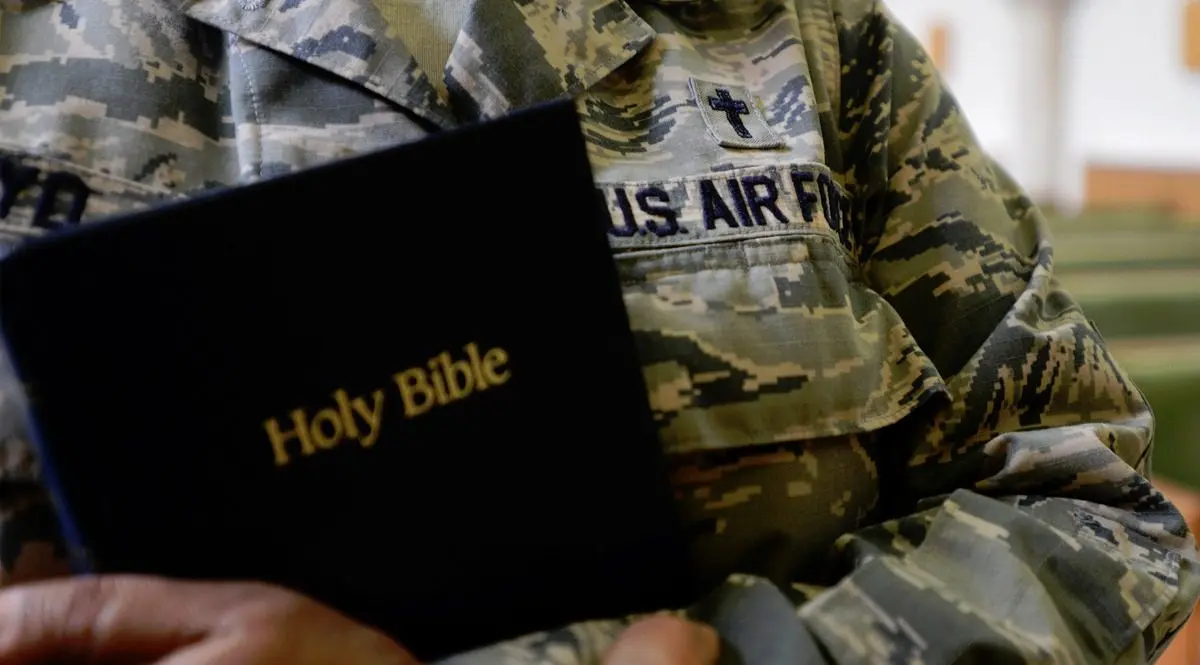
In this enlightening episode, the role of Christians in wartime decisions comes under scrutiny. Drawing insights from both the Old and New Testaments, we discuss how God’s character remains unchanged and what that means for the use of force. We explore biblical examples, including the provocative roles of David and the mandates for Israel, to understand how divine directives apply in modern warfare contexts.
SPEAKER 03 :
The CEM Network is pleased to present Ronald L. Dart and Born to Win.
SPEAKER 02 :
I got a letter from a correspondent a few days ago taking me to task for what she perceived as my agreement with this war. I can understand why people would think that no minister could possibly agree with any war. I don’t understand, she said. As Christians, we should be taking the gospel to other nations, not bombs. Now, the logic of that statement is unassailable, but it leaves a lot of questions unanswered. Can a Christian take up arms against another person or even another nation? Oh, surely not. But if we take that question to the extreme, that would mean a Christian could not be a policeman. Can a Christian ever be responsible for the death of another human being? Oh, surely not. But that would mean that no Christian could ever serve on the jury for a capital crime. Most people who call themselves Christian intuitively know that these extreme positions don’t work, but many of them could not tell you why. Thousands of Christians serve in both law enforcement and the military with a clear conscience. Are they wrong? Are they misguided? What is it they don’t understand? Or what is it that those on the other side of the equation don’t understand? Well, first, let me clarify a few things. We’re not dealing with a different God today than the world was dealing with, say, 5,000 years ago. God hasn’t changed from eternity. He is the same as he was 14 billion years ago when he said, let there be light and initiated the Big Bang. Also, there’s this passage in James. James 1, verse 16. Do not err, my beloved brethren. Every good gift and every perfect gift is from above and comes down from the Father of lights with whom is no variableness, neither shadow of turning. And then there’s Hebrews 13, 7. Remember those who have the rule over you, who have spoken unto you the word of God. Follow their faith, considering the objective of what they’re doing. Jesus Christ, the same yesterday, today, and forever. And you probably believe that. A God with perfect character isn’t likely to change that character like he’d change a suit of clothes. Now, here’s the question we have to ask. Does that God, who has always been the same, does he countenance the use of force, even deadly force, in some circumstances? Well, let me give you an example. Exodus 22, verse 21. You shall neither vex a stranger nor oppress him, because you were strangers in the land of Egypt. And one of the points God’s making, look, you were an alien down there. You were a stranger in that land, and you know how you were treated. I don’t want you to do the same stupid thing up here. Don’t vex the strangers. Don’t oppress them. Then he says, you shall not afflict any widow or fatherless child. No widow, no orphan. Think about this now. If you afflict them in any wise, and they cry at all to me, I will surely hear their cry, and my anger shall wax hot, and I will kill you with the sword, and your wives shall be widows, and your children fatherless. Now we just have to face up to it. God is not a pacifist. And he has a very short fuse, it seems, with those people who oppress the weak and the helpless in any society. He says, don’t do it. Don’t afflict a widow. Don’t afflict any fatherless child. If you do, I will get furious and I’ll kill you with the sword. I know this may not sound like the God that you think you know. I can’t help that. This is the God of the Bible. You can take him or leave him, but don’t try to make him over into what you wish he were, or at least you think you wish he were. Think about what God said here. Don’t afflict any widow. Don’t afflict any fatherless child. If you do, in any way, and they so much as utter a peep to me, I’m going to kill you with a sword. By the way, did you notice that God didn’t say he would kill them with lightning, hail, flood, earthquake, fire? He said he would kill them with the sword. Now, in the Bible, the sword is the sign of the military and the law enforcement power of the state, and it’s a sign of war. The prophet Jeremiah spoke of it in those terms, and in terms that will raise the hair on the back of your neck when you look at the locations he’s talking about in this prophecy, and you look at it in terms of today’s Middle East problems. You’ll find this in Jeremiah 47, verse 4. He says, because the day comes to spoil all the Philistines. Now, you may not know this, but the word Palestine in the modern language comes from the biblical word for the Philistines. Palestine is the land of the Philistines. So in a sense, when the Bible speaks about Philistines, it’s talking about the Palestinians of that day. It’s an old prophecy. And today’s Palestinians, I would never assume, are the same ethnic group of people the old Philistines were. But this may be a geographical, not an ethnic identification. Because the day that comes to spoil all the Philistines, all the Palestinians, and to cut off from Tyre and Sidon every helper that remains… Tyre and Sidon are in the geographic location of Lebanon. For the Lord will spoil the Palestinians, the remnant of the country of Kaphtor. Baldness has come upon Gaza. Do I have to tell anybody where Gaza is nowadays with all the news that comes out of the bombings and everything else out of the Gaza Strip and Palestine? Baldness has come upon Gaza. Ashkelon, which is a town in the Gaza Strip, is cut off with the remnant of their valley. How long will you cut yourself? Oh, you sword of the Lord. How long will it be ere you’re quiet? Oh, put yourself into your scabbard. Rest and be still. How can it be quiet? You’ve got a dialogue going on here, a poetic thing. On the one hand, somebody’s saying, oh, please, Lord. Put your sword away. Put your sword into your scabbard and rest and be still. The answer, how can it be quiet? Seeing the Lord has given a charge against Ashkelon and the seashore. That’s the Gaza Strip. There he has appointed it. The sword, which God had appointed back in those days against the Palestinians of old time, was in the hand of Israel. I know that will bother some people, but it’s there. It’s in the book. Read it for yourself, Jeremiah 47. Now, the word which, I mean, when you look at this, listen to this Psalm of David. He goes a little further with this. Psalm 144, verse 1. A Psalm of David. Blessed be the Lord my strength, which teaches my hands to war and my fingers to fight. Here we are. What are we supposed to do with this? David sings out to God, blessed be the Lord, my strength, who teaches my hands to war, my fingers to fight, my goodness and my fortress, my high tower and my deliverer, my shield and he in whom I trust, who subdues all my people under me. David understood, apparently, that God had taught him to fight, and David was a fighter. He was a fighter big time. You know, when David decided he would like to build a temple, and he talked to Nathan about it, God spoke to Nathan and told him, David can’t do it. Most people assume, and it isn’t exactly there in the account, but it’s generally assumed, that because David was a warrior, he was a bloody man, he was a fighter, because he had killed so many people that God did not allow him to build the temple. And it’s almost as though some men are called of God to keep their hands clean, and some people are called of God to get them dirty. In verse 9, still the 144th Psalm, I will sing a new song to you, O God. Upon a psaltery, an instrument of ten strings, I will sing praises to you. It is he that gives salvation to the kings, who delivers David his servant from the hurtful sword. He’s talking about wars that David himself had been delivered from. Rid me. Deliver me from the hand of strange children whose mouth speaks vanity, and their right hand is a right hand of falsehood. He’s talking about aliens around them. He put out his hand to them. He made a treaty with them. You couldn’t depend on them for anything. They could shake hands with you. They give you their right hand, and they were lying at the time they did it. Please, Father, do this, that our sons may be like plants that grow up in their youth, that our daughters may be like cornerstones polished after the similitude of a palace, that our garners may be full, affording all manner of store, that our sheep may bring forth thousands and ten thousands in our streets, that our oxen may be strong to labor. that there be no breaking in or going out or complaining in our streets. Happy is that people that is in such a case. Yea, happy is that people whose God is the Lord. Do you understand what David’s talking about here? He’s talking about God who taught his hands to war and his fingers to fight. David’s fight was necessary to oppose the hurtful sword so that his people would not have to, so that his people could live in peace. Now there’s an objection here that can be raised, and we should address it. All these examples I’ve given you are Old Testament. Aren’t things a little different in the New Testament? Yes, they are, but perhaps not for the reasons we think. We’ll talk about that when I come back.
SPEAKER 03 :
Can a Christian serve a jury in a capital punishment case? If we kill a killer, do we make ourselves no better than he? Is it wrong to take a life for a life? To request a free booklet entitled Capital Punishment, A Christian Dilemma, write to Born to Win, Post Office Box 560, White House, Texas 75791. Or call toll free 1-888-BIBLE-44. And tell us the call letters of this radio station.
SPEAKER 02 :
So just how different are things, and how are things different in the New Testament from what they were in the Old Testament? Why would the moral and ethical standards required of a godly man change from one testament to another? The standards of morals and ethics required of a godly man, why should they change? Now consider this example. Paul is writing to the Romans, chapter 12. Verse 19, Dearly beloved, avenge not yourselves, but rather give place unto wrath. For as it is written, Vengeance is mine, I will repay, saith the Lord. Therefore, if your enemy is hungry, feed him. If he’s thirsty, give him drink. For in so doing you shall heap coals of fire on his head. Be not overcome of evil, overcome evil with good. Now, really, this is good old New Testament Christianity, isn’t it? This is the kind of stuff that all Christians groove on and think, this is wonderful. Now, surely this is a New Testament difference from the way things were in the Old Testament, right? Well, no, not really. Listen to this out of Leviticus 19, verse 18. We’re embedded in the law, right? Deep in the law, which is the most lawless. It says, you shall not avenge nor bear any grudge against the children of your people. You shall love your neighbor as yourself. I am the Lord. Well, that’s what’s different. You’re not supposed to avenge yourself, give place unto wrath, do good to your enemies. He says in the Old Testament, you shall not avenge yourself nor bear any grudge against the children of your people. You love your neighbor as yourself. Now, think very carefully about this. It’s not that complicated, but because of our preconceptions, it’s easy to miss. In civil society, in both Old Testament and New Testament, a man is not allowed to pursue private vengeance. Vengeance, however, is a virtue of God. It’s not an evil. It’s not wrong. There’s not something bad about a vengeance. Vengeance is a virtue. God says, vengeance is mine. I will repay, saith the Lord. And I can hear many Christians say, well, of course, that’s right. I’m not supposed to do it. God will take care of it for me. I don’t have to lift a finger. That’s fine. The instrument now of God’s vengeance, the sword in God’s hand, is what? In other words, what is God going to use to execute his vengeance? Now, if you look at what Paul wrote to the Romans and you look at it in context, remember we just read in Romans 12, 19, don’t avenge yourselves, give place unto wrath, that vengeance is mine, I will repay, saith the Lord. He then follows it closely with these words in Romans 13, verse 1. Let every soul be subject to the higher powers, for there is no power but of God. The powers that be are ordained of God. The powers that be? Who are they? Who’s Paul writing to? Well, he’s writing to the Christians who live in Rome. Guess who the powers that be were for them? It was the Roman civil government. Then he says this, “…whoever resists the power, resists the ordinance of God, and they that resist shall receive to themselves…” Damnation. Wow. Tough judgment. The Roman Christians were told, let’s don’t get a revolution going over here against Rome. If you do, you’re going to get yourself killed. Rulers, he says, are not a terror to good works, but to the evil. Will you then not be afraid of the power? Do what is good, and they’ll be happy with you. Be good citizens. Do your jobs. Mind your own business. Carry on, and the government will not care less about you. For the government, he says, the powers that be, he is the minister of God to you for good. But if you do what is evil, be afraid. For he bears not the sword in vain. Bang. Here we come back to the sword again. He then says he is the minister of God, a revenger to execute wrath upon him that doeth evil. All right, now we’ve got it. God says, you afflict the widow, you hurt the fatherless child, and I’m going to kill you with the sword. In whose hand will hold the sword? The powers that be. In the case of Paul’s letter, it was the Romans who would have it. Now, there’s something important to know this. The higher powers then, the state, which is who he’s talking about, is the minister of God, a revenger to execute wrath upon him that does evil. And listen to this. Even when the state knows nothing of God, the state can be an instrument in the hand of God. to revenge evil, even when the state does not have any concept of that God at all. For the people who got this letter, the powers that be, were Roman. So when you look at the war in Iraq, even if you conclude that the U.S. is the sword of God, executing God’s wrath upon a truly evil regime, you have said nothing wrong. about the worthiness of the U.S. to do anything except make war. You understand? That merely by saying, yes, this is a necessary war, it is a just war, you are not conveying any accolades whatsoever upon the United States, except they are a sharp, sharp sword in the hand of God. Does that mean that God’s pleased with them? Ah, that’s another matter altogether and another thing for the prophets to address. You have said nothing about our blessings. You have said nothing about our righteousness as a people. We can be a sword in the hand of God to cut off evil from Iraq, even if we have our own problems. And boy, do we have our own problems. And boy, does the Iraqi regime deserve richly to be cut off. The truth is, there are people who don’t believe in war, and they should not be made to fight. There is this fascinating instruction in the law in Deuteronomy. Deuteronomy 20, where it begins in verse 1. It says this, When you go out to battle against your enemies, and you see horses and chariots and a people who are more than you, don’t be afraid of them, for the Lord your God is with you. He brought you up out of the land of Egypt. Okay, you’re going out to battle. Here they are, and we’re all arrayed. The horses and chariots were the tanks of those days, the armored cavalry. And he said, you go out there and you see more tanks than you’ve got. And you see a bigger army than you are. Don’t be afraid of them. For the Lord your God is with you who brought you out of the land of Egypt. I think that is really fascinating because here we are in Iraq, really outnumbered. More tanks, more soldiers, more people, and we’ve got this force coming in there. The one thing we’ve got is air power that they’ve got none of, and it makes an enormous difference. He says, don’t be afraid of them because the Lord your God is with you. And when you come near to the battle, the priests shall approach and speak to the people and say to them, listen, Israel, You approach this day in a battle against your enemies. Don’t let your hearts faint. Don’t be afraid. Do not tremble. Don’t be terrified because of them, because the Lord your God is He that goes with you to fight for you against your enemies to save you. I remarked recently to some friends that there was a battle that had just taken place in southern Iraq, not far south of Baghdad, to capture a bridge that And the American forces had fought across that bridge with Iraqi Republican Guard probably for seven hours that day in a severe firefight. They took the bridge, overran the bridge, took a bunch of Iraqi prisoners and killed off some Iraqi soldiers. And I looked at that, and they said not one American casualty came out of that battle. I commented to my friend, I said, you know what the difference is? It’s training, training, training. And my friend looked back and said, you think it might be prayer? And I had to say, yeah, yeah, because every day I pray for our troops. What gives me the right to do that? Because they are in there to destroy a regime that needs to be destroyed. They are, in a sense, doing God’s work because it is God’s will to destroy men when they become so evil that they can no longer be tolerated on the face of the planet. And I couldn’t help but think that God was with those men that day, and they won the battle, but they had to fight it. And I also thought that as they go before these men to do this, that someone else was looking at television, told me about it. He said he saw the company commander before they went into combat gather his men together and lead them in prayer. And these men are praying that God would strengthen their hand against this evil regime. And my prayer is that God would confuse their enemies and confound them. But he went on to say, the Lord your God is he that goes with you to fight for you against your enemies. And they go on to speak to the people saying, what man is there that’s built a new house and hasn’t dedicated it? Tell him to go home lest he die and battle another man dedicated. Is there anybody here who’s planted a vineyard and hasn’t eaten it yet? Go on home. We don’t want you to die in the battle and another man eat your vineyard. Is there anyone here that’s betrothed a wife and hasn’t taken her yet? You’re engaged. Go home to your wife. We don’t want you to die in the battle and another man take her. And the officer shall speak further to the people and say, Is there any man here that is afraid? Fainthearted, go home. We don’t want you here to weaken the heart of your brothers in battle. Do you realize this was an all-volunteer army he’s talking to? No draftees. And it’s interesting to me to notice how strong this army is that we have put in Iraq today. And they are not draftees. They are men who are there because they’re willing to fight. And we are learning these things. And as we are learning again, still, war is hell. We’ll talk about that after these words.
SPEAKER 03 :
If you would like to share this program with friends and others, write or call this week only and request your free copy of War and the Christian. Write to Born to Win, P.O. Box 560, White House, Texas 75791. or call toll-free 1-888-BIBLE-44. And please tell us the call letters of this radio station.
SPEAKER 02 :
We worry a lot about civilian casualties in this war, and that’s only right. We should. But I want you to think about the continuation of the Scripture I just read to you. It’s found in Deuteronomy 20, verse 9. Once they’ve finished, all the officers have spoken to the men, told them this, and the ones that are left… Here are their instructions. When you come near to a city to fight against it, proclaim peace to it. Basically, what they were supposed to do is tell them, we mean you no harm. We’ll make treaties with you. We want you to open up to us. You’re going to have to pay taxes to us because we’re going to provide your protection. In other words, it wasn’t merely a matter of dominance and of looting and pillaging. It was a matter of making cities and countries around you or entering into relationships with them. They said, we want a treaty. If they will make no peace with you, but will make war against you, then you shall besiege the city. And when God delivers it into your hands, you shall smite every male thereof with the edge of the sword. But you can save the women and the children alive. Kill all the men. I know how hard that sounds, but you have to understand, all the men were fighters. All the men were there. And it’s almost like you look at the situation in Iraq today and you say, who are the fighters? Where’s the army? Who’s against us? Who’s for us? You can’t tell. God’s instructions were to consider every man in the place a warrior. And the war in those days meant, basically, if you went out on the field with a weapon in your hand, you either won or you died. There weren’t a lot of prisoners of war taken in any wars of that time. And he said, this is true of all the nations that are on your borders. But as far as those cities and those peoples that are in the land that I am giving you, you shall save alive nothing that breathes. Some people cannot handle a God who would give such a command. But you have to understand how rotten those societies were, how corrupt, and how it would never be possible for Israel to live at peace with any of them. I’ll admit it’s tough, but that was a different world, and it was a singularly evil society. Times have changed, and we don’t have those instructions today. And as individuals, as Christians, we have a different set of instructions on how to love our enemies. We have to turn the other cheek. But understand this. The state does not have to turn the other cheek. In fact, the state must not. It is because the state is an agent of God to act as a protector of the weak that we are able to turn the other cheek. Now, today, we live in a nation that has a Christian majority. Our government is secular, nevertheless. Most of us still consider ourselves one nation under God. Like Israel of old, our governance is of the people, by the people, and for the people. You probably never thought of it that way, but before Israel had a king, they were self-governed under God. We are the government of this country. We are. And God is going to hold us accountable for how we govern. We have an obligation to be honest in judgment, honest in court, honest on a jury. And if the courts are corrupt, it’s our fault. We have an obligation to protect the weak, the fatherless, the widow, the poor. And we, we the people, through our elected representatives, made a decision to go to war with an evil regime. We made that decision to protect our own people. and out of it has grown a decision to liberate the Iraqi people. What they make of that liberty will be up to them. But the evil of Saddam Hussein and his gang of thugs has reached a stench to high heaven, and God has responded with the sword of a nation of Christians.
SPEAKER 03 :
Until next time, I’m Ronald Dart. The Born to Win radio program with Ronald L. Dart is sponsored by Christian Educational Ministries and made possible by donations from listeners like you. If you can help, please send your donation to Born to Win, Post Office Box 560 White House, Texas 75791 You may call us at 1-888-BIBLE44 and visit us online at borntowin.net.
SPEAKER 01 :
Christian Educational Ministries is happy to announce a new full-color Born to Win monthly newsletter with articles and free offers from Ronald L. Dart. Call us today at 1-888-BIBLE44 to sign up or visit us at borntowin.net.