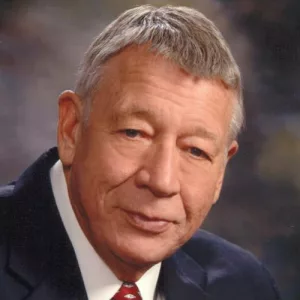

In this compelling episode of Through the Bible, we delve into the profound teachings of Dr. J. Vernon McGee as he explores a law concerning cleansing from the book of Haggai. As testimonies of faith and transformation set the tone, we transition into the heart of the sermon, where Dr. McGee addresses the critical difference between physical rituals and the true cleansing of the heart. With an emphasis on spiritual growth and understanding God’s Word, listeners are left with a thought-provoking narrative about the nature of holiness and unholiness and the necessity of a pure heart before God.
SPEAKER 06 :
The foundation, ye saints of the Lord, is laid for your faith.
SPEAKER 01 :
Welcome to the Sunday Sermon on Through the Bible. I’m Steve Schwetz, and I’m glad that you’re here for Dr. J. Vernon McGee’s message titled, A Law Concerning Cleansing. His passage for this sermon is Haggai chapter two. So grab your Bible and turn it to the Old Testament book of Haggai. And as you do that, let’s listen to a voicemail from a fellow Bible bus passenger. Now, the audio quality isn’t the best, but it’s a great testimony. So try to listen closely.
SPEAKER 05 :
Hey, Greg and Steve. I love to tell the story. I want to tell you guys I’ve always been a Christian growing up in the church. I’ve been saved since I was a teen. But as I became an adult and became a father, I felt convicted that I badly needed a greater understanding of the word. That was three years ago. I know now that back then I was what Dr. McGee referred to as a spiritual baby. But now, thanks to a friend of mine named Steven, I’ve been on the bus for three years. I’ve learned so incredibly much. I’ve got a greater understanding of the Word, of the Scriptures, and the importance of them. It’s been excellent for my own individual journey as a Christian, but especially as a father, I just knew I needed to know so much more so that I could help my children answer the questions that they’re going to have in this world. So I want to say a thank you to the Through the Bible program for the materials you’ve put out. They have been just more important than I can say from my own walk. And, of course, I want to say once again a thank you to Steve and a friend of mine for putting me onto this program. It’s been three years. We’ve got a couple more years to go, and I look forward to each study. I look forward to being a lifelong member on the team. Thanks, guys. Appreciate everything you do. Take care.
SPEAKER 01 :
What a great story of friendship and faith. Thank you for sharing. And Stephen, thanks for putting your friend on the Bible bus too. I’ll save both of you a seat as we continue our journey through God’s word together. Now here’s another voicemail. This is from Irma in California.
SPEAKER 04 :
I love the Bible because it teaches me about God and my Lord Jesus. I have been on the Bible bus off and on for many years. I have become a regular listener for the last year and a half. And I just want to share that through the Bible has changed my life. And I hear on the radio about, what are you doing to get the word out? And I’m not very good at it. I do share the Bible passes, and I do share with my grandchildren. But other than that, I don’t seem to reach people. So I give through the Bible so that you can reach out to those who are lost and need the word of God. So I pray that you continue to do what you’re doing. And I love the program. And I can’t wait to see Dr. McGee in heaven with my Lord. I thank you and praise you all for the work that you’re doing.
SPEAKER 01 :
Well, thank you, Irma. Through your prayers and partnership of listeners like you, God’s Word is going out in more than 250 languages around the world. We’re so grateful to have you on the team, because you’re right. People are lost, and they need the Word of God. And now we have one more voicemail, this one from Peter in Colorado Springs.
SPEAKER 03 :
Hi, this is Peter in Colorado Springs. It’s Monday, and this morning’s testimony by the micro-languages, as you referred to them as, It’s just I’m not the kind of heartwarming kind of personality. I’m kind of like still in the Army. But the fact that the Great Commission is reaching these absolutely tough areas to get to with even the best equipment just is a testimony of through the Bible radio. And that’s my preferred method of listening to it. via radio because it seems to have some kind of discipline to it. I get up early, I’m retired, and so by 6 a.m. in the morning, I’m listening to you guys. And it’s the progress of the Great Commission that you are able to reach these micro-languages, as you refer to them. It’s just amazing. Well, I’m on my fourth or fifth trip with you guys, and you’re still the best. as far as comprehensive education, and I try to share this with so many people I meet, and one of my comments in sharing is always, when a doctor comes to a verse that may be difficult to interpret, he always says, in other words, so he reduces a technical display into something more palatable. It’s just great. I love it. I argue with you, I know, at times, but I’m still here and you’re still there. And God bless you, man, because, again, to reach these remote areas, and not just there, but other places you’ve mentioned. And that’s what Jesus said at the end of Matthew, is to go and preach the gospel. It’s a great commission.
SPEAKER 01 :
Well, Peter, thanks. Yes, reaching people in micro languages is a huge part of fulfilling through the Bible’s mission. That is to take God’s whole word to the whole world and to everyone listening. So will you keep praying for that mission to continue? Well, if you’d like to join our world prayer team to help provide maybe a tank of gas to keep the Bible bus rolling along, just visit us at ttb.org or call 1-800-65-BIBLE. Now, you can also write to us at Box 7100. Pasadena, California, 91109. Or in Canada, Box 25325, London, Ontario, N6C 6B1. Let’s pray together. Heavenly Father, thank you for the power of your word and for how you use it to call us, to cleanse us, and change us. Thank you for every listener, Lord, whether they’re just beginning their journey or they’ve been on the Bible bus for decades. And strengthen each one of us to help us to walk in obedience to you. Use this message to speak clearly to our hearts. In Jesus’ name we pray. Amen. Now here’s the Sunday Sermon on Through the Bible with Dr. J. Vernon McGee.
SPEAKER 02 :
On December the 24th, 520 BC, Haggai the prophet knocked at the door of the priest’s quarters of the rebuilt new temple in Jerusalem, and he knocked there for a very definite purpose. And since it was December the 24th, and that’s Christmas Eve, you might think that the reason he did that he wanted to decorate a Christmas tree. Or maybe he was there in order to present a gift-wrapped present to the high priest. Or maybe he’d come to sing Christmas carols. Or probably he had come to attend a candlelighted service or to hear a Christmas message. The fact of the matter is that he knocked on the door of the high priest quarters in order to ask a question. And it was a very unusual question. He asked a question about how to clean things. And since it was before the day of these new wash day miracles, and he came to ask a law concerning ceremonial cleansing. For you see, there were many phases and facets of the everyday, workaday world in Israel which were not covered actually in detail by the Mosaic system. And certain involved situations, knotty and thorny problems arose as life became more complex in the nation Israel, which were not provided for adequately by the law. And the question is, how did Israel function under this system when there was no specific law to cover that? Well, a very interesting thing is that even before Moses died, after he’d given the law, a situation arose just like that. A man by the name of Zelophehad died. And the daughters of Zelophehad came to Moses and said to him, the Mosaic law says that when a man dies, his son shall inherit. And actually, Our father didn’t have any sons. All of his sons are daughters. And what about that? And so Moses went to the Lord, and the Lord said, the daughters of Zelophehad, they speak right. They are to inherit. And so it was made very clear that a woman would occupy the same position as a man in a situation like that. But God put down in the Mosaic system a law to take care of this. And I’d like to turn back to that law. It’s found in the 17th chapter of Deuteronomy. And it says, “…if there arise a matter too hard for thee in judgment…” between blood and blood, between plea and plea, and between stroke and stroke, being matters of controversy within thy gates. Then shalt thou arise, get thee up unto the place which the Lord thy God shall choose, And thou shalt come unto the priests, the Levites, and unto the judge that shall be in those days, and inquire, and they shall show thee the sentence of judgment. And thou shalt do according to the sentence which they of that place which the Lord shall show thee, and thou shalt observe to do according to all that they inform thee, according to the sentence of the law, which they shall teach thee, and according to the judgment, which they shall tell thee. Thou shalt do, thou shalt not decline from the sentence, which they shall show thee, to the right hand, nor to the left. So that God’s provision was quite adequate for a situation that would arise that was not covered specifically by the Mosaic Law. They would go to Jerusalem, go to the priests, and ask them for a law. May I say that you find that type of thing in our common civilization today. You find that there’s such a thing as known as statute law, that which a legislature passes. And then that which is known as common law, that which a court hands down as a decision relative to matters that probably have not been covered by a law, or at least there is an interpretation needed for the law. Now, I suppose that in the life of the nation Israel that there were many occasions that arose when there was a need to have recourse to this method. But the interesting thing is that as far as the word of God is concerned, no record is given until a thousand years have gone by. And you come to the post-captivity period after these people had been in Babylonian captivity for 70 years. A small remnant of them returned back to the land and back to Jerusalem. And we find they were very much discouraged. And God raised up three prophets to encourage the people. The last prophet of the Bible, Malachi, being one. But the two men that were used to urge these people to rebuild Jerusalem and rebuild the temple were Haggai and Zechariah. Haggai was a practical man. Zechariah was a dreamer. And this man Haggai was what you’d call a hard-headed pragmatist. He always said two plus two equals four. And he carried a slide ruler around with him all the time. And you need a man like that if you’re going to build the temple. And then Zechariah, he was a poetic type individual. I think of this man Haggai as being a stubborn Scotsman. like Thomas Carlyle, and Zachariah, a poetic Scotsman, like Robert Burns, who could write, my love is like a red, red rope that’s newly sprung in spring. My love is like a melody that’s sweetly played in tune. Well, may I say to you that that’s fine, that’s lovely, but that won’t build a temple. You need the practical, man. with his feet on the ground, and you need the dreamer with his head in the cloud. And both together can build a temple, and both of them did build a temple. And so when they first returned, there was an enthusiasm to build, but after 15 years, the debris there in Jerusalem and the enemies on the outside, and these people, they got discouraged, and they just quit building the temple. But they rationalized their position. They became very complacent. And they said, it’s just not the time to build. That’s the way they console themselves. They lost their esprit de corps. And into that situation, Haggai spoke. And he said very definitely to them, he said, it’s very interesting. All of you have moved out to suburbia. into a subdivision and you’ve built your homes, now why not build a temple? He said, let’s get busy. And he was very practical. He said, go to the mountain, you get wood, you bring it down here and let’s start building. And they did get busy. But there then arose a second difficulty and these people now became discontented people. they became dissatisfied, just the opposite of what they’d been before. And the reason was this. In the second chapter of Haggai, verse 3, it reads, “…who is left among you that saw this house in her first glory? And how do ye see it now? Is it not in your eyes, in comparison of it as nothing?” You see, these people now, when they have built the temple, it was almost completed, many of the old-timers had seen the temple before, Solomon’s temple in all of its glory. And now they said, look, this little thing that you’re building here, it’s nothing compared to the other. And you know, there’s always some dear saint around to put a wet blanket on every new endeavor for God. Why that’s true, I don’t know. But here they were. And it was discouraging to have them say, look, well, this doesn’t compare to the other. You remember? You hear that today? Some dear saint says, in the good old days, back 50 years ago, it was so wonderful. Well, I don’t know about you, but I don’t want to go back to the good old days. I like the good old new days that we’re having. And I wouldn’t go back to the good old days for anything. But that’s what they were saying. And now Haggai brings them a message of encouragement. He says, yet now be strong, O Zerubbabel. saith the Lord, and be strong, O Joshua, son of Josedech, the high priest, and be strong, all ye people of the land, saith the Lord, and work, for I am with you, saith the Lord of hosts. I’m with you. Before, the glory of God had departed from that temple, and now he’s back with them, and he’ll be with them. And that made that little old shotgun house they’d built much better than Solomon’s temple in its last days. But now these people were seized by a mercenary spirit. For three months they were. And they said, we’ve obeyed God and God has not blessed. We feel like that he’s sort of let us down. And in that situation, God sent this man to the temple to ask the priests for a law. And it’s a law concerning cleansing. Actually, it’s a two-fold inquiry with really one question with two facets to it. Let’s look at it this morning. The first inquiry is in verse 12. If asked now the priest concerning a law, saying, If one bear holy flesh in the skirt of his garment, and with his skirt do touch bread, or pottage, or wine, or oil, or any meat, shall it be holy? And the priest answered and said, No. Now, the question is this. Is holiness communicated by contact? And the answer is obvious, pretty negative. Holiness is not transmitted to unholiness by contact. Cleanliness is not transferred to uncleanliness by application. Holiness is not communicable at all. A holy object does not convey virtue by a connection with an unholy. A holy person will not convey virtue to another person. Now that’s the first side of the law. The second is this, and we need to note that This was the thing that was disturbing them, for they said, God says, I smote you with blasting and with mildew and with hail in all the labors of your hands, yet ye turn not to me, saith the Lord. Actually, they had returned to the land, but they hadn’t returned to God. They were going through the ritual at the temple. They were bringing the sacrifices. And because they were doing that, they were expecting God to bless them. But they had to learn, as you and I have to learn today, that religion is not a salve that you rub on on the outside, and that this matter today of Christianity is not an exterior job, it’s an interior job. You don’t rub it on, my beloved. That’s the first. The second inquiry. Then said Haggai, If one that is unclean by a dead body touch any of these, shall it be unclean? And the priest answered and said, It shall be unclean. Now, unholiness is transferable. Uncleanness is communicated to the clean by contact. And that which is unclean Unclean can’t become clean by contact or doing something that is clean. In other words, an evil heart cannot perform good deeds. Listen to the scripture. A bitter fountain cannot give forth sweet waters. The Lord said, you do not gather grapes from thorns nor figs from thistles. You just can’t do that. that there has to be more than something on the outside, and that when that which is unclean touches the clean, it becomes unclean. Now we are prepared to, shall I make a philosophical syllogism. In philosophy, there is a thing that’s known as putting down a major premise, putting down a minor premise, and then making a deduction. Let me illustrate. All men are liars. That’s the major premise. Dr. Cole is a man. You see what the deduction is? Dr. Cole is a liar, according to that. But may I say to you, your premises have to be right. And the fact of the matter is, Dr. Cole is not a liar. He’s a very truthful man. The only thing he tells are little white ones. He never tells the big ones at all. So that you have here a syllogism, as it’s called. Now let’s look at this. We can set this up as one. You have a major premise, you have a minor premise, and a deduction. The major premise is this. Holiness is not communicated. Minor premise, Unholiness is communicated. The deduction, when the holy and the unholy come into contact, both become unholy, not holy. Listen to the scripture again. Can the fig tree my brethren bear olive berries? As a man thinketh in his heart, so is he. An act, will you hear me now carefully? An act, a ritual, a ceremony cannot change the heart. You can rub religion on. You can go through ceremonies. They will not change the human heart. On the contrary, when something good is done on the outside, a good deed is touched and tinctured and tarnished by an evil heart. Now, this is a ceremonial law. But I want this morning you to see that this is a law that is applicable to every phase and level of life. You can put it in any realm. It’s like the law of gravitation. All ways work universal unless a greater law overcomes it. And there, thank God, there’s a greater law that overcomes this one, as we shall see. Move this into the realm of therapeutics, medical science, remedial science. And let me use a simple illustration. The little boy has the measles. Little Willie got the measles. Now, Mama doesn’t go next door and say to the mom of little Bobby, bring little Bobby over and let him touch little Willie, because he’s well, and he’ll make my little Willie well. You bring over the well, apply it to that which is unwell, and you make it well. You know that doesn’t work. If little Bobby comes over and touches little Willie, he doesn’t make little Willie well. Little Bobby has measles next week. That’s the way it works, my beloved. It works the opposite way. And you can move that into another realm. You can move it actually into the moral realm. The liquor industry, last Christmas, right before Christmas, they ran some lovely ads in the paper, full page, double truck. And they said, take a cup of coffee for the road. Isn’t that pious? Now, anybody with any sense knows the liquor industry is not selling coffee. Chase and Sanborn do that. They are selling liquor. That’s as pious as it possibly could be. And there were many people killed on our freeway, and they tell us that over 50%, and some say now 80%, were drunk. May I say to you, nine people killed down below San Diego the other day because a woman, a nurse, drunk, came in on the wrong freeway, driving the wrong direction. But the liquor industry is very pious, and they always, they make a very generous gift to some charitable organization. Can the unclean do something that’s clean and make it clean? No. Doesn’t work. It’s still filthy. May I say to you this morning that the racetracks always have a day for charity. Oh, sweet charity. They give generously, and let me tell you, they give generously. The first funeral I had in Southern California was a suicide of a man who had lost his home at the racetrack. and came back to what was his home, put a gun to his head, blew out his brains, and at the funeral he had two twin boys there, two of the finest college boys I ever looked at. Do you think giving one day to charity covers that up, my beloved? You can’t take that which is unclean and put it against that which is clean and make it clean. Doesn’t work that way. It works the other way, if you please. You can take this now to another realm the physical realm. And this morning, I want to come down to the lower platform because I want you to see that it works in the physical realm. We have a laboratory down here this morning. And I should say to you folk that are sitting in the first 15 rows that you’re in grave danger now. I want you to see this. I have here, this is very potent. What I need is really a little white coat. Then I could look out through these test tubes and give the commercial. Do you have bad breath? And may I say to you, we have something here that’ll cure bad breath. If you take this, may I say to you that you will Not have bad breath. In fact, you won’t have any breath. But it’ll cure it. And this is very potent also. Looks clear, but that’s Los Angeles city water. And that, my friend, is very potent also. I do not know what all is in it. But will you notice this law as we see it applied here? Will you notice? This is clean. This is unclean. If you take that which is clean and put it in that which is unclean, does it make it clean? How long do you think you’d have to pour that and make that clean? You could never make it clean. It would always have that in it. The clean never makes the unclean clean by contact. It just doesn’t work. But look, I can take the unclean and I can pour it in the clean I won’t have to put very much, I don’t think. Look at that. Does it make it unclean? May I say to you, it makes it unclean. The unclean in contact with the clean, it makes it unclean. Do you think that you can rub religion on and somehow or another become right with God? My friend, that doesn’t work in any realm at all today. Why do you think it’ll work in the realm of religion today? May I say to you as we look now at religion in this physical realm, the religious realm, I want you to notice that a great many people think that a ceremony or something, it’s all that’s needed. I have here a clipping, and the clipping is given out by Several outstanding churchmen, and I won’t quote this morning them other than what they say, Christian baptism is the basis of a union already existing which must be developed to its natural conclusion. These men believe that if you’re just baptized, that’s something on the outside, that puts everybody together, and that somehow or another, that’s all that’s necessary. Not necessary to change the human heart at all. I’d like you to see what God says, what he has to say about the condition of man. God says in Jeremiah, the 17th chapter, verse 9, the heart is deceitful above all things and desperately wicked. Who can know it? And over in the 13th chapter, or I should say the 15th chapter of Matthew, verse 18, The Lord Jesus said this. Will you listen to him? But those things which proceed out of the mouth come forth from the heart, and they defile a man. For out of the heart proceed evil thoughts, murders, adulteries, fornications, thefts, false witness, blasphemies. These are the things which defile a man. But to eat with one washing hands defileth not a man. They were saying, if you just wash your hands and go through a ceremony, you’re right with God. The Lord Jesus said, the trouble’s not with the hands, the trouble is with the heart. Thomas Beecher, the brother of Henry Ward Beecher, the great preacher in New England. He was also a pastor, but not as well known. But a great preacher. He had a clock in his church that just didn’t keep time. And finally, he put a sign up on the clock because people always were complaining. And it was this. Don’t blame the hands. The trouble lies deeper. May I say to you, the trouble with the clock is not the hand. The trouble’s down in the works. The trouble with man is not what he’s doing with his hand. It’s down in his heart. that something needs to be done. The heart must be changed. There is a religion that began in Chicago, and that’s strange, most of them begin out here. But this one began in Chicago, and I won’t give the name of it, but their theory is they build nice little cubby holes, little boots. They pipe in lovely music, put up beautiful pictures, and you go in and contemplate, and you think beautiful thoughts, and as you do, Everything will be wonderful. May I say to you, when I heard of that in Chicago several years ago, I went back to my hotel room, turned on the radio, got the best music I could get, which was classical music. And they had pictures there, not the best in the world. But I sat there and looked at the pictures and listened to the music to think good thoughts. And you know what happened? I could think of the dirtiest things at that time that I’ve ever thought of. And if you don’t believe it and you get home, you try it and see what you do. Out of the heart proceed these things, my beloved. A few years ago, people thought if they went to church at Easter time, that solved it for the year. Quite interesting, this comes from a report of one of the business organizations. Curiously, Easter business isn’t really as important as it was in former years. It’s big, no denying that. But it’s no longer crucial. Nowadays, spring as a whole is the main influence on sales. With the phenomenal growth of the suburb, Things used for the house play a bigger part in the retail picture than dress up for Easter. Indoor and outdoor furniture, garden tools and equipment, vacuum cleaners, floor polishes, washers, dryers, portable TV and radio, kitchen stuff. It’s this total spring business that must be watched for the tip-off on the buying mood of people. May I say to you, no longer now are they coming to church on Easter. They stay home for the spring festival idea. And that’s a return to paganism. For your ancestors and mine in Northern Europe celebrated a spring festival and it was religious. Just to do something on the outside, dress up for Easter or something like that. And the crowd that were out on Easter Sunday They’re not out today, and they may not even come next year at all. Simon, the apostle, told Simon, the sorcerer, thy heart is not right with God. The trouble lies deeper. God demands a clean heart. Paul says in Ephesians 6, 6, doing the will of God from the heart, In Hebrews 10, 22, let us draw near with a true heart. Now, how can a man’s heart be made clean that’s by nature unclean? Man’s heart like this. And you can pour this in all you want to. You don’t make it clean by just putting the clean with the unclean. And you can have all the religion that you want. That’s what’s wrong with Southern California. We have too much religion and not enough of the real thing. By doing something, no, you can’t do something to be right with God. There’s a dry cleaners that have up this sign. We can clean everything but your reputation. And my friend, religion can’t clean up your reputation. How can a man be right with God? The writer to the Proverbs says in Proverbs 29, who can say I’ve made my heart clean? I’m pure from my sin. God says, I have a secret formula. I have a private prescription whereby I can clean up the human heart. Will you listen to him? In Isaiah 118, come now, let us reason together, saith the Lord. Though your sins be as scarlet, they shall be white as snow. Though they be red like crimson, they shall be as wool. Now, we have here another beaker and a substance in here, and I’m not sure whether I’ve got the right one or not. Maybe I better do it this way. I advise you to be ready to duck now. The oven wasn’t bad, but this is really chemical we got now. Do you believe pouring this into there will clear it up? You want to know the truth? I don’t know. But we’re going to find out right now. Now you know that a chemical was in here that reacted with the base that was in here. Or was it the other way around? But anyway, they reacted. A catalyst had been put in here beforehand. And of course, that’s what cleared it up. Now, may I say to you, you can do that in chemistry. God says he can do it today. Peter says this in 1 Peter 1, 18 and 19, for as much As ye were not redeemed with corruptible things, as silver and gold from your vain conversation received by tradition from your fathers, but with the precious blood of Christ as of a lamb without blemish and without spot. And so today there is a lamb who shed his blood. The Lord Jesus came to this earth 1,900 years ago to die upon the cross, that there might be a secret formula, that there might be that which can cleanse your heart. And it’s the only thing that can cleanse your heart, my friend. Listen to the writer to the Hebrews in the ninth chapter, and I’m reading verses 13 and 14. For the blood of bulls and of goats and the ashes of an heifer sprinkling the unclean sanctifyeth to the purifying of the flesh. But how much more shall the blood of Christ, who through the eternal Spirit offered himself without spot to God, purge your conscience from dead works to serve the living and the true God? And John says in 1 John 1, 7, if we walk in the light as he is in the light, we have fellowship one with another. And the blood of Jesus Christ, God’s Son, just keeps on cleansing us from all sin. God today has a secret formula. It’s the blood of Christ. That’s what the wine here speaks of. It speaks of the blood of Christ that was shed in order that your heart might be cleansed and you may be made right before God. When I was in Peoria, Illinois, one of the most successful businessmen in Illinois, after the service, took me over to catch the Santa Fe. We had to make time. They’d had an early service so I could leave earlier. And that night, God blessed in a most unusual manner. This man employs a great many folks. It’s a man that is well-to-do in a lovely home with stable, with cars. A man that has everything but a man who loves the Lord. And as we went over, he told me, he said, you know, one of my employees, a man that’s been in deep trouble, tonight he came to Christ. And he says, I’m enthusiastic. And he began to weep. And you know, at a time like that, you become tender, I began to weep. And we both wept. And then I told him how good God had been to me. And he has. I should have died of cancer, but he was good. And I thank him for every day, and I was telling him about it, and then he told me his story. He said, you know, I started out working as a trucker for the Santa Fe here at $50 a month. I was rough, I was tough, I was a drunkard. And then he said, I tried everything, and finally I came to Christ. He cleansed. My friend, this morning, it’s that type of thing that keeps me from being cynical. There’s a lot today in the church that’s phony. A doctor told me in Tulsa, Oklahoma, as we were playing golf, he said, you know, I was a hypocrite in church for years. Used to go in and sit there and sing the hymns. But he said, one day I came to Christ and it changed my life. Are you tired of the sham and the show? Are you tired today of that which is counterfeit and that which is spurious and that which is not real, why don’t you come to Christ and have a good interior job done? Now let us pray. Our gracious, loving Father God, we thank Thee this morning that it can be demonstrated in every level of life that applying the clean to the unclean never makes it clean. But we thank thee that the blood of Jesus Christ, God’s Son, keeps on cleansing us from all sin from now throughout eternity. We would pray this morning if there are those here, those that have looked in, that they might be tired of rubbing it on the outside and playing at church and then come to grips with reality and come to know Christ. and have their hearts cleansed. We pray these things in Jesus’ name. Amen.
SPEAKER 01 :
For more on how you can have a relationship with Jesus Christ, click on How Can I Know God in our app or visit ttb.org. There you’ll find links to some of Dr. McGee’s foundational messages and then booklets on the Christian faith. I’m thinking of a couple in particular that you’ll want to check out. The faith equation and how to have fellowship with God are particularly good, but don’t take my word for it. Go check them out yourself. You’ll find several other messages there too. And if you prefer, we send you a few of these resources by mail. Well, call us. 1-800-65-BIBLE is the number and our team will be happy to help you out. And if you loved hearing from others on the Bible bus earlier in the program, I know that others would love to hear from you too. So go ahead and call and share your story at 1-800-65-BIBLE. In the options, you’ll hear one for leaving your Bible bus story and that’s what you want. So from there, it’s just as simple as listening to the prompt and then recording your voicemail. That number again is 1-800-652-4253. As we go, Let’s pray Romans 15, 13 for each other. May the God of hope fill you with all joy and peace in believing so that you may abound in hope by the power of the Holy Spirit. Amen.
SPEAKER 06 :
He washed it white as snow.
SPEAKER 01 :
Join us each weekday for our five-year daily study through the whole Word of God. Check for times on this station or look for Through the Bible in your favorite podcast store