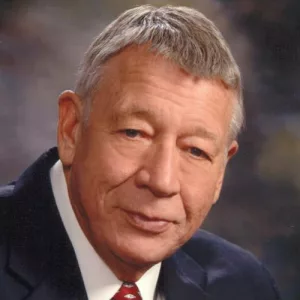

Join us as we embark on a journey through one of the most visionary books of the Bible, Zechariah. Unpacking spiritual traits of the millennium, our teacher Dr. J. Vernon McGee guides us through profound insights with clarity and depth. This episode delves into the rich tapestry of prophetic visions that foretell moral and spiritual transformations at the end of days, all rooted in Scripture and tradition.
SPEAKER 03 :
The foundation, ye saints of the Lord, is laid for your faith.
SPEAKER 04 :
The Bible Bus is moving ahead in our journey through God’s entire Word. We’re leaving behind the practical prophetic book of Haggai and diving into the visionary book of Zechariah. Welcome to Through the Bible. I’m Steve Schwetz, welcoming you aboard and inviting you to have your Bible in hand and your heart open to hear the Word. But first, let’s listen to this special introduction from our teacher, Dr. J. Vernon McGee, on how to understand prophecy.
SPEAKER 01 :
I want to talk to you today about a new subject. We have talked about dispensations and covenants and judgments. All of these are necessary to get the total perspective in order that we might understand prophecy. Now I want to speak on the spiritual characteristics of the millennium. The spiritual characteristics of the millennium. When the word millennium is used, most of us immediately and invariably think of streets of gold. desert blooming like a rose garden, and the lamb and lion lying down as pals. Well, these are physical, geographical, topographical changes that are identified with the Millennium. However, these are not the most important marks of identification of the Millennium. Moral and spiritual changes are the most notable and important marks of identification of the millennium. It is a thousand-year reign of Christ on the earth that is coming after the Great Tribulation. The church will be with Christ, and he’s coming to the earth to establish this kingdom. Now, it’s called a millennium because it’s a thousand years. And somebody says, well, that’s only mentioned one time in the Bible. Oh, may I say to you, it’s in the 20th chapter of Revelation, but it’s not mentioned one time. It’s mentioned six times. And I do not know how many times the Lord has to say something before he really means it. And I think that one time would have been enough, but he put it down as six times because he knew there’d be a group coming along denying that the millennial kingdom is a reality. Well, it is a reality, but it’s not physical. It’s spiritual. And since we’ve been dealing with prophetic books, in the Old Testament and shall continue to do so until the end of the Old Testament, it’s well to take time out to emphasize this feature as a preface to the remainder of the books of the Old Testament and the book of Revelation we’ll be going to next. For the book of Revelation is entirely an eschatological book when it was written, and it’s in the book of Revelation the millennium is mentioned. In other words, we are in prophecy entirely through the remainder of this five-year course through the Bible.
SPEAKER 04 :
Before we get to our study in Revelation, you’ll want to get your free notes and outlines. If you use our app, you already got them. Or you can download our digital book, Briefing the Bible, at ttb.org. To get an abbreviated paperback copy, just call us at 1-800-65-BIBLE. Now, as you find your seat and open your copy of God’s Word to Zechariah 1, let’s hear from a fellow Bible Bus passenger who recently left this message.
SPEAKER 02 :
My name is Samuel. I was introduced to Dr. McGee as a young police officer in Los Angeles in 1981. I began listening to Dr. McGee through the Bible on my way to work, sometimes on my way home from work, but I’ve been listening since 1981. And I have never called, but so much of my life has been guided by Dr. McGee And I’ve listened to him for many, many years. But I felt it’s time for me to call in and just let you know that I really appreciate the ministry. And I thank God that I will continue to listen until I leave this earth. And then I’m looking forward to meeting Dr. McGee in heaven. Thank you so much for what you do.
SPEAKER 04 :
Well, thanks, Samuel. I’ll continue to save you a seat. And you know, we’d love to hear your story too. What are you learning as we travel through the Bible together? Why don’t you call 1-800-65-BIBLE or send a message through our app or at BibleBus at ttb.org or send your letter to Box 7100, Pasadena, California, 91109. In Canada, Box 25325, London, Ontario, N6C 6B1. Let’s pray. Heavenly Father, your word is alive and active, and we ask that you would use it to pierce our souls and speak to our hearts. In Jesus’ name, amen. Here’s Dr. McGee with our study of Zechariah on Through the Bible.
SPEAKER 01 :
Now as we come to Zechariah, here’s a prophet that we want to get acquainted with, know something about his background. His name means, whom Jehovah remembers. And he’s identified here as the son of Berechiah. And Berechiah is the son of Iddo, the prophet. And so, actually, Zechariah, the name means Jehovah remembers. And Berechiah means Jehovah blesses. And Iddo means the appointed times. And these cluster names are quite interesting, by the way, because actually God remembers to bless at the appointed time. And that, I think, is something we ought to pick up here in this first verse. Now, this cluster of names with such rich meanings is suggestive of the encouragement that God wanted to give to the remnant that had returned to Jerusalem. In other words, God remembers and blesses in the appointed time. And we’ve seen that in the prophecy of Haggai. Now, the Jewish Targum states that Zechariah was slain in the sanctuary and that this Zechariah was both prophet and priest. And in Nehemiah 12, 4, Ido is mentioned as one of the heads of a priestly family. And Josephus states that Zechariah, the son of Baruchas, was slain at the temple. There are those who identify Zechariah here, by the way. As the one mentioned by the Lord Jesus in the 23rd chapter of Matthew, probably we ought to turn to that in 2335, where he says, “…that upon you may come all the righteous blood shed upon the earth from the blood of righteous Abel unto the blood of Zacharias.” the son of Baracus, whom he slew between the temple and the altar.” So that apparently this is the man that we’re dealing with here. But there are in Scripture about 20, I think it’s 25 men, separate men by the name of Zechariah that’s mentioned. In fact, somewhere between 25 and 30 Zechariahs are mentioned in the Scripture. Now, there is one that’s mentioned that I’d like to call attention to, one other one, and he’s the one who actually opens the New Testament. And it’s quite interesting, this Zechariah just about closes the Old Testament next to the last book. And the New Testament actually opens with Luke’s account. And it’s the account of Zacharias, a priest who was serving at the altar of incense when the angel appeared to him. And his wife was named Elizabeth. So that, again, God remembered. And after 400 years of silence, he broke through. Why? Because God remembered. And Zechariah is the first one that has appeared to. So that makes… Zechariah, quite an important individual here for us to look at. Now, we’ve already mentioned this before. Zechariah was contemporary with Haggai, although he was younger than Haggai. And you say, how do you know? Well, the way that we know is in Zechariah 2, 4, it says, “…and said unto him, Run, speak to this young man.” And this young man was Zechariah. So I take it that Haggai is a much older man than that. But this book, actually, that he wrote, it has the characteristics of an apocalypse. The visions resemble those in the book of Daniel and Revelation. And here is some facts that are quite interesting to note. Daniel was born in the land of Israel, but he wrote his apocalypse outside of the land of Israel, down at Babylon. Now, Zechariah was born outside the land, probably down by the canals of Babylon, but he wrote his within the land. Now, Daniel and Ezekiel and John all wrote outside the land, and they all wrote books that are like an apocalypse. Only Zechariah was in Israel when he wrote his apocalypse. In other words, in the dark day of discouragement which blanketed the remnant, he saw the glory in all of the rapture and vision of hope. He has more messianic prophecies than any of the other minor prophets. And I have an outline of this book that I think probably I ought to give you before we plunge into it. We have in the first six chapters apocalyptic visions. And they’re messianic and millennial. And there are 10 of those visions. And he had all of those visions given to him in one night. And I would say that that’s a good night’s work, by the way, to have that many visions. And then you have in this book a historic interlude, chapter 7 and 8. And in that, it resembles Isaiah. And there you have the same thing we have in Haggai. That was a question is asked, a question concerning a religious ritual. And the ritual was fasting. What about fasting? Is there any value to it? Well, we’re going to see that in chapters 7 and 8. And then the last part, the third division, are prophetic burdens. That means prophecies of judgment, and that’s from chapters 9 through 14. And you have in the first burden the prophetic aspects that are connected with the first coming of Christ, and that’s in chapters 9 and 11. And the second burden are prophetic aspects connected with the second coming of Christ, chapters 12 through 14. So you can see that we have here a rather unusual book. Now, this book is in direct contrast to Haggai. He’s contemporary with Haggai. They definitely knew each other, prophesied to the same people at the same period of time. And yet their prophecies are just about as different as any two could be. They are literally ages apart, but they were given to the same people at the same time. Haggai is down there at the foundation of the temple measuring it. He’s really got his feet on the ground. But this young man, Zechariah, he’s got his head in the air. And I tell you, when you have ten visions in one night, you’ve done pretty well. And his is entirely visionary, whereas Haggai is entirely practical. And yet they both are speaking for God to the same people at the same time concerning the same problem. And he’ll speak to us today as Haggai spoke to us, but in a different manner altogether. We need to recognize that these two need to go together. We suggested that in Haggai. You need the practical, pragmatic man to go along with the man who’s visionary. Because there’s a danger of the dreamer, you know, never being practical. And the practical man needs a vision also. So when you put these two together, you have a happy combination, by the way. I heard the story of a native in Africa who was blind, and he met a fellow who had no legs. And so he put the fellow who had no legs on his shoulder. And the fellow that had no legs was the eyes for the fellow that had no eyes. And that’s the way that they got along. One did the seeing, while the other one did the walking. or whatever was needed to be maybe running at times. You have that happy combination here in Haggai and Zechariah. Now we have in verse 1 the introduction. And will you note that for just a moment. We have here the introduction and the message of warning that’s in the first six verses. But the introduction we have in verse 1. In the eighth month, in the second year of Darius, came the word of the Lord unto Zechariah, the son of Berechiah, the son of Iddo, the prophet, saying, Now, The eighth month in the second year of Darius, and again we have this geared to Gentile king because there’s no king in either Israel or Judah now. Lion of David is off the throne, and the times of the Gentiles have begun. Now this second year is the same year that Haggai prophesied. It was in the sixth month of the second year of Darius that this man Haggai began. So this is the year 520. And he began to prophesy, but it’s the eighth month. And that’s the month that Haggai missed. Haggai had a prophecy in September and in October and December, but none in November. So this man, Zechariah, he prophesies here in the eighth month, in the second year of Darius. And that is in November that he was given this prophecy. And that, of course, lets us know that he was contemporary with Haggai. Now, again, he uses an expression that Haggai used, the word of the Lord. In other words, he speaks by the same authority as Haggai does. And this phrase, by the way, occurs 14 times in this book, another book that has a great emphasis upon it. Since it has 14 chapters, then it would occur average once a chapter. Now let me read verse 2. “‘The Lord hath been sorely displeased with your father.'” Now, this man speaking by the same authority that Haggai did, that is, that it’s the word of the Lord, he’s speaking now to the returned remnant, and he’s warning them not to follow in the footsteps of their pre-captivity fathers. He says, now, the reason that you went in captivity was because the Lord was displeased with your fathers. They sinned against God. Now, we don’t want you to make that same blunder, that same mistake. Now, he goes on in verse 3. He says, therefore, say thou unto them, thus saith the Lord of hosts. Well, here we go. He says here, Thus saith the Lord. But you notice how he’s addressed. He’s addressed as the Lord of hosts. Now, that has become a cliche to us today. In fact, many of the titles that are given to God have become almost meaningless to us, yet we use them a great deal. Now, what does Lord of hosts really mean? Well, it occurs 52 times in this book. It’s very important, therefore. Now, the word host is the Hebrew sabah or sabahoth, and it means service or strength. or even warfare. And the way it’s used here, it implies the boundless resources at his command for his people’s good. That’s Dr. Fossett’s definition of it. And I can’t improve on it, so I use it. Let me say that again. The Lord of hosts means It implies the boundless resources at his command for his people’s good. As we have it today, Paul says that he’s rich in mercy and he has all power. So what do you need today, friends? A little mercy? Well, he’s got an abundance of it. He’s rich in it. And he can extend mercy to you. My, how we need it today. And he’s the Lord of hosts. Now, will you note it? He says here, therefore, thus saith the Lord of hosts, turn unto me, saith the Lord of hosts, and I will turn unto you, saith the Lord of hosts. Well, that occurs here three times, you see, in this one verse. And then it occurs again in the next verse. Now, notice what he’s saying to them here in verse 4. He says, be not as your father’s. unto whom the former prophets have cried, saying, Thus saith the Lord of hosts, Turn now from your evil ways and from your evil doings. But they did not hear, nor hearken unto me, saith the Lord. This is his warning to them. Now, this starts off very practical, does it not? And it is very practical. He’s saying here to them, he says, Your fathers, They wouldn’t pay attention to the prophets. I sent to them, oh, I sent Hosea. I sent Joel. I sent Amos. And I sent to them Isaiah. I sent Jeremiah. I sent all of these prophets. And they didn’t listen to them. They didn’t heed them at all. And that’s the reason that they went into captivity. Be not as your father’s. unto whom the former prophets have cried, saying, Thus saith the Lord of hosts, Turn now from your evil ways and from your evil doings. But they did not hear. Now hearken unto me, saith the Lord. Now he asks a question. Verse 5. Will you notice this? He says, Your fathers, where are they? Well, and the prophets, do they live forever? The prophets’ voices are no longer sounding. That is the former prophet. Jeremiah and Isaiah and Hosea and Joel and Amos, they’re gone. They’re dead. Their voices are silent. And then, by the way, where are your fathers? Well, they’re buried down yonder in Babylon. And that was the wrong place to be buried. You see, they wanted to be buried in that land. That was very important. Even old Jacob down yonder in the land of Egypt, he made Joseph take an oath, says, don’t you bury me here in Egypt. I want to be taken back up yonder and buried with my fathers. And that’s where he’s buried today, there at Hebron. And what’s he waiting for? He’s waiting for the day when God’s going to raise him up along with the other patriarchs and the godly Israelites to live in that land. That’s their hope. That was their hope, to be raised up, to be buried in that land. And therefore, they wanted to be buried in that land. If you’ve ever been to Jerusalem, you know before the eastern gate there, down through the valley of Kidron and all up on the side of the Mount of Olives. They’re buried there, Israelites. Those are the graves that the Arabs mutilated a great deal. They are being restored by Israel. But why are they buried there? Because right there they expect to see the Messiah come someday to the earth. And I personally think they’ll be raised from the dead when he returns to the earth to establish his kingdom. The rapture, the Lord Jesus does not come to the earth. He comes into the air and he calls this church out of the world. He’s not coming to the earth at that time to establish his kingdom. The world is to go through the great tribulation period. The church is to be removed. Now, there would be no point in raising these from the dead that are the Old Testament saints, both Jew and Gentile, because they just have to stand around and wait till the tribulation is over to be raised to enter into the kingdom. And that is the thing. And may I say this was a very pertinent question that Zechariah is asking. He says, your fathers, where are they? Are they buried way down yonder in Babylon? By the canals of Babylon. That’s a bad place to be when your hope is right here in that land. You see, this meant a great deal in that day. This is a warning he gives them. But my words and my statutes, which I commanded my servants, the prophets, did they not take hold of your fathers? Or in other words, did they not overtake your fathers? The judgment came. In other words, your sins. have overtaken you. And they returned and said, as the Lord of hosts thought to do unto us, according to our ways and according to our doings, so hath he dealt with us. In other words, they were finally willing to admit That which had come to them by way of judgment was just and righteous on the part of God. Because he warned them, they had not listened to him. Now, Zechariah is giving a warning. Now, this all sounds very practical. But next time, friends, we begin and take up ten visions that this man had in one night. And friends, some of those visions, they’re something. So until next time, may God richly bless you, my beloved.
SPEAKER 04 :
Don’t miss any of Zachariah’s very unusual visions. Get back on the Bible bus next time. For more great teaching by Dr. McGee, why don’t you join me this Sunday for his Sunday sermon, When Jesus Went to a Funeral. You can listen by app or at ttb.org, or to find a local radio station that carries the Sunday sermon, call 1-800-65-BIBLE. Now as we go, I want to say a special thank you to those of you who faithfully pray and financially support this ministry. It really is a joy and privilege to have you invest in keeping the Bible bus winding its way through the peaks and valleys of Scripture. So to find out how you can join that team, just visit us, ttb.org is the address, or call 1-800-65-BIBLE. I’m Steve Schwartz. So grateful for your companionship on the Bible bus and your partnership in taking God’s whole Word to His whole world.
SPEAKER 03 :
All to him I owe. Sin had left a crimson stain. He washed it white as snow.
SPEAKER 04 :
Well, ride the Bible bus for five years and you’ll be amazed at what God teaches you from his word about what it means to believe on the Lord Jesus Christ and you will be saved. It’s a blessing that keeps on going. That’s what we believe at Through the Bible.