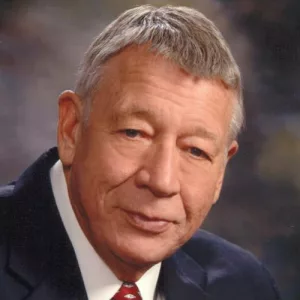

How do we decide when life should end? In this thought-provoking episode, we explore the profound ethical questions surrounding end-of-life decisions, examining what it means to live a life worth saving, and the moral implications of assisted death. Through insightful anecdotes and philosophical discourse, we delve into the dilemmas faced by caregivers and patients alike, all underpinned by the guiding principles of faith and ethics.
SPEAKER 02 :
The CEM Network is pleased to present Ronald L. Dart and Born to Win.
SPEAKER 03 :
Are there some lives that are just not worthy to be lived? Are there some lives that are not worth saving for medical reasons? How about for financial reasons? I had a good friend years ago. He was in his early 70s, and he was diagnosed with cancer of the esophagus. His doctor recommended some treatment, but he said, no, I don’t want to do that. He was an old rancher, and he concluded that if he’d had an old bull, he wasn’t going to spend a whole lot of money on him to try to cure him of a disease that was going to take his life anyway. And so he thought to himself, I’m not worth the investment to attempt to cure. Now, I wasn’t so sure I bought his rationale, but I’m not sure that was really his meaning. I think he just didn’t want to have to face the pain of sickness and the indignity of treatment. He would rather choose a different life for his last days than the one his doctor held out to him. Now I find it impossible to criticize his decision. He asked me specifically to pray with him and for him, and he committed the last days of his life into God’s hands. He was my friend, and I miss him. But I had no right to influence that decision. It was his to make. Now let me present a rather different end-of-life question for you to think about. A man is a diabetic. He has been told he also has terminal cancer. He has been told he faces a lingering, painful death. What if the man makes a decision that while he can still make his own decisions, he doesn’t want to die like that? So he simply refuses to take his insulin, slips into a diabetic coma, and dies. How should we feel about that kind of decision? We would think one way about him taking a gun, going into the closet, wrapping his head in a towel, and blowing his brains out. We would think one way about that. How would we think about this one, though? And how should we feel? Is it truly suicide, or is it merely a medical choice? Now, let me make the question harder. Suppose the diabetic in question can no longer make those decisions for himself. He is suffering from dementia and can’t be trusted to take his insulin. He faces steady deterioration for years. And finally, an ugly death at the end. Would you or I have the right to make the decision for him? Could we decide to simply stop his insulin and let him slip into a coma and die? Would that be like turning off a respirator to simply fail to give him his insulin and allow him to slip away? What would you decide in these cases? And more important than that, what would be the basis for your decision? All of us have what some people would call a worldview. We are unaware of this, just like a fish is not aware of water, but we all have a grid through which we view life’s problems and which we use to make decisions about those problems. But for the most part, that worldview goes unexamined. We never ask ourselves, why do we feel the way we do about this? Why do we think this way? Why is this our conclusion? We have always thought the way we have, and unless something jars us off our platform, we always will. What are the foundational principles upon which we will base our end-of-life decisions, be it our own end of life or someone we love? As Christian people, we like to think that the Bible is our foundation, our platform from which we view the world, that the Bible is the framework for making the hard decisions of life. But when we say that, we immediately are presented with a problem. The Bible simply does not address many of our issues for the simple reason that no one had our tools at his disposal to save life. Except Jesus, of course, and it wasn’t our tools he had. He simply could heal the sick and raise the dead. Nothing of medical science as we know it was available. None of the surgical procedures, much of the chemicals, the drugs, none of these things were available. So the Bible never had occasion to talk about it. But that doesn’t mean the Bible is of no value to us in making these decisions. We actually, in a lifetime of reading the Bible, use it as the grid, the worldview, the platform from which we view the world and make decisions about that world. Gilbert Mylander, writing in First Things in May of 2005, said this, “…a principle we want to uphold, but have to explore in relation to cases.” is that we should never aim at or intend the death of any of our fellow human beings, recognizing possible exceptions in cases where they themselves are threatening the lives of others. Then Mylander offers a corollary to the principle. We should not think of ourselves as the possessors of another’s life or judge that another’s life is not worthy of our care. Now, this ethic, I think, would hold wide acceptance among Christians and non-Christians alike. Let me repeat them. We should never aim at or intend the death of any of our fellow human beings, with recognized exceptions, and we should not think of ourselves as the possessors of another’s life or judge that another’s life is not worthy of our care. Now, we would agree on these things, I think, for the most part. But then we have to ask, why do we think that way? How did we come to these guiding principles? And how are they applied to the naughty problems we face as we, or people we love, approach the end of life? I know they tell us we should think these things through and make a living will while we can do so objectively with a clear mind. Personally, I’m really not so sure I would like to trust my end-of-life decisions to a piece of paper. Medical science is moving so fast, and the courts are intervening so often, that what I write in a living will today could become highly problematic tomorrow. My wife and I have talked this over, and our decision is that we both trust each other, and we’re going to leave it in our own hands. Now, we all know there will be a time to go. The question is, who gets to make the decision on how it’s going to be, and what will be the guiding principle when the time comes to make it? Committed to such a principle, Mylander concluded, we are naturally led to a certain way of caring for others who are ill, suffering, or dying. We should not aim at their death. whether by acting or by omission. And I think I agree with that. On the other hand, because we do not think that continued life is the only good or necessarily the greatest good in every circumstance, we are not obligated to do everything that might be done to keep someone alive. And I think we would agree with that. Actually, there are ridiculous extremes to which no one really thinks we should go just to keep… a person alive. If a possible medical treatment seems useless or quite burdensome for the patient, we are under no obligation to try it or continue it. In withholding or withdrawing the treatment, we are aiming at another good, the good of life free of the burden of treatment even if the life is shorter. And that is precisely the choice my rancher friend made. He chose a life free of the burden of treatment, even though he knew it would be shorter than his life under the treatment. He just didn’t want to undergo the indignity. We can easily imagine a patient deciding to forego a round of painful medical treatment and choosing a shorter life, but one free of the burden of that treatment. We’ve come to the place, though, where we can no longer be certain when a patient has gone beyond the reach of our care. We’re just not sure. And at this point, Mylander puts the issue a different way. Most of us feel that it is right to let people die who are clearly dying. But what about letting patients die who are, in fact, not dying? The example of this that comes immediately to mind is Terry Shavell. As I listened to all the arguments rage back and forth, and it was a useful time, frankly, for people who were paying attention to these things to hear all the debates on all sides of the issues, I had a simple question that kept coming to mind and that absolutely no one answered for me. What is the moral difference between withdrawing her feeding tube on the one hand and giving her a shot of, say, morphine, which would end her life more quickly and certainly painlessly? What’s the difference? No one answered the question. And some of the people I put it to pretended not to hear it. If we accept the principle that we should not intend or attempt to bring about the death of another person… then we must ask about euthanasia. Because in such a case, we are choosing what we perceive to be a better death, or at least an earlier death. But either way, we are choosing death. We are intending and attempting to bring about the death of another human being. Well, now with the coroner’s report in, we know, sort of, that Terri Chaveau could not have recovered, ever. And we know, I suppose, that she suffered no conscious pain as she was starved to death. But we do know this, too. We know that a conscious decision was made to end her life. Period. Now we will have to debate all the other circumstances where we will have that same decision come to us again. because this was not merely a matter of withholding life support. It was a matter of ending her life. I couldn’t call it euthanasia, because euthanasia is defined as the act or practice of killing or permitting the death of hopelessly sick or injured individuals. An overdose of morphine would have been euthanasia. In Terry’s case, it was merely bringing about her death with intention, without the palliative effect. of euthanasia. It seems to me that if we reject euthanasia, then we must also reject starving a person to death even when there is no chance of recovery. How are we going to make these decisions in years to come as medical science keeps giving us more options about how to live our last days and more ways to die?
SPEAKER 02 :
We’ll talk further about this, but first, listen to this important message. Is life worth living? There may be times when you feel like giving it up, but there is never a sacrifice or act of suffering that is worthless or in vain. Write for a free copy of the program titled, Is Life Worth Living? Write to Born to Win, Post Office Box 560, White House, Texas 75791, or call toll-free at
SPEAKER 03 :
1-888-BIBLE-44 So, is it wrong to hope or wish that a suffering person would go ahead and die? You know, I know people do that. I know they feel guilty because of it, but they don’t need to. It’s not wrong to hope or wish that the suffering would go away. The wrong would come in trying to bring it about. Lingering in the background of this question is an issue Paul Ramsey addressed in his book, The Patient as a Person. He concluded that there’s a substantive difference between stopping feeding someone who might live on indefinitely and turning off a respirator for someone who cannot breathe on his own. He said, and I quote, One does not know for certain that a patient will be unable to breathe on his own, And, unless we intend to suffocate him if he does breathe successfully on his own, it is possible to remove the respirator while withholding an intention to bring about the person’s death. End of quotation. Now, you may have to think about that a little bit, and you may not even agree with it, but there’s a certain sense in it. If we are going to disconnect the respirator, we can’t be, until we turn it off, absolutely certain that the person can’t breathe on his own. And so we can turn off the respirator without intending to kill him. Our job would simply be to allow a person who was dying to die. His underlying principle is that we should try to withhold the intention to cause the death of a patient. Now, clearly, in the case of the death of Terri Schiavo, her death was intended. It was intended to cause her death. Ramsey also said, and I quote, Moreover, we could withhold the more invasive interventions while simultaneously withholding an intention that the patient die. But it’s hard to believe we could withhold feeding while simultaneously withholding the intention that the patient die. And I have to agree. When you start withholding liquids and feeding, it is your intent that the patient die. Ballander turns to a second sort of case in which intervening to benefit and preserve life means keeping a person alive for what may well be a long period of deterioration and a yet worse death. Suppose he said, for example, a patient suffering from dementia said, experiences an episode where the cardiac arrhythmia causes unconsciousness. Why would we not implant a pacemaker in order to prevent further episodes? Almost certainly, we would provide a pacemaker, he said, if the person were not demented. So why exactly would the presence of dementia make us do otherwise? Now, that’s a difficult question. It’s a complicated question. And he goes on to analyze it. He says one might reject that conclusion, however, or at least argue with it. The argument would go something like this. In withholding the pacemaker, we are not aiming at this person’s death. On the contrary, when all of us choose constantly from among the various lives available to us, we are choosing not only a life, but also certain possible deaths. We are choosing among the various deaths open to us, making some far more likely than others. Now I think what he has in mind here is people who engage in risky hobbies like skydiving and others, where they actually do take chances. People do mountain climbings on the very high peaks where a certain number of them die. He goes on to say, this does not amount to aiming at or intending death when we do that. So we might decline the pacemaker for a demented loved one, choosing thereby a death likely from cardiac arrest rather than a death from other causes at the end of a long period of dementia. And it’s hard to listen to think of that and not consider, well, that’s not a bad idea, it seems to me. Mylander considers it a serious response, but says he doesn’t find it persuasive. Its flaw, he said, is that it’s grounded less in a desire to benefit the life that the patient has than to ask whether continued life would be a benefit. Hence, for as long as he lives on, our decision deprives him of benefits well within our power without burdening him greatly. That’s what we would do if we gave him a pacemaker. Thus, our desire to orchestrate the circumstances of death, to see that he dies from cardiac problems rather than as the end result of a decade of dementia, deflects our focus from helping him to live better for as long as he does live. Now, one of the things I thought was fascinating, and it illustrates, again, the idea of worldview, the platform from which a person views the world. Mylander says that death means, after all, the defeat of our desire to shape the circumstances of our life. Trying to orchestrate the circumstances of death has the look, therefore, of one last attempt to be what we are not. the author of the story of our life or the life of another. You know, this brought to mind a passage in the Bible that probably helps some of us inform our decisions. It’s in Deuteronomy 32, verse 39. God speaking says, See now that I, even I, am he, and there is no God with me. I kill, and I make alive. I wound, and I heal, and neither is there any that can deliver out of my hand. God is the author of life and death, and I’m afraid some of us from time to time forget that and decide that we’re going to play God. Euthanasia, said Mylander, is the ultimate attempt at managing death. And it misses the irony that we’re attempting to master the very event that announces our lack of mastery. We are exploring now whether some treatment decisions approach too closely to that same managerial attitude, whether they begin to choose death rather than life. And that’s a strange thing about our society today. We have gone away from being a culture of life. We are becoming a culture of death, a culture in which people choose to die. We see the results of that in some parts of Islam to this day, a people for whom death becomes the ultimate benefit. They live in a culture of death. And until now, we have lived in a culture of life. Also in Deuteronomy chapter 30, verse 19, God speaks again and says, I call heaven and earth to record this day against you. I have set before you life and death, blessing and cursing. Therefore, choose life that both you and your seed may live. Here we are. We are asked to choose life. We have the choice. But again, too many times we are choosing death. There are a couple of more important items.
SPEAKER 02 :
I’ll talk about them right after this important announcement. For a free copy of this radio program that you can share with friends and others, write or call this week only and request the program titled The End of the Road. Write to Born to Win, Post Office Box 560, White House, Texas 75791. Or call toll free 1-888-BIBLE44. And tell us the call letters of this radio station.
SPEAKER 03 :
Now I know I have left you with a lot of unanswered questions. Actually, it wasn’t my intent to give you the answers. You’ll have plenty of friends around you ready to do that. What I’m trying to do is to help us to think through the issues and to look for our basis for making decisions. Where is our home base? Where is our platform? What are the fundamental principles of life that we will use to make those decisions? And since I’m looking at this from a Christian point of view, from a biblical point of view, what can we carry away from the Bible that will help us and will inform us when those times come? Now we all know that Jesus faced a bitter end-of-life decision. In his case, it was not a medical condition, but something altogether different, and something he could have avoided if he wanted to. In the night of the Last Supper, he went to the Garden of Gethsemane and prayed so fervently that he nearly sweat blood. Luke tells a story. It says he came out and went as he was wont to the Mount of Olives. His disciples followed him. And when he was at the place, he said to them, pray that you enter not into temptation. And he was withdrawn from them about a stone’s cast. And he kneeled down and he prayed. We know from the gospel accounts that he went away and prayed three times. saying, Father, if you be willing, remove this cup from me. Nevertheless, not my will, but yours be done. And there appeared an angel to him from heaven strengthening him, because this was a hard time for him. And being in agony, he prayed more earnestly, and his sweat was as it were great drops of blood falling down to the ground. He had a terribly hard decision on that night. So hard, in fact, that an angel was sent to strengthen him. And I find myself wondering if the 55th Psalm… formed part of his prayer on that night. You’re probably familiar with one verse out of it. It goes like this, Oh, that I had wings like a dove, for then I would fly away and be at rest. Lo, then I would wander far off and remain in the wilderness. I would hasten my escape from the windy storm and tempest. Oh yeah, I can easily understand a desire to get away, a desire to avoid it, to fly away like a dove and not be there. The prayer begins, Give ear to my prayer, O God, don’t hide yourself from my supplication. Attend unto me, hear me. I mourn in my complaint and I groan because of the voice of the enemy, because of the oppression of the wicked, for they cast iniquity upon me and in wrath they hate me. This was a painful thing for Jesus, human as he was. that all the accusations of iniquity that were made against him, all of the anger that they expressed toward him, and the outright hatred for a man who in his lifetime had done nothing but good. They cast iniquity upon me, harkens back to Isaiah, who spoke of the time when the Messiah would have our sins laid upon him. My heart is sore pain within me. The terrors of death are fallen upon me. Fearfulness and trembling are come upon me, and horror has overwhelmed me. The facing of death, the end of his life, with the full knowledge of what was coming. It’s kind of shocking when you think about the possibility that Jesus actually feared death. But you see, if he had not, he would not have experienced what you and I experience. And I said, oh, that I had wings like a dove. I would fly away and be at rest. I would wander far off and stay in the wilderness, and I would hasten my escape from the windy storm and tempest. For it was not an enemy that reproached me, for then I could have borne it. Neither was it he that hated me that did magnify himself against me. I could have hid from him. But it was you, a man my equal, my guide, my acquaintance. We took sweet counsel together and walked into the house of God in company. You know, nothing could hurt worse than the betrayal of a friend It’s hard not to see Judas in this short passage. That night in the Garden of Gethsemane, he said, Judas, do you betray the Son of Man with a kiss?
SPEAKER 02 :
The Born to Win radio program with Ronald L. Dart is sponsored by Christian Educational Ministries and made possible by donations from listeners like you. If you can help, please send your donation to Born to Win, Post Office Box 560, White House, Texas 75791. You may call us at 1-888-BIBLE44 and visit us online at borntowin.net.
SPEAKER 03 :
Gilbert Bylander said, We should not want to think of ourselves as the author of the story of our own life or that of another. Nor, therefore… as one who exercises ultimate authority over life. That’s a thought to take away. From time to time, we have some hard decisions as to which of our radio stations we keep and which ones of them we let go, and the number of calls, letters, and comments that come in from a given station help us make those decisions. So let us hear from you. Give us a call or drop us a line. Our phone number again is 1-888-BIBLE44. That’s 1-888-242-5344. Our mailing address is Post Office Box 560, White House, Texas 75791. I’m Ronald Dart. Thank you for listening, and remember, you were born to win.
SPEAKER 01 :
Christian Educational Ministries is happy to announce a new full-color Born to Win monthly newsletter with articles and free offers from Ronald L. Dart. Call us today at 1-888-BIBLE44 to sign up or visit us at borntowin.net.