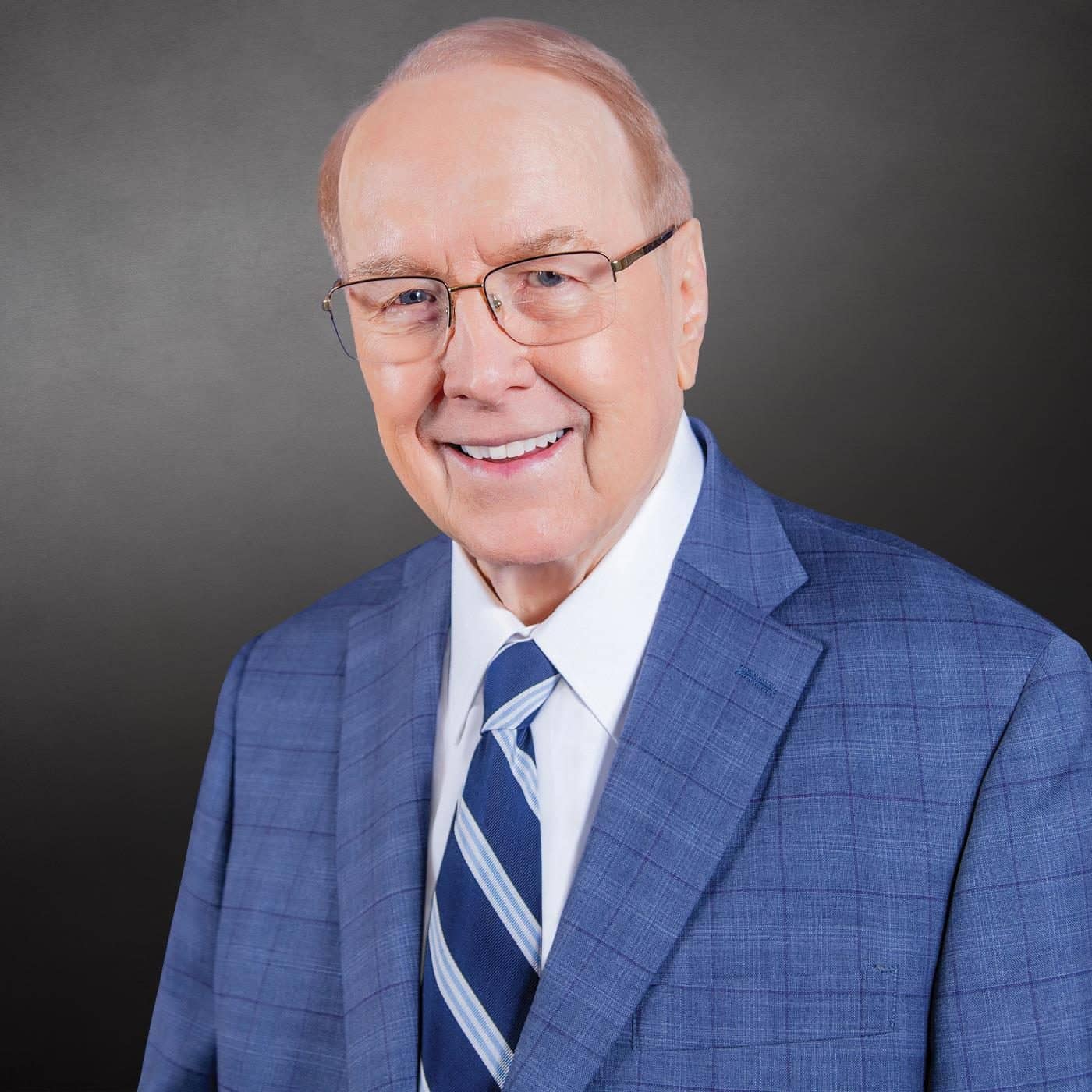

This episode of Family Talk is a thought-provoking dialogue that challenges listeners to consider the role of self-examination in strengthening marriages. Linda Dillow, an author with a compelling personal journey, joins Dr. Dobson to dissect the common pitfalls that plague marriages today. Through Christ-centered wisdom and practical advice, Dillow invites listeners to question long-held assumptions about relationships and embrace the biblical path to marital fulfillment.
SPEAKER 02 :
You’re listening to Family Talk, the radio broadcasting division of the James Dobson Family Institute. I am that James Dobson, and I’m so pleased that you’ve joined us today.
SPEAKER 01 :
Well, welcome to Family Talk, the broadcast division of the Dr. James Dobson Family Institute. I’m Roger Marsh. Have you ever stopped to consider what life is really like for your spouse? Well, today here on Family Talk, you’re going to hear Dr. Dobson’s insightful conversation with author and speaker Linda Dillow, who challenges wives everywhere to examine themselves through a powerful lens of self-reflection. Recently, Linda wrote a book that poses one of the most thought-provoking questions a wife can ask herself. And that question is, what’s it like to be married to me? This simple yet profound inquiry can transform marriages when approached with humility and openness to change through her own journey, including a life-altering accident that left her with a severe brain injury. Linda discovered profound truths about marriage, selfishness, and the differences between husbands and wives. On today’s edition of Family Talk, Dr. Dobson and Linda Dilla will explore why self-examination is crucial for marital growth. They’ll also talk about the common pitfalls that trap many wives, and they’ll reveal how understanding our God-given differences can lead to deeper intimacy. So right now, let’s get into part one of their enlightening discussion on today’s edition of Dr. James Dobson’s Family Talk.
SPEAKER 02 :
We’re really fortunate to have Mrs. Linda Dillow with us today. She has been a missionary on three continents along with her husband, Jody. But, Linda, I met you because I interviewed you about 10 years ago or so.
SPEAKER 04 :
We can’t be old enough to have been doing something 10 years ago.
SPEAKER 02 :
The years are going by in a hurry, I’ll tell you that. You have four children. I do. And 10 grandchildren. Yes.
SPEAKER 04 :
Isn’t that a blessing?
SPEAKER 02 :
Oh, my goodness. What a blessing.
SPEAKER 04 :
It is.
SPEAKER 02 :
We’ve got two, and I’m thankful for both of them. You’ve written a number of books, including Intimate Issues, and that was the book that I interviewed you about. You also co-wrote that book with Lorraine Pintus. But there was a time in your life when you weren’t sure that you were going to be able to write again. Tell us that story. You really had a bump in the road along the way as an author.
SPEAKER 04 :
Five years ago, Dr. Dobson, I fell down an entire staircase in an airport and landed on my head and woke up several hours later in a trauma hospital. This was in Southern California. And my husband flew out there and sat by my bed for five days and cried. The doctor said, you have a severe brain injury. And for two and a half years after my accident, I had no creative thoughts. It was like my brain needed everything just to try to learn a new way to live life. And two and a half years after my accident, God just began to give me back creative thinking. And he just whispered to me that he wanted me to write on marriage. And I said, really, God? And he said, yes.
SPEAKER 02 :
You have no doubt about the fact that what he gave you to write about here – was given to you by him. The insight came from your spiritual concepts and the biblical ideas, didn’t it?
SPEAKER 04 :
It did. And I began asking myself dangerous questions early in our marriage. And God just whispered, why don’t you ask other women those same questions that you’ve been asking yourself?
SPEAKER 02 :
Well, I don’t want to be too nosy with you, but what conclusions did you draw about yourself in your relationship with your husband? When you asked that question, what’s it like to be married, to me, what did you decide?
SPEAKER 04 :
That is a nosy question, but you can be nosy. You can be nosy. I decided that I was selfish, that I wanted my husband to respond to life like I did because then life would be easier for me. Mm-hmm. And I decided that I was prideful, that I felt my way of living life was really better than my husband’s, that being structured is really better than being flow with it because structure makes me feel comfortable. And God just said – You know, Jody isn’t wrong. He’s different. And you’re not right. You’re different. And I want you to accept the differences and even delight in the differences and allow me to mold you into me. One flesh.
SPEAKER 02 :
I think you’ve got something here for all of us to come to terms with. But you’ve already told us in my office a few minutes ago that some women have told you they threw the book away. They wouldn’t read it.
SPEAKER 04 :
No, they threw it against a wall and threw it in the trash. Because one thing that I did early in my marriage and that I encourage the women to do – is to think about who they want to become as a wife. What kind of a wife do you want to be in 20 years or in 30 years? And out of those thoughts and prayers to form a marriage purpose statement. And one of my friends just said, my marriage purpose is so bad right now. I can’t write a statement and say I’m going to try to live this for the rest of my life. So she threw it in the trash. And as we talked, she said, okay, I’ll ask God what I could live for the next three months. I said, well, that’s a start. That’s a start. And so she wrote a series of I will, I will forgive my husband because he had done some horrible things. I will seek today to love him. I will look at life through his eyes. And then at the bottom of it, she put from January through March 2011. I mean, God, you have me for three months and my husband has me for three months. But do you know after those three months? She sent me an email and said, I just added to the bottom of my marriage purpose statement, till death do us part. So God can get a hold of us when we pray. Really, God asks us to ask ourselves dangerous questions. We’re to say, search me, O God, and know my heart. Try me and see if there’s any wicked way in me. I mean, this is what David prayed. And really, asking dangerous questions is very biblical.
SPEAKER 02 :
Have you ever had a woman say to you, what if I go on this self-improvement campaign? What if I try to conform myself to Scripture? What if I do everything I can to care for and love my husband and he doesn’t match me on the other side? If there’s no change in him, then what happens?
SPEAKER 04 :
It’s a really good question, and there are a lot of women that are in that very place. And what I say to them, Dr. Dobson, is, I pray, I hope your husband… will want to ask God dangerous questions for him. But whether he does or not, there’s only one person that each of us can make secret choices for, and that is for me. And I want to be faithful to my God. And when I stand before him, I want to say, I did this. All I could do to be a wife to this man, and I can’t answer for my husband, but I want to be faithful to God for me.
SPEAKER 02 :
What’s the difference, and you talk about this in your book, what’s the difference in living by default versus living by design?
SPEAKER 04 :
I think what we’ve been talking about, about getting the gripes out and getting gratitude in people, shows, all right, if I’m serious before God and I want to give respect and praise and encouragement to my husband, that’s living by design. If I just don’t care, I don’t ever think about what comes out of my mouth, that’s living by default.
SPEAKER 02 :
I want to tell you what I was writing. I was trying to answer the question, why do so many women nag and gripe and complain? What is there in a female heart that makes that happen so commonly? And I’ve written down a few possible answers.
SPEAKER 04 :
I’d like to hear those answers.
SPEAKER 02 :
And I want to know what yours are. The first one is, if I don’t stay on him, he’ll get worse. Mm-hmm. I’m trying to keep him from becoming intolerable. And I can hardly live with him the way he is now. Second, he could be so much better if he’d only try. I’m going to show him how to do it. Okay? That’s two. Three, I am in such pain in this relationship. Please hear my heart.
SPEAKER 03 :
Mm-hmm.
SPEAKER 02 :
When she says to him, this is impossible. I can’t deal with it. Why don’t you change? She is really saying, I am in agony. I’m going through difficulties because I’m trying to love you and I’m having a hard time doing it. Number four, marriage is so different than what I expected it to be. I’m so disappointed with it. Perhaps I can make him what I need him to be. There’s four. I think you should write a book. It really comes out of the female heart, out of the sensitivity and the need for intimacy and the need for acceptance and the need for love. And when those needs are not met, the woman cries out for it. So you’re really trying to say, even though there are these uncomfortable aspects of life as you know it, you can accomplish a lot by listening to the Lord, reading the Scripture, and working on yourself.
SPEAKER 04 :
Because we can’t work on the other person. We all sort of have a built-in reaction when someone criticizes us. And griping really is criticism. And so we just push back. And then you just have the wife pushing at the husband and the husband pushing back. And the cycle’s got to stop.
SPEAKER 02 :
One thing is sure, nagging and griping and complaining do not change a man. Right. They make him want to dig in. It makes him angry. And that’s not the answer. So there has to be a better way. And I think you’ve hit it. It may not be entirely fair to take all the responsibility for your conflicts on yourself. It takes two to tangle. And the other side, the husbands have all kinds of flaws too. And we’re acknowledging that. Mm-hmm. But you’ve got to start someplace. And thank God it’s usually the women that are willing to work on it. This personal investigation that you’re asking women to embark upon indeed feels quite dangerous because it goes against human nature to examine ourselves in this way. But I think the Lord can really use it if we’re willing to be open to him and to see what he’s saying to us. So I want to ask you, you are out there along with Dr. Julie Slattery speaking a great deal. And you’re not only speaking to women, but you’re hearing from them. What are they saying to you about this book? Does it offend them? These are dangerous questions. Are people mad at you, and are they saying, I don’t think I can do this? What are you hearing?
SPEAKER 04 :
Dr. Dobson, I would say the majority are just very, very positive. One woman said recently, You know, a lot of Christian books are fluff. This isn’t fluff. And it makes me think, and I need to think. And so thank you for making me think about the hard questions. And I just want women to have hope. I think a lot of women out there are pretty hopeless about marriage. And they look at the very sad statistics that Christian marriages end as often as marriages of those who aren’t Christians. And they just think, shouldn’t God make a difference? And I believe He does, and I know you all do too. And we just want to try to pour hope into wives and husbands that no marriage is beyond God’s repair. And He’s a God who recreates, and He can recreate marriages. I’ve watched Him do it. I was so excited when I was studying Proverbs 24, where it says, “…by wisdom a house is built, and by knowledge it’s established.” And that Hebrew word, built, it means a recreation. It means to take something that’s toppling over and make it stand straight again. And I just got on my knees and said, God, thank you. Because you say by wisdom, a house or a house of marriage is built. You can recreate. in a couple who is willing. And it would be so wonderful if both the husband and the wife were willing at the same time. But God only needs one person to start. And so if a wife says, all right, I’ll ask these dangerous questions, and God, would you change me? My prayer is that her husband would feel loved and respected and that he would want to change. But there’s another side of this, and that is that the Lord Jesus said, if you love me, you will show by obeying me. And there is peace that comes in obedience. And if I am saying, Lord, I want to learn to love like you love, I have husbands come up to me and they just say, thank you, Linda.
SPEAKER 03 :
Yeah.
SPEAKER 04 :
And particularly about the question, what’s it like to make love with me? And that’s a question women don’t want to ask. But many husbands have come up and said, thank you. My wife is different because she asked that question.
SPEAKER 02 :
You may remember in some of our earlier programs that were addressed in bringing up girls and at about six months to 18 months of age, there is this hormonal bath that changes the female brain. She will never again be as she was before or as her brother will be. His hormonal bath of testosterone occurred when he was about eight weeks of age, referring to the gestational period. And they will be forever different. And understanding each other is tough. It is hard because we’re made differently, literally. And what the girl brain, what the female brain is like after that bath of estrogen is sensitivity and relationships becoming extremely important. And a desire to be loved and to be known and cherished, all of that. A guy grows up not feeling those things. So it’s really strange that the Lord put characteristics within us that both draw us to each other. We can’t get along without each other. And yet there is tension over who we are. And that’s sort of what you’re dealing with here.
SPEAKER 04 :
It is. I think, too, that women are just very idealistic about relationships and that we think, I’ve fallen in love with this man. He’s going to be everything. He’s going to fill my love gap that is so big in my heart. And when he doesn’t measure up to this idealistic view of who the perfect man was to be, everything to us, then we want to change him to become that because that’s what marriage is supposed to be like.
SPEAKER 02 :
Linda, you talk in your book about sexual intimacy, and that’s a reflection of the differences between men and women too. Absolutely. They have very different concepts of what that experience is to be like. And it behooves both partners to understand the spouse’s different needs there. Describe what those needs are.
SPEAKER 04 :
A woman wants a lot of physical touch that isn’t sexual. She wants her husband to adore her. She wants relationship before sexual intimacy. Whereas a man wants sexual intimacy and then relationship. And a woman absolutely cannot fathom that because we want to connect, and we connect by talking and entering into each other’s lives. And then I would love to give to you sexually, but for a man, it’s exactly the opposite. And, you know, God didn’t ask my opinion, but— If he had, I would have suggested he make us more of the same, not different. And yet, he built in the sexual differences between men and women before the fall. And so he obviously thought this was a good way for us to learn to be a servant lover. I love the way the message translates, 1 Corinthians 7, 4. It says that we are to serve one another, whether in bed or out, that we are to learn to look from the other person’s perspective, and that God made my husband just the way he did, and God wants me to love him in every way, including physically. And hopefully he will look at me and see the great need I have for connection and relationship.
SPEAKER 02 :
If it does not focus on the other person, it is the ultimately selfish perspective. It’s only when you are in tune with the other person’s needs that there is a gratification that goes to both partners. It’s absolutely true. Linda, when we were not on the air, I mentioned to you that books on marriage often lay down the same principles. They’re said a different way and with different illustrations. But there’s really very little that’s entirely new in regard to an institution as old as as marriage, which goes back to the Garden of Eden. You have really provided some food for thought here. And I am enjoying talking to you so much that I really would like to have you back with us. Would you be willing to do that?
SPEAKER 04 :
I would be honored.
SPEAKER 01 :
You know, it takes real courage to ask yourself what it’s like to be on the receiving end of your own behavior in marriage. And Linda Dillo’s conversation with Dr. James Dobson on today’s edition of Family Talk has certainly given us plenty to think about. By the way, if you’d like to hear this conversation again or share it with someone who might benefit from Linda’s wisdom, go to drjamesdobson.org forward slash family talk. Once you’re there, you’ll also find information about Linda Dillo’s book called What’s It Like to Be Married to Me?, Again, you’ll find the book information as well as the audio at drjamesdobson.org forward slash family talk. You know, the kind of biblical wisdom we heard on today’s Family Talk broadcast is exactly what families need in these challenging times. And right now through next Monday, June the 30th, Thank you for joining us. And in a culture that’s increasingly hostile toward traditional biblical values, we are committed to defending the sanctity of marriage and equipping couples with God’s design for lifelong relationships. Now, you can make a secure donation online at drjamesdobson.org. You can also call over the phone with your donation at 877-732-6825. And as a way of thanking you for your support of the Dr. James Dobson Family Institute during the month of June, we’ll thank you by sending you a copy of Dr. Dobson’s powerful book, Your Legacy, along with the companion DVD. In this deeply personal resource, Dr. James Dobson shares his own family’s spiritual heritage and provides practical strategies for passing your faith to the next generation. You’ll discover how to lead your children to Christ, how to build loving relationships that last, and create a godly legacy even in today’s secular-driven culture. The companion DVD features Dr. Dobson’s dramatic presentation and will challenge and inspire you to be intentional about your family’s spiritual journey. Now, you can request your copy of this special bundle featuring the book, Your Legacy, and the companion DVD, When you contact us online at drjamesdobson.org, you can also call 877-732-6825. Or you can write to us, send your tax-deductible donation through the mail to Dr. James Dobson’s Family Talk, P.O. Box 39000, Colorado Springs, Colorado, the zip code 80949. And by the way, in less than two weeks’ time, we’ll be celebrating our nation’s 249th birthday. That’s why I encourage you, before we leave the air for the day, to drop by our website at drjamesdobson.org and sign up for our exclusive Faith of Our Founders email series. You’ll discover the profound role that faith played in America’s founding and learn how our nation’s architects believed that God is the creator of our liberty. Now, these inspiring messages will strengthen your understanding of our Judeo-Christian heritage and why it matters even more so today. To sign up for the free Faith of Our Founders email series, go to drjamesdobson.org. Well, I’m Roger Marsh, and on behalf of Dr. James Dobson and all of us here at the JDFI, thanks so much for listening today. Be sure to join us again next time when we’ll hear the conclusion of Dr. Dobson’s enlightening conversation with Linda Dillow, asking the question every wife really wants to ask her husband— What’s it like being married to me? Until then, may God continue to bless you and your family. And be sure to join us again next time right here for another edition of Dr. James Dobson’s Family Talk. This has been a presentation of the Dr. James Dobson Family Institute.